DD
MM
YYYY

PAGES

DD
MM
YYYY

spot_img

PAGES

Home Blog Page 3397

The Revelation on Investments – Alpha Happens Even During Global Tensions

0
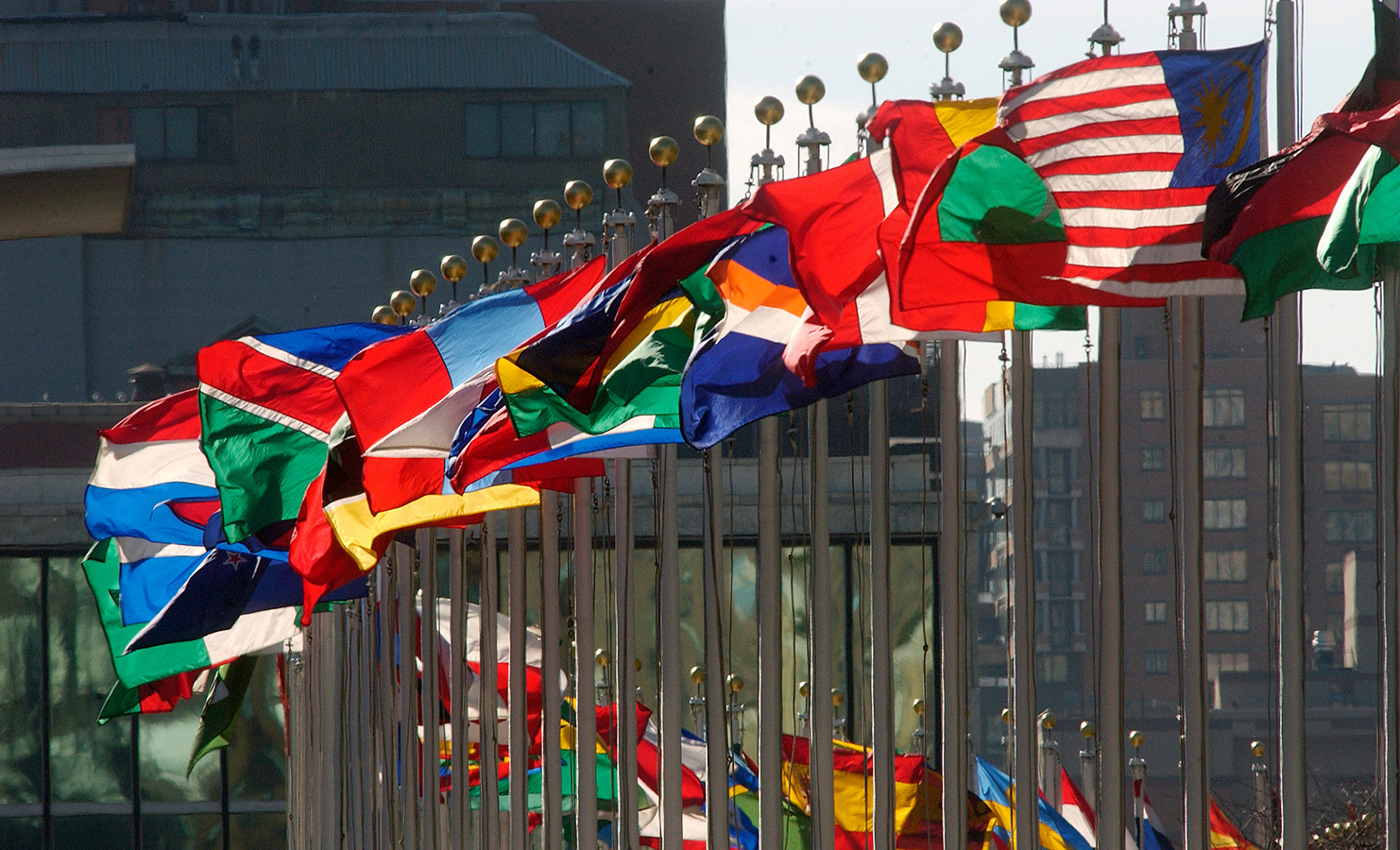
Flags of member nations flying at United Nations Headquarters.

It turns out to be an illusion: the stock market does well when the world seems to be at peace. Check the major stock markets in the world, they’re hitting new highs. Good People, we can make an argument that during crises (not full blown wars), the world goes Keynesian where we spend, spend and spend. And as that happens, companies make tons of money.

 As the Dow Jones Industrial Average hits the record-high 40,000 benchmark, stakeholders are experiencing “almost picture-perfect” conditions in other investment options, too, The Wall Street Journal reports. It notes that tech stocks, cryptocurrencies and gold are ticking up, and even lower-risk investments such as certificates of deposits are hitting 5% yields. But there are longer-term headwinds, including the government’s looming $1.1 trillion payment of extra interest on its debt over the next decade. JPMorgan Chase CEO Jamie Dimon is also skeptical, saying there’s “a lot of happy talk,” while inflationary forces remain unpredictable. 

So, provided it is all tension, no actual bullets and grenades, markets are fine. The only downside from the money making component is that inflation will go up since all these monies will end up on the streets and purses of people!

 Here is the message: never postpone an opportunity. Yes, “uwa bu ahia” [the world is a marketplace] and you can trade at peace and war time, notes the Igbo Nation! Indeed, never think the market will close.

When Does It Make Sense To Give Up On A Failing Startup?

0

A lot of startups are failing. The United States Bureau of Labor Statistics says that 10% of startups fail within the first year, and the percentage increases every year afterwards. Ultimately, they say that only 10% will remain in the long run, while the remaining 90% will fail at some point.

But now, what do we call startup failure?

For the most part, what hits the news as a startup failure is the point when the founder decides to throw in the towel and give up. The startup may have failed a long time ago, or it may not have even failed yet, but when the founder decides to give up, that startup is now qualified as a failed startup.

Now what I think is that most people give up on things too early, and this comes to play even when they start up a business. They have this awesome idea; they try it for maybe some weeks or months, and if it does not immediately work, they give up and move on to what they suppose would be the next big thing.

Do you agree?

One reason this could happen is that the founder has too many projects going on concurrently. And so, once they think something is not working out, they drop it and think to focus on something else that probably seems to have a higher potential to work out in their opinion.

Some experts have suggested that age and experience might be a factor, because a lot of these hit-and-run cases are common with very young entrepreneurs. That’s why every now and then, we meet founders in their twenties who already have 7 failed startups or maybe even more. And often, if you probe it, you could find that most of the startups were abandoned before they even had a chance to be successful.

Another reason this happens is impatience. Building a startup is hard work and long-term work. There will be times when people criticize what you are doing, other times when they say it is not going to amount to anything. Worse still, there will be those times when people are not even saying anything at all, and for founders, this may be the toughest time, even tougher than the discouraging talks.

If you consider the stories of most super successful founders, you will see that these were people who stuck on to the idea at a point where every other person had given up. They kept going even when people said their product sucks, or when they said nothing.

Did they ignore the comments? Not at all. But they took it in, and decided what to do with it. They decided whether to change strategy, tweak product, or pivot into something else altogether. But the important part was that they did not throw in the towel.

Some of these super successful founders also have the tale of one or two startup that may have failed in their hands and here is what I think is important to note. They made the decision themselves, on when to stop.

And that is what you should do too. Make the decision on when to give up, and often the most ideal time when that makes sense is when you have run out of all your ideas and strategies, and still not broken through. You have done the research, asked the questions and made the changes and still don’t get it right. At that time, you could make the decision to stop and let it go.

Importantly too, that is not the time to jump into another startup, but to retreat into the research and learning stage. Pick out the lessons from that failed startup before moving on to the next.

Why Founders Should Have A LinkedIn Strategy

0

Are you one of those founders who thinks everything about your brand’s social media presence should be tied to the brand and not you? Or do you know any Founder who thinks this way? Is that what it should be? Or are you missing out on something huge?

There is a general thinking that regular posting on LinkedIn is more common among B2B companies and not necessarily for B2C brands. I believe that every brand, every business, and every executive has strong reasons to be on LinkedIn, but that is not the focus of today’s post.

Let’s focus on why every Founder should have a LinkedIn strategy, whether B2C or B2B.

First, your customers are on LinkedIn. Even if you think that your product targets individuals only, these individuals work in companies that have a presence on LinkedIn. You also need to establish your presence there so that potential suppliers and retailers can be aware of your brand’s existence and the face behind the brand.

However, a more important reason is that constantly highlighting your successes and business moves on LinkedIn can significantly improve your perception and negotiation power, particularly if you plan to get investors and stakeholders into your business at some point.

The second reason every founder should have that presence on LinkedIn is that people engage better with individuals than with a brand they cannot put a face to. If customers are searching for your brand or business name on Google, they are often more interested in seeing the person behind the brand and reading the brand story. This is what a solid LinkedIn presence can help you achieve.

The third and most important reason is that it gives the Founder control over the company’s narrative. If you ever run into a publicity crisis in your business, you don’t want to be entirely at the mercy of the traditional PR system. You need to be able to address the audience directly and clarify issues or reassure them as the situation may require.

The best founders own their company’s narrative.

Potential investors, Employees, and Prospects will always want to check you out on LinkedIn. Make it worth their while.

If you are wondering what you could share on your handle, here are some thoughts.

First, share information about your industry and your company in particular. Let your network know more about what you do and your space. You can also share industry trends, data, and predictions that should concern founders, customers, and stakeholders in that space.

Share company updates, milestones achieved, and next moves.

If you have products, you can also share explainer content on using the products and common mistakes to avoid.

Share mistakes you made in the past in your business and how you learned from them. There’s no better way to show you are a winner than by showing your scars.

The ECOWAS Challenge in Mali, Niger and Burkina Faso

0

As we wish sustained stability in Congo, the ECOWAS must pay attention to what is happening in Mali, Niger and Burkina Faso. Largely, these guys are creating another union, and that can punt the ECOWAS mission: “In a historic move, Burkina Faso, Mali, and Niger have finalized their plan to form a confederation, officially marking their shift away from former colonial ruler France and toward closer ties with Russia. “

The African Union must call an emergency meeting and address these issues since it does appear that ECOWAS does not have any leverage over these guys; yes, it is all “coups” whether via rigged electoral pens or ambushed presidential guards with guns, they’ve maintained!

Importantly, these khaki men must understand that a bird which leaves the ground to perch on an ant-hill is still very much on the ground. Indeed, flipping from France to Russia is largely the same thing.  Leaders should lead and stop another neocolonialism of visions in Africa.

Burkina Faso, Mali, and Niger Finalize Plan to Form Confederation

20

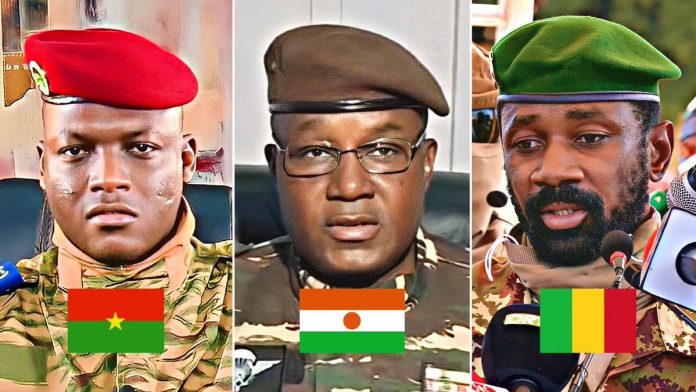
In a historic move, Burkina Faso, Mali, and Niger have finalized their plan to form a confederation, officially marking their shift away from former colonial ruler France and toward closer ties with Russia. 

The announcement came after a meeting of the countries’ foreign ministers in Niger’s capital, Niamey.

The newly formed Confederation of the Alliance of Sahel States (AES) aims to institutionalize and operationalize a unified front to tackle the region’s security and economic challenges. Niger’s Foreign Minister, Bakary Yaou Sangare, detailed the outcomes of the meeting in a statement released late Friday.

“The objective was to finalize the draft text relating to the institutionalization and operationalization of the Confederation of the Alliance of Sahel States (AES),” Sangare stated.

A New Era for the Sahel

The draft text, which will be presented for adoption by the heads of state of Burkina Faso, Mali, and Niger at an upcoming summit, signifies a significant geopolitical shift in the region. Although the exact date of the summit was not disclosed, the formation of the AES marks a clear intent to establish a new regional order.

Malian Foreign Minister Abdoulaye Diop, after meeting with General Abdourahamane Tiani, head of Niger’s military regime, declared the birth of the AES.

“We can consider very clearly, today, that the Confederation of the Alliance of Sahel States (AES) has been born,” Diop announced.

The Sahel region, plagued by jihadist violence for years, has seen increasing frustration with France’s inability to curb the insurgency. Also, the French government has been accused of exploiting its former colonies. This dissatisfaction has led Burkina Faso, Mali, and Niger to sever ties with the Economic Community of West African States (ECOWAS), which they accuse of being under French influence. The three countries announced their departure from ECOWAS in January, paving the way for the formation of the AES.

Seeking New Alliances 

The AES’s pivot towards Russia reflects a broader trend in African geopolitics, where countries are seeking new alliances beyond traditional Western powers. This realignment underscores a desire for diversified diplomatic and military support, especially in combating terrorism and fostering economic development.

The establishment of the AES is seen as a strategic move to enhance regional cooperation and address the persistent threat of jihadist violence. By pooling resources and coordinating efforts, the member states aim to create a more effective response to security challenges that have long plagued the Sahel region.

However, the formation of the AES also raises questions about the future of regional cooperation in West Africa. With Burkina Faso, Mali, and Niger charting their own course, the dynamics within ECOWAS and the broader West African region are likely to shift. There is concern that the AES could potentially attract other nations facing similar challenges and frustrations with existing regional bodies.

Ousmane Sonko, recently appointed as Senegal’s Prime Minister, has reportedly hinted at the possibility of closing French military bases in the country. This move aligns with Sonko’s long-standing stance against French influence in Senegal, a remnant of its colonial past.

Sonko and President Bassirou Diomaye Faye, have expressed a commitment to greater national sovereignty, including reevaluating foreign military presence and renegotiating mining, oil, and gas contracts to better benefit Senegal.

“We must question the reasons why the French army for example still benefits from several military bases in our country and the impact of this presence on our national sovereignty and our strategic autonomy,” he said.

“I reiterate here the desire of Senegal to have its own control, which is incompatible with the lasting presence of foreign military bases in Senegal… Many countries have promised defense agreements, but this does not justify the fact that a third of the Dakar region is now occupied by foreign garrisons.

“More than 60 years after our independence… we must question the reasons why the French army for example still benefits from several military bases in our country and the impact of this presence on our national sovereignty and our strategic autonomy.”

Thus, the AES represents a bold step for Burkina Faso, Mali, and Niger as they seek to redefine their regional and international relationships. By moving away from French influence and aligning more closely with Russia, these nations are signaling their intent to take control of their own security and economic destinies. 

However, experts believe that the success of the AES will depend on the member states’ ability to effectively collaborate and implement their shared goals in the face of ongoing regional challenges.