DD
MM
YYYY

PAGES

DD
MM
YYYY

spot_img

PAGES

Home Blog Page 3399

Crypto in the Spotlight: Navigating the Legal Landscape of Cryptocurrencies in India

0

In recent times, the spotlight has shone brightly on the realm of cryptocurrencies in India. As digital assets gain momentum, it becomes crucial for Hindi Roulette by Evolution Gaming enthusiasts and investors to understand the legal landscape governing these innovative financial instruments. In this article, we will explore the legal aspects surrounding cryptocurrencies in India, shedding light on the current scenario and the considerations one must bear in mind.

Understanding the Regulatory Framework

The regulatory status of cryptocurrencies in India has been a subject of continuous evolution. As of now, there isn’t a specific law governing cryptocurrencies, but that doesn’t mean they operate in a legal vacuum. The Reserve Bank of India (RBI) has, in the past, issued circulars restricting banking services for cryptocurrency transactions. However, the Supreme Court of India, in a landmark judgment in 2020, lifted the ban, deeming it unconstitutional.

This judicial intervention brought a sigh of relief to the crypto community, but it also underscores the need for a clear regulatory framework. The absence of comprehensive regulations poses challenges for users, businesses, and regulators alike, creating an environment where careful consideration and adherence to existing laws are imperative.

Tax Implications of Cryptocurrency Transactions

One aspect that individuals engaging in cryptocurrency transactions should be aware of is the taxation framework. In India, cryptocurrencies are considered taxable assets, and gains arising from their trading or investment are subject to taxation. The tax treatment varies depending on factors such as the holding period and the nature of the transactions.

Short-term capital gains on cryptocurrency transactions (holding period less than 36 months) are taxed at the individual’s applicable income tax slab rates. On the other hand, long-term capital gains (holding period more than 36 months) are subject to a flat tax rate, providing a more favorable tax treatment for those holding onto their investments for an extended period.

It is advisable for investors to maintain accurate records of their cryptocurrency transactions, including purchase and sale details, to facilitate accurate tax reporting.

Compliance and Due Diligence for Businesses

For businesses operating in the cryptocurrency space, compliance with existing laws and regulations is of paramount importance. The lack of a dedicated regulatory framework doesn’t absolve businesses from adhering to applicable laws related to anti-money laundering (AML) and know-your-customer (KYC) regulations.

Businesses dealing with cryptocurrencies must implement robust AML and KYC procedures to ensure the legitimacy of transactions and prevent illicit activities. Proactive due diligence in these areas not only safeguards the business from legal repercussions but also contributes to building trust among users and investors.

The Need for Investor Education

As the popularity of cryptocurrencies grows, so does the need for investor education. Understanding the risks and rewards associated with these digital assets is crucial for individuals looking to participate in the crypto market. It is advisable to stay informed about market trends, security best practices, and potential regulatory changes.

Numerous scams and fraudulent schemes have been associated with cryptocurrencies globally, making it essential for investors to exercise caution and conduct thorough research before making investment decisions. Engaging with reputable sources, seeking professional advice, and staying vigilant against potential scams are fundamental aspects of responsible participation in the cryptocurrency space.

Looking Ahead: Regulatory Clarity

The future of cryptocurrencies in India hinges on the establishment of a clear regulatory framework. The government has indicated its intention to introduce a cryptocurrency bill to address the regulatory challenges and provide legal clarity. The proposed bill aims to create a framework for the issuance of central bank digital currencies (CBDCs) and regulate private cryptocurrencies.

As the legislative process unfolds, it is crucial for stakeholders, including investors, businesses, and enthusiasts, to actively engage in the discourse. Collaborative efforts between the government and the crypto community can pave the way for regulations that foster innovation while addressing concerns related to consumer protection and financial stability.

In conclusion, the legal landscape of cryptocurrencies in India is a dynamic and evolving space. Navigating this terrain requires a combination of legal awareness, compliance with existing regulations, and a commitment to investor education. As regulatory clarity emerges, it is hoped that India’s approach to cryptocurrencies will strike a balance between fostering innovation and ensuring a secure and transparent financial ecosystem.

Experts Reveal Potential Price Turns of Shiba Inu (SHIB), Dogecoin (DOGE), and Meme Moguls (MGLS)

0

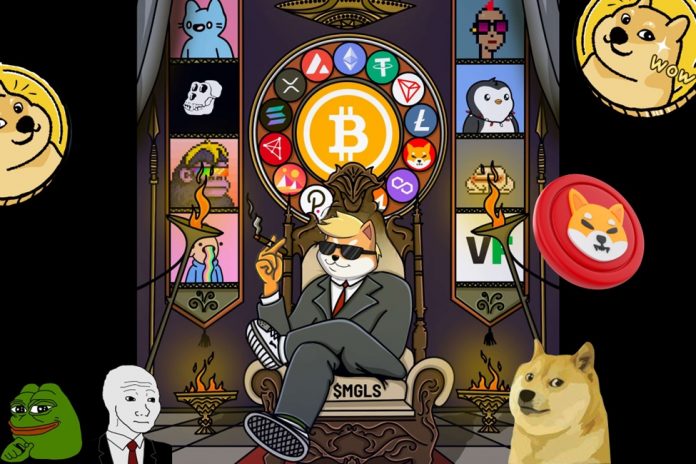
The trajectory of the crypto market is seeing a rising credibility for meme coins in the industry. As such, investors are looking forward to adding meme coins to their investment portfolio. Because of this, analysts are reviewing the activities of top meme coins like Dogecoin (DOGE), Shiba Inu (SHIB), and Meme Moguls (MGLS). Having shown a significant uptrend, experts seem to know whether they have the potential to become some of the top crypto investment alternatives in Q1 of 2024.

Shiba Inu (SHIB) Serves as Meme Coin Model

Shiba Inu (SHIB) is one of the poster tokens for meme coins. The success of Shiba Inu is not foggy, having recorded over 10 million growth percentages since its launch.

Meanwhile, the short-term price turn of Shiba Inu has not been on the positive side. For context, the Shiba Inu price value has lost over 18% in the past month, as per data from CoinMarketCap. Nonetheless, experts predict a growth in the token’s momentum that will trigger a rally.

Dogecoin (DOGE) Having a Price Retracement Amid Bullish Hopes from Investors

Since the turn of the year, Dogecoin (DOGE) has undergone what experts call a price retracement. While the price stats show that Dogecoin may have declined from its 2024 peak of $0.09, experts believe that the token may soon go bullish.

This is because of the gradual rise of momentum from Dogecoin. Experts predict an imminent arrival of the meme coin season, which could push the Dogecoin price into the bull market.

Meme Moguls (MGLS) Gears Towards Becoming a Meme Coin Sensation

Having kickstarted the presale phase of Meme Moguls (MGLS) in 2023, the token has garnered high-value investors and popularity from around the crypto space. Currently in stage 5 of its presale, the Meme Moguls token has already given early investors over 90% ROI.

With the imminent meme coin season at the corner, MGLS has been touted to be among the top crypto investment alternatives alongside Dogecoin and Shiba Inu. At the price of only $0.0036, MGLS is cheap with sky-high growth potential.

$MGLS is a utility token of the Meme Moguls platform. The platform is a virtual play-to-earn crypto gaming protocol that gives members a real-world trading experience as well as an immersive gaming experience on the side.

With the rising demand for meme tokens with strong utility, experts are predicting that the $MGLS token has the potential to gain over 1000% in price value before launch. MGLS is one of the top cryptos to buy in 2024 for those who are looking to gain massively in the year. In terms of security, the smart contract has been audited by SolidProof. The liquidity pool will be locked for five years and the team token will be locked for two years.

Click Here To Take Part In The Meme Moguls Presale

Visit the links below for more information about Meme Moguls (MGLS):
www.mememoguls.com

Top Crypto Utility Tokens to Invest in 2024: Ethereum, Decentraland and Scorpion Casino

0

Your ultimate guide to the best crypto utility tokens to buy in 2024.

As we venture into 2024, the cryptocurrency landscape continues to evolve, presenting new opportunities for crypto enthusiasts. Among the sea of options, utility tokens stand out for their intrinsic value and use cases within their respective ecosystems. In this context, Ethereum, Decentraland, and the emerging Scorpion Casino are garnering significant attention.

This article aims to provide an insightful comparison of these tokens, highlighting their unique features and potential for growth, especially focusing on the rising star – Scorpion Casino.

Presale In Its Final Stages 

1.  Scorpion Casino – Revolutionizing iGaming with Crypto

Scorpion Casino is quickly carving out a niche in the crypto presale space, especially with its focus on integrating cryptocurrency with the iGaming industry. Its unique model, which allows investors to receive daily USDT rewards based on the casino’s performance, sets it apart from traditional utility tokens. With a presale strategy that’s drawing attention, Scorpion Casino not only promises entertainment but also a potential for substantial returns.

2.  Ethereum – The Pioneer of Smart Contracts

Ethereum has long been a cornerstone of the crypto world, renowned for its introduction of smart contracts. These self-executing contracts with the terms of the agreement directly written into code have revolutionized the blockchain landscape. Ethereum’s upcoming upgrades and persistent innovation continue to make it a solid investment choice for those looking to tap into the potential of decentralized applications (DApps) and more.

3.  Decentraland – A Forerunner in Virtual Real Estate

Decentraland represents the intersection of blockchain and virtual reality, offering a decentralized platform for users to buy, sell, and build on virtual land. As the concept of digital real estate and virtual experiences gains traction, Decentraland’s MANA token showcases significant potential, making it an attractive option for investors seeking exposure to the burgeoning field of virtual worlds and metaverses.

Why Scorpion Casino Stands Out

Unlike traditional utility tokens, Scorpion Casino offers an innovative approach to utility and investment. The platform’s blend of gaming and crypto presale opportunities caters to both entertainment seekers and serious investors. As it gears up for its launch on major exchanges like BitMart, the potential for growth and adoption looks promising.

What Utility Token Will You Be Buying?

In the landscape of top crypto utility tokens for 2024, while Ethereum and Decentraland offer solid opportunities based on their established use cases and market presence, Scorpion Casino emerges as a uniquely enticing option. Its innovative integration of iGaming with cryptocurrency, coupled with the opportunity for daily rewards and a strong presale performance, positions it favorably for investors seeking both excitement and profitability.

For more information on SCORP, check out the following links;

Presale: https://presale.scorpion.casino/

Twitter: https://twitter.com/ScorpionCasino

Telegram: https://t.me/scorpioncasino_official

Bitcoin regains $41,000 as crypto market ticks upward in last week of January 2024

0

The cryptocurrency market has shown signs of recovery in the final week of January 2024, with Bitcoin leading the way. The largest digital asset by market capitalization has regained the $41,000 level, after dropping below $30,000 earlier this month. This represents a 37% increase in value since the monthly low.

Bitcoin’s rally has been driven by several factors, including positive news from institutional investors, regulatory developments, and network upgrades. Some of the highlights include:

Tesla announced that it has increased its Bitcoin holdings by another $1.5 billion, bringing its total to $3.5 billion. The electric car maker also said that it will accept Bitcoin as a payment option for its vehicles in select markets.

The US Securities and Exchange Commission (SEC) approved the first Bitcoin exchange-traded fund (ETF) in the country, allowing investors to gain exposure to the asset without having to buy or store it directly. The ETF, which tracks the performance of the CME CF Bitcoin Reference Rate, began trading on the New York Stock Exchange under the ticker symbol BTCR.

The Bitcoin network underwent a major upgrade, known as Taproot, which improves its scalability, privacy, and security. Taproot introduces a new signature scheme that allows for more complex and flexible transactions, such as multi-signature and smart contracts. Taproot also reduces the amount of data needed to verify transactions, making them faster and cheaper.

The global adoption of Bitcoin continued to grow, with more countries recognizing its legal status and facilitating its use. For instance, Brazil became the first Latin American nation to regulate Bitcoin as a legal tender, following the example of El Salvador. Meanwhile, India lifted its ban on crypto trading and allowed banks to offer services to crypto businesses.

These developments have boosted the confidence and optimism of the crypto community, as well as attracted new investors to the space. According to data from Glassnode, the number of active Bitcoin addresses reached a new all-time high of 38.6 million on January 25th, indicating a high level of network activity and user engagement.

The positive momentum of Bitcoin has also spilled over to other cryptocurrencies, lifting the overall market capitalization to over $1.2 trillion. Some of the best performers include Ethereum, which broke above $3,000 for the first time since September 2021; Cardano, which surged by over 50% after launching its smart contract platform; and Solana, which hit a new record high of $250.

As January comes to an end, the crypto market seems to have shaken off the bearish sentiment that dominated the previous months. However, challenges and uncertainties remain, such as regulatory risks, environmental concerns, and technical issues. Therefore, investors should exercise caution and due diligence when entering this volatile and unpredictable market.

UK Supreme Court Refuses Craig Wright Appeal

The UK Supreme Court has rejected the appeal of Craig Wright, the self-proclaimed inventor of Bitcoin, who was ordered to pay $5 billion worth of the cryptocurrency to the estate of his former business partner, Dave Kleiman.

The court upheld the decision of the High Court, which found that Wright had forged documents and lied in his testimony to claim ownership of more than a million bitcoins that he and Kleiman had mined together in the early days of the cryptocurrency.

Wright, who claims to be Satoshi Nakamoto, the pseudonymous creator of Bitcoin, has been involved in a legal battle with Kleiman’s brother, Ira, since 2018. Ira Kleiman sued Wright for half of the bitcoins that he alleged Wright owed to his brother’s estate, as well as intellectual property rights related to Bitcoin.

Wright has repeatedly failed to prove his claim to be Nakamoto and has been accused of fraud and perjury by several experts and witnesses. He has also faced criticism from the Bitcoin community, who have rejected his attempts to assert control over the cryptocurrency and its underlying technology.

The UK Supreme Court’s ruling is a major blow to Wright, who may have to surrender a significant portion of his fortune and reputation. It is also a victory for Ira Kleiman, who has vowed to donate a portion of the recovered bitcoins to charity.

The case is not over yet, however, as Wright has indicated that he will seek to challenge the jurisdiction of the UK courts and pursue further appeals. He has also filed a lawsuit against Ira Kleiman in Florida, where he is seeking to reverse a default judgment that awarded Kleiman 50% of the disputed bitcoins.

ARK Invest sold $42.8 million of BITO and purchased $62.3M of its own ETF last week

0

In a surprising move, ARK Invest has reduced its exposure to the first U.S. bitcoin futures ETF, BITO, and increased its stake in its own innovation-focused ETF, ARKK. According to data from ARK’s daily trading activity, the firm sold $42.8 million worth of BITO shares and bought $62.3 million worth of ARKK shares in the last week.

This decision may indicate that ARK is more confident in the long-term prospects of its own portfolio of disruptive companies than in the short-term performance of bitcoin futures. BITO, which launched in October 2021, tracks the price of bitcoin futures contracts rather than the spot price of bitcoin itself. This means that it is subject to contango, a situation where futures prices are higher than spot prices, which can erode returns over time.

ARKK, on the other hand, invests in companies that are expected to benefit from technological innovation across various sectors, such as Tesla, Shopify, Roku, Coinbase and Spotify. ARK’s founder and CEO, Cathie Wood, has been a vocal proponent of bitcoin and has predicted that it will reach $500,000 in the next five years.

However, she has also stated that she prefers to invest in companies that are building on top of the blockchain technology rather than in bitcoin itself.

By selling BITO and buying ARKK, ARK may be signaling that it sees more value and growth potential in its own ETF than in a bitcoin futures ETF that may not fully capture the upside of the cryptocurrency market.

ARK may also be taking advantage of the recent dip in ARKK’s price, which has fallen by about 20% since the start of the year, amid rising interest rates and market volatility. ARK may be betting that its ETF will rebound strongly as the innovation cycle continues and its holdings deliver on their promises.

Celo developers evaluating proposals for migration to become Ethereum layer 2.

Celo is a blockchain platform that aims to create a more inclusive and accessible financial system for everyone. Celo leverages a proof-of-stake consensus mechanism, a native stablecoin (cUSD), and a mobile-first approach to enable fast and low-cost transactions, as well as decentralized applications (DApps) that can reach billions of users.

However, Celo also faces some challenges in terms of scalability, interoperability, and security. As the demand for Celo’s services grows, so does the need for higher throughput, lower latency, and greater compatibility with other blockchains. Moreover, Celo has to ensure that its network remains secure and resilient against potential attacks or failures.

One possible solution to these challenges is to migrate Celo to become a layer 2 solution on top of Ethereum. Layer 2 solutions are protocols that run on top of an existing blockchain (layer 1) and provide additional functionality or performance improvements. By becoming a layer 2 solution, Celo could benefit from Ethereum’s network effects, security guarantees, and ecosystem of tools and developers.

However, migrating Celo to become a layer 2 solution is not a trivial task. It requires careful evaluation of various technical, economic, and social factors. For instance, Celo would have to decide which layer 2 protocol to adopt, how to ensure compatibility with its existing features and users, how to manage the transition process and governance, and how to deal with potential trade-offs or risks.

To address these issues, Celo developers are currently evaluating different proposals for migration to become Ethereum layer 2. These proposals include:

Optimistic rollups: A layer 2 protocol that uses fraud proofs to verify transactions on the layer 1 chain. Optimistic rollups can achieve high scalability and low latency, but also require complex dispute resolution mechanisms and incur high withdrawal costs and delays.

ZK-rollups: A layer 2 protocol that uses zero-knowledge proofs to verify transactions on the layer 1 chain. ZK-rollups can achieve high scalability and low latency, but also require advanced cryptographic techniques and incur high computation costs.

Plasma: A layer 2 protocol that uses exit games to verify transactions on the layer 1 chain. Plasma can achieve high scalability and low latency, but also require users to monitor the network and challenge invalid exits or withdrawals.

State channels: A layer 2 protocol that uses off-chain communication and signatures to verify transactions between participants. State channels can achieve high scalability and low latency, but also require users to lock up funds and be online at all times.

Each of these proposals has its own advantages and disadvantages, as well as different implications for Celo’s vision and values. Celo developers are carefully weighing the pros and cons of each option, as well as soliciting feedback from the community and stakeholders. The goal is to find the best solution that can enhance Celo’s performance, security, and interoperability, while preserving its mission of creating a more inclusive and accessible financial system for everyone.