DD
MM
YYYY

PAGES

DD
MM
YYYY

spot_img

PAGES

Home Blog Page 34

SpaceX’s 15,000-Satellite Starlink Push Triggers Industry, Environmental Backlash

0

SpaceX’s ambition to dramatically expand its Starlink cellular satellite network is drawing fresh resistance from rival satellite operators, environmental groups, and even fellow space companies, as U.S. regulators begin formally weighing the implications of one of the largest orbital buildouts ever proposed.

The Federal Communications Commission has opened a public comment period on SpaceX’s request to launch an additional 15,000 satellites for its next-generation cellular Starlink system. The proposal is designed to ease capacity constraints and significantly enhance Starlink’s ability to deliver direct-to-phone connectivity, including 5G-level services such as high-quality video calls and faster data downloads across the globe.

At present, SpaceX has FCC approval to deploy about 12,000 satellites, with roughly 650 currently supporting its cellular Starlink service. The additional constellation would mark a major scaling-up of that system. Taken together with SpaceX’s other Starlink filings, rival satellite provider Viasat estimates the company is seeking approval for close to 49,000 satellites in low-Earth orbit, a figure that has become a central concern for critics.

Viasat, one of SpaceX’s most persistent opponents, warned that the expansion could further entrench Starlink’s dominance in orbital space and radio spectrum. In a filing to the FCC, the company argued that granting the request would give SpaceX “an even greater ability and incentive to foreclose other operators from accessing and using limited orbital and spectrum resources on a competitive basis.”

The concern, echoed by other firms, is that the sheer scale of Starlink could crowd out competitors before they are able to deploy or expand their own systems.

Globalstar, which provides satellite connectivity for Apple’s iPhone emergency and messaging services, also lodged objections, focusing on spectrum use. While SpaceX struck a $17 billion deal last year to use EchoStar’s licensed spectrum within the United States, Globalstar says the same satellites would tap into the 1.6GHz band outside U.S. borders, a frequency range Globalstar relies on globally. The company argues that this overlap could result in harmful radio interference, even if it does not technically violate existing spectrum rights.

“SpaceX’s failure in the September Application to provide a legitimate interference analysis is not surprising,” Globalstar wrote, adding that the Big LEO band is already so congested that “new operator entry … is technically infeasible.”

The dispute highlights how Starlink’s expansion is not just a question of satellite numbers, but also of how finite spectrum resources are shared in an increasingly crowded orbital environment.

Beyond commercial rivals, environmental concerns are emerging as a significant line of opposition. DarkSky International, an advocacy group focused on light pollution and environmental impacts of space activity, urged the FCC to closely examine the long-term consequences of deploying and deorbiting 15,000 additional satellites. The group warned that as satellites burn up on reentry, they could release large quantities of metals and other compounds into the upper atmosphere, with unknown but potentially harmful effects on the ozone layer.

“SpaceX’s proposed satellites will dump millions of pounds of pollution into the atmosphere,” DarkSky alleged, arguing that the scale of the constellation warrants far more rigorous environmental scrutiny than it has so far received.

Scientific research into the atmospheric impacts of satellite reentry is still developing, leaving regulators with limited data as they weigh these concerns.

Even Blue Origin, the space company founded by Jeff Bezos and often viewed as a direct competitor to SpaceX, submitted comments. While stopping short of outright opposition, Blue Origin flagged operational risks associated with SpaceX’s plan to place many of the satellites in very low-Earth orbit, around 330 kilometers above the planet. At those altitudes, satellites could intersect with rocket flight paths, potentially constraining launch windows for other operators.

Blue Origin warned that a “very dense vLEO environment” could impose “unnecessary launch-availability constraints” unless accompanied by strict coordination and review procedures. The company urged the FCC to consider authorizing the satellites in phases, with future deployments dependent on evidence that other launch providers will not be materially hindered.

Additional objections have come from companies and industry groups, including Iridium, Ligado, and the Mobile Satellite Services Association, reflecting broad unease across the satellite sector. Still, such resistance is not new. SpaceX has faced similar pushback during earlier Starlink expansions, often overcoming it as regulators approved successive phases of deployment.

The decisive factor may be the FCC’s current leadership. Chairman Brendan Carr, a Republican appointee, has been openly supportive of SpaceX and has framed large satellite constellations as strategically important for U.S. leadership in space, particularly as China accelerates its own satellite ambitions. Under Carr, the FCC is already moving toward exempting large constellations from certain environmental review requirements, a shift that could blunt some of the objections now being raised.

SpaceX has not yet publicly responded to the latest round of criticism. The company has consistently argued that Starlink delivers tangible public benefits, from ending cellular dead zones to providing connectivity during disasters and in remote regions. It also says its satellites are designed to deorbit safely and burn up completely, minimizing risks to people on the ground.

Anthropic Pushes Claude Deeper Into Healthcare as AI Giants Race to Become Patients’ Digital Navigators

0

Anthropic’s decision to roll out a new suite of healthcare and life sciences features for its Claude AI platform marks another decisive step in a fast-forming race among leading AI companies to embed their systems directly into how people understand, manage, and navigate their health.

Announced on Sunday, the update allows users to securely share parts of their health records with Claude, enabling the chatbot to interpret medical information, organize disparate data, and help users make sense of complex healthcare systems. The launch comes just days after OpenAI unveiled ChatGPT Health, underscoring how quickly healthcare has become one of the most strategically important — and most scrutinized — frontiers for generative AI.

At a basic level, the new tools aim to solve a familiar problem for patients: medical data is fragmented, jargon-heavy, and often overwhelming. Test results, insurance paperwork, physician notes, and app-generated health metrics rarely live in one place or speak the same language. Anthropic’s pitch is that Claude can act as a unifying layer, pulling these strands together and translating them into something closer to plain English.

Eric Kauderer-Abrams, Anthropic’s head of life sciences, framed the update as an attempt to reduce the sense of isolation many people feel when dealing with healthcare systems. Patients, he said, are often left to coordinate records, insurance questions, and clinical details on their own, juggling phone calls and portals. Claude, in this vision, becomes less of a search tool and more of an organizer — a digital intermediary that helps users navigate complexity rather than diagnose disease.

In practical terms, the new health record features are launching in beta for Pro and Max subscribers in the United States. Integrations with Apple Health and Android Health Connect are also rolling out in beta, allowing users to pull in data from fitness trackers and mobile health apps. OpenAI’s competing ChatGPT Health product is similarly positioned, though access is currently gated behind a waitlist.

The near-simultaneous launches highlight how major AI developers see healthcare not just as a consumer feature, but as a long-term platform opportunity. OpenAI has said that hundreds of millions of people already ask ChatGPT health-related or wellness questions each week. Formalizing those interactions into dedicated health tools suggests an effort to capture that demand while imposing clearer guardrails.

Both companies are careful to stress what their systems are not. Neither Claude nor ChatGPT Health is intended to diagnose conditions or prescribe treatments. Instead, they are pitched as assistants for understanding trends, clarifying reports, and supporting everyday health decisions. That distinction is not merely rhetorical; it reflects legal, ethical, and reputational risks in a domain where errors can carry serious consequences.

Those risks have become more visible in recent months. Regulators, clinicians, and advocacy groups have raised concerns about AI chatbots offering misleading or inappropriate medical and mental health advice. Lawsuits and investigations have added pressure on companies to demonstrate restraint and accountability. Against that backdrop, Anthropic has emphasized privacy and oversight as central design principles.

In a blog post accompanying the launch, the company said health data shared with Claude is excluded from model training and long-term memory, and that users can revoke or modify permissions at any time. Anthropic also said its infrastructure is “HIPAA-ready,” signaling alignment with U.S. medical privacy standards — a critical requirement for adoption by healthcare providers and insurers.

Beyond individual users, Anthropic is also positioning Claude as a tool for the healthcare system itself. The company announced expanded offerings for healthcare providers and life sciences organizations, including integrations with federal healthcare coverage databases and provider registries. These features are aimed at reducing administrative burdens, an area where clinicians consistently report burnout and inefficiency.

Tasks such as preparing prior authorization requests, matching patient records to clinical guidelines, and supporting insurance appeals are time-consuming and largely clerical. Anthropic argues that AI can automate much of this work, freeing clinicians to focus on patient care. Industry partners appear receptive to that message. Commure, a company that builds AI tools for medical documentation, said Claude’s capabilities could save clinicians millions of hours each year.

Still, Anthropic is explicit that human oversight remains essential. Its acceptable use policy requires that qualified professionals review AI-generated content before it is used in medical decisions, patient care, or therapy. The company’s leadership has repeatedly cautioned that while AI can dramatically reduce time spent on certain tasks, it is not infallible and should not operate unchecked in high-stakes settings.

That balance — between empowerment and caution — sits at the heart of the current AI-healthcare push. Tools like Claude and ChatGPT promise clarity for patients in systems that often feel opaque. They also offer providers relief from administrative overload.

However, it is not clear whether these tools will ultimately reshape how people interact with medicine, with some analysts noting it will depend less on their technical sophistication than on how safely and transparently they are deployed.

Memory Crunch: How AI’s Relentless Appetite Is Rewriting the Economics of Computing

0

For years, the semiconductor industry has been defined by a familiar cycle: periods of oversupply, price collapses, and factory shutdowns, followed by rebounds driven by the next wave of consumer gadgets.

That cycle has now been decisively broken.

In 2026, the world will run short of memory, and this time the shortage is not being driven by smartphones or laptops, but by artificial intelligence systems whose scale is stretching the physical and economic limits of the memory industry.

At the center of the disruption is a quiet but profound shift in who gets priority access to one of computing’s most essential components. Memory, once treated as a relatively interchangeable commodity, has become a strategic resource. AI chip designers such as Nvidia, AMD, and Google now consume such vast quantities of high-performance RAM that they effectively dominate supply pipelines, crowding out entire segments of the traditional electronics market.

The imbalance is amplified by the industry’s extreme concentration. Three companies—Micron, Samsung Electronics, and SK Hynix—control nearly the entire global supply of DRAM. As AI demand has surged, these firms have found themselves in an enviable but constraining position: pricing power has returned, profits are climbing sharply, and yet production capacity cannot expand fast enough to meet orders.

Micron’s management has described demand growth as far outpacing the industry’s ability to respond, a statement borne out by its financials and by similar signals from its rivals.

What makes this shortage especially disruptive is not just the volume of memory being consumed, but the kind. Modern AI systems rely heavily on high-bandwidth memory, a specialized form of RAM engineered to sit close to the processor and move data at extraordinary speeds. Unlike conventional DRAM, HBM is built by stacking multiple layers of memory into tightly packed structures, a process that is expensive, slow to scale, and unforgiving of manufacturing defects.

In practical terms, every unit of HBM produced comes at the expense of far more conventional memory. Micron executives describe it as a three-to-one trade-off: making one bit of HBM means sacrificing three bits of standard DRAM that would otherwise serve consumer devices. This is the structural reason the shortage is spilling over into laptops, desktops, and even gaming hardware. It is not that factories are idle; it is that they are being reoriented toward AI almost exclusively.

The consequences are already visible in pricing. Market researchers expect DRAM prices to surge by more than 50% in early 2026, a scale of increase rarely seen in the memory sector. For consumers, the impact is jarring. Components that were once cheap upgrades have become scarce and expensive, reshaping purchasing decisions and margins across the PC and device ecosystem. For manufacturers, memory has quietly become one of the most volatile inputs in their cost structures, forcing difficult choices between absorbing higher costs or passing them on.

Behind the market turbulence lies a deeper technical tension. AI researchers have long warned that progress in computing is increasingly constrained not by processing power but by memory. Graphics processors have grown faster and more capable, yet memory capacity and bandwidth have not kept pace.

Large language models, now central to generative AI, intensify this mismatch by requiring vast amounts of data to be accessed repeatedly and quickly. The result is what engineers call the “memory wall,” a point at which expensive processors spend significant time idle, waiting for data to arrive.

Some startups are attempting to rethink this balance by designing systems that emphasize massive memory pools rather than ever-larger clusters of GPUs. These alternative architectures remain experimental, but they underscore a growing recognition within the industry: adding more compute alone is no longer enough. Memory is becoming the real bottleneck, shaping how AI systems are designed, deployed, and monetized.

The ripple effects extend to the largest technology companies. Hardware makers such as Apple and Dell are being pressed by investors to explain how they will navigate rising memory costs without eroding margins or alienating customers. Cloud providers, meanwhile, are recalculating the economics of AI services as memory becomes a limiting factor in scaling capacity. Even Nvidia, the primary driver of HBM demand, faces questions about whether its AI ambitions could indirectly raise prices for gamers and other customers reliant on the same supply chain.

Although relief is coming, it is slow. New fabrication plants are under construction in the United States, part of a broader push to expand domestic semiconductor manufacturing. Yet these facilities will not come online until 2027 or later, leaving at least a year in which supply remains structurally constrained. Memory makers themselves are candid about the gap: some customers will simply not get all the memory they want, regardless of price.

By the time additional capacity arrives, the industry may look very different. Memory will no longer be treated as a background component, but as a strategic asset central to AI competition, national industrial policy, and corporate profitability. The shortage of 2026 is shaping up to be more than a temporary imbalance.

Ride-Hailing Drivers Protest Waymo as Robotaxis Loom Over the Gig Economy

0

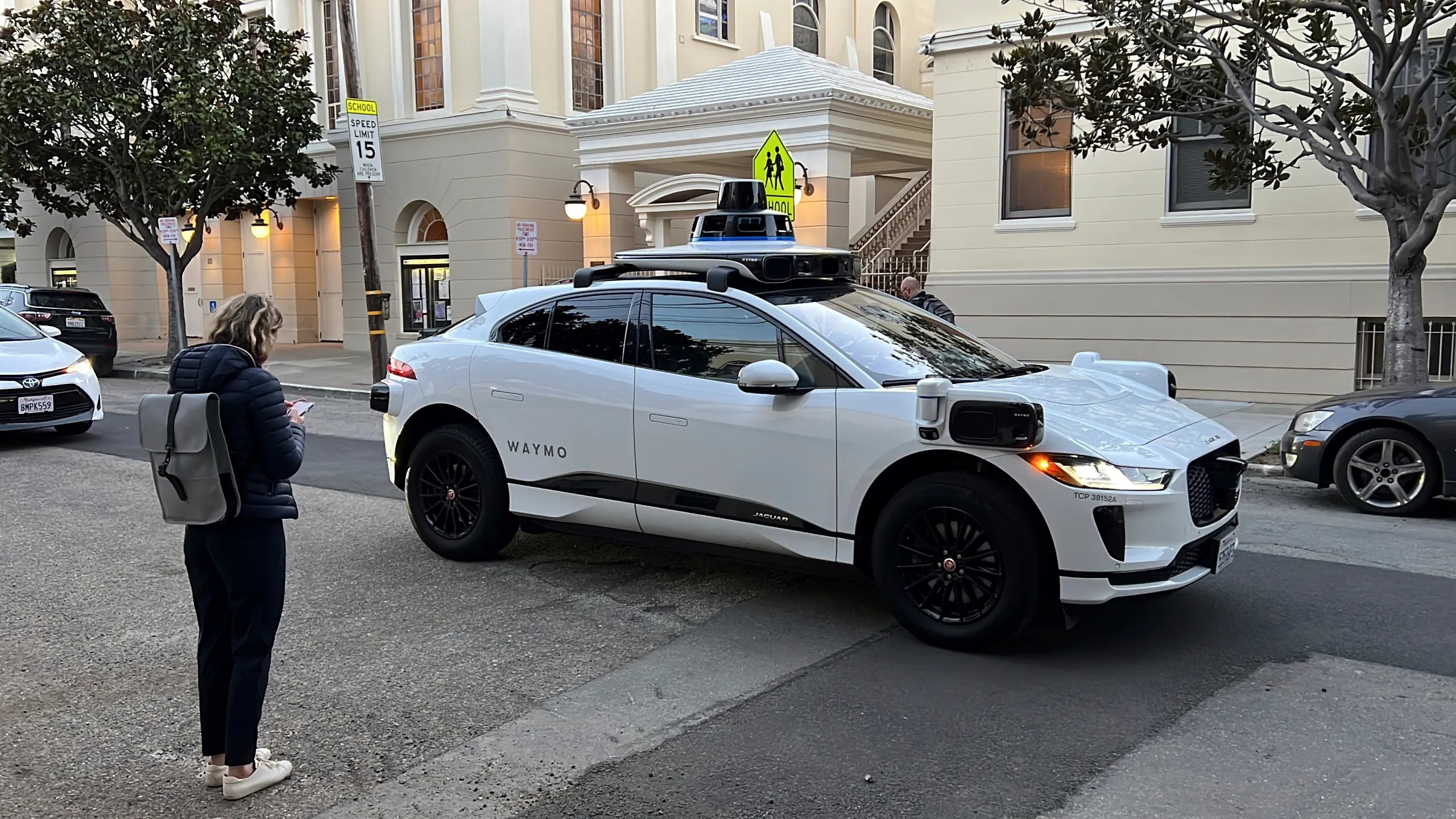
Ride-hailing drivers in San Francisco took to the streets on Friday to protest the growing presence of self-driving Waymo taxis, warning that autonomous vehicles threaten both public safety and the livelihoods of thousands of gig workers, even as history suggests the technological shift they oppose may be difficult to stop.

About two dozen Uber and Lyft drivers, joined by labor advocates, gathered outside the offices of the California Public Utilities Commission (CPUC), calling on state regulators to tighten oversight of autonomous vehicles and slow their expansion on city streets. Their demonstration unfolded as the CPUC met to consider further regulatory steps for robotaxis.

As protesters held signs and addressed the crowd, Waymo vehicles rolled past in steady succession, a quiet but pointed illustration of how embedded the autonomous cars have already become in San Francisco’s traffic flow.

“I personally am not against technology; what I am against is unfair treatment,” said Joseph Augusto, who drives for both Uber and Lyft.

He argued that human drivers are subject to licensing rules, traffic enforcement, and penalties that do not apply in the same way to autonomous vehicles.

“These companies are driving around the city, and they don’t seem to be held to the same standards as us drivers.”

The protest comes after a series of incidents that have fueled unease about the readiness of robotaxis for complex urban environments. Days before Christmas, a mass power outage left multiple Waymo vehicles stalled across San Francisco, blocking intersections and forcing the company to pause service.

Augusto said he saw cars frozen at junctions as pedestrians and drivers maneuvered around them in the dark.

“There were a lot of Waymos around. Just randomly all over the city and there’s no plan,” he said.

Earlier episodes have also drawn attention. In September, a Waymo vehicle made an illegal U-turn in San Bruno, but police could not issue a ticket because there was no human driver. In October, a Waymo struck and killed a neighborhood cat known locally as Kit Kat, an incident that spread widely online and intensified calls for accountability.

The California Gig Workers Union says such events highlight gaps in responsibility and enforcement, arguing that autonomous vehicles should be removed from public roads until safety concerns are fully addressed. The CPUC, which regulates ride-hailing companies and oversees permits for autonomous vehicle services, said it had no comment on the protest.

Waymo defended its operations through a spokesperson, saying the company aims to be “the world’s most trusted driver,” with a focus on safety, accessibility, and sustainability. The Alphabet-owned firm has said its vehicles are involved in fewer serious crashes than human drivers, and it continues to expand service in San Francisco and other U.S. cities.

Beyond safety, Friday’s protest pointed to a deeper economic anxiety. Many drivers see robotaxis as the next wave of disruption to the gig economy, echoing the upheaval that followed the rise of Uber and other ride-hailing platforms more than a decade ago. That earlier shift pushed traditional taxi operators to the margins, reshaping urban transport and work patterns in ways that proved largely irreversible.

Some drivers acknowledge that parallel. While they hope regulators will impose stricter rules or slow deployment, there is a quiet recognition that protests alone are unlikely to reverse the broader trend. As in previous cycles, a new technology-driven model is emerging to displace an existing one, backed by deep capital, political momentum, and promises of efficiency.

So far, San Francisco remains a frontline in that transition. The sight of human drivers rallying outside a regulator’s office as autonomous cars glide past captures a moment of tension between two transport eras. But it may be the beginning of a long standoff, and the outcome is already written.

Tekedia Capital Portfolio Startup, QFEX, Raises $9.5M

0

Tekedia Capital congratulates our portfolio startup, QFEX, the world’s only 24/7 exchange for U.S. equities, commodities, and FX, on raising $9.5M at a $95M valuation from General Catalyst and others. QFEX is building the future ahead of schedule. Well done, Team.