DD
MM
YYYY

PAGES

DD
MM
YYYY

spot_img

PAGES

Home Blog Page 3400

Intricate Dance of Bitcoin and the Crypto Market

0

The cryptocurrency market is a complex and dynamic ecosystem where the performance of one asset can significantly influence the entire landscape. At the center of this intricate dance lies Bitcoin, the original cryptocurrency, whose price movements often set the tone for the broader market’s performance.

Bitcoin’s Dominant Influence

Bitcoin, often referred to as digital gold, has established itself as the benchmark of the crypto market. Its price movements are closely watched by investors and enthusiasts alike, as they can provide insights into the market’s overall sentiment and direction. Recently, Bitcoin experienced a drop below the $68,000 mark, a movement that rippled across the crypto space, leading to mixed reactions and adjustments in investor strategies.

Interestingly, Bitcoin’s price fluctuations have shown a correlation with U.S. stock markets, suggesting that as the cryptocurrency matures, it may be increasingly integrated with traditional financial systems. This integration is a double-edged sword; it brings legitimacy and potential stability to Bitcoin but also exposes it to the same macroeconomic factors that affect traditional markets.

As the crypto market evolves, platforms like Coinbase face growth challenges, reflecting a maturing market that could lead to lower trading volumes and shifts in investor interest.

Bitcoin’s Price Trends and Market Impact

Bitcoin’s price is known for its volatility, with significant price swings that can occur within short periods. This volatility is attributed to various factors, including market sentiment, regulatory news, technological advancements, and macroeconomic trends. As of the latest data, Bitcoin’s price stands at $67,114.19 USD, experiencing a change of -3.24% over the past 24 hours.

The price of Bitcoin not only reflects its own value but also sets a precedent for the valuation of other cryptocurrencies. Often referred to as “altcoins,” these other digital assets frequently follow Bitcoin.

According to various analysts, the price of Bitcoin could see significant fluctuations. Some experts predict that the average BTC rate could be around $76,109.71, with potential swings between a minimum of $70,058 and a maximum of $82,161.42. This suggests a promising month for Bitcoin, with a potential return on investment (ROI) of 24.4% from the beginning of the month.

The Crypto Fear & Greed Index has emerged as a popular tool to gauge the market’s emotional temperature. This index is a daily indicator that measures the sentiments of Bitcoin and other large cryptocurrencies’ investors, ranging from 0 (extreme fear) to 100 (extreme greed). But why is this index important, and how can investors use it to their advantage?

The index is based on various data sources, including volatility, market momentum, social media sentiments, surveys, and trends. The underlying assumption is that the crypto market behavior is highly emotional. Investors may become overly greedy when the market is rising, leading to FOMO (Fear of Missing Out). Conversely, they may sell their coins in an irrational reaction to seeing red numbers, driven by fear.

Here’s how the index works: a high volatility in the price of Bitcoin, compared to the average values of the last 30 and 90 days, suggests a fearful market. Similarly, market momentum and volume are compared against recent averages to determine whether the market is acting overly greedy or bullish. Social media interactions, particularly on Twitter, are analyzed to assess public interest and sentiment towards Bitcoin.

The index’s value fluctuates over time, reflecting the changing sentiments in the market. For instance, a value closer to 100 indicates that investors might be getting too greedy, which could signal an impending market correction. On the other hand, a value near 0, indicating extreme fear, might present a buying opportunity, as it suggests that investors are overly worried.

Investors can use the Crypto Fear & Greed Index as a contrarian indicator. When the index shows extreme greed, it may be wise to consider taking profits or exercising caution, as the market could be due for a pullback. Conversely, extreme fear might indicate that the market has overreacted to the downside, potentially offering attractive entry points for investment.

It’s important to note that while the Crypto Fear & Greed Index can provide valuable insights, it should not be the sole basis for investment decisions. It’s one of many tools that investors can use to understand market sentiment and make more informed decisions. As with any investment tool, it’s crucial to consider the index in conjunction with other factors and perform thorough research before making any financial commitments.


Exploring Telegram Payment Systems

0

Telegram, the cloud-based instant messaging service, has been making waves with its comprehensive payment system designed for bots. This innovative feature allows users to make payments directly through the Telegram app, providing a seamless and secure transaction experience.

The platform’s payment system, known as Payments 2.0, was introduced to facilitate transactions for both physical and digital goods and services, making it a versatile tool for users and businesses alike.

Telegram has emerged not only as a powerful messaging platform but also as a versatile tool for financial transactions. With the introduction of Telegram Payment Systems, the app has transcended the boundaries of mere messaging and entered the realm of e-commerce and online payments.

Telegram’s foray into the payment arena began with the launch of Bot Payments, a feature that allowed users to make purchases directly through bots within the app. This innovative approach to in-app transactions was a game-changer, providing a seamless shopping experience without ever leaving the chat interface. The initial success of Bot Payments paved the way for further enhancements, leading to the development of Payments 2.0.

Telegram’s journey into the world of payments began with the introduction of Bot Payments in 2017. This feature enabled bot developers to accept payments from users globally, revolutionizing the way transactions were conducted on the platform. Initially, most payments were processed by Stripe, but as the system evolved, it expanded to include a variety of payment providers from around the world.

Payments 2.0, launched in April 2021, marked a significant upgrade to the system. It extended the capability to make payments from any app, including desktop applications, without Telegram taking any commission or storing payment information. The credit card details are sent directly to the payment provider, ensuring user privacy and security.

In June 2024, Telegram took another leap forward with the launch of ‘Telegram Stars,’ an in-app digital payments system tailored for digital goods and services. This system allows users to purchase items like e-books and online courses through in-app purchases on both Apple and Android devices.

How Telegram Payment Systems Work

The Telegram payment system is designed to be user-friendly and straightforward. Users can order goods or services from bots that offer them, with the bots now able to add a Pay button to their messages. When user taps Pay, they are prompted to enter their credit card and shipping information to confirm the payment. For added convenience, users with 2-Step Verification can save their card details for future purchases.

For bot developers, Telegram provides a free and open platform to implement the necessary APIs and accept payments without undergoing lengthy approval processes. The system supports a wide range of payment providers, allowing developers to choose the best option for their users or the one with the lowest commission rates.

Telegram’s payment systems have had a profound impact on how users interact with bots and conduct transactions. The ease of making payments directly through the app has enhanced the user experience, encouraging more transactions within the Telegram ecosystem. For businesses, this means a broader reach and a simplified process for selling goods and services.

Moreover, the addition of ‘Telegram Stars’ caters to the growing demand for digital products, providing a streamlined payment solution for content creators and educators. This development reflects Telegram’s commitment to adapting to user needs and staying ahead of the curve in the digital payments landscape.

Telegram’s payment systems represent a significant advancement in the integration of messaging and commerce. By providing a secure, efficient, and user-friendly platform for transactions, Telegram has positioned itself as a key player in the digital payments arena. As

Tech Layoffs: Over 90,000 Employees Laid Off so Far in 2024

0

According to recent data from Layoffs.fyi, over 90,000 tech employees have lost their jobs between January and May 2024.

The data revealed that the layoffs were carried out by 317 companies, comprising 96,551 laid-off employees, which is half the number reported during the same period last year.

Job cuts recorded in January saw over 31,000 employees laid off. April recorded 22,000 layoffs slightly more than the 20,000 reported in April 2023. The layoffs continued in May with 9,654 job cuts, which is 5,000 fewer than the number in May 2023.

The transportation sector is reported to have recorded the hardest hit in 2024, accounting for one-fifth of all tech layoffs. The sector reported over 17,500 job cuts year-to-date, a 70% increase compared to the same period in 2023.

The hardware industry followed with nearly 10,000 layoffs in the first five months of the year. The consumer and retail sectors also saw significant cuts, with 7,750 and 7,720 layoffs, respectively. Statistics also reveal that the cumulative number of job cuts in the tech sector has reached alarming levels. Since the beginning of 2021, tech companies have laid off more than 720,000 people.

The tech layoff wave has however continued to surge following a significant workforce reduction in previous years. In the year 2022, 165,269 employees were laid off from 1,064 tech companies. In 2023, 263,180 employees were laid off conducted by 1,191 tech companies.

In 2024, 96,551 tech employees have so far been laid off, conducted by 321 tech companies. Companies like Amazon, Google, TikTok, and Tesla, amongst others, have conducted sizable layoffs in the first months of 2024.

Factors Driving the Layoffs

1. Economic Uncertainty:

Global economic instability, influenced by factors such as inflation, geopolitical tensions, and fluctuating markets, has led companies to tighten their budgets. Reducing workforce costs has become a common strategy to weather economic storms.

2. Post-Pandemic Adjustments:

The COVID-19 pandemic accelerated digital transformation, leading to rapid hiring sprees in 2020 and 2021. As the world adapts to a post-pandemic environment, companies are reevaluating their workforce needs, leading to layoffs as they adjust to a new normal.

3. Investment Pullbacks:

Venture capital and private equity firms are becoming more cautious with their investments. The reduction in available funding has forced startups and even established companies to streamline operations and reduce headcounts.

4. Technological Shifts:

Rapid advancements in automation, artificial intelligence, and machine learning are transforming business operations. While these technologies drive efficiency, they also lead to job redundancies, contributing to layoffs.

However, despite ongoing layoffs in the tech industry in 2024, the total number of employees that have been let go in the past five months, is significantly smaller compared to 2023, indicating that the negative trend is finally slowing down.

Notably, the wave of layoffs in the tech industry in 2024 is a stark reminder of the sector’s inherent volatility. While the immediate impact on employees and companies is challenging, this period of adjustment could lead to a more sustainable and balanced industry in the long term.

Emphasizing innovation, reskilling, and adaptive strategies will be key to navigating this turbulent phase and emerging stronger in the future.

Happy Democracy Day, Nigeria

0

Good People, this is to wish Nigeria a Happy Democracy Day. While as a nation we have a lot to do, to advance shared prosperity and societal welfare gain, we cannot forget this rare privilege that you and I can write here, without deep fear of persecution, from the powerful people. So, let us celebrate this Day.

This Day is special because of what happened when I was in FUT Owerri. We had created a campus radio station, and it was a great one with lovers sending wishes, students running shows, and all our professors loved it. Then one day, the Vice Chancellor summoned me, as the Director of Research, with a clear warning: General Abacha wants the campus radio station dismantled.

What happened? He feared mere students who could only eat in bukkas (not canteens) could use the station to overtake his government. Whenever I remember that experience, one could see a blessing. I mean his men  could have come in the night, picked us up, and that would be it.

So, that we can share our views is one dividend of democracy and that is why we should celebrate this Day. I wish our leaders – political, economic, religious, technical, etc- more grace as they search for solutions for a working Nigeria. Yes, may this Democracy bring opportunities to all, as it did for some of us. Indeed, may Nigeria work for ALL.

I extend my wishes to Mr. President,  Mr. Governor of Abia State, and everyone serving.

Happy Democracy Day, Nigeria.

Glimpse into Solana’s ETF Potential

0

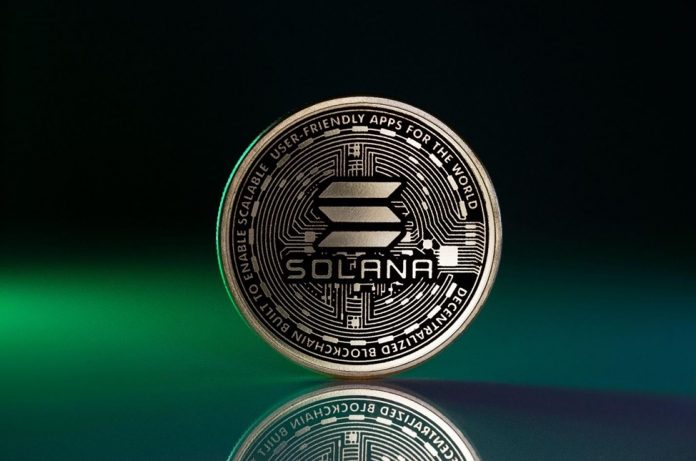
The world of cryptocurrency has been abuzz with the advent of exchange-traded funds (ETFs), offering a bridge between traditional finance and the burgeoning digital asset space. Following the successful launch of Bitcoin and Ethereum ETFs, the market’s gaze has turned towards Solana, a high-performance blockchain platform known for its speed and efficiency.

Solana’s journey towards potentially joining the ranks of Bitcoin and Ethereum in the ETF market is a testament to its growing prominence. With a market capitalization that places it among the top cryptocurrencies, Solana has garnered a dedicated following and has become a significant player in the crypto ecosystem. The speculation about Solana ETFs in the United States is gaining momentum, especially with the upcoming elections that could influence regulatory decisions.

The anticipation around Solana ETFs is not unfounded. The approval of Bitcoin ETFs in January and the near-approval status of Ethereum ETFs by the US Securities and Exchange Commission (SEC) have paved the way for other altcoins to follow suit. Investors and enthusiasts are keenly watching the developments, as a Solana ETF could further validate the cryptocurrency as a mainstream financial instrument.

Solana’s unique selling points, such as its focus on providing fast and cost-effective transactions, position it as a strong contender in the race for ETF approval. Unlike Ethereum, which prioritizes decentralization, Solana aims to optimize transaction speed and scalability. This approach has attracted a base of investors who believe in Solana’s potential to shape the future of crypto.

However, the path to ETF approval is not without its challenges. The lack of regulated futures contracts for Solana is a significant hurdle, as such contracts were crucial in securing SEC approval for Bitcoin and Ethereum ETFs. Currently, there are no plans from major futures exchanges to list Solana futures, which could delay the possibility of ETFs tied to this cryptocurrency.

Despite these challenges, the market’s enthusiasm remains high. The Grayscale Solana Trust (GSOL), for instance, trades at a substantial premium, indicating strong demand and limited supply of shares. This premium could be a barometer for the market’s expectation of Solana ETFs, although it’s important to note that such premiums can fluctuate independently of ETF developments.

As the crypto community awaits further news, the potential approval of Solana ETFs could mark another milestone in the integration of cryptocurrencies into the broader financial landscape. It would not only boost Solana’s legitimacy but also offer investors a new avenue to gain exposure to this innovative digital asset.

The road ahead for Solana ETFs is filled with both excitement and uncertainty. With regulatory landscapes shifting and the crypto market evolving, Solana’s place in the ETF sphere is a topic of much speculation and interest. As we continue to monitor the situation, one thing is clear: the conversation around Solana and its role in the future of finance is just getting started. Stay tuned for more updates as this story unfolds.

As the landscape continues to develop, it’s clear that the interest in Solana and its potential for ETFs is more than just a fleeting trend. It’s a sign of the growing recognition of cryptocurrencies as a legitimate and valuable part of the investment world. The future looks bright for Solana, and an ETF could very well be on the horizon.