DD
MM
YYYY

PAGES

DD
MM
YYYY

spot_img

PAGES

Home Blog Page 3409

M-Pesa Outages: The Implication on The Kenyan Economy And The Need For More Mobile Money Platforms to Emerge

0

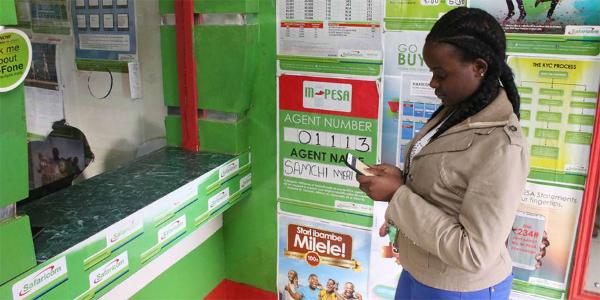
Kenyan mobile network Safaricom has come under heavy scrutiny, over the recent power outage that occurred on the mobile money platform M-Pesa.

Recall that M-Pesa was hit with downtime on Monday, inconveniencing millions of customers who rely on it for payment transactions.

The outage saw millions of Kenyans who rely on M-Pesa for their financial transactions such as paying for utilities like electricity, fuel, and parking fees, or purchasing items such as food and medicine in supermarkets and chemists stranded with unpaid bills.

This prompted the Communications Authority of Kenya (CA) to summon the company to shed light on the recent outage, which has rocked businesses and inconvenienced customers.

Safaricom, which has 27.7 million subscribers, explained in a statement that they suffered a technical issue and their services were being restored. The company said in a public notice that the outage had been fully resolved as of Tuesday, apologizing to its users.

The company wrote,

We experienced service intermittency with PayBill payments that resulted in some transactions not being completed on M-Pesa. The technical issue has since been resolved, and we continue to monitor the services closely. We apologize for any inconvenience that this disruption may have caused.”

Meanwhile, this is not M-PESA’s first outage. The mobile money went down for over two hours in early January 2024 and had a service outage in July 2023. These recurring outages affect the platform functionalities such as sending and receiving money, linked bank services, and other payment services.

Thousands of Kenyans have begun to feel discouraged from using the mobile service to make transactions because of the outages. However, other competing products can not match M-PESA’s market dominance, which would have given Kenyans more options.

The Implication of M-Pesa Outages on The Kenyan Economy 

M-Pesa is seen as a de facto national payment system in Kenya, which makes it a critical part of the economy. The mobile money platform accounts for about 99.9 percent of the value of mobile money transactions, underlining the entrenchment of the platform in the economy of the East African country.

M-PESA has been the market leader in Kenya, accounting for 96.5% of the market in 2023, followed by competitors Airtel Money and T-Kash. By March 2023, M-PESA had processed 26 billion transactions.

The mobile money parent company Safaricom owns the majority of the mobile infrastructure in Kenya, so it enjoys an almost total monopoly over the mobile payments space.

Considering that 43% of Kenya’s GDP flows through M-Pesa, a prolonged interruption would substantially disrupt economic activity.

This means that incessant outages on the service would bring transactions to a grinding halt, freezing commerce in its tracks. Also, businesses, large and small, would face crippling losses, and the flow of money would stagnate. The ripple effect would reverberate through supply chains, potentially dampening the entire economic engine.

A 2016 Treasury report and subsequent Treasury reports have often warned that a collapse of the M-Pesa service could, for instance, cause widespread disruption in the economy. This saw M-Pesa classified as a systemic risk to the country’s economy, underlining its crucial role.

While M-Pesa’s ubiquity may seem like a monopoly, it’s crucial to remember that competition does exist in the mobile money space. However, M-Pesa’s first-mover advantage and deep integration into the Kenyan economy have given it a substantial lead.

This however raises concerns about potential anti-competitive practices and the need for a leveled playing field for other players.

The Central Bank of Kenya, among other government agencies, has been attempting to make other mobile money products attractive to Kenyans. However, the development has yet to pick up as locals still prefer using the M-Pesa platform.

It is worth noting that the M-Pesa downtime serves as a stark reminder of the vulnerability inherent in such a centralized system.

This calls for the need for Diversification of Service Providers, to foster a competitive mobile money landscape that can reduce reliance on a single platform and provide users with alternative options in case of outages.


How to hedge your sports bet

1

As any seasoned punter will tell you, the world of sports betting is fraught with unpredictability. Smart bettors understand that while there are no guarantees of winning, certain strategies can protect your bankroll and potentially reduce losses over the long term. One such strategy is hedging your bets. Not to be confused with a lack of confidence, hedging is a calculated approach to manage risk and ensure that, no matter the outcome of an event, you come away with something. Surprisingly, you can hedge a sportbet in various ways, which is crucial to a structured and thoughtful betting strategy.

Hedging involves placing a bet on opposing outcomes of the same event, or across different events, so as to lock in profits or minimize losses. In essence, it acts as an insurance policy against your original wager. It’s a common technique in financial markets and can be just as effective when applied to sports betting. Here’s how you can hedge your sports bet comprehensively.

Understanding when to hedge

Hedging isn’t a one-size-fits-all strategy; there are specific scenarios where it makes the most sense. For instance, during a multi-leg parlay when the first few legs have won and the last leg is still to be played. Instead of risking the entire parlay on that final game, you can bet against your original wager to ensure you walk away with winnings, regardless of the outcome.

Another scenario is when there’s a significant windfall expected if an underdog you’ve bet on is close to winning. If the potential loss is too great for comfort, you can hedge by betting on the favorite to reduce risk.

Methods of hedging a bet

  1. Direct hedging: This is when you place a hedge bet directly against your original wager. If you bet on Team A to win, you later place a bet on Team B to win.
  2. Lay betting: Using a betting exchange, you can ‘lay’ a bet against your original bet. This means you would bet that your original pick won’t win.
  3. Futures bets: For outright market bets placed well in advance of the event, such as predicting a season’s champion, you can hedge as the season progresses and the odds change.

Calculating the hedge bet

Determining the exact amount to hedge can be the difference between making a profit and breaking even or a loss. You’ll need to consider the odds for the hedging bet and the potential returns from your original bet. Use the following formulas to calculate your hedge bet amount:

  1. Lock in profit: hedge bet amount = (Potential Profit from Original Bet / Hedge Bet Odds) + 1
  2. Break even: hedge bet amount = Potential Payout from Original Bet / (Hedge Bet Odds + 1)

Keep in mind that these calculations assume the best-case scenarios and don’t account for the vigorish (bookmaker’s commission).

Pros and cons of hedging

Before you begin to hedge your sports bets routinely, consider the advantages and disadvantages of this strategy:

Pros Cons
Minimizes potential losses Can reduce overall profits
 Locks in profits from risky bets  Requires additional capital
Provides emotional security Can be complex and time-consuming
Beneficial in volatile betting markets Misjudging can lead to magnified losses


 A step-by-step guide to hedging your sports bet

  1. Assess the Risk: Evaluate the potential outcome of your original bet and decide whether the risk of losing outweighs the potential winnings.
  2. Monitor the Odds: Odds can change; continuously monitor them to determine the right moment to place your hedge bet.
  3. Calculate Your Hedge: Use one of the formulas above to determine the appropriate hedge bet amount.
  4. Place Your Hedge Bet: Once you’ve calculated the amount, place your hedge bet at the right odds to ensure the desired outcome.
  5. Evaluate the Outcome: After the event, analyze the result of your hedge strategy and consider how it could be refined for future bets.

Practical tips for hedging:

  • stay informed, keep track of any changes that might affect the outcome of the bet;
  • be patient, wait for the optimal moment when the odds are most favorable for hedging;
  • understand the market, some sports and bet types are better suited for hedging than others;
  • use betting calculators, they can simplify the math behind hedging;
  • keep a log of your bets and hedging actions to analyze over time.

Remember, the goal of hedging isn’t just to prevent losses, but to make strategic decisions that contribute to long-term betting success.

When not to hedge

It’s important to know when hedging might not be the best decision. If the potential payout is small, or if hedging undermines a well-thought-out long-term betting strategy, it might be better to stick to your original bet. Additionally, in cases where you are supremely confident in the outcome, or if the odds for hedging are particularly poor, forgoing the hedge could be more profitable.

Hedging a sports bet is less about avoiding losses and more about risk management. By understanding the scenarios in which it’s beneficial, how to calculate your bets, and acknowledging the pros and cons, you can make informed decisions that elevate your betting from a chance hobby to a more systematic form of investment.

Why Unilever’s Omo and Lux Faded in Nigeria

0

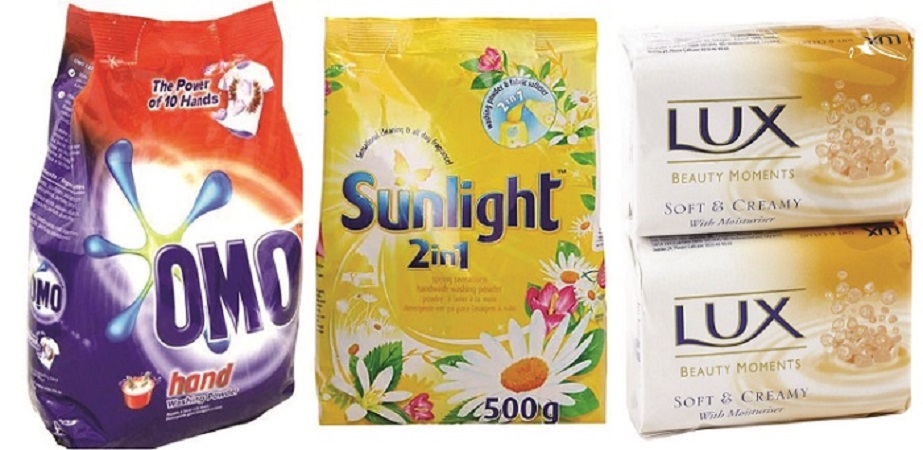
It is what it is: markets release waves and only great companies have the right antennas to pick the signals.  Those which do not, fade over time. This can be at a company- or a brand-level. We’re seeing that play out in Nigeria as Unilever Nigeria discontinues some iconic brands in the nation: “Unilever Nigeria, one of the leading consumer goods companies in the country, has announced that it will stop the production and sale of two of its popular brands, Omo and Lux, effective from February 1, 2024.”

Yes, Omo and Lux will be gone. Unilever’s Lux has no chance in this age where many Nigerians are becoming “whiter” and “fairer” to the extent you may mistake your ex-classmates a few years down the line. So, Nivea (which whitens skin) killed Lux while Ariel took down Omo. The Ariel frontal assault on Omo was through sachetization (making small packages) where Omo’s big box was disintermediated. Since that happened in the 1990s, Omo has not recovered. Omo used to be the king and its main competitor was Elephant. But Ariel arrived and knocked them out.

As a student in FUTO, I was among the regional sales network for Royal Crown, a haircare maker. My distribution center was then Hotel De General Nwankpi in Orlu. It was a great business and I saw first hand how innovation worked. Kessingsheen Hair Cream was very popular also.

But the Royal  Crown came and caused wahala. But Royal Crown then quickly faded with the likes of Soulmate using effective pricing and stylist support system to win market share. Stylists (yes, hairdressers) were the most important entry points.

For the fall of Omo and Lux, you will read about high prices of raw materials and forex difficulties as the core reasons why Unilever is exiting this personal care category. Those are nonsensical excuses when you consider that Ariel is also a foreign product (from P&G), and Germany-based Nivea has no production plant in Nigeria, which means they are also operating within the same market dynamics. The key difference: they make products people want and in this age, young people are loyal to brands only when those brands serve them well.

Implications of Unilever Nigeria Stopping Production, Sale of Omo and Lux

Implications of Unilever Nigeria Stopping Production, Sale of Omo and Lux

3

Unilever Nigeria, one of the leading consumer goods companies in the country, has announced that it will stop the production and sale of two of its popular brands, Omo and Lux, effective from February 1, 2024.

The decision was made after a thorough review of the company’s portfolio and market conditions, according to a statement issued by the company’s management.

Omo is a detergent brand that has been in the Nigerian market for over 50 years, while Lux is a soap brand that has been around for over 40 years. Both brands have enjoyed a loyal customer base and a strong reputation for quality and affordability.

Unilever Nigeria’s exit from the home care and skin cleansing markets means that consumers will no longer have access to some of the popular and trusted brands that they have been using for decades, such as Omo, Lux, Sunlight and others.

These brands have a loyal customer base and a strong market share in their respective segments. For instance, Omo is one of the leading laundry detergents in Nigeria, with a market share of about 40 percent. Lux is one of the leading soap brands in Nigeria, with a market share of about 15 percent.

The exit also creates a gap in the market that could be filled by other players, both local and foreign. Some of the potential competitors that could benefit from Unilever Nigeria’s exit include Procter & Gamble (P&G), which produces Ariel detergent and Safeguard soap.

Reckitt Benckiser (RB), which produces Vanish stain remover and Dettol soap; Henkel, which produces Persil detergent and Fa soap; PZ Cussons, which produces Canoe detergent and Imperial Leather soap; among others.

The exit could also have an impact on the employment situation in the country, as Unilever Nigeria may have to lay off some of its workers who were involved in the production and distribution of these products. The company employed about 1,000 people as of December 31, 2020. The company did not disclose how many workers were affected by its exit from these markets.

However, in recent years, the company has faced increasing competition from other players in the market, as well as rising costs of raw materials and logistics. The company said that these factors have made it difficult to sustain the profitability and growth of Omo and Lux, and that it has decided to focus on its core categories of food, beverages, personal care and household care.

The company assured its customers that it will continue to provide them with innovative and high-quality products that meet their needs and preferences. It also thanked its distributors, retailers and consumers for their support and patronage over the years. The company said that it will work closely with its stakeholders to ensure a smooth transition and minimize any inconvenience caused by the discontinuation of Omo and Lux.

Unilever Nigeria is a subsidiary of Unilever Plc, a global company with operations in over 190 countries. Unilever Nigeria was established in 1923 and has been listed on the Nigerian Stock Exchange since 1973. The company’s vision is to make sustainable living commonplace and to create a brighter future for Nigerians.

The S&P 500 saw another volatile midweek session

0

The S&P 500 saw another session of volatility on Wednesday, as investors weighed the latest earnings reports and economic data. The index closed down 0.3% after swinging between gains and losses throughout the day.

The index opened lower by 0.8%, then rallied to a new intraday record high of 5,321.76, before plunging to a session low of 5,189.23, down 1.7% from the previous close. The index eventually recovered some of its losses and ended the day at 5,253.42, down 0.4%.

What caused this roller-coaster ride for the S&P 500?

The Federal Reserve’s monetary policy decision and press conference. The Fed announced that it would keep its benchmark interest rate unchanged at 0.25%, as widely expected, but signaled that it was ready to start reducing its massive balance sheet of $8.8 trillion in bonds and other assets as soon as March.

The Fed also raised its inflation and growth forecasts for 2024 and 2025, suggesting that it may hike rates faster than previously anticipated. The Fed’s hawkish stance surprised some investors who were hoping for a more dovish tone amid the recent surge in COVID-19 cases and the uncertainty over the debt ceiling and government funding.

The earnings reports from some of the biggest companies in the S&P 500. The fourth-quarter earnings season kicked off on Wednesday with mixed results from some of the most influential firms in the index.

Apple, Microsoft, Amazon, and Tesla all beat analysts’ expectations for revenue and earnings per share, but their shares fell after hours as investors focused on their guidance and margins. Apple warned that supply chain disruptions would continue to affect its sales and production in the first quarter of 2024.

Some of the key takeaways from the session

The energy sector was the best performer, rising 1.4% as oil prices rebounded from a sharp drop on Tuesday. Chevron, Exxon Mobil and ConocoPhillips were among the top gainers in the S&P 500, as crude oil futures climbed above $80 a barrel.

The technology sector was the worst performer, falling 1.2% as some of the high-growth names faced selling pressure. Netflix, Tesla and Shopify were among the biggest losers in the S&P 500, as investors rotated out of the stocks that have led the market rally this year.

The earnings season continued to deliver mixed results, with some companies beating expectations and others disappointing. Boeing, McDonald’s and General Dynamics were among the companies that reported better-than-expected earnings and revenue, while Microsoft, Starbucks and Visa were among the companies that missed estimates or issued weak guidance.

The economic data also showed a mixed picture of the recovery, with some indicators pointing to strength and others to weakness. The durable goods orders for September rose 0.5%, beating expectations of a 0.2% decline, while the new home sales for September fell 6.9%, missing expectations of a 1.5% increase. The consumer confidence index for October dropped to 113.8, below expectations of 115.0 and the lowest level since February.

The consumer confidence index for October fell to 113.8, below expectations of 115.0 and the lowest level since February. The consumer confidence index (CCI) is a survey that measures how optimistic or pessimistic consumers are about their financial situation and spending patterns.

It is based on five questions about current and future conditions, such as business, employment, and income. The CCI is a leading indicator of economic activity, showing how consumers respond to changes in the economy.

The CCI is a leading indicator of economic activity, showing how consumers respond to changes in the economy. The CCI is important because it reflects consumers’ willingness to spend money, which can drive economic growth.

Consumer spending accounts for about 60% of the U.S. GDP, so when consumers are confident, they are more likely to make major purchases, such as homes and automobiles. Conversely, when consumers are pessimistic, they tend to save more and consume less, which can lead to an economic slowdown or recession.