DD
MM
YYYY

PAGES

DD
MM
YYYY

spot_img

PAGES

Home Blog Page 3414

eBay Announces Plan to Eliminate About 1,000 Jobs Amidst Ongoing Restructuring

0

Giant multinational e-commerce company eBay has announced plans to eliminate 1,000 jobs at the company, which constitutes 9% of its workforce.

The announcement comes as part of the company’s effort to align its organizational structure with its business strategy.

In a letter to employees, eBay Chief Executive, Jamie Iannone acknowledged the company’s progress but stated that the growth in the overall headcount and expenses has outpaced business expansion.

In his words,

While we are making progress against our strategy, our overall headcount and expenses have outpaced the growth of our business. This announcement underscores the need for eBay to streamline operations to improve customer satisfaction and drive growth in the face of a challenging macroeconomic environment.

To address this, we’re implementing organizational changes that align and consolidate certain teams to improve the end-to-end experience, and better meet the needs of our customers around the world. Shortly, we will begin notifying those employees whose roles have been eliminated and entering into a consultation process in areas where required.”

Regarding the recent job cuts at the company, the CEO said he wants employees to work from home on Jan. 24, to provide some space and privacy for these conversations.

These changes are difficult, but I’m confident that by working together we will become stronger than ever. In the months ahead, you will see a more focused, agile, and responsive eBay one that is better positioned to advance our purpose of creating economic opportunity for all”, he added.

eBay’s recent job cuts mark the second round of layoffs, which is coming after the company in February last year, announced plans to lay off 500 employees globally, which constituted 4 percent of its total workforce.

The e-commerce giant is keen on making structural changes to enhance agility and decision-making speed, a crucial step to align with the demands of a rapidly changing market.

The job cuts at eBay reflect a broader trend of layoffs in the tech industry which has seen several companies such as Amazon, Google, YouTube, and TikTok, laid off a significant part of their workforce.

The tech sector is currently experiencing a slowdown, which presents a moment of reckoning as companies reevaluate their growth strategies and operational structures. This recalibration is not just a matter of financial prudence but also a testament to the tech industry’s evolution in response to external pressures.

According to data from layoffs. fyi, which tracks job losses in the tech sector, there have already been more than 13,000 people laid off at 72 companies so far this year. 
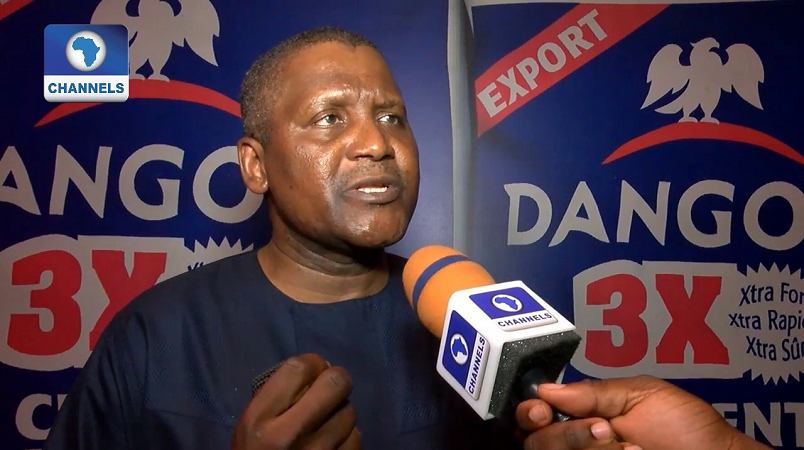
Towards Understanding The Dangote System and Techniques for Building Conglomerates

0

Chairman Dangote, congratulations: “Dangote Cement has emerged as the first company to achieve a market capitalization of N10 trillion on the Nigerian Exchange Group (NGX), closing trading on Monday with a market cap of N10.098 trillion.” This is simply amazing and impressive.

I have an open invitation for years now to meet Alhaji for a detailed interview. My fixation has been the institutionalization of the Dangote System and the techniques for  building category-king industrialized conglomerates. I have tried to write an ebook   without speaking with him, and also analyzed some of his speeches to get into what drives his business worldwide, yet, it does seem that one has to really make time to take that opportunity.  The team extended the offer to have access to him. This year, I plan to make it happen because if I do it, it will be a required reading in many business schools in Africa.

Good People, one thing is clear: someone needs to make the Dangote System a science which must be studied because across many indicators, he has demonstrated that value could be created despite any paralysis in the land. He has shown  that by accumulating capabilities in many ways, and deploying those in upstream areas where few can operate, one can unlock massive value in economies, and in the process transform sectors even as the rewards come in truckloads of alpha.

Yes, as I have written, “To thrive, you must accumulate capabilities. But greatness comes when you master how to compound those capabilities”. Aliko Dangote is a zen-master of compounding capabilities and we’re witnessing everything. I congratulate him.  Nigeria needs more pioneering entrepreneurs like Dangote to transform the nation. #respect

Dangote Cement Becomes the First Company to Hit N10 trillion Market Cap in NGX

Dangote Cement Becomes the First Company to Hit N10 trillion Market Cap in NGX

0

Dangote Cement has emerged as the first company to achieve a market capitalization of N10 trillion on the Nigerian Exchange Group (NGX), closing trading on Monday with a market cap of N10.098 trillion.

The company’s market cap surged by N917 billion in a single trading session, marking an 85.25 percent increase in capital gains for investors.

This achievement comes on the heels of the company displacing Airtel Africa as the most capitalized stock on the local bourse earlier this month.

At the close of Monday’s trading, Dangote Cement’s share price stood at N592.60 per unit, showcasing remarkable performance with a return of over 81.4% in the last 52 weeks. The company holds 17.04 billion outstanding shares, and a significant majority, approximately 85.8%, is controlled by Dangote Industries Limited, spearheaded by Africa’s wealthiest individual, Aliko Dangote.

The company’s growth has been bolstered by strategic initiatives, including two tranches of share repurchases conducted between 2020 and 2022. These buybacks, amounting to 166.9 million shares, are believed to have fortified the stock valuation.

The company’s growth has attracted major investors, with Femi Otedola, a prominent Nigerian billionaire, recently acquiring shares worth an impressive N6 billion in Dangote Cement Plc.

Dangote Cement’s milestone on the NGX has also fueled speculation about the potential listing of other Dangote Group entities, including the newly operational Dangote Petrochemical Refinery. Analysts had projected the listing of Dangote Refinery, along with Dangote Foods (a result of the ongoing merger of Dangote companies) and NNPC Limited, to be major boosts for the capital market.

The refinery’s commencement of production has had a positive ripple effect on the stocks of Dangote Group companies listed on the exchange. Investors in Dangote Cement, Dangote Sugar Refinery, and NASCON Allied Industries have gained over N1.2 trillion during the first two trading sessions of the past week.

Dangote Cement’s achievement comes amid a backdrop of controversy over the high cost of cement in Nigeria. Last year, BUA Cement Plc, the only rival to Dangote Cement in the Nigerian market, took a significant step by reducing the cost of its products from N4,650 to N3,500 per bag.

This move was prompted by discussions within the construction industry, with stakeholders expressing concerns over the high cost of cement in the country.

The Minister of Works and Housing, Dave Umahi, added to the discourse by saying that it’s cheaper to import cement than purchase from local manufacturers – BUA and Dangote Cement. This statement sparked a national conversation around the implications of the high cost of cement on construction in Nigeria.

In his response, BUA Cement’s Chairman, Abdul Samad Rabiu, stated that the company’s decision to reduce cement prices aligns with its mission to support development in the building materials and infrastructure sectors.

However, Dangote Cement, with its products selling in the range of N5,000 to N5,300 per bag, did not follow suit, maintaining its pricing strategy.

Dangote Cement’s dominant assertion on the NGX and the construction industry amid the challenges of cement pricing signifies its position as the major player with substantial market value – underscored by the company’s market cap milestone.

Dangote Refinery will Sell Products in Naira – Oil Marketers

0

In response to recent speculations surrounding the currency in which refined petroleum products from the Dangote Petroleum Refinery will be sold, oil marketers have sought to allay concerns by stating that the products will be dispensed in the local currency, the naira, and not in US dollars.

The clarification comes amidst the ongoing registration exercise for marketers by the refinery. On Tuesday, MOMAN, IPMAN, and DAPPMAN members were announced by Dangote Refinery as registered members for product distribution. These three major associations, collectively constituting 75 percent of the total market in Nigeria, are integral to the supply chain, facilitating fuel distribution to approximately 150,000 retail outlets across the country.

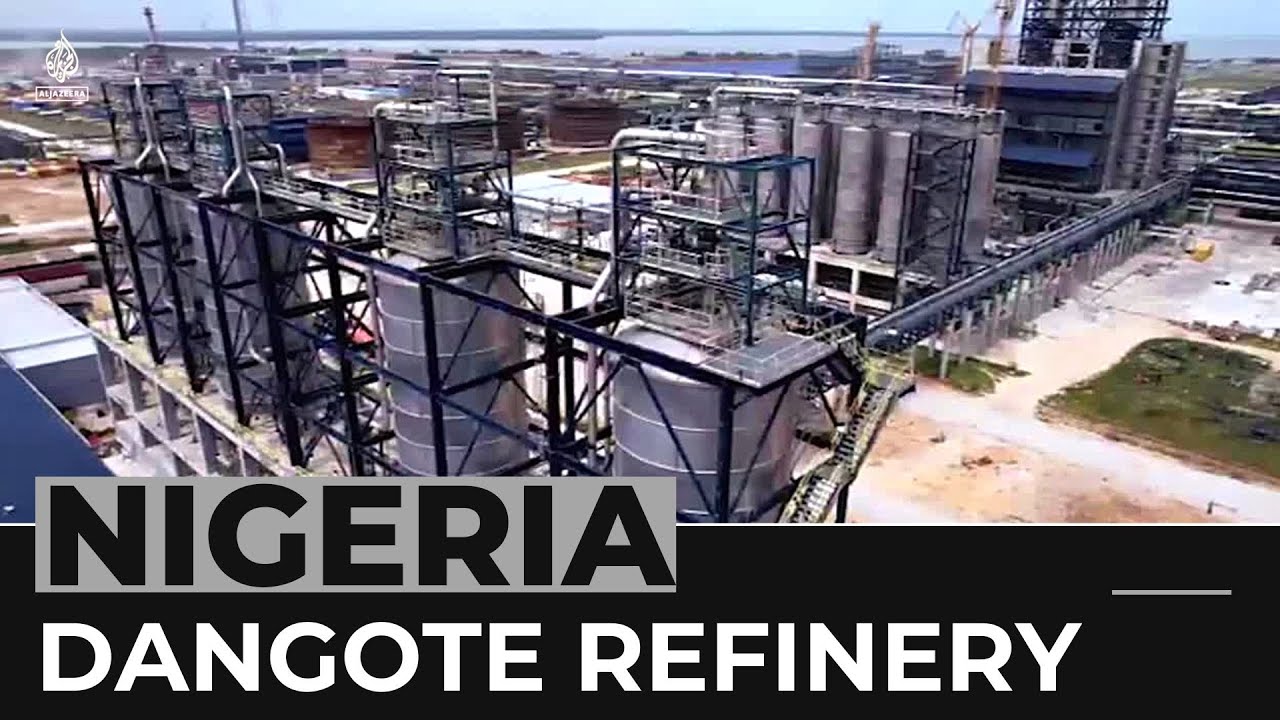
The $20 billion Dangote Refinery, which commenced the production of Automotive Gas Oil (diesel) and JetA1 (aviation fuel) on January 12, 2023, has, encountered various concerns that need addressing before it initiates the distribution of its products. One of the prominent concerns is the establishment of a pricing template for refined products.

According to The Punch, officials of the Nigerian Midstream and Downstream Petroleum Regulatory Authority have been engaging in discussions with the refinery’s management to finalize the pricing structure for the products.

A significant aspect of the concerns relates to the use of the US dollar in the supply chain. Given that crude oil, the primary raw material for the refinery is an international commodity traded in dollars, questions arose regarding whether the refined products would also be sold in dollars, especially since the plant is located in a free trade zone.

Chief Ukadike Chinedu, the National Public Relations Officer of IPMAN, responded to these concerns, acknowledging that crude oil is indeed purchased in dollars but assuring that this would not dictate the currency for selling refined products in the Nigerian market.

“The legal tender in Nigeria is the naira. The cement being sold by Dangote Cement is done in naira, not in dollars. So why should one think that he will now sell fuel in dollars? Except for the offshore sales for those who want to move the refined products out of Nigeria using vessels to transport them to other countries. Such customers may get theirs in dollar equivalent,” Ukadike explained to The Punch.

The ongoing debate about the currency in which Dangote Refinery will transact its products gains significance against the backdrop of the escalating price of the dollar in Nigeria’s forex market. With crude oil supplied in dollars, some have assumed that the refinery would also adopt the dollar for its product sales.

To put a permanent end to this, Ukadike said that the Nigerian government needs to close up the widening gap in the foreign exchange rate.

“If the exchange rate for the dollar is low, petroleum products would have been cheap in Nigeria because the products are imported. So I believe that Dangote will definitely sell the products in our local currency, which is naira,” Ukadike asserted.

When asked whether marketers had been briefed on the currency for product sales, considering that crude oil is supplied in dollars, Ukadike clarified that the pricing template had not yet been finalized. He stated, “No, the pricing template has not come out. What is going on now is legislation. The template is not yet out. And I must state that there is no way the NNPC will bring out its template in naira and Dangote will bring out its own in dollars. It is not possible! So for the cost of their products, I think they are still trying to fix the prices with the regulatory agencies of the Federal Government.”

The Dangote Petroleum Refinery, with a colossal capacity to refine 650,000 barrels of crude oil per day, has been touted as a crucial solution to the rising cost of petroleum products resulting from the removal of fuel subsidies.

Since its inception, the refinery has received six million barrels of crude oil at its two Single Point Mooring (SPM) locations located 25km from the shore. The initial crude delivery took place on December 12, 2023, and the latest cargo was delivered on January 8, 2024.

In a statement issued by the President of Dangote Group, Aliko Dangote, he affirmed that the products would be available in the market within the month, pending regulatory approvals. Dangote said that the refinery will make a difference in the Nigerian petroleum sector.

“This is a game changer for our country, and I am very fulfilled with the actualization of this project,” he said.

As the registration process for marketers continues and discussions with regulatory authorities progress, the finalization of the pricing template will be a crucial step for Dangote Refinery in addressing concerns and ensuring a smooth transition into the distribution phase. Emphasis is on the commitment to transacting in the local currency, underlining the refinery’s alignment with established business practices within Nigeria.

The anticipation for the refinery’s contribution to stabilizing petroleum product prices remains high, awaiting the formal announcement of the pricing template and subsequent product availability in the market.

Why Femi Otedola is buying tons of Dangote Cement shares

0

Not hard to understand why Femi Otedola is buying tons of Dangote Cement shares. Yes, you can check the following things on a Dangote Cement investment:

  1. Cement industry market leader with more than 65% of the market share.

  2. Dividend-paying which has been consistent for years.

  3. Founder-majority-owned, aligning that dividend-paying culture to the desire to have personal liquidity for other ventures. Aliko Dangote controls about 85% of Dangote Cement.

  4. Industry-leading gross margin which makes the company a rainmaker on making profits.

  5. Dominant in regions still at pre-industrialization phase which means more cement will be needed in Nigeria, Ethiopia, etc.

  6. High barrier of entry which is a great moat that no other person can launch to reshape the competition overnight.

  7. Etc Etc.

Indeed, provided you are sourcing the funds within Nigeria, why not? But if you are importing funds, the equation changes as you must consider the exchange rate stability. Otedola has truckloads of money within Nigeria to invest.

Students: there are three types of investors, where would you classify Otedola?

-Growth Maker: you buy low and wait for the value of the company to grow quickly.

-Value Picker: they focus on extremely beaten down equities.

– Income Chaser: these people do not necessarily care if the value of the stocks they hold go up or not, their major focus is the company’s ability to pay dividends.

Let us have an investment class on the Nigerian stock exchange; trade profitably everyone!

Meanwhile, Otedola is back to Forbes top 20 of richest billionaires in Africa

  1. Aliko Dangote – $13.9 billion
  2. Johann Rupert & family – $10.1 billion
  3. Nicky Oppenheimer & family – $9.4 billion
  4. Nassef Sawiris – $8.7 billion
  5. Mike Adenuga – $6.9 billion
  6. Abdulsamad Rabiu – $5.9 billion
  7. Naguib Sawiris -$3.8 billion
  8. Mohammed Mansour – $3.2 billion
  9. Roos Bekker – $2.7 billion
  10. Patrice Motsepe – $2.7 billion
  11. Issad Rebrab & family – $2.5 billion
  12. Mohammed Dewji – $1.8 billion
  13. Strive Masiyiwa – $1.8 billion
  14. Aziz Akhannouch & family – $1.7 billion
  15. Othman Benjelloun & family – $1.4 billion
  16. Youseff Mansour – $1.3 billion
  17. Yassen Mansour – $1.2 billion
  18. Christoffel Wiese – $1.2 billion
  19. Michiel Le Roux – $1.1 billion
  20. Femi Otedola – $1.1 billion

Comment on Feed

Comment 1: Femi Otedola’s investment in Dangote Cement seems to be a strategic move, considering the points you’ve highlighted Prof. His decision to invest in a market-leading company with a strong dividend history and a significant barrier to entry could be seen as aligning with the traits of an Income Chaser. However, given the company’s potential for growth in pre-industrial regions and its dominant market share, one could also argue that elements of Growth Investing are at play. Otedola’s unique position allows him to capitalize on local opportunities without the added complexity of currency exchange risks. It’s a nuanced strategy, blending an understanding of local market dynamics with a focus on both value and income.