DD
MM
YYYY

PAGES

DD
MM
YYYY

spot_img

PAGES

Home Blog Page 3424

Cardano Whales Transition to BlockDAG Having Raised $18.8 Million in Presale, Anticipate 30,000x ROI; Bitcoin Cash Price Up

0

Significant holders of Cardano, known as whales, are redirecting their attention to BlockDAG (BDAG), an emerging cryptocurrency during its presale phase noted for its promising high returns. Concurrently, the Bitcoin cash price has exhibited strength with substantial price increases, signalling a shift among savvy investors toward early investments with the potential for greater profits.

BlockDAG is carving out a niche in the crypto world for 2024, thanks to its novel scalability and decentralised finance solutions. This platform is becoming increasingly popular, propelled by its groundbreaking technology and a projection of an impressive 30,000-fold return on investment. A recent promotional video featuring a lunar theme has catapulted the presale forward, with BlockDAG raising over $18.8 million across several batches.

Shift in Cardano Whales Towards Emerging Altcoins

Over recent months, Cardano has experienced a 19.8% drop in value amidst a general market downturn. This decline has spurred Cardano’s larger investors to explore new avenues for higher yields.
BlockDAG has emerged as one such opportunity. It utilises Directed Acyclic Graph (DAG) technology and incorporates numerous advancements to boost its functionality, particularly in decentralised finance (DeFi). This strategic move by Cardano Whales aims to capitalise on high-return possibilities in an unpredictable market environment.

Bitcoin Cash Price Experiences a 133% Surge in Value

Bitcoin Cash price has recently seen a sharp 133% increase, peaking at $681 according to the Fibonacci levels, before starting a correction phase. The price has now stabilised around $480, with potential support expected at $325.

Despite this price adjustment, Bitcoin Cash demonstrates the potential for a bullish recovery, with technical indicators pointing to an imminent golden crossover on the weekly charts. This suggests that Bitcoin Cash may have favourable long-term prospects despite short-term volatility, captivating investors.

BlockDAG Becomes the New Focal Point for Crypto Whales

BlockDAG is quickly becoming a pivotal figure in the cryptocurrency market, particularly following the publication of its version 2 technical whitepaper. Built on Directed Acyclic Graph technology, BlockDAG addresses key scalability issues inherent in traditional blockchain systems. Additionally, a significant display event in Las Vegas has fueled excitement about BlockDAG’s capabilities, especially in the DeFi sector.

The platform’s first viral keynote video highlighted mobile mining and innovative resale opportunities for mining units. With future price projections reaching as high as $10 by 2025, whales and influential market players are reallocating their resources toward BlockDAG, drawn by the potential for astronomical returns.

BlockDAG’s presale continues to accelerate, with consistent price increases in each batch—the latest projected to rise from $0.005 to $0.006. The rapid success has already led to a remarkable $18.8 million in sales, including $2.2 million from mining unit sales alone. Anticipation is mounting for the upcoming lunar-themed keynote video, setting high expectations for reaching the forecasted 30,000-fold ROI.

Final Thought

BlockDAG is setting new benchmarks in the blockchain space with its successful presale totalling over $18.8 million, its moonshot teaser display, and innovations in mining technology.

As we look to 2024, BlockDAG is poised to be a top cryptocurrency and a fundamental investment for those looking to diversify from the volatile Bitcoin Cash price and adapt to the changing strategies of Cardano whales. The growing interest and escalating investments underscore a solid future for this project, establishing BlockDAG as a crucial entity in the evolution of cryptocurrency technology.


Engage in the BlockDAG Presale Today!

Website: https://blockdag.network

Presale: https://purchase.blockdag.network

Telegram: https://t.me/blockDAGnetworkOfficial

Discord: https://discord.gg/Q7BxghM

Tesla Recalls 3878 Cybertrucks as Elon Musk Unveils Model Y

0

Tesla has recently announced a recall of all 3,878 Cybertrucks shipped due to a significant issue with the accelerator pedal that could potentially get stuck, increasing the risk of a crash. This recall reflects Tesla’s commitment to customer safety and its proactive approach to addressing potential hazards.

The problem was identified as a fault within the vehicle’s accelerator pedal mechanism. Under certain conditions, the pedal could become trapped, leading to unintended acceleration. This issue was brought to light through customer complaints and subsequent internal testing by Tesla.

Upon discovering the fault, Tesla acted swiftly to halt deliveries and initiate a recall. The company has been transparent with the public, reporting the issue to the National Highway Traffic Safety Administration (NHTSA) and communicating the recall details to affected customers.

In an appealing tweet on X, Elon Musk, the CEO of Tesla, has once again made headlines with the unveiling of the Tesla Model Y, an all-electric midsize SUV that promises to bolster the company’s already impressive lineup of electric vehicles. The Model Y reveal event, held at Tesla’s design studio, showcased a vehicle that is not only a testament to Tesla’s innovation in electric vehicle technology but also a strategic move to capture a larger share of the growing SUV market.

The Model Y is poised to be a game-changer in the electric vehicle industry. It is designed to offer the versatility and space of an SUV while maintaining the performance and environmental benefits that Tesla is known for. With the Model Y, Tesla aims to address the needs of a broader consumer base, providing a more affordable option without compromising on quality and performance.

The unveiling event was a spectacle of Tesla’s journey, with Musk taking the audience through a trip down memory lane, highlighting the company’s milestones and challenges. From the debut of the Roadster to the scaling of the Gigafactories, Musk narrated Tesla’s story, emphasizing the company’s commitment to a sustainable energy future. The Model Y is a continuation of this vision, integrating Tesla’s solar panels, batteries, and superchargers into a comprehensive energy system.

Tesla has assured customers that the brake system operates correctly and, in the event of pedal entrapment, pressing the brake pedal will override the accelerator, allowing the vehicle to stop safely. As a remedy, Tesla is offering to replace or rework the accelerator pedal assembly and cover to prevent future incidents. This corrective action demonstrates Tesla’s dedication to maintaining high safety standards and its willingness to take immediate action when a risk is identified.

This recall serves as a reminder of the importance of rigorous quality control and the value of responsive customer service in the automotive industry. It also highlights the challenges faced by manufacturers as they innovate with new technologies and designs.

Tesla’s handling of the Cybertruck recall is an example of responsible corporate behavior in the face of potential safety issues. By prioritizing the safety of its customers and taking immediate corrective action, Tesla reinforces its reputation as a leader in automotive safety and customer care. The company’s actions set a standard for how automotive recalls should be managed, with transparency, speed, and a focus on customer well-being.

The Impacts of 2024 Bitcoin Halving on the Crypto Industry

0

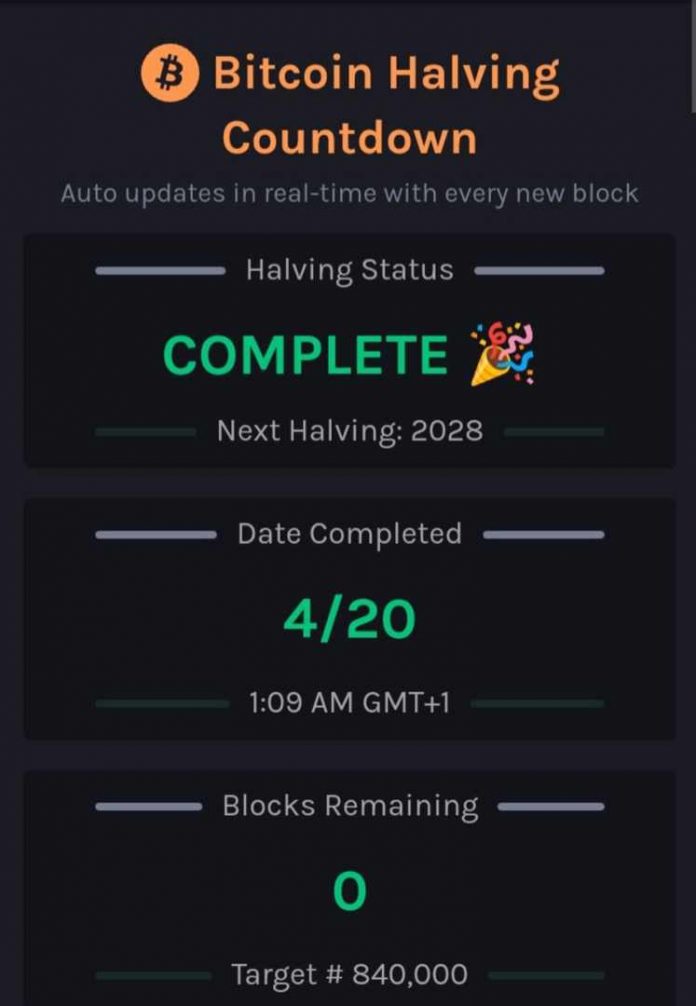
The crypto industry is abuzz with anticipation as the 2024 Bitcoin Halving which ended at Block height 840,000. This event, which occurs approximately every four years, is a significant milestone for Bitcoin and the broader cryptocurrency market. It’s not just a technical adjustment; it’s a moment that has historically influenced the entire landscape of digital currencies.

Bitcoin halving is not an isolated event; its repercussions are felt across the entire crypto industry. A reduction in Bitcoin’s new supply can potentially drive up its price if demand remains constant or increases. This, in turn, can lead to increased interest and investment in the crypto space, attracting new participants and boosting trading activity.

The 2024 halving comes at a time when the crypto industry has evolved significantly. The number of crypto users has surged, and institutional investment plays a more prominent role than ever before. This halving is unique because of the extraordinary growth in Bitcoin’s price leading up to the event, a pattern not observed in previous cycles.

The halving refers to the reduction of the block reward given to Bitcoin miners by half. This deflationary mechanism is built into the Bitcoin protocol to ensure that the total supply of Bitcoin never exceeds 21 million coins. The upcoming halving will see the reward drop from 6.25 to 3.125 bitcoins per block, potentially impacting miners’ profitability and prompting a strategic reevaluation of operations.

Past halvings have been followed by significant price increases in Bitcoin’s value. The 2020 halving, for instance, preceded a bull run that saw Bitcoin’s price soar over 660%, leading to a peak market capitalization of $2.93 trillion by November 2021. However, it also presents short-term challenges for miners, as the immediate effect is a reduction in revenue, which can be particularly tough for those with higher operational costs.

Predicting the exact outcomes of the halving is challenging, as the crypto market is influenced by a myriad of factors beyond just supply and demand. However, industry leaders and analysts are closely watching the event, expecting it to catalyze new market trends and possibly usher in the next phase of crypto evolution.

The immediate effect of the halving is a reduction in the block reward, which can significantly impact the profitability of mining operations. Miners with higher operational costs may find it challenging to sustain their business, leading to a potential decrease in the network’s hash rate.

Market Volatility: The halving can lead to speculative behavior as traders and investors anticipate the event’s impact on Bitcoin’s price. This speculation can cause increased market volatility, making it difficult for investors to make informed decisions.

Transaction Fees Surge: With the reward for mining a block halved, miners may become more reliant on transaction fees. If the price of Bitcoin does not increase proportionally to offset the reduced block reward, miners might prioritize transactions with higher fees, potentially leading to a surge in transaction costs.

Security Concerns: A significant drop in the hash rate due to miner capitulation could temporarily weaken the security of the Bitcoin network. A lower hash rate means the network requires less computational power to be compromised, although this risk is mitigated by the network’s design and the incentive structure.

The 2024 Bitcoin Halving is more than just a scheduled reduction in mining rewards; it’s a pivotal event that could shape the future of cryptocurrency. While it poses challenges, particularly for miners, it also offers opportunities for growth and innovation within the industry. As we approach this critical juncture, all eyes are on Bitcoin and its potential to once again redefine the financial landscape. The crypto community eagerly awaits to see how this halving will write the next chapter in the ongoing story of digital currency.

JP Morgan CEO Calls Bitcoin A Fraud And Ponzi Scheme

0
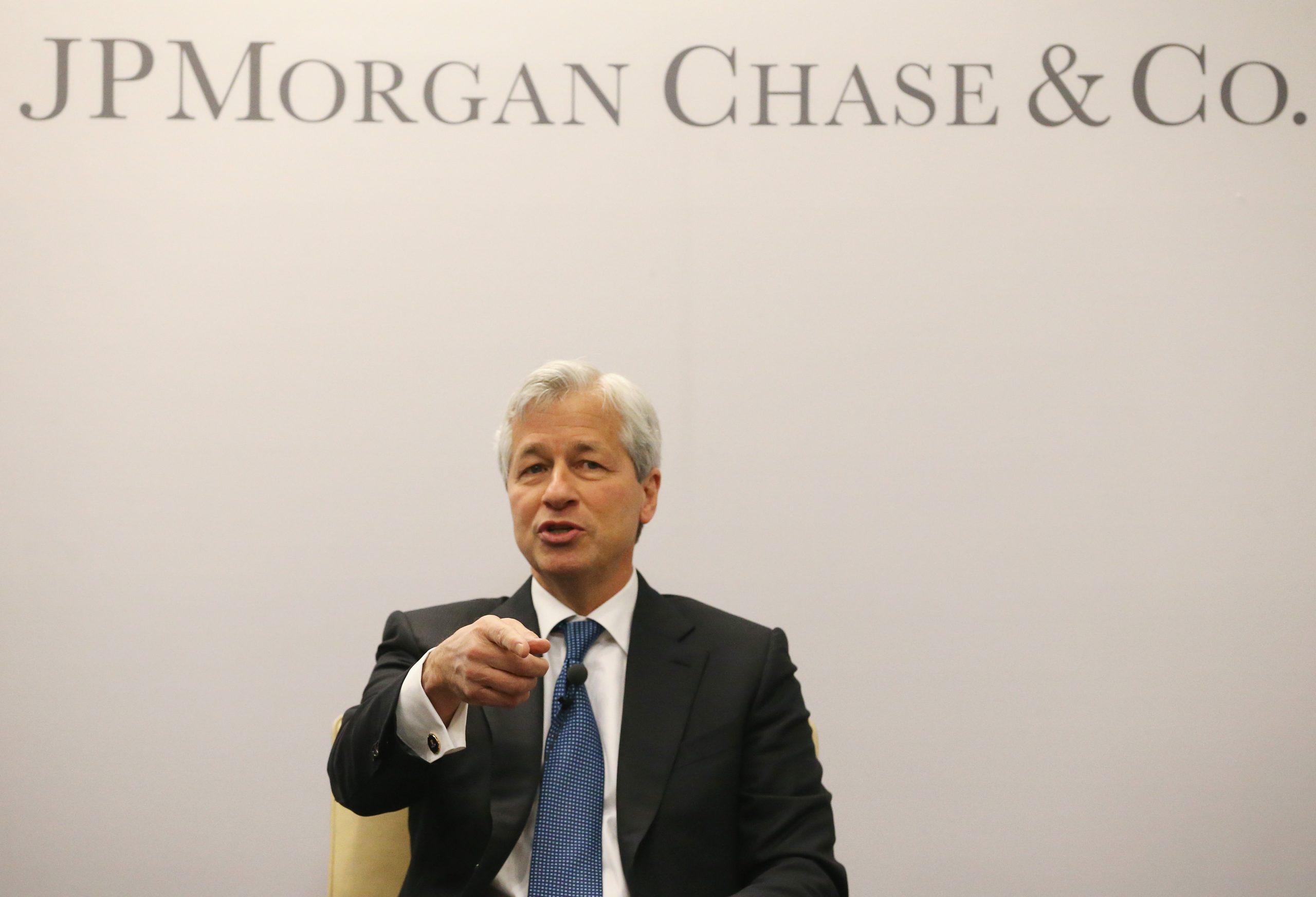
JP Morgan Chase puts contents through its CEO account, it goes viral. But the same content via JPMC account, no one cares (WSJ)

The CEO of JP Morgan Jamie Dimon has recently described Bitcoin as a “fraud and Ponzi scheme”. In a recent interview with Bloomberg, he expressed skepticism about Bitcoin’s worth as a valuable currency, stating that the crypto asset lacks prospects.

Describing Bitcoin, he said,

“If you mean crypto like Bitcoin, I’ve always said it is a fraud. If they think they are a currency, there is no hope for it. It is a Ponzi scheme”.

Dimon however acknowledged the value of Blockchain technology and smart contracts, lauding their potential applications. He noted that if a cryptocurrency can offer something useful like smart contracts, which hold inherent value, then blockchain technology has a purpose. He said, “To the extent, crypto is accessing certain blockchain things, that might have some value”.

It is interesting to note that this is not the first time Jamie Dimon has discredited the value of Bitcoin. The banker and businessman over the years has been open about his dislike for cryptocurrencies.

In a CNBC interview in January this year, Dimon described Bitcoin as a “pet rock” that does nothing. He said he did think Bitcoin did have some uses, noting that they just all happened to be illegal such as money laundering, fraud, tax avoidance, or as payment for sex trafficking.

Notably, during a Senate Banking Committee hearing in December 2023, he called the asset a “hyped-up fraud” and a “waste of time”, stating that if he were the government, he would close it down.

However, despite his reservations, Dimon recognizes the interest of his clients in cryptocurrencies. He has positioned the JP Morgan as an authorized participant in Blackrock’s spot Bitcoin exchange-traded fund (ETF)

Dimon emphasized the importance of supporting clients’ investment choices, highlighting a distinction between his personal views and professional responsibilities.

In June 2023, the bank launched euro-denominated transactions with its blockchain-based JPM Coin. The JPM Coin is typically used by large multinationals to transfer funds to and from their J.P. Morgan accounts or to make payments to other bank customers, per the report. Its benefits include payments that operate around the clock, payments that are executed more quickly than traditional transactions, and the ability to initiate payments that are not yet due, according to the report.

The debut of JPM Coin, which unlike bitcoin is equivalent to the US dollar, highlights the potential long-term threat blockchain poses to traditional financial players. The speed and security offered by blockchain make the payment space ripe for dramatic disruption.

Other major financial firms like BlackRock and Goldman Sachs had similar positions against Bitcoin like JP Morgan, before changing their minds as crypto became more popular and lucrative.

Recently, following the completion of Bitcoin’s fourth halving, JP Morgan has predicted that the price of Bitcoin will drop after the halving event.

The bank analysis of open interest in Bitcoin futures shows that the cryptocurrency is still considered overbought. JP Morgan wrote via a research report, “The price of Bitcoin is likely to weaken after the reward halving, a quadrennial event that slows the rate of growth in Bitcoin supply”.

Also, investment banking giant Goldman Sachs, has cautioned its clients from reading too much into the past halving cycles, given the respective prevailing macro conditions.

ECOWAS Allocates $25 Million to Combat Terrorism in West Africa

0

In a concerted effort to address the pressing issue of terrorism in West Africa, the Economic Community of West African States (ECOWAS) has earmarked $25 million for the fight against terrorism in Nigeria, Niger, Mali, and Burkina Faso. 

Fatou Sarr, ECOWAS Commissioner for Human Development and Social Affairs, revealed this allocation during a news conference held at the commission’s headquarters in Abuja on Friday.

Ms. Sarr outlined the allocation breakdown, stating that $4 million has been dedicated to humanitarian actions aimed at alleviating the devastating consequences of terrorism and mitigating the fallout of natural disasters in the sub-region. She emphasized the critical importance of humanitarian actions in addressing the multiple crises and displacements within the community, highlighting that such efforts persist even in countries under sanctions.

“In 2024, ECOWAS released $9 million for internally displaced people, refugees, and asylum seekers, as well as for the communities that welcome them across all 15 member countries,” Ms. Sarr stated. 

Additionally, she said $1 million has been allocated for stabilization efforts in Nigeria, targeting victims of terrorism, displaced individuals, injured persons, rehabilitation initiatives, and the reinforcement of community resilience.

“Out of a fund of $25 million intended for the fight against terrorism in Nigeria, Burkina, Mali and Niger, ECOWAS has reserved $4 million for humanitarian actions,” she said.

Ms. Sarr noted the commission’s ongoing commitment to providing support in crises, citing ECOWAS’s provision of over $12.6 million in 2023 alone to aid four million out of the 8.5 million victims of violent conflicts and disasters across West Africa.

She disclosed that the bloc has been trying to use deploy sports as a weapon for change, targeting especially the youths. Sports, deemed a crucial integration factor, are supported by ECOWAS through annual funding of $100,000 to sports federations.

However, this move is believed to be part of the bloc’s efforts to appease its seceding members – Niger, Mali, and Burkina Faso. In late January, the military-led governments of Niger, Mali, and Burkina Faso, in a joint statement, announced their decision to withdraw from ECOWAS, citing the perceived failure of the bloc to support them in their fight against terrorism and insecurity as a primary reason for their exit. 

Resisting the pressure from ECOWAS, the military leaders argued that their focus is on restoring security within their borders before returning to constitutional rule, emphasizing the need to address insurgencies linked to groups such as al Qaeda and the Islamic State.

“After 49 years, the valiant peoples of Burkina Faso, Mali, and Niger regretfully and with great disappointment observe that the (ECOWAS) organization has drifted from the ideals of its founding fathers and the spirit of Pan-Africanism,” Colonel Amadou Abdramane, the spokesperson for the Niger junta, said in a statement on behalf of the three nations.

“The organization notably failed to assist these states in their existential fight against terrorism and insecurity,” the statement added.

Since then, ECOWAS has been making efforts to bring the three back to the bloc. In February, the regional organization lifted most of the sanctions imposed on the military-led countries. 

In his opening remarks at the summit, ECOWAS chairman and Nigerian President Bola Tinubu emphasized the need for the bloc to reassess its approach to achieving constitutional order in four Member States, including the three suspended countries and Guinea, which is also under military rule. Tinubu urged Niger, Mali, and Burkina Faso to “reconsider their decision” and emphasized that “ECOWAS should not be seen as an adversary.”

Despite these calls, the three countries, whose current leadership came to power through military coups, have remained steadfast in their stance, refusing to return to ECOWAS. Instead, they have made moves to form their own bloc and seek new alliances.