DD
MM
YYYY

PAGES

DD
MM
YYYY

spot_img

PAGES

Home Blog Page 3426

Spot bitcoin ETF issuer VanEck to shutter BTC futures fund

0

VanEck, the company behind the first spot bitcoin exchange-traded fund (ETF) in Canada, has announced that it will liquidate its bitcoin futures fund in the US. The VanEck Vectors Bitcoin Strategy ETF, which was launched in August 2018, aimed to provide exposure to bitcoin futures contracts and other bitcoin-related investments. However, the fund failed to attract significant investor interest and had only $9.7 million in assets under management as of January 18, 2024.

The fund’s last day of trading will be January 26, 2024, and the liquidation process will begin on January 29, 2024. VanEck said that shareholders of the fund will receive cash proceeds equal to the net asset value of their shares as of the liquidation date. The fund’s closure does not affect VanEck’s other bitcoin-related products, such as the VanEck Bitcoin Trust and the VanEck Vectors Digital Assets Equity ETF.

The decision to shutter the bitcoin futures fund comes as VanEck faces increasing competition in the bitcoin ETF space. In October 2023, the US Securities and Exchange Commission (SEC) approved the first bitcoin futures ETFs, which track the performance of bitcoin futures contracts traded on regulated exchanges. Since then, several other issuers have launched similar products, attracting billions of dollars in inflows.

VanEck was one of the first companies to file for a bitcoin futures ETF in the US, but its application was repeatedly delayed by the SEC. The regulator has not yet approved any spot bitcoin ETFs, which would directly hold bitcoin in custody and track its price movements. VanEck was able to launch a spot bitcoin ETF in Canada in February 2023, after receiving approval from the Ontario Securities Commission. The VanEck Bitcoin ETF (VBTC) is listed on the Toronto Stock Exchange and has over $1 billion in assets under management.

VanEck remains hopeful that the SEC will eventually approve a spot bitcoin ETF in the US, as it believes that such a product would offer investors a more transparent and efficient way to access the bitcoin market. The company said that it will continue to work with regulators and stakeholders to bring innovative and investor-friendly digital asset solutions to the market.

The fund, which aimed to provide exposure to bitcoin through regulated futures contracts, had failed to attract significant investor interest and assets. VanEck’s decision comes at a time when the bitcoin ETF market is becoming more crowded and competitive, with several new products launching in the past few months.

Some of these products offer direct access to bitcoin through physical custody, while others track the performance of bitcoin-related companies or indices. VanEck itself has filed for a physical bitcoin ETF, which is still pending approval from the SEC. The closure of the bitcoin futures fund suggests that VanEck is shifting its focus and resources to its other bitcoin ETF initiatives, which may have more appeal and potential in the long run.

TradFi types are likely to see opportunity to the downside in 2024

The year 2024 is expected to be a challenging one for the traditional finance (TradFi) sector, as the global economy faces multiple headwinds and uncertainties. The ongoing pandemic, geopolitical tensions, environmental crises, and regulatory changes are some of the factors that could negatively impact the performance and profitability of TradFi institutions and markets.

We will explore why TradFi types are likely to see opportunity to the downside in 2024, and what strategies they could adopt to mitigate the risks and capitalize on the opportunities.

One of the main reasons why TradFi types are likely to see opportunity to the downside in 2024 is the rise of decentralized finance (DeFi), which is a fast-growing alternative to TradFi that leverages blockchain technology and smart contracts to offer financial services without intermediaries.

DeFi has been gaining popularity and adoption among users, investors, and developers, as it offers advantages such as lower costs, higher efficiency, greater transparency, and more innovation. According to a report by Deloitte, the total value locked (TVL) in DeFi protocols reached $200 billion in November 2023, up from $20 billion in January 2023, representing a tenfold increase in less than a year. The report also projected that DeFi could capture up to 10% of the global financial market by 2025, posing a significant threat to TradFi incumbents.

Another reason why TradFi types are likely to see opportunity to the downside in 2024 is the potential for increased volatility and instability in the financial markets, due to various macroeconomic and geopolitical factors. For instance, the Federal Reserve has signaled that it will start tapering its quantitative easing program in 2022, and possibly raise interest rates in 2023, in response to rising inflation and economic recovery.

This could lead to a tightening of liquidity and credit conditions, as well as a repricing of risk assets, which could trigger a market correction or even a crash. Moreover, the global economy could face further shocks from the pandemic, such as new variants, vaccine resistance, or lockdowns, which could hamper growth and consumer confidence.

Additionally, the world could witness more conflicts and tensions among major powers, such as the US-China rivalry, the Russia-Ukraine crisis, or the Iran nuclear deal, which could escalate into trade wars or military confrontations, disrupting global trade and security.

Given these challenges and uncertainties, TradFi types are likely to see opportunity to the downside in 2024, as they could benefit from short-selling, hedging, diversifying, or arbitraging strategies. Short selling involves selling borrowed assets with the expectation of buying them back at a lower price later, profiting from the price difference. Hedging involves using derivatives or other instruments to reduce or offset the exposure or risk of an asset or portfolio.

Diversifying involves allocating funds across different asset classes, sectors, regions, or strategies to reduce correlation and dependence on a single source of return. Arbitraging involves exploiting price differences or inefficiencies between two or more markets or instruments to generate risk-free profits.

TradFi types are likely to see opportunity to the downside in 2024, as they face multiple threats and challenges from DeFi, market volatility, and geopolitical instability.

However, they could also adopt various strategies to mitigate the risks and capitalize on the opportunities, such as short-selling, hedging, diversifying, or arbitraging. The key is to be flexible, adaptive, and proactive in navigating the complex and dynamic financial landscape in 2024.
Bitcoin becomes second largest ETF commodity in the US, surpassing Silver

0

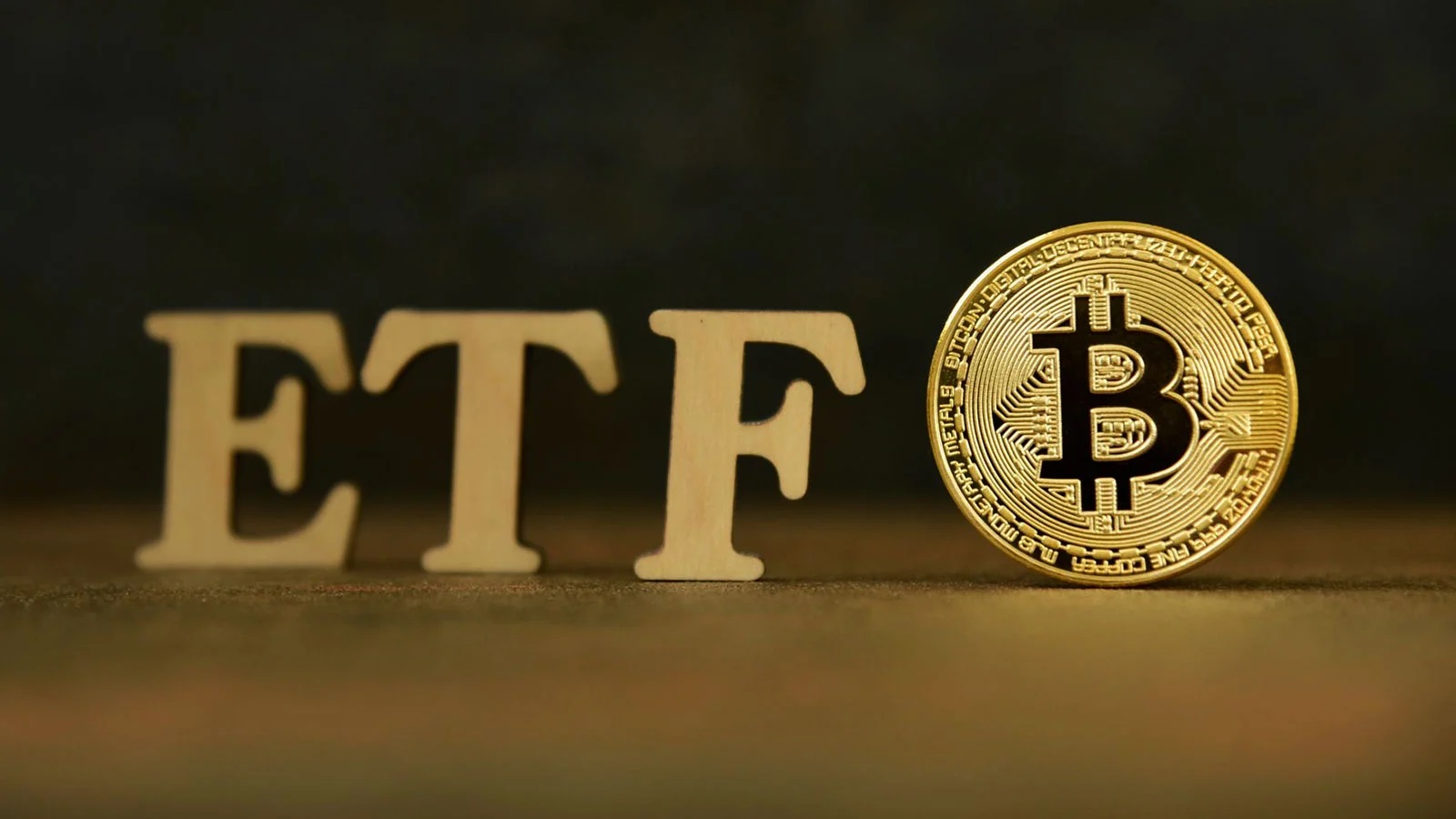
Bitcoin has achieved a remarkable milestone in the US financial market, as it has overtaken silver to become the second largest commodity in terms of exchange-traded fund (ETF) assets. According to a report by ETF.com, Bitcoin ETFs had a total of $28.9 billion in assets under management as of January 18, 2024, surpassing silver ETFs, which had $27.8 billion.

This means that Bitcoin is now only behind gold, which has $149.3 billion in ETF assets, in the ranking of the most popular commodities for investors.

This development reflects the growing demand and acceptance of Bitcoin as a legitimate and valuable asset class, especially after the launch of the first Bitcoin futures ETFs in October 2021. These products allow investors to gain exposure to the price movements of Bitcoin without having to buy or store the cryptocurrency directly, thus reducing the barriers and risks associated with it.

Since their debut, Bitcoin futures ETFs have attracted massive inflows and trading volumes, making them some of the most successful ETF launches in history.

The rise of Bitcoin ETFs also coincides with the impressive performance of the cryptocurrency itself, which reached a new all-time high of over $100,000 in November 2021 and has remained above $80,000 for most of 2022 and 2023.

Despite the volatility and regulatory uncertainty that still surround it, Bitcoin has proven to be a resilient and innovative asset that offers diversification and hedging benefits to investors, especially in times of inflation and geopolitical turmoil.

The surpassing of silver by Bitcoin is not only a symbolic achievement, but also a sign of a paradigm shifts in the global financial system. Silver has been used as a form of money and a store of value for thousands of years, while Bitcoin is only 15 years old and represents a new era of digital and decentralized finance.

The fact that investors are now allocating more capital to Bitcoin than to silver shows that they are embracing the potential and vision of this revolutionary technology, which could challenge and transform the existing structures and institutions that govern money and finance.

Bitcoin has outperformed many traditional assets, including silver, in terms of returns and adoption. This indicates that investors are recognizing the value and potential of this innovative technology, which offers a decentralized, secure and transparent way of transferring and storing value.

Bitcoin is not just a digital currency, but a network of distributed nodes that validate transactions and maintain the integrity of the system. Unlike silver, which is a physical commodity that requires storage, transportation and verification, Bitcoin is a purely digital asset that can be accessed and transferred anywhere in the world with an internet connection. Bitcoin also has a limited supply of 21 million coins, which makes it scarce and deflationary, unlike silver, which can be mined indefinitely.

The fact that investors are now allocating more capital to Bitcoin than to silver shows that they are embracing the potential and vision of this revolutionary technology. They are not only looking for short-term profits, but also for long-term value creation and innovation. Bitcoin is not a fad or a bubble, but a paradigm shift that will transform the way we exchange and store value in the digital age.

“The fundamental case for Bitcoin remains weak” says UBS Switzerland

Yet, this is not global. In a recent report, UBS, one of the largest and most influential banks in Switzerland, has expressed its skepticism about the long-term viability of Bitcoin as an asset class. The report argues that Bitcoin lacks some of the key features that make a currency or a store of value attractive, such as stability, scalability, and regulatory acceptance.

The report argues that Bitcoin lacks some of the key features that make a currency useful, such as stability, scalability, and regulatory acceptance. Moreover, the report claims that Bitcoin faces significant environmental and social challenges, as its energy-intensive mining process contributes to global warming and its anonymity facilitates illicit activities.

The report states that “the fundamental case for Bitcoin remains weak”, and that it is unlikely to replace traditional money or become a mainstream asset. It also warns investors that Bitcoin is subject to high volatility and regulatory uncertainty, and that they should be prepared for large price swings and potential losses. The report concludes that Bitcoin is more of a speculative gamble than a reliable store of value or a medium of exchange.

Despite its reputation as a groundbreaking technology, Bitcoin is actually quite outdated and limited in its functionality. It uses a proof-of-work (PoW) consensus mechanism, which is wasteful and vulnerable to attacks. It also has a hard cap of 21 million coins, which limits its growth potential and creates deflationary pressures.

Moreover, Bitcoin is unable to support smart contracts or decentralized applications (DApps), which are the main drivers of innovation and adoption in the blockchain space. To overcome these limitations, Bitcoin relies on third-party solutions, such as the Lightning Network or sidechains, which are complex and risky.

The fundamental case for Bitcoin remains weak. Bitcoin is not a reliable store of value or a medium of exchange. It is not environmentally friendly or socially responsible. It is not innovative or scalable. It faces significant challenges and risks that threaten its long-term viability. Therefore, I believe that investors and enthusiasts should be cautious and realistic about Bitcoin’s prospects and explore other alternatives that offer more value and potential.

UBS’s view on Bitcoin is not shared by all financial institutions, however. Some other banks, such as Morgan Stanley and Goldman Sachs, have shown more interest and openness towards the cryptocurrency, offering their clients exposure to Bitcoin-related funds and products.

Additionally, some companies, such as Tesla and MicroStrategy, have invested in Bitcoin as part of their corporate treasury strategy, signaling their confidence in its future potential. Furthermore, some countries, such as El Salvador and Ukraine, have taken steps to adopt Bitcoin as legal tender or to facilitate its use by their citizens.

Therefore, it remains to be seen whether UBS’s pessimistic outlook on Bitcoin will prove to be accurate or not. Bitcoin is still a relatively young and evolving phenomenon, and its future may depend on how it adapts to the changing technological, economic, and regulatory environment. While UBS may have valid reasons to doubt Bitcoin’s long-term prospects, it may also be underestimating its innovative and disruptive power.

The report also points out the environmental and social risks associated with Bitcoin mining, which consumes vast amounts of energy and generates significant carbon emissions.

The report concludes that Bitcoin is unlikely to replace traditional money or become a mainstream asset anytime soon, and that investors should be cautious about its high volatility and uncertain future.

X (Twitter) Begins the Roll Out of Audio and Video Call Feature for Android Users

1

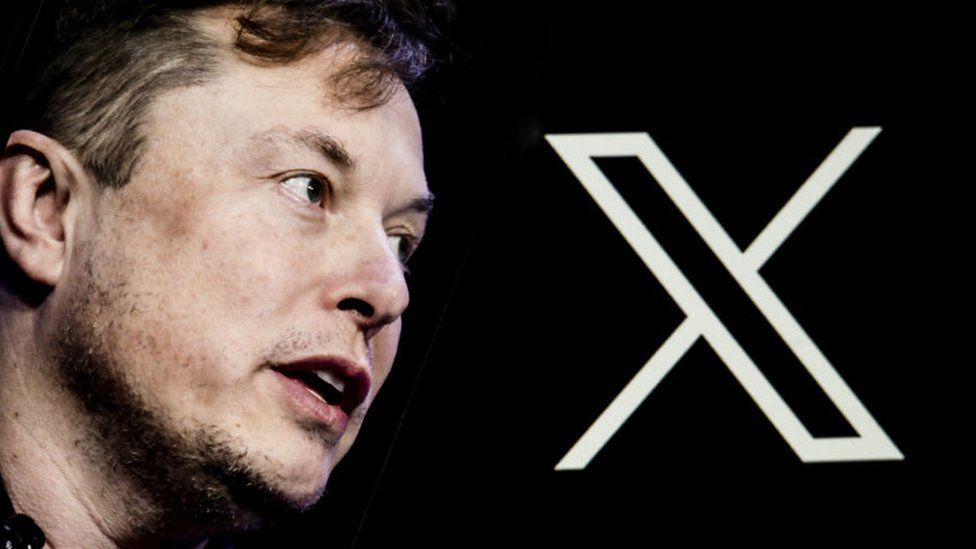
Social networking platform X (formerly Twitter) has begun the rollout of audio and video call features directly on the app to its Android users.

One of the engineers working on the project disclosed this information on his X handle while stating that the feature would be for premium users. However, he noted that it would be free for everyone to receive calls.

Users can enable or disable this feature through privacy settings, to give them the ability to control who can call them.

The launch of the audio and Video call feature to X doesn’t come as a surprise, as the company’s CEO Linda Yaccarino in August 2023, had disclosed that the features will be coming to the platform in the latest step in X becoming the “everything app”.

“Soon you’ll be able to make video chat calls without having to give your phone number to anyone on the platform,” Yaccarino told CNBC’s Sara Eisen, after listing other features that X offers or plans to, like long-form videos and creator subscriptions, as well as payments.

The launch of the audio and video call feature on X will see it rival popular messaging platforms such as WhatsApp, and other social media apps that have rolled out the feature.

According to Musk, users would not need phone numbers to make calls on X. He said the features would work on different operating systems, including iOS, Android, Mac, and PC, meaning that users would also be able to make calls not only on their phones but also on computers.

The significant changes on X are part of Elon Musk’s plan to turn the app into an everything platform. Musk’s description of where Twitter is heading was even simpler. His goal is to transform the social network.

Since he took over Twitter last October, he has introduced lots of changes to the platform including making the blue check mark a subscription-only feature, introducing community notes, monetization of content, and the recent change of the company’s name to X, among several other changes.

Musk has shown a personal affinity with the letter X. He’s compared his ambitions for X (formerly Twitter), with the vision he had for another entity called X.com, a financial services company he founded in 1999 that ultimately became PayPal Holdings Inc.

As the platform begins the rollout of audio-video calls on X, which doesn’t require phone numbers, it is clear that Elon Musk continues to prove that innovation knows no bounds.

Can Western Airstrikes stop the Houthis?

0

The ongoing conflict in Yemen has been described as the world’s worst humanitarian crisis, with millions of people facing starvation, disease and displacement. The Houthis, a rebel group aligned with Iran, have been fighting against the internationally recognized government of Yemen, backed by a Saudi-led coalition of Arab states and supported by Western powers.

The coalition has been conducting airstrikes against the Houthis since 2015, hoping to restore the government and end the war. But can these airstrikes really stop the Houthis, or are they only making things worse?

The coalition claims that its airstrikes are aimed at military targets and that it takes precautions to avoid civilian casualties. However, human rights groups and the United Nations have documented numerous cases of indiscriminate bombing, hitting schools, hospitals, markets and residential areas.

According to the UN, more than 18,000 civilians have been killed or injured by coalition airstrikes since 2015, accounting for more than half of all civilian deaths in the war. The airstrikes have also destroyed vital infrastructure and exacerbated the humanitarian crisis, leaving millions of people without access to food, water, health care and education.

The Houthis, on the other hand, have shown remarkable resilience and adaptability in the face of the coalition’s air superiority. They have developed their own arsenal of ballistic missiles, drones and naval mines, which they use to launch attacks on coalition forces and targets inside Saudi Arabia and the United Arab Emirates.

They have also consolidated their control over most of northern Yemen, including the capital Sanaa, and have gained support from some local tribes and factions. The Houthis claim that they are fighting against foreign aggression and interference, and that they represent the interests of the Zaidi Shia minority in Yemen.

The coalition’s airstrikes have failed to achieve their stated objectives of restoring the government and ending the war. Instead, they have contributed to a stalemate that has prolonged the suffering of the Yemeni people and created opportunities for other actors to exploit the chaos.

These include Al-Qaeda in the Arabian Peninsula (AQAP), Islamic State (IS) and separatist movements in southern Yemen. The airstrikes have also increased regional tensions and instability, as Iran and Saudi Arabia vie for influence and dominance in the Middle East.

The only way to stop the Houthis and end the war is through a political solution that addresses the root causes of the conflict and respects the rights and aspirations of all Yemenis. This requires a ceasefire, a lifting of the blockade, a resumption of peace talks and a comprehensive agreement that includes power-sharing, security arrangements, humanitarian assistance and reconstruction.

The international community, especially Western powers, should play a constructive role in facilitating this process, rather than fueling the war with arms sales and military support. The people of Yemen deserve peace, justice and dignity.

Understanding the role of Iran in regional escalation

Iran is a key player in the Middle East, with significant influence and interests in countries such as Iraq, Syria, Lebanon, Yemen and Bahrain. Iran’s involvement in these countries has often been seen as a source of tension and conflict, especially by its regional rivals Saudi Arabia and Israel, as well as by the United States and its allies.

We will examine the main factors that motivate Iran’s foreign policy and its role in regional escalation. We will also discuss the challenges and opportunities for dialogue and de-escalation with Iran, and the implications for regional and global security.

Iran’s foreign policy is driven by a combination of ideological, strategic and pragmatic considerations. Some of the main objectives of Iran’s foreign policy are:

To preserve the Islamic Republic and its political system, which is based on the concept of velayat-e faqih (guardianship of the jurist), whereby the Supreme Leader has ultimate authority over all aspects of state and society.

To defend Iran’s sovereignty and territorial integrity, especially against external threats and interventions, such as the US-led sanctions, the assassination of Iranian nuclear scientists and military commanders, and the Israeli attacks on Iranian targets in Syria.

To expand Iran’s influence and leverage in the region, by supporting allied groups and governments that share its ideological or strategic interests, such as Hezbollah in Lebanon, the Assad regime in Syria, the Houthis in Yemen, and various Shia militias in Iraq.

To counter the influence and ambitions of its regional rivals, particularly Saudi Arabia and Israel, which Iran perceives as hostile and threatening to its security and interests.

To promote Iran’s economic development and integration with the world, by seeking to overcome the US-led sanctions that have crippled its economy, and by pursuing diplomatic engagement with regional and international actors.

Iran’s role in regional escalation

Iran’s foreign policy objectives have often led to confrontation and escalation with its regional adversaries, as well as with the US and its allies. Some of the main examples of Iran’s role in regional escalation are:

The proxy wars in Syria and Yemen, where Iran has provided military, financial and political support to the Assad regime and the Houthis, respectively, against the opposition forces backed by Saudi Arabia and its allies. These conflicts have resulted in massive humanitarian crises, widespread instability and violence, and increased sectarian polarization.

The tensions in the Persian Gulf, where Iran has repeatedly harassed and attacked commercial vessels and oil facilities belonging to Saudi Arabia and its allies, as well as US military assets. These actions have raised the risk of a direct military confrontation between Iran and the US or its allies, which could have catastrophic consequences for regional and global security.

The nuclear standoff with the US, where Iran has gradually reduced its compliance with the 2015 Joint Comprehensive Plan of Action (JCPOA), also known as the Iran nuclear deal, after the US withdrew from it in 2018 and reimposed sanctions on Iran. The JCPOA was designed to limit Iran’s nuclear activities in exchange for sanctions relief.

However, since the US withdrawal, Iran has increased its uranium enrichment levels and stockpiles, as well as its research and development of advanced centrifuges. These moves have raised concerns about Iran’s nuclear capabilities and intentions and have increased the pressure on the remaining parties to the JCPOA (China, France, Germany, Russia, UK) to salvage it.

The prospects for dialogue and de-escalation with Iran

Despite the high level of tension and hostility between Iran and its adversaries, there have been some attempts to initiate dialogue and de-escalation with Iran. Some of these attempts are:

The indirect talks between Iran and the US in Vienna since April 2021, aimed at restoring mutual compliance with the JCPOA. These talks have faced several challenges and obstacles, such as domestic opposition from hardliners on both sides, regional incidents that have undermined trust, and political transitions that have changed the negotiating teams. However, both sides have expressed their willingness to continue the talks until a mutually acceptable outcome is reached.

The regional initiatives by countries such as Iraq, Oman, Qatar and Kuwait to mediate between Iran and Saudi Arabia. These initiatives have resulted in some positive developments, such as a series of secret meetings between Iranian and Saudi officials since April 2021 in Baghdad.

These meetings have reportedly discussed issues such as Yemen, Iraq, Lebanon and Syria. However, these talks have not yet produced any concrete results or agreements.

The international efforts by countries such as France, Germany, UK, Russia and China to support dialogue and de-escalation with Iran. These efforts have included diplomatic outreach to Iranian officials,

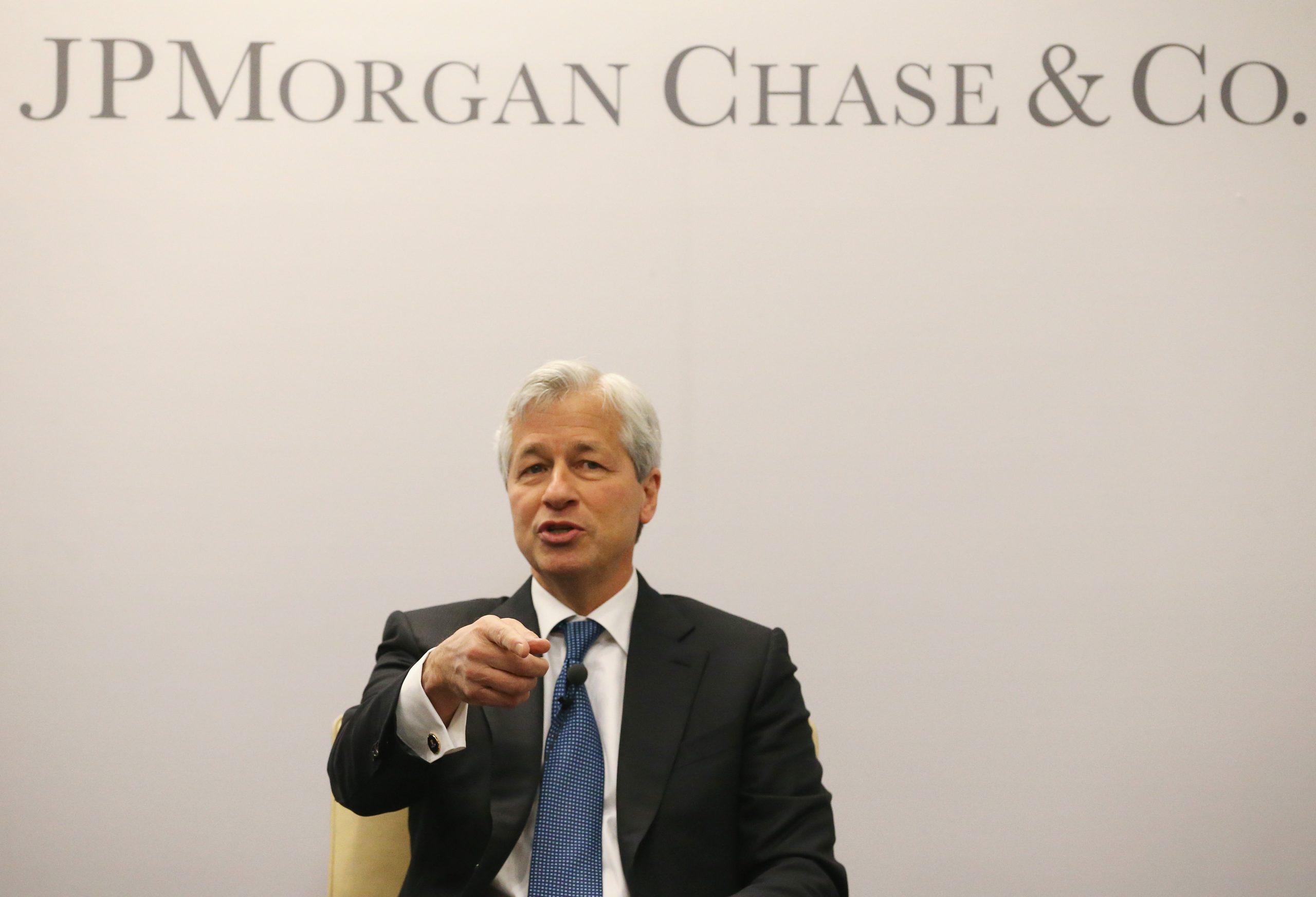
JP Morgan’s Jamie Dimon And His Crypto Viewpoints

0
JP Morgan Chase puts contents through its CEO account, it goes viral. But the same content via JPMC account, no one cares (WSJ)

If you are looking for a compelling antagonist in the crypto space, you might be disappointed by Jamie Dimon. The CEO of JPMorgan Chase has been one of the most vocal and consistent critics of cryptocurrencies, dismissing them as a fraud, a scam, and a bubble. He has also warned his employees not to trade them, and his bank has been accused of manipulating the market by spreading negative news.

Jamie Dimon trying to psychic on crypto?

Jamie Dimon, the CEO of JPMorgan Chase, has been known for his outspoken views on cryptocurrencies. He famously called Bitcoin a “fraud” in 2017, and later said he regretted that remark. He has also expressed skepticism about the long-term viability of crypto assets, saying they are not backed by anything and have no intrinsic value.

However, in a recent interview with CNBC, Dimon seemed to have a change of heart. He said he was “not going to talk about Bitcoin anymore” and that he was “open-minded” about the potential of blockchain technology. He also revealed that some of his clients were interested in investing in crypto, and that JPMorgan was ready to offer them the services they need.

Does this mean that Dimon has become a crypto believer? Not quite. He still maintained that crypto was not his “cup of tea” and that he personally would not invest in it. He also warned that crypto could face more regulation and scrutiny from governments and central banks in the future.

So, what is behind Dimon’s apparent shift in tone? Is he trying to psychic on crypto, as some observers have suggested? Psychic on crypto is a term coined by Michael Saylor, the CEO of MicroStrategy, who has been one of the most vocal and influential advocates of Bitcoin. It refers to the ability to foresee the future of crypto and act accordingly, even if it goes against one’s own beliefs or preferences.

Saylor himself claimed to have psychic on crypto when he decided to invest billions of dollars of his company’s treasury in Bitcoin, despite being a skeptic for years. He said he realized that Bitcoin was a superior store of value than cash or gold, and that it was inevitable that more institutions and individuals would adopt it.

Perhaps Dimon is following Saylor’s example and trying to psychic on crypto as well. He may not like or understand crypto, but he recognizes that it is a force that cannot be ignored or dismissed. He may also see an opportunity to profit from it by serving his clients who want exposure to it. He may also want to avoid being left behind by his competitors who are more open to crypto, such as Goldman Sachs or Morgan Stanley.

Whatever his motives are, Dimon’s latest comments show that he is no longer hostile or dismissive of crypto. He may not be a fan, but he is not a foe either. He is trying to psychic on crypto, and that is a sign of respect and recognition for the crypto industry.

But despite his apparent hostility, Dimon is not a very interesting or effective villain. He is not a visionary who sees the flaws in the crypto system and tries to expose them. He is not a mastermind who plots to destroy the crypto industry and its supporters. He is not even a hypocrite who secretly invests in crypto while publicly bashing it.

He is just a boring banker who does not understand or care about the potential of crypto. He is stuck in his old-fashioned worldview, where centralized institutions are the only legitimate and trustworthy actors in the financial system. He is blind to the innovation and disruption that crypto brings to the world. He is deaf to the voices of millions of people who use crypto as a way to escape oppression, censorship, and corruption, He is not a villain. He is a relic.

BlackRock now largest institutional holder of Bitcoin with 25,067 BTC

Meanwhile, BlackRock, the world’s largest asset manager, has revealed that it holds more than 25,000 bitcoins in its spot Bitcoin ETF, which was launched in October 2023. The ETF, which trades under the ticker BTCX on the Toronto Stock Exchange, allows investors to gain exposure to the price of bitcoin without having to buy or store the cryptocurrency themselves.

According to the latest disclosure, BlackRock’s ETF had 25,067 bitcoins as of January 18, 2024, worth over $1.06 billion at the current market price of $42,400 per bitcoin. This makes BlackRock one of the largest institutional holders of bitcoin in the world, surpassing the likes of MicroStrategy, Tesla and Square.

The spot Bitcoin ETF is different from the futures-based Bitcoin ETFs that have been approved by the US Securities and Exchange Commission (SEC) in late 2021. While the futures-based ETFs track the price of bitcoin through contracts traded on regulated exchanges, the spot ETF directly holds the underlying asset in a custodial arrangement.

This means that the spot ETF does not incur the costs and risks associated with rolling over futures contracts, which can erode the returns for investors. Moreover, the spot ETF may more closely reflect the actual supply and demand dynamics of the bitcoin market, as it increases the demand for physical bitcoins rather than synthetic ones.

BlackRock’s spot Bitcoin ETF is not the first of its kind in Canada, as several other asset managers have launched similar products since February 2021, when the Canadian regulators became the first in North America to approve such an innovation. However, BlackRock’s ETF has quickly become the most popular and successful among its peers, as it has attracted more assets and trading volume than any other Canadian spot Bitcoin ETF.

As of January 18, 2024, BlackRock’s ETF had a market capitalization of $1.12 billion and an average daily trading volume of $18.7 million, according to data from Bloomberg. In comparison, the second-largest spot Bitcoin ETF in Canada, managed by Purpose Investments, had a market capitalization of $546 million and an average daily trading volume of $7.9 million.

The success of BlackRock’s spot Bitcoin ETF may be attributed to several factors, such as its brand recognition, its low management fee of 0.75%, and its partnership with Coinbase Custody, one of the most trusted and regulated custodians in the crypto space.

Additionally, BlackRock may have benefited from its timing, as it launched its ETF amid a renewed interest and optimism in the bitcoin market, following the approval of the first US Bitcoin futures ETFs and the adoption of bitcoin as legal tender by El Salvador.

Since its inception on October 15, 2021, BlackRock’s spot Bitcoin ETF has delivered a return of 26%, outperforming both the futures-based Bitcoin ETFs in the US and the spot Bitcoin ETFs in Canada.

BlackRock’s spot Bitcoin ETF is a significant milestone for the mainstream adoption and acceptance of bitcoin as an asset class. It demonstrates that a reputable and regulated institution like BlackRock is confident and comfortable in holding and offering exposure to bitcoin to its clients.

It also shows that there is a strong and growing demand for bitcoin among investors who seek to diversify their portfolios with an alternative and uncorrelated asset that has proven to be resilient and appreciating over time. As more investors and institutions embrace bitcoin, we may see more innovation and competition in the crypto ETF space, both in Canada and in other jurisdictions.