DD
MM
YYYY

PAGES

DD
MM
YYYY

spot_img

PAGES

Home Blog Page 3427

Fitch Sounds Alarm Over Nigeria’s Forex Shortages and Soaring Debt: Says it Poses Threats to Economic Stability

0

Credit ratings agency Fitch has sounded the alarm over Nigeria’s economic challenges, highlighting persistent foreign exchange shortages and a soaring debt service-to-revenue ratio as factors contributing to a precarious sovereign credit rating.

Gaimin Nonyane, Fitch’s Director of Middle East and Africa Sovereigns, voiced concerns regarding the Central Bank of Nigeria’s (CBN) struggles to amass sufficient foreign exchange reserves, leaving them ill-equipped to clear the forex backlog and meet the substantial external financing needs of the private sector.

Nonyane drew attention to the current 30% disparity between the official and parallel exchange rates, emphasizing the resultant pressure on the Nigerian naira.

“We think that the central bank is still very well short of the amount it needs to be able to clear the foreign exchange backlog and also meet the extremely large external financing by the private sectors,” she stated.

Toby Iles, Fitch’s Head of Middle East and Africa Sovereigns, echoed Nonyane’s concerns about Nigeria’s economic vulnerability, particularly with interest payments to revenue ratio exceeding 40%. This ratio, four times higher than the median for B-rated sovereigns, poses a significant weakness for the country’s credit rating.

Iles noted that interest-to-revenue ratios across Africa have more than doubled since 2014, driven by heightened borrowing and increased costs due to global interest rate hikes.

The Central Bank of Nigeria has initiated efforts to clear a substantial backlog of foreign exchange forwards, estimated to be around $7 billion, facilitating cash repatriation by companies.

The Minister of Finance, Wale Edun, had last year, acknowledged the impact of the overdue forward payments in the foreign exchange market on the depreciation of the naira. Edun stressed the importance of addressing this issue for the stabilization of the local currency.

To tackle the forex backlog, the CBN announced the government’s move to raise about $10 billion with the assistance of banks.

Earlier this week, the apex bank announced it has successfully cleared approximately $2 billion of the backlog in the past three months and pledged to ensure liquidity in the forex market.

Despite the macroeconomic malaise, including record-level inflation, a weakening naira, and sluggish crude oil production, Fitch currently rates Nigeria at B- with a stable outlook.

However, concerns over Nigeria’s escalating debt levels persist, with the debt service to revenue ratio skyrocketing to 183% in the first quarter of 2023.

The country’s total public debt stands at N87.9 trillion as of Q3, 2023. In the 2024 budget proposal presented to the National Assembly, the federal government intends to borrow N7.83 trillion to address a budget deficit of N9.18 trillion. Despite this borrowing plan, the federal government said it is making concerted efforts to diminish reliance on debts and increase revenue through the Committee on Fiscal Policy and Tax Reforms.

The outcome of these concerted efforts and the ability of the Nigerian government to navigate these economic challenges will play a pivotal role in shaping the country’s economic stability in the coming months.

As Fitch’s warnings denote, addressing forex shortages and managing the debt burden are imperative for Nigeria’s financial resilience and creditworthiness on the global stage.
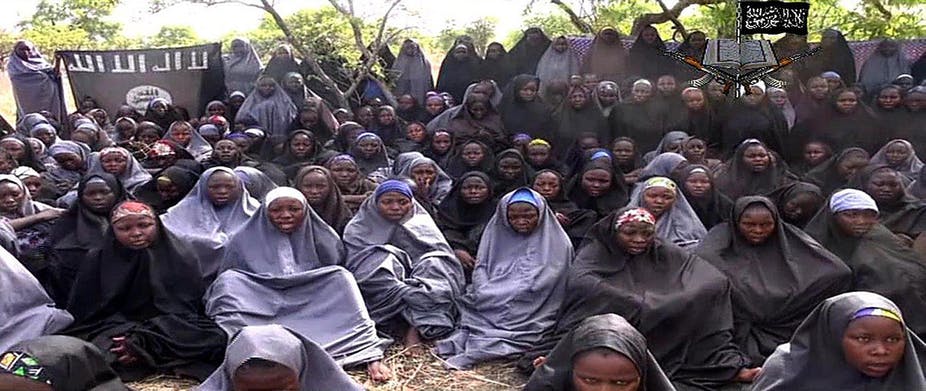

Kidnapping is rising in Nigeria

0

Kidnapping is a serious crime that involves abducting someone and holding them against their will, usually for ransom or political gain. Kidnapping is not a new phenomenon in Nigeria, but it has become more prevalent and violent in recent years.

According to the Global Database on Kidnapping, Nigeria recorded 1,061 kidnapping incidents in 2020, up from 685 in 2019 and 455 in 2018. Nigeria ranks third in the world for the number of kidnappings, behind Mexico and India. There are several factors that contribute to the rise of kidnapping in Nigeria, including:

Economic hardship: Nigeria is facing a recession, high inflation, unemployment and poverty. Many people are struggling to make ends meet and some resort to kidnapping as a way of making quick money. Kidnappers often target wealthy individuals, business owners, politicians, celebrities and foreigners who can pay high ransoms.

Political instability: Nigeria is dealing with various security challenges, such as the insurgency of Boko Haram in the northeast, the separatist movement of the Indigenous People of Biafra (IPOB) in the southeast, the banditry and cattle rustling in the northwest, and the militancy and piracy in the Niger Delta.

These groups often kidnap people for political reasons, such as demanding the release of their members, pressuring the government to meet their demands, or creating chaos and fear.

Weak law enforcement: Nigeria’s security forces are overstretched and underfunded. They lack the capacity and resources to prevent, respond to and investigate kidnapping cases. Many kidnappings go unreported or unresolved due to fear of reprisal, lack of trust in the authorities, or corruption. Some security personnel are even accused of being involved in or facilitating kidnapping activities. Kidnapping has negative impacts on individuals, communities and the country as a whole, such as:

Loss of lives: Many kidnapping victims are killed by their captors if their ransom is not paid or if they try to escape. Some die from injuries, illnesses or torture while in captivity. Some kidnappers also kill innocent bystanders or security personnel during their operations.

Psychological trauma: Kidnapping causes immense psychological distress to the victims and their families. They suffer from fear, anxiety, depression, post-traumatic stress disorder (PTSD), and other mental health issues. Some victims may develop Stockholm syndrome, where they sympathize with their captors. Some families may resort to selling their assets, borrowing money or going into debt to pay the ransom.

Economic loss: Kidnapping affects the economy by disrupting businesses, reducing investments, lowering productivity and increasing costs. Many businesses have closed down or relocated due to kidnapping threats. Many investors have withdrawn or reduced their investments in Nigeria due to security concerns. Many workers have lost their jobs or income due to kidnapping incidents. Many families have spent their savings or incurred debts to pay the ransom.

Social unrest: Kidnapping fuels social unrest by eroding trust, increasing tension and violence, and undermining social cohesion. Many people have lost faith in the government’s ability to protect them and provide basic services. Many communities have formed vigilante groups or armed themselves to defend themselves against kidnappers. Some ethnic or religious groups have blamed each other for kidnapping activities or retaliated against perceived enemies.

How can kidnapping be reduced in Nigeria?

Kidnapping is a complex and multifaceted problem that requires a holistic and coordinated approach from all stakeholders, including:

The government: The government should strengthen its security forces by providing them with adequate training, equipment, intelligence and incentives. The government should also improve its judicial system by ensuring speedy trials, fair sentences and accountability for kidnappers and their accomplices. The government should also address the root causes of kidnapping by implementing economic reforms, social policies and political dialogue.

The civil society: The civil society should raise awareness and educate the public about the dangers and consequences of kidnapping. The civil society should also advocate for the rights and welfare of kidnapping victims and their families. The civil society should also monitor and report on kidnapping cases and hold the government accountable for its actions or inactions.

The media: The media should report on kidnapping cases responsibly and ethically. The media should avoid sensationalizing or glamorizing kidnapping stories or divulging sensitive information that could endanger the lives of the victims or compromise the rescue operations. The media should also highlight positive stories of successful interventions or recoveries.

The private sector: The private sector should invest in security measures to protect their employees, customers and assets from kidnapping threats. The private sector should also cooperate with the authorities and share information on kidnapping incidents or suspects. The private sector should also support social initiatives that aim to prevent or reduce kidnapping.

The individuals: The individuals should be vigilant and cautious about their personal safety and security. The individuals should avoid traveling alone or at night, especially in high-risk areas.

The individuals should also avoid flaunting their wealth or status or sharing too much information about themselves or their activities on social media or other platforms. The individuals should also report any suspicious activities or persons to the authorities or the nearest security agency.

A Democrat in Virginia has officially introduced a bill to defend Bitcoin Rights

0

If you are a Bitcoin enthusiast, you may have heard of the recent efforts by some states to regulate or ban the use of cryptocurrencies. These attempts are not only misguided, but also unconstitutional. They violate your right to privacy, free speech, and economic freedom.

That’s why I’m proud to announce that I have officially introduced a bill in the Virginia House of Delegates that would protect your fundamental Bitcoin rights. The bill, HB 1608, would prohibit any state agency from imposing any licensing, registration, or reporting requirements on the use of Bitcoin or any other decentralized digital currency. It would also prevent any state agency from seizing or confiscating your Bitcoin or any other cryptocurrency without due process of law.

The bill is based on the principles of the Crypto-Currency Act of 2020, a federal bill that was introduced by Congressman Paul Gosar (R-AZ) last year. The Crypto-Currency Act of 2020 aims to provide clarity and certainty for the regulation of cryptocurrencies at the federal level, and to prevent any overreach by state or local governments.

The bill is also inspired by the recent adoption of Bitcoin as legal tender in El Salvador, a historic move that has opened up new opportunities for economic growth and financial inclusion for millions of people. El Salvador has shown the world that Bitcoin is not only a viable alternative to fiat money, but also a powerful tool for social and economic empowerment.

By introducing this bill, I hope to make Virginia a leader in the innovation and adoption of cryptocurrencies. I believe that Bitcoin and other decentralized digital currencies have the potential to transform the way we exchange value, store wealth, and access financial services. They also offer a way to resist the inflationary policies and excessive taxation of the federal government, which are eroding the purchasing power and savings of hard-working Americans.

Bitcoin is under attack. The recent proposal by the US government to regulate cryptocurrency transactions has sparked a fierce debate among the Bitcoin community and beyond. The bill, dubbed the “Stablecoin Tethering and Bank Licensing Enforcement (STABLE) Act”, aims to protect consumers and investors from the risks posed by stablecoins, which are digital tokens pegged to fiat currencies or other assets. However, the bill also threatens to undermine the core principles of Bitcoin: decentralization, censorship-resistance, and privacy.

The bill would require any issuer of a stablecoin to obtain a banking charter, comply with the same regulations as banks, and obtain approval from the Federal Reserve and the FDIC. This would effectively turn stablecoins into centralized digital currencies, subject to the whims and interests of the government and the banking system. Moreover, the bill would grant the Federal Reserve sweeping powers to regulate any service provider that enables the use of stablecoins, such as exchanges, wallets, and payment platforms. This could potentially expose millions of Bitcoin users to surveillance, censorship, and confiscation of their funds.

The bill is a clear attempt to stifle innovation and competition in the cryptocurrency space, and to preserve the monopoly of the fiat system. It is also a violation of the constitutional rights of Bitcoin users, who should be free to choose their own form of money and to transact with it without interference from third parties. The bill is an affront to the vision of Satoshi Nakamoto, who created Bitcoin as a peer-to-peer electronic cash system that does not rely on trusted intermediaries.

We, as Bitcoin users, advocates, and developers, must stand up for our rights and oppose this bill. We must educate ourselves and others about the benefits and challenges of Bitcoin, and dispel the myths and misinformation spread by its detractors. We must also support the efforts of organizations that are fighting for our cause, such as the Bitcoin Foundation, Coin Center, and the Electronic Frontier Foundation. We must make our voices heard by contacting our representatives and senators, and urging them to reject this bill. We must not let the government dictate how we use our money.

Bitcoin is more than just a technology or an asset. It is a movement, a community, and a culture. It is a symbol of freedom, innovation, and empowerment. It is our right, and our responsibility, to defend it. I urge you to support this bill and to contact your representatives in the Virginia House of Delegates and Senate to ask them to co-sponsor and vote for it. Together, we can defend our fundamental Bitcoin rights and make Virginia a more prosperous and free state.

“My business ideas have grown bigger than myself” – Ewune Sally, CAR, on Tekedia Mini-MBA

0

She came to Tekedia Institute Mini-MBA and within months, she has a great testimony:   “It has been an impactful journey which I’ll forever cherish. My business ideas have grown bigger than myself, thanks to Tekedia and the world class faculty members who made sure we were fed with the best materials on business & innovation. Keep taking Africa to the world.”

Out of the beautiful lands of the amazing Central African Republic, Ewune Sally, Founder and CEO Dunamis Solutions, is leading with innovations. Our school has improved  her ability to organize, combine and recombine factors of production, to deliver better products and services in her business. We’re thrilled because growing businesses and careers are our missions!

Read Tekedia Testimonials here  and register here

Tekedia Mini-MBA >> “growing businesses and careers are our missions”

The Bill Gates of Africa Endorses Tekedia Mini-MBA; Register Today

0

Out of the land of Black Stars, one of the finest technology luminaries, experienced the quality of Tekedia programs, and he has a message packaged in excellence. Yes, the “Bill Gates of Africa” and Africa’s tech pioneer, Ghana’s Herman Chinery-Hesse, is clear: Tekedia Mini-MBA has transformed his team.

Herman was among those who built the first web stacks in Africa, triggering a new dawn of digitization. He used the words “wonderful”, “fantastic”, “affordable” to describe Tekedia Mini-MBA. Legends speak, and We the People just listen because they sabi well well.

Do you want your team transformed? I guess so. Then begin here to co-learn with us. More SMEs come here from across Africa than any university in the continent . Register for Tekedia Institute Mini-MBA; we begin on Feb 5