DD
MM
YYYY

PAGES

DD
MM
YYYY

spot_img

PAGES

Home Blog Page 3429

BlockDAG’s Moonshot Keynote Teaser Triggers $20 by 2026 Prediction Amid Cardano Volatility and Solana (SOL) Price Fluctuations

0

Cardano (ADA)’s sharp 20% drop epitomises the intense Cardano volatility investors often face, driven by shifting market sentiments and economic variables. Meanwhile, Solana (SOL) Price also experiences significant fluctuations, recently breaching key support levels.

Amidst this volatility, BlockDAG coin teases the release of its moon-based keynote display, introduces a technology of innovation while successfully raising $18.2 million in its presale, plans to sell coins at $0.006 in its 10th batch, aims for a $20 valuation by 2026, and showcases the potential for extraordinary growth in the blockchain sector.

Cardano Volatility & Sharp Decline Marks the Storm

Cardano recently experienced a significant drop, losing 20% of its value, highlighting the volatility that often characterises the cryptocurrency market. Various factors influenced this decline, including market sentiment and external economic conditions. Investors reacted differently, some selling their holdings to minimise losses while others viewed the dip as a buying opportunity.

Technical analysis suggests that Cardano’s price is highly sensitive to market dynamics and news. Despite these challenges, opinions on future trends vary, with some expecting continued fluctuations and others hopeful for stabilisation from upcoming technological updates in the Cardano ecosystem.
Riding the Halving Wave: Can Solana (SOL) Price Surge to $200?

The anticipation around Bitcoin’s halving event has sparked discussions on its potential ripple effects on other cryptocurrencies, including Solana. Analysts are speculating whether the Solana (SOL) price could soar to the $200 mark post-halving, considering the historical positive impact of Bitcoin halvings on the broader market.

This potential uptick would be driven by increased investor interest and general bullish sentiment in the crypto market. The price of Solana demonstrates a robust recovery trajectory, aligning with broader market trends. The upcoming halving is the catalyst that propels Solana to new heights, underscoring its resilience and growing popularity in the crypto ecosystem.

BlockDAG Aims New Heights with $18.2 Million Presale!

BlockDAG has captured significant attention with its innovative approach to addressing blockchain scalability issues. By launching its Keynote at Shibuya Crossing and announcing the upcoming keynote from an ambitious location, the moon, BlockDAG has effectively piqued audience interest and showcased its forward-thinking vision. The release of the DAGpaper further highlights the potential of the technology. This paper elaborates on how the Directed Acyclic Graph (DAG) chain can process transactions concurrently, bypassing the sequential limitations of traditional blockchains and significantly boosting transaction speeds.

The technical backbone of BlockDAG lies in its use of DAG technology, which allows for parallel transaction processing. This architecture eliminates the typical bottlenecks caused by block creation times, enhancing throughput as the network scales. Integrating the Proof of Engagement (PoE) consensus mechanism with DAG’s transactional efficiency presents a robust solution poised to support high-throughput applications, making it an attractive platform for a growing user base.

BlockDAG’s financial trajectory is equally promising, having raised nearly $18.2 million from its presale, with a projected coin price increase to $0.006 by the 10th batch. This success hints at BlockDAG nearing its ambitious milestone of a $20 valuation by 2026. The combination of strategic keynote placements, the informative DAGpaper and the inherent scalability features of the DAG chain are pivotal in strengthening BlockDAG’s position in the market.
Conclusion

The cryptocurrency market continues to fluctuate intensely, with Cardano volatility and Solana (SOL) price navigating through significant drops and recoveries. However, BlockDAG drives through the negative winds with its innovation and potential.

With a successful $18.2 million presale and plans to offer coins at $0.006 in its 10th batch, BlockDAG is strategically positioning itself for substantial growth, targeting a $20 valuation by 2026. This ambitious goal is supported by its cutting-edge DAG technology and Proof of Engagement (PoE) consensus, promising to revolutionise blockchain scalability and performance, making BlockDAG a standout in the blockchain landscape.

Join BlockDAG Presale Now:

Website: https://blockdag.network

Presale: https://purchase.blockdag.network

Telegram: https://t.me/blockDAGnetworkOfficial

Discord: https://discord.gg/Q7BxghMVyuyu
Billion Dollar Jackpot vs Uniswap: Why Are Utility Coins Pumping Right Now?

0

The cryptocurrency market is experiencing a surge in popularity, particularly for tokens with real-world utility. This trend is fueled by a growing understanding of blockchain technology’s potential to revolutionize various industries. In this space, two tokens are generating excitement: Billion Dollar Jackpot (BDJ) and Uniswap (UNI).

Billion Dollar Jackpot is a unique platform merging Formula 1 excitement with blockchain tech. Users can predict race outcomes and earn rewards in $BDJ, the platform’s native token. Uniswap, on the other hand, is a well-established decentralized exchange (DEX) enabling users to trade various cryptocurrencies without intermediaries. While seemingly distinct, both BDJ and Uniswap cater to a growing demand for utility tokens within the crypto ecosystem.

Billion Dollar Jackpot: F1 Predictions on the Blockchain

Billion Dollar Jackpot (BDJ) is a novel platform that merges the thrill of Formula 1 racing with the transparency and security of blockchain technology. Here’s a closer look at its key aspects.

$BDJ offers a revolutionary platform where users can participate in F1 prediction markets. By accurately forecasting race outcomes, users can climb the leaderboard and compete for weekly prizes as well as a massive end-of-season jackpot. The platform leverages decentralized technology to ensure complete transparency and security in all predictions, transactions, and results.

The Billion Dollar Jackpot project outlines a clear roadmap with various phases, from initial coin offering (ICO) launch and community building to platform launch, token distribution, and the introduction of additional sports markets. Participating in the presale is easy, allowing users to buy $BDJ with various cryptocurrencies or even a credit card.

Several features distinguish BDJ from traditional gaming platforms:

  • F1-Focused Blockchain Platform: $BDJ uniquely combines F1 and blockchain technology, catering to a passionate global fanbase eager for innovative ways to engage with the sport.
  • Predictions Market with Rewards: The platform gamifies F1 viewership by allowing users to predict race outcomes and win $BDJ tokens.
  • Decentralized and Secure: Blockchain ensures transparency, security, and tamper-proof transactions, fostering trust among users.
  • Comprehensive Token Utility: $BDJ serves various purposes, encouraging active participation and long-term engagement.
  • Structured Roadmap for Growth: The project has a clear roadmap, indicating a planned approach to growth and adaptation.
  • Accessibility and Ease of Entry: Multiple payment options for the presale and user-friendly staking mechanisms make participation easy.

Billion Dollar Jackpot is currently in the early stages of its presale. Funds raised from this will be used for liquidity and development of the platform. You can get $BDJ for a fraction of the launch price currently, meaning a high ROI once the token is fully live on exchanges.

Uniswap: A Leading Decentralized Exchange

Uniswap is a major player in the decentralized exchange (DEX) arena. Unlike traditional exchanges controlled by a central authority, Uniswap operates on a decentralized protocol, where users can swap various cryptocurrencies directly. Here’s what makes Uniswap so popular:

  • Decentralization and Security: Uniswap eliminates the need for a central authority, reducing the risk of hacks or manipulation. Users maintain control over their funds throughout the trading process.
  • Liquidity Pools: Uniswap utilizes liquidity pools created by users who deposit their crypto holdings. This system ensures smooth trading and minimizes price fluctuations.
  • Accessibility and Ease of Use: Anyone with a cryptocurrency wallet can access Uniswap and trade tokens, making it user-friendly for both beginners and experienced traders.
  • Wide Range of Tokens: Uniswap supports a vast array of tokens, including established cryptocurrencies and emerging projects.

Utility Tokens Take the Lead

The growing popularity of both Billion Dollar Jackpot and Uniswap reflects the increasing demand for utility tokens within the cryptocurrency market. BDJ offers a unique and engaging platform for Formula 1 fans, while Uniswap provides a secure and user-friendly DEX for broader crypto trading. As the market continues to thrive, utility tokens with strong use cases are likely to remain at the forefront of innovation and adoption.


Find out more about BDJ:

Website: https://racetoabillion.com/en

Twitter: https://twitter.com/B_DollarJackpot

Telegram: https://t.me/billion_dollar_jackpot

Wema Bank Disconnects Its Fintech Partners Over Fraudulent Activities, Launches Anti-Fraud Campaign

0

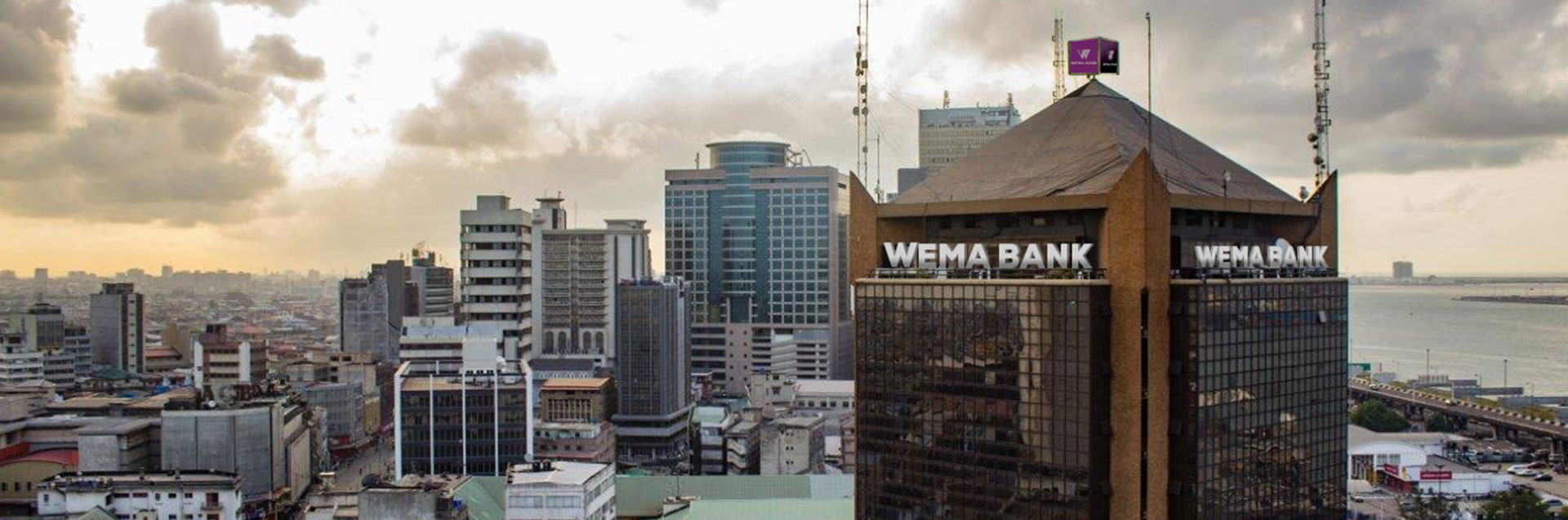
Nigeria’s commercial financial institution Wema Bank has reportedly disconnected seven (7) of its Fintech partners from its payment gateway platform, citing a case of fraud.

The bank disclosed that the move was necessitated following the rising cases of fraud involving some wallet accounts linked to the fintech firms.

In a statement, Wema Bank disclosed that illicit wallet accounts owned by some of its fintech partners using third-party wallet accounts had spiked.

In a bid to protect its customers from falling victim to fraud cases, the bank launched an anti-fraud campaign for sensitization purposes, providing customers with vital information on the tactics used by fraudsters and how they can avoid falling victim to their schemes.

The anti-fraud campaign is targeted at creating awareness, educating, and equipping customers with the necessary information needed to mitigate, detect, and handle fraudulent activities on their bank accounts, which underscores the bank’s commitment to safeguarding customers’ finances and personal data.

Furthermore, Wema Bank acknowledged that the tricks used by these fraudsters are constantly evolving, hence it is committed to staying ahead by providing customers with up-to-date information on their activities.

Speaking on this Wema Bank’s Chief Audit Executive, Oluwole Esomojumi said,

The antics of fraudsters are constantly evolving. To stay steps ahead, it is imperative that consumers have a good understanding of what interaction or engagement are telltale signs of fraud and how they can handle suspicious fraudulent engagements, hence the launch of the Wema Bank anti-fraud campaign. We are steps ahead on our end which is why we have taken time to investigate our fintech partners and those found culpable have been disengaged from our payment gateway platform.

As a bank that is resolute in our stance against fraud, we cannot compromise the safety of our beloved Nigerians, especially when these threats of fraud are emanating from fintechs who use our platforms. Rest assured, there is no room for fraudsters here. We have multiplied the frequency of our security checks and are committed to rooting them out one by one. No fraudster is safe with Wema Bank because customer safety is our priority and empowering the lives and businesses of every customer is our mission.”

Fintech fraud cases have continued to be prevalent in Nigeria for several years, which has raised concerns. A report revealed that between 2019 and July 2023, banking customers lost N51 billion worth of savings to fraud, as cybercriminals are now targeting Fintech bank customers. Even the big names have not been spared, the likes of Flutterwave, Patricia, and Interswitch.

This growing fraud problem is not only affecting customers’ trust, but has created distrust among companies. Recall that in October 2023, Fidelity Bank temporarily restricted fund transfers to neobanks such as PalmPay, OPay, Moniepoint, amongst others.

Notably, there are concerns by several financial experts that some of these Fintech platforms have weak security measures which makes it easy for fraudsters to penetrate. However, Fintech companies in Nigeria have been urged to deploy blockchain technology to prevent cases of fraud in the sector.

Also, they are advised to propagate and implement a system that can anticipate those fraud cases before they happen, as having a solid framework against fraud for financial services has become more crucial than ever.

Currency Devaluation Impacts Wealth of African Millionaires, 1,600 Nigerians Dropped From Dollar Millionaire List – Report

0

In a recent report by Henley and Partners, currency depreciation and underperforming stock markets swept off the wealth of Africa’s millionaires.

This erosion of wealth according to the report, can be largely attributed to the typical composition of African wealth portfolios. African investors reportedly allocated their assets equally across equities, property, and cash.

With African stock markets underperforming against global peers, local property markets facing headwinds, and currencies depreciating against the dollar, African investors have seen their wealth eroded on multiple fronts.

In the report, the South African rand declined by 43% against the US dollar from 2013–2023, and even though the Johannesburg Stock Exchange (JSE) all Share Index, which makes up well over half of Africa’s listed company holdings, rose in local currency terms, it was down 5% in USD terms over that period.

Currencies in several African countries also performed poorly compared to the US dollar over the past 10 years, with dramatic depreciations of over 75% recorded in Nigeria, Egypt, Angola, and Zambia.

Nigeria saw the largest decline in millionaires, followed by Kenya and Egypt with 500 each, and South Africa, 400. In Nigeria, the devaluation of the Naira impacted the wealth of dollar millionaires, which saw their number drop by 16.3 percent in 2023. This also led to 1,600 Nigerian millionaires being swept off the dollar millionaire list.

It is worth noting that the liberalisation of the foreign exchange regime in Nigeria as part of measures to revive the economy led to a large devaluation of the naira. In February 2024, Nigeria and Africa’s richest man Aliko Dangote saw $3 billion wiped off from his wealth in one week. Dangote was one of the most affected by the naira devaluation.

He began climbing in the billionaire ranking in January, gaining a whopping $7 billion in weeks, ranked 82nd in the world, and later plummeted to 132nd wealthiest men after the Naira devalued to par with the parallel market.

Amid these challenges, there are some notable centers of affluence across the continent. The ‘Big 5’ wealth markets — South Africa, Egypt, Nigeria, Kenya, and Morocco — collectively account for 56% of Africa’s high-net-worth individuals and over 90% of its billionaires.

South Africa leads the pack with 37,400 millionaires, 102 centi-millionaires, and 5 billionaires, followed by Egypt with 15,600 millionaires, 52 centi-millionaires, and 7 billionaires.

Going forward, over the next decade (to 2033), the likes of Mauritius, Namibia, Morocco, Zambia, Kenya, Uganda and Rwanda are all expected to experience 80%+ millionaire growth. Mauritius, with its stable governance and favorable tax regime, is projected to experience a remarkable 95% growth rate, positioning it as one of the world’s fastest-growing wealth markets once more. Namibia, too, is poised for impressive high-net-worth growth, with a forecast exceeding 85% by 2033.

However, the report highlights the growing trend of Wealthy Africans seeking residence or citizenship abroad, which calls for the need of African governments to create an enabling environment that encourages local investment and mitigates talent and capital flight.

Implementing measures like bolstering institutions, improving transparency, and enacting investor-friendly policies will be crucial for retaining and attracting wealth. Despite the obstacles, Africa still holds vast potential for wealth generation.

World Bank Report: Rising Inflation Pushed 10 Million Nigerians into Poverty in 2023

0

According to the World Bank’s ‘Macro Poverty Outlook for Nigeria: April 2024’, rising inflation coupled with weak earnings resulted in 10 million Nigerians slipping into poverty in 2023.

The report paints a grim picture of an economy where nominal earnings have failed to keep pace with soaring inflation rates, leading to a decline in living standards across the country.

“Nominal earnings have not kept up with inflation, pushing another 10 million Nigerians into poverty in 2023,” it said.

The report reveals alarming statistics regarding poverty rates in Nigeria across various economic thresholds. Notably, 30.9% of the population falls below the international poverty rate of $2.15 per day. Even more concerning is the fact that 63.5% live in poverty according to the lower middle-income threshold of $3.65 per day, while a staggering 90.8% fall below the upper middle-income poverty line of $6.85 per day.

Root Causes of Economic Strain

The dire economic situation is attributed to a combination of weak macroeconomic fundamentals and deep-seated structural constraints. The overreliance on the oil sector is identified as a significant factor, with its deteriorating performance contributing to macroeconomic instability. Low state revenues, driven by factors such as an expensive petrol subsidy and ineffective tax rates, further exacerbate the challenges faced by the government in providing essential public services.

Additionally, high levels of inflation, fueled by loose monetary policies and depreciating exchange rates, continue to erode purchasing power and hinder economic growth. Structural issues such as inadequate infrastructure, high trade costs, insecurity, weak institutions, and low levels of human capital development further compound Nigeria’s economic woes.

“Nigeria’s economic growth has been insufficient to raise living standards, weighed down by weak macroeconomic fundamentals and several structural constraints. Overreliance on the oil sector for fiscal revenues, exports, and FX inflows led macro stability to erode with the sector’s deteriorating performance in recent years,” the report noted.

“Low revenues—including due to a costly petrol subsidy, low tax rates, and weak tax administration—have limited state capacity and public service delivery.

“Inflation has remained high and escalating on the back of a relatively loose monetary policy and exchange rate depreciation. Structural factors holding back the country’s growth potential include lack of adequate energy and transport infrastructure, high domestic trade costs and foreign trade protectionism, widespread insecurity, weak institutions, and low levels of human capital development.”

Outlook and Projections

The World Bank noted the urgent need for ambitious reforms centered around macroeconomic stabilization to address these challenges. Economic forecasts predict an average growth rate of 3.5% between 2024 and 2026, slightly outpacing the population growth rate. However, poverty rates are expected to continue rising in 2024 and 2025 before stabilizing in 2026, driven by ongoing reforms and persistently high inflation.

Since 2015, Nigeria’s inflation rate has been on an upward trend, reaching 33.2% in March 2024. Food inflation has surged to 40.01% year-on-year, driven by rising prices of essential items such as garri, millet, and yam.

Moreover, the cost of Housing, Water, Electricity, Gas, and Other Fuels has soared by 27.64% over the past year, further burdening Nigerian households amidst escalating inflation and declining incomes.

Against this backdrop, more Nigerians are finding it difficult to cope, as the cost of goods and services outweighs their earning power. This suggests a likelihood of more Nigerians falling into abject poverty in the next two years.

Efforts to stabilize the economy are expected to gradually moderate inflation to 15.1% by 2026, supported by tightened monetary policies and exchange rate stabilization initiatives.

The report highlights the urgent need for comprehensive reforms to address Nigeria’s economic challenges and alleviate the growing burden of poverty on its population.