DD
MM
YYYY

PAGES

DD
MM
YYYY

spot_img

PAGES

Home Blog Page 3448

The Rains of Profits in Nigerian Banking and Power of Value Capture

1

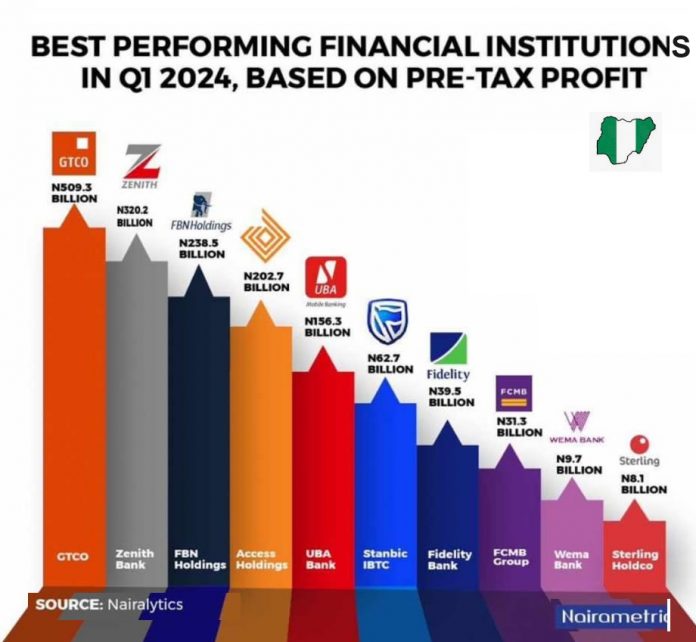
The numbers are out and Nigerian banking is firing on all cylinders: “Nigerian banks recorded a combined pre-tax profit of N1.58 trillion in Q1 2024, marking a 263% year-on-year increase compared to N436 billion in Q1 2023, with GTCO posting the highest profit in Nigeria banking history for the quarter…Top performers in Q1 2024 included Zenith Bank (N320.2 billion pre-tax profit), FBN Holdings (N238.5 billion), Access Holdings (N202.7 billion), and UBA (N156.3 billion)…”, notes Nairametrics.

Congratulations folks and well done. Nigerian bankers are the hardest working professionals in our nation. If everyone has the same level of productivity they have, Nigeria would have been a bigger Singapore. Period.

Yes, it is an industry where excuses are not tolerated, and the workers understand that loud and clear. Those days, I used to board diesel trucks from Apapa to Victoria Island to ensure diesel was delivered to Diamond Bank’s headquarters. I used to go to the VI NEPA office at 1am begging them to keep light on the Diamond Bank line. I worked for 3 years including on Christmas Day, Easter Day, etc without a vacation.  

But I enjoyed it because they elevated your spirit to see a mission which if you drop the ball, that mission could be imperiled. Go to night shift, sleep and the next day, the branches will not open because “system is down”. Why? The entry level engineers in the HQs did not complete the tasking end of day runs on time. Sleep twice, you are out!

So, when you look at these numbers, put everything in context: they’re coming from an industry which works and has figured out how to capture value (read my Harvard piece on capturing value here). 

GTBank’s GTCO has one of the finest genes; it has an industry-leading cost-to-income ratio, averaged over a decade, and that continues to show on its profitability. I am also happy to note that the elephant is dancing well despite the recent paralysis. So, guys, enjoy the party.

Now your question – why are banks breaking profit records when companies are closing and the economy struggling? 

My response: It is not the banking sector’s fault that the Central Bank of Nigeria (CBN) is increasing the prime rate which forces banks to hike interest rates on their customers. It is also not the banking sector’s fault that Nigeria floated its currency which delivers higher value for their foreign currency denominated financial instruments. So, if you visit your bank and the interest rate has gone up, do not curse the bank, ask the apex bank because those rates are partly driven by the central bank policy.

Now, he is defending the banks to protect his friends. That is not fair to a village boy; I hope you can take time and master how banks design their processes and playbooks to capture value in Nigeria.


Matter Labs Trademarking of “ZK”, A Closer Look At IP Licensing in Web3

0

The intersection of intellectual property (IP) and the burgeoning field of Web3 is a complex and evolving landscape. One of the recent developments in this space involves Matter Labs and their efforts around the trademarking of ‘ZK’, a term commonly associated with zero-knowledge proofs, a privacy-preserving cryptographic method. This move has sparked a significant debate within the Web3 community regarding the implications of IP licensing and trademarking in an ecosystem that values decentralization and open-source principles.

Matter Labs, known for their development of the zkSync protocol, filed to claim “zero-knowledge” as a trademark in nine countries, which led to public outcry from other projects working on zero-knowledge-based solutions. The contention lies in the fact that zero-knowledge proofs are not a new concept and have been a part of cryptographic discussions since the 1980s. The technology saw its first real-world application with the launch of the Zcoin and Zcash protocols in 2016, which utilized zero-knowledge proofs to enhance transaction privacy on the blockchain.

The trademark bid by Matter Labs raises questions about the ownership and commercialization of terms and technologies that many believe should remain in the public domain. The Web3 ethos often leans towards collaborative development and shared advancements, with many projects releasing their code under open-source licenses to foster innovation and collective growth.

In response to Matter Labs’ trademark filing, a joint statement from Starkware, Polygon, and Polyhedra—three teams also working on zero-knowledge solutions—called for the Web3 community to demand the withdrawal of these trademarks. They argue that zero-knowledge proofs should be considered a public good, belonging to everyone, and not subject to corporate ownership.

On the flip side, the case of HYPERCOMIC illustrates a different approach to IP in Web3. HYPERCOMIC, a consortium involving Korea’s leading webtoons and Netflix production units, announced a strategic collaboration with Matter Labs to leverage zkSync’s blockchain technology. Their goal is to create a decentralized IP ecosystem that incentivizes and rewards fans for interacting with and supporting HYPERCOMIC’s IPs. This model aims to revolutionize how users engage with IP content, allowing fans to play an active role in the growth and direction of IPs, while also earning rewards for their contributions.

The HYPERCOMIC initiative highlights the potential for Web3 technologies to create novel IP management and monetization models that benefit creators and consumers alike. It presents a contrast to the traditional centralized control of IP growth by distributors and offers a community-driven approach to supporting and developing content.

The debate around Matter Labs’ ‘ZK’ trademark bid and the contrasting models of IP management in Web3 underscores the need for a nuanced understanding of IP rights in the digital age. As the Web3 space continues to evolve, it will be crucial for the community to navigate these issues carefully, balancing the protection of innovations with the ethos of openness and accessibility that many associate with the decentralized web.

The ongoing discussions and actions taken by various stakeholders in the Web3 community will likely shape the future of IP licensing and trademarking in this new digital frontier. It remains to be seen how these tensions will resolve and what precedents will be set for future innovations in the space. For now, the Matter Labs ‘ZK’ trademark controversy serves as a pivotal case study in the complex interplay between IP rights and the principles of Web3.

Impacts of Celebrity’s Token Launch on the Crypto Industry

0

The cryptocurrency industry has witnessed a significant transformation with the advent of celebrity-backed digital tokens. This new trend has introduced a unique dynamic to the market, capturing the attention of both investors and fans alike. The recent launch of a token by a renowned Australian rapper on the Solana blockchain is a testament to the growing influence of celebrities in the crypto space.

The Impact of Celebrity Endorsements on Cryptocurrency.

Celebrity endorsements have long been a powerful tool in marketing, capable of swaying public opinion and consumer behavior. In the realm of cryptocurrency, the effect is magnified due to the nascent and highly speculative nature of the market. When celebrities enter the crypto industry, they bring with them a substantial following, which can lead to increased awareness and adoption of digital assets.

The phenomenon of celebrities launching their own tokens has sparked a new level of interest in cryptocurrencies. These tokens often carry the personal brand of the celebrity, offering a unique value proposition to their fans. For instance, the recent launch of ‘MOTHER’ by Iggy Azalea has not only garnered media attention but also highlighted the potential for personal branding in the crypto market.

While the involvement of celebrities can lead to a surge in market activity, it also comes with its own set of challenges. The hype generated by celebrity endorsements can sometimes overshadow the underlying value and utility of the token, leading to inflated prices and speculative bubbles. Moreover, the risk of scams and deceptive practices, as seen in some controversial token launches, remains a concern for the industry.

As the crypto industry continues to mature, the role of celebrity tokens will likely evolve, potentially leading to more sophisticated and integrated use cases. For now, they remain a fascinating aspect of the crypto phenomenon, blending the allure of fame with the potential of blockchain technology.

On the flip side, the successful integration of celebrity tokens into the crypto ecosystem can offer a range of benefits. It can enhance the visibility of blockchain technology, attract new demographics to the market, and potentially lead to innovative use cases for digital assets.

As the crypto industry continues to evolve, the role of celebrities will likely become more pronounced. The key to harnessing the positive aspects of this trend lies in transparency, education, and responsible promotion. By ensuring that celebrity-backed tokens are launched with clear objectives and genuine utility, the industry can mitigate risks and foster a healthy environment for growth.

The impact of celebrity token launches on the crypto industry is multifaceted. It presents opportunities for market expansion and innovation, while also posing challenges that require careful consideration. As the industry matures, the integration of celebrity influence with digital assets will undoubtedly shape the future of cryptocurrency.

The exploration of social tokens and their history offers a comprehensive understanding of this emerging trend and its potential trajectory in the digital economy. The crypto industry stands at the cusp of a new era, one where the convergence of celebrity culture and digital assets could redefine the very nature of value and investment in the years to come.

Nvidia Set to Overtake Apple as World’s Second-Most Valuable Company, Thanks to AI Boom

0

Nvidia, a leading semiconductor company, is on the brink of surpassing Apple to become the world’s second-most valuable company, according to Reuters’ analysis.

This shift stems from the growing influence of artificial intelligence (AI) technologies on the market. Nvidia’s high-end chips, essential for virtually all AI applications such as OpenAI’s ChatGPT, have significantly boosted the company’s valuation, nearly tripling its worth over the past year to $2.68 trillion.

Nvidia’s rapid ascent in the stock market can be attributed to its strategic alignment with major technological trends. Starting with gaming demand, followed by the cryptocurrency boom, and now the AI surge, Nvidia has consistently matched innovation with market demand. This has resulted in explosive growth for the company.

“It is certainly notable because Apple has been so dominant for so long, especially on the growth and innovation front. Recently though, Apple’s innovation curve seems to have flattened, showing slower future growth,” said Brian Mulberry, client portfolio manager at Zacks Investment Management.

“On the other hand, Nvidia has been able to catch wave upon wave of growth. Beginning with gaming demand, then crypto and now AI, they have been able to perfectly match innovation with demand and that equals explosive growth,” he added.

In contrast, Apple has faced significant challenges. The tech giant, which ceded its No. 1 spot to Microsoft earlier this year, is grappling with weak demand for its iPhones and stiff competition in China. Apple’s valuation currently stands at $2.92 trillion, but the company’s innovation trajectory has slowed, impacting its growth prospects.

Nvidia’s influence on the stock market has been profound. The company is heavily weighted on the S&P 500 and the Nasdaq, playing a crucial role in driving U.S. stocks to record highs. It accounted for more than a third of the S&P 500’s gains this year, underscoring its pivotal role in the market.

Nvidia also set a record by becoming the fastest company to grow from $1 trillion to $2 trillion in 2024, outpacing giants like Amazon, Google-parent Alphabet, and Saudi Aramco. This rapid growth is fueled by Nvidia’s consistent ability to exceed Wall Street’s expectations for revenue and profit. The demand for its graphic processors has far outstripped supply as major tech companies race to integrate AI into their systems.

Despite the surge in its stock price, Nvidia’s forward earnings valuation has fallen, trading at 37 times forward earnings compared to 48 times a year ago, according to LSEG data. This indicates a sharp increase in analysts’ earnings estimates, reflecting strong confidence in Nvidia’s future performance.

Nvidia’s popularity extends to the derivatives market as well. The GraniteShares 2x Long NVDA Daily ETF, which tracks twice the daily percentage change in Nvidia, is the largest single-stock ETF. The fund recently clocked $1 billion in daily turnover for the first time ahead of Nvidia’s results, and its total net assets hit a record $2.82 billion this week, according to Lipper data.

Options traders are similarly bullish. Nvidia’s volumes, particularly for call options, have picked up in recent sessions following the surge in its stock price. Thursday marked the fifth straight session where more than a million Nvidia call options changed hands, the longest such streak in the stock’s history, according to a Reuters analysis of Trade Alert data.

Nvidia’s trajectory highlights the transformative impact of AI on the tech industry. The company’s ability to innovate and meet market demands positions it well to continue its upward momentum. As AI applications become more pervasive, Nvidia’s high-end chips will remain in high demand, ensuring sustained growth and market dominance.

Meanwhile, Apple faces the challenge of reinvigorating its innovation pipeline and navigating a highly competitive market. The company’s ability to adapt and innovate will be critical in maintaining its position among the world’s top companies.

Real Madrid Defeats Dortmund in Champions League Final: A Record 15th Title

0

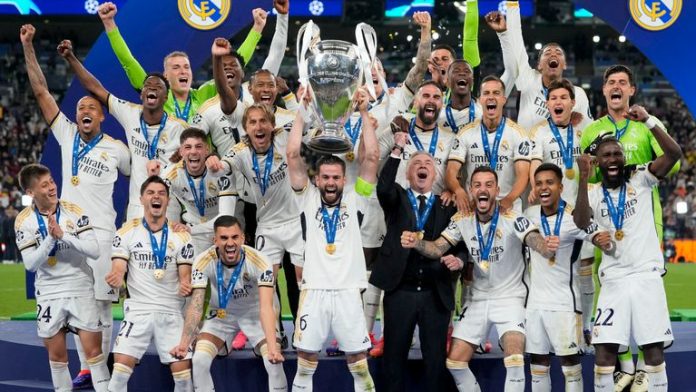
After a night of intense effort and strategy, Real Madrid emerged victorious once again in the Champions League final, with their fans creating a wall of white and serenading their unbeatable team.

The victory at Wembley Stadium marked Real Madrid’s record-extending 15th Champions League title, cementing their status as Europe’s most successful football club.

The Road to Victory

Real Madrid’s manager, Carlo Ancelotti, described the 2023-2024 season as a “10 out of 10” after their 2-0 victory over Borussia Dortmund.

“This season has been 10/10. My players have been spectacular,” Ancelotti said, reflecting on a campaign that also saw Real clinch the La Liga title in Spain.

The final itself was a tense affair, with both goals coming late in the second half from Dani Carvajal and Vinícius Júnior. The success marked Ancelotti’s fifth Champions League win as a manager, another record, and placed players like Toni Kroos, Carvajal, Luka Modric, and Nacho alongside club legend Paco Gento with six Champions League wins each.

Dortmund’s Missed Opportunities

Borussia Dortmund, under the guidance of Edin Terzic, dominated the first half of the match but were unable to capitalize on their chances. Julian Brandt, Niclas Füllkrug, and Karim Adeyemi all missed clear opportunities to put Dortmund ahead.

“They [Dortmund] played better than us and had more chances than us, but they let us get away with 0-0 at half-time,” Ancelotti admitted.

Füllkrug came closest to scoring for Dortmund when he hit the post in the 24th minute. Real Madrid struggled to get into the game initially, with former Dortmund star Jude Bellingham effectively neutralized by his old teammates. However, after weathering the first-half storm, Real Madrid found their rhythm in the second half, leading to their decisive goals.

Real Madrid’s Unyielding Spirit

Reflecting on the season, Ancelotti highlighted the resilience and determination of his squad. “In the second half we had more balance, played better and managed to win the game. This win makes me very satisfied because we never give up and always fight until the end,” he said.

Ancelotti also noted the team’s ability to overcome numerous challenges, including the loss of key players, which they compensated for with commitment and teamwork.

Having secured their 15th Champions League title, Ancelotti emphasized that Real Madrid’s focus would quickly shift to next season.

“In this club, there is a continuous demand and we are never satisfied. After the Euros and Copa America, the players will come back with the same hunger and ambition as before,” he said.

Tribute to Toni Kroos

The final also marked the last club game for midfielder Toni Kroos, who plans to retire after Euro 2024. Ancelotti paid tribute to Kroos, praising his professionalism and impact on the team.

“I’m really grateful to Kroos. He finished at the very top, there is no way to finish higher than this. He is a legend at this club,” Ancelotti said, adding that the club would welcome him back if he ever changed his mind about retiring.

Real Madrid’s Historic Dominance in Europe

Real Madrid’s dominance in the Champions League is unparalleled. The Spanish giants won the first edition of the tournament, then known as the European Cup, in 1955 and retained the trophy for the next four editions—a record for the longest consecutive wins in the competition’s history.

With 15 titles, Real Madrid has more than doubled the tally of the second-most successful club, AC Milan, which has seven titles. German powerhouse Bayern Munich and English club Liverpool have each won the Champions League six times. Other notable multi-time winners include Barcelona (5), Ajax (4), Manchester United (3), Inter Milan (3), Juventus (2), Benfica (2), Nottingham Forest (2), Porto (2), and Chelsea (2).

Since their last European Cup final loss to Liverpool in 1981, Real Madrid has won nine consecutive finals over 43 years, showcasing their enduring prowess in European football.

The Decisive Moments

The final’s turning points came in the latter stages of the match. Dani Carvajal broke the deadlock with a header from a corner, and shortly after, Vinícius Júnior capitalized on a defensive error to secure the second goal. The match was particularly harsh on Dortmund defender Ian Maatsen, who was involved in the mistakes that led to both goals.

“It was a very difficult game,” Carvajal told Movistar. “In the first half we came out alive, they were quite a lot better. We knew our moment would come … We knew how to suffer. That’s football.”

This Champions League victory adds to Real Madrid’s storied legacy and highlights their ability to triumph under pressure. The club’s journey through the season, marked by strategic brilliance and unyielding determination, underlines why they are considered the best club in the world.