DD
MM
YYYY

PAGES

DD
MM
YYYY

spot_img

PAGES

Home Blog Page 3459

Experts Predict BlockDAG Price to Reach $30 by 2030, Alongside TRON Transfers and INJ Price Updates

0

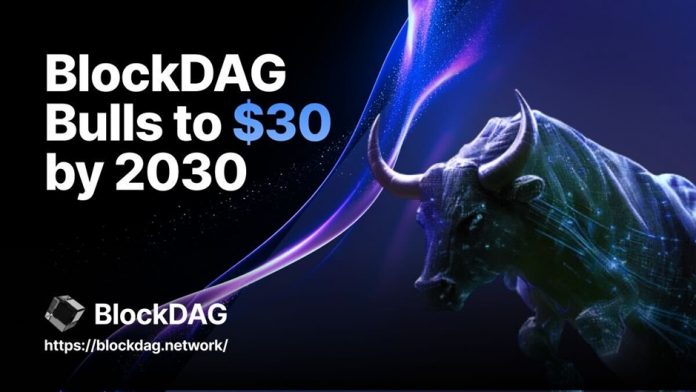
BlockDAG is a top crypto gem, strategically poised for substantial growth with a predicted price surge to $30 by 2030. Amidst active TRON transfers and dynamic INJ price movements, BlockDAG showcases its robust potential through a successful presale phase, raising $19 Million to date. This rapid accumulation of funds highlights investors’ confidence in its cutting-edge technology and the promising financial returns anticipated from early participation.

TRON (TRX): A Leader in Stablecoin Transactions

TRON has made headlines with its impressive handling of USDT transactions, significantly outpacing Ethereum. Last week alone, over $110 billion in USDT was transferred through TRON, highlighting its dominance in stablecoin transactions. Low network fees and a robust user base support this activity, making TRON a top contender in the stablecoin market. TRON now holds over 52% of the total circulating USDT, up 16% from the start of the year, further cementing its position as daily active users and transaction volume leader.

Injective (INJ): Poised for Breakout with Innovative DeFi Integration

The Injective is showing signs of breaking out from its consolidation phase. Recent on-chain data reveals an uptick in daily active addresses, suggesting growing user engagement and potential for substantial price movements. With 44.27% of INJ holders in profit, the network is poised for further growth. This activity is underpinned by innovative projects like InQubeta’s AI-driven investment strategies, which enhance the DeFi landscape and attract new investors to Injective’s ecosystem.
BlockDAG: Pioneering Crypto Growth with Advanced Technology

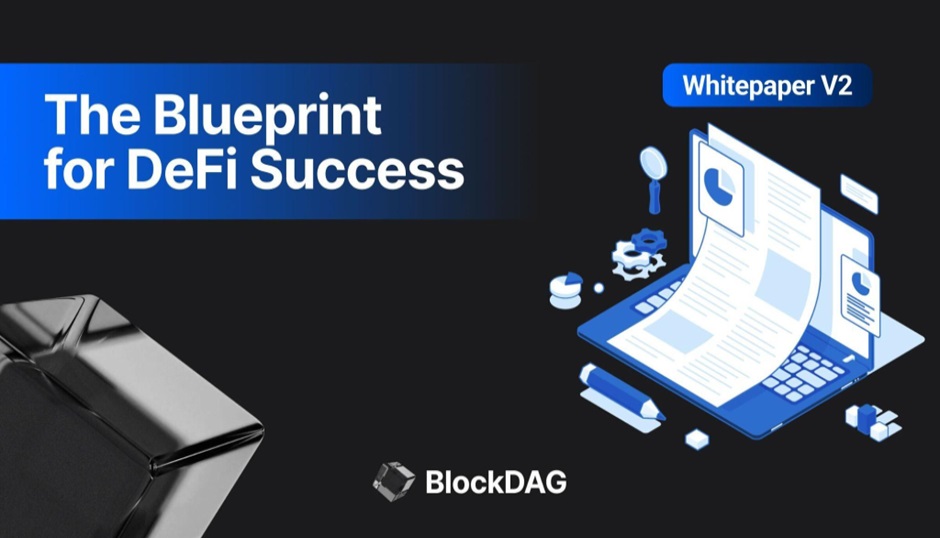
BlockDAG introduces a groundbreaking approach by integrating traditional blockchain with Directed Acyclic Graphs (DAGs), enhancing scalability and speed. The recent release of Whitepaper V2 outlines this technology’s potential, highlighting a projected transaction throughput of up to 15,000 transactions per second. As detailed in the whitepaper, this innovation positions BlockDAG to revolutionize applications requiring rapid processing and low transaction costs.

As BlockDAG continues its development, the financial outlook is promising. Experts forecast a significant increase in value, with predictions suggesting that the price of BDAG could reach $30 by 2030. This optimistic forecast is fueled by the network’s ongoing enhancements and strategic market positioning outlined in its roadmap. Such growth potential makes BlockDAG an attractive option for investors looking for long-term gains.

BlockDAG’s presale phases have shown impressive progress, with batch prices gradually increasing—currently, batch 9 is priced at $0.005, with batch 10 expected to rise to $0.006. This structure offers early investors substantial growth potential, evidenced by the $19 Million raised in the presale. The recent teaser trailer for an upcoming keynote from the moon has sparked additional interest, promising to boost visibility and investor enthusiasm further.
Final Thought

BlockDAG solidifies its position as a top investment opportunity within the crypto landscape. With its presale batches rapidly progressing and prices rising, this crypto gem showcases a promising future with experts predicting a stellar rise to $30 by 2030. Emphasizing its advanced features and successful fundraising, BlockDAG is the smart choice for investors looking to capitalize on innovative crypto technologies. To secure a stake in its burgeoning network, consider investing early in BlockDAG’s dynamic presale.

.

Join BlockDAG Presale Now:

Website: https://blockdag.network

Presale: https://purchase.blockdag.network

Telegram: https://t.me/blockDAGnetworkOfficial

Discord: https://discord.gg/Q7BxghMVyuyu
Nigeria to Receive $2.2bn from The Word Bank Loans Amid Concerns Over Rising Debt

0

The Federal Government of Nigeria is set to receive a substantial loan package totaling around $2.2 billion from the World Bank, along with additional budget support from the African Development Bank (AfDB).

Minister of Finance, Wale Edun, announced these developments during a press briefing after Nigeria participated in the World Bank/IMF Spring Meetings in Washington DC, United States.

Edun highlighted various sources of international funding to boost the Nigerian economy, including diaspora remittances, foreign portfolio investments, and support from international development partners such as the World Bank and AfDB. The total loan package from the World Bank, amounting to $2.25 billion, offers favorable terms with a lengthy moratorium period of 10 to 20 years and an interest rate of just 1%.

He stated, “We have qualified for the processing just this week to the Board of Directors of the World bank of a total package of $2.25 billion of what you can call ‘the closest you can get to a free lunch’- virtually a grant. It’s for about a 10- 20 year moratorium and about 1% interest.”
Additionally, low-interest budgetary support from the African Development Bank is expected to further boost Nigeria’s economic recovery efforts.

“In addition, there is a similar budgetary support – low-interest funding from the African Development Bank (AfDB) and, clearly, there are also ongoing discussions with foreign direct investors across many sectors,” he said.

Edun also revealed plans to issue dollar-denominated securities targeted at Nigerians in the diaspora and those with foreign-denominated savings within Nigeria, aiming to attract foreign exchange inflows into the country.

According to the Minister, the issuing of government securities at an interest rate closer to the CBN’s monetary policy rate (MPR) is an indication of the collaboration between both sides of the economy in tackling inflation in the country and attracting forex inflows.

However, concerns have been raised regarding Nigeria’s escalating public debt, with projections indicating that the nation’s total debt profile could reach at least N107.38 trillion soon. This anticipated increase in debt follows recent approvals for fresh borrowings by the Federal Government and new securitization of the Central Bank of Nigeria’s Ways and Means advances.

In December 2023, the Senate approved President Bola Tinubu’s request to borrow $7.8 billion and €100 million as part of the Federal Government’s 2022-2024 borrowing plan. Nigeria’s total debt stood at N87.91 trillion as of September 2023, according to data from the Debt Management Office.

The mounting debt burden has raised concerns about its sustainability, particularly as Nigeria’s revenue is increasingly diverted towards debt servicing, hindering economic and infrastructural development. However, it occurs amidst a global backdrop of mounting debt burdens on developing countries. The United Nations Trade and Development Report Update (April 2024) highlights the challenges faced by governments in developing countries as they struggle to manage increasing debt levels.

“Developing countries’ governments are struggling under increasing debt payment obligations. In 2022, they paid $50 billion more to external creditors than they received in new loans,” the report.
“By 2023, nine low-income countries had fallen into debt distress, with an additional 25 on the brink, underscoring a worsening global debt crisis.”

These challenges underscore the urgency for Nigeria to carefully manage its debt levels to avoid jeopardizing its long-term economic stability and growth prospects.

The Nigeria’s Lost Economic Data Under APC Government

0

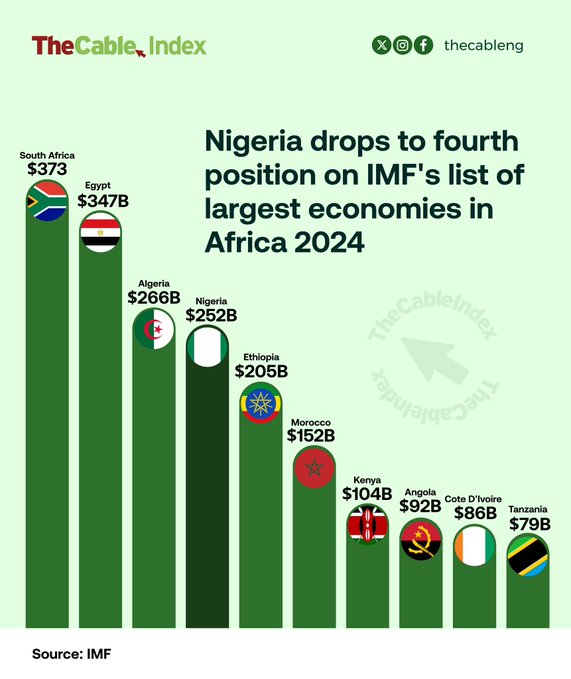
Many things happened last year including Nigeria losing its #1 position as Africa’s largest economy, to now #4. But I read one financial report where a company which has been printing losses in Naira, but reporting in USD, noted that it reduced its losses without mentioning that currency shift was the reason the loss reduced, not because of any operational efficiency or anything else for that matter!

Left and right, Nigeria has recorded a lost economic decade under the APC government and that statement is factual: “Nigeria’s GDP has plummeted under the All Progressives Congress (APC) government, dropping from $568.49 billion in 2014 to less than $260 billion in 2024.”

Of course, making such a factual statement will attract tribal bombs and partisan attacks as though not writing it will make the mess disappear. For those who care to look at issues on their merits, we have enough data to compare APC and PDP, and we can write that PDP was better in governing, than APC, using a decade of comparative data.

“Nigeria’s economic growth has been insufficient to raise living standards, weighed down by weak macroeconomic fundamentals and several structural constraints. Overreliance on the oil sector for fiscal revenues, exports, and FX inflows led macro stability to erode with the sector’s deteriorating performance in recent years. Low revenues—including due to a costly petrol subsidy, low tax rates, and weak tax administration—have limited state capacity and public service delivery.

“Inflation has remained high and escalating on the back of a relatively loose monetary policy and exchange rate depreciation. Structural factors holding back the country’s growth potential include lack of adequate energy and transport infrastructure, high domestic trade costs and foreign trade protectionism, widespread insecurity, weak institutions, and low levels of human capital development.”

Russia’s Embrace of Cryptocurrency for International Settlements is a Progressive Move

0

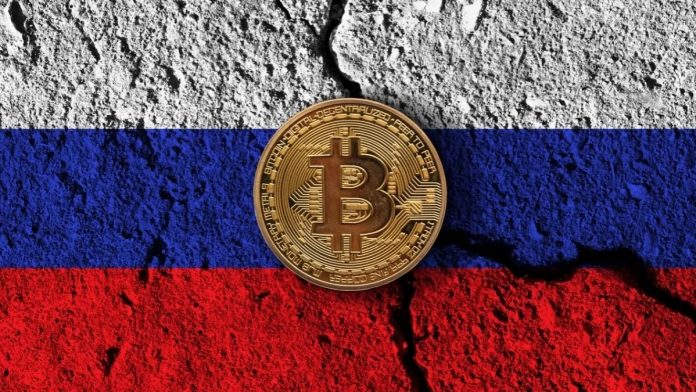
In a significant shift in financial policy, the Bank of Russia has announced its support for accelerating the adoption of cryptocurrency payments for international settlements. This move marks a progressive step towards integrating digital currencies into the global financial landscape, potentially altering the dynamics of international trade and commerce.

The announcement by the Bank of Russia comes at a time when the use of cryptocurrencies in global transactions is becoming increasingly prevalent. By adopting a sandbox-style experimental regime, the Bank aims to explore the practicalities and implications of cryptocurrency-based settlements while maintaining a controlled environment to mitigate potential risks.

Elvira Nabiullina, the governor of the Bank of Russia, has emphasized the importance of launching these crypto-based payments within a regulated framework. This approach reflects a cautious yet forward-thinking strategy, acknowledging the potential of cryptocurrencies to facilitate international trade while recognizing the need for oversight and stability in financial operations.

The decision to support cryptocurrency usage for international settlements aligns with Russia’s broader efforts to expand the variety of currencies and payment methods available for cross-border transactions. Amidst global sanctions and economic pressures, this initiative could provide alternative avenues for Russia to engage in international trade and maintain economic resilience.

Furthermore, the Bank of Russia’s openness to using national digital assets, also known as central bank digital currencies (CBDCs), without the sandbox exploratory phase, indicates a commitment to advancing digital finance within the country. The exploration of CBDCs for international payments is already underway, with the potential to streamline transactions and enhance the efficiency of the financial system.

This development is not only significant for Russia but also for the international financial community. As countries and financial institutions around the world grapple with the integration of digital currencies, the Bank of Russia’s initiative serves as a potential model for others to consider. The move could spur further innovation and adoption of cryptocurrency in international settlements, challenging traditional financial frameworks and paving the way for a more interconnected and digital global economy.

The Bank of Russia’s support for cryptocurrency in international settlements is a testament to the evolving nature of global finance. As the world moves towards a more digitized economic structure, the integration of cryptocurrency into mainstream financial operations could redefine the way nations conduct trade and manage international relations.

As the conversation around cryptocurrency and international trade continues to evolve, it will be crucial to monitor the outcomes of Russia’s experimental regime and the broader impact on the global financial system. The Bank of Russia’s initiative may well be a harbinger of a new era in international settlements, one that embraces the possibilities of digital currencies while navigating the complexities of a rapidly changing economic landscape.

Boston Dynamics introduces new generation “Atlas” Robots

0

Boston Dynamics, a trailblazer in the field of robotics, has recently unveiled its latest marvel: the new generation “Atlas” robot. This cutting-edge humanoid robot represents a significant leap forward in robotics technology, showcasing an array of advancements that could redefine the industry’s future.

The new Atlas robot is a fully electric platform, marking a departure from the previous hydraulic models. This evolution not only enhances the robot’s efficiency but also its potential for integration into various commercial applications. The electric Atlas is designed to operate in real-world environments, a testament to Boston Dynamics’ commitment to creating robots that are not only technologically impressive but also practically valuable.

One of the most striking features of the new Atlas is its strength and range of motion, which surpasses that of its predecessors. The robot’s advanced control system and state-of-the-art hardware enable it to perform complex tasks with a level of agility and dexterity that mimics human capabilities. This humanoid robot can navigate its surroundings with unprecedented precision, thanks to its depth sensors and real-time perception abilities.

Boston Dynamics, renowned for its cutting-edge robotics, has developed an impressive array of robots that have captured the world’s attention. Here’s a look at some of their most notable creations.

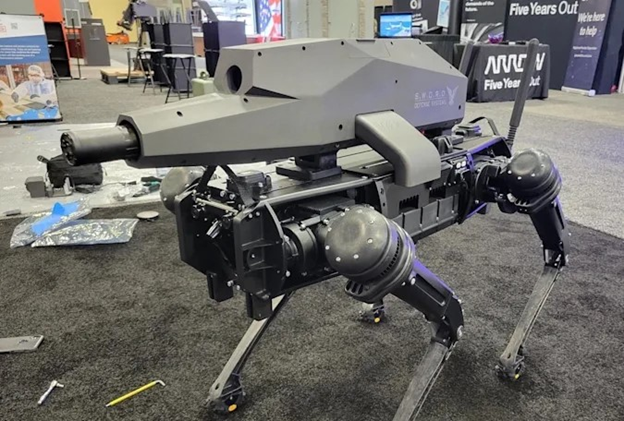
Spot: This four-legged robot is perhaps the most recognized of Boston Dynamics’ machines. Spot is designed for a variety of applications, from navigating rough terrain to assisting with inspections and data collection in hazardous environments.

Stretch: Stretch is a robot specialized for warehouse operations. It’s equipped to handle tasks such as unloading trucks and moving boxes, aiming to improve efficiency and reduce the physical strain on human workers.

BigDog: Developed initially in 2005, BigDog was one of the earliest robots designed by Boston Dynamics. It was created to serve as a robotic pack mule to accompany soldiers in terrain too rough for conventional vehicles.

Handle: Handle is a robot that combines wheels and legs, allowing it to maneuver in tight spaces and handle objects with great agility. It’s particularly adept at box handling, making it another asset for logistics and warehouse environments.

The development of Atlas has been a journey of innovation and collaboration. Boston Dynamics has partnered with Hyundai to test and iterate Atlas applications, aiming to refine the robot’s functionalities for industrial use. The focus is on creating a robot that can work alongside humans, enhancing productivity and safety in settings such as manufacturing plants.

Atlas’s introduction is not just about the robot itself but also the broader implications for the digital transformation ecosystem. The deployment of autonomous mobile robots like Atlas requires a robust IT infrastructure, employee training, and the establishment of new operational processes. With over 1,500 deployments of its Spot robot, Boston Dynamics has already begun educating companies on how to coexist with autonomous mobile robots.

The new Atlas robot is a beacon of innovation, symbolizing the potential of robotics to expand human potential and transform the way we live and work. As Boston Dynamics continues to push the boundaries of what robots can do, the world watches with anticipation to see how Atlas will shape the future of robotics and automation.