DD
MM
YYYY

PAGES

DD
MM
YYYY

spot_img

PAGES

Home Blog Page 3462

Enhancing Passport Acquisition: Nigeria Unveils Five Steps of Pioneering Automated System

1

The Ministry of Interior in Nigeria has unveiled a groundbreaking leap in passport acquisition, marking a historic milestone in the nation’s administrative services.

During a comprehensive review of Nigeria Immigration Service facilities in Abuja, Minister of Interior, Olubunmi Tunji-Ojo, announced the launch of the country’s inaugural online portal for automated passport applications.

Set to go live on January 8, 2024, the automated passport application system is poised to revolutionize the process for both Nigerian citizens and international individuals seeking passports.

Minister Tunji-Ojo noted the significance of this innovation, emphasizing its pivotal role in substantially reducing human interaction during passport application procedures. This is aimed at bringing efficiency and convenience to individuals navigating the complexities of acquiring international passports.

Outlined below are the streamlined steps individuals can follow to seamlessly apply for a passport through this innovative online portal:

Step 1: Access and NIN Auto-fill
Applicants will visit passport.immigration.gov.ng and input their National Identification Number (NIN) to auto-populate their data from the National Identity Management Commission (NIMC). Basic details like date of birth and captcha will be needed for identity confirmation.

Step 2: Complete Passport Data Fields
Once the NIN-generated data is populated, applicants proceed to select their passport type, preferred processing state, booklet type, and processing office. The chosen options will determine applicable passport fees: N35,000 for a 5-year, 32-page passport and N64,000 for a 10-year, 64-page passport. Diaspora applicants will pay $142 for a 5-year (32 pages) and $242 for a 10-year (64 pages) validity.

Step 3: Upload Photographs and Documents
Applicants must upload a passport photograph adhering to International Civil Aviation Organization (ICAO) standards, ensuring it is 2 inches by 2 inches, with proper brightness, contrast, and natural skin tones. Additionally, they will fill in their details on the portal.

Step 4: Biometric Capturing at Immigration Office
After fulfilling online requirements, applicants will visit their chosen office for biometric capturing.

Step 5: Track Application Progress and Pickup
Using the provided application and reference numbers, applicants can monitor their application’s progress. Once ready for pickup, they can collect their passports from the nearest immigration office.

Minister Tunji-Ojo assured applicants that passport collection would be available within 2 weeks after application submission, marking a significant improvement in processing times.

This milestone development aligns with the minister’s steadfast commitment to resolving persistent challenges in passport processing. Notably, Tunji-Ojo successfully cleared a backlog of 204,332 passports last year, demonstrating his dedication to streamlining passport issuance processes for Nigerians.

The unveiling of this automated system heralds a new era of efficiency and convenience in Nigeria’s administrative services, promising a smoother and more accessible passport application experience for all.
NCC Grants Approval For Partial Disconnection of GLO by MTN Over Unpaid Debt: What it Means For Subscribers

0

The Nigerian Communications Commission (NCC) has approved a partial disconnection of Globacom by MTN due to Globacom’s failure to settle its interconnect debt.

The NCC disclosed this in a public notice issued on Monday, announcing that Globacom has been given a 10-day notice starting from January 8, to pay its debt, or risk disconnection should the company default in payment.

The commission disclosed that Glo was notified of the application made by MTN and was allowed to comment and state its case. However, having examined the case, the NCC concluded that Globacom does not have any justifiable reason for non-payment of the interconnect charges. 

The NCC wrote,

The Nigerian Communications Commission hereby notifies the public and subscribers of Globacom Limited (Globacom) that approval has been granted for the partial disconnection of Globacom from MTN Nigeria Communications Plc, due to non-settlement of interconnect charges. 

“Globacom was notified of the application made by MTN and was allowed to comment and state its case. The Commission, having examined the application and circumstances surrounding the indebtedness, determined that Globacom does not have sufficient or justifiable reason for non-payment of the interconnect charges. 

“All subscribers are, therefore, requested to TAKE NOTICE that: The Commission has approved the Partial Disconnection of Globacom to MTN in accordance with Section 100 of the Nigerian Communications Act, 2003, and Paragraph 9 of the Guidelines on Procedure for Granting Approval to Disconnect Telecommunications Operators, 2012. 

“At the expiration of 10 (ten) days from the date of this notice, subscribers of Globacom will no longer be able to make calls to MTN but will be able to RECEIVE CALLS. The Partial Disconnection, however, will allow inbound calls to the Globacom network. Please note that this disconnection will persist until otherwise determined by the Commission.” 

What it means for Glo Subscribers;

1.) Under this partial disconnection, subscribers of Globacom will be unable to initiate calls to any MTN numbers. However, Glo customers will still be able to receive inbound calls from MTN customers.

2.) Globacom’s subscribers will experience several limitations in their communication capabilities, specifically with the inability to make outgoing calls to any MTN numbers during the period of partial disconnection.

3.) The disconnection could cause inconvenience for Globacom customers who regularly communicate with MTN subscribers. It may disrupt personal and business communications, affecting users’ ability to make crucial calls.

4.) Potential Revenue Loss for Globacom: The inability to make calls to MTN numbers might result in a temporary loss of revenue for Globacom, as outgoing calls to MTN subscribers contribute to the telecom company’s earnings.

5.) Reputation and Customer Trust Impact: Service disruptions and financial disputes can affect the reputation of the involved telecom operators. Customers may lose trust in the affected companies, particularly if communication issues persist or if the situation is not resolved promptly.

It is however interesting to note that this is not the first time Glo subscribers will be disconnected from making calls to MTN over unpaid debt.

In 2019, MTN, acting upon a directive from the NCC, briefly disconnected Glo subscribers over a N4bn debt.

United States National Debt Ceiling

0

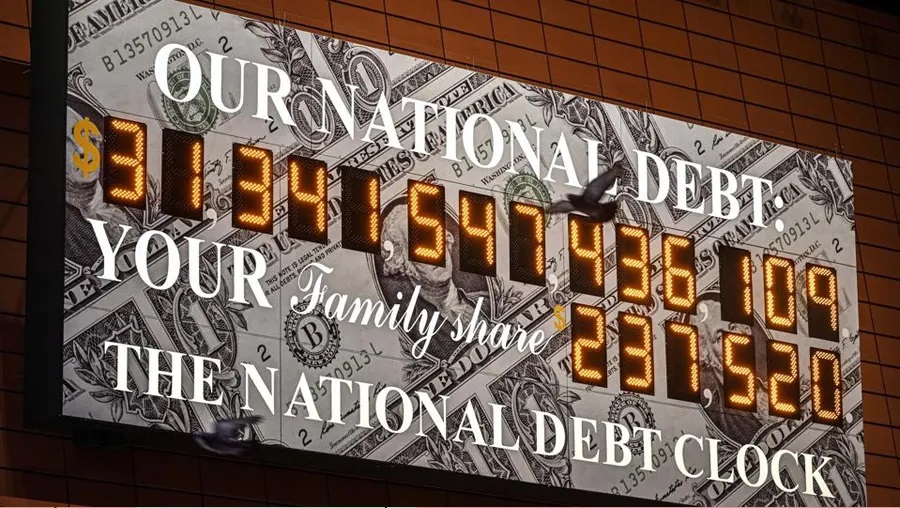
Debt ceiling is the legal limit on how much money the federal government can borrow to pay its bills. It covers spending that Congress has already authorized, such as Social Security benefits, military salaries, interest on the national debt and more. The debt ceiling does not authorize new spending; it only allows the government to pay for what it has already agreed to spend.

If the debt ceiling is not raised, the government will run out of money to pay its bills, which could have serious consequences for the economy and the financial markets. The government would have to prioritize some payments over others, such as interest on the debt, Social Security benefits, or military salaries.

This could cause delays or defaults on some obligations, which could damage the credit rating of the US and increase borrowing costs. It could also trigger a recession, as government spending is a major component of the GDP.

The US government has been operating under a temporary suspension of the debt ceiling since August 2019. That suspension expired on July 31, 2023, and since then, the Treasury Department has been using extraordinary measures to keep paying the bills without exceeding the limit.

However, those measures were expected to run out by Monday, according to Treasury Secretary Janet Yellen. If that happened, the US would have faced a default on its obligations for the first time in history, which could have triggered a financial crisis and a recession.

After months of partisan deadlock, President Biden and House Speaker Kevin McCarthy reached a deal, to raise the debt ceiling by $480 billion, enough to cover the government’s borrowing needs until early December 2024. The deal also included a two-year budget agreement that set spending caps for defense and nondefense programs, as well as some provisions to reduce spending and increase revenues.

The House passed the bill last year by a vote of 271-165, with 50 Republicans joining 221 Democrats in support. The Senate followed suit by a vote of 63-36, with 17 Republicans joining 46 Democrats in support.

Implications of the bill

The bill will allow the US government to avoid a default and continue paying its bills until early December 2024. It will also provide some fiscal certainty for the next two years by setting spending levels for defense and nondefense programs. However, it will not resolve the underlying issue of the debt ceiling, which will likely resurface again in December when the new limit is reached.

Moreover, it will not address the long-term challenges of reducing the national debt and balancing the budget, which will require bipartisan cooperation and hard choices on spending and taxes. The bill will allow the US to pay its existing debts and avoid a default that would have severe economic consequences.

The debt ceiling has been raised 78 times since 1960, most recently in August 2019. However, it is often a source of political conflict, as some lawmakers use it as a leverage to demand spending cuts or policy changes from the administration. This creates uncertainty and instability for the government and the economy and increases the risk of a default or a shutdown.

The bill will also set spending limits for defense and nondefense programs, with some adjustments for Covid relief funds, IRS funding and energy projects. The bill will resume federal student loan payments, impose work requirements for some welfare recipients, and extend the debt ceiling until after the 2024 presidential election.

Nigeria’s Illusion of Using Interest Rates to Control Inflation

1

I have written that Nigeria must develop a new playbook on how we fight inflation in the country. Yes, our current use of interest rate is suboptimal because it is not working. Some validations on that thesis:

“Under the previous regime of the Central Bank, we have seen a continuous tightening of monetary policy, and the concept of monetary policy tightening is to increase interest rate. Our MPR is at 18.75% if monetary policy tools can tackle inflation, then inflation will have been subdued by now, given all the monetary policy tools and tightening that has taken place over the last two years This economy is not the type of economy where the interest rate can effectively fight inflation” – Director of the Centre for the Promotion of Private Enterprise (CPPE), Dr. Muda Yusuf .

“The previous administration of the CBN under the leadership of Godwin Emefiele had consistently increased the interest rate to 18.75% in July as a measure to curb inflation. However, the move seemed counterproductive as inflation rose for the sixth consecutive month in July to 24.08%. As of November, Nigeria’s inflation stands at an 18-year high of 28.2%- marking ten months of consecutive increase.” – Nairametrics

What I have written: “Note that interest rate changes do not affect consumer demand that much in Nigeria since we have a limited consumer lending system. In other words, when we change rates, we are merely affecting companies as they’re really the entities which actually borrow in Nigerian banking. 

“Yes, the irony is that only companies can actually drive production (which boosts Supply) and that is why using the increase of rates to fight inflation in Nigeria has not been effective. Contrast this with say the United States where consumer lending is massive via credit cards, etc. There when rates go up, you influence Demand significantly, making it possible to cool down inflation. Our strategy cannot mirror the US, etc with developed consumer lending because higher rates punish those who are to boost Supply which is vital for us to reduce inflation.”

Simply, I have written that increasing interest rates to fight inflation in Nigeria is a waste of time. Our consumer lending which affects demand is insignificant and that means the interest rate which affects lending is toothless.

The Central Bank of Nigeria must change its strategy. What we do doesn’t make sense. Think of it – we increase the interest rate which is designed to cool down the economy by making capital more expensive,  only for the same apex bank to release trillions of naira to the federal government, via Ways and Means, to flood the economy with cash. At the end, the Ways and Means (like the new N7.3 trillion) will cancel the impact of the interest rate hike. This has been going on for ages!

BARELY one hour after reading a letter from President Bola Tinubu, requesting for the approval of the the securitisation of the outstanding debit balance of N7.3 trillion Ways and Means from the Central Bank of Nigeria (CBN), the Senate immediately approved it.”

NIN Deadline: Millions of Bank Accounts Risk Being Blocked in Nigeria

0
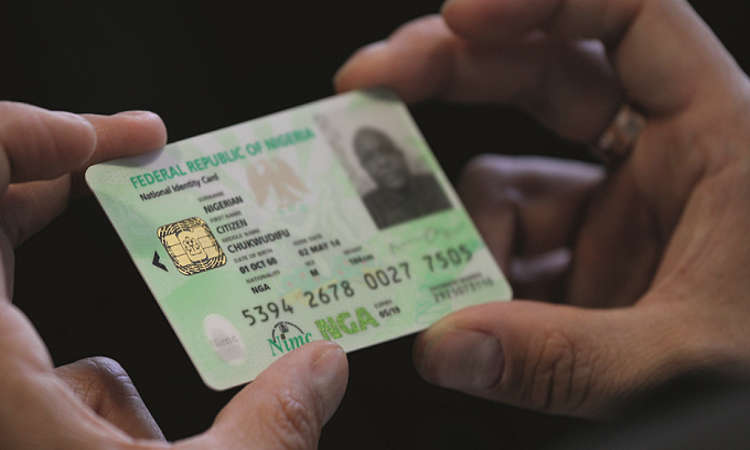
National ID Card, Nigeria

Millions of bank accounts in Nigeria, risk being blocked as the deadline for all accounts and wallets to have a Bank Verification Number (BVN) or National Identity Number (NIN) draws closer.

Recall that the Central Bank of Nigeria in a circular issued on the 1st of December, to all commercial, merchant, non-interest payment service banks, and mobile money operators, mandated that new customers get NIN linked to their accounts.

As part of its effort to promote financial system stability, the apex Bank disclosed that it had become necessary to strengthen the Know Your Customer (KYC) procedures in financial institutions under the purview of the Central Bank of Nigeria (CBN).

Accordingly, the CBN issued an amendment to Section 1.5.3 of the Regulatory Framework for Bank Verification Number (BVN) Operations and Watchlist for the Nigerian Banking Industry (The Guidelines).

In this regard, the CBN wrote,

1. It is mandatory for ALL Tier-1 bank accounts and wallets for individuals to have BVN and/or NIN.

2. It remains mandatory for Tiers 2 & 3 accounts and wallets for Individual accounts to have BVN and NIN.

3. The process for account opening shall commence by electronically retrieving BVN or NIN-related information from the NIBS’ BVN or NIMC’s NIN databases and for the same to become the primary information for onboarding of new customers, and all existing customer accounts/wallets for individuals with validated BVN shall be profiled in the NIBS’ ICAD immediately and within 24hrs of opening accounts/wallets.

For all existing Tier 1 accounts/wallets without BVN or NIN.  Effective immediately, any unfunded account/wallet shall be placed on Post No Debit or Credit until the new process is satisfied. On March 1, 2024, all funded accounts or wallets shall be placed on Post No Debit or Credit and no further transactions permitted.

To ensure uniform and full compliance, the CBN has advised the executive compliance officers, chief compliance officers, or heads of the compliance functions to acquaint themselves with the guidance notes it provided, which it said apply to all institutions being regulated.

Several banks have begun to notify their customers through direct contact solicitation, calls, SMS, and emails to get their accounts linked to their NIN.

Notably, Nigerians have been advised not to wait until a week before the deadline to start to swarm and overwhelm commercial banks, as the perfect time to do the linking is now.

It is interesting to note that a 2023 report by Enhancing Financial Innovation and Access (EFInA), revealed that 5 percent (3 million) of banked adults in Nigeria are without a BVN or NIN.

Also, a NIMC report revealed that the number of Nigerians with National Identification Numbers rose to 104.16 million as of the end of December 2023.

This signified that only 10.13 million Nigerians registered for NIN in 2023. A monthly average of enrolments revealed that 844,167 Nigerians got NIN per month in 2023, revealing that the total number of NIN registrations in 2023 is low when compared with 21.33 million that registered in 2022.

The NIMC further expressed concern that the number is a far cry from the Federal Government’s target of 2.5 million registrations per month.