DD
MM
YYYY

PAGES

DD
MM
YYYY

spot_img

PAGES

Home Blog Page 3466

World Bank Report: Rising Inflation Pushed 10 Million Nigerians into Poverty in 2023

0

According to the World Bank’s ‘Macro Poverty Outlook for Nigeria: April 2024’, rising inflation coupled with weak earnings resulted in 10 million Nigerians slipping into poverty in 2023.

The report paints a grim picture of an economy where nominal earnings have failed to keep pace with soaring inflation rates, leading to a decline in living standards across the country.

“Nominal earnings have not kept up with inflation, pushing another 10 million Nigerians into poverty in 2023,” it said.

The report reveals alarming statistics regarding poverty rates in Nigeria across various economic thresholds. Notably, 30.9% of the population falls below the international poverty rate of $2.15 per day. Even more concerning is the fact that 63.5% live in poverty according to the lower middle-income threshold of $3.65 per day, while a staggering 90.8% fall below the upper middle-income poverty line of $6.85 per day.

Root Causes of Economic Strain

The dire economic situation is attributed to a combination of weak macroeconomic fundamentals and deep-seated structural constraints. The overreliance on the oil sector is identified as a significant factor, with its deteriorating performance contributing to macroeconomic instability. Low state revenues, driven by factors such as an expensive petrol subsidy and ineffective tax rates, further exacerbate the challenges faced by the government in providing essential public services.

Additionally, high levels of inflation, fueled by loose monetary policies and depreciating exchange rates, continue to erode purchasing power and hinder economic growth. Structural issues such as inadequate infrastructure, high trade costs, insecurity, weak institutions, and low levels of human capital development further compound Nigeria’s economic woes.

“Nigeria’s economic growth has been insufficient to raise living standards, weighed down by weak macroeconomic fundamentals and several structural constraints. Overreliance on the oil sector for fiscal revenues, exports, and FX inflows led macro stability to erode with the sector’s deteriorating performance in recent years,” the report noted.

“Low revenues—including due to a costly petrol subsidy, low tax rates, and weak tax administration—have limited state capacity and public service delivery.

“Inflation has remained high and escalating on the back of a relatively loose monetary policy and exchange rate depreciation. Structural factors holding back the country’s growth potential include lack of adequate energy and transport infrastructure, high domestic trade costs and foreign trade protectionism, widespread insecurity, weak institutions, and low levels of human capital development.”

Outlook and Projections

The World Bank noted the urgent need for ambitious reforms centered around macroeconomic stabilization to address these challenges. Economic forecasts predict an average growth rate of 3.5% between 2024 and 2026, slightly outpacing the population growth rate. However, poverty rates are expected to continue rising in 2024 and 2025 before stabilizing in 2026, driven by ongoing reforms and persistently high inflation.

Since 2015, Nigeria’s inflation rate has been on an upward trend, reaching 33.2% in March 2024. Food inflation has surged to 40.01% year-on-year, driven by rising prices of essential items such as garri, millet, and yam.

Moreover, the cost of Housing, Water, Electricity, Gas, and Other Fuels has soared by 27.64% over the past year, further burdening Nigerian households amidst escalating inflation and declining incomes.

Against this backdrop, more Nigerians are finding it difficult to cope, as the cost of goods and services outweighs their earning power. This suggests a likelihood of more Nigerians falling into abject poverty in the next two years.

Efforts to stabilize the economy are expected to gradually moderate inflation to 15.1% by 2026, supported by tightened monetary policies and exchange rate stabilization initiatives.

The report highlights the urgent need for comprehensive reforms to address Nigeria’s economic challenges and alleviate the growing burden of poverty on its population.

Google Initiates A Fresh Round of Layoff, Fires 28 Employees Protesting Project Nimbus

0

Amidst efforts to streamline operations and reduce costs, Alphabet-owned Google has initiated layoffs impacting an unspecified number of employees, a company representative confirmed on Wednesday.

This move marks the latest in a series of cuts at the technology giant, reflecting broader trends within the tech and media industry amidst economic uncertainties.

While the lay-offs are not companywide, affected employees will have the opportunity to apply for internal roles within Google. However, the representative did not disclose the exact number of employees affected or specify the teams involved. It’s noted that a small percentage of the affected roles will transition to hubs where the company is investing, including locations such as India, Chicago, Atlanta, and Dublin.

The decision to implement layoffs follows a wave of job cuts across Google and the broader industry throughout the year, raising concerns about the potential for further reductions as companies navigate economic challenges.

Speaking on the rationale behind the move, the Google representative highlighted ongoing efforts to enhance efficiency and realign resources with the company’s key product priorities. This includes initiatives undertaken by various teams during the second half of 2023 and into 2024 to streamline operations and remove unnecessary layers.

“Throughout the second half of 2023 and into 2024, a number of our teams made changes to become more efficient and work better, remove layers and align their resources to their biggest product priorities,” the Google representative added.

Employees across several of Google’s teams in its real estate and finance departments have been affected by the layoffs. Specifically, the finance teams impacted include Google’s treasury, business services, and revenue cash operations.

In response to these developments, Google’s finance chief, Ruth Porat, reportedly communicated the restructuring efforts to employees via email, according to BI. The restructuring includes plans to expand growth to key locations such as Bengaluru, Mexico City, and Dublin, in line with the company’s strategic objectives.

This announcement comes on the heels of previous job cuts at Google, including significant layoffs across multiple teams in January, which encompassed engineering, hardware, and assistant teams. These moves align with the company’s focus on investment and the development of artificial intelligence offerings, as indicated by CEO Sundar Pichai earlier in the year.

Also on Tuesday, Google fired employees protesting Project Nimbus, resulting in backlash. The dismissal impacted 28 employees who participated in office protests in New York and California. The dismissals come amid ongoing tensions surrounding Project Nimbus, a $1.2 billion joint contract between Google and Amazon providing services to Israel’s government.

According to a Google spokesperson, the employees occupied Google offices in Sunnyvale, California, and New York City, protesting against Project Nimbus.

The spokesperson stated, “Physically impeding other employees’ work and preventing them from accessing our facilities is a clear violation of our policies, and we will investigate and take action.”

The terminated employees have been placed on administrative leave, with their access to company systems cut off.

Nine workers were arrested after they refused to vacate the offices, with five arrests occurring in Sunnyvale and four in New York. Charges of criminal trespassing have been brought against the protesters, according to authorities.

Chris Rackow, Google’s head of security, described the protests as “extremely disruptive” and stated that they “made coworkers feel threatened” in an internal memo.

The protests stem from discontent surrounding Project Nimbus, which provides artificial intelligence and cloud computing services to Israel’s government and military. More than 100 people, including Google employees, protested the project outside the company’s New York office in 2022, following the resignation of a Google employee who had spoken out against it.

The latest protests were organized by the tech group No Tech for Apartheid, which campaigns for the cancellation of Project Nimbus, alleging that the contract enables the Israeli government to surveil and displace Palestinians. The contract drew additional scrutiny after Hamas launched a series of attacks on Israel in 2021, resulting in significant casualties.

Google has defended its involvement in Project Nimbus, stating that the contract serves Israeli government ministries operating within the company’s Terms of Service and Acceptable Use Policy. The tech giant asserts that the work is not directed at highly sensitive or classified military projects.

Sunnyvale Police Department Captain Dzanh Le reported that between 80 to 90 protesters gathered outside the building in Sunnyvale, with some occupying a room within Google’s complex. Despite multiple requests to leave, the protesters remained, resulting in arrests for criminal trespassing.

The terminations and arrests have sparked criticism, with concerns raised over freedom of expression and Google’s handling of employee dissent.

TSMC Reports Nearly 9% Rise in First Quarter Profits Amidst Soaring Global Demand for Microchips

0

On Thursday, semiconductor giant Taiwan Semiconductor Manufacturing Company (TSMC) announced a robust performance for the first quarter of 2024, driven by soaring global demand for microchips powering diverse technologies from mobile phones to artificial intelligence.

TSMC reported a nearly 9% increase in net profits for the first quarter, reaching NT$225.4 billion ($6.97 billion), compared to NT$206.9 billion in the same period last year. Additionally, first-quarter revenues surged by 13% year-over-year to $18.87 billion.

During the earnings call, CFO Wendell Huang revealed that TSMC anticipates second-quarter revenues to rise by an impressive 27.6%.

As a leader in chip manufacturing, TSMC controls over half of the world’s silicon chip production, earning it the moniker of the “lifeblood” of the modern world. The company’s client roster includes tech giants like Apple and Nvidia.

TSMC’s advanced microchips play a pivotal role in various industries, making it an indispensable player in the global supply chain.

Despite its dominance, TSMC faces challenges, particularly concerning its fabrication plants in Taiwan, which are vulnerable to natural disasters like earthquakes. A recent magnitude-7.4 quake in Taiwan resulted in some production loss, but TSMC expects minimal impact on second-quarter revenue.

Huang acknowledged the impact of the earthquake, disclosing that “a certain number of wafers in the process were impacted and had to be scrapped.”

“But we expect most of the lost production to be recovered in the second quarter and thus minimum impact to the second quarter revenue,” he said.

TSMC has ambitious expansion plans to meet rising demand and diversify its production base. The company announced the construction of a third semiconductor factory in Arizona, boosted by a preliminary agreement with the U.S. Commerce Department.

This move aligns with the U.S. government’s efforts to strengthen domestic chip production and reduce reliance on foreign suppliers under the Chips and Science Act. Under this agreement, TSMC will receive up to $6.6 billion in direct funding from the U.S. government, raising its total investment in the North American country to $65 billion.

CEO CC Wei highlighted significant progress in TSMC’s Arizona projects, with the first fab already in engineering wafer production and on track for volume production in the first half of 2025.

“In Arizona, we have received the strong commitment and support from our U.S. customers and plan to build three fabs … We have made significant progress in our first fab, which has already entered engineering wafer production in April,” said CC Wei.

“We are well on track for volume production in the first half of 2025.”

The second fab will focus on advanced technologies to meet demand in AI-related applications.

Wei added that the second fab in Arizona has been upgraded “to utilize 2-nanometer technologies to support the strong AI-related demand in addition to the previously announced 3-nanometer” chips.

U.S. Commerce Secretary Gina Raimondo recently remarked that if successful, the TSMC fabs in Arizona would mark the “first time” that super-advanced chips are manufactured on American soil.

This initiative marks a significant milestone in bringing advanced semiconductor production capabilities to the United States, potentially elevating the country’s position in the global semiconductor industry and enhancing its technological competitiveness.

In addition to its U.S. expansion, TSMC recently launched a new $8.6 billion plant in Japan and plans to establish another facility in Kumamoto for advanced chip production, denoting its global footprint and commitment to meeting the growing demand for microchips worldwide.

US Sanctions Woke China, and Today American Firms Are Losing Ground in China

1

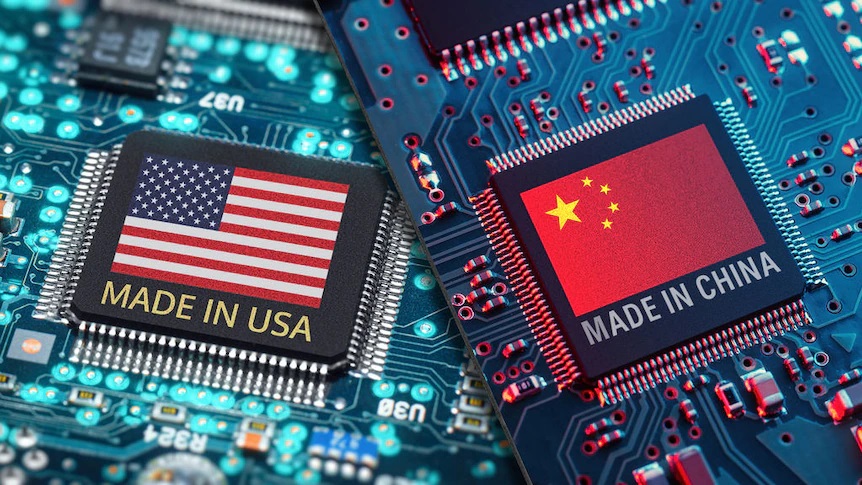
The periwinkle rarely drops the precious gems until it is cracked. For years, China has possessed latent capabilities in the semiconductor industry. But magically, to unlock those abilities, US sanctions were needed. So, when the sanctions came, China abandoned US chips and looked inwards.

Today, it is having a moment: “In the wake of US trade restrictions on advanced chip-making equipment, China’s integrated circuit (IC) output witnessed a remarkable surge of 40% to 98.1 billion units in the first quarter of the year, per SCMP.”

When I wrote my book – Nanotechnology and Microelectronics: Global Diffusion, Economics and Policy – which won the IGI Global 2010 Book of the Year award, the ingredients of greatness were visible in China. The United States used sanctions to move China years ahead, and today, those sanctions have created immense competitions for American companies.

You can ask Apple: “The new Pura 70 series offers four phones at price points similar to the iPhone’s, and it’s presumed to run on an advanced, China-made chip, though Huawei has not revealed that information. The company’s smartphone shipments in China jumped 64% year over year in the first six weeks of 2024, per Counterpoint Research; iPhone sales dropped 24% over that same period.”

Due to those chips, very soon Apple will become history in China, and you can add Tesla, and many other US companies. Semiconductor sanctions woke a sleeping dragon, and now it is devouring everything on the path. Do not find ways to motivate your enemies.

China’s Semiconductor Industry Surges 40% Amid US Trade Restrictions

0

In the wake of US trade restrictions on advanced chip-making equipment, China’s integrated circuit (IC) output witnessed a remarkable surge of 40% to 98.1 billion units in the first quarter of the year, per SCMP.

This expansion emanates from the country’s focus on boosting the production of older-generation chips while grappling with constraints imposed by international trade dynamics.

March alone witnessed a staggering 28.4% jump in national IC output, reaching an unprecedented high of 36.2 billion units, as reported by the National Bureau of Statistics (NBS) on Tuesday.

The NBS highlighted the accelerated growth in China’s hi-tech manufacturing sector, reflecting the robust expansion of the semiconductor industry, which is increasingly localized. Haitong Securities echoed this sentiment in a recent report, forecasting a strong rebound in China’s IC production for the year.

The surge in China’s IC output is attributed in part to robust demand from downstream sectors, notably new energy vehicles and smartphones. Government data revealed a 29.2% increase in new-energy-vehicle output in the first quarter, reaching 2.08 million vehicles, while smartphone production expanded by 16.7% during the same period.

In recent years, China has significantly expanded its IC production capacity, with output nearly tripling in the first quarter of 2024 compared to the same period in 2019. However, under the US embargo on advanced chip technologies, Chinese investments have predominantly focused on mature semiconductors, leading to concerns about potential overproduction.

The Centre for Strategic and International Studies highlighted this trend, suggesting that US export controls may inadvertently drive state-backed investments in legacy-chip production, potentially paving the way for Chinese dominance in this sector.

“An unintended consequence of US export controls on advanced chip technology to China may be a wave of state-backed investment leading to overproduction and, potentially, Chinese dominance of global legacy-chip production,” researchers wrote.

Taiwan-based IC research company TrendForce projected that China’s global share of mature-process capacity could reach 39% by 2027, further underscoring the country’s growing influence in the semiconductor industry.

China’s efforts to achieve self-reliance in core technologies have intensified, particularly with initiatives such as the Xinchuang campaign, aimed at developing local alternatives to foreign chips, systems, databases, and software. Beijing aims to bolster the Chinese tech sector, targeting an annual output of 100 billion yuan (US$13.9 billion) by next year.

Despite these ambitious initiatives, China remains heavily reliant on chip imports, with IC imports growing by 12.7% to 121.5 billion units in the first quarter. IC exports also edged up by 3% to 62.4 billion units, according to data released by the General Administration of Customs.

Semiconductors continue to rank as China’s largest import item, surpassing even crude oil in the previous year. This highlights the challenges, amid the country’s ongoing efforts to overcome the impacts of US trade sanctions and build self-sufficiency in semiconductor production.