DD
MM
YYYY

PAGES

DD
MM
YYYY

spot_img

PAGES

Home Blog Page 3468

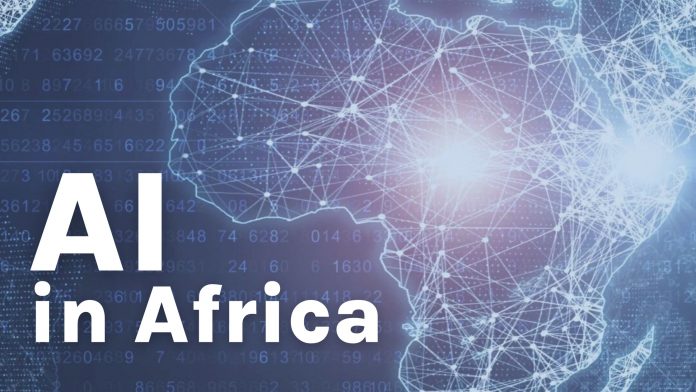
AI To Stimulate Massive Economic Growth in Africa

0

That is a very big one: “Microsoft, the global tech giant, has projected that Artificial Intelligence (AI) could inject a staggering $1.2 trillion into Africa’s economy by the year 2030. This projection is part of a broader estimate of $15.7 trillion as the potential contribution of AI to the global economy by the same year.”

Huhh. In 2023, the estimated GDP of Africa was $3.1 trillion, and $8.86 trillion at PPP. In 2022, Nigeria had the highest GDP in Africa at $477.4 billion, followed by South Africa at $405.7 billion, Egypt, Algeria, and Morocco. In 2022, the GDP per capita in Africa was $2,150.60, the highest value since 2015.

Simply, AI could add close to 40% more on Africa’s GDP in mere 6 years. If that should be the case, every local government, state, etc should develop an AI-centric developmental playbook.

But I doubt that, considering that AI needs electricity, broadband internet, and other things you cannot leapfrog, to work, and deliver productive value.

Microsoft Forecasts $1.2 Trillion AI Boost for Africa’s Economy by 2030

Opensea launches support for Limit Break’s ERC721-C Contract

0

Opensea, the leading marketplace for non-fungible tokens (NFTs), has recently announced its support for Limit Break’s ERC721-C contract. This move is a significant step forward for creators in the NFT space, as it allows them to enforce royalties on sales made through the Opensea platform. The ERC721-C contract is an innovative solution that addresses the long-standing issue of royalty enforcement, which has been a point of contention among creators and collectors alike.

The introduction of the ERC721-C contract by Limit Break represents a pivotal development in the NFT ecosystem. Traditional ERC721 contracts did not have built-in mechanisms to ensure that creators received royalties from secondary sales. This often led to creators missing out on potential earnings when their work was resold. The ERC721-C contract aims to rectify this by providing a programmable royalty enforcement mechanism that creators can leverage to receive their due share from subsequent sales.

Opensea’s adoption of the ERC721-C standard is a testament to the platform’s commitment to supporting creators’ rights and interests. By integrating this contract, Opensea enables creators to set and enforce their royalty terms programmatically. This ensures that creators are compensated fairly for their work, even as it changes hands among collectors. The move also aligns with the broader industry’s shift towards more creator-centric models, where the rights and earnings of artists and creators are prioritized.

The ERC721-C contract also introduces transfer security policies, allowing creators to dictate the terms of token transfers for their collections. This feature is crucial in preventing practices such as wash trading, which can inflate prices artificially and harm the NFT industry’s integrity. With the ERC721-C standard, creators can choose to allow interactions only with contracts and applications they deem safe, thus maintaining control over the distribution of their work.

Opensea’s support for the ERC721-C contract came after the Dencun upgrade on the Ethereum network, which enabled compatibility for this new standard. The upgrade marks a significant milestone in the evolution of the Ethereum blockchain, paving the way for more sophisticated and secure smart contract implementations. Creators who wish to enforce their earnings according to the ERC721-C standard will find their sales supported not only on Opensea but also on other marketplaces that are powered by Limit Break’s Payment Processor.

This development is a game-changer for the NFT industry, as it empowers creators with the tools to protect their intellectual property and financial interests. It also fosters a more sustainable ecosystem where the contributions of creators are recognized and rewarded appropriately. As the NFT market continues to grow and evolve, the support for standards like ERC721-C will likely become increasingly important, setting a precedent for how digital assets are managed and monetized in the future.

Microsoft Forecasts $1.2 Trillion AI Boost for Africa’s Economy by 2030

0

Microsoft, the global tech giant, has projected that Artificial Intelligence (AI) could inject a staggering $1.2 trillion into Africa’s economy by the year 2030. This projection is part of a broader estimate of $15.7 trillion as the potential contribution of AI to the global economy by the same year.

Theo Watson, a Commercial Lawyer with Microsoft Africa, presented these figures during his session titled “AI Opportunity in Africa” at the African AI Journalists Academy held virtually. Watson stated that the $1.2 trillion infusion could propel Africa’s GDP by 5.6% by 2030.

However, Watson noted the need for responsible regulation to harness the full potential of AI while mitigating risks. He advocated for regulations that prioritize ethical considerations and ensure AI advancements align with societal values and norms across the diverse African continent.

“Responsible and sustainable innovation will ensure that AI progress aligns with the needs that define Africa’s vastly diverse cultures… Collaborating with relevant stakeholders will be key to ensuring that AI solutions are not just technologically advanced but also culturally attuned and genuinely beneficial to African societies,” he stated.

Microsoft’s commitment to responsible AI development was highlighted, with Watson outlining the company’s AI principles focusing on fairness, reliability, safety, privacy, inclusivity, transparency, and accountability since 2016.

Echoing these sentiments, Akua Gyekye, Government Affairs Director at Microsoft Africa, highlighted the transformative impact of technology on various sectors, including health, education, and agriculture. Gyekye cited examples from South Africa and Nigeria where AI applications were enhancing water management and agricultural productivity, respectively.

“Farmers in Nigeria and Kenya are getting customized advice on farming based on AI, advice on soil and weather data.

“This helps them to make evidence- driven decisions and increase yields using technology to do the research and help find the right use of AI to boost productivity of their workforce,” she said.

Gyekye proposed a blueprint for governing AI in Africa, advocating for transparency, academic and public access to AI, and safety mechanisms for critical infrastructure. She also stressed the importance of public-private partnerships to address societal challenges associated with AI deployment effectively.

Microsoft’s projections offer a glimpse into the potential economic and societal benefits awaiting Africa, provided that responsible governance and collaboration frameworks are in place as the continent prepares to embrace the AI revolution.

Since the launch of OpenAI’s ChatGPT, the market for Artificial Intelligence (AI) has witnessed exponential growth. According to industry reports, the AI market has expanded significantly, with a compound annual growth rate (CAGR) of approximately 35% since the introduction of advanced AI models like ChatGPT. This growth can be attributed to the increasing adoption of AI technologies across various industries, including healthcare, finance, manufacturing, and retail, among others.

Microsoft’s projections putting the value of the AI market to a staggering $15.7 trillion globally by 2030, underscores the transformative potential of AI in reshaping economies and societies across the globe. With Africa expected to capture a significant portion of this growth, the continent stands a chance to leverage AI-powered solutions to address pressing challenges and unlock new development opportunities.

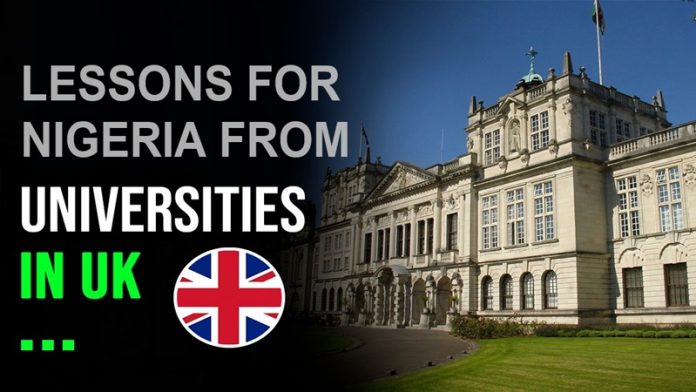
Nigeria Must Pay Attention To The Paralysis in UK Universities as Economic Mess Hits Campuses

2

A few years ago, I posited that by 2031, Nigeria could begin to privatize its federal universities, in the same way it privatized its energy infrastructures. I hope that does not happen since the only thing the ordinary citizens get from Nigeria is subsidized university education. If you remove that, inequality will scale and inter-generational poverty will become a constant. I was a three-time University Scholar while in FUTO, and the generosity of Nigeria on my education remains appreciated

Good People, the global university education has many structural challenges. In the UK, it is assuming a new dimension: “The Vice-Chancellor of the University of Kent, Karen Cox who has occupied the position since 2017, will step down from her role next month, following a significant restructuring effort amidst a potential £30 million deficit. The deficits are as a result of dwindling student recruitment compared to expanding Russell Group institutions and elevated dropout rates due to rising living costs.”

In the UK, besides the immigration changes, the BREXIT was an own-goal. But do not take out the impact of inflation. In other words, if the citizens are fighting for food, going to school may not be an immediate priority. As a great comment on this piece noted, “there is also a 40% drop in the number of part-time entrants, which make up a big part of the total student population of 2.8M.” In other words, in the UK, continuous education is stalled and people cannot easily pay for part-time education. That is scary for a top-10 global economy!

In the Igbo Nation, it is always a great honour when you call your kinsmen and they gather to listen to you. The UK was a center of gravity in Europe, but it did not see it as an honour. It went to dismantle what made UK amazing, via BREXIT, etc. Today, even its universities are paying the prices as inflation rises and poverty scales in the land.  After BREXIT, I wrote that it was a huge irony that the “Great Britain which used to annihilate kingdoms and colonized them” would like to be left alone, peacefully! Unfortunately, that would weaken the UK because it did not know the power of its strength. 

Back to Nigeria, the nucleus of my postulation is the evidence that Nigeria is largely fading across most developmental indicators. Yes, people who graduated in the 2000s had better job opportunities than those who finished in the decade of 2010s. And those in the 2010s are better than those in the 2020s. And the current 2020s will be better than those coming in the 2030s.

Indeed, there is nothing happening in Nigeria today that will show that those graduating in the 2030s will have better opportunities. If that trajectory continues, the university system will be under massive stress. Simply, if 40% of UK part-time students can drop out of the UK educational system, because of high inflation and challenging living standards, you can extrapolate what will happen for all the many federal universities in Nigeria.

Dangote Refinery Delivers Products and UK Universities Are in Enrollment Crisis


Implications of a Steady Interest Rate Environment are multifaceted

0

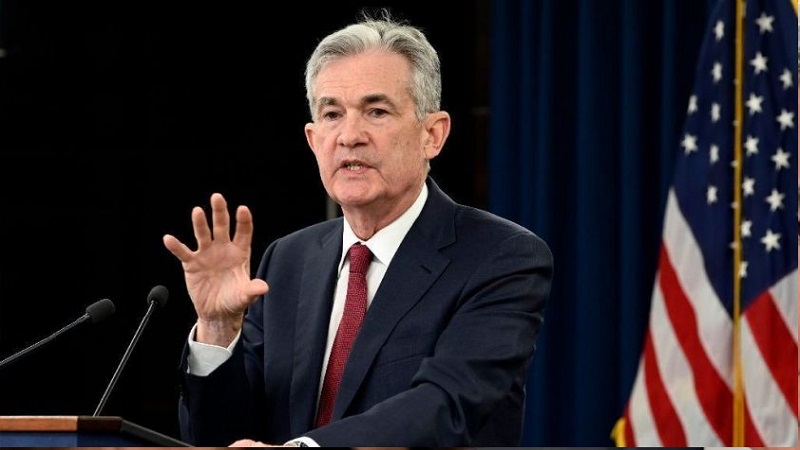
The low probability of a recession means the US Federal Reserve and other major central banks may be less aggressive in cutting interest rates.

In the intricate dance of the global economy, the Federal Reserve (Fed) and other major central banks play pivotal roles, often signaled by their monetary policy decisions. Interest rate adjustments are one of the most powerful tools at their disposal, influencing economic activity, inflation, and currency values. The current economic landscape suggests a low probability of a recession, which in turn implies that these central banks might adopt a less aggressive stance on cutting interest rates.

The Federal Reserve, as the central bank of the United States, wields a comprehensive set of tools to implement monetary policy, aiming to promote maximum employment, stable prices, and moderate long-term interest rates. These tools are designed to influence the availability and cost of money and credit to help achieve the nation’s economic goals.

The Fed, in particular, has a dual mandate to foster maximum employment and price stability. In times of economic uncertainty or downturn, the Fed may lower interest rates to stimulate borrowing, spending, and investment. Conversely, when the economy is robust, interest rates may be increased to temper inflation and prevent overheating.

Recent data from the CME FedWatch Tool indicates a high likelihood that the Fed will maintain the current target rate in the upcoming Federal Open Market Committee (FOMC) meetings. This aligns with the market’s expectations, which, according to futures pricing data, do not foresee significant rate cuts in the near future. Such sentiment is echoed by financial analysts who monitor the Fed’s policy signals and economic indicators closely.

The implications of a steady interest rate environment are multifaceted. For consumers, it could mean more predictable borrowing costs, potentially encouraging larger purchases like homes and cars. For businesses, it could translate to stable loan terms, supporting investment and expansion plans. Investors might find a less volatile bond market, as interest rate stability can reduce the uncertainty that typically leads to market swings.

However, the Fed’s cautious approach also reflects the complexities of managing an economy that is interconnected with global markets. Major central banks around the world often move in concert, as unilateral decisions can have ripple effects across borders. The European Central Bank (ECB), the Bank of Japan (BOJ), and others also weigh similar considerations when setting their policies.

The current economic indicators suggest that the Fed and its global counterparts may take a measured approach to interest rate adjustments. While the low probability of a recession provides some breathing room, central banks remain vigilant, ready to act should the economic winds shift. As always, their decisions will be closely watched by market participants and policymakers alike, as they continue to balance growth with stability in an ever-evolving economic landscape.

Understanding the Federal Reserve’s monetary policy toolkit is crucial for grasping how the central bank influences the economy and financial markets. These tools, along with the Fed’s communication strategies, play a significant role in shaping economic expectations and outcomes. For those interested in the intricacies of monetary policy, the Federal Reserve offers extensive resources and educational materials to explore.