DD
MM
YYYY

PAGES

DD
MM
YYYY

spot_img

PAGES

Home Blog Page 3471

E-Payment Transactions in Nigeria Surged to N234 Trillion in Q1 2024

0

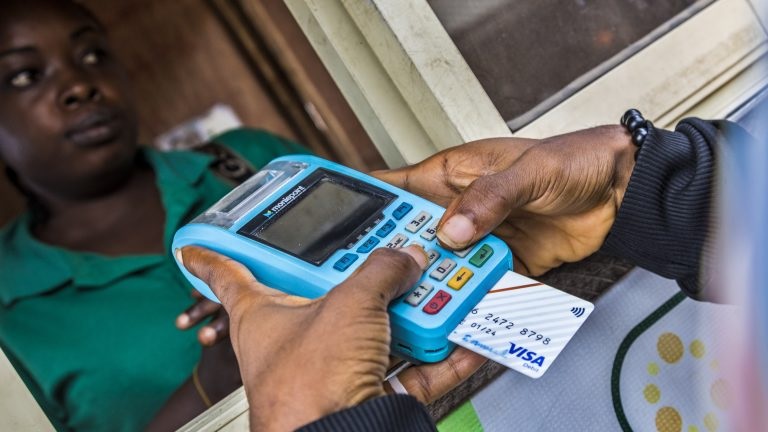
Electronic payment transactions in Nigeria is reported to have surged to N234.4 trillion in the first quarter (Q1) of 2024.

According to the report released by the Nigerian Interbank Settlement System (NIBSS), the value of electronic payment transactions grew year-on-year (YoY) by 89 percent from N136.2 trillion recorded in Q1 of 2023.

The data also showed that the value of NIBSS Instant Payment (NIP) recorded a high value of transactions, growing YoY by 90.8 percent to N236.46 trillion in Q1, 2024, from N123.9 trillion in Q1 2023.

From January to March, there was a steady rise in the amount of payment transactions carried out via various banks and fintechs in the country, as report revealed that the value of Mobile Money Operations (MMO) transactions grew by 87.8 percent to N17.11 trillion in Q1, 2024 from N9.11 trillion in Q1 of 2023.

Also, the value of Cheque transactions grew by 22 percent to N935.24 billion in Q1 of 2024, from N765.9 billion in Q1’23. However, the transaction value of PoS transactions fell year-on-year (YoY) by 8.09 percent to N2.61 trillion in Q1’24 from N2.84 trillion in Q1’23.

Financial experts disclose that the surge in e-payment transactions can be linked to the recent cash crunch experienced in the country and the cashless policy of the Central Bank of Nigeria (CBN).

Recall that when the CBN last year announced plans to redesign the old Naira notes, New notes were scarce in circulation as banks were rationing their release. On the other hand, PoS operators imposed exorbitant cash exchange charges.

This development compelled most Nigerians to adopt the electronic channels for payment of goods and services. Despite the ease of the cash crunch, a lot of them have maintained the electronic mode of payment as their preferred option.

Many of those who were forced to use either PoS or bank transfers during the period, have discovered that it is the fastest way to make payments without them going through the hassle of withdrawing cash from the bank or ATM before making payment.

Aside the cash scarcity experienced in March 2023, the revised cashless policy implemented by the CBN, which further limits the amount of cash that can be withdrawn from banks daily, has also been pushing e-payment growth. Many Nigerians are now getting used to mobile transfers, paying with PoS, USSD, among others.

Also, most businesses that do not accept mobile transactions, have now adopted transfer option as a means of payment. This implies that electronic transactions are expected to increase.

In line with this, it is interesting to note that six (6) commercial banks in Nigeria have ramped up their investment in information and technology (IT) by 44.66 percent, totaling N205.34 billion. This surge in spending corresponds with the increasing number of customers engaging in electronic transactions.

Financial statements from these banks also indicate a significant uptick in income from electronic transactions, rising by 43.73 percent to N331.61 billion. These figures underscore the notable evolution occurring in Nigeria’s payment landscape.
Dangote Refinery Slashes Diesel Price to N1,000 per Liter

0

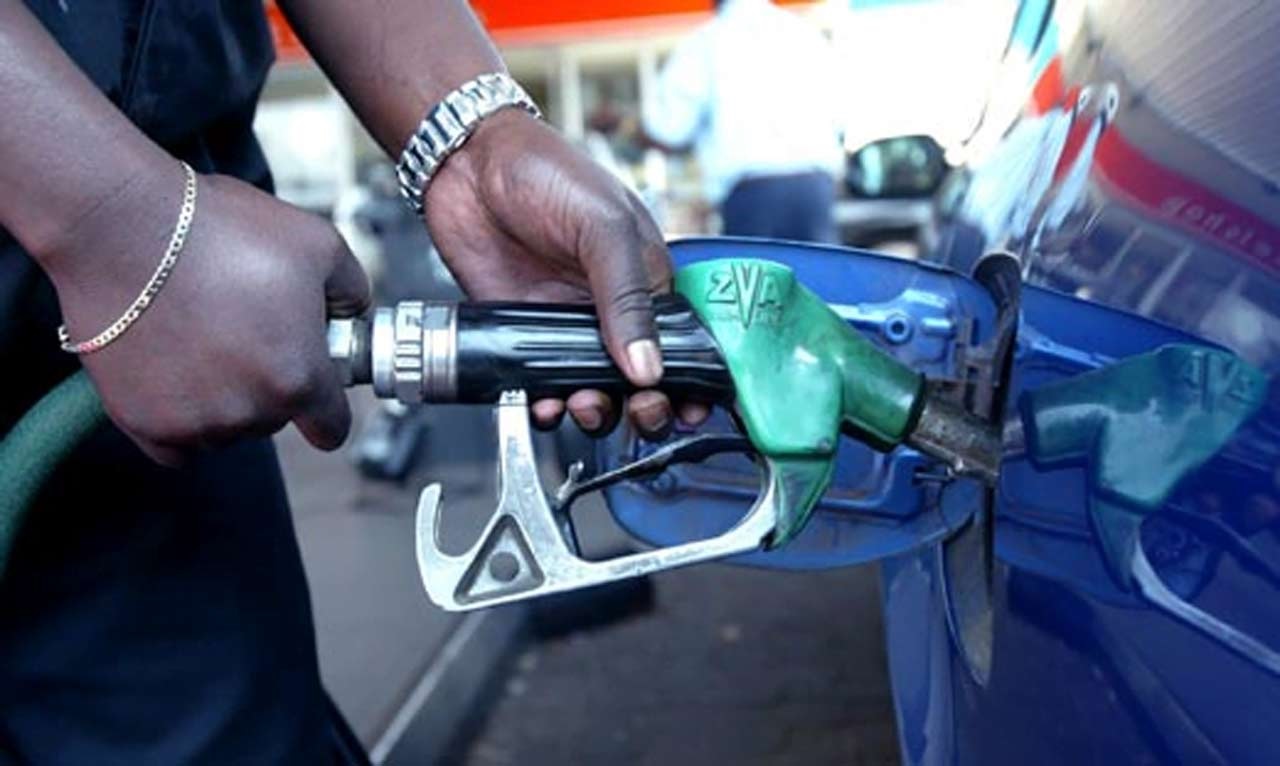
In a bid to alleviate the financial burden on businesses and consumers, the Dangote Petroleum Refinery announced a significant reduction in the price of diesel from N1,200 to N1,000 per liter.

This move follows the refinery’s previous reduction from the market rate of N1,600, representing over a 30% crash. The latest price adjustment is expected to have a considerable impact on the overall economy, particularly in light of diesel’s crucial role in powering businesses across various sectors.

“While rolling out the products, the refinery supplied at a substantially reduced price of N1,200 per liter three weeks ago, representing over 30 percent reduction from the previous market price of about N1,600 per liter.

“This significant reduction in the price of diesel, at Dangote Petroleum Refinery, is expected to positively affect all the spheres of the economy and ultimately reduce the high inflation rate in the country,” the company said in the note.

The reduction in diesel prices comes as a welcome relief amidst concerns over the high cost of living, exacerbated by the country’s high food inflation rate, which stood at 40.01% as of March. The steep reduction in diesel prices is expected to positively affect all spheres of the economy, ultimately contributing to a reduction in the nation’s high inflation rate.

Dangote Petroleum Refinery, Africa’s largest refinery project spearheaded by Aliko Dangote with an investment of about $19 billion, has begun supplying the Nigerian domestic market with petroleum products, including diesel and aviation jet fuel. The refinery’s strategic positioning near Lagos’ commercial center and its capacity to process up to 650,000 barrels per day are poised to revolutionize Nigeria’s petroleum industry, significantly reducing the nation’s dependence on imported fuels.

Devakumar Edwin, a Group Executive at Dangote, confirmed that the company has initiated the distribution of diesel and jet fuel to the local market.

“We have substantial quantities. Products are being evacuated both by sea and road. Ships are lining up one after another to load diesel and aviation jet fuel.

“Ships load a minimum of 26 million liters, though we try to push for 37 million liters vessels, for ease of operations,” Edwin said.

However, despite the refinery’s efforts to lower diesel prices, industry stakeholders, including the Independent Petroleum Marketers Association of Nigeria (IPMAN), advocate for further reductions to between N700 and N850 per liter. Marketers argue that such reductions would not only enhance competitiveness within the sector but also stimulate economic activity by reducing operational costs for businesses across industries.

Oil marketers and refinery managers have called upon the Federal Government to intervene and facilitate constructive dialogue aimed at reaching a consensus on fair and sustainable pricing mechanisms for diesel. They believe that by aligning diesel prices with market realities and addressing concerns raised by industry stakeholders, policymakers can effectively support economic recovery efforts and foster long-term prosperity for Nigeria’s economy.

This intervention is seen as crucial for promoting stability in the energy sector and enhancing investor confidence in Nigeria’s economic future.

In essence, the reduction in diesel prices holds the promise of catalyzing a virtuous cycle of economic growth, wherein lower operational costs translate into reduced consumer prices, thereby mitigating inflationary pressures and enhancing overall economic stability.

Nigerians, The Best Way to Read Ndubuisi Ekekwe

0

Good People, allow me to breathe. I did not create the foreign reserves data on Nigeria. I only picked that data from the Central Bank of Nigeria website. I am not spreading any fake news; that is impossible as I do not break news as I only focus on analyzing broken news. Understand that 99.9% of my posts  have links to my blog. The goal is for you to go there and get references, links. The link to CBN website was provided, and here is the direct link for that plot on CBN website https://lnkd.in/e467YVif
(Tekedia post https://lnkd.in/e296Uv3S )

Also, the reduction on foreign reserves was not an attack on any politician or party. I only quoted a statement made by the current finance minister.  So, it is strange how people think I am attacking someone. Punch reported the same thing: “Nigeria’s FDI fell by $19bn in 10 years – Edun” https://lnkd.in/ejAEZPSK
(Tekedia post https://lnkd.in/evVk4m7N )

What is the problem with Nigeria? Does it mean we cannot express our opinions without being reminded of our tribes? I have said this many times, if you want to get value from my posts, try not to see Ndubuisi, because that amazing Igbo name could throw you off, making you form opinions before reading. Yes, the problem is not me, most times, it is you. I enjoy writing because it liberates my mind and I appreciate that you find time to come here. Thanks.

US Basketball Salaries and Liberations in Mali, Niger, and Burkina Faso

0

Wow. Women NBA #1 pick will be paid $338,056 over four years:

  • 2024: $76,535
  • 2025: $78,066
  • 2026: $85,873
  • 2027: $97,582

For men, the NBA’s 2023 No. 1 draft pick signed a four-year contract totaling $55 million. That is on average $13.7 million per year. (The 2024 #1 pick is not ready but will likely be in $millions).

This world has no balance at all. During a program in Johns Hopkins University over the weekend, a professor noted that Ivory Coast still pays rents to France for its presidential mansions in the country (I did not believe that, but it seems to be factual). Another bombshell was that some French mining companies in some of these Francophone countries pay taxes to France, not to the African nations!

Where am I going? Follow me. Yes, across most indicators, humans are not optimal animals. How do you pay a young woman $76,535 and a man $13.7 million in the same company? I mean the National Basketball Association is an organization with Women and Men subsidiaries. Even if the men bring 99% of the profits, fairness will demand a boost for the girl wage, say $1 million, over this burger-frying-wage despite the efforts and intensity required for a professional sport.

On the Francophone one, I said I will check the economies of Mali, Niger, and Burkina Faso to see if the walls they’re breaking are working. It seems: “According to the IMF, Mali, Niger, and Burkina Faso have outperformed the average growth for sub-Saharan Africa in 2023, despite sanctions imposed on them by ECOWAS. The IMF attributes this performance to strategic choices in several sectors of the economy.” Check, those “choices” could be asking companies to pay taxes or leave the country.  How I wish people do not need to do coups for such liberations in the land!

Africa’s Most Iconic Footballers

0

Discover the prominent figures in African soccer whose talent on the pitch has captivated people globally. Their enchanting dribbling and impressive scoring have dominated this game.

Samuel Eto’o

He’s a famous football player from Africa, recognised for his extraordinary career. He achieved the title of African Footballer of the Year four times, sharing this honour with Yaya Toure. Et?’o won an Olympic gold medal in the year 2000 and won three Champions League championships. He achieved two of these with Barcelona and one while playing for Inter Milan.

Bitcoin sports betting makes watching players such as Samuel Et?’o more exciting. It increases the enjoyment of every game and honours the history of great football achievements.

He won several championships, three of them with Barcelona. Et?’o was strong and fast, which made him a very good forward. He’s still the highest goal scorer for AFCON and the Cameroon team. His legacy as one of Africa’s football greats is undeniable.

Mohamed Salah

Meet Mohamed Salah, Egypt’s football sensation, born on June 15, 1992, in Basyoun. From kicking the ball with friends to dominating the Premier League, his journey is one of determination and skill. Despite gruelling commutes, Salah’s dedication led him to the Egyptian national team at just 19, scoring 34 goals for his country.

His European exploits with clubs like FC Basel, Chelsea, and AS Roma showcased his prowess. Joining Liverpool FC in 2017, Salah’s impact was immediate. Off the pitch, his generosity knows no bounds. He supports schools, hospitals and even infrastructure projects in his homeland.

Sadio Mane

Introducing Sadio Mane, the Senegalese football sensation who lights up the Premier League with Liverpool. From the humble village of Bambali, Senegal, Mane’s rise to stardom is legendary. Inspired by Senegal’s 2002 World Cup performance, Mane pursued football. He made waves in France with Metz before conquering Austria with Red Bull Salzburg, clinching league titles.

His remarkable skills earned him a record-breaking transfer to Liverpool in 2016. This made him the most expensive African player at the time. He let them go to prestigious tournaments like the Olympics and the World Cup. In 2020, Mane was in New African Magazine’s Top 100 Most Influential Africans.

Jay Jay Okocha

Jay Jay Okocha is a legendary Nigerian footballer renowned for his unmatched brilliance on the field. His journey began in Enugu, where he dazzled with Enugu Rangers before making waves in Europe with Borussia Neunkirchen and 1. FC Saarbrücken. His dynamic style and memorable goals earned him fame in the Bundesliga.

Moving to Fenerbahçe in Turkey and later Paris Saint-Germain, Okocha’s skills shone. Along the way, he mentored talents like Ronaldinho. At Bolton Wanderers, he left a lasting legacy, leading the team with his dynamic leadership.

Internationally, Okocha’s impact with the Super Eagles was monumental. He secured a World Cup qualification and Olympic gold. His dedication made him a national hero, earning recognition from legends like Pelé.

Yaya Toure

Meet Yaya Toure, the Ivorian midfield maestro whose journey from Bouake, Ivory Coast, to football stardom is legendary. Rising through clubs like Manchester City and Barcelona, he’s celebrated for his pivotal goals and leadership on the pitch.

His Premier League records and iconic chants are testaments to his greatness. Despite challenges, Yaya Toure’s legacy endures as a symbol of skill, determination and football excellence.

Didier Drogba

Meet Didier Drogba, the legendary Ivorian footballer known for his prolific goal-scoring and leadership. Starting his professional career at just 15 with Le Mans FC in France, Drogba later played for top clubs like Chelsea FC, where he became a household name in the English Premier League.

His remarkable performances earned him recognition across Europe. He won several league titles and domestic cups. Drogba also represented Côte d’Ivoire in numerous African Cup of Nations and World Cup tournaments, showcasing his skills on the global stage.

After playing in China and Turkey, Drogba returned to Chelsea before retiring. Despite hanging up his boots, his legacy continues to inspire fans worldwide.

Legends on and off the Pitch

From Samuel Eto’o’s dazzling goals to Mohamed Salah’s electrifying speed. Africa has produced football’s finest. Join us in celebrating the legacies of Jay-Jay Okocha, Yaya Toure, Didier Drogba and more. Their stories inspire millions and unite nations. Let’s champion Africa’s rich football heritage together.