DD
MM
YYYY

PAGES

DD
MM
YYYY

spot_img

PAGES

Home Blog Page 3488

Egypt-Based VC Firm T-Vencubator Launches Operations to Invest in Local Startups

0

Egyptian tech-focused Venture Capital (VC) firm T-Vencubator, has launched operations with the aim to support the growth of local startups in Egypt.

As the first Egyptian Tech Venture Capital and Incubator, T-Vencubator seeks to invest solely in Egyptian startups with a vision to digitize the nation and address the daily challenges faced by its citizens.

The VC firm offers ‘Vencubation’, a unique blend of Venture Capital and Incubation, dedicated to solving everyday challenges through tech-driven solutions.

Speaking on its launch, T-Vencubator CEO Reem Safy said,

“We believe that technology will solve a lot of Egypt’s problems. We’re not just putting money into startups, we are investing in exceptional talents that are shaping the future of Egypt”.

Also speaking, Head of Growth and Marketing in T-Vencubator Hazel El Samra said,

“The “T” in T-Vencubator signifies our core values, which are tomorrow, togetherness, technology, transformation, and talents. We are paving the way for a brighter and more progressive Egypt”.

T-Vencubator is dedicated to reshaping Egypt’s future by fostering local innovation and providing a platform for startups to thrive. The company’s mission is anchored in solving everyday problems through technology, leveraging its unique position as the first Egyptian Tech Vencubator while doing that in a unique style rooted in Egyptian culture.

The launch of T-Vencubator is in alignment with Egypt’s Ministry of Communications and Information Technology (MCIT) Vision 2030, on its digital transformation strategy, to build a Digital Egypt.

It is interesting to note that in the heart of Egypt, digitalization has taken off in recent years. There has been growing awareness and prioritization in the country, realizing the benefits resulting from the power of technology and innovation.

The government has formulated digital transformation frameworks within Vision 2030 and is moving towards digitalization across major regional industries. The government has also developed two key initiatives namely ICT Strategy 2030 and Digital Egypt, an all-encompassing plan to build the nation’s digital economy, to aid this digitalization drive.

With an increased rate of technological digital transformation in Egypt, it will bring about unprecedented opportunities to accelerate the achievement of all 17 SDGs.

Also, it will increase efficiency, productivity, competitiveness, promote innovation, allow delivering dynamic and responsive public services, and support informative decision-making through data-driven insights.

Egypt has in the past few years been gearing towards becoming a hub for entrepreneurship and innovation, thereby attracting local and foreign investors, accelerators, and incubators. The country’s quest for significant digital transformation, offers immense potential for economic growth, as well as for delivering social and public services more efficiently and inclusively.

When this is achieved, it will hold great promise for the country, thereby empowering its citizens to take advantage of technology and thrive in the digital age.

ARK Invest bought 4.3 million shares of ProShares Bitcoin Strategy ETF (BITO), as Solana volume passes $BTC and $ETH

0

ARK Invest, the leading investment firm in disruptive innovation, has made a significant move in the cryptocurrency space. The firm has purchased 4.3 million shares of ProShares Bitcoin Strategy ETF (BITO), the first bitcoin futures exchange-traded fund in the US, according to its daily trade report.

This comes after ARK Invest sold its remaining holdings of the Grayscale Bitcoin Trust (GBTC), the largest bitcoin fund in the world, earlier this week.

The decision to switch from GBTC to BITO reflects ARK Invest’s confidence in the new ETF, which offers exposure to bitcoin price movements without the need to hold or store the digital asset directly. BITO tracks the performance of bitcoin futures contracts traded on the Chicago Mercantile Exchange (CME), which are regulated by the Commodity Futures Trading Commission (CFTC).

GBTC, on the other hand, is a trust that holds actual bitcoins in a cold storage but charges a high annual fee of 2% and often trades at a significant premium or discount to its net asset value.

By investing in BITO, ARK Invest is betting on the growing adoption and institutionalization of bitcoin as an alternative asset class. The firm has been vocal about its bullish outlook on bitcoin, which it considers to be a form of digital gold and a hedge against inflation.

ARK Invest’s founder and CEO, Cathie Wood, has repeatedly stated that she expects bitcoin to reach $500,000 in the long term. She has also expressed her support for a bitcoin ETF, which she believes will lower the barriers to entry and increase the liquidity and transparency of the market.

ARK Invest is not the only one to embrace BITO, which has seen a strong demand since its launch on October 19. The ETF has attracted more than $1 billion in assets under management in its first week of trading, making it one of the most successful ETF debuts in history.

The popularity of BITO also indicates that investors are willing to accept the risks and costs associated with bitcoin futures, such as contango, rollover and margin requirements, in exchange for a more convenient and accessible way to gain exposure to bitcoin.

The emergence of BITO and other similar products could also pave the way for a spot bitcoin ETF, which would track the actual price of bitcoin rather than its futures contracts. However, such an ETF would require the approval of the Securities and Exchange Commission (SEC), which has so far rejected or delayed several applications due to concerns over market manipulation, fraud and custody issues.

The SEC’s chairman, Gary Gensler, has signaled that he is more open to a futures-based bitcoin ETF than a spot one, but he has also warned investors about the potential volatility and complexity of these products.

As the cryptocurrency landscape evolves, ARK Invest is likely to continue to adjust its portfolio accordingly. The firm is known for its active and thematic approach to investing, focusing on disruptive technologies such as artificial intelligence, biotechnology, fintech and blockchain.

ARK Invest currently offers five actively managed ETFs, two index ETFs and four actively managed mutual funds, as well as a research platform and a podcast series. The firm has over $50 billion in assets under management as of October 2023.

Solana volume passes $BTC and $ETH and bull run has not even started

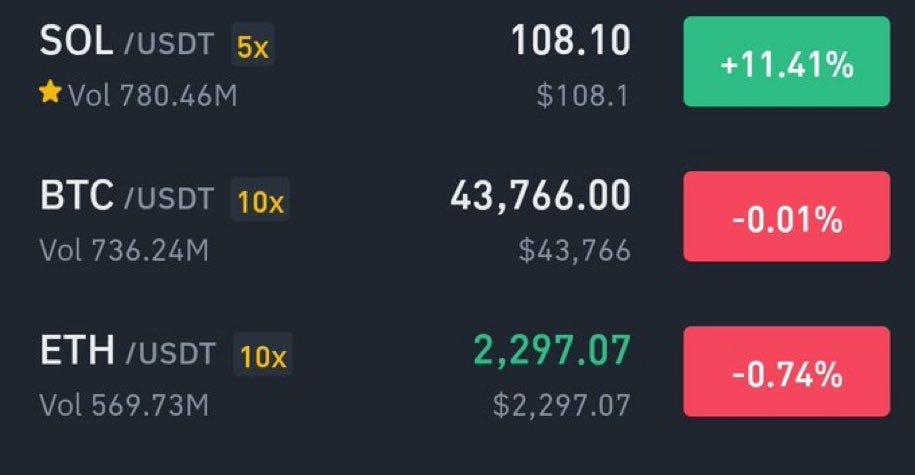
Solana, the high-performance blockchain platform that aims to scale crypto to the masses, has been making waves in the crypto space recently. According to data from Binance spot trading volume, Solana’s daily trading volume surpassed that of Bitcoin and Ethereum on December 25, 2023, reaching a record high of $86.4 billion. This is a remarkable feat for a relatively new project that launched its mainnet in March 2020.

What is driving Solana’s explosive growth? One of the main factors is its innovative design that enables fast, low-cost and secure transactions without sacrificing decentralization. Solana claims to achieve over 50,000 transactions per second (TPS) with sub-second finality and fees as low as $0.00001 per transaction.

This is possible thanks to Solana’s unique features such as Proof of History (PoH), a novel consensus mechanism that uses a verifiable source of time to order events on the network; Turbine, a block propagation protocol that breaks data into smaller packets for faster transmission; and Sealevel, a parallel smart contract execution engine that optimizes resource utilization.

Another factor is Solana’s vibrant ecosystem of developers, users and investors who are building and supporting various applications and projects on the platform. Solana hosts some of the most popular and innovative decentralized applications (DApps) in the crypto space, such as Serum, a decentralized exchange (DEX) that leverages Solana’s speed and liquidity to offer a superior trading experience.

Audius, a decentralized music streaming service that empowers artists and listeners; and Metaplex, a platform that enables creators to launch their own non-fungible token (NFT) marketplaces. Solana also has a strong community of supporters who participate in its governance, staking and validation processes. According to Staking Rewards, Solana has over 960 validators and over 74% of its total supply staked, indicating a high level of security and confidence in the network.

The most exciting part is that Solana is still in its early stages of development and adoption. The project has a roadmap that outlines its future plans and goals, such as implementing sharding, improving cross-chain interoperability, and launching more DApps and DeFi protocols.

Solana also has a growing list of strategic partners and investors who are backing its vision and providing resources and expertise. Some of the notable names include Alameda Research, Multicoin Capital, Coinbase Ventures, Jump Trading, OKEx, Huobi, Binance and many more.

Solana is clearly one of the most promising and disruptive projects in the crypto space today. It has proven its ability to compete with the leading platforms in terms of performance, scalability and innovation. It has also demonstrated its potential to attract and retain a large and diverse user base across various sectors and use cases.

Solana is not just another blockchain platform; it is a game-changer that is reshaping the future of crypto and beyond. And the best part is that the bull run has not even started yet.

Gaston Glock dies at the age of 94-years-old

0

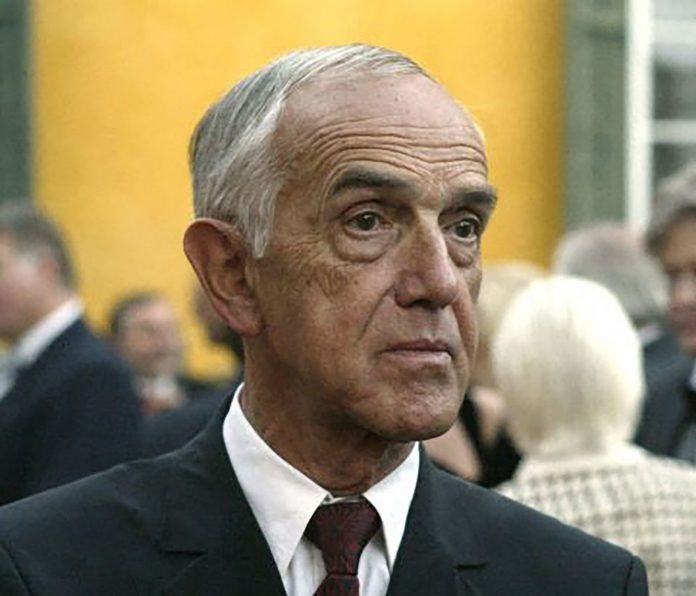
The firearms industry has lost one of its most influential figures. Gaston Glock, the founder and developer of the Glock pistol, died on December 27, 2023, at the age of 94. He was a visionary engineer and entrepreneur who revolutionized the design and manufacture of handguns.

Glock was born in Vienna, Austria in 1929. He started his career as a radiator manufacturer, but in the late 1970s he became interested in firearms after hearing about a tender from the Austrian army for a new service pistol. He had no previous experience in gun making, but he applied his engineering skills and innovative spirit to create a polymer-framed, striker-fired, high-capacity pistol that was simple, reliable and durable.

The Glock 17, as it was named, won the contract in 1982 and soon became popular with military and law enforcement agencies around the world. Glock also established a successful subsidiary in the United States, where his pistols gained a loyal following among civilian shooters and enthusiasts. Today, Glock pistols are used by more than 65% of U.S. law enforcement agencies and are available in various models and calibers.

Glock was not only a brilliant inventor, but also a shrewd businessman. He built a global empire that generated billions of dollars in revenue and employed thousands of people. He also faced many challenges and controversies, such as legal battles, patent disputes, assassination attempts and family feuds. He was a private and secretive person who rarely gave interviews or appeared in public.

Glock’s impact on the firearm industry is undeniable. According to the ATF, Glock pistols accounted for 65% of the pistols imported into the US in 2020, and more than 50% of the pistols used by US law enforcement agencies. Glock pistols are also widely used by civilians for self-defense, sport shooting, and hunting. Glock has sold over 15 million pistols worldwide since its inception in 1982.

Glock’s success was based on his ability to anticipate and meet the needs of his customers, as well as his constant pursuit of excellence and innovation. Glock was not a gun enthusiast or a trained engineer, but he had a knack for solving problems and creating simple, reliable, and durable products. He also had a keen sense of marketing and branding, creating a loyal fan base and a strong reputation for his company.

Glock’s passing leaves a void in the firearm industry that will be hard to fill. His son, Robert Glock, who has been the co-CEO of Glock GmbH since 2010, will continue to lead the company and uphold his father’s vision and values.

However, Glock will face increasing competition from other manufacturers who are trying to emulate or surpass Glock’s products and market share. Glock will also have to deal with the challenges posed by changing regulations, consumer preferences, and social trends that affect the firearm industry.

Glock’s legacy will live on through his products, his company, and his customers. He will be remembered as one of the most influential figures in the history of firearms, and as a man who changed the world with his ideas and actions.

Glock’s legacy will live on through his products, which have changed the history and culture of firearms. He will be remembered as a pioneer and a legend in the gun world. He is survived by his wife Kathrin and his six children.

Glock was not the only influential figure in the firearms industry. There are many others who have contributed to the development and innovation of guns, such as Samuel Colt, John Browning, Mikhail Kalashnikov, Eugene Stoner and Hiram Maxim.

These inventors have created some of the most iconic and widely used firearms in history, such as the Colt revolver, the Browning pistol, the AK-47 rifle, the M16 rifle and the Maxim machine gun. They have also shaped the military and political landscape of the world with their inventions.

US Congressman Says SEC’s Gensler Should be Fired in 2024

0
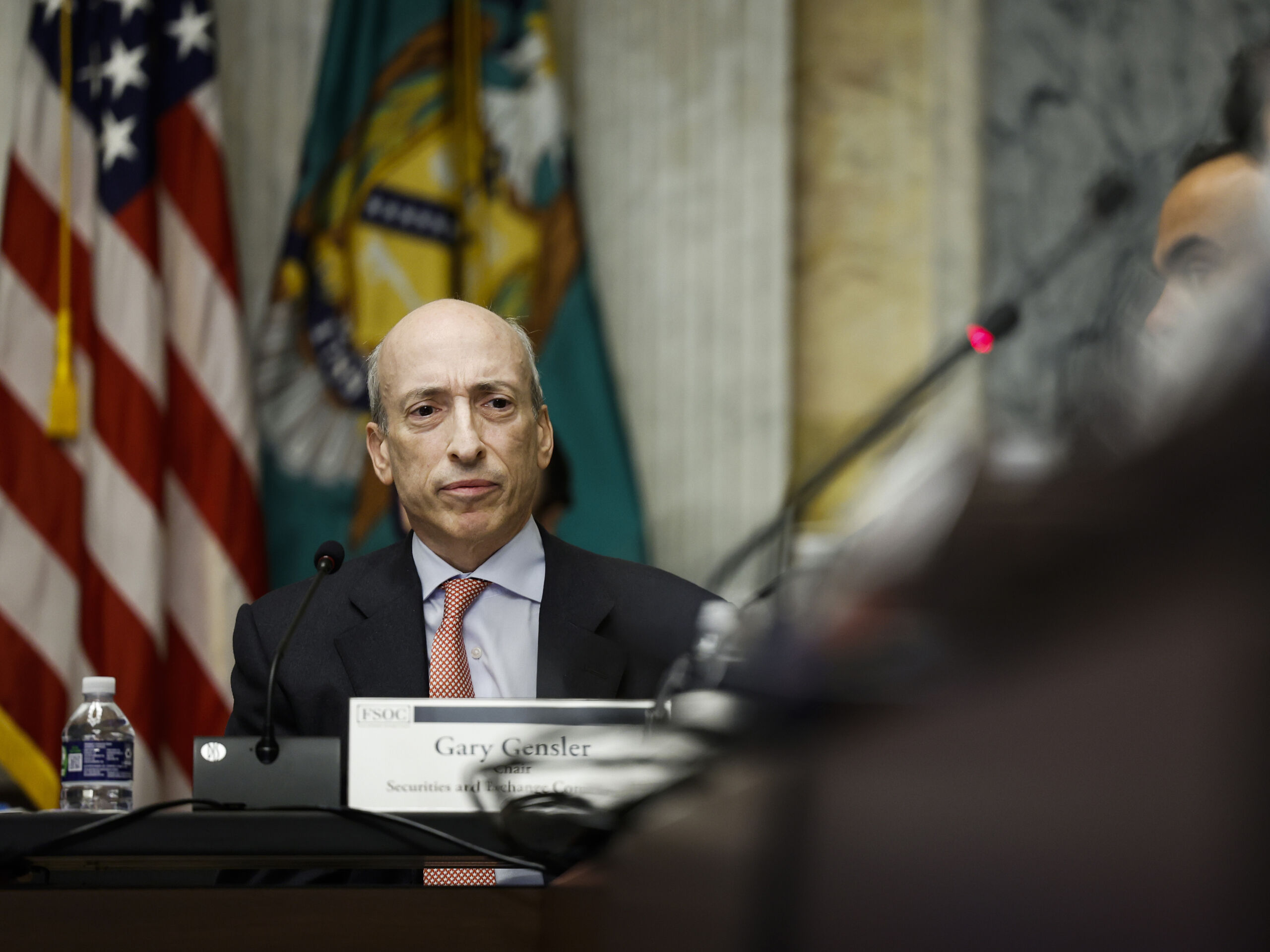
WASHINGTON, DC - OCTOBER 03: Securities and Exchange Commission (SEC) Chair Gary Gensler listens during a meeting with the Treasury Department's Financial Stability Oversight Council at the U.S. Treasury Department on October 03, 2022 in Washington, DC. The council held the meeting to discuss a range of topics including climate-related financial risk and the recent Treasury report on the adoption of cloud services in the financial sector. (Photo by Anna Moneymaker/Getty Images)

In a recent interview with CNBC, US Representative Ted Budd, a Republican from North Carolina, expressed his dissatisfaction with the Securities and Exchange Commission (SEC) and its chairman, Gary Gensler. He accused Gensler of overregulating the crypto industry and stifling innovation. He also said that Gensler should be fired in 2024, when the next presidential term begins.

Budd, who is a member of the House Financial Services Committee and the co-chair of the Congressional Blockchain Caucus, said that he was disappointed with Gensler’s testimony before the committee in October. He said that Gensler did not provide clear guidance on how the SEC would regulate crypto assets and platforms, and instead resorted to vague threats and enforcement actions.

Budd said that he was concerned about the impact of the SEC’s actions on the US crypto industry, which he said was a source of job creation and economic growth. He said that the SEC was driving away innovation and investment from the US to other countries that have more friendly regulatory environments. He also said that the SEC was hurting American consumers and investors who want to access the benefits of crypto.

Budd said that he hoped that Congress would pass legislation to provide clarity and certainty for the crypto industry, and to limit the SEC’s authority over crypto. He said that he supported the Securities Clarity Act, which would amend the Securities Act of 1933 to exclude digital tokens from the definition of securities.

He also said that he supported the Eliminate Barriers to Innovation Act, which would establish a joint working group of regulators and industry representatives to study and recommend a regulatory framework for crypto.

He said that the SEC should provide clear guidance and rules for crypto businesses and investors, instead of relying on enforcement actions and lawsuits. He also urged the SEC to work with Congress and other stakeholders to develop a comprehensive legislative framework for crypto regulation.

Senator Budd is not alone in his views. Many crypto advocates and industry leaders have expressed similar concerns about the SEC’s approach to crypto regulation. They argue that the SEC is stifling innovation and growth in the crypto sector, which has the potential to create jobs, wealth, and social impact. They also point out that the US is falling behind other countries, such as Singapore, Switzerland, and Japan, that have adopted more proactive and supportive policies for crypto development.

The SEC, on the other hand, has defended its actions as necessary to protect investors and maintain market integrity. The SEC has said that it is applying existing securities laws to crypto assets, and that it is open to dialogue and collaboration with the crypto industry. The SEC has also warned that many crypto products and services may pose significant risks to investors, such as fraud, hacking, volatility, and lack of transparency.

The debate over crypto regulation is likely to continue as the industry evolves and matures. The challenge for both the SEC and the crypto community is to find a balance between innovation and protection, between flexibility and certainty, and between national and global interests. The future of crypto depends on how well they can achieve this balance.

Budd said that he believed that Gensler was not fit to lead the SEC, and that he should be replaced by someone who understands and supports crypto. He said that he hoped that the next president would appoint a new SEC chairman who would foster innovation and protect consumers in the crypto space. He said that he would work with his colleagues in Congress to ensure that Gensler is fired in 2024.

Mt. Gox starts PayPal repayments of 2014 Bitcoin Hack, FTX to Repay Customers

3

Mt. Gox, the infamous cryptocurrency exchange that was hacked in 2014 and lost 850,000 bitcoins, has announced that it will start repaying its creditors using PayPal. The announcement was made on the official website of the exchange, where users can log in and claim their refunds.

According to the website, Mt. Gox has obtained approval from the Tokyo District Court to use PayPal as a payment method for the civil rehabilitation proceedings. The exchange said that PayPal was chosen because it is “fast, secure and convenient” and that it will cover the fees for the transactions.

The exchange also said that it has recovered about 200,000 bitcoins from various sources, including its own wallets, third-party services and law enforcement agencies. The remaining 650,000 bitcoins are still missing and presumed stolen by hackers.

The repayment process will be based on the balance of each user’s account as of February 2014, when the exchange suspended its operations. The exchange will use the exchange rate of $483 per bitcoin, which was the average price at the time of the hack.

Users who want to claim their refunds will have to provide their PayPal email address and verify their identity using a photo ID and a selfie. The exchange said that it will process the claims within 10 business days and that users can expect to receive their funds within 24 hours after approval.

The announcement comes as a surprise to many in the crypto community, who have been waiting for years for Mt. Gox to resolve its legal issues and return their funds. Some users have expressed skepticism and distrust about the PayPal option, while others have welcomed it as a sign of progress and hope.

Mt. Gox was once the largest and most popular bitcoin exchange in the world, handling over 70% of all bitcoin transactions at its peak. However, in February 2014, the exchange revealed that it had been hacked and lost almost all of its bitcoins, worth about $450 million at the time. The hack triggered a massive sell-off in the crypto market and a loss of confidence in the security and reliability of bitcoin exchanges.

Since then, Mt. Gox has been involved in a complex and lengthy legal process, involving multiple lawsuits, investigations and bankruptcy proceedings. The exchange has been under the supervision of a court-appointed trustee, Nobuaki Kobayashi, who has been selling some of the recovered bitcoins to pay off the creditors.

The PayPal option is part of the civil rehabilitation plan that was approved by the court in December 2020. The plan allows creditors to choose between receiving cash or bitcoins as their repayment. However, due to the limited amount of bitcoins available, most creditors will only receive a fraction of their original claim.

The plan also stipulates that any remaining bitcoins after the repayment will be returned to Mt. Gox’s shareholders, mainly its former CEO Mark Karpeles. This has sparked controversy and criticism from some creditors, who argue that Karpeles should not benefit from the hack and that he should be held accountable for his role in the exchange’s collapse.

Karpeles has maintained his innocence and claimed that he was not involved in or aware of the hack. He has also said that he does not want to receive any bitcoins from Mt. Gox and that he will donate them to a foundation that will support the development of bitcoin.

The PayPal option is expected to be available until March 31, 2024, after which any unclaimed funds will be forfeited. Users who have not yet filed their claims or who prefer other payment methods can still do so through the online system or by contacting Kobayashi’s office.

FTX plans to pay back customers crypto but at the price they were when they went bankrupt

FTX, one of the leading cryptocurrency exchanges, has announced that it will reimburse its customers who lost their funds due to the recent insolvency of a third-party custodian. The exchange said that it will use its own reserves to pay back the affected users, but with a catch: the compensation will be based on the market value of the crypto assets at the time of the bankruptcy, not the current price.

This means that some customers may receive less than what they had originally deposited, while others may receive more. For example, if a customer had 10 bitcoins (BTC) in their FTX account when the custodian went bankrupt, and the price of BTC was $50,000 at that time, they will receive $500,000 worth of FTX tokens (FTT) as compensation.

However, if the price of BTC is now $60,000, they will miss out on the $100,000 difference. Conversely, if the price of BTC is now $40,000, they will gain an extra $100,000.

FTX said that this method of compensation is fair and transparent, as it reflects the actual value of the assets at the time of the loss. The exchange also said that it will cover any legal fees and expenses incurred by the customers in relation to the bankruptcy case.

FTX CEO Sam Bankman-Fried said that he regrets the inconvenience and frustration caused by the custodian’s insolvency, and that he hopes to restore trust and confidence in the crypto industry.

“We are deeply sorry for what happened to our customers who trusted us with their funds. We take full responsibility for this incident, and we will do everything in our power to make it right. We believe that paying back our customers based on the market value of their crypto at the time of the bankruptcy is the most fair and transparent way to handle this situation.

We also want to assure our customers that we have taken steps to prevent this from happening again, and that we are working with regulators and law enforcement to hold the custodian accountable for its actions.” Bankman-Fried said in a blog post.

The exchange did not disclose the name of the custodian or the amount of funds that were affected by the insolvency. However, some sources claim that the custodian was Crypto Capital, a Panama-based company that has been accused of fraud and money laundering by several authorities.

FTX is not the first exchange to face such a situation. In 2019, QuadrigaCX, a Canadian crypto exchange, went bankrupt after its founder died and took the private keys to the exchange’s wallets with him. The exchange owed its customers over $190 million in crypto and fiat currencies, but could not access them.

FTX’s decision to pay back its customers at the original value of their deposits is commendable and shows that the exchange cares about its users and their funds. It also sets a positive example for other exchanges that may face similar issues in the future.