DD
MM
YYYY

PAGES

DD
MM
YYYY

spot_img

PAGES

Home Blog Page 3489

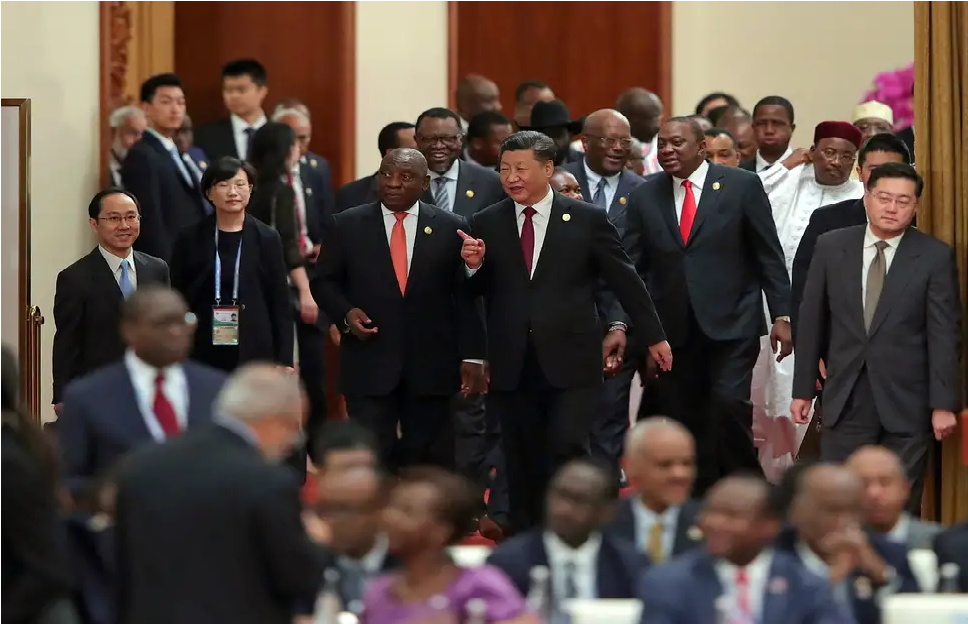
Why Africa should review and recalibrate its relationship with China

0

Africa and China have a long history of economic and political ties, dating back to the 1950s when many African countries gained their independence from colonial powers. China supported the liberation movements and provided aid and investment to the newly formed states.

Since then, China has become Africa’s largest trading partner, a major source of infrastructure financing, and a key player in regional and global affairs.

However, in recent years, some critics have raised concerns about the nature and impact of China’s engagement with Africa. They argue that China is exploiting Africa’s natural resources, creating debt traps, undermining governance and human rights standards, and eroding Africa’s sovereignty and agency.

They also claim that China is pursuing its own strategic interests in Africa, such as securing access to markets, raw materials, and political influence, at the expense of Africa’s development and security.

These criticisms are not entirely unfounded, but they also overlook some of the benefits and opportunities that China’s presence in Africa offers. China has contributed to Africa’s economic growth, poverty reduction, infrastructure development, and regional integration.

China has also supported Africa’s participation in multilateral platforms, such as the Forum on China-Africa Cooperation (FOCAC), the Belt and Road Initiative (BRI), and the African Continental Free Trade Area (AfCFTA). China has also cooperated with Africa on various issues of common concern, such as climate change, public health, peace and security, and digital transformation.

Therefore, it is not a question of whether Africa should engage with China or not, but rather how Africa should engage with China in a way that maximizes its benefits and minimizes its risks. This requires a comprehensive and nuanced understanding of the opportunities and challenges that China’s involvement in Africa presents, as well as a clear vision of Africa’s own interests and priorities. It also requires a proactive and pragmatic approach that leverages Africa’s strengths and capabilities, while addressing its weaknesses and vulnerabilities.

Trade and investment: Africa should diversify its exports to China, reduce its trade deficit, negotiate fairer terms for Chinese loans and projects, promote local content and value addition, enhance environmental and social safeguards, and foster more balanced and sustainable economic partnerships.

Governance and human rights: Africa should uphold its own values and standards of democracy, rule of law, human rights, and good governance, while engaging with China on these issues through dialogue and cooperation. Africa should also protect its sovereignty and independence from external interference or pressure.

Security and peace: Africa should enhance its own capacity to address its security challenges, while seeking China’s support for peacekeeping, counter-terrorism, maritime security, and conflict resolution. Africa should also ensure that its security cooperation with China does not undermine its relations with other partners or regional organizations.

Development and cooperation: Africa should align its development agenda with China’s cooperation initiatives, such as the FOCAC action plan, the BRI projects, and the AfCFTA framework. Africa should also leverage China’s experience and expertise in areas such as industrialization, urbanization, digitalization, agriculture, education, health, and innovation.

Global governance: Africa should strengthen its voice and influence in global affairs, while working with China to reform the international system to make it more inclusive, representative, and responsive to the needs and aspirations of developing countries. Africa should also collaborate with China on global challenges such as climate change, pandemic response, debt relief, multilateral trade, and human development.

By reviewing and recalibrating its relationship with China in these areas, Africa can enhance its strategic partnership with China in a way that serves its long-term interests and goals.

This will also enable Africa to pursue a more diversified and balanced foreign policy that engages with other partners on the basis of mutual respect and mutual benefit. Ultimately, this will contribute to Africa’s vision of achieving a peaceful, prosperous, and integrated continent.

Some challenges and criticisms have emerged in the Africa-China relationship. Some of these include:

  • The debt burden and sustainability of some African countries that have borrowed heavily from China for infrastructure projects.

  • The environmental and social impacts of some Chinese investments and activities in Africa, such as mining, logging and wildlife trade.

  • The lack of transparency and accountability of some Chinese actors in Africa, such as state-owned enterprises, private companies and individuals.

  • The perceived imbalance and inequality of the Africa-China partnership, which is often seen as favoring China’s interests over Africa’s needs and aspirations.

These issues have raised questions about the benefits and costs of the Africa-China relationship, as well as its future direction and prospects. Therefore, it is important for African countries to review and recalibrate their relationship with China, in order to: Ensure that the relationship is based on mutual respect, trust and cooperation, and that it aligns with Africa’s own vision and agenda for development.

Enhance the quality and diversity of the relationship, by expanding the areas of cooperation beyond trade and infrastructure, to include sectors such as health, education, agriculture, science and technology, culture and tourism. Promote the principles and values of good governance, human rights, democracy and rule of law, both within Africa and in its engagement with China.

Strengthen the capacity and voice of African institutions, governments, civil society and media, to effectively negotiate, monitor and evaluate the relationship with China. Foster a balanced and inclusive relationship that benefits all stakeholders, especially the ordinary people of Africa and China.

By reviewing and recalibrating its relationship with China, Africa can seize the opportunities and address the challenges that come with this strategic partnership. This will enable Africa to achieve its goals of peace, prosperity and integration, while also contributing to global peace and development.


eNaira Experienced A Substantial Growth of 284.6%, Totaling N9.78 Billion in August – CBN

0

According to the Central Bank of Nigeria (CBN), the electronic version of the Nigerian Naira, known as the eNaira, exhibited a remarkable increase in August, surging by 284.6% and reaching a substantial sum of N9.78 billion.

This was disclosed in the apex bank’s Monthly Economic Report for August 2023. However, the eNaira for the month was substantial, when compared to the Currency-In-Circulation (CIC) it was only 0.37%.

The CBN also reported an 11.7% decline in currency-in-circulation for August to reach N2.66 trillion. The decline in CIC was attributed to a rise in the use of electronic payment methods for business transactions.

Total credits for August increased by 0.8% to N38.55 trillion for the month with the service sector constituting over half of the credits at 52.2%. The industry and agricultural sector represented 43.2% and 4.6% respectively.

Also, consumer credits for the month stood at N2.99 trillion representing an increase of 16.9% from the previous month when compared to the previous month. The report noted that the rise in consumer credit was a result of an increase in demand for credit facilities by economic agents.

Personal loans constituted the most consumer credit for the month at 75.4% trailed by retail sector loans which represented 24.6%.

With the launch of the naira in October 2021, Nigeria became the first country in Africa and one of the seven countries in the world to have a digital currency. The eNaira project according to the CBN is envisaged to improve financial inclusion, increase remittance, and ensure a more effective monetary policy.

At the time of the launch, the former Governor of CBN Godwin Emefiele forecasted that the digital currency could boost Nigeria’s GDP by as much as $29bn over the next 10 years. Amongst other advantages, he disclosed that it is expected to boost commerce by making retail transactions more seamless in places such as petrol stations and supermarkets

According to reports, the number of eNaira wallets spiked more than 12-fold to 13 million since October 2022, when CBN announced the redesigning of the old naira notes, which led to a nationwide cash crunch.

The former CBN Governor as at then, disclosed that the volume of transactions had jumped to 63% to N22 billion, about $48 million this year.

Meanwhile, why there’s a shortage of statistics on eNaira usage, it is safe to say that Africa’s first central bank digital currency (CBDC) hasn’t caught the interest of many Nigerians.

Given its perks of speedy transactions at zero fees amongst others, many Nigerians are yet to take advantage of what the Central Bank of Nigeria (CBN) describes as the same naira with more possibilities, especially when digital payments are fast becoming viable options.

In August 2023, the acting Governor of CBN Folashodun Adebisi Shonubi, disclosed that modifications will be made to the eNaira to boost adoption.

Shonubi said the CBN was amending the current model of the Central Bank Digital Currency (CBDC), the eNaira, to ensure an increase in the volume and activity of wallet holders.

The bank leadership in a concerted effort to drive the CBDC usage, introduced new features, such as upgrading the eNaira to support NFC technology, which is the same technology used by popular platforms like Apple Pay and Google Pay for contactless payments.

Additionally, the central bank introduced enhanced programmability functions that will enable users to set restrictions on payments, including utilization in government aid programs like farmer loans.

Notabl6, the IMF noted the eNaira holds significant potential for streamlining the remittance process.

How does Goldman Sachs make Money?

0
The logo for Goldman Sachs is seen on the trading floor at the New York Stock Exchange (NYSE) in New York City, New York, U.S., November 17, 2021. REUTERS/Andrew Kelly/Files

Goldman Sachs is one of the largest and most influential investment banks in the world. It provides a wide range of financial services to corporations, governments, institutions, and individuals. In this blog post, we will explore how Goldman Sachs makes money from its various business segments and activities.

Goldman Sachs operates in four main segments: Investment Banking, Global Markets, Asset Management, and Consumer & Wealth Management. Each segment has different sources of revenue and income, as well as different risks and challenges.

Investment Banking

Investment banking is the segment that provides advisory services to clients on mergers and acquisitions, corporate finance, restructuring, equity and debt offerings, and other strategic transactions. Goldman Sachs earns fees from these services, which are based on the size and complexity of the deals.

Investment banking also includes underwriting services, where Goldman Sachs acts as an intermediary between issuers of securities and investors. Goldman Sachs earns commissions and spreads from these activities, as well as interest income from holding securities in inventory.

The risks of investment banking include market risk, credit risk, operational risk, legal risk, and reputational risk. Market risk is the risk of losing money due to changes in market prices or volatility. Credit risk is the risk of losing money due to defaults or downgrades of counterparties or issuers.

Operational risk is the risk of losing money due to errors, fraud, system failures, or external events. Legal risk is the risk of losing money due to lawsuits, fines, or regulatory actions. Reputational risk is the risk of losing money due to damage to the company’s brand or image.

Global Markets

Global markets are the segment that engages in trading and market-making activities across various asset classes, such as equities, fixed income, currencies, commodities, and derivatives. Goldman Sachs makes money from these activities by taking advantage of price movements, arbitrage opportunities, liquidity provision, and client facilitation.

Global markets also include securities services, where Goldman Sachs provides prime brokerage, clearing, custody, financing, and securities lending services to institutional clients. Goldman Sachs earns fees and interest income from these services.

Asset Management

Asset management is the segment that provides investment management and advisory services to clients across various asset classes and strategies, such as equity, fixed income, alternative investments, real estate, and private equity. Goldman Sachs makes money from these services by charging management fees, which are based on the assets under management (AUM), and performance fees, which are based on the returns generated for the clients.

Asset management also includes lending activities, where Goldman Sachs provides loans and other financing solutions to clients. Goldman Sachs earns interest income and fees from these activities.

Consumer & Wealth Management

Consumer & wealth management is the segment that provides financial solutions to individual clients, such as high-net-worth individuals (HNWIs), mass affluent clients, and retail customers. Goldman Sachs makes money from these solutions by offering products and services such as wealth management, personal banking, credit cards, mortgages, deposits, loans, and digital platforms. Goldman Sachs earns fees, interest income, and interchange revenue from these solutions.

Goldman Sachs makes money from a variety of sources across its four main segments: investment banking, global markets, asset management, and consumer & wealth management. The company’s revenue and income depend on various factors such as market conditions, client demand, regulatory environment, competition, and risk management. Goldman Sachs strives to diversify its revenue streams and optimize its capital allocation to achieve sustainable growth and profitability.

Notable Technological Advancements of 2023

0

The year 2023 will be remembered for many reasons, some of them grim and some of them inspiring. On the one hand, the world faced unprecedented challenges such as soaring inflation, violent conflicts, and deepening polarization.

On the other hand, the human spirit of innovation and resilience shone through in remarkable ways, as new technologies emerged to address some of the most pressing problems of our time.

One of the most notable developments of 2023 was the breakthrough in nuclear fusion by South Korea’s KSTAR facility, which achieved a stable plasma state for 30 seconds at a temperature of 100 million degrees Celsius, nearly seven times hotter than the core of the Sun.

This milestone was hailed as a major step towards achieving clean and unlimited energy for the world and sparked a renewed interest in fusion research among other countries and organizations.

Another area where technology made a significant impact was in health care, especially in the fight against COVID-19 and its variants. Several new vaccines and treatments were developed and distributed around the world, thanks to the collaboration of scientists, governments, and private sector partners.

Some of the most promising innovations included mRNA-based vaccines that could be tailored to specific strains of the virus, nanobots that could deliver drugs directly to infected cells, and artificial intelligence that could diagnose and monitor patients remotely.

However, not all technological advances were positive or beneficial for humanity. 2023 also witnessed some of the worst cyberattacks in history, targeting critical infrastructure, government agencies, and private companies.

Some of the most damaging incidents included a ransomware attack that paralyzed the US oil pipeline system, a hack that exposed the personal data of millions of Facebook users, and a coordinated assault that disrupted the global internet service for several hours. These attacks exposed the vulnerability of our digital systems and raised serious questions about cybersecurity and privacy.

Moreover, technology also played a role in exacerbating some of the social and political issues that plagued 2023. The spread of misinformation and propaganda through social media platforms contributed to increasing polarization and extremism among different groups and ideologies.

The use of drones and autonomous weapons in warfare raised ethical and legal dilemmas about accountability and human rights. The emergence of biotechnology and genetic engineering posed challenges to our understanding of identity and morality.

Besides these major trends, there were also other notable technological advancements that occurred in 2023. Some examples are:

Green hydrogen: Hydrogen is a clean fuel that can be used for various applications such as transportation, heating, and electricity generation. However, most hydrogen today is produced from fossil fuels, which emit greenhouse gases.

Green hydrogen is produced from renewable sources such as water or biomass, using electrolysis or other methods that do not emit carbon dioxide. Green hydrogen has the potential to reduce emissions from hard-to-decarbonize sectors such as industry and aviation.

Gene editing: Gene editing is a technique that allows scientists to modify the DNA of living organisms with precision and accuracy. Gene editing can be used for various purposes such as improving crops, creating new medicines, or curing genetic diseases.

One of the most widely used tools for gene editing is CRISPR-Cas9, which acts like a molecular scissors that can cut and paste DNA sequences. Gene editing has raised ethical concerns about its safety and implications for human dignity.

Quantum computing: Quantum computing is a form of computing that uses quantum mechanical phenomena such as superposition and entanglement to perform operations on data. Quantum computers can theoretically solve problems that are too complex or time-consuming for classical computers, such as cryptography, optimization, or artificial intelligence. Quantum computing is still in its infancy, but several companies and governments are investing heavily in developing quantum hardware and software.

Connected devices: Connected devices are devices that can communicate with each other or with external networks via wireless technologies such as Wi-Fi, Bluetooth, or 5G. Connected devices can range from smartphones and smartwatches to smart home appliances and smart city infrastructure.

Connected devices can collect and share data, offer personalized services, or enable remote control. Connected devices can also pose risks such as data breaches, cyberattacks, or privacy violations.

Artificial intelligence: Artificial intelligence is a branch of computer science that aims to create machines or systems that can perform tasks that normally require human intelligence such as reasoning, learning, or decision making.

Artificial intelligence can be applied to various domains such as education, health care, entertainment, or security. Artificial intelligence can also have social impacts such as displacing workers, influencing behavior, or creating bias.

As we look back at 2023, we can see that it was a year of contrasts, where technology was both a source of hope and a cause of concern. We can also see that it was a year of learning, where we had to adapt to new realities and cope with new challenges. We can hope that 2024 will be a year of action, where we will use technology wisely and responsibly to create a better world for ourselves and others.

Competitive Gaming: How Can Remote Players Qualify?

0

Worldwide, eSports are becoming more and more prominent. Ten years ago, few people would have thought that video gaming would be on par with traditional sports. Now, the world’s most popular sports leagues all have eSports counterparts, from the ePremier League to the NFL’s new Tuesday Night Gaming scheme.

And, beyond the realm of pro sports mashups, eSports have taken off in their own right. Games like League of Legends, PUBG, and Fortnite have tens of millions of active players. The top echelon of competitors represents established teams and makes hundreds of thousands of dollars. Most are now battling it out in regional leagues before advancing to global championships—something that sports fans would dream of seeing.

For gamers, this type of glory is more accessible than ever before—especially as institutions like universities start to offer eSports-centric programs. But what sorts of things can the average gamer to do improve their chances in competitive gaming? Here are a few tips to help you make the cut.

Option #1: Join an Open League

The easiest way to get started with competitive gaming is to check out the most accessible tournaments. These opportunities are available for just about every type of game, whether an FPS, battle royale, or even a game like poker.

Let’s cover an example of the latter. A poker player who wants to take their game to the next level might consider joining something like PokerStars’ Power Path. This Power Path is designed to guide players as they start their journey toward qualifying for more online and in-person tournaments. So, if you’re looking to level up, seek out guides that lay out how to advance.

Option #2: Use Online Forums to Build a Team

Poker players must always go it alone, but that isn’t always the case with other games. In fact, titles like League of Legends involve quite a bit of teamwork. If you’re looking to advance in a multiplayer game, then you first need to find a team.

One of the easiest ways to do this is to seek out like-minded players on forums. What do we mean by likeminded? In terms of competitive gaming, that means this player should be interested in gaining new skills, can communicate efficiently, and is at the same skill level as you (or a bit higher).

Option #3: Join in-Game Guilds

Another option to push your gaming skills to new levels is to target a community within the game. Once again, this isn’t always possible. However, if you’re interested in games like World of Warcraft and Elder Scrolls Online, then joining an in-game guild or clan can quickly introduce you to new skills and ideas.

That’s also true for resources. If you join a clan that includes other advanced players, you might immediately have access to their resources, such as a crafting station in Elder Scrolls. The same is true for loot and difficult missions. In games like World of Warcraft, it’s not uncommon for guild members to split items and armor, and then tackle dangerous quests together.

Option #4: Show Off Your Skills & Build Your Rep on Twitch

Clearly, there are easy ways to learn from other gamers as you advance toward your goal of becoming an eSports star. But there’s still one big issue—if you want to join a top team, then you need to be recruited. And you can only be recruited if you’re visible.

For this reason, many eSports hopefuls have focused on building a following on Twitch (and, sometimes, YouTube). That’s because Twitch and YouTube are the primary spaces where recruiters search for up-and-coming gamers. As gamers build a following, they’re able to showcase their skills to a broader audience.

Simultaneously, building a following on Twitch or YouTube can also allow gamers to create their own channels. Even if they aren’t recruited, they can potentially earn sponsorship dollars by building up their follower count. Ninja, for example, is one of the most successful gamers in the world—but he’s largely in the entertainment space rather than competitive eSports.