DD
MM
YYYY

PAGES

DD
MM
YYYY

spot_img

PAGES

Home Blog Page 3493

SpaceX Starlink is Part of Nigeria’s Broadband Services Future

0

Elon Musk’s satellite broadband service, Starlink, has a clear path to #1 in Nigeria, and it is just a matter of time for that reality: “Elon Musk’s internet company, Starlink, has rapidly ascended to become Nigeria’s third-largest Internet Service Provider (ISP) by subscriber number in the fourth quarter (Q4) of 2023, according to the latest data released by the Nigerian Communications Commission (NCC).”

First, our major telcos are breaking record losses due to currency paralysis, and I do not expect many of them to be investing significantly over the next few years. Secondly, the unbelievable level of attacks on fiber cables will discourage some independent investors in that space.

So, what do you expect? State governments from 2026 will visit SpaceX to help connect their communities. They cannot do that now because the nation is hot (you are not supporting local telcos, etc), but if you check Starlink pricing, it is adjusting for that future.

Indeed, drop N100k monthly, and your rural primary school will have internet service. Do the same for the church, mosque, and just like that the local government headquarters will go Starlink. The future in Nigeria is satellite broadband, and it will do to GSM what GSM did to CDMA, and what CDMA did to NITEL cobwebs.

SpaceX Starlink Emerged as Nigeria’s Third-Largest ISP in Q4 2023

Musk Starlink Records High Adoption Rate in Nigeria With Impressive Ranking

0

Elon Musk-owned satellite internet service Starlink, has reached a significant milestone in Nigeria, by becoming the third largest internet provider, in the fourth quarter (Q4) of 2024.

This was revealed in a report by the Nigerian Communications Commission (NCC), highlighting Starlink notable influence and adoption in Nigeria.

According to data, Starlink active customers in Nigeria increased to 23,897 in Q4 of 2024, from 11,207 in Q3 of 2023, to become one of the leading ISPs in the country. The Q4 figure represented a 113% increase in customers quarter on quarter.

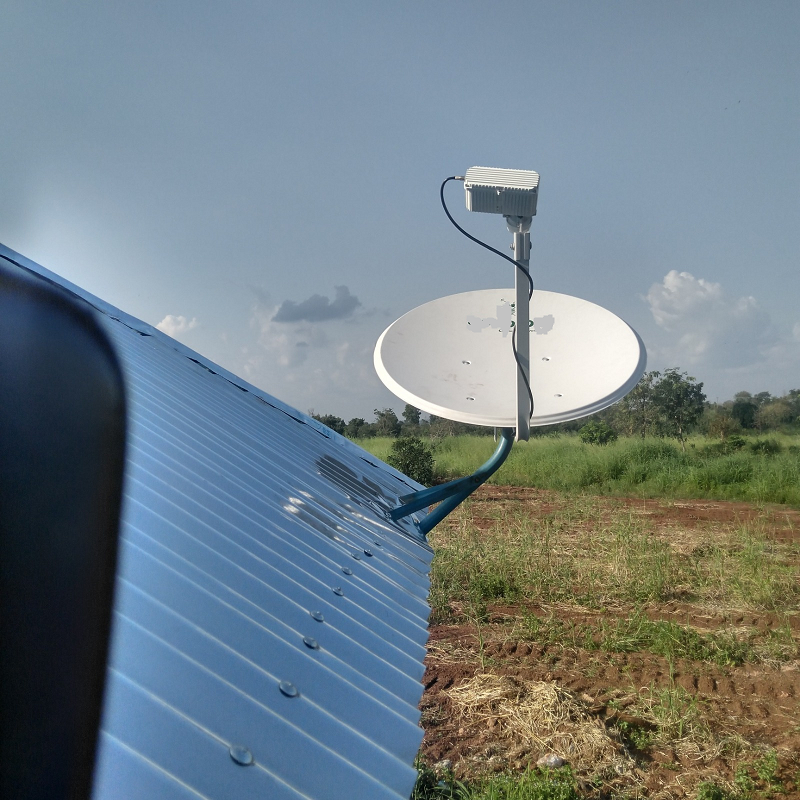
Starlink has gained significant traction in Nigeria due to its ability to provide high-speed internet access in remote and underserved regions, where local internet service providers often struggle to reach. By leveraging a constellation of low Earth Orbit (LEO) satellites, Starlink offers a reliable and efficient internet solution, addressing the digital divide in Nigeria.

Recall that in 2021, it was reported that Starlink, saw Nigeria as a critical market and immediately entered into talks with the Nigerian Communications Commission (NCC) to secure the licences needed to launch. One year later, Elon Musk announced that Starlink had been approved for deployment in Nigeria to provide high-speed, low-latency broadband internet, with a monthly subscription of USD 110 and USD 599 for the complete Starlink kit.

With the launch of Starlink in Nigeria, Some Nigerians expressed concerns that the high cost of acquiring Starlink’s hardware was too high.

Meanwhile, one month ago Elon Musk’s Starlink slashed its internet price by 45% in Nigeria. The internet router which was being sold for N800,000 as of April 9, 2024, now costs N440,000, according to a new price update released by the company on its website. However, the monthly subscription for the internet service remains unchanged at N38,000 per month.

While the company did not state any reason for the price slash, the recent appreciation of the naira against the US dollar and other foreign currencies may have influenced Starlink’s decision.

Despite Starlink price still on the high side compared with local ISPs, the internet service  has sparked high adoption interest among Nigerians who are eager to change their service providers.

The rapid adoption of Starlink in Nigeria can be attributed to its innovative technology, competitive pricing, and the increasing demand for robust internet connectivity across the country. As more individuals and businesses in Nigeria seek to stay connected in an increasingly digital world, Starlink’s entry and expansion in the market have provided a much-needed boost to the nation’s internet infrastructure.

This development highlights the transformative potential of satellite internet services in enhancing digital inclusion and fostering economic growth in emerging markets.

Industry experts disclosed that the launch of Starlink in Nigeria could mean a lot for the country in the area of broadband penetration, Job creation, increased investment and revenue generation.

Bitcoin Surges to Highest Price Since Halving, Sparks Bullish Sentiments

0

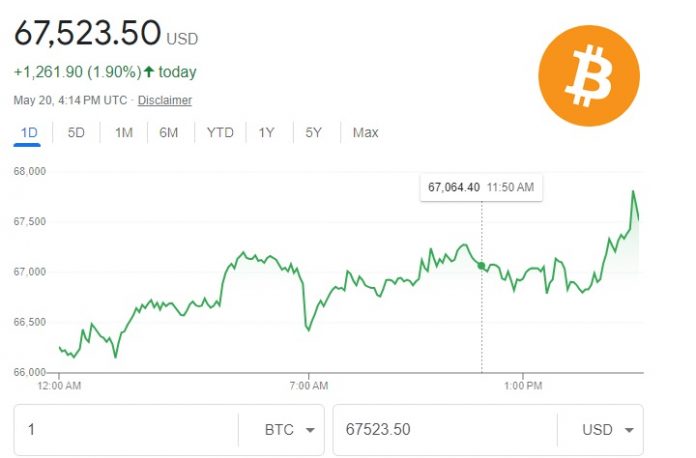
The price of Bitcoin has surged to the highest point since halving, hitting $67.5k price which has sparked bullish sentiments.

Data from CoinMarketCap reveal that the price of Bitcoin has increased by about 3% in the last day and by more than 9% in the past week.

Analysts predict that Bitcoin price could start rallying to new all-time highs if it manages to rise above the $67k price. Head of research at 10x Markus Thielen said the $67,000 level is acting as a significant resistance line for Bitcoin which could determine its price action in the coming weeks.

He said,

“A breakthrough above $67,500 could potentially lead to new all-time highs, a scenario that our Bitcoin ETF model predicts”.

Also, in a post made on X, popular crypto analysts Rekt Capital stated that the price of Bitcoin has broken its downward trend which could it move heavily to the upside.

He wrote,

“The Daily Downtrend is over. And yesterday, BTC broke out from its Daily Bull Flag (black). Any dips into the Bull Flag top would not just confirm the breakout, but also mimic a key late March retest (green circle) that preceded upside to ~$70,000”.

In a susbsequent post, he stated that BTC  only needed to drop an additional -1% to perform the post Bull Flag breakout retest attempt in an effort to secure trend continuation to the upside. Soon after, he said that the retest was successful, noting that Bitcoin has fully confirmed its breakout from the Bull Flag (black).

With these bullish predictions, crypto traders and enthusiasts anticipate a new wave of growth to the upside.

The current BTC market structure is forming a bullish continuation pattern with price trading at $67,040 as at the time of writing this report. A possible break out to the upside, could see the price of the crypto asset reach a record high. Recent market indicators affirm that Bitcoin is presently breaking out of the current market structure with a price target of about $75,000.

Notably, reports reveal that Inflows from the United States spot Bitcoin Exchange-traded funds (ETFs) remained positive for the second consecutive week, as the ETFs amassed over $200 million worth of cumulative net inflows, which is just half compared to previous weeks $413 million.

Institutional inflows from ETFs were a significant part of the current Bitcoin rally to new all-time highs. Recall that in February 15, Bitcoin ETFs accounted for about 75% of new investment in the world’s largest cryptocurrency as it surpassed the $50,000 mark.

Recent reports ascribe this growing demand to institutional and retail interest in spot BTC ETFs, with data showing that this investment product is steadily gaining ground on Gold ETFs in assets under management (AUM).

Bitcoin price is not showing any signs of stopping as the bulls seize every correction as a “buy-the-dip” opportunity. An increase in buying pressure could see Bitcoin price reclaim the $73,000 level.

ICC Seeks to Issue Arrest Warrants for Netanyahu, Hamas Leaders, over War Crimes

0

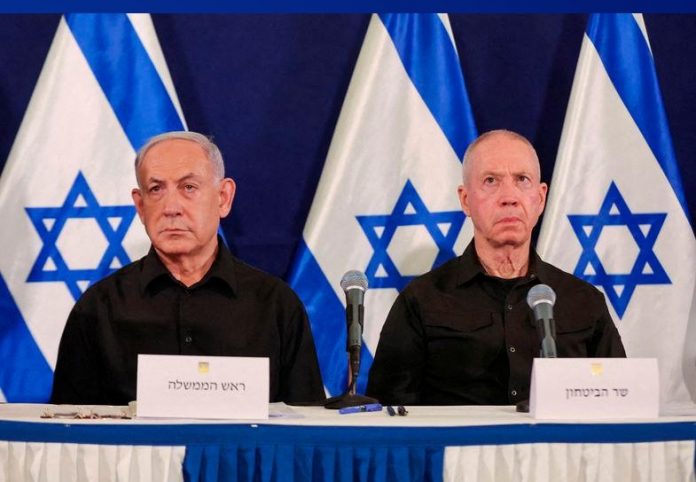
The International Criminal Court (ICC) is seeking to issue arrest warrants for Israeli Prime Minister Benjamin Netanyahu, Defense Minister Yoav Gallant, and three senior Hamas leaders: Yahya Sinwar, Mohammed Diab Ibrahim al-Masri (known as Mohammed Deif), and Ismail Haniyeh. 

The ICC Prosecutor Karim A.A. Khan announced the development in a statement on Monday, saying the warrants are to be issued “on the basis of evidence collected and examined by my Office.”

“My Office submits that the war crimes alleged in these applications were committed in the context of an international armed conflict between Israel and Palestine, and a non-international armed conflict between Israel and Hamas running in parallel,” Khan said.

Charges Against Hamas Leaders

The charges against the Hamas leaders are extensive and severe. They are accused of extermination and murder as crimes against humanity, contrary to Articles 7(1)(b) and 7(1)(a) of the Rome Statute. 

Additionally, murder as a war crime (Article 8(2)(c)(i)), taking hostages as a war crime (Article 8(2)(c)(iii)), and rape and other acts of sexual violence as crimes against humanity and war crimes (Articles 7(1)(g) and 8(2)(e)(vi)) are included in the indictments. 

They also face accusations of torture (Articles 7(1)(f) and 8(2)(c)(i)), other inhumane acts and cruel treatment (Articles 7(1)(k) and 8(2)(c)(i)), and outrages upon personal dignity (Article 8(2)(c)(ii)).

These charges are rooted in the systematic attacks against Israeli civilians and the taking of hostages during the conflict, which began on October 7, 2023. According to Khan, the evidence collected and examined by his office provides reasonable grounds to believe that Sinwar, Deif, and Haniyeh bear criminal responsibility for the heinous acts committed on Israeli soil and against its people.

“We submit that the crimes against humanity charged were part of a widespread and systematic attack against the civilian population of Israel by Hamas and other armed groups pursuant to organizational policies. Some of these crimes, in our assessment, continue to this day,” he said.

Charges Against Israeli Leaders

Netanyahu and Gallant are similarly facing serious allegations. The ICC has charged them with using starvation of civilians as a method of warfare (Article 8(2)(b)(xxv)), willfully causing great suffering or serious injury to body or health (Articles 8(2)(a)(iii) and 8(2)(c)(i)), and willful killing and murder as war crimes (Articles 8(2)(a)(i) and 8(2)(c)(i)). 

They are also accused of intentionally directing attacks against a civilian population (Articles 8(2)(b)(i) and 8(2)(e)(i)), extermination and murder as crimes against humanity (Articles 7(1)(b) and 7(1)(a)), persecution (Article 7(1)(h)), and other inhumane acts (Article 7(1)(k)).

These charges are connected to the alleged systematic deprivation of essential supplies to the civilian population in Gaza, leading to severe suffering and death. Khan disclosed that the investigation concludes Netanyahu and Gallant orchestrated and executed a policy that intentionally inflicted severe hardship on the Gazan population, constituting crimes against humanity and war crimes.

“My Office submits that the evidence we have collected, including interviews with survivors and eyewitnesses, authenticated video, photo and audio material, satellite imagery and statements from the alleged perpetrator group, shows that Israel has intentionally and systematically deprived the civilian population in all parts of Gaza of objects indispensable to human survival,” Khan noted.

The ICC’s Investigation

The ICC’s investigation is said to be comprehensive, involving interviews with victims, survivors, and eyewitnesses. The evidence includes CCTV footage, authenticated audio, photos, videos, medical records, and expert testimonies. Khan highlighted that the meticulous collection and analysis of evidence have led to these grave conclusions, painting a harrowing picture of deliberate and systematic violations of international law.

However, the evidence does not make it easy to effect the arrest warrant. Despite the ICC’s bold move, analysts believe that the likelihood of arresting Netanyahu remains slim, primarily due to geopolitical dynamics. This is because of the United States’ staunch support for Israel, which is believed, to pose a significant obstacle. Historically, the U.S. has opposed ICC actions that target its allies or its own nationals.

Geopolitical analysts acknowledged the significant challenges in effecting Netanyahu’s arrest, noting that the political shield provided by the United States makes it near impossible to bring him to justice under current international mechanisms.

The United States’ position on the ICC has been complex and often adversarial. While it has cooperated on certain issues, it has also enacted measures to protect its citizens and allies from ICC jurisdiction. For instance, the American Service-Members’ Protection Act (ASPA), often referred to as the “Hague Invasion Act,” authorizes the use of military force to free any U.S. or allied personnel detained by the ICC. This reflects the lengths to which the U.S. might go to protect Israeli officials from ICC prosecution.

Implications for International Justice

While the potential ICC’s warrants against both Israeli and Hamas leaders underscore its commitment to addressing alleged war crimes impartially, the practical enforcement of these warrants is fraught with the aforementioned difficulties. The court relies on the cooperation of states to apprehend and transfer suspects, a process complicated by political alliances and national interests.

The move to issue these arrest warrants has elicited strong reactions from various quarters. Israeli officials have condemned the ICC’s actions, accusing the court of bias and overreach. Netanyahu, in a defiant statement following earlier ICC’s rulings against Israel, has asserted that Israel will not be intimidated by politically motivated actions of the ICC and will continue to defend its citizens and sovereignty.

The case against Netanyahu, in particular, is seen as the biggest test of the ICC in recent time. Many believe that the ICC’s actions, while symbolically important, may not lead to actual prosecutions unless there is a dramatic shift in international political will.

Against this backdrop, Khan has called for synergy among the parties to the Rome Statue to approve and effect the arrest warrants, noting that the outcome could strengthen or undermine international laws.

“Let us today be clear on one core issue: if we do not demonstrate our willingness to apply the law equally, if it is seen as being applied selectively, we will be creating the conditions for its collapse,” he said. “In doing so, we will be loosening the remaining bonds that hold us together, the stabilizing connections between all communities and individuals, the safety net to which all victims look in times of suffering. This is the true risk we face in this moment.”

Khan further emphasized that no individual can act with impunity and that nothing can justify the deprivation of basic necessities required for life, the taking of hostages, or the targeting of civilians.

“Today we once again underline that international law and the laws of armed conflict apply to all. No foot soldier, no commander, no civilian leader – no one – can act with impunity,” he said. 

SpaceX Starlink Emerged as Nigeria’s Third-Largest ISP in Q4 2023

0

Elon Musk’s internet company, Starlink, has rapidly ascended to become Nigeria’s third-largest Internet Service Provider (ISP) by subscriber number in the fourth quarter (Q4) of 2023, according to the latest data released by the Nigerian Communications Commission (NCC).

The NCC report reveals that Starlink’s active customers in Nigeria surged to 23,897 by the end of Q4 2023, marking a significant 113% increase from the 11,207 customers reported in Q3 2023. This swift growth has positioned Starlink as one of the leading ISPs in the country, surpassing many long-established local providers.

Despite Starlink’s impressive growth, Spectranet and FiberOne maintained their positions as the top two ISPs in Nigeria. Spectranet leads the market with 113,869 active customers, followed by FiberOne, which recorded 27,000 active users by the end of 2023.

The NCC’s data shows that out of 245 companies licensed as ISPs in Nigeria by the end of 2023, only 106 had active customers during Q4. These 106 ISPs collectively served 262,206 active customers, a number that pales in comparison to the 163.8 million active internet subscriptions managed by the country’s four major mobile network operators: MTN, Airtel, Globacom, and 9mobile.

Starlink’s Competitive Edge

Starlink’s meteoric rise in the Nigerian ISP market can be attributed to several key factors:

  1. Widespread Availability: Starlink’s satellite internet service has made it a viable option for customers in remote areas with poor internet infrastructure. This has significantly broadened its customer base beyond the reach of traditional ISPs.
  2. Customer Interest and Demand: Since its announcement in January 2023, Starlink has generated high interest among Nigerians eager to switch from their current service providers. This interest was evident even before its official launch, with many Nigerians pre-ordering Starlink hardware in 2022.
  3. Pricing Strategy: In April 2024, Starlink announced a 45% price reduction on its internet router, slashing the price from N800,000 to N440,000. Although the monthly subscription fee remains at N38,000, the lower entry cost has made Starlink more accessible to a broader audience.
  4. Reliable Service: Starlink’s reputation for reliable service and efficient customer support has set it apart from many local ISPs, which have struggled with service issues and customer dissatisfaction.

Challenges for Local ISPs

Local ISPs in Nigeria have faced several challenges that have impeded their growth and customer satisfaction, including an unfriendly business environment, operational hurdles, and infrastructure limitations. These issues have created an opening for Starlink to quickly gain a substantial market share.

With its current trajectory, many industry analysts believe it is only a matter of time before Starlink climbs to the number one spot among Nigerian ISPs. Its rapid expansion and innovative approach are expected to continue driving growth, potentially reshaping the competitive landscape of the Nigerian internet service market.

Starlink’s emergence as Nigeria’s third-largest ISP within a year of its official launch underpins the transformative potential of satellite internet technology in bridging connectivity gaps, especially in underserved regions. The company’s satellite internet is expected to play a crucial role in the evolution of Nigeria’s internet services, helping to achieve the government’s push for 100% internet penetration.

As of 2022, Nigeria had approximately 84 million internet users, a figure projected to grow to 117 million by 2027. In terms of internet penetration, over 38 percent of Nigeria’s population had access to the internet in 2022. This data which reflects the increasing digital connectivity in the country, also underlines a huge gap in internet penetration. The internet penetration percentage is expected to rise from 38 percent to 48 percent by 2027.