DD
MM
YYYY

PAGES

DD
MM
YYYY

spot_img

PAGES

Home Blog Page 3494

Emirates Airline to Resume Flights to Nigeria on October 1, 2024

0
Two african young women sitting in a car while have road travel

Emirates Airlines has announced it will resume operations in Nigeria on October 1, 2024, after a two-year hiatus. This significant development was confirmed by Adnan Kazim, the airline’s Deputy President and Chief Commercial Officer, who noted the company’s renewed commitment to the Nigerian market and the strategic importance of this route.

Kazim revealed that Emirates will operate a daily service between Lagos and Dubai, a route that has been eagerly anticipated by both leisure and business travelers. 

“We are excited to resume our services to Nigeria. The Lagos-Dubai service has traditionally been popular with customers in Nigeria and we hope to reconnect leisure and business travelers to Dubai and onwards to our network of over 140 destinations,” he said.

The daily flights will be conducted using a Boeing 777-300ER. Flight EK783 is scheduled to depart from Dubai at 0945hrs, arriving in Lagos at 1520hrs. The return flight, EK784, will leave Lagos at 1730hrs, arriving in Dubai at 0510hrs the following day. Tickets are currently available for booking on emirates.com or through travel agents.

The Hiatus and the Resolution

Emirates Airlines suspended its flights to Nigeria in October 2022 due to difficulties in repatriating funds held in the country, amounting to $85 million. This financial impasse, along with other diplomatic issues involving Nigeria and the UAEled to the halting of services, straining the relationship between the airline and Nigerian authorities. However, recent diplomatic efforts have successfully resolved these issues, paving the way for the resumption of flights.

Kazim highlighted that the resumption of flights to Nigeria is part of a broader expansion of Emirates’ network across Africa. The airline now operates to 19 destinations on the continent, providing a total of 157 weekly flights departing from Dubai. 

Additionally, Emirates’ network extends to an additional 130 regional locations across Africa through codeshare and interline partnerships with airlines such as South African Airways, Airlink, Royal Air Maroc, and Tunis Air.

“We thank the Nigerian government for their partnership and support in re-establishing this route and we look forward to welcoming passengers back onboard,” Kazim expressed, acknowledging the cooperative efforts that facilitated this development.

The successful resolution of the impasse and the return of Emirates flights can be attributed to significant diplomatic efforts. In April, the Minister of Aviation and Aerospace Development, Festus Keyamo, said that the Nigerian government had been actively working with Emirates Airline to facilitate the resumption of services.

Keyamo noted that President Bola Tinubu played a pivotal role in resolving the frosty relations between Nigeria and the United Arab Emirates. 

“Emirates flight resumption is almost happening. I just received a letter from Emirates. The letter is on my phone now. They have gone through all the gamut, and they are ready to come back. They will announce the date because to restart a route, they have to get an aircraft for that route,” the minister said.

Looking Forward

The resumption of Emirates flights to Nigeria marks a significant milestone in the airline’s operations and its relationship with Nigeria. It is expected to enhance connectivity, facilitate business and leisure travel, and contribute positively to the economies of both Nigeria and the UAE. 

With the support of strategic partnerships and a robust network expansion plan, Emirates is poised to offer enhanced travel options and connectivity through Dubai to passengers from Nigerian cities.

Stakeholders in the aviation industry have noted the strategic importance of the partnership between Nigeria and the UAE, which enhances connectivity and offers more travel options to Emirates customers around the world.

The return of Emirates flights is a welcome development for travelers and stakeholders alike. It is therefore hoped that the challenges – mainly failure to repatriate earnings, which forced the airline to suspend operation, will not resurface. 

Singapore Airlines is joining Emirates in paying employees a sizeable bonus after reporting a record annual profit, Bloomberg reports, citing an anonymous source. The payout by the city-state carrier equates to nearly eight months of salary. Emirates is awarding its staff a 20-week bonus, Reuters reported days earlier, citing an internal email. The airlines are sharing profits amid strong, sustained demand for international travel, but also high costs and economic and geopolitical uncertainty. Both airlines paid employees similar bonuses last year, as travel boomed coming out of the coronavirus pandemic.


A Court Upholds Central Bank of Nigeria’s Regulation Requiring Social Media Handles of Bank Customers

0

In a landmark ruling, the Federal High Court in Lagos upheld a new regulation by the Central Bank of Nigeria (CBN) requiring financial institutions to collect the social media handles of their customers as part of the standard Know-Your-Customer (KYC) procedures. 

The decision, delivered on Thursday, May 16, by Justice Nnamdi Dimgba, has stirred significant discourse on privacy rights and regulatory compliance in Nigeria’s banking sector.

Justice Dimgba ruled that the CBN regulation does not breach the right to privacy of bank customers. He dismissed a suit filed by Lagos-based lawyer Chris Eke, who sought a declaration that Section 6(a)(iv) of the Central Bank of Nigeria (Customer Due Diligence) Regulations, 2023, was unconstitutional and invalid.

Eke argued that the regulation was undemocratic and inconsistent with Section 37 of the 1999 Constitution of the Federal Republic of Nigeria (as amended), which guarantees the privacy of citizens. He also requested a perpetual injunction to prevent the CBN from enforcing the regulation.

The CBN, in its defense, filed a notice of preliminary objection, challenging the competence of Eke’s suit. The apex bank contended that the regulation did not interfere with the private lives of customers as claimed.

In his judgment, Justice Dimgba held that the preliminary objection had merit and struck out the suit. He reasoned that the provision of a social media handle is akin to providing an email address or phone number—standard contact information used for due diligence.

“The essence of having a social media account is for one to be publicly visible communication-wise. It would be highly unreasonable to hold the CBN in breach of privacy for it,” Justice Dimgba held.

The judgment’s details.

Justice Dimgba elaborated on several key points. He held: “First, the Applicant claims that the requirements on the CBN Regulations for financial institutions to request and collect the social media handle of its customers as part of KYC infringes on his right to privacy. This claim is very ambitious and amounts to a very far throw. The said Regulations are directed to and apply to financial institutions. It does not apply to private individuals such as the Applicant.

“Even if, as appears to be argued, that the Regulations itself would inevitably affect the Applicant, this claim is speculative for the simple reason that in nowhere in the affidavit in support was it stated that the Applicant operates an account with a financial institution and that the said institution had demanded his social media handle.

“There is also no deposition to the effect that any financial institution had begun to implement this Regulation and that its implementation had begun to create disruptions and inconvenience against the general population, in which case one could infer that the suit should be legitimated as a public interest litigation.

“Assuming even that the banks had begun to implement these regulations, the applicant assuming he maintained any bank accounts or sought to open one, but is being hindered or irritated by the requirement of the Regulation to avail his social media handle as part of KYC, the Applicant still had a choice, which is to refuse to do business with any bank insisting on the information as part of its social media handle but to seek other alternatives.

“My view is that the provision of a social media handle is of the same genre as the provision of email addresses, phone numbers, and other means by which a potential customer of a bank can be contacted.

“I should even say that the essence of having a social media account was for one to be publicly visible communication-wise. It, therefore, appears quite ironic, though wryly, that one can suggest that asking for information about a social media handle with which the individual exposes and immerses himself or herself in the public, can amount to a violation of privacy rights.

“A social media handle is left at large for the world to see, being in the public space, everyone enjoys the liberty to have access to it whether or not consent was obtained. It would be highly unreasonable to hold the Respondent in breach of privacy for what other persons have access to.”

Dimgba concluded that the regulation aimed at providing alternative means for banks to contact customers and conduct due diligence did not infringe on the right to privacy. He noted that having a social media handle was inherently public and that concerns about privacy violations were speculative and unfounded.

“The apprehension of the Applicant of his social interactions being monitored is manifestly speculative in itself and rather incredulous to believe that the financial institutions have the luxury of time to concern itself with such frivolities. On the whole, if I did not sustain the NPO, I would have dismissed the suit for the reasons stated. But the NPO having been sustained, the suit is therefore hereby struck out,” he said.

This ruling reinforces the CBN’s regulatory authority and clarifies the scope of privacy rights in relation to banking procedures, setting a precedent for future cases involving data collection and privacy in Nigeria’s financial sector.

Nigeria’s Tax Revenue Emerges as Leading Source of Income Amid Oil Output Decline

0
FIRS signpost

The Federal Government of Nigeria has announced that tax revenue has become the highest source of income for the country, marking a significant shift in the nation’s revenue generation trajectory. 

Oluwatoyin Madein, the Accountant-General of the Federation, made this revelation on May 14 at the 26th Annual Tax Conference organized by the Chartered Institute of Taxation of Nigeria (CITN) in Abuja. The conference, themed ‘Sustainable Tax Culture and Economic Roadmap for Nation Building,’ highlighted the pivotal role of tax revenue in sustaining the country’s economy.

Acknowledging the shift in revenue sources, Madein emphasized the significance of tax revenue, which has become crucial for the Federation Account Allocation Committee (FAAC). 

“Tax revenue as at today is the highest source of revenue accruing to the federation,” she stated. “Therefore, at the federation account allocation committee meetings, we eagerly await the numbers coming from the Federal Inland Revenue Service (FIRS) because the performance keeps on increasing and brings succor to all tiers of government.”

This dependence on tax revenue marks a departure from the country’s historical reliance on oil. Nigeria has faced a dramatic decline in oil output, with production dropping to 1.281 million barrels per day (mbd) as of April, according to the Organization of the Petroleum Exporting Countries (OPEC). This decline has significantly impacted national revenue, forcing the government to seek alternative sources.

Against this backdrop, Madein called on tax practitioners to intensify their collection efforts to further boost government revenue

“Let us remain steadfast in our commitment to building a better future for all. Together we can harness the transformative power of taxation to create a more prosperous, equitable, and sustainable world,” she urged. She also highlighted the importance of non-oil revenue, which has become a critical lifeline for the nation’s finances.

“To tax practitioners, you are doing so well but we need more of this to be able to deliver on all the areas that the citizens are looking forward to because, for even infrastructure development, it is only through funds that we can get it done,” Madein added.

CITN’s Stance on Tax Culture

Samuel Agbeluyi, the president of CITN, echoed the need for a sustainable tax culture, stressing that it requires involvement from all levels of government. He noted that promoting a tax-paying culture involves the careful and transparent use of tax revenue to build trust between the government and taxpayers, which is essential for nation-building efforts.

Agbeluyi also welcomed the suspension of the cybersecurity levy implementation, a new tax move that had sparked significant backlash. 

“The institute will keep advising the government on its policies, taking into account their impact on citizens,” he said.

Declining Oil Output and Economic Challenges

The shift to tax revenue comes amid ongoing issues in Nigeria’s oil sector and a broader economic context characterized by the rising cost of living, which consequently, is crippling economic activities. The weight of the resulting economic hardship is underlined by skyrocketing inflation. As of April, Nigeria’s inflation rate stood at 33.69%, according to the latest data from the Nigerian Bureau of Statistics. 

The federal government’s push to widen the tax net has seen attempts to introduce new taxes, despite President Bola Tinubu’s earlier promise to streamline taxation to create a business-friendly environment. The latest was the Cybersecurity Levy, which generated a lot of backlash, forcing the government to suspend it.

Forced to depend on non-oil revenue, the Nigerian government has also sought revenue generation from its agencies, such as the Nigerian Customs Service (NCS). The exchange rate for customs duty collections has risen to N1502.1/$, the highest in seven weeks going back to March 22nd when the figure stood at N1572/$.

Economists have called for tax breaks, warning that increasing taxes now will exacerbate Nigeria’s economic woes. They also note that the federal government’s pivot towards tax revenue underscores the urgent need for a diversified and sustainable economic strategy. 

“This is absolute surrender,” Economist, Kalu Aja, said at the news of the NCS’ import rate increase. “There is no law mandating the Nigerian Customs to charge this rate. A way to reduce imported inflation is to fix this rate at $1:N100. IGR is not development.”

BlockDAG’s Enhanced Dashboard Fuels Investment Insight, Outshining DOGE And SHIB Rivalry, BNB Market Movements

0

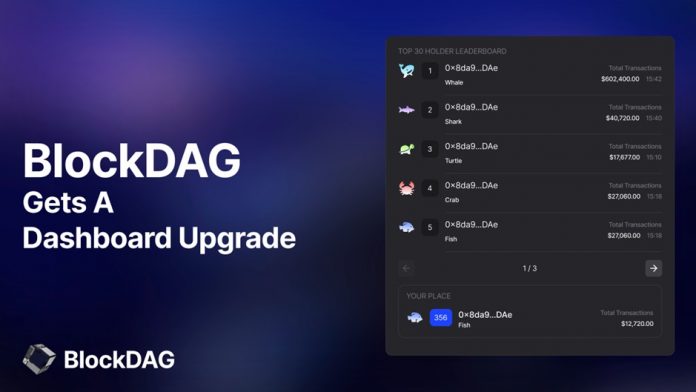
As the rivalry heats up between meme coins SHIB and DOGE, with nearly equal social dominance, and as BNB evaluates its market sustainability, BlockDAG has introduced a significant upgrade to its dashboard. This enhancement not only elevates user engagement by offering sophisticated investment management tools but also supports the visualization of whale transactions. This initiative has contributed to BlockDAG’s impressive $26.9 million in presale earnings, demonstrating its growing influence in the crypto world.

The Ongoing SHIB vs. DOGE Competition and Market Dynamics

Over the past month, Dogecoin has captured more public interest than Shiba Inu, despite their similar levels of social dominance, which paints a picture of a closely contested battle. Recently, SHIB’s price saw a 4.07% increase over 24 hours, while DOGE experienced a 1.48% rise. Market watchers speculate about the future standings in this rivalry, with some predicting SHIB might surpass DOGE, though opinions remain divided.

The market shows SHIB with a potential short-term upside, characterized by a solid base of holders compared to DOGE’s balance of traders and holders. Both cryptocurrencies are anticipated to experience price surges, with DOGE possibly reaching $0.17 and SHIB aiming for $0.000033.

BNB’s Trading Volume Surge and Sustainability Questions

Recently, the Binance BNB Chain experienced a significant increase in DEX trading volume, surpassing $700 million, suggesting a revitalized market interest. This uptick could potentially influence the price of BNB, as trading volume often correlates with asset demand. However, despite this increase, the chain’s on-chain volume has seen a downturn since May 10, prompting questions about its long-term sustainability.

The network’s Total Value Locked (TVL) remains below previous highs, indicating fluctuating network health. While the rise in TVL suggests growing trust in BNB Chain’s capabilities, analysts emphasize the need for thorough evaluation of various factors, including economic conditions and regulatory changes, before making investment decisions.

BlockDAG’s Dashboard Innovations and Mining Advancements

BlockDAG’s latest dashboard overhaul provides a more intuitive and detailed interface, enhancing the investment experience by allowing users to easily access transaction histories, notifications, and rank information. Users can now see their transaction details, manage their profiles, and track referrals and bonuses directly from the dashboard, promoting a transparent and interactive environment.

The dashboard also integrates a live transaction feature, showcasing purchases in real time and categorizing investors from small-scale ‘Crabs’ to large-scale ‘Whales’ based on their investment size. Moreover, BlockDAG has launched the X100 miner, a high-efficiency device capable of producing up to 2,000 BDAG daily, translating to substantial daily earnings. This mining technology, known for its power and low noise levels, is tailored for both novice and experienced miners.

BlockDAG Dominates with Advanced Dashboard and Robust Tools

In the competitive crypto landscape where SHIB and DOGE vie for dominance and BNB’s market dynamics evolve, BlockDAG sets itself apart with a state-of-the-art dashboard and significant presale success. Now in its twelfth batch, BlockDAG has amassed $26.9 million from sales of 9.1 billion coins. The X100 miner introduction further underscores BlockDAG’s commitment to innovation and superior investment resources, making it an attractive option for discerning crypto investors.


Join BlockDAG Presale Now:

Website: https://blockdag.network

Presale: https://purchase.blockdag.network

Telegram: https://t.me/blockDAGnetworkOfficial

Discord: https://discord.gg/Q7BxghMVyu

Morgan Stanley’s Strategic Bitcoin ETFs Investment, as FTT Token sees Skyrocketing Volume

0

In a landmark disclosure, Morgan Stanley has revealed a substantial investment in US spot bitcoin ETFs, amounting to over $270 million. This strategic move positions Morgan Stanley as a significant player in the cryptocurrency investment space, reflecting a broader acceptance and institutional confidence in digital assets.

The investment, primarily in Grayscale’s Bitcoin Trust (GBTC), makes Morgan Stanley one of the largest holders of GBTC, with a reported investment of $269.9 million. This is not just a mere financial maneuver but a testament to the growing recognition of cryptocurrency as a legitimate and valuable asset class within the traditional financial sector.

The significance of this investment extends beyond Morgan Stanley. It underscores a trend where Global Systemically Important Banks (G-SIBs) are increasingly disclosing investments in spot Bitcoin ETFs. This list includes other prominent financial institutions such as the Royal Bank of Canada, JP Morgan Chase, Wells Fargo, BNP Paribas, and UBS.

The first quarter of 2024 marked the end of the initial period during which investors could purchase most spot Bitcoin ETFs. The filings reveal a historical scale of professional investor ownership, reminiscent of the launch of gold ETFs in 2004, which was considered the most successful ETF launch at the time. According to Bitwise CIO Matt Hougan, over 700 professional firms have invested nearly $5 billion by the May 15 deadline, indicating a significant shift in the investment landscape.

Despite the influx of institutional money, retail investments continue to dominate the space, with spot Bitcoin ETFs collectively holding about $50 billion in assets under management (AUM) as of the latest reports. This balance between institutional and retail participation could be indicative of a maturing market, where cryptocurrencies are not just speculative instruments but are being embraced as part of diversified investment portfolios.

Morgan Stanley’s disclosure is a clear signal that cryptocurrencies, particularly Bitcoin, are gaining traction among traditional investment firms. It reflects a forward-thinking approach to investment, one that recognizes the potential of digital currencies to reshape the financial industry. As more institutions follow suit, we may witness a significant transformation in how investments are made, managed, and perceived in the years to come.

The broader implications of such investments by Global Systemically Important Banks (G-SIBs) suggest a maturing market where traditional and digital finance converge. With other significant financial giants also entering the bitcoin space through ETFs, the landscape of investment is witnessing a transformation.

For investors and market observers alike, these developments are worth watching. They may not only influence the performance and stability of cryptocurrency markets but also signal a new era of digital asset integration into mainstream finance.

FTT token sees skyrocketing volume following positive creditor news

The cryptocurrency market is known for its volatility and the rapid changes in the fortunes of its many tokens. In a remarkable turn of events, the FTX token, which had been considered defunct, has seen a significant surge in trading volume. This unexpected development follows the release of positive news regarding creditors, which has sparked renewed interest and speculation within the crypto community.

At the core of FTX’s initial decline was a critical report revealing questionable financial practices involving its sister company, Alameda Research. The report, published on November 2, 2022, by CoinDesk, disclosed that a significant portion of Alameda Research’s balance sheet was comprised of FTX’s native token, FTT, and other speculative digital assets created by FTX and its affiliates. This revelation raised alarms about the actual financial health and stability of the exchange.

The situation escalated when Binance, a rival cryptocurrency exchange, announced the liquidation of its position in FTT tokens. This move triggered a massive sell-off, leading to a domino effect of customer withdrawals from FTX. The exchange was unable to meet the sudden spike in withdrawal requests, exposing an $8 billion shortfall in its accounts.

The lack of liquidity was further exacerbated by allegations of mismanagement of funds by FTX’s leadership. The U.S. government brought civil and criminal charges against Sam Bankman-Fried, the CEO of FTX, accusing him of misappropriating customer deposits to cover losses incurred by Alameda Research, as well as for personal expenditures.

The culmination of these events led to the collapse of FTX, which declared bankruptcy on November 11, 2022. The aftermath of this event had far-reaching implications, not only for FTX and its customers but also for the broader cryptocurrency market, which saw a significant downturn in the value of many digital assets.

The FTX saga serves as a cautionary tale about the risks associated with the nascent and highly volatile cryptocurrency market. It underscores the importance of transparency, sound financial practices, and regulatory compliance in maintaining the integrity and trust necessary for the functioning of financial markets, especially those involving innovative and emerging technologies like cryptocurrencies.

The FTX token, also known as FTT, experienced a dramatic increase in spot volume, reaching $139 million on May 8. This level of activity was unprecedented since the token’s decline at the end of December. The surge aligns with comments from U.S. Securities and Exchange Commission (SEC) Chairman Gary Gensler, emphasizing the importance of operating within the legal framework of the cryptocurrency market. These remarks came amid discussions of potential bids to revive the FTX platform, which had previously faced significant challenges.

The crypto market is often influenced by regulatory news and the sentiment of investors. The SEC’s stance on legal compliance and the potential for a reboot of the FTX exchange have contributed to a speculative rally, with the FTT token’s price nearly doubling. This price movement reflects the market’s reaction to the possibility of FTX’s return under new management and a renewed commitment to transparency and legality.

The situation surrounding FTX, and its token is a microcosm of the broader crypto market, where news and sentiment can quickly shift the tides. Institutional traders and individual investors alike are closely monitoring the developments, as they could set precedents for the future of cryptocurrency exchanges and the tokens associated with them.

As the market continues to evolve, the FTX token’s resurgence serves as a reminder of the inherent uncertainties and opportunities within the world of cryptocurrencies. It underscores the importance of staying informed and cautious, especially in a landscape where the next twist can be just around the corner.

For those interested in the intricate details of the FTX token’s journey and the market’s response, further information can be found in the comprehensive reports provided by The Block and CoinDesk. These sources offer valuable insights into the complexities of the cryptocurrency market and the factors that drive it.

The rise in FTX’s token volume is not just a singular event but a testament to the dynamic nature of the crypto market. It highlights the potential for revival and growth, even in the face of adversity, and serves as a beacon for cautious optimism in the ever-evolving digital asset landscape.