DD
MM
YYYY

PAGES

DD
MM
YYYY

spot_img

PAGES

Home Blog Page 3498

Top Crypto Presale: BlockDAG’s 20,000X ROI Potential Leaves NuggetRush & Kelexo (KLXO) Presales in Dust

0

The crypto world is buzzing with excitement over up-and-coming projects like  NuggetRush (NUGX), BlockDAG (BDAG), and Kelexo (KLXO) presales. All three projects are already showing signs of massive growth post-launch and beyond, but which one has the highest potential to create the next wave of crypto millionaires? Boasting a 20,000x ROI potential, BlockDAG not only stands out but also leaves competitors like NuggetRush and Kelexo trailing in its wake. This remarkable potential has caught the eye of investors worldwide, positioning BlockDAG as the top crypto presale to watch.

Kelexo (KLXO) Presale

Kelexo (KLXO) is capturing investor interest in the presale market as it launches the first decentralized peer-to-peer crypto lending platform. This platform offers lenders an opportunity to earn passive income via fixed interest rate loans, while giving borrowers access to short-term liquidity without the need for KYC verification. To bolster investor trust, Kelexo has conducted a thorough audit of its lending platform’s smart contracts, ensuring their security and integrity.

NuggetRush Presale

NuggetRush (NUGX) introduces a play-to-earn gaming experience where participants can design their avatars, embark on mining expeditions in collaboration with peers, and collect character NFTs.

The NuggetRush NFTs, along with other unique NFT items and mined materials, can be traded or sold within the game’s marketplace. Furthermore, the NuggetRush game supports artisanal miners through charitable contributions from its marketplace revenues, offering an added real-world impact.

BlockDAG Rises as the Top Crypto Presale in 2024

BlockDAG (BDAG) is swiftly making its mark in the crypto landscape, captivating a global audience with a notable presale achievement of $15.9 million and a $600M fundraising target by the end of 2024. BlockDAG’s presale momentum is truly remarkable, catalyzed by the recent showcase of BlockDAG at the Las Vegas Sphere and the launch of the V2 technical whitepaper, with analysts projecting a total presale sell-out within just three months. Furthermore, they predict a jaw-dropping 20,000x ROI potential for BlockDAG’s investors, praising the project for its groundbreaking technology and strong tokenomics.

At the core of BlockDAG’s architecture lies an innovative consensus mechanism that integrates cutting-edge protocols PHANTOM and GHOSTDAG, designed to maximize transactions throughout and maximize network security by encouraging honest node behaviour and deterring malicious activities.

Beyond its robust network, BlockDAG presents the X-series – a lineup of energy-efficient yet extremely powerful mining rigs that can generate up to $100 per day in passive income, depending on the model. Additionally, BlockDAG introduces a crypto payment card, which will be supported in 38 million outlets worldwide, enabling users to pay with crypto for daily purchases.

BlockDAG has just moved forward to its 8th (out of 45 in total) presale batch, selling BDAG coins for $0.0045 each. The presale price is slated to increase from one batch to the next, so investors should act quickly while the project is still early in its presale.

Top Crypto Presale Highlights 2024

Kelexo (KLXO) introduces a pioneering decentralized peer-to-peer lending platform, enabling fixed interest rate loans and granting immediate access to liquidity for borrowers. On the other hand, NuggetRush (NUGX) merges play-to-earn gaming with real-world impact, supporting artisanal miners and offering players tangible financial rewards through NFTs. However, BlockDAG (BDAG) is poised to dominate the crypto presale market in 2024, with a staggering $15.9 million raised and analysts forecasting a 20,000X ROI potential for its early investors.


Join BlockDAG Presale Now:

Website: https://blockdag.network

Presale: https://purchase.blockdag.network

Telegram: https://t.me/blockDAGnetworkOfficial

Discord: https://discord.gg/Q7BxghMVyu

For Zimbabwe, It Goes Beyond A New Currency, ZiG

0

Wishing Zimbabwe luck on this experimentation: “Zimbabwe, a nation grappling with economic instability characterized by persistent inflation, has undertaken a notable initiative, with the central bank introducing a gold-backed currency called the Zimbabwe Gold (ZiG), aiming to tame inflationary pressures.”

“All share prices will now be denominated in ZiG, therefore the opening prices for the trading session effective April 8 will reflect the ZiG currency,” Justin Bgoni, the CEO of the Zimbabwe Stock Exchange (ZSE), said.

Since its introduction, ZiG has exhibited remarkable strength against the US dollar, registering a cumulative gain of 0.4% and reaching a value of 13.45 against the dollar, according to central bank data. This resilience stems from the substantial backing of ZiG by 2,522 kilograms of gold and $100 million in foreign reserves, providing a solid foundation for its value in the global market.

Yet, I have a warning: gold cannot save you if you do not make things. If you tabulate all the values of gold in Zimbabwe, it cannot match the intrinsic value of Zimbabwe and the Zimbabwean people. So, it goes beyond gold!

When Ghana made 1 Cedi = 1 USD, I said that unless saving people the time on writing long digits on cheque books, it would not change anything. Of course, over time, the Cedi has lost affinity with US dollars in multiples. Yes,, the Cedi has lost value against the US dollars due to the fact that Ghana is not doing what America does:  productivity, innovation and high export.

Zimbabwe: look at your productivity, improve your balance of trade and payment, and if you do those, you will be fine. Financial engineering on currency is an illusion!

Zimbabwe’s Gold-Backed Currency ‘ZiG’ Marks A New Era in the Nation’s Economic Reform

0

Zimbabwe, a nation grappling with economic instability characterized by persistent inflation, has undertaken a notable initiative, with the central bank introducing a gold-backed currency called the Zimbabwe Gold (ZiG), aiming to tame inflationary pressures.

The announcement, made last Friday, set the stage for a transformative shift in the country’s financial situation. Following swiftly, trading of ZiG commenced on Monday, April 8, marking a pivotal moment in Zimbabwe’s economic history.

“All share prices will now be denominated in ZiG, therefore the opening prices for the trading session effective April 8 will reflect the ZiG currency,” Justin Bgoni, the CEO of the Zimbabwe Stock Exchange (ZSE), said.

Since its introduction, ZiG has exhibited remarkable strength against the US dollar, registering a cumulative gain of 0.4% and reaching a value of 13.45 against the dollar, according to central bank data. This resilience stems from the substantial backing of ZiG by 2,522 kilograms of gold and $100 million in foreign reserves, providing a solid foundation for its value in the global market.

John Mushayavanhu, the governor of Zimbabwe’s Reserve Bank, informed reporters in the capital Harare on Friday that the new currency would be supported by foreign currencies, gold, and precious minerals.

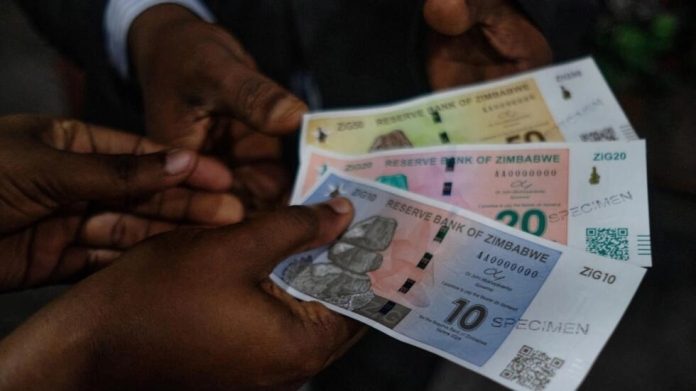
The policy was kicked off with the issuance of new banknotes, ranging from one to 200 ZiG, featuring imagery such as gold ingots and Zimbabwe’s iconic Balancing Rocks, which symbolizes a fresh start in the country’s monetary policy. Zimbabweans are afforded a 21-day window to convert their old currency into ZiG, streamlining the transition process and ensuring widespread adoption.

Mushayavanhu said the central bank would also introduce a market-determined exchange rate.

“With effect from today … banks shall convert the current Zimbabwe dollar balances into the new currency,” he said.

The new banknotes are part of the government’s efforts to promote “simplicity, certainty, [and] predictability” in Zimbabwe’s financial affairs, according to Mushayavanhu.

Despite initial concerns about reserve adequacy, President Emmerson Mnangagwa’s inspection of the central bank’s vaults on Thursday revealed a robust reserve portfolio. With substantial gold reserves both domestically and abroad, totaling approximately $285 million, ZiG’s foundation is fortified against economic volatility, instilling confidence in its stability and longevity.

According to Mushayavanhu, who assumed his role earlier this year, the vaults hold 1.1 tonnes of solid gold, with an additional 1.5 tonnes stored abroad, which he described as “more than three times cover for the ZiG currency being issued.”

Zimbabwe’s economic woes have refused to go away over the years. Over the past year, the Zimbabwean dollar witnessed a staggering loss of nearly 100 percent of its value against the US dollar. Official trading rates placed the Zimbabwean dollar at about 30,000 against the US dollar, while on the black market, it soared even higher to 40,000, according to tracker Zim Price Check.

This drastic depreciation has exacerbated the country’s already high inflation rate, which stood at 55 percent in March, according to official data. The inflationary pressures have further burdened Zimbabwe’s 16 million citizens, many of whom are grappling with widespread poverty, soaring unemployment rates, and the adverse effects of a severe drought induced by the El Nino weather pattern.

While ZiG offers hope amid the economic climate that has evoked memories of the hyperinflation crisis of 2008, (a period so tumultuous that the central bank issued a 100-trillion-dollar note), its success has become a cause for concern for Zimbabweans.

Local reports indicate a prevailing preference for US dollars in retail and government transactions, suggesting a gradual uptake by financial institutions and underlining persistent challenges in achieving universal acceptance of ZiG.

Analysts also express reservations regarding ZiG’s resilience amid fluctuations in gold prices and the specter of past economic crises.

The unveiling of ZiG marks Zimbabwe’s sixth attempt at a new currency in its efforts to address persistent economic turmoil.

While the launch of ZiG, which signifies a critical juncture in Zimbabwe’s economic reform agenda – aimed at curbing hyperinflation and fostering economic stability, has been hailed for its potential to stimulate economic recovery, economists have advocated sustained efforts to overcome adoption hurdles and ensure the enduring success of the currency.

Trump Removed from Billionaires Index As His Media’s Market Cap Crashes

0

The fortune of former US President Donald Trump has taken a tumultuous turn, with far-reaching implications for his Truth Social platform and ongoing legal battles.

Trump has been removed from the global billionaire index following the crash of Truth Social’s stock, days after he joined the league as the social media platform hit more than $6 billion in market cap.

Trump’s exclusion from the Bloomberg Billionaire Index was attributed to the underperformance of Trump Media, the parent company of the Truth Social app.

In a stark reflection of this downturn, the company’s share price experienced a sharp decline, plummeting by 8.57% in Wednesday’s trading session. This precipitous drop led to Trump Media’s market capitalization plummeting below $4.7 billion, a substantial departure from its valuation of $7.85 billion in March.

The magnitude of Trump Media’s share price decline, reflecting a month-to-date downturn of 44.71%, is believed to underscore the severity of the market’s response to recent developments. Despite Trump’s significant ownership stake of nearly 60%, the value of his holdings has dwindled to less than $2.7 billion as of Wednesday’s close, marking a stark contrast to its previous valuation of over $5 billion merely two weeks prior.

Compounding Trump’s financial woes are the legal challenges stemming from his media venture. Co-founders of Truth Social, Andy Litinsky and Wes Moss, have initiated legal action against the former president, alleging retaliation for their legal challenge regarding the value of their stake in the company.

Litinsky and Moss have achieved a notable victory in their legal battle, with a Delaware judge permitting them to augment their lawsuit with fresh claims of retaliatory measures by Trump, including the imposition of a restrictive six-month lockup period on their shares.

In stark contrast to Truth Social’s struggles, other players in the social media industry have witnessed varied performances. Meta’s shares have surged impressively, reflecting investor confidence and optimism in the company’s future trajectory.

However, Snapchat has experienced a downturn, indicating a challenging time for the platform amid intensified market competition and evolving consumer preferences.

Trump Media’s legal representatives contend that the lockup agreement is customary in blank-check transactions and push back against Litinsky and Moss’s legal maneuvering. They argue that premature liquidation of their shares would have detrimental effects on the company and its shareholders.

Despite the initial optimism surrounding Trump Media’s merger with Digital World Acquisition Corp, the company’s significant decline in value has raised concerns among investors. Trump’s substantial stake in the company, coupled with ongoing legal battles, paints a complex picture of the company’s prospects and Trump’s financial standing.

Trump’s financial difficulties have broader implications beyond his personal wealth, affecting the operational sustainability of Truth Social. The platform’s recent crash highlights the hurdles Trump Media faces in the fiercely competitive social media arena. Trump’s ambitions to position Truth Social as a competitor to established platforms such as Meta’s Facebook and Twitter have been met with skepticism.

During an interview with CNBC earlier this month, Barry Diller, Chairman of IAC and Expedia, didn’t hold back, describing Trump Media as “a scam” and lambasting investors in its stock as “dopes.”

Diller’s blunt criticism arises from concerns regarding the company’s substantial valuation despite its lack of revenue.

“It’s ridiculous,” Diller exclaimed on CNBC’s “Squawk Box,” adding, “The company has no revenue. It’s a scam, just like everything he’s ever been involved in is some sort of con,” in reference to Trump.

Core Competency and the Age of Unbounded Competition in Tech Sector

0

They taught us in economics that companies have to specialize and build core competencies.  They need to do things really well, and be the best possible in the domains. But today, while that philosophy remains, it has been well degraded especially in the technology space.

For technology companies, everyone is doing everything, even at top-level. Alphabet, Google parent company, is a car company, a search company, a medical company, an advertising juggernaut, etc. Amazon is an e-commerce firm, a publisher, a movie producer, a drone maker, etc.  Meta, the parent of Facebook, has upped the scale with an advanced chip: “Tech giant Meta recently announced the rollout of the company’s in-house Artificial Intelligence (AI) chip, designed to boost power and speed up training for its unique workloads.”

Sure, I am not saying that Google could start making cement or running waste disposal, my point is this: in tech, once you build the foundational stack, every other thing on top of it becomes easier. In other words, the first core stack is the real issue, and once that is settled, the gloves are off, and you can battle in anything possible in tech. This also explains the nature of emerging competition; it is both frontal and flank-based, meaning that your competitor may not even be part of your industry association.

Meta Debuts Latest Advanced AI Chip to Provide Most Efficient Architecture For Its Workloads