DD
MM
YYYY

PAGES

DD
MM
YYYY

spot_img

PAGES

Home Blog Page 3498

Nigeria’s Inflation Rate Climbs to 33.69% in April 2024

0

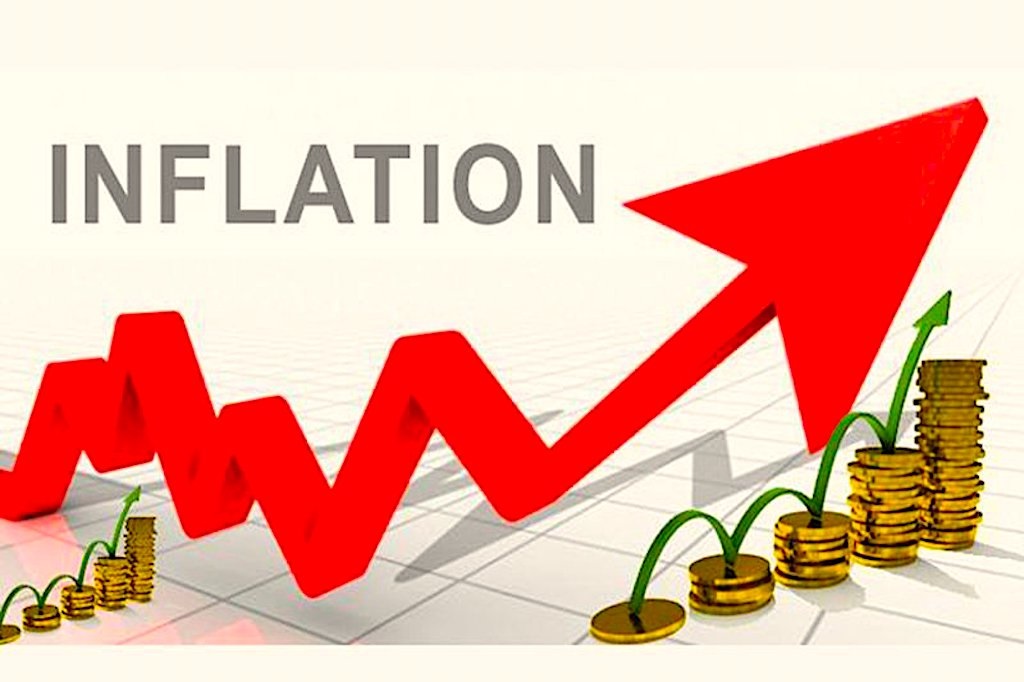
Nigeria’s headline inflation rate surged to 33.69% in April 2024, a 0.49% increase from March 2024’s rate of 33.20%, according to the latest data from the Nigerian Bureau of Statistics (NBS). 

This record rise in the inflation rate, which underscores the persistent economic challenges facing the nation, has dashed the hope of millions of Nigerians expecting a drop in the cost of goods and services.

On a year-on-year basis, the headline inflation rate in April 2024 was markedly higher, showing an increase of 11.47 percentage points from the 22.22% recorded in April 2023. This sharp rise highlights the escalating cost of living and the impact of various economic factors over the past year.

While the year-on-year inflation showed a steep rise, the month-on-month headline inflation rate in April 2024 was 2.29%, a decrease of 0.73% from the 3.02% recorded in March 2024. This indicates a slowdown in the rate of price increases compared to the previous month.

The NBS report also noted, “The percentage change in the average Consumer Price Index (CPI) for the twelve months ending April 2024 over the average of the CPI for the previous twelve-month period was 28.10%, reflecting a 7.28% increase compared to 20.82% recorded in April 2023.”

Urban and Rural Inflation

Urban areas experienced a sharper increase in inflation. In April 2024, the urban inflation rate stood at 36.00%, a 12.61 percentage point increase from 23.39% in April 2023. On a month-on-month basis, urban inflation was 2.67%, slightly lower than March 2024’s 3.17%. The twelve-month average for urban inflation was 30.02% in April 2024, compared to 21.50% in April 2023.

Rural areas also saw significant inflationary pressures. The rural inflation rate in April 2024 was 31.64% on a year-on-year basis, up by 10.50 percentage points from 21.14% in April 2023. Month-on-month, the rural inflation rate decreased to 1.92% in April 2024 from 2.87% in March 2024. The twelve-month average for rural inflation was 26.38%, compared to 20.18% in April 2023.

Food Inflation

Food prices continued to drive inflation. The food inflation rate in April 2024 reached 40.53% year-on-year, significantly higher than the 24.61% recorded in April 2023. The NBS said the increase was driven by rising prices of essential items such as millet flour, garri, bread, wheat flour, yam, cocoyam, various oils, dried fish, beef, and several fruits and beverages.

On a month-on-month basis, food inflation in April 2024 was 2.50%, a decrease from the 3.62% recorded in March 2024. The NBS attributed the monthly decline to slower increases in prices for items like yam, potatoes, beer, and various beverages and oils.

The average annual food inflation rate for the twelve months ending April 2024 was 32.74%, a 9.52 percentage point increase from the 23.22% recorded in April 2023.

Core Inflation

Excluding volatile agricultural products and energy, core inflation stood at 26.84% year-on-year in April 2024, up by 6.87 percentage points from 19.96% in April 2023. Significant price increases were observed in housing rentals, urban transportation, and medical services. On a month-on-month basis, core inflation was 2.20% in April 2024, down from 2.54% in March 2024. The twelve-month average core inflation rate was 22.84%, compared to 17.70% in April 2023.

Regional Inflation Variations

Inflation rates varied significantly across different states. Kogi recorded the highest year-on-year inflation rate at 40.84%, followed by Bauchi (39.91%) and Oyo (38.37%). Borno (26.09%), Benue (27.53%), and Taraba (28.69%) had the lowest year-on-year inflation rates. Month-on-month, Lagos experienced the highest increase at 4.52%, while Kano (0.30%), Ebonyi (0.97%), and Adamawa (1.25%) saw the slowest rises.

Food inflation also showed regional disparities. Kogi had the highest year-on-year food inflation rate at 48.62%, with Kwara (46.73%) and Ondo (45.87%) following. Adamawa (33.61%), Bauchi (33.85%), and Nasarawa (34.03%) had the lowest rates. On a month-on-month basis, Lagos led with a 4.74% increase, while Kano (0.47%), Adamawa (0.98%), and Zamfara (1.50%) had the slowest rises.

The rising inflation rates in Nigeria reflect ongoing economic challenges, including food supply disruptions and increased costs of living. With the rates making life unaffordable for most Nigerians, policymakers face the pressing task of addressing these inflationary pressures to stabilize the economy and mitigate the impact on citizens. 

The significant variations in inflation rates across regions also highlight the need for targeted measures to address local economic conditions, especially food production and the high cost of transportation. 

Earlier this month, the Governor of the Central Bank of Nigeria, Olayemi Cardoso, identified the government’s large-scale purchases of food items for distribution as palliatives to vulnerable citizens as a contributor to the soaring food inflation in the country.

Nigerian Government’s Plan To Utilize N20 trillion from Pension Funds for Infrastructure Development Is Bad Policy

1

Another evolution as the Nigerian government plans to utilize N20 trillion from pension funds for infrastructure development: “Critics, including Atiku Abubakar, raised concerns about the legality and potential risks to retirees’ savings, while Finance Minister Wale Edun defended the plan as a means to unlock funds for development. The move sparked a debate on balancing economic growth with the security of pension funds.”

Let me add my voice as we did when the last administration wanted to go after the same funds. First, the Nigerian government has no exogenous  or endogenous capacity to return this fund back to pensioners if it is allowed to use it. The Pension fund does not belong to the government, and public pension managers cannot listen to the government on their investment thesis. 

Unless we can see the data which shows that giving this special vault to the federal government over other investment asset classes is superior on returns, safety,  and other indicators, we condemn this move. The government should just forget this fund and look for other alternatives.

I call the federal government to pause this initiative because it is anti-people and Nigerians do not support it. For years, the pension funds have been buying federal government securities; let it just end there. But going at this scale, to fund infrastructure, will be terrible. 

The pension managers should resist such pressures and stand for workers. If the government needs funds to fund infrastructures, it should do what other countries do: improve rule of law and make Nigeria safer for infrastructure investments. If you do those, private companies will take over these infrastructure burdens. 

In America, companies own train lines, bridges, etc, because there are strong property rights. Nigeria should make such possible, and not where you get a building permit, and you build, then in ten years, another government will come and tear down the same building even though a previous one gave you a permit to build. Who will invest in infrastructure when you see how some state governments are bulldozing properties left and right? 

If Nigeria focuses on fixing those matters, private funds will come to build our infrastructures since it is clear the government has no kobo.

President Bola Ahmed Tinubu virtually commissioned three major gas infrastructure projects on May 15, 2024, aimed at boosting economic growth and promoting the use of Compressed Natural Gas (CNG). The projects include the Anoh Gas Processing Plant, Anoh – OB3 Gas Pipeline Project, and the AHL Gas Processing Plant 2. The government has mandated the use of CNG vehicles by its officials and is encouraging the establishment of CNG refueling units across the country. Additionally, the Federal Executive Council approved an initiative to transform Nigeria’s infrastructure and housing sector through private partnerships, and the government is eyeing N20 trillion from the pension fund for infrastructure development.

Nigeria’s e-Payment Transactions Decline to N79.85trn in April 2024

0

According to a report by the Financial Derivatives Company Limited (FDC), electronic payment transactions in Nigeria recorded a decline of N79.85 trillion in April 2024, marking a decrease of 93.1% from N88.04 trillion recorded in the preceding month.

While Cheque transactions increased by 10.68 percent to N290.36 billion in April from N262.35 billion in March, the report revealed that NIBSS Instant Payment (NIP) transactions experienced a 9.31% decline to N75.32 trillion in April, down from N83.05 trillion in March.

Additionally, transactions via the Nigeria Interbank Settlement System Electronic Fund Transfer (NEFT) dropped by 9.07% to N3.42 trillion in April, compared to N3.76 trillion in the preceding month. Point of Sales (PoS) transactions also experienced a significant decline, falling by 15.35 percent to N811.77 billion compared to N958.99 billion in March.

It is worth noting that the decline in April e-payment transactions is coming after consecutive increases in the first three months of this year. The consistent growth witnessed month-on-month underscored the burgeoning prominence of e-payment solutions in Nigeria’s financial landscape, signifying a shift towards greater digitalization and efficiency in financial transactions.

In the first quarter (Q1) of 2024, e-payment transactions surged to N234 trillion, marking an 89.3 percent increase from the N123.8 trillion recorded in the same month.

Meanwhile, experts note that the decline in e-payment transactions in April is attributed to reduced customer spending, as well as delayed discretionary purchases and consumers opting for lower-value transactions. Notably, the value of transactions is predicted to decline further in May, due to the reduction in consumer spending and business activities.

Small businesses and consumer goods firms are facing heavy disruption in their supply chain and operational costs due to inflation, currency risk, removal of fuel subsidies leading to a significant increase in energy costs, and scarcity of foreign exchange.

In recent times, revenues and business forecasts are set to suffer short-term pressures, declines, and low or no profits. Because the Nigerian economy is largely import-driven, the unstable foreign exchange rate continues to generate higher import bills for many of these companies.

This saw inflation reach 32 percent year-on-year in February 2024, driven mainly by food price inflation of 38 percent and loose financial conditions. Inflation has remained a major challenge for Nigerians and continues to worsen the operations of businesses in the country.

The International Monetary Fund (IMF) expects Nigeria’s inflationary pressure to ease to 26 percent this year. Daniel Leigh, division chief of the research department at IMF, said inflation in the country would drop alongside global inflationary pressures estimated to decline from 2.8 percent at the end of 2024 to 2.4 percent at the end of 2025. With continued monetary tightening, inflation is projected to gradually decline to 24 percent year-on-year at end-2024.

As Bitcoin Holds Steady, New Players in DeFi Show Promising Signs of Surge

0

The cryptocurrency market is experiencing relative stability, with Bitcoin’s price holding steady despite ongoing regulatory concerns and economic uncertainties. This stability provides a much-needed respite for investors navigating the turbulent crypto waters.

Beneath the surface, the decentralized finance (DeFi) sector transforms dynamically. Innovative and adaptable solutions, like RCO Finance, are emerging and offer a promising future for this space.

Bitcoin’s Stability Amidst a Surging DeFi Ecosystem

Despite the overall cryptocurrency market witnessing significant fluctuations, Bitcoin has managed to maintain a notable level of stability.

This steadiness comes at a time when the decentralized finance (DeFi) sector is experiencing rapid growth, introducing a wave of alternative cryptocurrencies and stablecoins.

Notably, Bitcoin’s market dominance has seen a slight decline, now at 63.4%, a trend observed over the past year.

This shift underscores the growing interest and investment in the DeFi ecosystem and alternative crypto assets, beginning to carve out substantial niches within the larger market.

As of April 2024, Bitcoin’s average price was $62,446.15, with a 2.5% estimated growth. This stability is particularly significant when considering Bitcoin’s historical volatility, which includes remarkable fluctuations such as its rise to over $30 in 2011, a dip and recovery to surpass $1,000 in 2013, a dramatic surge in 2017 to reach an all-time high of $19,850, followed by a descent into the “crypto winter” in 2018.

RCO Finance: A New Player in the DeFi Arena

Amidst this growth, new players like RCO Finance are making their mark. RCO Finance is a DeFi trading platform that bridges the distance between cryptocurrency and traditional stocks, allowing customers to invest in shares powered by Ethereum’s blockchain era.

With the platform’s user-friendly interface and tested security measures, this approach draws many investors seeking to expand their portfolios.

The AI trading platform also offers an all-in-one RCOF token that unlocks diverse advantages and functionalities within the RCO Finance environment.

This token isn’t just about trading – it’s your ticket to exclusive, high-return pools that offer opportunities beyond the everyday market.

Users can enjoy discounted transaction costs and token price reductions and have a say in relative governance decisions.

The platform’s approach to tokenization not only empowers investors with greater autonomy and lower fees but also aligns with their commitment to full decentralization, leveraging AI to maximize returns and enhance trading decisions.

Institutional Adoption and Innovative Solutions Driving DeFi Growth

DeFi is booming, and a big reason why is that major institutional players like PayPal are getting on board. We can see this shift in the growing number of Bitcoin whales (addresses with large Bitcoin holdings) and the recent green light for spot Bitcoin ETFs, boosting institutional confidence and opening up exciting new investment opportunities.

Developing modern DeFi answers on systems like RCO Finance, especially Layer 2 scaling and superior tokenization projects, expands blockchain abilities and fosters new use instances.

The diversification and development of the crypto world are critical because they spark new thoughts and encourage more people to use it.

Conclusion

Bitcoin is holding steady, but decentralized finance (DeFi) is buzzing with exciting new developments. More and more investors in the crypto space are getting attracted to potential players like RCO Finance, who bring a larger spectrum into the scene.

The RCOF token presale, currently priced at $0.0127, has been a success. Over 6 million tokens were sold, gathering nearly $75,000.


For more information about the RCO Finance (RCOF) Presale:

Visit RCO Finance Presale

Join The RCO Finance Community

How To Manage Finances During Bull and Bear Markets?

0

When it relates to making investments, we sometimes ignore the necessity of maintaining cash in our inventory. It truly plays a key role in your investment plan, especially while traveling through the uncertain environment of bull and bear markets.

Hence, knowing what we may do to our cash situation during these economic cycles might allow us to better plan for the possibilities and threats they provide.

Before proceeding on, let us first clarify what a bull and bear market is. A bear market is indicated by a loss of at least 20% from its preceding highest point, whereas a bull market begins at the weakest point after a decline of 20% or more and extends until the next high.

Main Considerations To Cater

Your portfolio’s ideal cash level changes based on your particular situation and the state of the market. You may use the following criteria to help you decide how much liquidity you ought to have in your investment account:

  • Aspirations financially
  • Horizontal time`
  • Required expenditures
  • Tolerance to risk
  • Generate income

Though the best answer for you remains dependent on your situation, U.S. Bank recommends that your cash and its equivalents make up between 2% and 10% of your portfolio. Let’s now examine how to manage the money in your range in various market scenarios after you’ve decided on it.

Varying Cash Position Throughout Bull Markets

Ideally, investors will start to expand their stock market investment as soon as they detect indications of a bull market beginning. When the bull market soars higher, they should think about restructuring their portfolio and cutting back on any excessive stock holdings.

You can also automate your trade if you are dealing in digital currencies. A reliable resource to manage your digital trades is bitcoin code as it maintains financial confidentiality as well as guides investors about market fluctuations.

During a bull market, selling or sitting on the sidelines is not always simple since some investors think the stock market will keep rising. However, especially when markets hit their zenith, it is crucial to determine if the valuations of today are driven by speculation or by fundamentals.

Finding cheap prospects in the market will get harder as stock prices keep rising. It could be prudent at this stage to think about progressively raising the amount of cash in your portfolio in order to maintain flexibility and seize the chances that could present themselves during the eventual shift to a bear market.

Changing Your Cash Position In Bull Markets

while there is a bear market, cash is king since it enables investors to seize chances while others are selling at discounts. With stocks having generally dropped to lower levels, now is a great moment for investors to enhance their market exposure and reduce their cash holdings.

But sometimes, investors will be impacted by their dread of “catching a falling knife.” Remember that most traders will not be able to call the exact bottom in the bear market and that there is undoubtedly a chance of purchasing a stock whose price has dropped to continue falling. Investors buying stocks in a bear market must therefore be ready for these holdings to see further declines in price before bottoming out.

However, it is always helpful to connect with trade assistance tools. One example of such a tool is bitcoin ocde which aids investors in understanding the market conditions and then investing. Investors should so buy in tranches as this approach offers the chance of bringing down the price of a stock should it keep falling.

As the bull market starts to rebound, keep lowering your cash proportion and investing in the market to take advantage of the early phases of a bull market and maybe boost your long-term returns.

Takeaway

Maintaining control of your financial position to successfully traverse both bull and bear markets can be an emotionally taxing endeavor. Because we are unable to precisely time the market, it is eventually necessary to have an organized strategy and maintain a long-term perspective.

When others are greedy, you should be scared, and when others are fearful, you should be greedy. This demonstrates how important it is to have cash on hand to take advantage of lucrative investing opportunities during periods of market decline.

Hence, you will be in a better position to traverse market cycles and accomplish your financial objectives over the long term if you manage your cash position with caution and make adjustments to it according to the conditions of the market.