DD
MM
YYYY

PAGES

DD
MM
YYYY

spot_img

PAGES

Home Blog Page 3517

U.S. Federal Reserve signals that a far easier monetary policy is in store for 2024

0

The U.S. Federal Reserve announced on Thursday that it plans to keep interest rates low and continue its bond-buying program for 2024. This is a clear indication that the central bank is not worried about inflation and is committed to supporting the economic recovery from the pandemic.

The Fed’s statement was in line with the expectations of most analysts and investors, who had anticipated a dovish stance from the policy makers. The Fed also revised its economic projections, showing a brighter outlook for growth and employment, but a lower inflation forecast.

The Fed expects the U.S. economy to grow by 6.5% this year, up from 4.2% in December, and the unemployment rate to fall to 4.5% by the end of 2021, down from 5% previously. However, the Fed also expects inflation to remain below its 2% target for the next three years, despite the massive fiscal stimulus and the reopening of the economy.

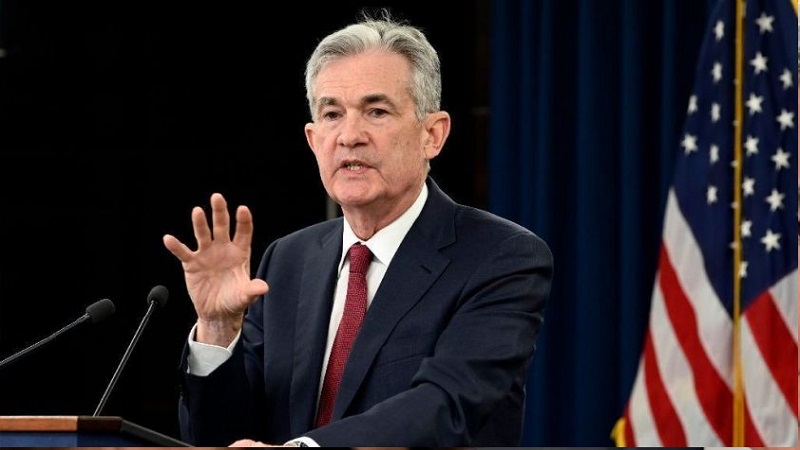
The Fed’s chair, Jerome Powell, reiterated that the central bank will not raise interest rates until it sees “substantial further progress” towards its goals of maximum employment and stable prices. He also said that the Fed will continue to buy $120 billion worth of Treasury and mortgage-backed securities per month until it sees “significant further progress”.

Powell stressed that the Fed’s policy is based on actual outcomes, not forecasts, and that it will not react to temporary spikes in inflation caused by supply bottlenecks or base effects. He said that the Fed will be patient and flexible, and that it will communicate well in advance any changes in its policy stance.

The Fed’s decision to maintain a highly accommodative monetary policy for 2024 reflects its belief that the U.S. economy still faces significant challenges and risks from the pandemic, and that it needs sustained support from both fiscal and monetary authorities.

The Fed’s message also signals its confidence that it has the tools and the credibility to deal with any potential inflationary pressures in the future, without jeopardizing its long-term objectives. The Fed’s announcement was welcomed by the financial markets, which rallied on Thursday.

Consumer spending is the largest component of the US gross domestic product (GDP), accounting for about 70% of the total. The Fed’s policy lowers the cost of borrowing for consumers, making it easier for them to finance purchases of goods and services, such as cars, appliances, vacations, and education. Lower interest rates also increase the disposable income of consumers, as they pay less on their mortgages, credit cards, and other debts.

This boosts their confidence and willingness to spend. Moreover, the Fed’s policy stimulates the stock market and the housing market, which increases the wealth of consumers and encourages them to spend more.

Business investment is another key driver of the US economy, contributing about 15% of the GDP. The Fed’s policy lowers the cost of capital for businesses, making it more attractive for them to invest in new equipment, machinery, software, research and development, and expansion. Lower interest rates also improve the cash flow of businesses, as they pay less on their loans and bonds.

This enhances their profitability and ability to invest. Furthermore, the Fed’s policy supports the demand for US goods and services from domestic and foreign consumers, which increases the sales and revenues of businesses and motivates them to invest more.

The stock market hit new record highs, while the bond market stabilized after a recent sell-off. The dollar weakened against other major currencies, while gold and oil prices rose. The Fed’s policy is expected to boost consumer spending, business investment, and housing activity, as well as support global growth and trade. The Fed’s policy is also likely to have spillover effects on other countries, especially emerging markets, which may benefit from lower borrowing costs and stronger demand from the U.S.

Safemoon Officially files for Chapter 7 Bankruptcy As Crypto Market Shows Signs of Ticking Along Sideways

0

Safemoon, the popular cryptocurrency project that promised to revolutionize the industry, has announced that it is filing for chapter 7 bankruptcy. This means that the project will be liquidated, and its assets will be distributed among its creditors.

The announcement came as a shock to many investors who had hoped that Safemoon would recover from its recent troubles, such as the departure of its CEO, the hacking of its wallet, and the regulatory scrutiny from various authorities. Safemoon had claimed to be a deflationary token that rewarded holders with passive income and burned a portion of every transaction. However, critics had accused it of being a Ponzi scheme that relied on constant inflow of new buyers to sustain its price.

According to the bankruptcy filing, Safemoon owes more than $200 million to its creditors, including exchanges, developers, marketing agencies, and legal firms. The filing also reveals that Safemoon has less than $10 million in assets, most of which are in its own token. The value of Safemoon has plummeted by more than 99% since its all-time high in April 2021, making it virtually worthless.

The bankruptcy news has sparked outrage and disappointment among the Safemoon community, many of whom have lost their life savings by investing in the project. Some have blamed the team for mismanagement and fraud, while others have blamed themselves for falling for the hype and not doing enough research. Some have even expressed suicidal thoughts and asked for help on social media.

Why did Safemoon collapse?

SafeMoon was a cryptocurrency project that launched in March 2021 and quickly gained popularity on social media, thanks to its innovative mechanism of rewarding holders and burning tokens. However, the project soon faced a series of challenges and controversies that led to its downfall. In this blog post, we will explore the reasons why SafeMoon collapsed and what lessons can be learned from its failure.

One of the main reasons why SafeMoon collapsed was that it was accused of being a fraudulent scheme by the U.S. Securities and Exchange Commission (SEC). The SEC filed a complaint against SafeMoon and its executive team in December 2021, alleging that they violated federal securities laws by conducting an unregistered offering of digital assets and making false and misleading statements to investors.

The SEC claimed that SafeMoon raised over $1.5 billion from more than 2.5 million investors worldwide but failed to disclose the risks and costs associated with its tokenomics model, such as the 10% fee imposed on every transaction.

The SEC also alleged that SafeMoon’s liquidity pool was not locked as claimed, and that its executives diverted millions of dollars from the pool to their personal accounts or to other projects. The SEC’s complaint triggered a massive sell-off of SafeMoon tokens, which resulted in a 40% price drop in one day.

Another reason why SafeMoon collapsed was that it faced multiple class-action lawsuits from disgruntled investors who claimed that they were deceived by the project and its celebrity promoters. Two different groups of investors filed lawsuits against SafeMoon and its endorsers, such as rapper Lil Yachty, YouTuber KEEMSTAR, and boxer Jake Paul, accusing them of engaging in a “pump and dump” scheme.

The lawsuits alleged that SafeMoon and its promoters artificially inflated the price of the token by hyping it up on social media, and then dumped their holdings when the price reached its peak, leaving the investors with worthless tokens.

The lawsuits also claimed that SafeMoon and its promoters violated various state laws by failing to register their offering of securities, disclosing material information, and acting in good faith. The lawsuits sought damages for the losses suffered by the investors, as well as injunctive relief to prevent further harm.

A third reason why SafeMoon collapsed was that it lost credibility and trust among its community and the wider crypto industry. SafeMoon’s reputation was tarnished by several scandals and controversies that exposed its lack of transparency, professionalism, and competence. For example, SafeMoon’s chief technology officer left the project in November 2021, citing personal reasons, but later revealed that he had been threatened by other members of the team.

He also accused SafeMoon’s CEO John Karony of mismanaging the project and lying to the public about its progress and partnerships. Moreover, SafeMoon’s website was hacked in October 2022, resulting in the leak of sensitive data of over 500,000 users, including their email addresses, passwords, wallet addresses, and transaction histories.

Furthermore, SafeMoon’s ambitious plans to launch its own exchange, blockchain, wallet, NFT marketplace, wind turbines, and expansion in Africa were met with skepticism and criticism from experts and analysts who questioned their feasibility and viability.

SafeMoon collapsed because it failed to deliver on its promises and expectations, and because it faced legal actions and reputational damage from various stakeholders. SafeMoon’s story serves as a cautionary tale for investors who are interested in investing in cryptocurrencies and DeFi products. It also highlights the need for more regulation and oversight in the crypto space to protect consumers from fraud and deception.

The fate of Safemoon serves as a cautionary tale for anyone who is interested in investing in cryptocurrency projects, especially those that promise unrealistic returns and have no clear use case or roadmap. While there are many legitimate and innovative projects in the crypto space, there are also many scams and failures that prey on the naive and greedy. Investors should always do their own due diligence and never invest more than they can afford to lose.

Crypto market is showing signs of ticking along sideways for remainder of 2021

Meanwhile, the crypto market has been experiencing a prolonged period of low volatility and sideways movement, which is likely to continue until the end of the year. This is according to a recent report by CoinDesk, which analyzed the historical trends and current indicators of the major cryptocurrencies.

The report found that the average daily volatility of Bitcoin, Ethereum, and Litecoin has been declining since the peak in May 2023, when the market experienced a sharp correction.

The volatility index, which measures the standard deviation of daily returns, has dropped from over 8% in May to around 3% in December for Bitcoin, from over 12% to around 5% for Ethereum, and from over 16% to around 6% for Litecoin.

The report also noted that the correlation between the top three cryptocurrencies has increased, meaning that they tend to move in the same direction more often. The correlation coefficient, which ranges from -1 (perfectly negative correlation) to 1 (perfectly positive correlation), has risen from around 0.6 in May to around 0.8 in December for Bitcoin and Ethereum, and from around 0.5 to around 0.7 for Bitcoin and Litecoin.

These trends suggest that the crypto market is in a consolidation phase, where traders are waiting for a clear signal or catalyst to break out of the current range. The report identified several potential factors that could influence the market direction in the near future, such as:

  • The launch of Bitcoin futures ETFs in the US, which could increase the institutional demand and liquidity for Bitcoin.

  • The transition of Ethereum to a proof-of-stake consensus mechanism, which could reduce the supply and environmental impact of Ethereum.

  • The adoption of Litecoin as a payment option by major retailers and platforms, such as Walmart and PayPal, which could boost the utility and popularity of Litecoin.

  • The regulatory developments and legal challenges in different jurisdictions, which could affect the risk and compliance of crypto assets.

The report concluded that the crypto market is showing signs of maturity and resilience, as it has survived several shocks and uncertainties in 2021. However, it also warned that the market is still subject to high volatility and unpredictability, as new events and innovations could trigger significant price movements at any time. Therefore, investors and traders should be cautious and well-informed when entering or exiting the crypto market.

The Woman In The Help Me, Help Me Vocals Is Entitled To Royalties From Asake

0

“Help me, help me, he Dey carry me go where I no no”, was/is a popular phrase in Nigeria that almost everyone has heard of. It was from a policewoman who was allegedly abducted by a bus driver and in her cry for help, she voiced; the help me, help me line. 

The voicing was funny that people have been creating content around it and are still making content using the vocals of the “Help Me Help Me; even popular musicians like Asake used the vocals “Help me, help me, he Dey carry me go where I no no” as an intro in one of his hit songs; Peace Be Unto You”, the song have garnered over thirty million views on YouTube and hundreds of millions of streams on the streaming platforms. 

Using funny vocals extracted from other people’s content as an intro for songs is not new to music-making both in Nigeria and in other jurisdictions. In the recent Phyno’s hit single; “Do I”, he used the vocals of “Mess Up, Mess Up”, a vocal content which is accredited to a famous Nigerian actor, Mike Ezuronye. It was from a scene in a movie where Mike Ezuronye was caught by Uche Jumbo cheating on her with other ladies; having been caught, Mike Ezuronye voiced “mess up, mess up”, in regret. 

As for the “help me, help me police lady, she was recently diagnosed with some illness and Asake reached out to her a few days back and gifted her the sum of five million nairas and this gift of five million naira from Asake the woman has generated a lot of controversy on social media with numerous divergent opinions. Whilst Some are praising Asake for his philanthropic act of gifting the lady five million naira, others say that Asake has been unfair for gifting the woman a meagre sum of five million naira out of the money he has made using the woman’s vocal. Some are also claiming that the woman does not own the legal rights to the contents since she did not copyright the vocals nor trademark the phrase. 

Well, in instances like these; according to intellectual property laws and international best practices, an owner of a vocal or content used or sampled in the making of another content like a song or a video is presumed to be a co-owner of the song or video that the content was sampled in, therefore, he or she is entitled to royalties that accrue from the music or video. 

Therefore, the lady in the Help Me, Help Me vocals definitely deserves royalties from the Asake’s “Peace Be Unto You” song in which the vocals were used as an intro and the royalties will sure be far more than five million naira. So as every other person whose voice has been used or sampled in a song over a video is entitled to royalties unless there is a contract stating otherwise and the owner of the content does not necessarily need to copyright the vocals or trademark phrase before they will be the legal owner of the contents and legally entitled to the royalties. 

Be it as it may, I am not oblivion of the recent court judgment in the case of Banire V NTA Star TV and I can therefore fully appreciate the argument that the person who recorded the video and posted it is the rightful owner of the content and not the woman as adjudged in the case of Banire V NTA star TV (CA/A/345/2017) but this can be distinguishable because she was recorded without her consent or approval, hence she can lay claims to the content as her intellectual property. 

Same with the” Mess up, mess up” vocals used by Phyno in his song which was lifted from the content of Mike Ezeruonye. In this instance, the producer(s) of the movie is entitled to royalties from Phyno’s “Do I” which the vocals were used as an intro unless there is a clause in the contract for engagement that every intellectual property in the movie is both shared with the actor/ the producer or it reverts back to the actor after sometime then Mr Mike Ezuronye will be entitled to the royalties. 

How Nigeria Can Become Richer [video]

1

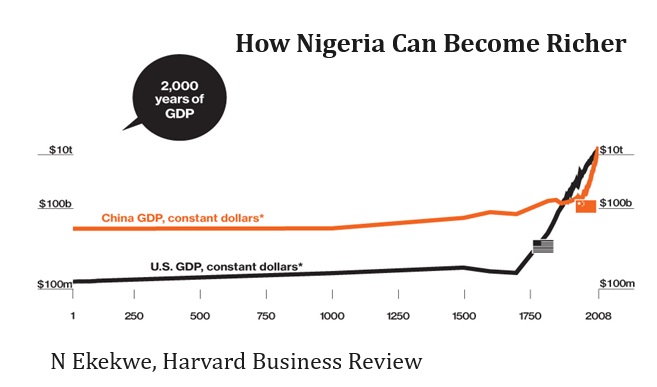
In my study of 2,000 years of gross world product (aggregate of GDPs of nations), I realized a clear correlation between property rights and economic development. Amazingly, no nation has cut-off that trajectory of converting assets to capital, to create more capital, before becoming rich.

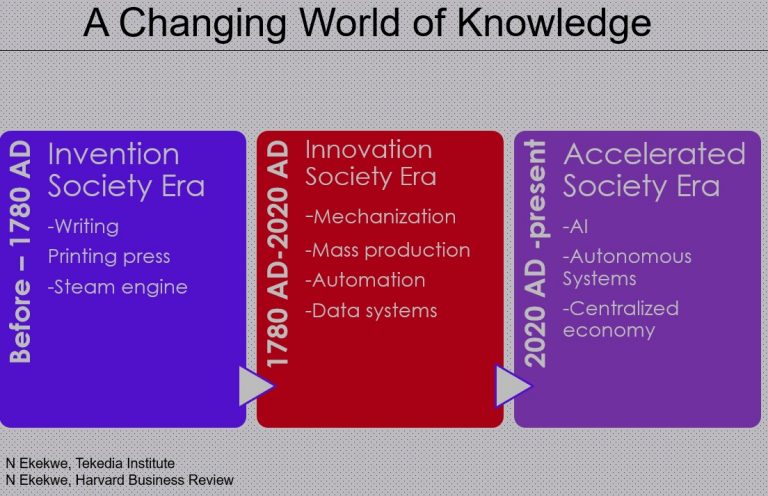
On my discovery, I divided the last 2,000 years into three eras: the invention society era, innovation society era and the accelerated society era. For each nation, I looked at what happened when it established a regime of stronger property rights. 

In the United States, the nation changed on July 31, 1790 when Samuel Hopkins was awarded the first United States patent. In my 2009 book – Nanotechnology and Microelectronics: Global Diffusion, Economics and Policy – which received the 2010 IGI Global Book of the Year award, I explained that the patent system with the broad intellectual property rights could be considered one of the greatest policy innovations in economic history. Yes, that IP rights boosted the broad property rights and American GDP rose.

As we approach 2024, I call on the Nigerian government to unlock WEALTH in the nation by turning our assets into capital through the enactment of appropriate laws and regulations. If we do not do that, we cannot develop, irrespective of our efforts!

The Eras In Our World – Invention, Innovation and Accelerated Society Eras <p data-wpview-marker=

Comment on Feed

Comment 1: Another profound comment from our esteemed prof. Every Nigerian decision maker should read at least the last paragraph.

I can point to the Certificate of Occupancy (C of O) as one factor that prevents Nigerians from realizing the value of their landed property. The certificates are the property title. They are issued by state governors who also can and do cancel them capriciously.

With so little security of Title, a Nigerian land owner has little opportunity to use the equity in property to fund a business or lifestyle.

First evidence to me that government is serious about growth will be when they take the C of O out of the hands of politicians

Comment 2: Initial instinct is nice words for deaf ears. Will the government listen when it is full of people mainly looking for ways to display criminal tendencies and exploit the common wealth without common sense?
But then second thought is maybe they will repent and listen or somehow the right people will listen. And it’s good to keep saying because not saying is the problem of the mouth and not hearing is the problem of the ear.
Please keep advising and writing your common sense which is not even common

Comment 3: I believe balancing property rights for economic development is essential. While strong intellectual property rights, exemplified by the United States, drive economic evolution, overly stringent regimes can stifle innovation and fair competition. Achieving the right balance is challenging but crucial for pushing an innovation-friendly environment.

I also believe that addressing economic complexities involves tailored, woven approaches considering regulatory frameworks, education, and inclusive policies.

My take is while property rights play a vital role, a holistic strategy may provide a more comprehensive solution.

The call for the Nigerian government to enact laws for wealth creation is valid but requires a thoughtful, nuanced approach that anticipates challenges and prioritizes inclusive growth. We will continue to engage in a dialogue embracing diverse perspectives to craft lasting solutions.

Comment4: Seminal thinking . But it’s understanding, adoption and implementation require the availability of like-minded people, who would appreciate what Ndubuisi Ekekwe is saying. The truth is that we have a paucity of such people here. We like to argue that we don’t, but the reality is that we do. That is even fundamentally why we are where we are, and why we are how we are. The cargo-cult mentality is still reigning supreme in our waltenchaung.

People are still grumpy about Inflation

0

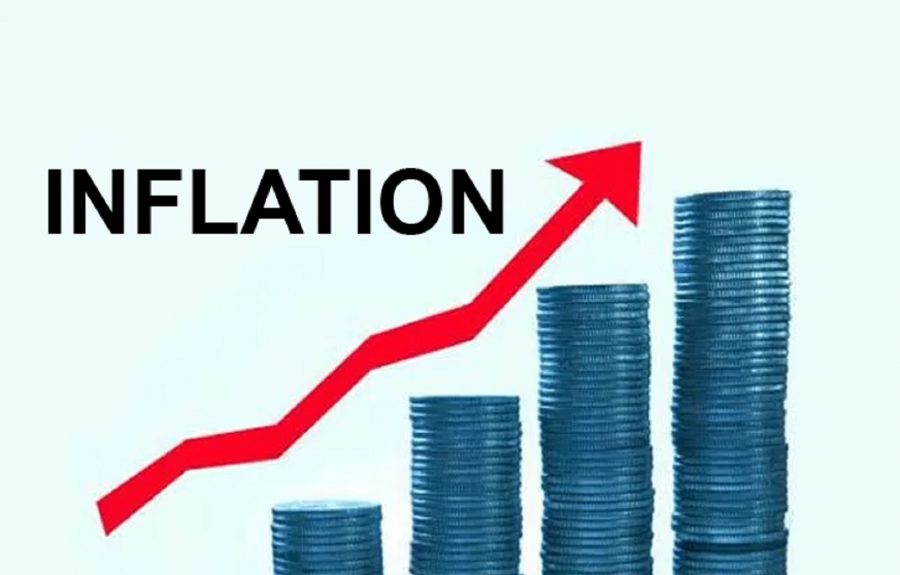
Inflation is a topic that affects everyone, from consumers to businesses, from workers to investors. It is the general increase in the prices of goods and services over time, which reduces the purchasing power of money. Inflation can have both positive and negative effects on the economy, depending on its level, causes and duration.

However, in recent months, inflation has become a source of frustration and anxiety for many people around the world. According to the International Monetary Fund (IMF), global inflation rose to 3.9% in October 2021, the highest rate since 2008. The main drivers of this surge were the disruptions in supply chains caused by the COVID-19 pandemic, the rising energy and commodity prices, and the expansionary fiscal and monetary policies adopted by many governments to support the recovery.

Many people are feeling the pinch of inflation in their daily lives, as they have to pay more for food, gas, rent, utilities, health care and other essential items. Some people are also worried about the impact of inflation on their savings, investments, wages and pensions. Inflation can erode the value of money over time, making it harder to plan for the future and achieve financial goals.

While some economists argue that inflation is a temporary phenomenon that will subside as the pandemic eases and the supply-demand imbalances are resolved, others warn that inflation could become more persistent and entrenched if not addressed properly. They urge policymakers to act swiftly and decisively to rein in inflationary pressures and anchor inflation expectations.

One of the strategies to cope with inflation is to adjust your spending habits and budget accordingly. You can try to reduce your expenses on non-essential items, look for cheaper alternatives or discounts, and avoid impulse buying. You can also save money by using coupons, cashback programs, loyalty cards or apps that offer rewards or discounts. You can also plan your purchases ahead of time and buy in bulk when possible.

Another strategy is to increase your income or sources of income. You can ask for a raise or a bonus from your employer, look for a better-paying job or a side hustle, or sell some of your unwanted items online or at a garage sale. You can also invest in yourself by learning new skills or upgrading your qualifications that can boost your earning potential.

A third strategy is to invest your money wisely and diversify your portfolio. You can look for investments that offer higher returns than inflation, such as stocks, bonds, real estate, commodities or cryptocurrencies. However, you should also be aware of the risks involved and do your research before investing. You should also diversify your portfolio across different asset classes, sectors and regions to reduce your exposure to market volatility and inflation shocks.

A fourth strategy is to hedge against inflation using financial instruments or products that are designed to protect your purchasing power. For example, you can buy inflation-linked bonds or securities that adjust their interest payments or principal value according to changes in inflation rates. You can also buy gold or other precious metals that tend to increase in value when inflation rises. You can also use derivatives such as futures or options contracts that allow you to lock in prices or profits in advance.

These are some of the strategies that you can use to cope with inflation. However, you should also consult a financial advisor or planner who can help you tailor a plan that suits your specific needs and goals.