DD
MM
YYYY

PAGES

DD
MM
YYYY

spot_img

PAGES

Home Blog Page 3518

FIFA announces new NFT drop amid Ankex Winding off Operations

0

The world’s governing body of football, FIFA, has announced a new NFT drop that will give fans a chance to win tickets to the 2026 World Cup in North America. The NFTs, which will be minted on the Ethereum blockchain, will feature digital collectibles of some of the most iconic moments and players in World Cup history, as well as exclusive artwork and animations.

The NFT drop will start on December 18, 2023, and will last for 10 days. Each day, a limited number of NFTs will be released for sale on FIFA’s official website and partner platforms. The price of each NFT will vary depending on the rarity and demand. Fans who purchase the NFTs will also receive a digital certificate of authenticity and ownership.

But that’s not all. Each NFT will also come with a unique code that can be entered into a lottery draw for a chance to win one of 100 pairs of tickets to the 2026 World Cup final, which will be held at the MetLife Stadium in New Jersey, USA. The lottery draw will take place on January 1, 2024, and the winners will be announced on FIFA’s social media channels.

FIFA’s president, Gianni Infantino, said that the NFT drop is a way to celebrate the history and future of football, as well as to connect with fans in a new and innovative way. He said: “We are very excited to launch this NFT drop, which is a first for FIFA and for football. We want to offer our fans a unique opportunity to own a piece of World Cup history and to have a chance to witness the biggest sporting event in the world live. We believe that NFTs are a great way to showcase the beauty and diversity of football, as well as to support its development around the world.”

The NFT drop is part of FIFA’s digital strategy, which aims to leverage emerging technologies and platforms to enhance the fan experience and engagement. FIFA has also partnered with several leading companies in the blockchain and NFT space, such as ConsenSys, OpenSea, and Dapper Labs, to ensure the quality and security of the NFTs.

FIFA’s NFT drop is expected to attract millions of fans from all over the world, who will be eager to get their hands on these exclusive digital assets and to have a shot at winning the ultimate prize: tickets to the 2026 World Cup final. Don’t miss this chance to be part of football history and join the NFT revolution.

Qredo, a leading provider of crypto custody solutions, has announced that its crypto exchange platform Ankex has ceased operations. The decision was made after a thorough review of the market conditions and the regulatory environment. Qredo stated that Ankex was unable to achieve the level of growth and profitability that it had envisioned, and that it was facing increasing challenges from competitors and regulators.

CEO Michael Moro, formerly of Genesis Trading, has already moved on. Ankex sought to combine a non-custodial DeFi approach with elements familiar to professional traders such as a central limit order book, earlier this year, but its “development has been paused,” the exchange said in a message to its community.

“As some of you tested earlier this year, Ankex was ready for a public beta launch. Unfortunately, our path must pause at this stage.” Ankex may have just been a victim of unfortunate timing as the crypto industry gradually emerges from a prolonged bear market.

Qredo thanked its Ankex customers for their support and loyalty and assured them that their funds are safe and secure in Qredo’s custody system. Qredo also said that it will continue to focus on its core business of offering institutional-grade crypto custody services, and that it will explore new opportunities to innovate and expand its product portfolio. Qredo expressed its confidence in the future of the crypto industry, and its commitment to providing the best solutions for its clients.

Bitcoin’s rally stalls as it enters a new trading range

0

Bitcoin, the leading cryptocurrency, has seen its price stabilize after reaching a 20-month high last week. The digital asset surged to over $43,000 on November 10, breaking its previous record set in February this year. Since then, however, bitcoin has been trading in a narrow range, mostly between $42,000 and $43,000, with occasional dips and spikes.

What is behind this consolidation? Some analysts suggest that bitcoin is facing strong resistance at the $43,000 level, which was a previous all-time high in February. Others point to the lack of momentum and volume in the market, as traders and investors await more catalysts and signals for the next move. Still others attribute the sideways movement to the uncertainty and volatility in the global markets, as the coronavirus pandemic continues to impact the economy and politics.

Whatever the reason, bitcoin seems to have found a new equilibrium for now, after a remarkable rally that saw it gain more than 70% since October. The question is: how long will this range last, and what will trigger the next breakout or breakdown?

Some bullish factors that could support bitcoin’s price include:

  • The growing adoption and acceptance of bitcoin by institutional investors, corporations, and governments. For example, PayPal recently announced that it will allow its users to buy, sell, and hold bitcoin and other cryptocurrencies on its platform. This could open the door for millions of new customers and merchants to use bitcoin as a payment option.

  • The increasing scarcity and demand for bitcoin, as more than 18.5 million bitcoins have been mined out of the total 21 million that will ever exist. Moreover, many bitcoin holders are reluctant to sell their coins, preferring to hold them for the long term. This reduces the supply and increases the price pressure on the market.

  • The innovation and development in the bitcoin ecosystem, such as the launch of new products and services that enhance the usability, security, and efficiency of bitcoin transactions. For example, the Lightning Network is a second-layer solution that enables fast and cheap payments on top of the bitcoin blockchain. This could improve the scalability and performance of bitcoin as a medium of exchange.

    Some bearish factors that could weigh on bitcoin’s price include:

  • The regulatory and legal risks that surround bitcoin and cryptocurrencies in general. Many governments and authorities are still wary of the potential impact of bitcoin on their monetary sovereignty, financial stability, and tax revenue. Some countries have banned or restricted the use of cryptocurrencies, while others have imposed strict rules and regulations on their users and providers. This could limit the growth and adoption of bitcoin in some markets.

  • The technical and security challenges that face bitcoin and its network. Bitcoin relies on a decentralized network of nodes and miners to validate and process transactions. However, this network is vulnerable to attacks, disruptions, and glitches that could compromise its functionality and integrity. For example, in May this year, a bug caused a temporary split in the network, resulting in some nodes rejecting valid blocks. This could erode the trust and confidence in bitcoin as a reliable system.

  • The competition and innovation from other cryptocurrencies and blockchain platforms. Bitcoin is not the only game in town when it comes to digital assets. There are thousands of other cryptocurrencies that offer different features, benefits, and use cases. Some of them are faster, cheaper, more scalable, more flexible, or more user-friendly than bitcoin. For example, Ethereum is a platform that enables smart contracts and decentralized applications that can run on its network. This could challenge bitcoin’s dominance and market share in the crypto space.

As you can see, there are many factors that influence bitcoin’s price movement and direction. It is hard to predict what will happen next, as the market is driven by supply and demand, sentiment and emotion, news and events. However, one thing is certain: bitcoin is here to stay, and it will continue to surprise us with its volatility and innovation.

Bitcoin NFT Hysteria auctions at Sotheby’s as Super-Mario

The world of digital art and collectibles is booming, thanks to the rise of non-fungible tokens (NFTs) that are powered by blockchain technology. NFTs are unique and verifiable digital assets that can represent anything from art, music, games, sports, and more. They have been selling for millions of dollars in online auctions, attracting celebrities, investors, and enthusiasts alike.

The crypto art market has exploded in recent months, with some NFTs (non-fungible tokens) selling for millions of dollars. But what are NFTs and why are they so popular? And how can you get involved in this new form of digital art?

NFTs are unique digital assets that are stored on a blockchain, a distributed ledger that records transactions and ensures their security and authenticity. Unlike traditional digital files, which can be copied and shared endlessly, NFTs cannot be duplicated or altered. They have a provable ownership and history, which makes them valuable and scarce.

NFTs can represent any type of digital content, such as images, videos, music, games, or even tweets. But one of the most popular categories of NFTs is crypto art, which is digital art that is created, sold, and collected on the blockchain.

Crypto art has been around for a few years, but it gained mainstream attention in March 2021, when a collage of 5,000 images by the artist Beeple sold for $69 million at Christie’s auction house. Since then, many other artists, celebrities, and brands have jumped on the NFT bandwagon, creating and selling their own digital artworks.

One of the latest NFT craze is the Super-Mario series, created by the artist known as Beeple, Beeple is the online pseudonym of Mike Winkelmann, a graphic designer and digital artist from Wisconsin, USA. Beeple has been making one digital artwork every day since 2007 and has amassed a huge following on social media. His NFTs have been breaking records in the crypto art market, with one piece selling for $69 million at Christie’s in March.

Now, Beeple is bringing his Super-Mario NFTs to Sotheby’s, one of the world’s oldest and most prestigious auction houses. The collection, titled “The Super-Mario Bros. Collection”, features 21 NFTs that depict iconic scenes and characters from the popular video game franchise. Each NFT is a pixelated animation that pays homage to the retro style and nostalgia of the original games.

The collection will be auctioned online from December 18 to December 22, with bidding starting at 1 Bitcoin (around $48,000 at the time of writing). The winner will receive not only the NFTs, but also a physical display case that contains a custom-made Nintendo console and a cartridge that can play the animations on a TV screen.

Beeple said that he chose to use Bitcoin as the currency for his auction because he believes that it is “the future of money”. He also said that he is a huge fan of Super-Mario and that he wanted to create something that would appeal to both gamers and art lovers.

“I think Super-Mario is one of the most iconic and influential video games of all time, and I wanted to celebrate its legacy and impact on culture,” he said. “I hope that these NFTs will bring joy and nostalgia to the people who grew up playing these games, as well as introduce them to a new generation of collectors who appreciate digital art and innovation.”

Sotheby’s said that they are excited to host Beeple’s Super-Mario NFTs, as they reflect their commitment to exploring new frontiers in art and technology. They also said that they expect a high demand for the collection, as it combines two of the hottest trends in the market: NFTs and gaming.

“NFTs have revolutionized the way we perceive and value digital art, and Beeple is one of the pioneers and stars of this movement,” they said. “His Super-Mario NFTs are a perfect example of how he blends creativity, humor, and technical skill to create works that are both entertaining and engaging. We are thrilled to offer this collection to our global audience of collectors, who are always looking for new and exciting ways to express their passions and personalities.”

DAOs are the future of Web3

0

DAOs or Decentralized Autonomous Organizations are a new form of governance and collaboration that enable people to coordinate and cooperate without intermediaries, hierarchies, or borders. DAOs are essentially communities that share a common vision and mission, and that operate according to a set of rules encoded in code.

DAOs can be created for any purpose, such as managing a protocol, a platform, a fund, a social movement, or a collective art project. DAOs are transparent, democratic, and resilient, and they have the potential to unleash the creativity and innovation of millions of people around the world.

What are the benefits of DAOs?

DAOs offer many benefits over traditional organizations and institutions, such as:

Autonomy: DAOs are self-governing and self-sustaining. They do not depend on any external authority or entity to function or exist. They are controlled by their members, who can join or leave at any time, and who can propose and vote on decisions that affect the DAO. DAOs can also interact with other DAOs and protocols in a peer-to-peer manner, creating a network of decentralized cooperation.

Efficiency: DAOs eliminate the need for intermediaries, middlemen, and bureaucracy. They reduce the costs and frictions of coordination and transactions. They enable faster and cheaper execution of tasks and projects. They also allow for more experimentation and iteration, as well as more flexibility and adaptability to changing circumstances.

Inclusivity: DAOs are open and accessible to anyone who shares their vision and values. They do not discriminate based on identity, location, or background. They empower anyone to contribute their skills, ideas, and resources to the DAO, and to benefit from its outcomes. They also foster a sense of community and belonging among their members, who can communicate and collaborate across borders and cultures.

Accountability: DAOs are transparent and verifiable. They record all their actions and transactions on a public ledger that anyone can audit and verify. They also have mechanisms to ensure that their members act in the best interest of the DAO, such as reputation systems, incentives schemes, dispute resolution processes, and governance tokens. DAOs can also be held accountable by their stakeholders, such as users, customers, partners, or regulators.

How can you join or create a DAO?

There are many ways to join or create a DAO, depending on your goals, preferences, and level of expertise. Some of the most common ways are:

Join an existing DAO: There are many DAOs that already exist and that are looking for new members. You can find them on platforms such as Aragon, DAOhaus, Colony, or MolochDAO. You can also browse directories such as DeepDAO or DAObase to discover different types of DAOs.

To join a DAO, you usually need to have some stake in its success, such as owning its governance token, providing liquidity to its pool, or contributing value to its project. You may also need to apply or be invited by existing members.

Create your own DAO: If you have an idea for a new DAO that does not exist yet, you can create your own using tools such as Aragon Studio, OpenLaw, or dxDAO Framework. You can also use templates or templates from existing DAOs to customize your own. To create a DAO, you need to define its purpose, vision, values, rules, roles, and incentives. You also need to attract and onboard members who share your vision and values.

Participate in a DAO incubator or accelerator: If you want to learn more about DAOs and how to create them successfully, you can participate in a DAO incubator or accelerator program. These programs provide education, mentorship, funding, and networking opportunities for aspiring DAO creators and participants. Some examples of these programs are MetaCartel Ventures, MetaGammaDelta, LAO Labs, or PrimeDAO.

Examples of successful DAOs?

There are many examples of successful DAOs that have achieved remarkable results in various domains and industries. Some of them are:

MakerDAO: MakerDAO is a decentralized lending platform that allows anyone to borrow stablecoins (DAI) against collateral (ETH). MakerDAO is governed by its community of MKR token holders who vote on key parameters such as interest rates.

SMCDAO; SirMapy & Co is a booming and biggest Dao in Nigeria, the community is a decentralized platform for all things digital, SMCDAO has two prominent coins, Wikicat Coin and Defi Tiger Token which was created as tutorial tokens to spur crypto education amongst community members. Both tokens have a market capitalization of over $30 million and 10,000+ active community members on Telegram.

With these initiatives of a decentralized community of believers who have diverse digital skills be it software developers, community mods and managers, Market Makers and all help boost Nigeria’s stance in the ever-growing blockchain market.

Intel Unveils Gaudi3 AI Chip to Compete with Nvidia and AMD in AI Market

0

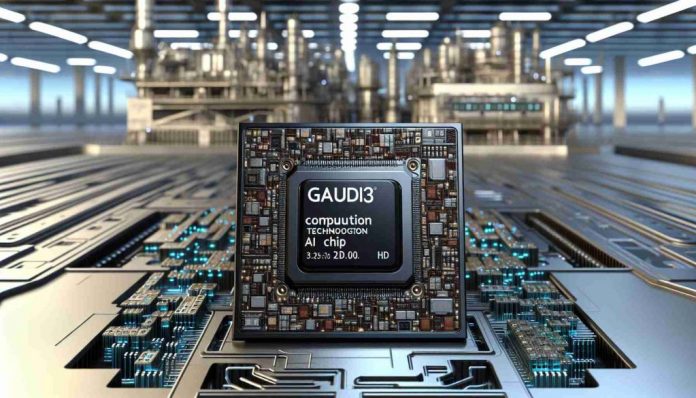
Intel Corporation made a significant stride in the competitive artificial intelligence (AI) market on Thursday with the unveiling of its latest computer chips, including the Gaudi3 — an AI chip designed for generative AI software.

The move is seen as a direct challenge to Nvidia and AMD, the current leaders in the market for chips powering large and power-hungry AI models.

Gaudi3, set to launch next year, is expected to compete directly with Nvidia’s H100 and AMD’s upcoming MI300X. The announcement comes as part of Intel’s broader strategy to diversify its offerings and attract AI companies away from Nvidia’s dominant position. Intel shares responded positively, rising by 1% on Thursday.

Intel CEO Pat Gelsinger expressed enthusiasm for the potential of generative AI, stating, “We’ve been seeing the excitement with generative AI, the star of the show for 2023. We think the AI PC will be the star of the show for the upcoming year.”

Gaudi3, developed in 2019 following Intel’s acquisition of chip developer Habana Labs, aims to position itself as a formidable contender in the AI chip market.

However, the competition is expected to be fierce, as Nvidia’s GPUs currently power prominent AI models like OpenAI’s ChatGPT. Nvidia’s stock has surged nearly 230% year-to-date, highlighting its stronghold in the industry. In contrast, Intel shares have seen a more modest rise of 68%.

To complement its foray into AI, Intel also introduced Core Ultra chips and new fifth-generation Xeon server chips. Both include a specialized AI component called a Neural Processing Unit (NPU) to enhance the performance of AI programs.

The Core Ultra chips, designed for Windows laptops and PCs, leverage a 7-nanometer manufacturing process for increased power efficiency and improved gaming capabilities.

Gelsinger’s strategic vision includes catching up to Taiwan Semiconductor Manufacturing Co. (TSMC) in chip manufacturing prowess by 2026, and the 7-nanometer Core Ultra chips reflect progress in that direction. The new chips also promise to run programs like Adobe Premier more than 40% faster, showcasing their versatility beyond AI applications.

Additionally, Intel’s fifth-generation Xeon processors, commonly used in servers deployed by large organizations and cloud companies, were highlighted for their prowess in inferencing—the less power-hungry phase of deploying AI models. Although pricing details for the new Xeon processors were not disclosed, the previous iterations were known to cost thousands of dollars.

Intel’s latest product announcements signal a broader industry trend, with traditional processor manufacturers like AMD and Qualcomm also aligning their product lines with the growing demand for AI capabilities.

The tech industry anticipates a new phase of AI-powered growth, and Intel’s strategic entry positions itself for engaging competition in the realm of artificial intelligence hardware. The unveiling of Gaudi3 is seen as a giant leap by Intel that is poised to reshape the market’s dynamics in the coming years.

Blockchain and Artificial Intelligence Among The Most Disruptive and Important Technologies of Recent Time

0

Blockchain and artificial intelligence are two of the most disruptive technologies of the 21st century. They have the potential to revolutionize various industries, from finance and healthcare to education and entertainment. But what are the differences and similarities between these two innovations? How can they complement or compete with each other? And what are the challenges and opportunities for their future development and integration?

Blockchain is a distributed ledger technology that enables secure and transparent transactions without the need for intermediaries. It uses cryptography and consensus mechanisms to ensure the validity and immutability of the data stored on the network. Blockchain can facilitate peer-to-peer exchange of value, such as cryptocurrencies, smart contracts, digital assets, and identity verification.

Artificial intelligence is a branch of computer science that aims to create machines or systems that can perform tasks that normally require human intelligence, such as reasoning, learning, decision making, and natural language processing. Artificial intelligence can leverage data and algorithms to optimize processes, enhance customer experience, generate insights, and create new products or services.

Blockchain is a system of storing and transferring data in a decentralized, distributed, and secure way. It is based on a network of computers (nodes) that communicate and validate transactions using cryptography and consensus algorithms.

Each transaction is recorded in a block of data, which is linked to the previous block, forming a chain of blocks (hence the name blockchain). The blockchain is immutable, meaning that once a block is added, it cannot be altered or deleted. This ensures the integrity and transparency of the data.

Blockchain has many applications and use cases, such as:

Cryptocurrencies: Blockchain is the underlying technology behind digital currencies like Bitcoin, Ethereum, and others. These currencies enable peer-to-peer transactions without intermediaries or central authorities.

Smart contracts: Blockchain can also enable the execution of self-enforcing agreements based on predefined rules and conditions. These contracts can automate processes and transactions in various domains, such as finance, law, supply chain, insurance, etc.

Decentralized applications (DApps): Blockchain can also support the development of applications that run on the network without a central server or authority. These applications can offer various services and functions, such as social media, gaming, e-commerce, etc.

Identity management: Blockchain can also provide a secure and verifiable way of managing digital identities and credentials. This can enhance privacy, security, and trust in online interactions and transactions.

Asset tokenization: Blockchain can also enable the representation of physical or digital assets as tokens on the network. This can facilitate the ownership, transfer, and exchange of these assets in a more efficient and transparent way.

Blockchain is not without challenges and limitations, however. Some of the main ones are:

– Scalability: Blockchain faces a trade-off between security and performance. As the network grows in size and complexity, it becomes more difficult to process transactions quickly and cheaply.

– Interoperability: Blockchain also faces a challenge of compatibility and communication between different platforms and protocols. There is a need for standards and frameworks that can enable cross-chain interactions and integrations.

– Regulation: Blockchain also faces a challenge of legal and regulatory uncertainty and complexity. There is a need for clear and consistent rules and guidelines that can address the issues of governance, compliance, taxation, privacy, etc.

Blockchain is a revolutionary technology that has the potential to disrupt and improve various aspects of our society and economy. It offers new possibilities for innovation, efficiency, transparency, and inclusion. However, it also poses significant challenges and risks that need to be addressed and overcome. Therefore, it is important to understand blockchain’s potential and limitations, as well as its implications for various stakeholders.

Blockchain and artificial intelligence have some common features, such as:

  • They are both data-driven technologies that rely on large amounts of information to function effectively.

  • They are both decentralized and distributed, meaning that they do not depend on a single authority or entity to operate or control them.

  • They are both scalable and adaptable, meaning that they can handle increasing demand and complexity without compromising performance or quality.

  • They are both innovative and disruptive, meaning that they can create new value propositions and challenge existing paradigms and business models.

However, blockchain and artificial intelligence also have some significant differences, such as:

Blockchain is based on transparency and trust, while artificial intelligence is based on opacity and uncertainty. Blockchain makes all the transactions and data visible and verifiable by anyone on the network, while artificial intelligence often operates in a black box manner, where the inputs and outputs are not always clear or explainable.

Blockchain is deterministic and rule-based, while artificial intelligence is probabilistic and data-based. Blockchain follows predefined protocols and logic to execute transactions and validate data, while artificial intelligence learns from data and adapts to changing situations and environments.

Blockchain is slow and energy-intensive, while artificial intelligence is fast and efficient. Blockchain requires a lot of computational power and time to reach consensus and secure the network, while artificial intelligence can process large amounts of data and perform complex tasks in a fraction of time and cost.

Therefore, blockchain and artificial intelligence have both synergies and trade-offs that need to be considered when applying them to various domains and use cases. Some of the possible scenarios are:

Blockchain can enhance artificial intelligence by providing data provenance, security, privacy, and auditability. For example, blockchain can enable traceability and accountability of the data sources and models used by artificial intelligence systems, as well as protect the data owners’ rights and interests.

Artificial intelligence can enhance blockchain by providing data analysis, optimization, automation, and interoperability. For example, artificial intelligence can help blockchain networks to improve their performance, scalability, governance, and compatibility with other systems and platforms.

Blockchain can compete with artificial intelligence by offering alternative solutions or services. For example, blockchain can enable decentralized applications (DApps) that can perform functions similar to those of artificial intelligence systems, such as prediction markets, reputation systems, or decentralized autonomous organizations (DAOs).

Artificial intelligence can compete with blockchain by offering superior solutions or services. For example, artificial intelligence can provide more accurate, efficient, or personalized outcomes than blockchain-based solutions, such as fraud detection, risk management, or recommendation systems.

Blockchain and artificial intelligence are both powerful technologies that can transform various aspects of our society and economy. However, they are not mutually exclusive or incompatible. Rather, they can coexist and cooperate in a symbiotic way that can create more value than either of them alone. The key is to understand their strengths and weaknesses, as well as their potential impacts and implications for different stakeholders and sectors.