DD
MM
YYYY

PAGES

DD
MM
YYYY

spot_img

PAGES

Home Blog Page 352

Ottawa’s Landmark Entertainment Resort Opens Its Doors

0

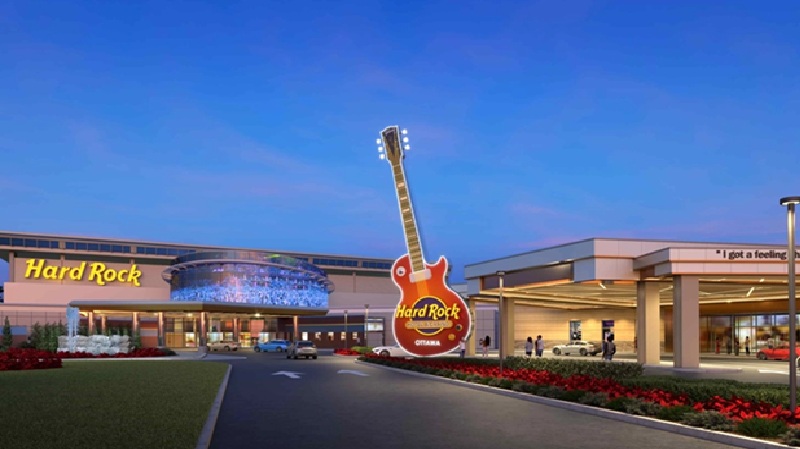
Ottawa has entered a new era of luxury and entertainment with the grand opening of the Hard Rock Hotel & Casino Ottawa on August 14. As the first fully integrated Hard Rock resort in Canada, the CA$350 million development merges hospitality, music, and gaming into a single destination designed to elevate the city’s cultural and tourism profile.

The project represents a bold statement of how Canada’s hospitality sector is transforming through high-end investments, job creation, and experiential appeal.

This trend highlights how innovation in the hospitality and entertainment space mirrors the growing discussions around online casinos in Canada as part of the country’s broader lifestyle economy.

The Grand Opening Event

The opening of the Hard Rock Hotel & Casino Ottawa marked a defining moment for both the Hard Rock brand and Canada’s capital. The August 14 debut was celebrated with fanfare, live performances, and a full showcase of the resort’s amenities.

City officials and business leaders attended the launch, emphasizing the significance of the CA$350 million investment in Ottawa’s economic and cultural growth. The venue’s unveiling positioned the city as a future leader in entertainment tourism and hospitality innovation.

The inaugural event underscored Hard Rock’s signature blend of music, energy, and luxury. Guests experienced the grand reveal of Hard Rock Live, the resort’s live entertainment venue, featuring performances that embodied the brand’s global reputation for music-centered experiences. Ottawa’s residents and visitors alike viewed the launch as a milestone moment that would redefine the city’s social landscape.

The CA$350 Million Investment

At the heart of this development lies a massive CA$350 million investment that solidifies Hard Rock’s confidence in the Canadian market. The project’s funding brought together architectural innovation, world-class interior design, and advanced gaming infrastructure, setting a new standard for integrated entertainment properties nationwide.

The scale of the investment demonstrates how global hospitality leaders are identifying Canada as fertile ground for large-scale, culturally infused tourism ventures.

The investment’s immediate impact on the local economy has been substantial. Beyond construction, the project’s operational phase created more than 700 jobs, spanning hospitality, culinary, gaming, and event management sectors. This infusion of employment opportunities contributes to Ottawa’s broader strategy of diversifying its economy through tourism and lifestyle development.

Luxury Accommodation and Guest Experience

The Hard Rock Hotel portion of the property brings a distinct blend of sophistication and entertainment to Ottawa. Designed to cater to both leisure and business travelers, the hotel combines contemporary luxury with the brand’s iconic musical heritage. Each suite and room integrates memorabilia and design elements that echo the global Hard Rock identity while maintaining local artistic influences.

The accommodations feature state-of-the-art amenities, premium finishes, and an immersive environment that reflects Hard Rock’s philosophy of connecting guests with culture through design. The combination of art, technology, and comfort ensures that each guest experiences not only luxury but also a unique sense of place tied to Ottawa’s evolving hospitality narrative.

Culinary Diversity With 10 Restaurants

One of the cornerstones of the new resort is its culinary portfolio, which includes 10 restaurants offering a wide spectrum of cuisines. From fine dining experiences to casual social spots, the selection reflects Ottawa’s growing appetite for global flavors and immersive dining atmospheres. This culinary variety enhances the property’s position as a full-day destination for both visitors and residents.

Each restaurant within the Hard Rock Hotel & Casino Ottawa introduces a unique theme and approach to gastronomy, merging international influences with Canadian produce. The combination of local sourcing and global flair exemplifies how modern resort dining is evolving beyond traditional casino fare into a more dynamic, experiential element of travel.

Hard Rock Live: The Heart of Entertainment

Hard Rock Live, the resort’s concert and performance venue, anchors the entertainment experience within the property. Designed to host world-class acts and local performers alike, the venue merges acoustical precision with audience intimacy, creating a premier destination for live events in Canada’s capital.

The architectural layout of Hard Rock Live embodies the brand’s global legacy in music culture. It is equipped with advanced sound and lighting systems and a stage adaptable for multiple genres, from rock and pop to jazz and classical. This dual focus on versatility and quality ensures year-round engagement for audiences and artists.

The Expansive Gaming Floor

The casino floor within Hard Rock Hotel & Casino Ottawa reflects the modern evolution of gaming in Canada. It combines cutting-edge design with a diverse array of gaming options that appeal to both casual players and seasoned enthusiasts. The integration of technology ensures seamless experiences across all entertainment offerings.

The gaming area includes hundreds of slot machines, high-limit rooms, and table games, all within an environment that balances excitement with sophistication. Its layout emphasizes accessibility, atmosphere, and service, positioning it as a model for future casino developments in the country.

Job Creation and Economic Growth

The project’s creation of more than 700 jobs represents one of its most tangible contributions to Ottawa’s economy. These positions span across various departments, including hospitality, event coordination, culinary services, and facility management. This direct employment boost supports both residents and the broader labor market.

Beyond job creation, the casino’s operational ecosystem supports local suppliers, contractors, and tourism services. The ripple effect of economic benefits extends beyond the resort’s boundaries, stimulating business growth throughout the region and enhancing Ottawa’s appeal to investors and visitors alike.

Cultural and Tourism Influence

The Hard Rock Hotel & Casino Ottawa is more than a gaming destination; it is a cultural landmark that celebrates music, food, and hospitality in unison. The integration of entertainment, art, and architecture positions it as a magnet for cultural tourism in Canada.

With its scale and visibility, the resort enhances Ottawa’s global identity as a destination city. It complements national efforts to promote Canadian cities as cultural and entertainment centers capable of attracting international visitors seeking high-quality, multifaceted experiences.

Canada’s Redefinition of Hospitality

This new resort signals how Canada is redefining its hospitality sector by merging cultural experiences with large-scale investment. The integration of music, food, and gaming aligns with a broader shift toward experiential tourism that emphasizes emotional connection and brand identity.

The success of the Hard Rock Hotel & Casino Ottawa is part of a global trend in which integrated resorts serve as cultural and economic anchors. By offering more than accommodation and gaming, these venues become social hubs where creativity, commerce, and community intersect.

A Model for Future Development

The project serves as a case study for how strategic investment and brand storytelling can reshape a city’s image and economy. With its CA$350 million foundation, employment generation, and focus on entertainment, the Hard Rock Hotel & Casino Ottawa provides a blueprint for future hospitality developments in Canada.

As the brand’s first fully integrated resort in Canada, it sets a benchmark for others to follow. Its success may encourage additional international hospitality brands to consider similar ventures, further transforming the Canadian entertainment landscape through innovation and investment.

Domestic and International Appeal

By design, the Hard Rock Hotel & Casino Ottawa attracts both Canadian and international visitors. The property’s combination of luxury, accessibility, and entertainment value makes it a year-round draw for travelers seeking immersive cultural experiences within a resort setting.

Ottawa’s emergence as the host city for such a major development elevates its status within the national tourism map. The city now competes with destinations like Toronto and Vancouver in offering comprehensive entertainment experiences that blend high-end hospitality with vibrant local culture.


The 2025 Presale Countdown: Comparing BlockDAG, Bitcoin Hyper, DeepSnitch AI, and Others for the Next Crypto to Explode

0

Crypto presales in 2025 are reaching a turning point as major projects move closer to launch. DeepSnitch AI has seen its presale value jump by 17% in under two weeks, showing clear momentum. Bitcoin Hyper is drawing attention with its GPU-powered model, but it still lacks confirmed testnet updates.

The spotlight, however, is now on BlockDAG (BDAG), which has captured global attention by raising over $420 million, selling more than 27 billion coins, and reaching Batch 31. The project has also launched a limited offer, cutting its batch price from $0.03 to $0.0015, creating a rare ROI window of nearly 2,940%.

With presales closing in quickly, buyers searching for the next crypto to explode are focusing on which projects combine progress, visibility, and early access benefits before listings begin.

1. BlockDAG: $420M+ Raised and $0.0015 Access Before Genesis Day

BlockDAG is closing in on its final presale chapter with unmatched strength and growing demand. The project has already raised more than $420 million, sold over 27 billion coins, and distributed 20,200+ miners worldwide. Currently in Batch 31, BlockDAG has reintroduced its $0.0015 entry through the TGE code, offering one of the lowest access points before Genesis Day.

The TGE feature determines how soon buyers receive their airdrops based on rank. Those with higher ranks get earlier access. The breakdown is simple:
Ranks 1–300 get an instant airdrop, 301–600 receive theirs after 30 minutes, 601–1000 after an hour, 1001–1500 after two hours, 1501–2000 after four hours, 2001–5000 after six hours, and anyone ranked above 5000 gets theirs within 24 hours. This transparent system encourages early participation while rewarding quick action.

BlockDAG has moved beyond ordinary presales by offering live testnet access, wallet integrations, CSV exports, and WalletConnect functionality. Its BWT Alpine Formula 1® Team partnership has given it global visibility across fan simulators, driver suits, and race cars, an achievement few crypto projects reach before their official launch.

Genesis Day, confirmed for November 26, is when everything goes live. Buyers using the TGE entry can expect near-instant airdrops based on their rank and a seamless transition to mainnet utilities. With a 2,940% ROI since Batch 1, a running testnet, and exchange listings ahead, BlockDAG stands as the most complete ecosystem in presale today. Among upcoming launches, it’s the clear next crypto to explode before prices surge post-listing.

2. Bitcoin Hyper: GPU Rewards Without Testnet Confirmation

Bitcoin Hyper is reimagining Bitcoin’s mining structure by shifting toward GPU incentives. It’s designed to reward network participants who contribute computing power and engage early with its ecosystem. The model appeals to those who appreciate traditional mining but want a modern approach built on scalable hardware.

While community traction is growing, the main concern is timing. The project hasn’t yet released a working testnet, leaving its actual performance unverified. This delay raises questions about delivery, but once the testnet launches, there’s potential for strong returns as the presale moves toward completion. Bitcoin Hyper offers a high-risk but possibly high-return scenario for those exploring presales that still have room for expansion.

Its mining-based model keeps it relevant among upcoming releases, but without technical validation, it remains a concept waiting for execution. For those watching the presale phase, it still holds curiosity value as one of the more speculative options in the next crypto to explode category.

3. Best Wallet Token: Aiming to Simplify DeFi Access

Best Wallet Token focuses on making decentralized finance simpler and safer. It is developing a feature layer that integrates directly into non-custodial wallets, allowing users to manage DeFi tools and digital assets without losing control of their funds.

Its presale has gained moderate attention from users who prefer practicality over hype. Although the interface demo has not yet been released, the team’s plan to make DeFi tools accessible through everyday wallets has caught attention. This approach could reshape how users interact with decentralized applications once the integration layer is live.

Best Wallet Token may not have the noise of larger projects, but it’s quietly positioning itself as a functional bridge between wallets and DeFi utilities. As its presale nears closure, it’s drawing those who want real-world usability over speculation, putting it on the watchlist for people scanning for the next crypto to explode within utility-driven categories.

4. DeepSnitch AI: 17% Surge in Less Than Two Weeks

Artificial intelligence remains one of the strongest themes in crypto, and DeepSnitch AI is proof of that. Its presale value has risen by 17% in under two weeks as interest grows in AI-based blockchain tools. The project’s focus is on smart contract auditing and automated threat detection, which could reduce vulnerabilities that often go unnoticed until they cause damage.

Although the technical details are still broad, the early momentum indicates strong market interest. DeepSnitch AI’s vision of combining machine learning with blockchain security gives it a niche edge. If the promised developer tools are delivered, it could see significant growth after launch. For many watching new presales, this project stands out as an AI-driven option among those vying to be the next crypto to explode in 2025.

5. BlockchainFX: Passive Earnings Without Proof of Utility

BlockchainFX positions itself as a staking and yield-focused project, aiming to provide consistent passive earnings from day one. The concept appeals to those who prefer stable rewards over active trading. However, the lack of a visible testnet or staking dashboard has slowed broader adoption.

Even without technical previews, the presale has attracted steady interest from those who favor low-volatility entries. The project’s narrative around consistent earnings is attractive, but its credibility depends on whether the team can deliver a working system before the presale closes.

As the launch nears, BlockchainFX must prove its technical reliability to remain relevant among the next crypto to explode contenders. Until then, it remains a cautious option for those seeking passive reward systems within presales.

Final Take: BlockDAG Leads as Presales Reach the Finish Line

Each project on this list brings a distinct idea to the table, but BlockDAG’s combination of live progress, global branding, and funding scale puts it at the top. With over $420 million raised, a $0.0015 TGE entry, and 27 billion coins sold, it’s the most advanced project nearing launch.

Bitcoin Hyper still attracts attention for its mining concept, while Best Wallet Token and DeepSnitch AI showcase functional and AI-powered approaches. BlockchainFX caters to passive-earning seekers.

Yet, as the presale period closes, BlockDAG’s mix of verified infrastructure, F1® exposure, and fast airdrop delivery gives it unmatched credibility. Those searching for the next crypto to explode before exchange listings see BlockDAG as the clear front-runner for 2025, combining urgency, transparency, and real technology under one expanding ecosystem.


From Hospitals to Ballot Boxes: How Zero Knowledge Proof (ZKP) Protects What Matters: Whitelist Opening Soon!

0

The future of blockchain isn’t about hype, it’s about solving problems that truly matter. Zero Knowledge Proof (ZKP) is designed with that goal in mind, turning advanced cryptography into practical tools that improve real lives. Instead of focusing on speculative trading, it’s building technology for industries that need privacy, compliance, and security.

From healthcare and voting to financial verification, Zero Knowledge Proof uses its privacy-preserving framework to deliver real-world utility. The project represents a new generation of blockchain design, one where technical innovation aligns with genuine social and industrial needs. As its whitelist prepares to open, the focus is firmly on purpose, not just price.

How Zero Knowledge Proof (ZKP) Keeps Privacy and Proof in Perfect Balance

Zero Knowledge Proof (ZKP) uses cryptography to allow people to prove something is true, like ownership, identity, or compliance, without revealing the private details behind it. This means you can verify information while keeping your personal data safe.

At its core, the technology integrates two advanced systems:

  • zk-SNARKs for fast, lightweight proofs ideal for financial use.
  • zk-STARKs for scalable, transparent verification suited for large-scale enterprise operations.

Together, these create a blockchain where privacy doesn’t conflict with accountability. The project’s design allows secure smart contracts, private transactions, and verifiable yet hidden data exchanges. It’s not just theory, this foundation supports practical tools for governments, businesses, and individuals who want to operate safely in digital environments without giving up control of their information.

Why It Matters: Building Digital Trust for Everyday Life

The real power of Zero Knowledge Proof (ZKP) lies in how it tackles two challenges that touch nearly everyone, data privacy and institutional trust. Every day, people share financial details, identification documents, and medical information online, often surrendering control over who can access them.

This technology changes that by allowing users to prove facts without exposing private data. For instance:

  • A business can confirm tax compliance without revealing its entire balance sheet.
  • A voter can prove eligibility without showing personal ID details.
  • A patient can verify insurance coverage without sharing their full medical history.
  • A student can validate credentials without releasing full academic records.

By combining privacy, security, and verifiability, Zero Knowledge Proof builds a framework for digital trust that can scale globally. It’s technology designed not for speculation but for service, creating systems that empower individuals and institutions alike.

Real-World Impact: How Zero Knowledge Proof (ZKP) Protects Data Where It Matters Most

Zero Knowledge Proof (ZKP) brings blockchain into everyday life through use cases that affect entire societies. Its whitepaper outlines several practical applications built on verifiable privacy:

  • Healthcare: Patients can share proof of vaccination or medical results without exposing their complete medical history.
  • Voting Systems: Voters can confirm their eligibility and participation while keeping their identity private, helping prevent fraud and data leaks.
  • Supply Chains: Businesses can prove the authenticity of goods without revealing sensitive supplier data.

These examples show a clear focus on usability and trust. Instead of serving speculation, the project serves a function. By turning cryptography into a privacy shield for real systems, Zero Knowledge Proof takes blockchain from abstract to applicable. It’s technology that protects people, businesses, and governments while ensuring digital transparency.

The Investment Angle: Building Real Worth Through Real-World Adoption

What makes Zero Knowledge Proof (ZKP) particularly compelling is its potential to power entire industries beyond crypto. Privacy and compliance are trillion-dollar challenges in healthcare, elections, and global finance.

If a platform can securely manage those challenges, it can attract not just individuals but major institutions.

Key advantages include:

  • Regulatory adaptability: Its selective disclosure system allows lawful transparency without data exposure.
  • Cross-sector relevance: From fintech to logistics, its proof-based verification fits existing digital systems.
  • Scalable design: zk-Rollups and recursive proofs handle high transaction volumes with minimal cost.

These capabilities position it for serious enterprise adoption. For investors, that represents a long-term horizon built on real utility, not speculation. A single large-scale adoption could propel the network far beyond typical crypto valuations, creating value grounded in real-world problem-solving.

A Human-Centered Path Forward: Turning Blockchain’s Promise into Proof

Zero Knowledge Proof (ZKP) isn’t just another blockchain project, it’s a bridge between digital innovation and everyday trust. Its focus on healthcare, governance, and enterprise applications shows a commitment to solving real, measurable problems.

By merging advanced cryptography with a user-first design, the project offers a privacy layer built for real-world use. As interest grows and whitelist access nears, the conversation is shifting from speculation to substance. Zero Knowledge Proof crypto represents a model for how blockchain should evolve, secure, scalable, and genuinely useful to society. In a world demanding both privacy and transparency, it offers a rare balance of both.

Nexchain AI’s Presale Token vs Solana & XRP: Who Wins the Next Cycle?

0

The world of blockchain technology has been dominated by giants like Solana (SOL) and XRP for years, capturing the attention of investors and developers alike. However, a new challenger has emerged, poised to disrupt the space with its unique, AI-integrated approach: Nexchain AI. With its presale token offering a revolutionary combination of artificial intelligence and blockchain, Nexchain AI is setting itself up as a major player in the next cycle. As the market watches, Nexchain’s rise could outperform even the longstanding dominance of Solana and XRP, promising unparalleled utility and massive gains.

Nexchain AI: A Game-Changer in Blockchain Technology

Nexchain AI is a cutting-edge blockchain project that combines decentralized security with artificial intelligence to create an optimized, scalable network. Using a hybrid Proof-of-Stake (PoS) model, Nexchain integrates AI to enhance transaction processing and network management. This technology brings new efficiencies that both Solana and XRP have yet to fully realize.

While both SOL and XRP have achieved success in the market, Nexchain’s presale token is designed to offer greater scalability and improved security, thanks to its AI-driven consensus mechanisms and sharding. The presale token has quickly gained traction, surpassing expectations in its fundraising stages. In Stage 25, the price was set at $0.1 per NEX, and it quickly raised $9,275,000.

The project continued its upward trajectory with Stage 26, where the presale token was priced at $0.104, successfully raising $10,125,000. Stage 27  progressed well with the price set at $0.108 and a total raise of $11,025,000. As of the latest update, the 28th stage is live with 1 NEX token selling at $0.112. These milestones highlight the high demand and growing investor confidence in Nexchain’s potential.

The Presale Token’s Rising Value

Nexchain’s presale token continues to show impressive growth, attracting both whales and retail investors. As each stage progresses, the presale price increases, signaling strong demand for the project.  With Stage 28 nearing its completion, Nexchain’s presale token could soon become one of the most sought-after tokens in the crypto space.

Compared to Solana and XRP, which have stagnated in some areas, Nexchain’s presale token has been consistently advancing, making it a strong contender in the next market cycle. Moreover, Nexchain has employed CERTIK to ensure robust security, providing further confidence to investors. This level of security, combined with the innovative use of AI in its consensus mechanism, sets Nexchain apart from other blockchain projects.

The presale token is not just an opportunity for investors to capitalize on the project’s early stages but also a chance to be part of a blockchain that is built for the future. The advancement that has been recorded is not the last stop, as a Testnet 2.0 launch is scheduled for November. This version presents a new design, smoother functionality, and real-time AI-driven safety checks.

Users will gain access to AI Events, a feature that prevents scam transactions and mitigates MEV risks. Each transaction displays an AI Risk Score to help users evaluate safety before approval. Running between October 13 and November 28, the testnet campaign rewards participants with a 100% bonus using promo code TESTNET2.0, signaling Nexchain’s continued focus on building secure, transparent, and adaptive blockchain.

Conclusion: Nexchain AI’s Token Leads the Way

Nexchain AI is positioning its presale token as a groundbreaking asset in the blockchain space. With advanced technology, robust security, and a dynamic presale structure, it is well on its way to becoming a top contender against Solana and XRP.

As the presale token continues to rise in value and demand, investors are taking note of the project’s long-term potential. The growth seen in its presale stages demonstrates the market’s belief in Nexchain’s ability to disrupt the industry. If the current momentum continues, Nexchain AI could very well outperform Solana and XRP in the next market cycle.


More Details:

Website: https://nexchain.ai/

Telegram: t.me/nexchain_ai/3

X: https://x.com/nexchain_ai

Broadcom Confirms OpenAI Is Not Its Mystery $10bn Customer Despite Major AI Chip Partnership

0

In what appears to clarify weeks of speculation across the semiconductor industry, Charlie Kawwas, president of Broadcom’s Semiconductor Solutions Group, has confirmed that OpenAI is not the mystery $10 billion customer that Broadcom referenced during its September earnings call.

Kawwas made the clarification on Monday during a joint appearance with OpenAI President Greg Brockman on CNBC’s “Squawk on the Street.” The two executives discussed their newly announced partnership to jointly build and deploy 10 gigawatts of custom artificial intelligence accelerators — a project that analysts had widely assumed made OpenAI the unidentified mega-client in Broadcom’s order books.

“I would love to take a $10 billion [purchase order] from my good friend Greg,” Kawwas said on air. “He has not given me that PO yet.”

The comment came just hours after the companies officially announced a long-term plan to develop and deploy a new class of AI infrastructure designed specifically for OpenAI’s frontier models, confirming months of collaboration rumors between the two firms.

Broadcom did not immediately respond to CNBC’s follow-up request for comment on Kawwas’s statement.

A Partnership Built for AI Scale

OpenAI’s collaboration with Broadcom represents one of the most ambitious infrastructure initiatives in the AI sector, aiming to create a custom line of chips optimized for training and inference at massive scale. The two companies said they will begin deploying racks of these accelerators by late 2026, with full completion of the 10-gigawatt deployment expected by 2029.

“By building our own chip, we can embed what we’ve learned from creating frontier models and products directly into the hardware, unlocking new levels of capability and intelligence,” Brockman said in a statement.

The move is part of OpenAI’s rapid expansion of compute infrastructure to keep up with demand from its ChatGPT platform and enterprise products, which now serve hundreds of millions of users globally.

Broadcom’s Mystery Customer Still Unknown

During Broadcom’s September earnings call, CEO Hock Tan disclosed that a fourth large customer — alongside Google, Meta, and ByteDance — had placed a $10 billion order for custom AI chips. The revelation immediately sparked speculation among analysts and investors, with many pointing to OpenAI as the likely client due to its aggressive data center buildout.

However, Kawwas’s confirmation on Monday effectively rules out OpenAI, leaving the identity of the mystery customer unknown.

Broadcom has not disclosed the client’s name, citing confidentiality agreements, but analysts have suggested potential candidates, including Amazon Web Services, Oracle, or Tesla’s xAI project — all of which are investing heavily in AI compute infrastructure.

The order, according to Tan, will significantly boost Broadcom’s AI revenue forecast for next year, with shipments of the new custom chips expected to begin in 2026.

OpenAI’s Infrastructure Blitz

OpenAI’s infrastructure expansion has been nothing short of aggressive. Over the past few months, the company has struck multi-billion-dollar agreements with major chipmakers, including Advanced Micro Devices (AMD), Nvidia, and CoreWeave — all part of an effort to diversify and secure long-term compute supply.

The startup, now valued at $500 billion, is working to scale up capacity in anticipation of its next-generation AI models. These deals have made OpenAI one of the largest buyers of GPUs and AI accelerators globally, rivalling hyperscalers such as Google and Amazon in chip procurement.

Its partnership with AMD, for instance, involves deploying six gigawatts of Instinct GPUs over multiple hardware generations, while the deal with CoreWeave focuses on providing cloud infrastructure optimized for OpenAI’s workloads.

Broadcom’s custom chip collaboration, therefore, fits squarely into OpenAI’s broader strategy of building proprietary hardware systems that could eventually reduce its dependence on traditional suppliers like Nvidia.

Broadcom’s Expanding AI Footprint

For Broadcom, the deal with OpenAI cements its growing role in the AI semiconductor ecosystem — an area historically dominated by Nvidia. The company designs and manufactures high-performance custom chips used by some of the largest tech firms, including Google’s Tensor Processing Units (TPUs) and Meta’s AI servers.

Broadcom’s AI-related revenue has grown sharply, and CEO Hock Tan recently forecast that AI chip sales could exceed $10 billion in 2025, accounting for nearly a quarter of the company’s semiconductor revenue.

Still, the firm’s decision not to name its fourth major customer has kept analysts guessing. Some speculate the client could be a nontraditional tech player developing in-house AI capabilities, or even a government-backed initiative seeking long-term chip supply security.

A Race to Control AI Hardware

The partnership between OpenAI and Broadcom underscores a broader industry trend, where AI companies are increasingly moving toward designing their own chips to optimize performance, efficiency, and cost.

Rival firms have followed similar paths. Google developed its own Tensor chips for AI and cloud computing, Amazon built its Trainium and Inferentia chips for AWS, and Meta announced plans earlier this year to deploy its custom Meta Training and Inference Accelerator (MTIA) chips across data centers.

OpenAI has joined that elite circle — a move analysts believe will give it a competitive advantage as AI workloads grow exponentially.

As Kawwas and Brockman appeared side-by-side on CNBC, their comments made clear that while OpenAI may not be Broadcom’s secret $10 billion customer, the two companies are forging one of the most significant partnerships in the AI chip race.