DD
MM
YYYY

PAGES

DD
MM
YYYY

spot_img

PAGES

Home Blog Page 3520

Nigeria Data Protection Commission (NDPC) Launches Investigation Into Over 400 Privacy Breach Cases Linked to Loan Apps

0

The Nigeria Data Protection Commission (NDPC) has launched an investigation into over 400 privacy breach cases linked to loan apps.

The commission made this known via its recently released 2023 annual report while noting that its ongoing investigations have revealed that these loan apps are overly intrusive.

“They generally violate the principles of Data Protection and privacy because they have access to contacts, pictures, messages, etc, of data subjects”, the commission stated.

The NDPC is therefore seeking a ban on mobile numbers found to have been used by lenders to breach the privacy of their customers.

Acknowledging that privacy breaches by loan apps are a systemic problem, the commission said it is also adopting a systemic solution by working with other regulators and third-party platforms being used by lenders.

It said,

“Over 400 cases of privacy breaches involving shadowy loan sharks are being addressed at the systemic level. The Commission has now drafted the Nigeria Data Protection Act-General Application and Implementation Directive (NDPA-GAID) which addresses the abetment of data breaches, the need for data ethics and privacy by design and by default among others.

“Under abetment, the third-party platforms through which data privacy breaches take place will now be required to deny access to those who use their platforms for privacy breaches. Organizations, particularly communication networks should be willing to restrict or ban telephone lines that are implicated in privacy violations”.

The NDPC added that it is also collaborating with regulators under the Joint Enforcement and Regulatory Taskforce to sanitize the digital lending space, calling for more stringent laws to safeguard consumers from such unethical practices.

It further noted that the Federal Competition and Consumer Protection Commission (FCCPC) now requires lending companies to obtain data protection clearance from NDPC before operation.

It is worth noting that the issue of digital lenders otherwise known as loan apps, unlawfully obtaining the private data of consumers over defaultment of loans, has continued to be an issue of concern, due to the incessant rate at which it has continued to occur.

In recent times, these platforms have resorted to unprofessional measures of harassment, cyberbullying, and breach of data privacy of their customers who may have defaulted in their loan(s) repayment.’ In light of these events, personal data protection and privacy have become issues of great concern for a number of stakeholders.

The Federal Competition & Consumer Protection Commission of Nigeria (FCCPC) in a bid to sanitize the lending space has on several occasions delisted digital money lenders (DMLs) for violating customer privacy.

Despite the Nigeria Data Protection Bill 2023 which was signed into law on the 14th of June 2023 by President Bola Ahmed Tinubu, such unethical practices have continued to take place, as some stakeholders and  commissions have swung into action to come up with new regulations that would address the challenges around breach of private data by loan apps. 

Alleged Rights Violations: Binance Executives Sue Nigerian Authorities

0

Detained Binance executive Tigran Gambaryan and his colleague Nadeem Anjarwalla have filed a legal complaint against Nigeria’s security adviser, Nuhu Ribadu, and the Economic Financial Crimes Commission (EFCC), alleging rights violations.

Their lawsuits, marked FHC/ABJ/CS/356/24 and FHC/ABJ/CS/355/24 respectively, seek to bring to light serious allegations of rights violations by the Nigerian authorities.

NAN reports that on March 18, originating motions were filed by their legal representative Olujoke Aliyu from Aluko and Oyebode Law Firm, seeking relief before Justice Inyang Ekwo. Gambaryan and Anjarwalla allege that their fundamental rights were infringed upon, particularly regarding their detention and the confiscation of their passports.

Gambaryan, responsible for financial crime compliance at Binance, contends that his detention violates constitutional provisions safeguarding personal liberty. He demands immediate release and the return of his passport, as well as injunctions against further detention and a public apology.

Anjarwalla, serving as Binance’s Africa regional manager, echoes similar sentiments, noting the arbitrary nature of their detention without formal charges.

In Gambaryan’s application, he explicitly states: “I seek a declaration that my detention and seizure of my passport contravened sections 35 (1) and (4) of the 1999 Constitution (as amended).” He further stated: “The only reason for his detention is because the government is requesting information from Binance and making demands on the company.”

During the court proceedings, the absence of legal representation for Anjarwalla raised significant questions, especially in light of his subsequent escape from custody. The court granted an adjournment to enable Anjarwalla to secure legal counsel and for the respondents to adequately prepare their defense.

Mr. T.J. Krukrubo, appearing for both Anjarwalla and Gambaryan, informed the court. He informed the court that while the processes had been served on ONSA and EFCC, they still required time to respond adequately. Therefore, he requested an adjourned date, highlighting that the respondents’ time to file their applications would expire the following Thursday.

“Although the respondents were served two days ago, they were not represented.” Furthermore, he drew attention to their notice of withdrawal of legal representation for Anjarwalla, filed on March 26. This move raised speculation, particularly considering Anjarwalla’s escape.

Regarding the adjournment, the judge remarked, “Withdrawing the legal representation means that the applicant has no legal representation and requires that the matter be adjourned for the applicant to seek legal representation and for the respondents to be given an opportunity to come to court.” The judge consequently adjourned the matter until April 8 for further mention.

Meanwhile, the Office of the National Security Adviser (ONSA) said it’s working with the international community to see that the escapee Binance executive is extradited.

“Upon receiving this report, this office took immediate steps, in conjunction with relevant security agencies, MDAs, as well as the international community, to apprehend the suspect,” a statement by the head of Strategic Communication, ONSA, Zakari Mijinyawa, said.

However, critics have faulted the move, noting that the Nigerian government has no basis to request extradition given how the Binance executives were arrested and remanded in custody in violation of their rights.

Given its notoriety, the outcomes of these cases will not only affect the individuals involved but also have far-reaching implications for Nigeria’s reputation for upholding the rule of law and respecting international legal norms.

Nigeria’s FIRS Reiterates Commitment to Cut Tax Types from 200 to 10 for Nigerian Businesses

0
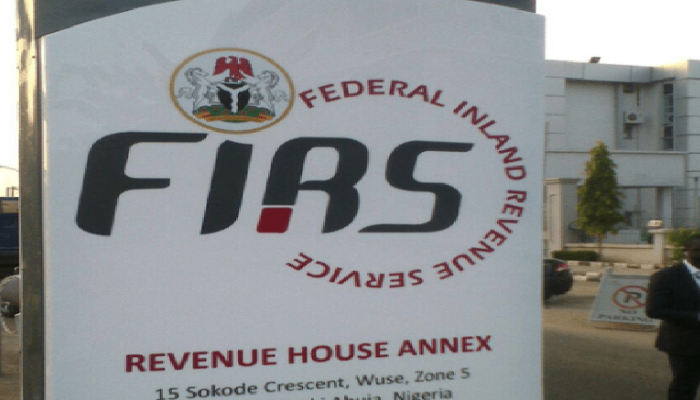
FIRS signpost

The Chairman of the Federal Inland Revenue Service (FIRS), Zacch Adedeji, has provided assurances that the agency will not introduce additional taxes in Nigeria.

Adedeji disclosed ongoing efforts to bolster the revenue base through strategic measures. He disclosed this during a visit by the management team of Guinness Nigeria Plc, led by Chief Executive Officer Adebayo Alli, to the Revenue House in Abuja on Wednesday.

He reiterated FIRS’s commitment to aligning with the directives set forth by the President, particularly in maintaining a single-digit tax system.

A statement issued on the visit by Dare Adekanmbi, the Special Adviser on Media to the FIRS chairman, quoted Adedeji as follows:

“The President gave a directive that he wants a single digit tax in the country, meaning that the maximum number of taxes we will have after the work of the Presidential Committee on Fiscal Policy and Tax Reforms will be nine taxes,” he said.

“For us at FIRS, we have responded to that directive. We want to grow the pie such that even if we are taking the same percentage of the bigger pie, the result will be huge.”

Adedeji highlighted FIRS’s focus on expanding the revenue pie rather than imposing additional tax burdens. He expressed confidence in enhancing revenue collection without resorting to new taxes or tax hikes.

He expressed optimism that by God’s grace, “we will not introduce additional taxes nor increase any form of tax,”

“We are only determined to increase the pie. We have restructured our operations at FIRS in such a way that we are now effectively carrying out our duty of assessing, collecting and accounting for taxes. We used to have functional types of taxes, but we have identified that the only customers we have are the taxpayers,” he said.

Furthermore, Adedeji noted FIRS’s efforts to enhance customer relations through operational restructuring. He emphasized the importance of categorizing taxpayers into large, medium, and small businesses based on turnover to streamline tax assessment and collection processes. This approach aims to create a conducive environment for taxpayers while ensuring effective tax administration.

Additionally, he highlighted government initiatives aimed at stimulating economic growth, including the consumer credit scheme and the introduction of a single-window platform for logistics at ports. These initiatives seek to boost the purchasing power of Nigerians, enhance productivity, and facilitate smoother business operations, benefiting companies like Guinness.

Late last year, in a move to eliminate multiple taxation, the Presidential Committee on Fiscal Policy and Tax Reforms proposed the stoppage of 190 taxes choking businesses in the country.

The Chairman of the committee, Mr Taiwo Oyedele, while presenting his report to the President said the panel suggested the merger of over 200 taxes being paid by Nigerian businesses into 10.

While the Organized Private Sector has thrown its support behind the federal government’s move to curtail multiple taxation, it expressed concern about states. Nigerian states hold the highest stake when it comes to multiple taxation and have shown no sign of willingness to curtail it.

The tax reform committee did not announce how it plans to get the states to stop increasing their number of taxes.

Nigeria’s Dangote Oil Refinery Set to Disrupt European Gasoline Trade

0

The opening of the Dangote oil refinery is set not only to reshape the African energy industry but also to shake up European refineries, bolstering Nigeria’s ambitious energy independence project.

Representing a colossal investment of $20 billion, the refinery, which commenced operations in January, boasts a staggering capacity to refine up to 650,000 barrels per day (bpd). This monumental project marks a pivotal moment for Nigeria, Africa’s most populous nation and top oil producer, long hampered by a lack of refining capacity that forced it to rely heavily on fuel imports.

Reuters reports that analysts are predicting that the commencement of operations at the Dangote refinery could signal the demise of the decades-old gasoline trade from Europe to Africa, valued at a staggering $17 billion annually. Quoting data from Kpler, the report notes that approximately one-third of Europe’s average gasoline exports in 2023, totaling 1.33 million bpd, found their way to West Africa, with Nigeria emerging as a primary destination.

Eugene Lindell, head of refined products at consultancy FGE, notes the vulnerability of European refineries in the face of intensified competition.

“The loss of the West African market will be problematic for a small set of refineries that do not have the kit to upgrade their gasoline to European and U.S. specification,” he said.

Andon Pavlov, an analyst at Kpler, goes further, estimating that as much as 300-400,000 bpd of European refining capacity is now at risk of closure due to the impending gasoline oversupply. Refineries such as the UK’s Grangemouth and Germany’s Wesseling are among those most vulnerable to premature shutdowns.

The challenges facing the European refining sector extend beyond competition from burgeoning African refineries. Since 2009, around 30 refineries in Europe have shuttered their operations, grappling with competition from newer, more advanced plants in the Middle East and Asia. The COVID-19 pandemic further exacerbated these challenges, leading to demand destruction and additional closures.

According to data from the consultancy IIR, since 2016, Europe has experienced a loss of 1.52 million barrels per day (bpd) in operational crude distillation capacity. Currently, Europe’s operational crude distillation capacity stands at 13.93 million bpd. This decline highlights shifts and changes within the European crude oil refining industry over the specified timeframe.

Additionally, the transition towards renewable energy sources is placing further pressure on fossil fuel refineries. Companies like Petroineos and Shell have cited this transition as a driving force behind their decisions to shutter plants like Grangemouth and Wesseling.

A European refinery executive who spoke to Reuters anonymously said that refineries near the coast, which are geared towards exports, are more at risk, while inland refineries are less vulnerable as they rely on local demand.

“The changes won’t happen overnight, but they could ultimately lead to closures of refineries and their conversion to storage terminals,” he added, referring to the challenging market environment.

Despite the impending challenges, the Dangote refinery’s emergence as a regional powerhouse in gasoline production is poised to coincide with the implementation of new environmental regulations in Northwest Europe. These regulations are expected to compel refineries to either adapt to stringent standards or face closure, further complicating the European refining industry.

Amidst these seismic shifts, West Africa’s role as a primary outlet for gasoline that fails to meet European standards is set to undergo a fundamental transformation.

European refineries face a challenge in meeting regional diesel demand while producing an excess of gasoline, relying on exports to balance supply. In contrast, the Dangote refinery, backed by Africa’s wealthiest individual, Aliko Dangote, was designed to address this disparity by focusing on gasoline production. Capable of producing up to 53 million liters of gasoline per day, equivalent to about 300,000 barrels per day (bpd), the refinery aims to meet local gasoline needs and potentially reduce Africa’s reliance on gasoline imports.

LinkedIn is exploring a TikTok-like Short Form Video Feature to Enhance App Usage

0

LinkedIn, a business and employment-focused social media platform is reportedly exploring a TikTok-like short-form video feed feature on the app to enhance its usage.

This feature which was spotted by industry insider and marketing influencer Austin Null, is currently in early testing and not yet available to everyone.

The feature which is on the app’s navigation bar in a new video tab, once it is tapped, will redirect users to a vertical feed of short videos where they can swipe through different content. Users can engage with the content by liking, sharing, and commenting.

According to LinkedIn, the feature is a dedicated feed for short-form videos focused on professional content. This means users can expect to see videos offering career advice, insights from industry experts, analysis, job search tips, and so on, presented in an easily digestible format.

Notably, the rollout of the short-form video feed feature is coming following LinkedIn’s reported observation of growing user preference for video content. The Microsoft-owned platform says that videos are becoming one of its user’s preferred formats for learning from professionals and experts, which is why it is testing a new way for users to discover relevant videos.

The feature will no doubt present new opportunities for creators and industry experts on the platform to showcase their knowledge in their respective fields which will also amass them so many followers.

In the future, LinkedIn might consider monetizing the feed, allowing creators to earn from their video content, which would also encourage more creators to share their videos on the app.

With this feature, LinkedIn joins the likes of Instagram, Snapchat, YouTube, and TikTok, amongst others that have launched short-form video feeds that have continued to gain popularity.

In today’s fast-paced digital age, short-form video content has become the preferred choice for many consumers. From TikTok to Instagram Reels, to YouTube, short-form videos have taken over the social media landscape.

The rise of short-form video content can be attributed to several factors, which include the decreasing attention spans of audiences, the ease of consumption, and the rise of mobile usage.

Also, they are easier to consume and share, making them a powerful tool for increasing brand visibility and reaching a wider audience. With short-form video content, businesses can also showcase their products or services in a more visually appealing and engaging way, leading to higher audience engagement and conversion rates.

Influencers have found immense success in leveraging short-form video content to connect with their followers and drive brand collaborations. The format’s innate shareability and potential for virality have made it a powerful tool for influencer marketing, enabling brands to tap into their audience’s trust and engagement.