DD
MM
YYYY

PAGES

DD
MM
YYYY

spot_img

PAGES

Home Blog Page 353

JPMorgan Launches $10bn U.S. Security and Resilience Investment Plan Amid Trump’s Push to Rebuild Supply Chains

0
JP Morgan Chase puts contents through its CEO account, it goes viral. But the same content via JPMC account, no one cares (WSJ)

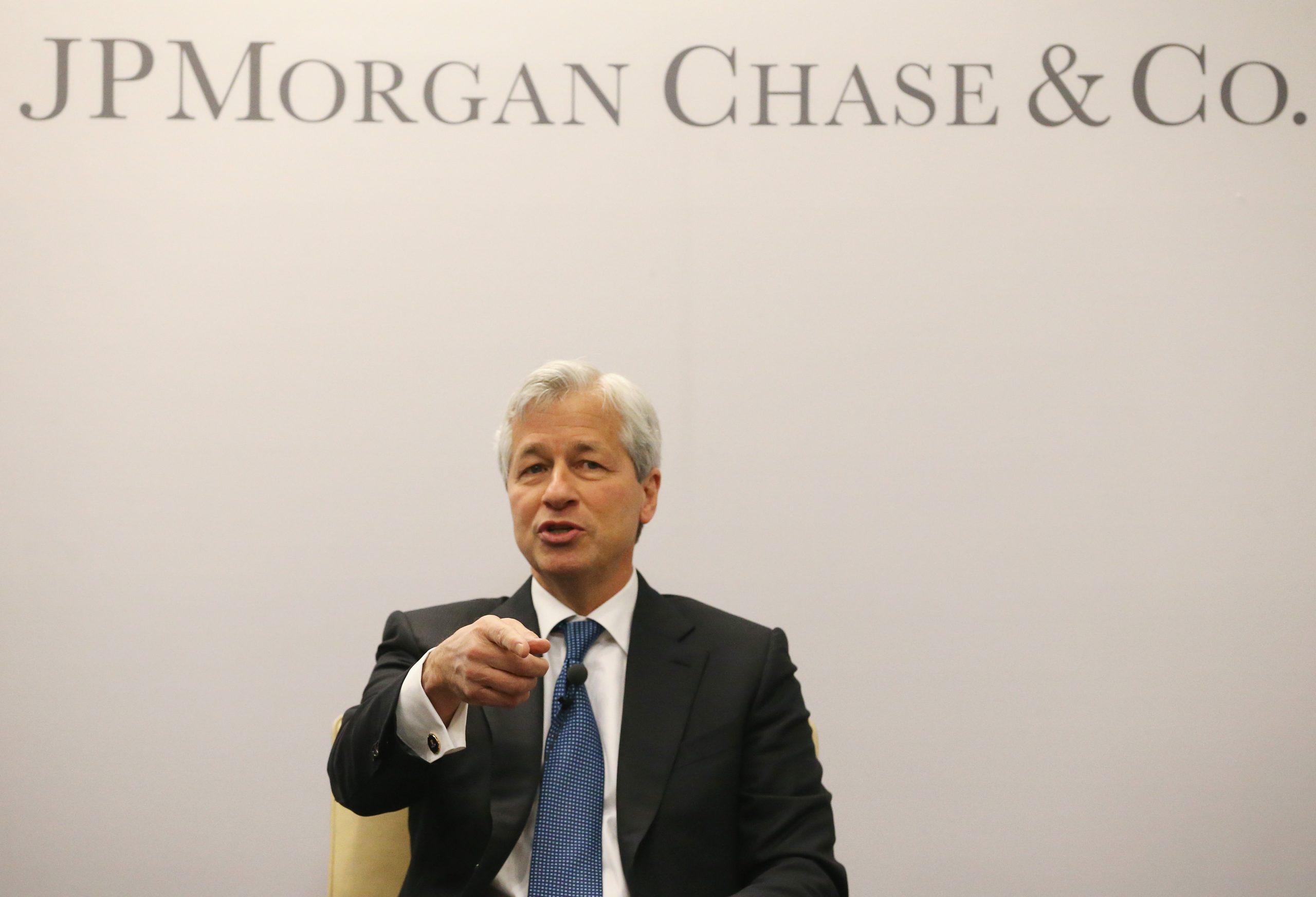
JPMorgan Chase & Co. has announced a sweeping plan to invest up to $10 billion in U.S. companies considered vital to national security and economic resilience, marking the most ambitious private-sector response yet to President Donald Trump’s renewed focus on industrial sovereignty and defense readiness.

The program, announced on Monday, is part of a 10-year, $1.5 trillion initiative that aims to facilitate, finance, and invest in industries critical to the growth and stability of the U.S. economy — including defense, energy, and manufacturing. JPMorgan said it will deploy the initial $10 billion through direct equity and venture capital investments, with the broader commitment spread across lending, project financing, and capital markets support.

The announcement sent shares of the nation’s largest bank up 1.4% in pre-market trading.

The plan aligns closely with the Trump administration’s agenda to modernize infrastructure and reduce dependence on foreign supply chains, particularly in strategic sectors such as semiconductors, pharmaceuticals, clean energy, and rare earth minerals — all areas where the U.S. has long been reliant on imports from China.

“It has become painfully clear that the United States has allowed itself to become too reliant on unreliable sources of critical minerals, products and manufacturing — all of which are essential for our national security,” JPMorgan Chairman and CEO Jamie Dimon said in a statement accompanying the announcement.

Dimon’s comments echoed the White House’s broader industrial policy objectives, which have gained renewed urgency following President Trump’s revival of a trade war with Beijing last Friday. The president promised to sharply raise tariffs in retaliation for China’s decision to curb exports of rare earth materials, vital components in electronics and defense systems.

Trump, who has repeatedly criticized major U.S. banks for “debanking” clients based on political or religious beliefs, praised the new initiative as a sign that Wall Street was “getting back to serving America’s interests.”

The “Security and Resiliency Initiative”

JPMorgan said its new “Security and Resiliency Initiative” will focus investment on four strategic areas:

  • Supply chain and manufacturing
  • Defense and aerospace
  • Energy independence
  • Frontier technologies — including artificial intelligence and quantum computing

These broad areas will be further divided into 27 sub-sectors, covering everything from shipbuilding, nuclear energy, and nanomaterials to secure communications and next-generation computing systems.

The bank also announced that it will establish an external advisory council, composed of public- and private-sector leaders, to guide the initiative. It plans to hire more bankers and investment professionals dedicated to national security-linked transactions and expand research on supply chain vulnerabilities through its recently launched Center for Geopolitics.

The program builds on JPMorgan’s existing work with the federal government. Earlier this year, the bank helped structure the U.S. government’s deal with MP Materials (MP.N) — a Nevada-based rare earth mining company — aimed at revitalizing domestic mineral extraction.

“We’ve had no less than 100 calls with clients to talk about the MP transaction as well as what this means for other industries,” said Andrew Castaldo, JPMorgan’s co-head of mid-cap mergers and acquisitions. “And we’ve had numerous trips down to Washington to explore those opportunities with the government.”

According to people familiar with the discussions, JPMorgan is coordinating closely with the administration on dozens of transactions across up to 30 industries identified as “critical to national and economic security.”

A $1.5 Trillion Industrial Push

The newly announced $10 billion allocation forms part of a much larger strategic plan. JPMorgan revealed it has already committed to facilitating about $1 trillion in financing for clients in these strategic industries over the next decade, and now plans to expand that figure by 50%, to $1.5 trillion.

Analysts say the bank’s decision represents a structural pivot in how Wall Street approaches industrial investment — from maximizing global efficiency to reinforcing domestic production capacity.

Policy Frustrations and a Call for Speed

While unveiling the plan, Dimon also took aim at regulatory and bureaucratic delays that he said were stalling America’s ability to rebuild.

“America needs more speed and investment,” Dimon said, warning that outdated policies and workforce shortages were undermining progress. He added that if key reforms and infrastructure modernization “had been done earlier, things wouldn’t be this bad.”

That sentiment aligns with the Trump administration’s push for accelerated permitting and deregulation to encourage investment in manufacturing, energy, and defense.

The U.S. is currently pursuing deals across multiple strategic sectors, ranging from critical minerals and microchips to advanced defense manufacturing, as part of an emerging national security-industrial complex that fuses government policy with private capital.

In that sense, JPMorgan’s plan is not merely a financial commitment — it is a signal that Wall Street is re-aligning with Washington’s industrial strategy under Trump’s second term.

The bank is effectively positioning itself as a financial backbone of America’s new industrial era by combining its capital strength with federal priorities, helping to fund projects designed to re-shore production, secure supply chains, and drive technological self-sufficiency.

Market analysts expect the plan to stimulate investment in middle-market defense and energy companies, particularly those seeking capital to scale domestic production. It may also boost innovation in frontier technologies — especially in AI and quantum computing, where national competitiveness has become a defining geopolitical issue.

If successful, JPMorgan’s $10 billion security initiative could serve as a template for other major banks, including Goldman Sachs and Bank of America, to follow suit, as Wall Street and Washington draw closer in reshaping America’s economic future.

Former Intel CEO Pat Gelsinger Warns of AI Bubble but Predicts It Won’t Burst for “Several Years”

0
Pat, new Intel boss

Former Intel Chief Executive Officer Pat Gelsinger has become the latest high-profile voice to warn that the world is in the midst of an artificial intelligence (AI) bubble — though he believes the boom still has significant room to run before it slows down.

“Are we in an AI bubble? Of course. Of course we are,” Gelsinger told CNBC’s Squawk Box in an interview on Monday. “I mean, we’re hyped. We’re accelerating. We’re putting enormous leverage into the system.”

Gelsinger, now a general partner at the Silicon Valley venture capital firm Playground Global, said he expects the AI bubble to continue expanding for “several years” before any correction happens. He noted that while there has been an “industry shift to AI,” companies have “yet to really start materially benefiting from it.”

His remarks come amid an increasingly fierce global debate about the sustainability and real economic impact of the AI boom, which has driven record investments, valuations, and stock market surges.

Investors Keep Pouring In

Despite repeated warnings, investors remain unrelenting in their bets on companies offering AI products and infrastructure. Tech giants such as Nvidia, Microsoft, Amazon, Alphabet, and Meta have together invested hundreds of billions of dollars into AI data centers, cloud infrastructure, and chip manufacturing. Nvidia’s market value alone has soared past $4 trillion, largely due to its dominance in the GPU market, powering AI systems.

In recent months, companies like OpenAI, Anthropic, and Cohere have attracted multi-billion-dollar funding rounds, while chipmakers such as AMD, Broadcom, and TSMC have seen unprecedented demand from data center clients.

However, the pace of investment has sparked anxiety among analysts and executives who question whether the returns will justify the massive capital outlays. As Gelsinger pointed out, the market’s enthusiasm has far outstripped the tangible productivity gains AI has delivered so far.

The Growing Bubble Debate

The divide among business leaders over the real impact of AI has widened sharply in recent months. Gelsinger’s assessment adds to a chorus of voices suggesting the industry is entering speculative territory.

OpenAI CEO Sam Altman, whose company ignited the current AI frenzy with the launch of ChatGPT in late 2022, said earlier this year that the sector is “overhyped in the short term and underhyped in the long term.” Altman admitted that a correction could occur as companies and investors realize that not every AI application will be transformative or profitable.

Alibaba cofounder Joe Tsai also warned recently that he was “beginning to see some kind of bubble” in AI valuations, saying the pace of investment reminded him of the late 1990s internet boom.

“I start to see the beginning of some kind of bubble,” Tsai told delegates at the HSBC Global Investment Summit in Hong Kong earlier this year. Some of the envisioned projects commenced raising funds without having secured “uptake” agreements, he added. “I start to get worried when people are building data centers on spec. There are a number of people coming up, funds coming out, to raise billions or millions of capital.”

On the other side of the debate, Nvidia CEO Jensen Huang — whose company is arguably the single biggest winner from the AI surge — has dismissed comparisons to the dot-com bubble. Huang insists that AI represents a lasting technological shift already delivering measurable productivity.

Similarly, Microsoft CEO Satya Nadella has argued that AI is not a bubble but the “next platform shift” comparable to the birth of the internet or the smartphone. Microsoft has invested tens of billions of dollars in OpenAI and in upgrading its Azure data centers to handle AI workloads, betting that AI will redefine enterprise software and search.

“Late on AI” and Lessons from Intel

For Gelsinger, the lessons come from experience. During his nearly four-year tenure as Intel’s CEO, he tried to reposition the company to compete in the fast-evolving semiconductor market dominated by Nvidia, AMD, and TSMC. However, Intel’s delays in developing high-performance chips for AI workloads left it struggling to keep pace.

Reflecting on his time at the company, which he left in December 2024, Gelsinger admitted that Intel “made a set of bad decisions over 15 years” and was “late on AI as well.” He said his focus at Playground Global now includes supporting startups working on practical applications of AI, robotics, and computing infrastructure that could prove durable beyond the current speculative cycle.

Financial analysts have echoed Gelsinger’s caution, warning that AI infrastructure spending could soon outpace near-term returns. Goldman Sachs recently estimated that global AI investment could reach $1 trillion by 2030, but noted that only a fraction of that spending has translated into measurable profit so far.

Morgan Stanley analysts have drawn parallels with the early internet era, saying that while AI will likely have a lasting impact, the valuation multiples for many AI-linked companies are “unsustainably high.”

Similarly, economists at Bank of America said that while AI adoption could eventually boost productivity, “the market may be pricing in gains that could take years to materialize.”

“Building the Rails”

Gelsinger concluded his remarks with a metaphor capturing both the optimism and caution surrounding AI’s evolution.

“We’re building the rails for the future,” he said, “but we haven’t yet seen the trains really running on them.”

His view underscores a growing recognition in Silicon Valley and on Wall Street that while AI is undoubtedly transforming industries and sparking one of the most powerful investment waves in decades, its true payoff — and whether it can sustain the trillions of dollars now chasing it — remains uncertain.

Best Crypto Presales of 2025: Why BlockDAG, BlockchainFX, Remittix, and Quant Earth Are Gaining Attention!

0

2025 has been a major year for new crypto launches, with presale tokens capturing strong attention from online communities and early investors searching for the next breakout project. From cross-border payment systems to metaverse-linked networks, innovation in the crypto space is moving fast, drawing both curiosity and cautious optimism.

Among the most talked-about names are BlockDAG, BlockchainFX, Remittix, and Quant Earth, four projects offering very different paths to growth. Each brings its own approach, from technical breakthroughs to real-world integration, shaping conversations across crypto circles. This article looks at why these names are being recognized as some of the best crypto presale opportunities of 2025, and what makes them stand out in an increasingly competitive market.

1. BlockDAG: A Powerful Combo of Speed and Security

BlockDAG has become the face of the best crypto presale discussions in recent months, and with good reason. It’s designed as a hybrid of Directed Acyclic Graph (DAG) and Proof-of-Work (PoW) technology, blending fast transaction speeds with strong security. The network supports EVM compatibility, meaning developers can easily build dApps and smart contracts without friction.

The presale has already crossed $420 million, with nearly 27 billion coins sold, reflecting solid community interest. Plus, coins are priced at $0.0012 per BDAG for a limited time, while the launch has been confirmed at $0.05! For those who join now, this signals a baked-in 41x ROI potential. Adoption has also surged, with its X1 app hitting 3 million, and a recent partnership with the BWT Alpine Formula 1® Team boosting visibility.

BlockDAG’s ongoing dev updates, including improved explorer features and ASIC miner rollouts, suggest the team is actively building. The combination of scalability, energy efficiency, and strong fundraising momentum makes BlockDAG a leading name in the best crypto presale conversation for 2025.

2. BlockchainFX: The All-in-One Trading Hub

BlockchainFX aims to simplify digital finance by combining crypto, stocks, ETFs, and forex trading in one place. Its “super app” model targets users who want to manage multiple asset types under a single ecosystem. The project has raised over $8.5 million so far, with presale prices moving between $0.027 and $0.05.

Analysts predict a possible $1 target after its listing, though such figures should be treated cautiously. BlockchainFX’s vision is ambitious, offering multi-market exposure backed by blockchain transparency.

However, the concept’s success depends heavily on execution and real user adoption. Despite this uncertainty, it remains one of the best crypto presale options to watch for its innovative cross-market potential.

3. Remittix: Bridging Crypto and Real-World Payments

Remittix focuses on solving a real challenge: making global money transfers faster and cheaper. Its PayFi network converts crypto into fiat and sends it directly to users’ bank accounts worldwide. The project has reportedly raised over $26 million, with recent price data hovering around $0.19 per token on Bitget.

Its Web3 wallet is now in beta testing, supporting major chains like Ethereum, Solana, and Tron. Remittix also promotes a deflationary token model, with 10% of transactions burned to maintain value. While it’s still early, the presence of an actual working product and a CertiK audit gives it credibility. For users interested in practical crypto applications, Remittix is a noteworthy mention among the best crypto presale tokens right now.

4. Quant Earth: The Digital Twin of Our Planet

Quant Earth offers a bold vision of combining blockchain, metaverse, and geospatial technology to create a “digital twin” of Earth. The project uses ZK-rollups to minimize gas fees and support high-speed transactions. Current presale listings show a token price of around $0.021, while earlier rounds were much lower, some as cheap as $0.00027.

With a total supply of 100 billion QET tokens and a focus on mapping real-world data into a blockchain metaverse, Quant Earth hopes to attract both gaming and environmental data users. However, caution is warranted due to mixed trust scores and limited technical proof so far. Still, its futuristic appeal makes it an interesting part of the best crypto presale group for tech-focused enthusiasts.

Final Thoughts

Each of these projects, BlockDAG, BlockchainFX, Remittix, and Quant Earth, brings something different to the table. Whether it’s blockchain efficiency, all-in-one financial trading, crypto remittances, or virtual world mapping, they highlight how diverse and experimental the presale market has become.

BlockDAG, however, stands out as the most talked-about contender in the best crypto presale space thanks to its strong funding, hybrid architecture, and visible development progress. Still, as with all early-stage projects, potential buyers should approach with caution, do thorough research, and stay alert for official updates before making any commitments.


Bitcoin Rebounds as Market Sentiment Improves Amid Tariff Easing and Institutional Buying

0
Blazpay – AI crypto presale

Bitcoin began the week on a strong note, recovering some of the losses it suffered last week following U.S. President Donald Trump’s proposal to impose 100% import tariffs on China.

The world’s largest cryptocurrency rallied on Monday as market sentiment turned positive after Trump appeared to soften his tone on trade relations.

In a post on his Truth Social platform, Trump wrote, “We don’t want to hurt China; we want to work with them.” This signaled a more conciliatory stance that helped ease global market concerns.

Bitcoin was up 3.7% over the past 24 hours, trading around $115,460, though still about 9% below its record high. After plunging below $110,000 during last week’s sell-off, the crypto asset is currently trading at $115,027 as of the time of writing this report.

Traders have been “buying the dip,” suggesting that fears surrounding the trade war may have subsided for now.

Institutional Buyers Reenter the Market

Institutional activity is also bolstering Bitcoin’s recovery. Grayscale recently filed to launch a Bittensor Trust, designed to attract institutional investors into AI-linked crypto assets, signaling growing confidence in the digital asset sector.

Meanwhile, Marathon Digital Holdings (MARA), one of the world’s leading Bitcoin miners listed on Nasdaq, reportedly purchased 400 BTC worth approximately $46.3 million through crypto brokerage firm FalconX.

According to on-chain data from Arkham Intelligence, Marathon executed the purchase via its custodian, Anchorage Digital, with additional inflows from FalconX wallets. The transactions suggest a continued pattern of institutional accumulation, with smaller transfers—such as 150 BTC worth $18 million—recorded over the past week.

This latest acquisition brings Marathon’s total Bitcoin holdings to 52,850 BTC, valued at around $6.1 billion, solidifying its position among the world’s largest public Bitcoin holders.

Market Recovery Amid U.S. Government Shutdown

Bitcoin’s resurgence comes against the backdrop of the ongoing U.S. federal government shutdown, which has entered its third week. The stalemate, caused by a budget impasse between Republicans and Democrats, has halted progress on the approval of 16 pending Bitcoin and cryptocurrency exchange-traded funds (ETFs).

Despite the political uncertainty, risk appetite appears to be returning across the broader crypto market. Major altcoins are also rallying, with Ethereum up nearly 9% to trade above $4,130, while XRP, Solana, BNB, and Dogecoin have gained between 10% and 20%.

Recall that last week’s bloodbath saw the crypto market experience its most devastating single-day crash on record on Friday, erasing over $19 billion in value within just 24 hours.  Analysts note that the sharp downturn may have pushed crypto prices too low, prompting traders to re-enter the market.

Technical indicators such as the Relative Strength Index (RSI) are showing upward momentum, suggesting a potential reversal. On-chain data also reveals increased whale accumulation and a decline in negative funding rates, further supporting the bullish outlook.

Vincent Liu, Chief Investment Officer at Kronos Research, observed that liquidity is gradually returning as markets rebound amid leverage resets and easing tariff concerns. “Despite the weekend whiplash, the ‘Uptober’ uptrend stays alive as buyers boldly buy the dip,” Liu noted.

Nassar Achkar, Chief Strategy Officer at CoinW, shared a similar sentiment, emphasizing that the broader bullish trend remains intact. He added that traders are closely monitoring key macroeconomic signals, particularly the upcoming U.S. CPI report, the Federal Reserve meeting, and ETF flow data—to gauge Bitcoin’s next move.

Future Outlook

As optimism returns to the crypto market, Bitcoin’s rebound may signal the beginning of renewed momentum, with investors watching closely to see whether this recovery can evolve into a sustained rally.

Top 6 Hottest Bitcoin Mining Apps in 2025 to Save Money and Earn Passive Income

0

In 2025, cloud mining apps have made Bitcoin mining more accessible than ever. Instead of buying expensive hardware or incurring high electricity bills, mobile apps now enable users to mine cryptocurrency from anywhere. With just a smartphone, you can turn idle time into a stream of passive income.

But not all apps are created equal. Some prioritize transparency and security, while others focus on user-friendly features or free trials. To help you choose, we’ve reviewed the 6 hottest Bitcoin mining apps in 2025 that make crypto mining simple, affordable, and reliable. 

  1. DeepHash — The Most Profitable Smart Bitcoin Mining Provider in 2025

If you’re looking for a trustworthy and high-performing app, DeepHash stands at the top of the list. Based on advanced AI-powered optimization and fully renewable energy, it gives users a smooth experience with guaranteed returns. Unlike many platforms, DeepHash is transparent with real data and offers a free trial to get started.

Why DeepHash Stands Out:

  • 100% renewable energy operations for eco-friendly mining
  • AI-based hashrate optimization to maximize profitability
  • 24/7 customer support for beginners and experts
  • A free trial contract to test the platform risk-free.

? Click to visit DeepHash to receive $100 for free?

Here’s a look at DeepHash’s most popular mining plans in 2025:

Mining Farm Contract Amount Contract Time Daily Profit Total profit ROI
Norway – Bodø Hydro Farm 100 1 1.5 1.5 1.50%
Canada – Quebec Hydro Farm 150 2 5 10 3.33%
Iceland – Reykjavik Geothermal Farm 500 3 16 48 3.20%
Bhutan – Thimphu Hydro Farm 1100 3 38.5 115.5 3.50%
Paraguay – Itaipu Hydro Farm 2800 2 106.4 212.8 3.80%
Uruguay – Montevideo Wind-Solar Farm 6500 2 273 546 4.20%
Sweden – Luleå Hydro-Wind Farm 12500 2 600 1200 4.80%
El Salvador – Volcano Geothermal Farm 23500 1 1527.5 1527.5 6.50%
USA (Texas) – Solar-Wind Farm 39500 1 3160 3160 8.00%


?? Explore more at DeepHash.com

With flexible plans, eco-friendly mining, and reliable daily payouts, DeepHash has become the go-to app for both beginners and seasoned miners in 2025.

  1. StormGain

StormGain has been around for several years and is well-established in the mining community. Its mobile app includes built-in trading features, alongside mining, making it a convenient all-in-one crypto hub.

Key Features:

  • Free built-in Bitcoin cloud miner
  • Crypto trading and mining in one app
  • User-friendly design for quick navigation

While it’s popular, the free mining rewards are relatively small compared to premium plans from platforms like DeepHash. Still, for casual users, it’s a solid choice.

  1. ECOS

ECOS is another major player offering a mobile app for Bitcoin mining. Founded in 2017, it has developed into a trusted platform with investment options like portfolios and savings.

Why ECOS is Trending in 2025:

  • Low entry point for mining contracts
  • Extra investment tools beyond mining
  • Clear mobile app interface

The downside is that profits may be slower if you start small. However, its longevity in the industry adds to its credibility.

  1. NiceHash

NiceHash is a marketplace app where users can buy or sell hashing power. It is widely used on desktops but also has a mobile app version for tracking and managing contracts.

Advantages:

  • Access to a wide range of algorithms
  • Marketplace flexibility
  • Transparent operations

That said, beginners might find it confusing at first since it’s more technical compared to apps like DeepHash, which are plug-and-play.

  1. CryptoTab Browser App

CryptoTab is one of the most downloaded crypto apps worldwide. It works as a browser that lets you mine Bitcoin in the background while surfing the internet.

Highlights:

  • Simple to use with no setup
  • Works directly in your phone’s browser
  • Built-in referral program for higher rewards

While fun and easy, it doesn’t offer the high payouts of dedicated mining platforms. It’s best suited for hobbyists who want casual passive income without serious investment.

  1. Binance Cloud Mining App

As one of the world’s largest exchanges, Binance also provides a mobile app with integrated mining services. Users trust it for its security and brand reputation.

What Makes It Popular:

  • Backed by Binance’s global reputation
  • Easy integration with Binance wallet and trading
  • Multiple cryptocurrencies supported

However, Binance’s mining contracts are sometimes limited and may require higher entry points. Beginners looking for free trials or smaller plans often turn to alternatives like DeepHash.

Choosing the Best Bitcoin Mining App in 2025

When selecting a Bitcoin mining app, consider its profitability, ease of use, and reliability. While some apps offer free but small earnings, others provide structured plans with guaranteed payouts.

Here’s how the six platforms compare at a glance:

App Best For Strength Weakness
DeepHash Beginners & pros AI-optimized profits, renewable energy, free trial None significant
StormGain Casual users Free built-in miner Lower rewards
ECOS Long-term miners Established, extra tools Slow small-scale profits
NiceHash Advanced users Flexible marketplace Complex for beginners
CryptoTab Hobbyists Browser-based mining Very small earnings
Binance Trusted exchange users Brand reputation Higher contract costs


Final Thoughts

Bitcoin mining apps are reshaping passive income opportunities in 2025. Among all the options, DeepHash stands out with its eco-friendly operations, AI-driven optimization, transparent payouts, and beginner-friendly plans.

Whether you’re mining casually through apps like StormGain or aiming for serious earnings with Binance, the best choice depends on your goals. However, if you seek steady returns, flexibility, and transparency, DeepHash remains the top Bitcoin mining app in 2025.

Start mining smarter today with DeepHash.