DD
MM
YYYY

PAGES

DD
MM
YYYY

spot_img

PAGES

Home Blog Page 3536

Navigating Security Breaches in the Digital Age

0

In the ever-evolving landscape of cryptocurrency, security remains a paramount concern for investors, traders, and the platforms that facilitate their transactions. The recent buzz around alleged security breaches at Bitfinex and concerns regarding Tether (USDT) have brought these issues into sharp focus, highlighting the need for vigilance and robust cybersecurity measures in the digital finance sector.

Bitfinex, a prominent cryptocurrency exchange, has found itself at the center of controversy following claims of a data breach by a group identifying as FSOCIETY. These allegations have been met with skepticism by Bitfinex’s Chief Technology Officer, Paolo Ardoino, who has publicly disputed the claims. Ardoino’s stance is supported by an internal system analysis that reportedly found no evidence of a breach, with only a small number of the email addresses released by the group matching those of actual Bitfinex users.

The situation underscores the complex challenges faced by cryptocurrency exchanges. Bitfinex is no stranger to security incidents, having experienced a significant hack in 2016. Since then, the exchange has taken considerable steps to bolster its security infrastructure, a move that is now under scrutiny amidst the current allegations.

The implications of such security concerns extend beyond the immediate stakeholders. Tether (USDT), a stablecoin pegged to the US dollar, is intricately linked to Bitfinex, with Ardoino also serving as the CEO of Tether. The stability and reliability of USDT are critical to the broader cryptocurrency market, where it serves as a key medium for transactions and value storage.

In response to the allegations, Ardoino has emphasized the importance of maintaining robust security measures and has reassured users of the integrity of Bitfinex’s systems. The exchange has not reported any direct communication from FSOCIETY regarding a data breach, and the lists of stolen emails and passwords appear to be from unrelated incidents.

This episode serves as a reminder of the inherent risks associated with digital assets and the importance of continuous improvement in security protocols. For users, it is a call to practice due diligence and to stay informed about the measures taken by exchanges to protect their investments.

As the cryptocurrency market matures, it is likely that we will witness further advancements in security technologies and regulatory frameworks. These developments will be crucial in building trust and fostering a stable environment for digital finance to thrive. For now, the crypto community watches closely as Bitfinex navigates these turbulent waters, with the hope that transparency and resilience will guide the industry toward a more secure future.
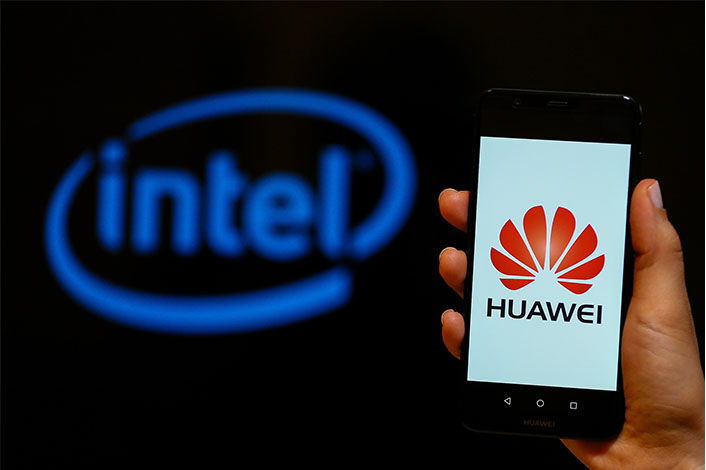

Intel, Qualcomm expects revenue to tank after U.S. Revokes Chip Export Licenses for Huawei

0

The United States has taken further steps to curb China’s technological influence by revoking certain licenses for chip exports to Huawei, a Chinese tech giant. 

The Commerce Department confirmed this development to CNBC on Tuesday, marking the latest move in the ongoing efforts to address national security concerns associated with China’s tech prowess.

A spokesperson for the Commerce Department highlighted the dynamic nature of national security threats emanating from China’s growing tech prowess, noting the need for continuous assessment and adaptation of export controls. 

While specific details regarding the revoked licenses were not disclosedit was confirmed that certain exports to Huawei had been affected.

“We continuously assess how our controls can best protect our national security and foreign policy interests, taking into consideration a constantly changing threat environment and technological landscape,” a Commerce spokesperson said in a statement.

“As part of this process, as we have done in the past, we sometimes revoke export licenses,” the spokesperson said. “But we can confirm that we have revoked certain licenses for exports to Huawei.”

Huawei’s inclusion on a U.S. trade blacklist in 2019 prohibited American firms from supplying technology, including crucial 5G chips, to the Chinese company over national security concerns. Subsequent tightening of chip restrictions in 2020 extended these limitations to foreign manufacturers utilizing American chipmaking equipment, requiring licenses for semiconductor sales to Huawei.

The US has also created rules meant to restrict to China, the flow of advanced chips that can be used for AI.

Despite these restrictions, Huawei’s consumer business, particularly smartphones and laptops, has shown resilience, with the recent launch of the Mate 60 Pro smartphone winning market attention. Analysis by TechInsights, cited by CNBC, revealed the utilization of advanced chips from China’s leading chipmaker, SMIC, in the Mate 60 Pro, circumventing some of the U.S. sanctions aimed at impeding Huawei’s technological advancements.

U.S. chip firms such as Qualcomm and Intel, which supply components to Huawei, have acknowledged the potential impact of export restrictions on their operations. 

Qualcomm anticipates a reduction in revenue from Huawei beyond the current calendar year, citing the development of Huawei’s own chips as a contributing factor. Similarly, Intel foresees the impact of new export restrictions on its revenue for the next quarter, highlighting the escalating tensions and uncertainties surrounding U.S.-China relations in the tech sector.

“While we have continued to sell integrated circuit products to Huawei under our licenses, we do not expect to receive product revenues from Huawei beyond the current calendar year,” Qualcomm said.

“Additionally, to the extent that Huawei’s 5G devices take share from Chinese original equipment manufacturers that utilize our 5G products or from non-Chinese OEMs that utilize our 5G products in devices they sell into China, our revenues, results of operations and cash flows could be further impacted.”

Meanwhile, Huawei’s aggressive expansion in the smartphone market, particularly with its Pura 70 series, launched in April, poses a significant challenge to competitors like Apple in China. Counterpoint Research data shows a substantial increase in Huawei’s smartphone sales, with iPhone sales dropping by 19.1% in the first quarter, while Huawei’s smartphone sales surged by 69.7%, as reported by Counterpoint Research.

Huawei’s net profit in 2023 increased by 144.5% compared to the previous year, reaching 87 billion yuan (approximately $12 billion). This growth was partly attributed to the sales of the Mate 60 Pro in China, as disclosed by the company in March.

Intel expects new export restrictions to China to impact its revenue for the next quarter, according to a new financial filing. Intel said its revenue for the second quarter of 2024 will still fall within the original range it outlined of $12.5 billion to $13.5 billion but below the midpoint.

Since 2019 when Huawei was placed on US trade blacklist, tensions between the US and China and the race to advance in cutting-edge technology have only intensified, especially with the rise of generative AIThis is the latest episode.

BlockDAG Advances With $23.9M Presale And Revolutionary X1 Miner Edges Out Competitors

0

As the cryptocurrency space continues to evolve, BlockDAG is capturing significant attention with its innovative integration of DAG and blockchain technologies, aimed at enhancing scalability and security. The project is not only making headlines with its robust 30,000x ROI forecasts but also impressing with its booming presale, which is now in its tenth batch. Over 5,359 miners have been sold, and the value of BlockDAG has surged by 500% since the presale began. The recent Development (Dev) Release 25 has further positioned BlockDAG at the forefront of blockchain innovation by optimizing network efficiency and preparing for the groundbreaking launch of the X1 miner app.

Launching Soon: X1 Miner App by BlockDAG

BlockDAG stands out by merging the best qualities of Directed Acyclic Graphs (DAGs) with traditional blockchain technology. This hybrid approach significantly boosts transaction speed and scalability while maintaining rigorous security standards through established blockchain consensus mechanisms. With the upcoming launch of the X1 miner app scheduled for June 1st, BlockDAG is set to transform everyday smartphones into efficient mining devices, capable of generating BDAG coins without extensive battery or data consumption.

BlockDAG’s 25th Development Release Enhances Network Efficiency

The 25th Development Release by BlockDAG introduces critical enhancements that amplify the protocol’s efficiency and scalability. This update incorporates advanced substreams within the libP2P protocols to increase the throughput and reliability of transactions across the network. These improvements are designed to optimize communication pathways, ensuring faster and smoother interactions as the user base expands.

Standard libP2P protocols such as /ipfs/ping/1.0.0 and /ipfs/id/1.0.0 have been integrated in this release to foster improved node-to-node communication. This strategic update significantly cuts down latency and resource use, boosting overall network performance and stability, which is vital for supporting a growing infrastructure.

BlockDAG Sets a New Standard in Crypto Innovation

BlockDAG’s latest development release demonstrates the project’s ongoing commitment to pushing the boundaries of what its blockchain-DAG hybrid technology can achieve. The enhancements introduced in this release are poised to dramatically expand the network’s capacity for managing large transaction volumes, reaffirming BlockDAG’s leading position in blockchain innovation. With a focus on technical excellence and user accessibility, BlockDAG continues to pave the way for future advancements in decentralized blockchain solutions.

Looking Ahead: BlockDAG’s Bright Future

With the 25th Dev Release and the upcoming X1 miner app, BlockDAG continues to showcase its dedication to innovation and high potential for substantial investor returns. As it progresses through its tenth presale batch with each coin priced at $0.006, BlockDAG strengthens its market presence, maintaining engagement with its community and setting the stage for future technological advancements in blockchain technology.


Join BlockDAG Presale Now:

Website: https://blockdag.network

Presale: https://purchase.blockdag.network

Telegram: https://t.me/blockDAGnetworkOfficial

Discord: https://discord.gg/Q7BxghMVyu

How Nigeria Can Reduce Poverty and Hunger in Farming Communities

1

The conclusion is self-evident: sending a family of five $50 per month over six months will not make any significant change in that family despite whatever model you may have there. So, it is refreshing that a World Bank report has confirmed what many of us felt was a waste of resources and time: “Despite the earnest efforts to uplift vulnerable populations, the study revealed that the cash transfer program fell short of significantly improving household consumption or boosting women’s employment opportunities.”

As I argued when we began this mindless policy, Nigeria can help those families if we focus on setting up clusters which will guarantee 24/7 electricity for cold rooms in each local government. In other words, if you use the money transferred to a few “lucky” citizens to build some cold rooms which can serve communities, you will reduce poverty by reducing post-harvest waste.

In the Igbo Nation, there is a season called “unwu” [famine], and it is the period between the planting of yams and before they get to maturity for harvest. Due to lack of storage means, historically, that period was considered a time of limited food options. Of course, that is not the case as we now have packaged food and other food options which were not available in ancestral Igbo.

My point is this: inadequate storage facilities is one of the reasons we have massive hunger in farming communities in Nigeria. If we focus on that root cause over the preferred handouts of commonwealth to a few, Nigeria will be on a path of fixing the real issue. Yet, this is not to say that governments cannot provide targeted support to families, but I do think that fund transfer should not be the main vector, if we desire to see meaningful impacts, on these initiatives.

World Bank Research Reveals Limited Impact of Nigeria’s Cash Transfer Program

World Bank Research Reveals Limited Impact of Nigeria’s Cash Transfer Program

0

In Nigeria’s ongoing battle against poverty and efforts to foster economic stability, the Federal Government, in collaboration with the World Bank, launched a conditional cash transfer program back in 2016. This initiative aimed to provide financial support to vulnerable segments of the population, with the hope of uplifting them from the grips of poverty.

However, recent research conducted by the Bretton Woods Institute has shed light on the program’s limited impact on household consumption, financial inclusion, and employment, especially among women.

Despite the earnest efforts to uplift vulnerable populations, the study revealed that the cash transfer program fell short of significantly improving household consumption or boosting women’s employment opportunities. 

 “However, in contrast to these strong positive impacts, we do not find any statistically significant effects on overall household consumption or on caregivers’ employment and financial inclusion, the World Bank stated.

“Nonetheless, the limited impacts on household consumption and women’s employment suggest that there is remaining scope for a complementary livelihood support intervention to generate sustainable improvements in households’ self-sufficiency.”

This revelation has prompted the World Bank to advocate for supplementary livelihood support interventions to fortify sustainable progress in enhancing households’ self-sufficiency.

The Bretton Woods Institute’s findings underscore the pressing need for additional measures to foster meaningful change in household welfare and economic empowerment, particularly among the most marginalized communities. 

While the cash transfer program has yielded positive outcomes such as increased household savings, improved food security, and greater decision-making autonomy for beneficiaries, its efficacy in driving substantial socioeconomic transformation remains in question.

The Federal Government’s National Social Safety Nets Project (NASSP), which oversees the cash transfer program, initially aimed to provide financial assistance to one million Nigerians as part of a broader N500 billion social intervention package.

The Federal Government secured an $800 million World Bank facility in 2023 to expand the cash transfer program, particularly targeting the most vulnerable segments of society in the aftermath of the removal of petrol subsidies. 

However, the program has faced challenges, including issues of credibility and corruption allegations, prompting public scrutiny and demands for reform.

The Humanitarian Ministry, responsible for disbursing the funds, is plagued by allegations of corruption and malfeasance. The latest minister, Betta Edu, was suspended by President Bola Tinubu for allegedly diverting funds designated for the social intervention program into private accounts.

Despite these shortcomings, the World Bank’s research uncovered several positive outcomes. These include an uptick in household savings and food security, as well as enhanced access to farmlands and livestock, among other benefits.

The report also highlighted that beneficiary households were more inclined to shift away from solely using their income for household consumption and instead engage in longer-term saving practices. Moreover, beneficiaries reported experiencing improved autonomy in decision-making and greater freedom of movement.

“We also find improvements in caregivers’ self-reported happiness, decision-making autonomy over how to spend their own income, and freedom of movement.

“Households are substantially more likely to save the longer they have been receiving cash transfers and to switch away from exclusively using the cash for household consumption,” the World Bank said.