
DD
MM
YYYY

PAGES

DD
MM
YYYY

spot_img

PAGES

Home Blog Page 3538

Fluence’s ‘Cloudless Platform’ Goes Live as Alternative to AWS, Google Cloud

0

In an era where cloud computing has become synonymous with big tech giants like AWS and Google Cloud, a new player has emerged with a revolutionary proposition. Fluence, a decentralized platform, has officially launched its ‘Cloudless Platform’, offering a unique alternative to the centralized services that currently dominate the market.

The launch of Protocol Village marks a significant milestone for Fluence, as it represents a major leap forward in the realm of decentralized networks. This innovative platform is designed to enhance collaboration and interoperability between different protocols, fostering a more unified and efficient blockchain ecosystem.

The ‘Cloudless Platform’ by Fluence is designed to operate without the need for traditional cloud infrastructure. Instead, it leverages a network of independent nodes to provide computing resources and data storage. This approach not only challenges the status quo of cloud services but also aims to address some of the key concerns associated with them, such as privacy, security, and vendor lock-in.

Fluence’s platform operates on the principle of protocol interoperability, allowing various applications and services to communicate seamlessly. This is achieved through Protocol Village, a suite of protocols that ensure compatibility and smooth operation across different systems and services.

One of the standout features of Fluence’s platform is its commitment to open-source development. By fostering a community-driven approach, Fluence encourages innovation and collaboration among developers. This open ecosystem is expected to accelerate the development of new applications and services that can run on the ‘Cloudless Platform’.

As businesses and individuals become increasingly aware of the implications of data sovereignty and digital autonomy, Fluence’s ‘Cloudless Platform’ presents an attractive proposition. It offers users control over their data while providing a robust and scalable solution for their computing needs.

The launch of Protocol Village marks a significant milestone for Fluence as it sets out to redefine the landscape of cloud computing. With its decentralized model, Fluence is poised to empower users with greater freedom and flexibility in how they manage their digital resources.

The implications of Protocol Village are far-reaching. By providing a common ground for various protocols to interact, it paves the way for more seamless integration of services and applications. This not only benefits developers but also end-users who will enjoy a more cohesive experience across different blockchain platforms.

Looking ahead, the launch of Protocol Village is just the beginning. It sets the stage for a future where decentralized networks can operate more harmoniously, unlocking new possibilities for innovation and growth in the digital world.

As we move forward, it will be interesting to observe how the market responds to this alternative approach to cloud computing. Will Protocol Village and Fluence’s ‘Cloudless Platform’ disrupt the dominance of established players? Only time will tell.
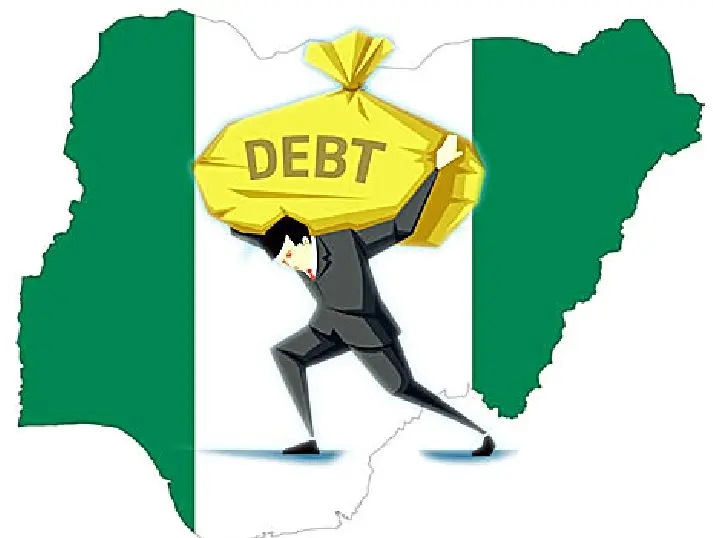

Nigeria’s Public Debt Hits N97.341 Trillion, Fueling Concerns Over Debt Sustainability

0

Nigeria’s public debt stock as of December 31, 2023, has reached a staggering N97.341 trillion (equivalent to 108.229 billion dollars), as revealed by data released by the Debt Management Office (DMO) in Abuja on Friday.

The DMO disclosed that this amount encompasses both domestic and external debt stocks of the federal government, the 36 state governments, and the Federal Capital Territory (FCT). Notably, there has been a significant increase of N9.43 trillion compared to the figures reported in the third quarter of 2023.

Explaining the surge, the DMO attributed it primarily to fresh domestic borrowing by the federal government aimed at financing the deficit in the 2024 budget, coupled with disbursements from multilateral and bilateral lenders.

“Total domestic debt stood at N59.12 trillion, representing 61 percent of the total public debt stock, while external debt amounted to N38.22 trillion, constituting the remaining 39 percent,” stated the DMO.

Furthermore, the DMO highlighted that Nigeria’s external debt composition is skewed towards loans from multilateral and bilateral sources, aligning with the country’s debt management strategy. Multilateral loans accounted for 49.77 percent, and bilateral loans constituted 16.02 percent of the external debt stock.

“This equates to a total of 63.79 percent, primarily concessional and semi-concessional loans. While the DMO continues to implement best practices in public debt management, the recent and ongoing revenue enhancement efforts by the authorities will bolster debt sustainability,” The DMO said.

The rising debt profile is spurred by certain states’ disproportionately high levels of public debt. Lagos, Delta, and Ogun states stand out with the highest debt amounts, while Ebonyi, Kebbi, and Jigawa recorded the lowest debt stock.

With the public debt stock at N97.341 trillion, the individual debt burden borne by Nigerians is estimated at a debt stock per capita of N446,000. This is in consideration of Nigeria’s estimated population of 218 million people, according to World Bank Open Data.

Concerns have continued to grow about Nigeria’s rising debt portfolio, especially as it significantly gulps the nation’s revenue generation. The federal government said it plans to allocate a substantial N8.25 trillion for debt servicing in 2024. This amounts to approximately 45 percent of the projected revenue and 29 percent of the anticipated expenditure for the fiscal year, fuelling concerns over the sustainability of Nigeria’s debt trajectory.

The potential impacts of such high public debt on Nigeria’s economy are manifold; with economists warning that it can exert upward pressure on interest rates, crowd out private sector investment, and constrain government expenditure on critical sectors such as healthcare, education, and infrastructure. Furthermore, they note that excessive debt servicing obligations divert resources away from productive investments, hindering economic growth and development.

Against this backdrop, stakeholders are calling for prudent fiscal management and strategies to enhance revenue generation to mitigate the risk of debt distress. They note the urgent need for prudent fiscal management, enhanced revenue generation, and effective debt management strategies to mitigate the risks of debt distress and safeguard Nigeria’s economic future.

Many warn that failure to address these challenges could exacerbate vulnerabilities, undermine macroeconomic stability, and impede efforts to achieve sustainable development goals.

Peter Schiff expressed concerns over Michael Saylor’s approach to Bitcoin investment

0

In a recent discourse on financial strategies, economist Peter Schiff expressed concerns over Michael Saylor’s approach to Bitcoin investment. Schiff, known for his critical views on cryptocurrency, argued that Saylor’s aggressive accumulation of Bitcoin could be fraught with high risk and might lead to adverse outcomes for his company. Schiff’s skepticism stems from the volatile nature of digital currencies and the potential for significant financial loss.

Saylor’s aggressive accumulation of Bitcoin could be fraught with high risk due to several factors. Firstly, the volatile nature of cryptocurrency markets means that the value of Bitcoin can fluctuate wildly, which could lead to significant financial losses. Additionally, regulatory uncertainties surrounding cryptocurrencies could pose legal and operational risks.

Furthermore, the concentration of a large portion of assets in Bitcoin may not align with traditional investment diversification principles, potentially increasing financial vulnerability. It’s crucial for investors to conduct thorough research and consider risk management strategies when dealing with cryptocurrencies.

Bitcoin, the pioneering cryptocurrency, is known for its high volatility. This characteristic can cause the value of Bitcoin to change dramatically in a very short period of time. Such unpredictability can significantly impact investors, potentially leading to substantial financial losses. It is crucial for individuals considering investing in Bitcoin to be aware of this risk and to have a strategy in place to mitigate potential losses.

Bitcoin’s volatility is primarily due to its relatively small market size, which means that it doesn’t take significant amounts of money to move the market price up or down. This is compounded by the fact that the cryptocurrency market is still very young and does not have the stability that comes with a mature market. Other factors contributing to Bitcoin’s volatility include varying liquidity, differing perceptions of its intrinsic value, market sentiment, and news of significant events such as regulatory updates or technological breakthroughs.

Market sentiment plays a significant role in the volatility of Bitcoin. It refers to the overall attitude of investors towards a particular market or asset. In the case of Bitcoin, positive news or developments can lead to a surge in buying activity, driving up prices rapidly. Conversely, negative news can cause panic selling, leading to a sharp decline in prices. Since the cryptocurrency market is highly speculative, it is particularly sensitive to changes in sentiment, which can be influenced by a wide range of factors including media coverage, investor behavior, and broader economic events.

Examples of positive news for Bitcoin that can affect market sentiment include announcements of large-scale institutional investments, countries adopting Bitcoin as legal tender, technological advancements in blockchain, and successful integration of Bitcoin into payment systems of major retailers. Additionally, favorable regulatory developments or endorsements from influential figures can also lead to increased investor confidence and a rise in Bitcoin’s value.

When Bitcoin is adopted as legal tender, it means that it is recognized by a country’s law as a valid form of payment for goods and services. It becomes an official currency alongside or instead of the traditional currency. This allows residents to use Bitcoin for everyday transactions such as buying groceries, paying bills, and taxes. The adoption also typically requires businesses to accept Bitcoin as payment, which can further integrate it into the economy and potentially stabilize its value over time.

S&P 500 Giants Lead Charge

0

The financial landscape is witnessing a significant upswing, buoyed by a dovish Federal Reserve and a burgeoning AI sector that continues to exceed expectations. This potent combination has been a driving force behind the sustained rally in the stock market, capturing the attention of investors and analysts alike.

As the market navigates through tumultuous economic waters, a handful of S&P 500 giants are charting a course towards growth, standing out as beacons of resilience. These industry leaders are not just surviving; they’re thriving, edging ever closer to pivotal buy points that signal strength and potential for long-term investment.

Leading the pack, we see a diverse array of sectors represented, from tech titans harnessing innovation to consumer staples providing essential goods. Each company showcases robust fundamentals and strategic market positioning, making them attractive to investors looking for stability in uncertain times.

These sectors include technology, where innovation is the currency of growth; consumer staples, providing indispensable goods that anchor consumer demand; healthcare, delivering essential services and pioneering advancements; financials, underpinning economic transactions; and industrials, driving infrastructure and growth.

These industry behemoths are not merely weathering market fluctuations; they are actively leveraging their sector-specific advantages to edge closer to critical buy points. This strategic positioning underscores their resilience and potential as investment prospects.

Investors are keenly observing these stocks as they approach their buy points, recognizing the unique blend of sector strength and favorable market indicators. The alignment of robust earnings with positive technical analysis paints a promising picture for those ready to invest.

The representation of these diverse sectors within the S&P 500 giants offers investors a spectrum of opportunities. As these leading stocks near buy points, it’s an invitation for investors to engage with the market’s potential, backed by the solidity of sector leaders.

In the current financial climate, marked by a dovish Federal Reserve and an AI-driven market surge, investors are keenly observing stocks that are approaching their buy points. While specific names of the three stocks nearing these pivotal positions have been mentioned in various financial news outlets, it is crucial for investors to conduct thorough research or consult financial advisors to identify these opportunities accurately.

The stock market’s momentum, fueled by strategic economic policies and technological growth, presents a dynamic landscape where timely and informed decisions are paramount. As such, identifying the right stocks near buy points requires a deep dive into market analysis and trends.

As these stocks near their buy points, savvy investors are taking notice. The convergence of favorable technical indicators with solid earnings reports creates a compelling narrative for potential growth. It’s not just about riding the wave; it’s about identifying the right moment to dive in.

For those poised to capitalize on these opportunities, the rewards could be significant. These S&P 500 giants offer a blend of security and upside that is hard to find in today’s volatile market landscape. As they approach their buy points, the question remains: who will take the leap?

Food Prices Surge Across Nigeria: NBS Notes Alarming Increases

0

The National Bureau of Statistics (NBS) has sounded the alarm on the escalating prices of essential food items across Nigeria. According to the NBS’s Selected Food Prices Watch report for February 2024, released in Abuja on Saturday, the nation is grappling with a significant surge in the cost of basic food commodities.

This surge paints a grim picture of economic strain for households already grappling with high inflation and rising living costs.

The report unveils a concerning trend, indicating substantial year-on-year and month-on-month increases in the prices of various food staples, including beef, rice, beans, onion, white garri, yam, and bread. The statistics presented by the NBS shed light on the severity of the situation, with percentages that underscore the magnitude of the price hikes.

The average price of boneless beef has seen a staggering increase of 49.41 percent from February 2023 to February 2024, reaching a new high of N3,654.56 per kilogram. On a month-to-month basis, this essential protein source surged by 10.22 percent in February alone, intensifying the burden on consumers already grappling with financial strain.

“On a month-on-month basis, 1kg of boneless beef increased by 10.22 percent in February from the N3,315.78 recorded in January 2024,’’ the report said.

Similarly, the cost of local rice has skyrocketed by 134.81 percent year-on-year, with a notable month-on-month increase of 19.69 percent. This surge has propelled the price of 1kg of local rice to N1,222.97 in February 2024, posing significant challenges to households reliant on this staple for sustenance.

“On a month-on-month basis, 1kg of local rice increased by 19.69 per cent from the N1,021.79 recorded in January 2024,” the report said.

Brown beans have not been spared from the inflationary onslaught, experiencing a staggering 98.25 percent year-on-year increase and a 20.62 percent month-on-month surge. With the price soaring to N1,177.93 per kilogram, consumers are forced to contend with the harsh realities of diminishing purchasing power.

The report also highlights the exponential rise in the prices of onion bulbs, white garri, yam tuber, and sliced bread, further exacerbating the financial strain on Nigerian households.

According to the NBS, the average price of 1kg of onion bulb rose by 103.44 percent on a year-on-year basis from N450.07 in February 2023 to 915.61 in February 2024. In addition, the average price of 1kg of yam tuber rose by 131.33 percent on a year-on-year basis from N436.41 recorded in February 2023 to N1009.56 in February 2024.

“On a month-on-month basis, 1kg of white garri increased by 20.44 per cent from N600.69 recorded in January 2024 to N723.45 in February 2024,” it said.

These escalating prices paint a dire picture of food insecurity and economic instability, raising concerns about the government’s ability to address the root causes of inflation and mitigate its adverse effects on the populace.

The state-wise analysis provided by the NBS notes the widespread nature of the food price crisis, with disparities evident across different regions of the country. From Abia to Kogi, Niger to Borno, and Nasarawa to Sokoto, each state grapples with its unique set of challenges, further complicating efforts to alleviate the burden on consumers.

The regional breakdown reveals stark variations in food prices, with the South-East emerging as one of the hardest-hit regions, particularly concerning the cost of boneless beef. Conversely, the North-West records relatively lower prices for essential commodities, offering some respite amidst the prevailing economic turmoil.

The NBS report is believed once again to serve as a clarion call for urgent intervention to address the underlying factors driving food inflation in Nigeria. Soaring prices underlines the urgent need for concerted efforts by the government, policymakers, and stakeholders to implement sustainable solutions that safeguard the welfare of the populace and ensure access to affordable and nutritious food for all Nigerians.

Civil society organizations are urging the federal government to prioritize agricultural investment as a strategic imperative for mitigating food insecurity and promoting economic resilience.

With the stakes higher than ever, Nigeria stands at a crossroads, where decisive action is imperative to steer the nation away from the brink of a full-blown food crisis.