DD
MM
YYYY

PAGES

DD
MM
YYYY

spot_img

PAGES

Home Blog Page 354

The Trust Advantage: How Unified Platforms Strengthen Transparency

0

Trust is the cornerstone of every thriving business partnership. Absent trust, collaboration deteriorates, clients are hesitant, and your team is disengaged from the organization’s intended outcome. Trust-building cannot be built on established promises, rather it requires visibility, consistency, and openness in the work being done. However, in many organizations, disconnected tools facilitate trust-erosion. Data is scattered about many different apps, sign-offs become lost in emails, and employees function in silos. Rather than nurturing trust, disconnectedness creates distrust.

For this reason, modern project management tools are changing the game. By consolidating communication, planning and decision-making, they deliver clarity and accountability at work. When employees can see the work and values connected to the strategy, and clients receive reliability in the transactions, that’s trust something that is no longer abstract, but tangible. Lark is one example of a platform that is designed for transparency; the connectedness of the systems gives the organization a trust advantage that is critical for growth.

Lark Base: Clarity for collective work
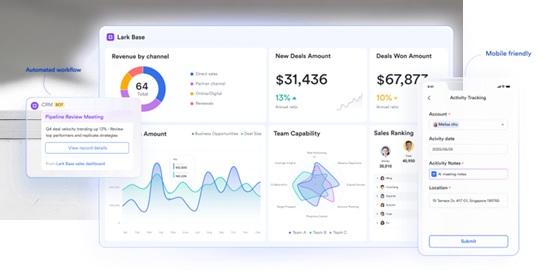
Lark Base


Transparency begins with visibility. When teams track projects in separate spreadsheets and tools, leaders often struggle to see progress clearly. Employees are left guessing about priorities, and accountability becomes blurred. Lark Base addresses this by creating a single hub where projects, data, and responsibilities are visible to all.

Taking sales teams for an example: With the capabilities of tracking, syncing, automating, and analysing, Lark Base can help the team to build up a CRM app to manage customer relationships. Because it all lives in one system, departments no longer compete with conflicting versions of the truth. Leaders see real-time updates, and employees know their contributions are recognized and aligned with broader goals. This visibility fosters trust internally, as individuals no longer feel their work is hidden or undervalued, and externally, as clients see consistent progress reflected in shared updates.

Lark Docs: Transparency through collaboration
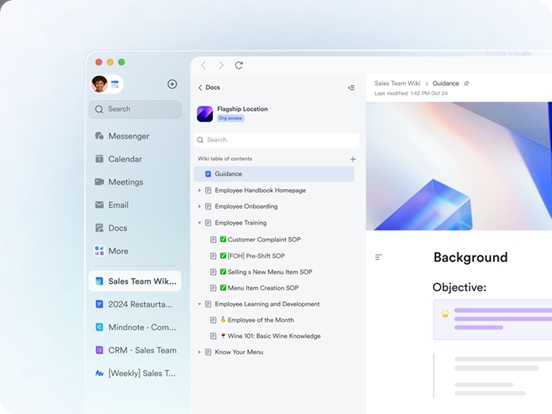
Lark Docs

Documents can often demonstrate how much value an organization assigns to transparency. When drafts or reports are circulated without transparency and real feedback is lodged in an inbox, collaboration feels closed off and fragmented. Employees may feel like they are outside the process, and clients may not have confidence in a process that is so opaque. Lark Docs solves this shared thinking by promoting what are called living documents, where collaboration occurs openly in real time.

With Docs, teams can co-edit reports, strategies, or plans together and avoid the inefficiencies of drafts. Feedback lives in comment form, visible to everyone involved, so no view is “dropped.” If a product launch plan continues to evolve or change, every stakeholder can see how the new plan was developed and what decisions led to it. Docs can also link to Base projects or Calendar events, preventing ambiguity because information drives execution. Not only is this shareable format and transparency a better way to work together, but it creates a better situation for all employees and clients, who feel they are part of the process.

Lark Calendar: Making commitments visible
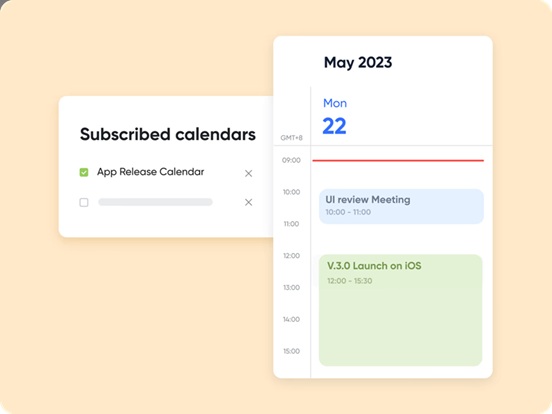
Lark Calendar

Trust is built not only on words but on commitments kept. Yet in many organizations, deadlines are unclear or schedules live in isolated systems, making it easy for commitments to slip. Lark Calendar makes time management transparent by embedding deadlines and events directly into workflows.

When a milestone is created in Base, it appears automatically in Calendar, visible to everyone responsible. Employees no longer wonder whether deadlines are real or tentative, they see them clearly alongside their other priorities. For global teams, automatic time zone adjustments ensure no one is left out of the loop due to scheduling errors. By keeping commitments visible and reliable, Calendar builds trust within teams and reassures clients that promises will be met on time.

Lark Approval: Confidence in decision-making
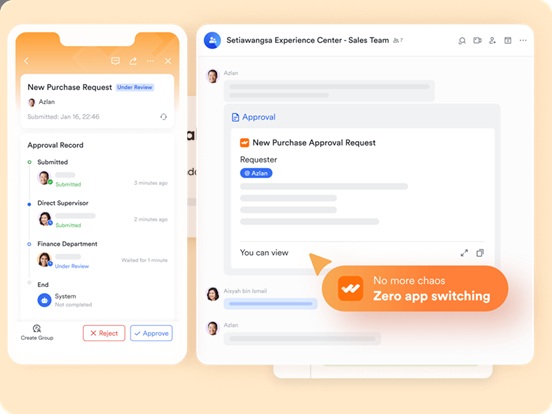
Lark Approval

Unclear decisions can erode trust faster than anything. When the approval process slows down, or if it seems tied to whims, employees get frustrated and clients question the reliability of the organization. Lark Approval creates a more trustworthy environment by providing a more transparent method of decision-making. Instead of requests fading into oblivion inside email chains, requests are now being made within a contextual workflow, the process is visible, and employees can follow the progress of their requests without feeling the need to nag for an update.

The same goes for managers who will know where approvals are flowing to the right people. Because Approval works as part of an automated workflow, escalations and reminders progress automatically to ensure no approval seems like forever, and the decisions are clear. Over time, this builds trust across the organization, as the consistency of outcomes both internally and externally builds confidence that decisions are made fairly and predictably.

Lark Wiki: Access to knowledge without barriers
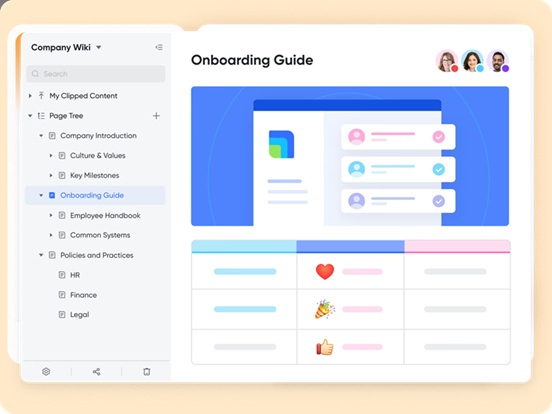
Lark Wiki

When knowledge is stored in personal files or behind conversational doors, trust diminishes. Employees who cannot access necessary information can feel left out, while newcomers struggle to build knowledge of processes expediently. Lark Wiki creates transparency by establishing a central place for organizational knowledge to reside that is always accessible.

Policies, playbooks, or best practices exist in Wiki, and employees will see a current version in real time. Teams and departments can share learnings and best practices across organizational lines, and onboarding becomes easier as new employees can easily find reliable materials from Day 1. Instead of knowledge being hoarded, it becomes collectively owned. This type of transparency creates trust, so employees can feel confident they can find the needed information without obstruction.

Lark Messenger: Trust in everyday communication
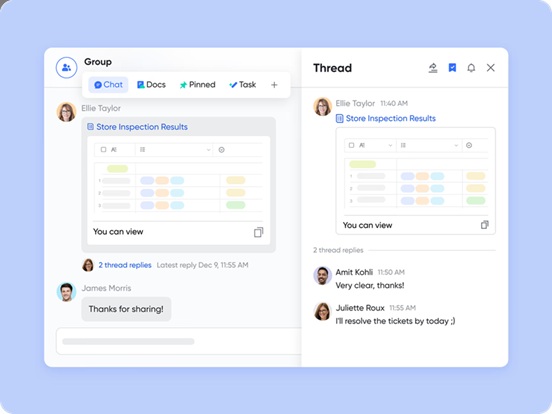
Lark Messenger

Trust is tested every day in communication. Quick bits of information quickly disappear in chat threads, and important decisions and discussions get lost in silos of messaging applications. Lark Messenger solves this problem by linking communication directly to workflow, so discussions are attached to the activity.

Teams can have conversations about projects and effortlessly convert tidbits of communication into tasks or connect the information with Base records. The translation features enable global teams to partner without misinterpretation, while file-sharing keeps all of the context together. The conversations do not just fade away into white noise; they now become part of the transparent workflow of the organization. This transparency establishes trust because employees see communication tied to outcomes, and clients experience responsiveness without confusion.

Conclusion

You cannot build trust based on a strong intention alone; it requires systems that make work transparent, consistent, and visible. Work that happens in fragmented tools creates opacity. Integrated systems that work on a single, connected platform will show the connection between your strategy, actions, and outcomes. Lark shows us how connected workflows provide that trust advantage that businesses need today.

Base will bring clarity to shared projects. Docs creates an environment for collaborative open work. Calendar shows commitment over time. Approval creates transparency in every decision. Wiki retains knowledge and makes it accessible. Messenger connects conversations to outcomes. Trust turns from an aspiration into practice.

In the long term, the advantage is clear. When the employee feels trusted and empowered, their engagement increases. When the client sees reliability and openness, their relationship continues to deepen. With connected platforms, transparency will no longer be an afterthought; it will be the foundation of positive, strong, enduring success for your business.

Perp TRADER Profits $190M From Hyperliquid As Market Plummeted

0

On October 11, 2025, the cryptocurrency market experienced one of its most severe flash crashes in history, triggered by U.S. President Donald Trump’s unexpected announcement of 100% tariffs on all Chinese imports effective November 1.

Bitcoin (BTC) plummeted from around $125,000 to as low as $104,000—a 17% drop—in under three hours, while Ethereum (ETH) fell 18% to $3,574, and many altcoins shed 60-90% of their value.

Over $1 trillion in market capitalization evaporated, and more than 1.6 million traders faced liquidations totaling $30 billion, the largest such event on record. This chaos highlighted vulnerabilities in both centralized and decentralized platforms, but two stories dominated: a mysterious Bitcoin whale’s massive profits and an outage on the emerging perpetuals DEX Lighter.

$200M Profit from Perfectly Timed Shorts Blockchain analytics firms like Lookonchain and on-chain sleuths quickly spotlighted a Satoshi-era (2011) Bitcoin whale who appeared to “front-run” the crash with uncanny precision. This trader, identified by wallet addresses, opened over $1.1 billion in short positions on BTC and ETH across platforms like Hyperliquid just days before the announcement.

Three days prior on October 8, the whale initiated shorts worth hundreds of millions, betting on a downturn amid rising U.S.-China trade tensions.

Exactly 30 minutes before Trump’s tariff speech, the whale doubled their exposure, adding another nine-figure short on BTC and ETH. Linked wallets mirrored these moves, fueling speculation of insider knowledge or coordinated trading.

As the market tanked, the whale closed 90% of their BTC short and fully exited ETH positions at the bottom, locking in realized profits of approximately $190-200 million in under 30 hours. They left a small $92 million BTC short open, with an additional $35.8 million in unrealized gains.

Most activity occurred on Hyperliquid, where the whale’s trades contributed to the liquidation frenzy. Funds were swiftly withdrawn to new accounts, and the trader has since gone neutral—no further shorts.

This wasn’t isolated luck; the timing raised red flags about information asymmetry in crypto. Whales with ties to traditional finance or policy circles may have anticipated the tariff bombshell, turning a geopolitical shock into a windfall.

Lighter Perp DEX: Outage Amid the StormAs the crash unfolded, decentralized exchanges (DEXs) faced unprecedented stress from cascading liquidations and thin order books.

While some platforms like Hyperliquid and Pacifica held up, Lighter—a fast-rising zk-rollup-based perpetuals DEX on Ethereum L2—suffered a significant outage. Lighter, backed by a16z Crypto and known for its zero-fee model and 10,000 orders-per-second speed, was in private beta with $700M TVL and $5.75B daily volume pre-crash.

But the event exposed scaling limits. Withdrawals began glitching hours before the tariff announcement, with charts freezing shortly after. During the peak cascade BTC dipping to $104K, Lighter went fully offline for about 1 hour at record throughput levels.

Trading halted, preventing closes or new orders, and recovery lagged behind competitors. High leverage up to 200x amplified liquidations, overwhelming Lighter’s central limit order book (CLOB) and zk-proof verification.

Unlike centralized exchanges (CEXs) like Binance, which could throttle APIs, Lighter’s on-chain settlement left no “off-switch,” turning a $400M liquidity pool into a vulnerability during the black swan event.

Users reported inability to exit positions, exacerbating losses. This echoed past DEX issues like the Hyperliquid’s July outage but hit Lighter harder due to its youth—launched in beta early 2025, with spot trading eyed for late October.

The outage wasn’t Lighter’s first rodeo—earlier ties to Hyperliquid’s API issues hinted at dependencies—but it underscored a broader. Even “decentralized” platforms can falter under extreme volatility. Perp DEX trading volume had hit $1T monthly in September 2025, but events like this test infrastructure beyond incentives.

This crash wasn’t just a tariff tantrum; it was a stress test for crypto’s maturity. Whales like this one thrive on opacity, extracting value while retail bleeds—$30B in liquidations vs. one entity’s $200M haul.

For DEXs, Lighter’s stumble highlights the need for hybrid safeguards without sacrificing trustlessness. As markets recover BTC at ~$111K as of October 12, expect regulatory scrutiny on insider trading and calls for better DEX resilience.

If history rhymes, this could mark the cycle’s “purge” phase, weeding out weak hands before the next leg up. Stay vigilant—crypto’s playground favors the informed, not the hopeful.

Rug Radio Transitions to Myriad Markets Sunsetting $RUG and Genesis NFTs

0

Rug Radio, a decentralized media platform known for its Web3 podcast ecosystem and community-driven content, has officially announced the sunset of its $RUG utility token and Genesis NFT collection.

This move integrates the project into the MyriadMarkets ecosystem, a Solana-based prediction markets platform emphasizing no-KYC betting, fast settlements, and community rewards. The transition rewards early Rug Radio supporters by converting their holdings into allocations of the upcoming $MYR token.

A comprehensive snapshot was taken on October 7, 2025, capturing all Genesis NFT ownership and $RUG token balances—whether claimed, unclaimed, or pending earnings. This ensures no value is lost for holders.

Support for $RUG token production, claims, and Genesis NFT utilities like daily $RUG yields of 5-11 tokens per NFT ends immediately. The Genesis NFTs will no longer generate rewards within the Rug Radio ecosystem.

Snapshot data will convert into $MYR community allocations at Myriad’s Token Generation Event (TGE), expected soon. Early estimates suggest Genesis NFT holders could receive around 26% of total $MYR supply as rewards, though exact ratios are pending confirmation.

$RUG and $RDAO governance token balances will also factor into allocations. Rug Radio is pivoting to amplify its community within Myriad’s high-signal prediction markets meta, where betting volumes have already exceeded $10M mostly sub-$50 bets settled in <1 minute.

This aligns with broader Web3 trends toward integrated ecosystems, potentially boosting NFT floor prices amid the shift. Utility token for Rug Radio ecosystem (e.g., DAO access via 1,800 $RUG ? 1 $RDAO swap; earned via NFTs, listening bounties). Contract.

he announcement has sparked bullish sentiment among holders, with posts highlighting it as a “big move” for long-term value in prediction markets. One holder noted their Genesis NFT appreciated ~$245 in a week, attributing it to the Myriad integration.

Speculation on exact $MYR allocations per NFT is rampant, with calls for predictions on platforms like Xeet.ai. This evolution positions Rug Radio’s community in a “much bigger” narrative, blending media, DAOs, and on-chain betting.

Myriad Markets is a decentralized prediction market platform built on Solana, emphasizing no-KYC access, fast settlements often under 1 minute for small bets, and integration with social media and content ecosystems like Decrypt and Rug Radio.

It allows users to speculate on real-world outcomes—ranging from crypto prices and elections to sports events and cultural happenings—by trading “shares” in binary or multi-outcome markets.

The platform uses a constant function market maker similar to automated market makers in DeFi to dynamically price shares, ensuring liquidity and reflecting crowd-sourced probabilities.

Bets can be placed with USDC for real-money stakes or points for low-risk practice and rewards. The core appeal lies in its simplicity: shares act like probabilistic bets, where the market price signals the community’s consensus on an event’s likelihood.

For instance, a share priced at $0.63 implies a 63% chance of the outcome occurring. This setup aggregates collective intelligence, often outperforming polls or experts in accuracy.

Points vs. USDC Markets

Free-to-play with $MYR points earn via predictions, quests, leaderboards, or referrals—e.g., share PNL cards for bonuses. Ideal for testing; points convertible to $MYR tokens post-TGE or used for rewards.

Real-money bets with stablecoin. Higher stakes, direct USD payouts. Promotions like zero-fee October drops encourage entry. Bet via X extension; share referral links for USDC kickbacks on referred trades.

Earn $MYR points for activity (e.g., top leaderboard wins NFTs like Lil Pudgy). Ties into Rug Radio migration for airdrops. Solana enables sub-second trades; handled 415K users in 30 days via thirdweb infra, with $10M+ volume mostly micro-bets.

Beyond the Finish Line: Sports as a Catalyst for a Nation’s Growth

0

When the world tuned in to watch cyclists snake through Rwanda’s hilly roads — welcome to the “Land of a Thousand Hills” — during the 2025 UCI Road World Championships, they weren’t just witnessing athletic grit — they were seeing the culmination of a national vision.

Rwanda didn’t stumble into this spotlight by accident. Over the past decade, the country has methodically invested in sports diplomacyinfrastructure, and strategic branding — all under a larger ambition: to make Rwanda not only a top-tier tourist destination but a continental hub for global sports and events.

How “Visit Rwanda” Became a Global Brand

If you’ve watched an Arsenal, PSG, or Bayern Munich match lately, you’ve probably noticed “Visit Rwanda” emblazoned on the jerseys and sidelines. That wasn’t just clever advertising — it’s a symbol of Rwanda’s global outreach strategy.

Through sports partnerships and sponsorships, Rwanda has placed itself firmly on the international map. The “Visit Rwanda” initiative isn’t about traditional tourism alone — it’s about storytelling through sport. Every match, every mention, every image helps reshape global perception, transforming Rwanda’s identity from a post-conflict recovery nation to a place of aspiration, safety, and opportunity.

This sports-marketing synergy is working. Football fans who may have never heard of Kigali now associate Rwanda with ambition, modernity, and resilience.

A Model of What’s Possible in Africa

Rwanda’s sports renaissance is setting a template for other African nations — how to merge sports, tourism, and nation branding into a unified growth engine — captured in the 4-pointers below — infrastructure development, youth empowerment, economic impact and soft power diplomacy.

  • Infrastructure Development: The Kigali Arena, modern roads, upgraded stadiums, and world-class event logistics show how sports investment spills over into broader national benefits.
  • Youth Empowerment: Local initiatives are nurturing young athletes, coaches, and sports entrepreneurs. Cycling academies and football training camps are creating opportunities for the next generation.
  • Economic Impact: Every major event — from basketball tournaments to cycling championships — generates jobs, boosts local businesses, and expands Rwanda’s service economy.
  • Soft Power Diplomacy: By attracting global events and fostering partnerships with international organizations, Rwanda is rewriting its geopolitical relevance through sports.

The Symbolism Behind the Pedals

The 2025 UCI Road World Championships weren’t just a competition — they were a metaphor for the nation itself. The cyclists climbing Rwanda’s steep hills mirrored the country’s own journey — uphill, relentless, and driven by purpose.

In the words of a Rwandan rider featured by Cycling Weekly“People will never forget what I’ve done — because it shows that Rwanda can rise, and we can win.” That sentiment echoes far beyond the race — it’s the pulse of a nation in motion.

Looking Ahead: The Road to Legacy

Rwanda’s challenge now is to turn moments into momentum. The infrastructure, visibility, and goodwill built through these global sporting ventures must evolve into a lasting ecosystem — nurturing athletes, drawing investors, and deepening tourism appeal.

Already, Rwanda is being scouted for future African and global sports events — from marathons to triathlons and international youth games. If it continues this trajectory, Kigali could soon stand shoulder-to-shoulder with global sports cities like Doha, Barcelona, and/or Cape Town — each known for blending tourism and sport into economic and cultural identity.

Final Thoughts

Rwanda’s story today is one of transformation — from recovery to resilience, from tourism to sports, from being visited to being celebrated. By boldly merging sports, tourism, and national pride, Rwanda has done more than host a race — it has redefined what African nations can achieve when vision meets execution. So whether you’re a traveller, a sports enthusiast, or an investor, keep your eyes on Rwanda — the small country making big moves on the global stage.

Top 3 Crypto Coins to Buy Now for the Omni-Banking Supertrend

0

One of the more overlooked and underappreciated trends in crypto is the omni-bank supertrend. This trend is at the intersection of fintech and crypto and is often dubbed the “omni-banking” revolution.

Omni-banking refers to the convergence of traditional banking services with cryptocurrency. Consider it a super app where users can send, receive, hold, transfer, save, invest, and spend value in any form on one platform. In an omni-bank ecosystem, dollars, euros, yen, cryptos, and stablecoins are all interchangeable money in a single account.

The omni-bank investment thesis has taken a back seat among the investment community, who are focused on DeFi, NFTs, RWAs, and other hot topics. However, consumer demand for a product that offers the speed and freedom of crypto with the familiarity of traditional finance is rapidly growing and could show a snowball effect over the coming years.

1. Inside Digitap’s Omni-Bank: Wallets, FX, and Visa Access

Digitap ($TAP) is one of the projects that best represents the omni-bank supertrend. Marketed as the world’s first crypto omni-bank, Digitap created a platform where all forms of money coexist and interact with each other.

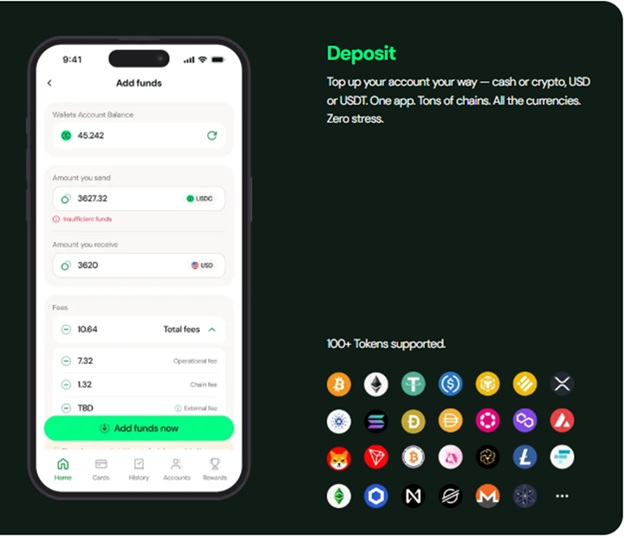
Source: Digitap

Users can store fiat currency and crypto in a single account, exchange between them instantly, and spend their balance via a Visa-branded Digitap card. This means that users can get paid in a crypto stablecoin, invest part of the proceeds in a crypto like Bitcoin (BTC) or Ethereum (ETH), and use the remaining balance to pay for everyday items via the Visa card.

Digitap’s goal is to make crypto-enabled banking as easy as traditional online banking, which is key to attracting mainstream users. Digitap is early in its journey and is currently undergoing the second round of its presale event.

Currently priced at $0.0159 per token, early investors who bought in the first round have already made a 27% paper profit, and those buying today will make a 22% profit when the price jumps to $0.0194 in the next round.

Still, the current price offers investors a ground-floor opportunity to invest in one of the few crypto presales with real utility. Digitap needs to capture just a fraction of a percent of the trillions of dollars in global payments to succeed.

2. Stellar’s Rails Power Remittances, but Fees Remain Sticky

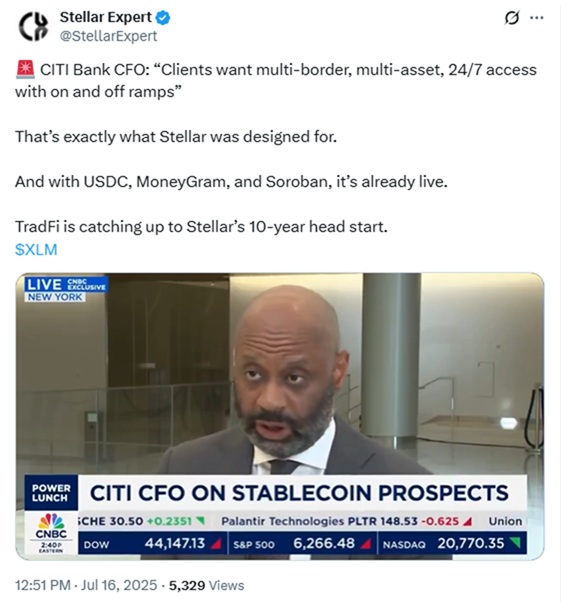
Stellar (XLM) is a crypto veteran project built for financial integration. It is an open-source blockchain designed for fast, low-cost payments and cross-border transactions. Stellar’s network has been selected by traditional financial institutions like MoneyGram to assist in global on- and off-ramps. Stellar is testing upgrades to handle up to 5,000 transactions per second to support enterprise-scale workloads.

Stellar’s proven technology and the 12,000% lifetime gain in its token validate the omni-banking investment thesis. Users can turn cash into digital dollars (Circle’s USDC stablecoin) and vice versa through the MoneyGram mobile app, essentially blending traditional remittances with crypto.

Source: @StellarExpert

The problem with Stellar’s business model is that it has no say in how a firm like MoneyGram sets fees. Traditional remittance fees cost on average 6.2% of the transfer’s total value. Coupled with high foreign exchange fees for global transfers, consumers can certainly move their money quicker but at too high a cost.

To be clear, this is no fault of Stellar. However, platforms like Digitap, for example, can slash the remittance fee by up to sixfold to a potentially industry-leading sub-1% rate.

3. Tron’s Speed Matters, But Still Falls Short

Tron (TRX) isn’t a pure play “bank” or provider of banking services. However, it has become an industry leader for something very relevant: stablecoin transactions. In the context of omni-banking, stablecoins are vital, as they are digital dollars that people actually use for day-to-day value transfer.

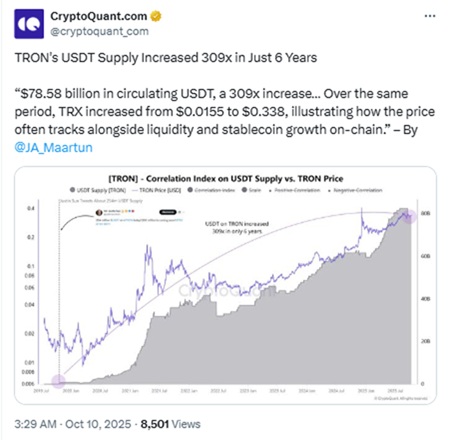
Tron has evolved to become the preferred rail for moving stablecoins worldwide. Over half of Tether’s USDT supply (the largest dollar stablecoin) is used on Tron. Tron also handles more than $23 billion in USDT transactions on a daily basis.

Tron’s network is built for speed and low cost. Transaction fees on Tron come in at a fraction of a cent, while throughput is high at more than 1,000 TPS. This means sending USDT on Tron is near-instant and almost free.

Tron has positioned itself as a major player in the backbone of crypto transactions. But one thing it lacks is the advanced features of a new DeFi app that can handle fiat transactions or be used to pay for everyday items.

Source: @cryptoquant_com

Omni-Banking Needs an All-in-One: Where $TAP Fits Today

The concept of omni-banking in crypto refers to breaking down the wall between crypto assets and everyday money. While Stellar and Tron deserve praise for their contribution to making it easier for people to send and receive money, they fall short of an all-in-one crypto and fiat app.

Digitap checks all the right boxes and remains mostly undiscovered among investors. Digitap is certainly making the case to be included in the list of best crypto presales for 2025.

Digitap is Live NOW. Learn more about their project here:

Presale https://presale.digitap.app

Website: https://digitap.app

Social: https://linktr.ee/digitap.app