DD
MM
YYYY

PAGES

DD
MM
YYYY

spot_img

PAGES

Home Blog Page 355

FLOKI Roars, Bonk Explodes, But It’s BullZilla That’s Becoming the Top Meme Coin to Buy Right Now

0

FLOKI and Bonk present attractive opportunities. BullZilla ($BZIL) is quickly climbing the ranks as one of the top meme coins to buy right now. With its presale phase currently ongoing and over $880k raised, BullZilla is attracting attention for its innovative features and its growth potential. What sets BullZilla apart is its unique Roar Burn Mechanism, a deflationary feature that makes the token scarcer and more valuable with every milestone it reaches. As meme coins continue to gain momentum, BullZilla presents an exciting alternative that could deliver high returns for early investors.

FLOKI and Bonk are emerging as two of the top contenders. FLOKI, inspired by Elon Musk’s beloved dog, has captured the hearts of meme lovers and crypto investors alike, showing remarkable growth and community engagement. Trading at $0.00007352, FLOKI’s latest 9.79% price increase within 24 hours only adds to its appeal. On the other hand, Bonk, the community-driven coin, has captured attention with a staggering 14.47% price jump, currently trading at $0.00001557. These coins are part of a new generation of meme tokens that bring fun and excitement to the crypto world, but are they the best options for investors right now?

BullZilla: A New Era in Meme Coin Investments

BullZilla ($BZIL) is not just another meme coin; it is an investment opportunity that comes with a well-thought-out strategy and a clear roadmap. Currently priced at $0.0001524, the BullZilla project has already raised over $880k during its presale, attracting more than 2,900 holders. The growing interest in the token can be attributed to its Roar Burn Mechanism, which reduces the total supply of tokens, making each $BZIL token scarcer and increasing its value. The more BullZilla progresses through its milestones, the more tokens are burned, which naturally leads to higher demand and a potential price surge.

The BullZilla presale offers a unique chance for investors to buy early at a low price before the full-scale launch. With its community-driven approach, BullZilla is set to benefit from a Roar Surge, where the burning of tokens triggers an excitement wave within the community, further enhancing the token’s value. For those looking to secure a position in the next big meme coin, BullZilla stands out for its clear investment strategy and sustainable growth model. Additionally, its investment scenario makes it a top pick for those seeking significant returns as it moves closer to full launch.

How to Buy BullZilla Coins: One of the Top Meme Coin Presales in 2025

Investing in BullZilla is a straightforward process that anyone can follow with ease. To get started, first set up a Web3 wallet such as MetaMask or Trust Wallet. These wallets will allow you to interact with the BullZilla presale site. Next, you’ll need to buy Ethereum (ETH) from an exchange like Binance or Coinbase and transfer it to your wallet. Once your wallet is set up and funded, head over to the official BullZilla presale site.

Connect your wallet to the site, and then swap ETH for $BZIL. Choose the amount of $BZIL you want to purchase, confirm the transaction, and your allocation will be secured immediately. The tokens will be claimable once the presale completes. Given that the current presale price is still below market value, now is the ideal time to invest in BullZilla before the price surges when the project officially launches.

Investment Scenario: $2000 in BullZilla Presale

If you were to invest $2,000 in BullZilla at its current presale price of $0.0001524, here’s what the potential ROI could look like: Number of tokens purchased: 13,142,000 $BZIL

As the BullZilla presale progresses and prices increase, your initial investment could see a significant return once the project is fully launched. Given the growing community and the Roar Burn Mechanism, the scarcity of $BZIL tokens is expected to increase, driving the price upward.
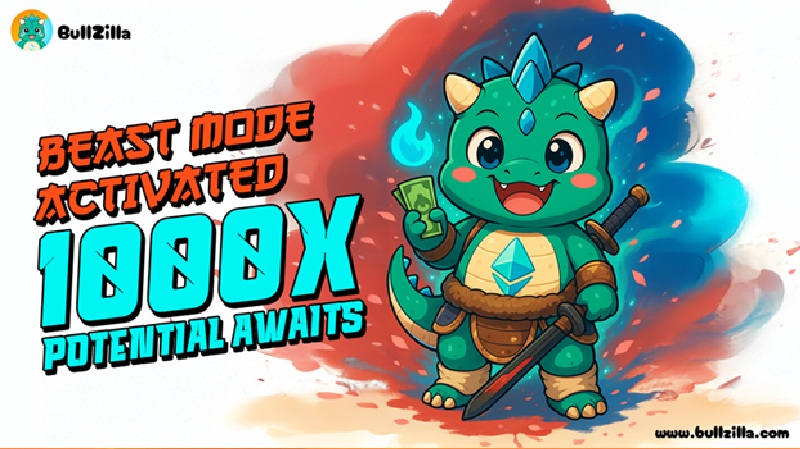
FLOKI: The Viking-Inspired Coin with Massive Growth Potential

FLOKI has been one of the most talked-about meme coins in recent times, especially following its 9.79% increase in just 24 hours. This surge isn’t just a short-term pump; it’s the culmination of strategic community-building and the development of an evolving ecosystem. Currently trading at $0.00007352, FLOKI has gained significant traction in the decentralized finance (DeFi) space, appealing to a wide range of investors. The coin’s growth can be attributed to its Viking-inspired branding, strong community involvement, and an increasing number of use cases within the Floki Inu ecosystem.

One notable aspect that makes FLOKI stand out is its real-world applications. Unlike many other meme coins, FLOKI has been working to establish itself as more than just a fun investment vehicle. With partnerships in NFT projects and DeFi ecosystems, it’s steadily evolving into a versatile asset. Investors are also keeping an eye on its roaring community and viral marketing tactics, which contribute to its growing popularity. For those looking to invest in one of the top meme coins to buy right now, FLOKI presents an interesting option with its strong upward momentum.

Bonk: The Coin That Refuses to Be Ignored

Next on the list is Bonk, a meme coin that has taken the crypto world by surprise. After its meteoric rise of 14.47% in just 24 hours, the Bonk token has attracted significant attention from the broader crypto community. Trading at $0.00001557, Bonk is known for being a community-driven coin with explosive price action. While its growth has been somewhat volatile, its ability to bounce back time and again proves the resilience of its community.

Bonk’s decentralized nature, coupled with a fun and engaging community, makes it an exciting prospect for meme coin lovers. The coin’s popularity surged with social media trends, and it continues to attract attention due to its low price entry point and potential for rapid growth. Investors who are early to recognize the potential of Bonk have witnessed impressive returns. However, as with any meme coin, price volatility remains a key risk factor. Despite these risks, Bonk remains one of the top meme coins to buy right now for those willing to take on some risk for the potential of significant returns.

Conclusion: Find the Top Meme Coin Presales in 2025?

FLOKI and Bonk continue to make waves in the crypto market, and BullZilla emerges as a strong contender in the race. With its innovative features, including the Roar Burn Mechanism, and a presale that has already raised over $880k, BullZilla presents a top meme coin to buy right now for investors looking to capitalize on the growing demand for meme coins. Both FLOKI and Bonk have proven themselves as viable investments with strong community support, but BullZilla offers a unique proposition that sets it apart from the pack.

For those interested in meme coins, now is the time to pay attention to BullZilla ($BZIL). Its presale is already gaining traction, and the Roar Burn Mechanism promises to drive its value higher as the project progresses. By purchasing BullZilla at its presale price, investors are positioning themselves for potentially substantial returns. The cryptocurrency landscape is filled with opportunities, and BullZilla is one to watch for those seeking the top meme coin presales in 2025.

For More Information:

BZIL Official Website

Join BZIL Telegram Channel

Follow BZIL on X  (Formerly Twitter)

Frequently Asked Questions

What makes BullZilla different from other meme coins?

BullZilla incorporates a Roar Burn Mechanism that reduces supply over time, which naturally increases the token’s value.

How can I participate in BullZilla’s presale?

You can participate by setting up a Web3 wallet, buying Ethereum (ETH), and swapping it for $BZIL on the presale portal.

Is BullZilla a good investment?

BullZilla’s ROI potential and scarcity-driven price appreciation make it a promising investment, especially for those getting in early.

How does the Roar Burn Mechanism work?

The Roar Burn Mechanism burns a portion of tokens each time BullZilla reaches a milestone, increasing scarcity and driving up token value.

What is the current presale stage of BullZilla?

BullZilla is currently in Stage 6 (Full Send!), with over $880k raised and 2,900+ token holders.

Glossary

  • Meme Coin: A cryptocurrency inspired by a meme or social trend, often used as a joke or community project.
  • Presale: The period in which tokens are sold at a discount before the official launch.
  • Roar Burn Mechanism: A deflationary mechanism where tokens are burned to reduce supply and increase value.
  • Ethereum (ETH): A popular cryptocurrency used for transactions and smart contracts.
  • Web3 Wallet: A wallet used to interact with decentralized applications on the blockchain.

ALT TEXT

Top meme coins to buy right now, BullZilla presale, BullZilla ($BZIL) crypto presale, BullZilla meme coin presale, ROI potential, FLOKI, Bonk, Roar Burn Mechanism, $BZIL, presale, cryptocurrency investment, presale stage, $BZIL presale, token scarcity, community-driven coin, investment opportunities, decentralized finance (DeFi), Ethereum wallet, Web3 wallet.

Disclaimer

BullZilla ($BZIL) presents an exciting investment opportunity in the meme coin market. With its ongoing presale, the project has already raised over $880k, offering early investors a chance to buy at a discounted price. The presale process is simple: set up a Web3 wallet, purchase Ethereum (ETH), visit the presale site, and swap ETH for $BZIL. BullZilla’s unique Roar Burn Mechanism adds significant value by decreasing token supply, driving scarcity, and increasing demand. As the project progresses, its potential for substantial returns grows, making it one of the top meme coins to buy right now.
Slack Tests AI-Powered Upgrade to Slackbot, Turning It Into a Personalized Digital Assistant

0

Slack is testing a major update that transforms its well-known Slackbot from a basic reminder tool into a full-fledged AI-powered assistant, capable of performing complex, personalized tasks across workplace communications.

The revamped Slackbot, announced by Rob Seaman, Slack’s Chief Product Officer at Salesforce, marks one of the company’s most ambitious AI rollouts to date.

“Slackbot today is fairly rudimentary,” Seaman told The Verge. “But what we’ve done is we’ve actually rebuilt it from the ground up as a personalized AI companion.”

The update is currently in pilot testing within Salesforce, Slack’s parent company, where more than 70,000 employees are already using it. The company plans to make it widely available to all users by the end of the year.

From Simple Reminders to Smart Workflows

Until now, Slackbot has functioned mainly as a tool for delivering reminders, notifications, and simple automated messages. But with the new AI-driven version, Slackbot is becoming a context-aware digital assistant designed to help teams navigate increasingly complex workspaces.

The updated Slackbot can now:

  • Summarize and organize project updates and messages from multiple channels.
  • Create tailored work plans, such as product launch schedules or content campaigns.
  • Search for information using natural language, making it easier to locate files and messages even without specific keywords.
  • Coordinate meetings by integrating directly with Microsoft Outlook and Google Calendar.

In one internal demo, Slack showcased how the AI Slackbot could compile data from various channels to build a product launch plan within Slack’s Canvas feature. It could also help craft a social media campaign using a company’s specific tone and brand language — something that previously required multiple tools or manual input.

Personalized and Privacy-Protected

Slack is positioning the AI Slackbot as a personalized assistant that learns from the user’s workspace context — such as messages, files, and recent activity — but with strict data controls in place.

According to Seaman, all AI features operate through Amazon Web Services’ Virtual Private Cloud (VPC), ensuring that no user data leaves Slack’s firewall and that none of the information is used to train AI models.

“Meaning that no data leaves the firewall, no data is used in the training of the models at all,” Seaman emphasized, addressing one of the major privacy concerns surrounding generative AI in corporate environments.

Slack also clarified that companies can opt out of using the new AI Slackbot if they choose, but individual users within a participating company cannot disable it independently.

How It Works

The upgraded Slackbot will appear as an icon next to the search bar in the Slack interface. Clicking it opens a DM-style panel on the right side of the screen, where users can type natural-language prompts such as:

  • “What are my priorities for today?”
  • “Find the latest updates on the product launch.”
  • “Show me the document that Jay shared in our last meeting.”

The assistant will then draw on the user’s Slack workspace — including conversations, files, and shared resources — to produce contextual results, eliminating the need for time-consuming manual searches.

This update builds on Slack’s growing lineup of AI-enabled productivity tools, which already include thread and channel summarization, auto-generated meeting notes, and real-time translation of company jargon.

“We’ll keep putting those little touches there where they make sense, to save users a click,” Seaman said. The new Slackbot, he added, is meant to blend seamlessly into daily workflows, reducing the friction between users and the information they need.

Existing Slackbot features, such as custom commands and automated messages, will remain intact. The goal, Seaman explained, is to expand capabilities without disrupting familiar workflows.

Rising Competition in Workplace AI

Slack’s move comes as AI assistants are rapidly becoming the new battleground among productivity platforms. Microsoft has begun embedding its Copilot AI across Teams and Office 365, while Google has integrated its Gemini assistant into Workspace apps like Gmail and Docs.

Slack is now betting that employees will prefer a conversational approach to handling everyday tasks,
by transforming Slackbot into an AI assistant that sits natively inside the messaging platform, without toggling between multiple applications.

Some believe the change could also reinforce Salesforce’s broader AI ambitions, as the company seeks to integrate Slack more tightly into its Einstein AI ecosystem.

For now, the pilot remains limited, but Slack says user feedback from Salesforce’s internal rollout has been “very positive.” The company believes the AI Slackbot will significantly reduce information overload — one of the most common pain points in large organizations using Slack.

If successful, the upgrade could redefine how workers interact with corporate information systems, transforming Slack from a chat hub into a dynamic productivity engine.

OpenAI Partners with Broadcom to Build Custom AI Chips, Expanding Its Push to Reduce Reliance on Nvidia

0

Artificial intelligence leader OpenAI has announced a major partnership with Broadcom to design and produce its own computer chips, in a move that underscores the company’s growing ambition to control every layer of the AI supply chain and reduce dependence on Nvidia’s dominant hardware.

The partnership, revealed Monday, will enable OpenAI to develop and deploy up to 10 gigawatts of custom AI accelerators, a massive amount of computing capacity roughly equivalent to the output of ten nuclear reactors. The project aims to power the company’s sprawling AI data centers that support products such as ChatGPT and Sora, and advance OpenAI’s long-term goal of creating superintelligent AI systems.

In a statement, OpenAI said that building its own chips allows it to “embed what it’s learned from developing frontier models and products directly into the hardware, unlocking new levels of capability and intelligence.”

Under the deal, Broadcom will be responsible for deploying racks of custom-built hardware beginning in the second half of 2026, with full rollout expected to be completed by the end of 2029, according to details shared in the announcement.

OpenAI co-founder and CEO Sam Altman described the collaboration as a foundational step toward ensuring the company has the infrastructure it needs to sustain its rapid pace of innovation.

Part of a Wider Infrastructure Strategy

The Broadcom deal follows OpenAI’s six-gigawatt partnership with AMD and a 10-gigawatt deal with Nvidia, both announced earlier this year. Collectively, these agreements represent one of the most aggressive infrastructure buildouts in the AI industry, reflecting OpenAI’s intent to diversify its chip supply and secure guaranteed access to the computing power required to train and deploy massive AI models.

These arrangements became possible only after OpenAI modified its exclusive cloud computing agreement with Microsoft, which had previously limited its flexibility in sourcing compute from other vendors.

The move also places OpenAI alongside major technology firms such as Meta, Google, and Microsoft, all of which are investing heavily in custom AI chips to alleviate dependence on Nvidia’s graphics processing units (GPUs), which have become the gold standard for AI workloads.

Analysts say the push toward in-house chip design is both a strategic and economic response to the global shortage of AI chips, which has constrained supply chains and driven up costs. Though custom silicon projects have not yet threatened Nvidia’s market dominance, they have significantly benefited companies like Broadcom, which designs specialized components for AI systems.

Market Reaction

Investors welcomed the news, sending Broadcom shares up 9% on Monday, rebounding from a market selloff last Friday. Shares of other chipmakers also saw modest gains as optimism returned to semiconductor markets amid easing U.S.-China trade tensions.

Over the weekend, President Donald Trump sought to ease concerns about escalating geopolitical frictions with Beijing, writing on Truth Social that it “will all be fine,” in reference to trade talks and supply chain stability.

The timing of OpenAI’s Broadcom deal reflects broader efforts across the U.S. tech industry to fortify chip manufacturing alliances and secure long-term supply resilience in the face of unpredictable global dynamics.

However, OpenAI’s decision to move into chip design marks a strategic milestone that could reshape the economics of AI development. The company gains the ability to tailor chip architecture to the unique demands of its AI models by vertically integrating its hardware stack, potentially improving performance efficiency while cutting operational costs.

The 10-gigawatt infrastructure target places OpenAI’s ambitions on par with some of the world’s largest cloud operators. Analysts note that such capacity could support next-generation multimodal systems and large-scale simulation environments central to OpenAI’s pursuit of artificial general intelligence (AGI).

While Nvidia remains the undisputed leader in AI computing, the combined effect of OpenAI’s deals with AMD, Nvidia, and now Broadcom signals a new phase of diversification that may, over time, dilute Nvidia’s market control.

As the race for computing power accelerates, AI infrastructure has rapidly become one of the most lucrative segments of the technology industry, with smaller chip design firms and data center specialists also benefiting from the surge in demand.

The partnership with Broadcom, for OpenAI, is not just about building chips; it is about building independence, ensuring that the next generation of AI innovation will not be limited by the availability of hardware.

German Government Sees Slight Popularity Uptick in Latest Polls

0

Recent opinion polling in Germany, conducted in the lead-up to the next federal election expected by March 2029, indicates a modest boost for Chancellor Friedrich Merz’s center-right coalition government.

Formed after the CDU/CSU’s victory in the February 2025 snap election securing 28.6% of the vote and leading a grand coalition with the SPD, the administration has navigated economic stagnation, immigration debates, and rising unemployment.

Current trends show the governing parties—primarily CDU/CSU and SPD—collectively polling at around 45.2% nationally, up from post-election lows but still trailing the surging far-right Alternative for Germany (AfD) at 25.4%.

This minor lift is attributed to Merz’s focus on tax cuts, economic revitalization, and stricter migration controls, which resonate amid public concerns over inflation and border security. Data aggregated from recent polls; AfD’s gains highlight ongoing polarization, while the coalition’s edge provides short-term stability.

Analysts note this uptick could be fleeting, as the AfD continues to erode support from both conservatives and the center-left by capitalizing on anti-immigration sentiment.

AfD Stumbles in Key Mayoral Run-Off, Failing to Claim First Major City Win

In a closely watched local election on October 12, 2025, the far-right AfD fell short in its bid to secure its first mayoral position in a significant German city.

The run-off in Frankfurt an der Oder—a border town in Brandenburg with around 58,000 residents—pitted AfD candidate Wilko Möller against independent Axel Strasser. Preliminary results show Strasser winning decisively with 69.8% of the vote to Möller’s 30.2%, amid a 49.4% turnout.

This outcome blocks what would have been a symbolic breakthrough for the AfD, which has been classified as a “suspected right-wing extremist” organization by German intelligence and faces ongoing surveillance.

The race followed a tight first round on September 21, where Strasser edged Möller 32.4% vs. 30.2%, eliminating candidates from the CDU and SPD. Political observers, including University of Potsdam’s Jan Philipp Thomeczek, had warned that an AfD victory could signal the party’s viability in urban centers beyond its eastern strongholds.

Instead, the loss reinforces the “firewall” strategy by mainstream parties, who refuse coalitions with the AfD despite its national polling surge.This defeat echoes earlier setbacks for AfD mayoral hopefuls, such as losses in North Rhine-Westphalia run-offs in late September 33% in Gelsenkirchen, 28% in Hagen.

However, the party did notch a historic small-town win in July 2025 with Hannes Loth in a rural eastern municipality, underscoring its rural-urban divide in appeal. On X, the result sparked quick reactions, with users sharing Al Jazeera coverage and debating the AfD’s broader momentum.

These developments highlight Germany’s deepening political fault lines: a stabilizing but vulnerable center-right government against an AfD capitalizing on discontent, yet repeatedly rebuffed at executive levels.

The minor boost reflects public approval of Merz’s focus on tax cuts and stricter migration policies, addressing economic stagnation and immigration concerns. However, with unemployment rising and inflation persistent, sustained gains depend on tangible economic results by 2026.

The CDU/CSU (25.1%) and SPD (14.4%) face internal tensions, as the SPD’s declining share (-2.0% since February 2025) pressures the coalition’s unity. Failure to align on contentious issues like migration or budget deficits could erode this uptick.

The AfD’s strong 25.4% polling, closing in on the CDU/CSU, underscores a polarized electorate. The coalition’s modest gains may not withstand AfD’s anti-establishment appeal if economic or social crises intensify, particularly in eastern Germany.

A stabilized German government could bolster the EU’s center-right leadership, especially as Germany pushes for tighter EU migration policies. However, the AfD’s influence may complicate Berlin’s ability to project unity in Brussels.

AfD’s Mayoral Run-Off Loss

The loss reinforces the AfD’s struggle to break through in urban centers, where diverse electorates and mainstream party “firewalls” block its path. This contrasts with its rural successes like Hannes Loth’s 2025 small-town win, highlighting a geographic limit to its executive ambitions.

The decisive victory of independent Axel Strasser, backed by a united anti-AfD front, shows the effectiveness of mainstream parties’ refusal to cooperate with the AfD. This strategy, if maintained, could cap AfD’s local governance gains, even as its national polling surges.

An AfD mayoral win would have been a historic milestone, amplifying its legitimacy and media presence. The defeat tempers its momentum, potentially cooling donor and activist enthusiasm, though its strong showing (30.2%) still alarms opponents.

Despite the loss, the AfD’s ability to reach a run-off in a city like Frankfurt an der Oder signals growing acceptance among some voters, especially in the east. Its national polling strength (25.4%) suggests that future local breakthroughs remain possible, particularly in smaller municipalities or if mainstream parties falter.

The AfD’s rise, coupled with the coalition’s fragile gains, points to a volatile electorate ahead of the 2029 federal election. Smaller parties like The Left (10.8%) and Greens (11.6%) could play kingmaker roles if the coalition weakens further.

The AfD’s anti-immigration rhetoric, while divisive, resonates with a significant minority, risking deeper societal divides. The government’s pivot to stricter migration controls may mitigate this but alienates progressive voters.

The AfD’s strength in eastern Germany like in Brandenburg versus its urban rejections highlights a regional divide that could shape future campaign strategies and resource allocation.

The government’s slight popularity boost offers breathing room but not security, while the AfD’s mayoral loss delays its local ascent without diminishing its broader challenge. Both trends underscore Germany’s delicate political balance, with economic performance and migration debates likely to dictate future shifts.

Salesforce Adds Voice to Agentforce, A New Feature That Lets AI Agents Speak to Customers Naturally

0

Salesforce is stepping deeper into the generative AI race with the introduction of Agentforce Voice, a new feature that lets its AI agents speak to customers in natural-sounding conversations.

The move expands the company’s AI-powered customer service platform beyond text-based chat, allowing businesses to customize tone, pacing, and pronunciation — and even let customers interrupt the agent mid-conversation, much like in real human interactions.

Announced ahead of Salesforce’s annual Dreamforce conference in San Francisco, Agentforce Voice marks the company’s most ambitious step yet to modernize enterprise customer service with AI. The feature integrates with major telephony systems, including Amazon, Five9, Genesys, NICE, and Ericsson’s Vonage — platforms already widely used across corporate call centers.

With this, Salesforce is aiming to position itself at the center of an emerging era of AI-enabled voice interaction that promises to redefine how businesses handle customer engagement.

The development signals how rapidly voice technology has become the next competitive frontier in artificial intelligence. What began as a text-driven revolution with OpenAI’s ChatGPT in late 2022 has evolved into a more immersive experience where machines can hold conversations that sound increasingly human. Both OpenAI and Anthropic have launched spoken versions of their chatbots that can converse fluidly without the flat, robotic tone typical of earlier voice assistants. Now, that same capability is finding its way into the backbone of corporate software — the systems that handle everything from customer inquiries to tech support.

Salesforce launched Agentforce in 2024 as part of its sweeping push to embed generative AI into its suite of customer relationship management (CRM) tools. The platform uses large language models to help companies automate and personalize responses to client requests over chat, email, and now, phone. According to Salesforce, Agentforce has been deployed in more than 12,000 business environments — a notable milestone that demonstrates its appeal, even if adoption has not matched early investor expectations.

Analysts at RBC Capital Markets noted last week that “investor enthusiasm around Agentforce has moderated as adoption has lagged expectations,” maintaining a “hold” rating on Salesforce’s stock. The cautious sentiment reflects broader market unease about how enterprise software firms will adapt as AI becomes more capable — and more autonomous.

Salesforce’s share price has slid about 28% since the start of 2025, a sharp contrast to the Nasdaq Composite, which has gained around 15% over the same period. The decline marks growing investor anxiety that AI could erode the long-term value of traditional software. In its latest earnings report, Salesforce itself warned that “new AI products may disrupt workforce needs and negatively impact demand for our offerings,” an admission that even industry leaders are not immune to the transformative, and potentially destabilizing, power of AI.

Those fears were amplified in September when Anthropic demonstrated that its Claude Sonnet 4.5 model was able to build a working chat application — similar to Salesforce’s Slack — in just 30 hours. The demonstration showcased how AI could potentially automate complex coding tasks and build full-scale software systems at a fraction of the time and cost, raising questions about the future relevance of traditional enterprise software development.

Yet Salesforce CEO Marc Benioff has sought to project calm. In a recent interview with CNBC’s Morgan Brennan, he rejected the notion that AI poses an existential threat to the business software industry.

“When we get into this kind of zero-sum game — that all this is going to get wiped out or change overnight — you’re not dealing with somebody who actually runs a company,” Benioff said. “Business is incremental, it’s evolutionary. We don’t see that kind of change.”

Benioff’s comments pinpoint a more measured view of how technology disruption unfolds — not as an immediate revolution, but as a process of adaptation. Salesforce has weathered multiple technological transitions over its two-decade history, from the rise of cloud computing to the era of mobile-first enterprise software. For the company, AI represents both a challenge and an opportunity: a chance to reinvent itself while maintaining the scale and reliability that large businesses require.

The new Agentforce Voice offering could become a key part of that reinvention. Salesforce is entering a race to make AI interactions more natural and contextually aware — a vital advantage for customer service operations that depend on human-like empathy and responsiveness. Voice, after all, remains the dominant mode of communication for many customers who prefer calling over typing.

The company says that with Agentforce Voice, users will be able to set different personalities for their AI agents — adjusting tone, accent, and delivery speed to align with brand identity or cultural context. The ability for callers to interrupt the AI mid-sentence adds a touch of realism, acknowledging one of the most common elements of human conversation: interjection.

Salesforce also plans to roll out Agent Script in November, a companion product that allows businesses to customize what AI agents say and do. Organizations will be able to fine-tune dialogues, craft guided responses, and set behavioral parameters for AI-driven customer service — effectively building a digital workforce tailored to their communication style.

However, a growing roster of startups is racing to build similar products, led by Sierra, a company co-founded in 2023 by former Salesforce co-CEO Bret Taylor. Sierra, now valued at around $10 billion, has been attracting attention with its AI agents that can “pick up the phone” to handle customer calls. Its clients include major names like ADT, SiriusXM, and SoFi, positioning it as a credible challenger to its former parent company.

For Salesforce, that competition carries symbolic weight: a sign that even its former executives are betting that AI-driven automation could define the next era of enterprise software. Sierra’s rapid ascent shows how new entrants are capitalizing on the market’s hunger for practical AI applications — tools that not only demonstrate novelty but also save costs and streamline operations.

Still, Salesforce’s advantage lies in its scale and integration. Few companies can match its reach across global enterprises, where its CRM products are already deeply embedded in daily workflows. Salesforce is betting that its existing relationships, combined with the trust it has built over decades, will help it retain an edge, even as nimbler competitors emerge.

The introduction of Agentforce Voice comes at a moment when the AI landscape is undergoing a shift from experimentation to execution. Businesses are no longer merely testing generative AI; they are deploying it at scale. Yet, as enthusiasm rises, skepticism lingers about whether AI systems can maintain reliability, handle complex customer emotions, and comply with privacy laws in live interactions.

Salesforce’s decision to spotlight Agentforce Voice at Dreamforce is believed to be a strategy to reassure investors that the company remains not only relevant but essential in the new AI-driven economy. Its challenge now will be to prove that these AI innovations can generate tangible revenue growth — and not merely serve as buzzwords to placate a restless market.