DD
MM
YYYY

PAGES

DD
MM
YYYY

spot_img

PAGES

Home Blog Page 3557

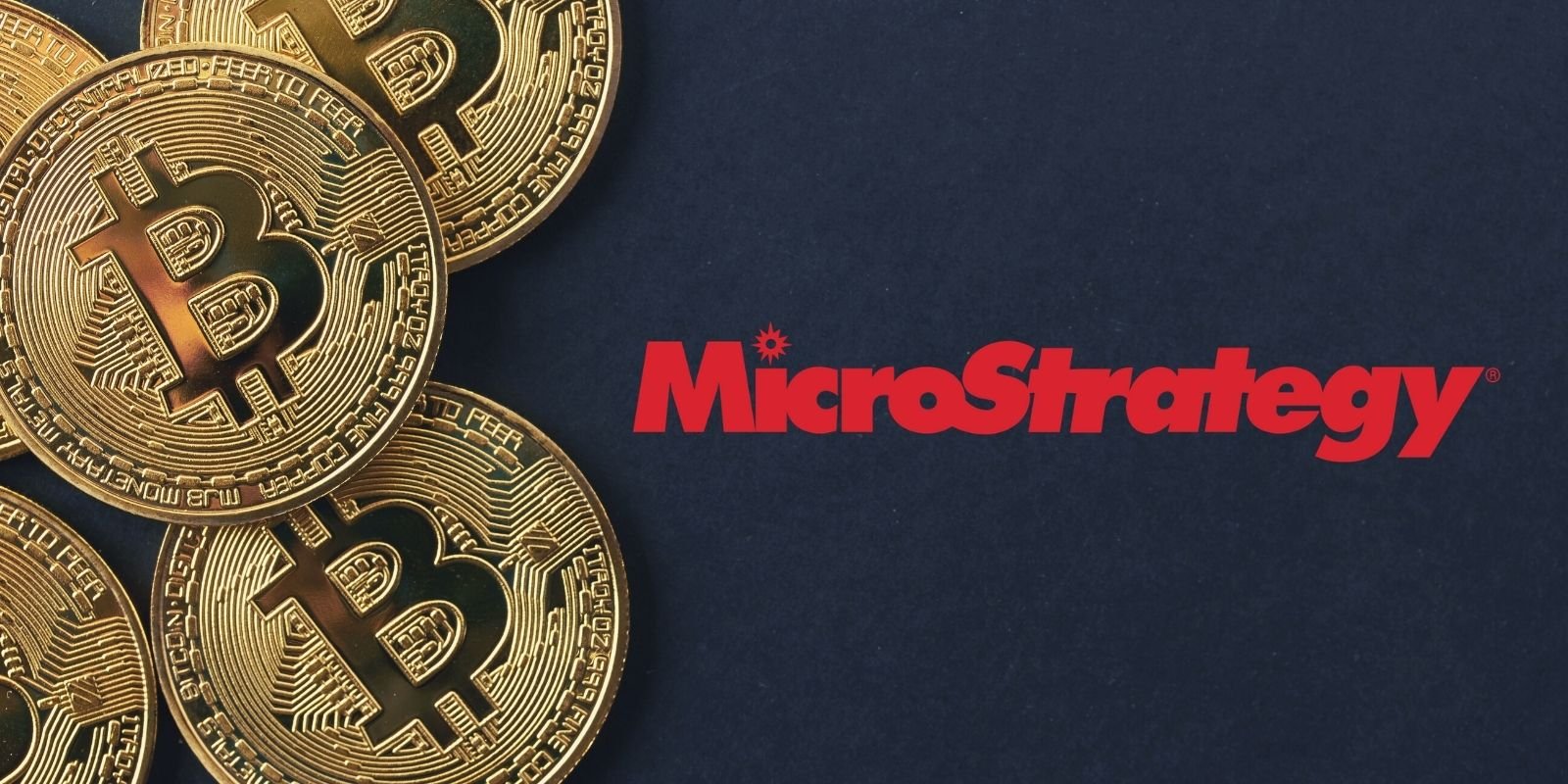
MicroStrategy is $1.29 billion in profit on its Bitcoin holdings

0

MicroStrategy, the business intelligence software company, has made a staggering profit of $1.29 billion on its Bitcoin investments. The company started buying Bitcoin in August 2020, when the price was around $11,000. Since then, it has accumulated more than 114,000 Bitcoins, worth over $6 billion at the current market price of around $53,000. This means that MicroStrategy has more than quintupled its initial investment of $1.15 billion in just over a year.

The company’s CEO, Michael Saylor, is a vocal advocate of Bitcoin and believes that it is the best store of value and hedge against inflation. He has repeatedly stated that he plans to hold Bitcoin for the long term and does not intend to sell any of his holdings. He has also encouraged other companies and institutions to adopt Bitcoin as part of their treasury strategy.

MicroStrategy’s bold move to invest in Bitcoin has paid off handsomely, as the cryptocurrency has outperformed every other asset class in the past year. Bitcoin has increased by more than 380% since August 2020, while the S&P 500 index has gained about 30% and gold has dropped by 7%. MicroStrategy’s stock price has also soared by more than 400% in the same period, reflecting the market’s appreciation of its Bitcoin strategy.

But what is the future of Bitcoin? Will it continue to rise in value and adoption, or will it face competition and regulation that will limit its growth? Some experts predict that Bitcoin will reach $100,000 or even $1 million in the next decade, while others warn that it could crash to zero or be banned by governments. The truth is that no one knows for sure what will happen to Bitcoin, as it is a new and innovative technology that is constantly evolving and facing new challenges.

However, one thing is certain: Bitcoin has proven to be a resilient and revolutionary invention that has changed the way people think about money and finance. It has created a global and decentralized network of value that is open, transparent, and censorship resistant. It has also inspired thousands of other cryptocurrencies and blockchain projects that aim to solve various problems and create new opportunities in different sectors and industries. Bitcoin is not just a digital currency; it is a social and economic phenomenon that has the potential to transform the world.

MicroStrategy is not the only company that has benefited from investing in Bitcoin. Other notable examples include Tesla, which bought $1.5 billion worth of Bitcoin in February 2021 and made a profit of about $1 billion by April 2021; Square, which bought $220 million worth of Bitcoin in 2020 and 2021 and made a profit of about $800 million by July 2021; and Galaxy Digital, which bought $134 million worth of Bitcoin in 2018 and made a profit of about $860 million by June 2021.

These companies have shown that investing in Bitcoin can be a lucrative and strategic decision, especially in times of economic uncertainty and currency devaluation. However, investing in Bitcoin also comes with risks and challenges, such as volatility, regulation, security, and taxation. Therefore, investors should do their own research and due diligence before buying or selling any cryptocurrency.

Netanyahu Warns Hezbollah: War means Lebanon’s destruction

0
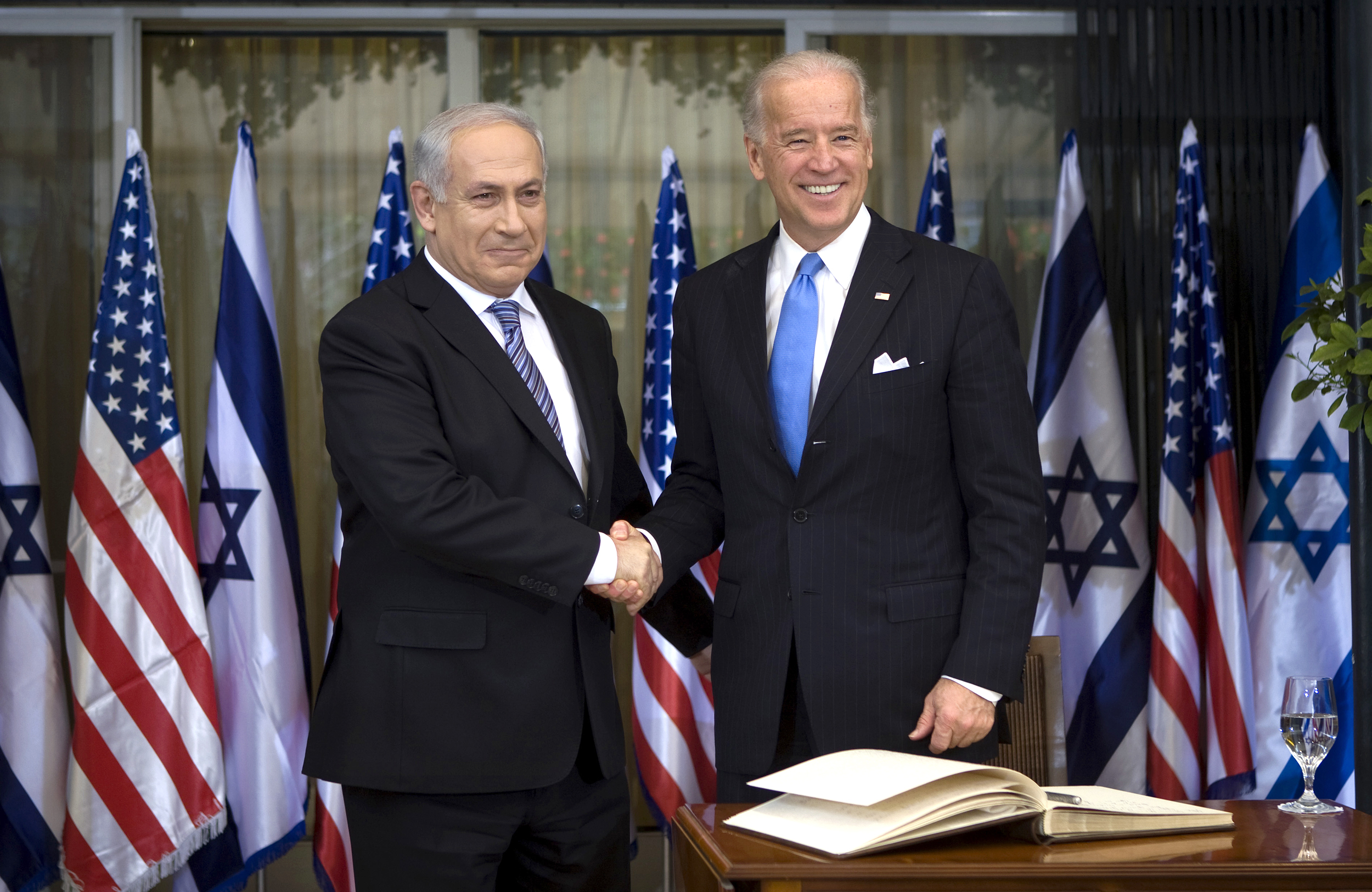
Benjamin Netanyahu and Joe Biden in Jerusalem, on March 9, 2010.

In a recent speech, Israeli Prime Minister Benjamin Netanyahu issued a stern warning to the Lebanese militant group Hezbollah, saying that any war with Israel would result in Lebanon’s destruction. Netanyahu accused Hezbollah of stockpiling thousands of rockets and missiles in civilian areas, posing a grave threat to Israel’s security and sovereignty. He also blamed Iran for supporting and arming Hezbollah, calling it a “terrorist regime” that seeks to wipe out Israel.

Netanyahu’s remarks came amid rising tensions between Israel and Hezbollah, which have been engaged in a series of cross-border skirmishes and exchanges of fire in recent weeks. The two sides fought a devastating 34-day war in 2006, which ended with an UN-brokered ceasefire that remains fragile and frequently violated. Both sides have vowed to inflict heavy damage on each other in case of another conflict, raising fears of a regional escalation.

Netanyahu’s warning to Hezbollah was also seen as a message to the international community, especially the United States, which is currently engaged in indirect talks with Iran over reviving the 2015 nuclear deal. Netanyahu has been a vocal opponent of the deal, arguing that it would enable Iran to pursue its nuclear ambitions and increase its support for its proxies in the region, such as Hezbollah. He has urged the US and its allies to impose more sanctions on Iran and to confront its aggression in the region.

Netanyahu warns Hezbollah: War means Lebanon’s destruction

In a televised speech on Sunday, Israeli Prime Minister Benjamin Netanyahu issued a stern warning to the Lebanese militant group Hezbollah and its patron Iran, saying that any attack on Israel would result in a devastating response that would destroy Lebanon’s infrastructure and civilian population.

Netanyahu accused Hezbollah of hiding thousands of rockets and missiles in residential areas, using the Lebanese people as human shields. He said that Israel would not hesitate to target those sites if provoked, regardless of the collateral damage.

He also blamed Iran for supplying Hezbollah with advanced weapons and fueling the conflict in the region. He said that Israel would not allow Iran to establish a permanent military presence in Syria or Iraq, and that Israel would defend itself against any Iranian aggression.

Netanyahu’s speech came amid rising tensions between Israel and Hezbollah, following a series of cross-border incidents in recent weeks. On August 25, Hezbollah fired several rockets at northern Israel, claiming to have killed or wounded Israeli soldiers. Israel denied any casualties and retaliated with artillery fire and airstrikes.

On September 1, Israel said it had thwarted an attempted drone attack by Hezbollah near the border with Syria. Hezbollah denied any involvement and accused Israel of fabricating the incident to justify its own attacks.

Both sides have vowed to continue their operations and have warned each other of severe consequences in case of further escalation. The United Nations and several countries have called for restraint and dialogue, fearing a repeat of the 2006 war that killed more than 1,000 people and displaced millions.

As Naira Hits Record Low, Nigeria Needs To Focus On The Root Cause

2

From Reuters: “ABUJA, Dec 1 (Reuters) – Nigeria’s naira dropped to a record low against the dollar on Friday on the official market, close to the rate at which it trades on the unofficial parallel market. The currency of Africa’s biggest economy fell as low as 1,160 naira to the dollar, LSEG data showed, before recovering to around 800 naira.

“The naira’s official exchange rate has been drifting towards the parallel market level as the central bank is yet to clear outstanding foreign-currency amounts owed in forward deals.

“Last week, central bank Governor Olayemi Cardoso said he would allow market forces to determine exchange rates while setting clear, transparent and harmonised rules governing market operations. The currency sold at around 1,165 naira on the parallel market on Friday.”

My Comment: 

The strength of Naira does not come from the Central Bank of Nigeria (CBN) but from warehouses and factories (the modern and the old). Until Nigeria leaves financial engineering and focuses on  what anchors Naira, Naira will continue to fade. Every apex bank has two core missions: strengthen currency by managing inflation and boost employment through interest rates management. 

For Nigeria, to strengthen Naira, you need to reduce inflation and that can come by boosting Supply through production. Our challenge today is that our manufacturing index is dropping, triggering an avalanche on the inflationary pull. As that happens, the CBN loses control on employment because rates are raised to curtail that inflation, creating a double whammy where corporations cannot borrow cheaply, and that results in reduction in Supply. Ceteris paribus, if Supply drops when Demand stays constant, inflation rises.

Nigeria should not leave its currency to FLOAT because Nigeria does not have life jackets to support Naira if it begins to drift.  Rather, Nigeria should float companies and if that happens, Naira will improve. Why? The Demand of USD is more than supply of USD and if that remains, allowing a float will keep weakening the Naira. If two people each have $100 to sell, and ten people want to each buy $100, you have a massive imbalance, and there is no policy regime that will stabilize that currency unless you inject more USD in the system.

The minister and CBN governor know these things, but Nigeria is a place where smart people are not given the freedom to do the right things in government. The assumption is that Naira will continue to fade until Nigeria changes the path. My position is based on looking at data across economies; I have written many briefs for the World Bank, African Union, etc on currencies.

Nigeria will be fine; it has great people. But we must adjust quickly. Yes, we must focus on the root cause which is Production and not the stylist method of how to buy and sell USD dollars. What we’re doing will work in America because it is the only country which can print USD dollars; for Nigeria, we can only have USD  by earning it, and that means we have to offer something in the global market for someone to buy. If we do not do that, nothing will work. (Of course, we can even avoid the need of USD by substituting things we need USD to buy, making them locally in Nigeria).

Comment on Feed

Comment 1: Currently, Nigeria is not producing to boost supply, neither is it importing to fill up the gap created by a lack of local production of a several commodities. The ports are empty, due to a greatly reduced importation. I know this because I am in the ocean logistics industry. The current policies of this government which has adversely affected both production and importation is dangerous.

It is not surprising that that there is a tight squeeze on the economy. They should, as a matter of urgency, free up the path to importation as an immediate measure so that commodities will swarm the economy and drive down prices, while on the long run, concentrate on a gradual but consistent regime of import substitution.

The economy is currently frozen up and it tells on about all the facets of the Nigerian space.

Comment 2: The problem with left leaning liberal policies especially in Nigeria, trying to control fundamentals against the flow of natural principles is that it creates room for corruption like happened when there was a wide difference between official and black market exchange rates in the past.

My Response: The Central Bank of Nigeria was established in 1958 and managing the stability of the old pounds and later Naira was never a problem because Nigeria produced most of the things it needed.  During the war, both the Biafran pounds and Nigerian pounds strengthened because despite the vagaries of war, things were still made locally. But from 1986-1989, Nigeria began a financialization policy, as the IMF, etc tasked IBB to essentially de-industrialize, via the SAP policy.  SAP brought emphasis on exchange rate control, credit control, and devaluation of naira. The implication was making things in Nigeria became harder compared to other competitors!

Immediately that happened, the Financial Sector became the easiest way to become rich over making things. Between 1989-1992, IBB licensed dozens of finance houses and the leading new generation banks in Nigeria were born within that window (GTB, Zenith, UBA’s STB, Diamond/Access, etc) . As that was happening, SAP sapped Nigeria and rewired the economy to be finance-first, instead of manufacturing-first. From that 1989, the Naira started losing value to USD because our balance of payment and balance of trade began to deteriorate. 

Unlike in the past, today, finance drives the agenda of the government. In the past, it was manufacturing. Visit Aba to see what Okpara did with Aba Ceramics, Aba Glass Industry, etc. Visit Kano to see the brilliance of Ahmadu Bello. Awolowo had a stamp everywhere. MAN (manufacturers association of Nigeria)  was very powerful and the minister of science and tech (honestly, I do not know the current one unless I google) was a key cabinet post. The most influential people in Nigeria were industrialists: Nnanna Kalu, one of the men who built Aba, was a household name. In the north, there were the legends in Kano. The Abeokuta men have their history. In all dimensions, they built stuff. 

So, no one should blame APC, PDP, etc for the recent slides in Naira; we should blame everyone that we forgot what worked for Naira in that past. One day, we will have a sankofa moment, return to the past to learn, and then push for the future.

Comment 3: We all are in a vehement agreement that sustained economic development is only achieved by deliberate action by the government and people. We have not had very good government of late.

The private sector, especially manufacturing, needs a leg up. We are far too many in Nigeria to depend on the service sector, and we are not renowned for excellent service.

So, we need to highgrade agriculture and related manufacturing. Everywhere I fly to in Europe and America, as we approach to land, I see well set up and cultivated fields. We need to feed the nation first and then grow enough to sell to the rest of the world in order to improve our balance of trade.

Next, we need to tap into the manufacturing centres in Aba, Nnewi, Ibadan, Agbara, Kano…targetting products for export and local consumption.

My Response: I agree that we need visionary leaders including in that agriculture. Part of the reason we’re having high food inflation is that Nigeria’s agro policy is geared towards export-oriented crops, not things people need in Nigeria, because we want to earn US dollars. So, you will see sesame seeds, etc and all kinds of things we do not need in Nigeria, but are needed abroad. But the cassava, yam, etc we need do not get a lot of help. In other words, our agriculture policy for decades now have been dollarized, with focus on export, instead of feeding the people.

The #StopHateForProfit’’s Campaign on X Spreads

0

Walmart, the largest retailer in the United States, announced that it has suspended all advertising on X, a social media platform that has been accused of spreading misinformation and hate speech. The decision came after a coalition of civil rights groups launched a campaign called #StopHateForProfit, urging advertisers to boycott X until it takes more action to prevent harmful content on its site.

Walmart said in a statement that it values diversity and inclusion, and that it does not want its ads to appear next to content that does not align with its corporate values. “We have been concerned about the proliferation of extremist views and hateful rhetoric on X for some time, and we have repeatedly expressed our dissatisfaction to X’s leadership,” the statement read. “We have decided to pause our advertising on X until we see more meaningful changes that address the issues we have raised.”

Walmart joins other major companies such as Coca-Cola, Unilever, Starbucks, and Verizon, who have also pulled their ads from X in recent weeks. According to estimates by the research firm Pathmatics, X lost about $7.5 billion in ad revenue in July due to the boycott. X’s CEO, has defended his company’s policies, saying that X stands for free expression and that it does not benefit from hate speech. However, he also acknowledged that X has more work to do to combat misinformation and hate speech, and that he is committed to working with advertisers and civil rights groups to find solutions.

Twitter, the popular social media platform, has been facing a backlash from some of its advertisers after the news of Elon Musk’s acquisitions broke out. The billionaire entrepreneur, who is known for his ventures in space exploration, electric vehicles, and neural implants, has recently acquired several companies that are related to artificial intelligence, biotechnology, and blockchain. Some of these companies include OpenAI, Neuralink, and Starlink.

According to some reports, Musk plans to integrate these technologies into Twitter, creating a new platform that would allow users to communicate with each other using brain-computer interfaces, access satellite internet services, and participate in decentralized applications. Musk claims that this would enhance the user experience and create a more innovative and inclusive online community.

However, not everyone is happy with this vision. Some of the advertisers who rely on Twitter for reaching their target audiences have expressed their concerns and dissatisfaction with the potential changes. They argue that Musk’s acquisitions would disrupt the existing business model of Twitter, which is based on selling ads and data to third-party companies. They fear that they would lose their access to valuable user information and analytics, as well as their ability to customize and optimize their ads according to user preferences and behaviors.

Additionally, some advertisers worry that Musk’s acquisitions would alienate some of the existing users of Twitter, who may not be comfortable or interested in using the new technologies that Musk intends to introduce. They claim that this would reduce the size and diversity of the user base, which is one of the main attractions of Twitter for advertisers. They also question the ethical and social implications of Musk’s acquisitions, such as the potential risks of privacy violations, cyberattacks, and social polarization.

As a result of these concerns, some advertisers have decided to boycott Twitter or reduce their spending on the platform until they receive more clarity and assurance from Musk and Twitter’s management. Others have started to look for alternative platforms that can offer them similar or better services and opportunities. This has caused a significant drop in Twitter’s revenue and stock price, as well as a loss of trust and reputation among its stakeholders.

Twitter has not yet responded officially to the advertisers’ complaints or Musk’s acquisitions. However, some sources suggest that Twitter is in talks with Musk and his companies to negotiate the terms and conditions of the integration. They also indicate that Twitter is working on developing new features and policies that would address some of the advertisers’ concerns and retain their loyalty and satisfaction. It remains to be seen how Twitter will balance the interests and expectations of its different stakeholders in the face of this unprecedented challenge.

The #StopHateForProfit campaign has praised Walmart for its decision, calling it a “powerful signal” that X needs to change its ways. “Walmart is sending a clear message that it will not tolerate X’s failure to protect its users from hate, racism, and violence,” the campaign said in a statement. “We hope that more advertisers will follow Walmart’s lead and hold X accountable for its harmful actions.”

Notable Provisions of The Production, Curtailment & Domestic Crude Oil Supply Obligation Regulations

0

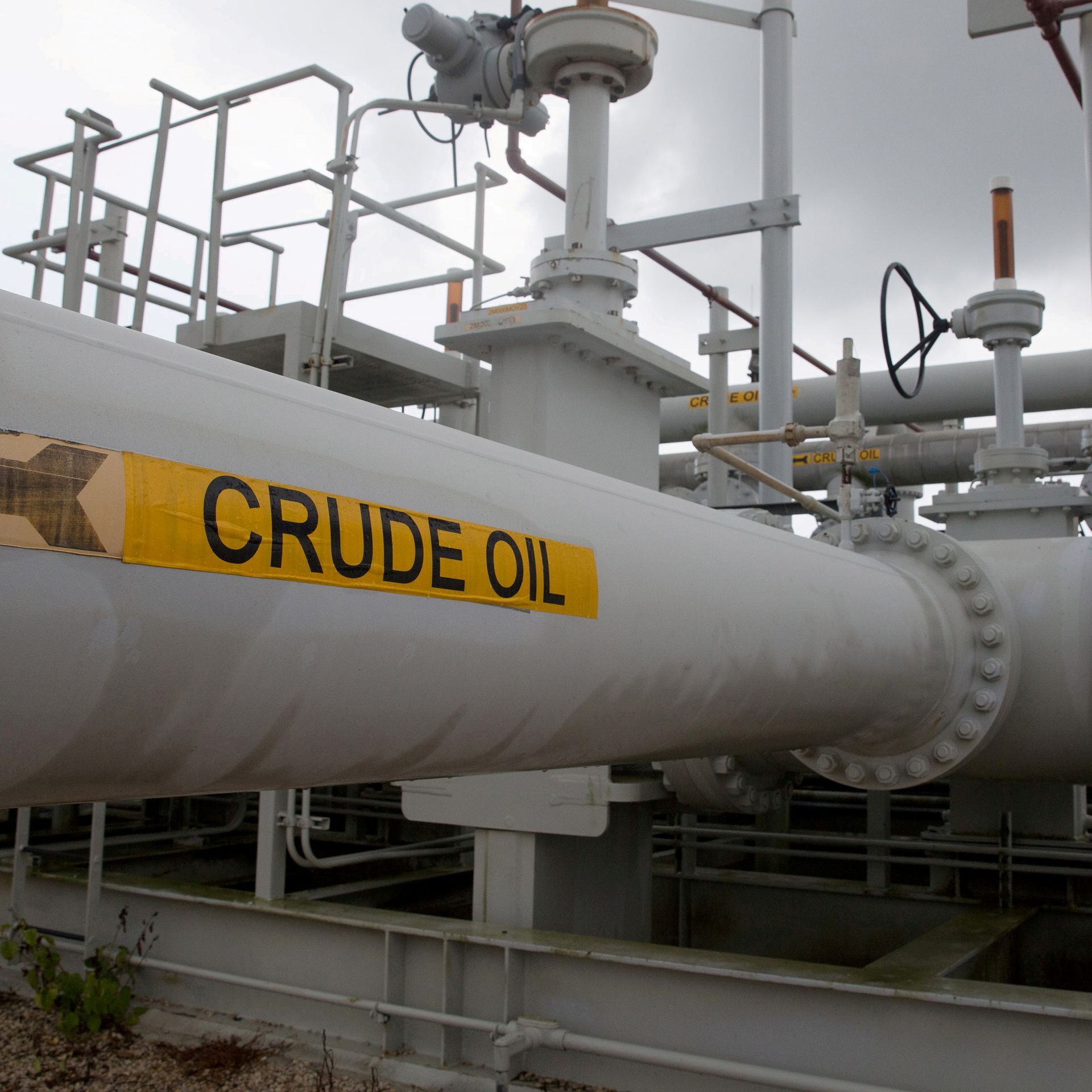
This first part of a 3-article series talks about the new regulations of the Nigerian Upstream Petroleum Regulatory Commission (“The Commission” or “NUPRC”) on Domestic Crude Oil Supply, Production & Curtailment obligations. This article will be focused on the following provisions :

– Objective of the regulations

– Application scope

– Regular production of petroleum from a well

– TAR determination procedures

– NUPRC allocation quotas

– Production quota and curtailment

Objective

– The objective of these regulations is to provide the general rules for production curtailment and utilization of the produced petroleum in relation to export and domestic crude oil supply obligations pursuant to Sections 8 & 109 of the Petroleum Industry Act.

Application Scope

– These regulations apply to production curtailment and utilization of petroleum in relation to export and domestic crude oil supply obligations pursuant to Sections 8 & 109 of the Petroleum Industry Act.

Regular Production of Petroleum From a Well

– Regular production of petroleum from a well shall be based on the Technical Allowable Rate (TAR) and production quota issued by the NUPRC.

– The TAR shall be based on the report of Maximum Efficiency Rate(MER) tests conducted by a lessee and submitted to the commission.

– The MER test shall be witnessed by an officer authorized by the commission.

– A lessee shall not obtain regular production from a well without an approved TAR & production quota from the NUPRC.

Procedure for determination of Technical Allowable Rate (TAR)

– The commission shall allocate TAR for regular production from a well for a duration not exceeding a 6-month cycle as follows –

a). January- June of every year.

b). July- December of every year.

– Notwithstanding the provisions above, every TAR issued less than 6 months to the end of the year by the commission shall terminate by the 31st  of December of the year the TAR was issued.

Allocation of Production Quota by NUPRC

– The commission shall allocate production quota to lessees, from time to time, based on :

a). TAR for each well in a lease

b). Production performance of each well in a lease

c). Any other consideration as the NUPRC may determine

– Production quotas shall be issued for a period of not more than 6 months.

Production Quota & Production Curtailment

– A lessee shall not produce petroleum from a well in a lease area above the production quota assigned by the commission.

– The commission shall use TAR and production quota in the assessment of the performance of a well.

– Where the minister gives directives in line with the Petroleum Industry Act to the commission to cut back production, the commission shall revise the allocated production quota to conform with the directive of the minister. 

Section II

This second installment of the NUPRC regulations focuses on their provisions regarding :-

-The failure to utilize allocated production quotas.

–  Periodic reporting requirements.

– The notification of domestic crude refining requirements.

– Notifications of Crude Oil supply shortages/situations of inadequate supply.

– Regulations on the existence of shortages or inadequate supply conditions.

Failure to utilize allocated production quota

– A lessee shall ensure full utilization of allocated production quotas for any given period.

– Where a lessee is unable to utilize or is under-utilizing allocated production quota for 7 consecutive days, the lessee shall within 48 hours notify the commission in writing, stating the reason for such failure.

– A lessee who fails to notify the NUPRC in line with the provision above, contravenes the regulations and is liable to an administrative penalty of $55,000.00 for every day the contravention subsists.

Periodic Reporting 

– A lessee shall, in addition to the requirement to notify the commission as explained above, include in its monthly report to the commission, any failure or underutilization of its production quota within the period covered by the report.

Imposition of domestic crude oil supply obligation and export control

– Crude oil produced by a lessee shall be subject to domestic crude oil supply obligations (DCSO) imposed by the commission, provided that the lessee shall be entitled to export any volume of crude oil more than its domestic crude oil supply obligation.

Notification of domestic crude refining requirements

– The commission shall publish on its official website and in 3 national newspapers the domestic crude refining requirement of operating refineries in Nigeria based on information provided to the commission by the authority on the crude oil requirements of refineries in operation in Nigeria pursuant to the Petroleum Industry Act.

-The information published by the commission pursuant to this regulation shall be to facilitate crude oil sales transactions between producers and operating refineries in Nigeria.

Notification of crude oil supply shortage or inadequate supply conditions

– The commission, upon receipt of a notification from the authority pursuant to the Petroleum Industry Act of shortage in the supply of crude oil to operating refineries in Nigeria or the existence of inadequate crude oil supply conditions to operating refineries in Nigeria, shall require the authority to provide a written confirmation of the supply shortage or inadequate supply conditions to the NUPRC, stating the :- 

a). Volume of the shortage.

b). Refineries affected by the shortage.

c). Specification or grade of crude oil in short supply.

d). Reason, if any, for the shortage.

e). Any other conditions causing the shortage or inadequate supply condition.

Existence of shortage or inadequate supply conditions

– The NUPRC shall, upon receipt of the information pursuant to these regulations, issue a Request For Quotations (RFQ) to all producing licenses and lessees requiring them to submit a quotation for the supply of any required volume to meet the shortage or close the inadequate supply condition.

Section III

This article is the final installment in the Domestic Crude Oil Supply Obligation Regulations series and focuses on its provisions concerning :

– Conditions for the imposition of the obligation to supply.

– Sale of Crude Oil by lessee.

– Export of crude oil by lessee.

– Submission of reports by lessee.

– Penalties for non-compliance.

What are the conditions for the imposition of the obligation to supply?

– The NUPRC shall impose the obligation to supply by identification and selection of producing licensees and lessees based on –

a). The proximity and accessibility of the supply location to the refiner’s location.

b). Matching of the licensee’s or lessee’s crude specification to the grade requirements for domestic supply.

– Where more than 1 licensee or lessee meet the requirement mentioned above, the commission shall impose the obligation to supply by allocating volumes to each producer based on the weighted proportion of its total production and taking into consideration –

a). Any existing refinery supply contracts it may have.

b). Any existing crude export contract it may have.

c). Its TAR & production quota per lessee.

What do the regulations say on the sale of crude oil by a lessee?

– A lessee on whom a DCSO has been allocated shall sell the allocated volumes of crude oil to the specific refinery nominated by the NUPRC under the regulations.

What are the provisions of the regulations on the export of crude oil by lessee?

– Where production for any given quarter falls below the allocated quota for that quarter, a lessee shall first fulfill its obligation to supply to the domestic market before any export may be permitted by the commission, provided that where there is no demand by any refinery license holder in that quarter, the lessee may export all the production for that quarter.

What are the provisions of the regulations on the submission of reports by a lessee?

– A lessee shall submit a monthly report, in the form and manner prescribed by the NUPRC , relating to the following –

a). Production performance based on the allocated quota.

b). Utilization of production in terms of DCSO and export.

What are the penalties for non-compliance with the regulations?

– A licensee or lessee who fails to submit an RFQ or submits an RFQ outside the time specified is liable to pay an administrative fine of $10,000.00.

Requirements & Procedures For Upstream Gas Exploration & Development Permits In Nigeria – Gas Field Development Plans (GFDPs) & Temporary Gas Flaring Permits/Waivers

This article will be looking at the requirements and procedures involved in granting permits for Gas Field Development Plans and Temporary Gas Flaring Permits as prescribed by the NUPRC Gas Exploration and Development Permit (Requirements & Procedures) Regulations.

Gas Field Development Plans – Requirements & Procedures

– The proposed gas field development programme (GFDP) must be submitted at least 30 working days before the commencement of any part of it and shall be in accordance with the Petroleum Drilling and Production Regulations and its amendments.

– The GFDP shall contain but not limited to the following :-

1). A minimum of 3 wells must have been drilled and a field study carried out detailing the static and dynamic reservoir model.

2). Concept study and reasons for choice of proposed development plan.

3). Seismic and Geologic prognosis.

4). Field reserves and ultimate recovery.

5). A structural map of all gas bearing sands on a scale of 1:25,000

6). Reservoir geologic modeling.

7). Reservoir engineering simulation studies.

8). Well location optimisation/depletion plan.

9). Well bore utility.

10). The production profile and the anticipated dive mechanism.

11). Gas utilization plan in line with the Federal Government policy of zero flare.

12). Cost estimates of the development.

13). Surface facilities.

14). HSE strategy/case.

15). Field abandonment plan.

16). Applicable Processing fee payment to the NUPRC.

– Satisfactory development programmes would then be evaluated and approved.

– However where strong objections exist, the company would be informed. Individual well location proposals still require to be approved on their merits. Also , approvals to drill do not necessarily imply that the target completion zones have been approved.

– Completions are separately considered for approval.

Temporary Gas Flaring Permit/Waiver – Requirements

– The permit for gas flaring waiver application should contain the following:

a). Name of field and facility where flaring is expected.

b). The reason and justification for the temporary Gas flaring exercise.

c). Actions/processes already put in place to reduce the flare volumes before seeking the permit/waiver.

d). The duration over which gas will be flared and total volume of gas expected to be flared.

e). Any other information/supporting facts to justify the application for.