DD
MM
YYYY

PAGES

DD
MM
YYYY

spot_img

PAGES

Home Blog Page 356

U.S. Jury Orders Samsung to Pay $445.5m to Collision Communications Over 4G, 5G and Wi-Fi Patent Infringement

0

A federal jury in Marshall, Texas, has ordered Samsung Electronics Co. Ltd. to pay nearly $445.5 million in damages to Collision Communications Inc., after finding that the South Korean tech giant infringed on multiple patents covering technologies essential to 4G, 5G, and Wi-Fi standards.

The verdict, delivered on Friday, concluded that Samsung’s flagship Galaxy smartphones, laptops, and other wireless-enabled devices violated four patents belonging to Collision Communications. The patents in question relate to improving wireless network efficiency, reducing interference, and enhancing data throughput in mobile and Wi-Fi communication systems.

The ruling represents one of several nine-figure patent infringement verdicts Samsung has faced in the same Eastern District of Texas, particularly in Marshall, which has long been a preferred venue for high-stakes intellectual property disputes due to its fast docket and jury pool familiar with complex technology cases.

According to court documents, Collision Communications, headquartered in Peterborough, New Hampshire, sued Samsung in 2023, alleging that the company had knowingly used its patented technologies without authorization in a broad range of consumer electronics, including its Galaxy S series smartphones, Galaxy Tab tablets, and certain laptop models that use 4G and 5G chipsets.

Collision argued that Samsung’s products made use of key innovations that improve signal quality and data transmission in congested wireless environments—technologies originally developed as part of research conducted by BAE Systems, a British defense contractor. The intellectual property was later acquired by Collision from BAE Systems, although BAE is not directly involved in the litigation.

The patents asserted in the case include U.S. Patent Nos. 8,848,556, 9,230,966, 9,456,210, and 10,257,913, all of which describe mechanisms for efficient data communication and adaptive bandwidth optimization across wireless networks.

Samsung denied the allegations, maintaining that its products were built using proprietary technologies and that Collision’s patents were invalid, overly broad, and unenforceable. The company’s defense lawyers also argued that Collision’s inventions were not fundamental to the standards governing 4G and 5G communications.

However, the jury found in favor of Collision on all counts, determining that Samsung had willfully infringed the patents—a finding that could potentially lead to enhanced damages if upheld by the presiding judge.

Neither Samsung nor Collision’s legal representatives have commented publicly since the verdict.

The Eastern District of Texas, particularly the Marshall Division, has been at the heart of some of the largest technology patent awards in U.S. history. Samsung itself has been hit with several similar rulings in recent years, including verdicts exceeding $200 million in separate cases involving semiconductor and wireless standards.

Legal analysts say the ruling is significant not only for its financial size but also for its implications in the ongoing battle over standard-essential patents (SEPs)—technologies that are integral to the functioning of mobile networks and often subject to fair, reasonable, and non-discriminatory (FRAND) licensing terms.

The outcome adds to growing pressure on major smartphone makers, including Apple, Huawei, and Samsung, which have faced a barrage of lawsuits from smaller research-based firms claiming infringement on network and connectivity patents.

If upheld, the $445.5 million judgment will stand among the largest patent infringement damages ever awarded against Samsung in the U.S., highlighting the financial risks global tech firms face as patent enforcement intensifies amid the 5G and next-generation communications boom.

The verdict also underscores the ongoing trend of smaller research firms leveraging intellectual property portfolios originally developed for defense, telecommunications, or academic research to challenge larger players dominating the consumer electronics industry.

The Lesson in the Palace and Qualifying Yourself To Be Recommended In Your Absence

0

He hosted a banquet of glory and wine. The hall was radiant with laughter and arrogance as King Belshazzar and his nobles drank from the golden vessels taken from the Temple in Jerusalem by his father, Nebuchadnezzar. But in that moment of human pride, a mysterious hand appeared and began to write on the wall, and words that no one could read. The laughter vanished; the king’s face turned pale. He summoned his astrologers, diviners, enchanters, and the wise men of Babylon, and promised wealth, power, and purple robes to anyone who could interpret the writing. None could.

Then came the queen, the voice of memory and wisdom, reminding the king that in his kingdom was a man who once decoded mysteries for his father. “In the days of Nebuchadnezzar,” she said, “there was Daniel, in whom dwells the spirit of the holy gods.” This Daniel had once led the king’s advisory council, the equivalent of the modern board of strategy and intelligence or director of strategy in a company, interpreting dreams, solving impossible problems, and offering clarity when confusion reigned. But under the new regime, he was demoted and forgotten. Yes, the new CEO came, demoted and transferred him out of the headquarters!

When Daniel was finally called, he did not flatter the king and delivered with professionalism. He interpreted Mene, Mene, Tekel, Parsin. Simply, a message of judgment and decline for the kingdom; not a great one for the king, but that is not my focus. My focus is that Daniel’s wisdom was so timeless that even in his absence, a queen had to recommend him.

And there lies the lesson: become so competent that people mention your name in rooms you are not present in. Be the Daniel in your sector and the person whose insight is remembered when the handwriting appears on the wall of confusion in companies and boardrooms. In boardrooms and executive meetings, when leaders ask, “Who can solve this?”, may your name echo like Daniel’s, not because you seek recognition, but because your competence has become your identity.

In the Igbo Nation, we say that the hand that gathers dust must be ready for the consequences of its deeds. Yes, excellence and mediocrity both leave fingerprints. Make yours the kind that writes solutions on the wall of destiny so that you can qualify before others to recommend you in your absence.

CBN Orders Instant ATM Refunds, Tightens Oversight on Banks and Payment Operators

0

The Central Bank of Nigeria (CBN) has issued new draft guidelines mandating banks to provide instant refunds for failed Automated Teller Machine (ATM) transactions, in what analysts see as one of the boldest steps yet to protect consumers and strengthen accountability in the financial sector.

The new rules, released on October 9, 2025, are part of broader efforts by the apex bank to restore public confidence in digital banking amid rising complaints over delayed reversals and unresponsive customer service. The circular, signed by Musa I. Jimoh, Director of the Payments System Policy Department, was addressed to banks, payment service providers, card schemes, and independent ATM deployers. Stakeholders have until October 31, 2025, to submit feedback before final adoption.

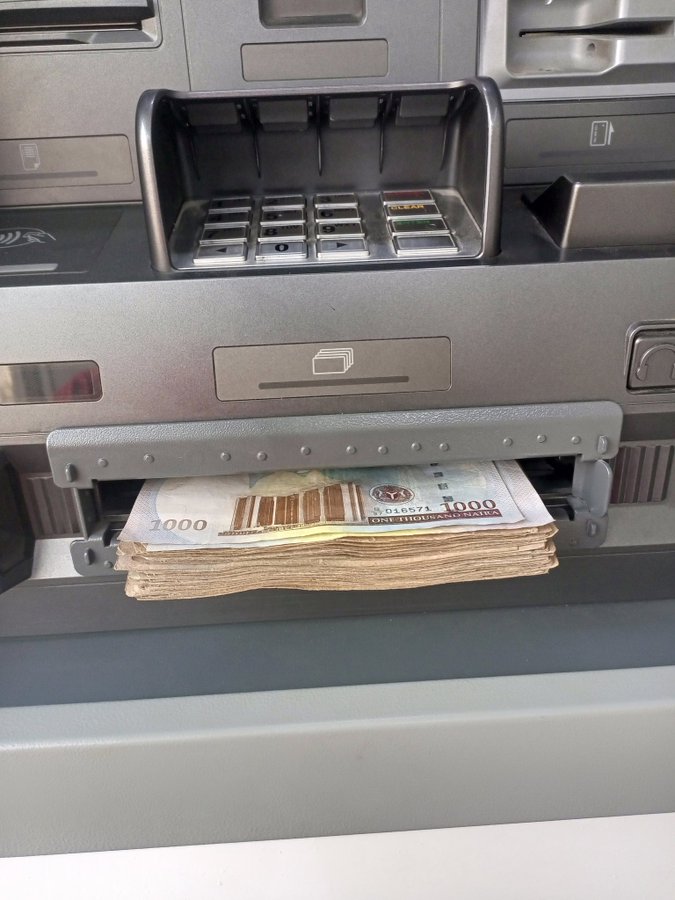
Under the draft framework, the CBN is compelling banks to automatically refund customers for any failed transactions. For on-us transactions—where customers use their own bank’s ATM—the reversal must happen instantly. However, in cases where a technical issue prevents this, the refund must be processed manually within 24 hours.

For not-on-us transactions—where customers withdraw from other banks’ ATMs—the refund window must not exceed 48 hours. The CBN also directed ATM acquirers to automatically initiate reversals without waiting for customer complaints, marking a shift toward proactive consumer protection.

This directive addresses one of the most persistent pain points in Nigeria’s financial system: customers being debited without receiving cash. Many consumers have long complained that banks take days, sometimes weeks, to refund failed ATM transactions despite electronic traceability.

The apex bank said the measure aims to “improve consumer confidence in the banking system, reduce frustration, and enhance trust in e-payment channels.”

Beyond protecting customers, analysts say the new directive could boost revenue for the government. ATM acquirers and banks have often been accused of underreporting or delaying refunds from failed transactions, shortchanging both customers and regulatory agencies in the process.

By mandating automatic reversals and closer monitoring, the CBN expects a more transparent flow of funds that will also improve data accuracy in financial reporting—thereby increasing remittances into the government purse.

The refund directive forms part of a sweeping reform of Nigeria’s ATM regulatory framework, replacing the 2020 electronic payments guidelines. The CBN said the review became necessary due to rapid technological evolution, growing cyber threats, and Nigeria’s goal of deepening financial inclusion.

Under the new policy, banks and card issuers are required to deploy one ATM for every 5,000 cards issued. The rollout will occur in phases—30% compliance by 2026, 60% by 2027, and full compliance by 2028. Any new deployment, redeployment, or decommissioning of machines will require CBN approval.

ATMs are also required to meet higher operational and security standards. They must comply with global Payment Card Industry Data Security Standards, maintain audit logs for dispute resolution, and feature clear card orientation signs. To promote inclusion, at least 2% of each bank’s ATMs must be fitted with tactile symbols for visually impaired users.

The CBN also made clear that customer convenience will be a key performance benchmark. ATMs must dispense cash before releasing cards, provide receipts when requested, allow free PIN changes, and ensure that only fit banknotes are dispensed. Operators must also provide backup power, functional helpdesk lines, and screen prompts giving users ample time to complete transactions.

To curb fraud, all ATMs must be sited in secure, well-lit locations with anti-skimming devices and surveillance cameras that capture activity without recording keystrokes.

The apex bank said it will enforce compliance through regular audits, on-site inspections, and mandatory monthly reports from all ATM operators, listing new deployments and their locations. Financial institutions that violate the new guidelines will face penalties, though specific sanctions are yet to be disclosed.

These measures come barely eight months after the CBN scrapped the three free monthly withdrawals allowed for customers using other banks’ ATMs—a policy shift that drew mixed reactions from consumers and advocacy groups.

The new draft guidelines, however, appear designed to balance regulation with consumer protection. If fully implemented, they could mark a turning point in Nigeria’s banking ecosystem—where reliability, speed, and trust have often been undermined by inefficiency and opacity.

Historic Crypto Market Meltdown Wipes Out $19 Billion in 24 Hours as Trump’s China Tariff Triggers Market Crash

0

The cryptocurrency market experienced its most devastating single-day crash on record on Friday, erasing over $19 billion in value within just 24 hours.

Data from Coinglass revealed that more than 1.6 million traders were liquidated as panic swept through global markets.

The massive sell-off was reportedly triggered by President Donald Trump’s announcement of a new 100% tariff on China, coupled with fresh export restrictions that sent shockwaves across global financial systems.

The announcement reignited the US-China trade war, hitting global risk assets across the board. Stocks, oil, and crypto all went red. The Nasdaq fell 3.6%, while the S&P 500 and Dow Jones also posted their biggest drops in months.

Investor sentiment turned sharply negative, with the Crypto Fear & Greed Index plunging to 35 firmly in “fear” territory and the average crypto Relative Strength Index (RSI) slipping to an oversold level of 25.97.

At the heart of the turmoil, Bitcoin faced unprecedented selling pressure. Having recently reached a new all-time high above $126,000, Bitcoin’s price nosedived  crashing to around $101,725 price, before managing a modest rebound to $112,145, as at writing this report.

CoinGlass data showed that a staggering $19.31 billion in leveraged positions were wiped out within a single day. Bitcoin accounted for the largest share with $5.36 billion in losses. Bitcoin’s four-hour RSI dropped to levels unseen since the early stages of the trade war in February, signaling extreme oversold conditions. Traders who had heavily leveraged on the bullish rally suffered historic losses, with long positions forming the majority of liquidations.

Ethereum (ETH) followed closely with $4.42 billion. The largest single liquidation occurred on the Hyperliquid exchange, where an ETH-USDT position worth $203 million was forcibly closed. The liquidation frenzy marked the biggest leverage flush in crypto history, with over 1.66 million traderscompletely wiped out.

As automated liquidation systems kicked in, panic spread rapidly, accelerating the downward spiral.

The crash extended beyond Bitcoin, hitting altcoins even harder. Solana, XRP, and meme tokens such as Dogecoin and Shiba Inu suffered declines ranging from 16% to 40%, as retail traders raced to exit the market. Analysts had previously warned that the altcoin market was overstretched and vulnerable to sudden shocks.

Adding to the market anxiety, the U.S. government shutdown, now entering its tenth day, has led to a data blackout as official economic indicators remain suspended amid political gridlock in Congress. Despite this, independent data sources continue to reflect the extent of the financial turmoil.

The sell-off also destabilized the USDe stablecoin, which temporarily lost its dollar peg as institutions offloaded assets to cover margin calls. This de-pegging intensified the chaos across leveraged trading platforms, triggering additional waves of forced liquidations.

Despite the carnage, several market analysts remain cautiously optimistic about the long-term outlook. They point to expanding global liquidity and sustained inflows into Bitcoin exchange-traded funds (ETFs) as signs of underlying strength.

Analysts say Bitcoin’s next key support sits at $100,000. Falling below that, said Caroline Mauron of Orbit Markets, “would signal the end of the past three-year bull cycle.”

Arthur Hayes, co-founder of BitMEX, hinted that the crash may have created rare buying opportunities. “Congrats to all you stink bidders,” he wrote. “We won’t be seeing those levels any time soon on many high-quality alts.”

Future Outlook

For now, Bitcoin’s ability to hold above the $110,000 threshold is seen as the key level to watch. Should it maintain that support, experts believe bullish momentum could soon return to the market.

Nigeria’s Public Debt Hits N152.4tn as Weak Naira, Borrowing Costs Deepen Fiscal Strain

0

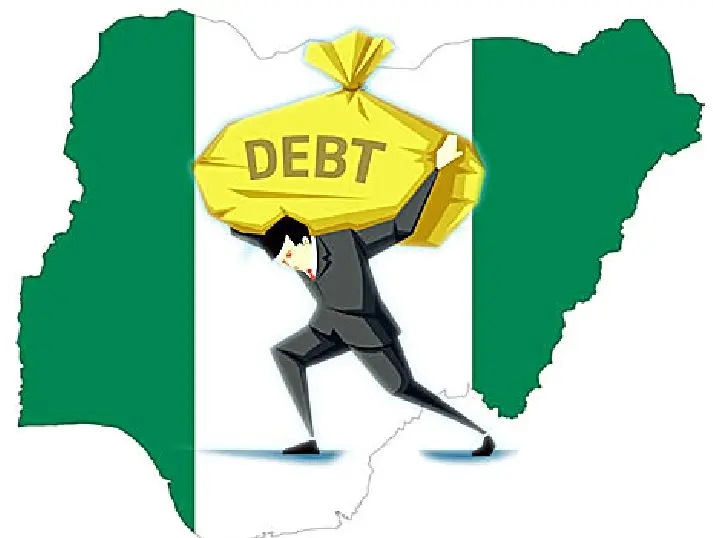
Nigeria’s total public debt has climbed to N152.40 trillion as of June 30, 2025, according to new data from the Debt Management Office (DMO). The figure marks an increase of N3.01 trillion, or 2.01%, from N149.39 trillion at the end of March.

In dollar terms, the debt rose from $97.24 billion to $99.66 billion, reflecting a 2.49% increase in just three months.

The report shows that while borrowing has moderated compared to the previous year, the country’s debt burden continues to swell—largely because of currency depreciation and heavy reliance on domestic and external financing to cover fiscal deficits.

External Debt Sees Modest Increase

Nigeria’s external debt rose to $46.98 billion (N71.85 trillion) in June from $45.98 billion (N70.63 trillion) in March. The increase, though moderate, reinforces concerns about the country’s dependence on external lenders.

Multilateral institutions remain Nigeria’s largest creditors, with a combined exposure of $23.19 billion, accounting for nearly half of the country’s external obligations. The World Bank, through its International Development Association (IDA) arm, remains the single largest creditor with $18.04 billion outstanding.

Bilateral loans totaled $6.20 billion, led by the Export-Import Bank of China at $4.91 billion, followed by smaller exposures to France, Japan, India, and Germany. Commercial borrowings—mostly Eurobonds—accounted for $17.32 billion, representing 36.9% of the external debt.

Analysts say Nigeria’s dependence on Eurobonds and other commercial instruments exposes the country to global market volatility, especially as international investors demand higher yields amid global interest rate hikes. Meanwhile, the concentration of loans from multilateral institutions underscores Nigeria’s reliance on concessional financing, a pattern that reflects weak domestic revenue capacity.

Domestic Debt Heavily Tilted Toward Long-Term Bonds

The domestic debt stock climbed to N80.55 trillion in June from N78.76 trillion in March, an increase of N1.79 trillion. Federal Government bonds dominated the portfolio with N60.65 trillion, representing over 79% of total domestic debt.

This includes N36.52 trillion in naira-denominated bonds, N22.72 trillion in securitized Ways and Means advances—money borrowed directly from the Central Bank of Nigeria (CBN)—and N1.40 trillion in dollar bonds.

Shorter-term instruments made up a smaller share: Treasury bills accounted for N12.76 trillion (16.7%), Sukuk bonds stood at N1.29 trillion, while savings bonds, green bonds, and promissory notes amounted to N91.53 billion, N62.36 billion, and N1.73 trillion, respectively.

The sharp rise in securitized Ways and Means advances points to persistent fiscal pressure, as the government increasingly relies on borrowing to plug budget deficits rather than expand revenue. Economists warn that the trend could worsen inflationary pressures and crowd out private investment if unchecked.

Federal Government Accounts for Over 92% of Total Debt

Of the total N152.40 trillion, the Federal Government is responsible for N141.08 trillion (92.6%), comprising N64.49 trillion in external debt and N76.59 trillion in domestic obligations.

For the first time in 2025, the DMO included a detailed breakdown of subnational debt. States and the Federal Capital Territory (FCT) collectively owe $4.81 billion (N7.36 trillion) externally and N3.96 trillion domestically—bringing their total to N11.32 trillion (7.4%) of the national debt.

Currency Depreciation Inflating Debt Stock

The DMO noted that external debt was converted at the CBN’s exchange rate of N1,529.21 per dollar as of June 30, 2025. The weaker naira—compared with earlier in the year—magnified the naira value of Nigeria’s foreign debt, adding trillions to the headline figure even without significant new borrowing.

This currency effect highlights Nigeria’s vulnerability to exchange rate volatility. The more the naira weakens, the higher the country’s debt appears in domestic terms, further complicating fiscal management.

Although Nigeria’s debt-to-GDP ratio remains within international benchmarks—hovering around 45%—economists are increasingly alarmed by the rate of debt accumulation and the rising cost of servicing loans.

According to data from the Budget Office, debt servicing consumed over 80% of government revenue in the first half of 2025, leaving little fiscal room for capital projects or social programs.

The situation is more alarming as the government continues to borrow. Early this week, President Bola Tinubu wrote the National Assembly, seeking approval for a fresh external borrowing of $2.3bn. This is in addition to a plan to issue a $500m sovereign Sukuk, which will mark Nigeria’s debut in the international Islamic finance market.

The request, contained in a letter read on the floor of the House of Representatives by Speaker Tajudeen Abbas on Tuesday, complies with Sections 21(1) and 27(1) of the Debt Management Office Establishment Act, 2003. The borrowing plan seeks legislative approval for external financing to implement the 2025 Appropriation Act, refinance maturing Eurobonds, and expand Nigeria’s debt instruments to include Islamic finance products.

A Widening Fiscal Gap

Against this backdrop, concerns are growing that Nigeria is heading into a massive debt trap, especially as revenue – largely tied to oil – is not keeping up with the debt increase.

The DMO’s report comes amid concerns that the government’s 2025 budget—anchored on an oil benchmark of 2.06 million barrels per day and an exchange rate of N1,450 per dollar—is already under strain. Actual oil production has averaged below 1.5 million barrels per day, weakening revenue inflows.

Analysts say this combination of low oil revenue, high debt service, and a weakening naira could push Nigeria into deeper fiscal pressure, forcing further borrowing or monetary interventions by the CBN.

The DMO maintains that Nigeria’s borrowing strategy remains guided by sustainability principles, but with the debt stock now above N152 trillion, the challenge has shifted from access to finance to managing the burden without stifling growth.