DD
MM
YYYY

PAGES

DD
MM
YYYY

spot_img

PAGES

Home Blog Page 356

Crypto Markets Rebound from $3.6T Lows As Equities Pre-Market Flip Positive

0

The cryptocurrency market experienced a sharp pullback over the past week, dipping to a total market capitalization low of approximately $3.6 trillion amid a broader leveraged liquidation event totaling around $19 billion.

This drop was largely confined to mid- and low-cap altcoins down ~30%, while major assets like Bitcoin held above $115,000 and Ethereum above $4,000, preserving much of the bull market structure.

By October 13, 2025, the market has staged a quick recovery, with the total crypto market cap climbing back to $3.93 trillion—a 5.13% gain in the last 24 hours alone. This rebound reflects renewed buying interest, particularly in high-cap tokens, as the Fear & Greed Index hovers at a neutral 40, signaling balanced sentiment without extreme fear or euphoria.

Bitcoin (BTC): Trading around $121,800–$124,000, up significantly from the dip and maintaining its position as “digital gold” with strong institutional inflows via ETFs.

Ethereum (ETH): Hovering near $4,350, benefiting from staking rewards and DeFi activity. Overall Volume: 24-hour trading volume surged to $270.55 billion, indicating heightened liquidity.

The Altcoin Season Index sits at 45/100, still favoring Bitcoin dominance, but analysts eye a potential Q4 pump as leverage clears out. This shakeout appears engineered to flush weak hands, setting the stage for further upside toward the all-time high of ~$4.3 trillion.

Broader factors like stabilizing global politics and rising Web3 adoption continue to underpin optimism.

US Equities Flip Positive in Pre-Market Trading

US stock markets are set for a green open on Monday, October 13, 2025—Columbus Day/Indigenous Peoples’ Day—with NYSE and Nasdaq operating on regular hours (9:30 a.m. to 4:00 p.m. ET), unlike the bond market which remains closed.

Pre-market futures have turned positive after a choppy Friday close, buoyed by retreating Treasury yields and softer crude oil prices amid ongoing government shutdown concerns.

The positive flip comes despite a stronger dollar pressuring export-heavy sectors like materials and tech, but overall, equities are holding near record highs. Investors are watching for any shutdown-related volatility, with focus shifting to upcoming earnings season.

The rapid bounce-back from a $19 billion leveraged liquidation event suggests strong underlying demand, particularly for high-cap assets like Bitcoin and Ethereum. This resilience reinforces the narrative of crypto as a maturing asset class, capable of absorbing shocks without breaking key support levels.

The Fear & Greed Index at 40 neutral indicates a balanced market, avoiding the overheated sentiment that often precedes major corrections. This could pave the way for sustainable growth toward the all-time high of ~$4.3 trillion.

The 30% drop in mid- and low-cap altcoins highlights their higher volatility and sensitivity to leverage-driven sell-offs. The Altcoin Season Index at 45/100 suggests Bitcoin dominance persists, but a potential Q4 altcoin rally could emerge as leverage clears and speculative capital rotates back into riskier assets.

Investors should remain cautious of over-leveraged positions, as liquidations can trigger cascading declines in smaller tokens, though the current recovery signals opportunity for selective altcoin exposure.

Continued institutional inflows via Bitcoin ETFs and Ethereum’s staking rewards bolster the case for crypto as a portfolio diversifier. Rising Web3 adoption and stabilizing global politics further support long-term growth.

However, macro risks like a potential US government shutdown or unexpected monetary policy shifts could reintroduce volatility, particularly if they impact risk appetite across asset classes.

The surge in 24-hour trading volume $270.55 billion reflects heightened liquidity, creating opportunities for short-term traders to capitalize on momentum. Long-term investors may view this dip-and-recovery as a buying opportunity, especially for Bitcoin and Ethereum, which held key levels.

Monitoring on-chain metrics like whale activity, exchange inflows and sentiment indicators will be crucial to gauge whether this rebound has legs or if another shakeout looms.

The positive pre-market action in US equities futures S&P 500 +0.4%, Nasdaq 100 +0.6%, Dow +0.3% on October 13, 2025, despite holiday-thinned trading— Columbus Day/Indigenous Peoples’ Day, has its own set of implications.

The flip to green in pre-market trading, driven by retreating Treasury yields and softer oil prices, signals a return of risk-on sentiment. This aligns with the crypto market’s rebound, suggesting a broader appetite for growth assets as macro fears temporarily ease.

Equities holding near record highs indicate investor confidence in the US economy, though the absence of major economic data or earnings today may keep moves modest.

The Nasdaq’s stronger pre-market gain +0.6% points to tech sector resilience, potentially fueled by a weaker yen boosting export competitiveness for US tech giants. Energy stocks may see gains despite lower oil prices, as supply concerns linger.

The looming threat of a US government shutdown introduces uncertainty. A prolonged standoff could disrupt federal spending, rattle consumer confidence University of Michigan sentiment expected at 54.5, and pressure equities, particularly cyclical sectors.

A stronger dollar, while supporting pre-market gains, could weigh on multinationals and exporters, potentially capping upside in indices like the Dow. The positive pre-market flip suggests a potential green open, but thin holiday volume may exaggerate moves.

Day traders should monitor intraday volatility, especially post-open, as the lack of major catalysts could lead to choppy trading. Long-term investors may focus on tech and growth stocks, given Nasdaq’s outperformance, but should hedge against shutdown-related risks via diversified exposure or defensive assets.

The simultaneous rebound in crypto and equities signals a coordinated risk-on move, likely driven by easing macro pressures yields, oil and renewed liquidity. This could amplify momentum if global markets follow suit, particularly in tech-heavy indices and crypto majors.

Both markets remain vulnerable to external shocks—crypto to leveraged liquidations and regulatory noise, equities to shutdown fears and dollar strength. Investors should maintain disciplined risk management, using stop-losses and diversified portfolios.

The crypto recovery and equities’ resilience set a constructive tone for Q4, with potential for new highs if macro conditions stabilize. However, vigilance is warranted as earnings season and policy developments unfold.


Blackstone Deepens European Push with $1.3bn UK Logistics Sale and Possible Bid for Big Yellow Self-Storage

0

Blackstone Group, the world’s largest alternative asset manager, has announced a new wave of deals in the United Kingdom as it expands its real estate footprint across Europe.

The firm said on Monday it would sell about £1 billion ($1.3 billion) worth of logistics assets to Tritax Big Box REIT in a cash-and-stock transaction that also gives Blackstone a 9% stake in Tritax. The U.S. private equity powerhouse also revealed it is considering a bid for UK self-storage operator Big Yellow Group, a move that sent the company’s shares soaring.

The announcements underscore Blackstone’s accelerating push into European property and logistics, even as rising borrowing costs and softer valuations continue to reshape the region’s real estate sector.

Under the logistics deal, Tritax Big Box will acquire around 41 assets from Blackstone’s portfolio of British warehouses. The transaction — comprising £632 million in cash and the issuance of new Tritax shares — will make Blackstone one of Tritax’s largest shareholders, owning roughly 9% of the company after completion.

Shares in Tritax rose 3% in early London trading following the announcement, reflecting investor optimism that the deal would strengthen the logistics company’s position in one of Europe’s most sought-after real estate sectors.

The sale is part of Blackstone’s ongoing strategy to rebalance and scale its European logistics holdings, which have grown rapidly since the e-commerce boom accelerated during the pandemic. Demand for high-quality warehouses and last-mile delivery facilities has continued to climb as retailers and logistics operators expand their online fulfillment networks.

The U.S. investment firm, which manages more than $1 trillion in assets globally, has become one of Europe’s biggest logistics landlords through subsidiaries like Mileway, its pan-European logistics platform, and Warehouse REIT, a UK logistics specialist it acquired in July 2025 for nearly £500 million after outbidding Tritax in a competitive auction.

Blackstone’s latest sale to Tritax effectively turns its former rival into a partner. Some analysts see strong long-term fundamentals in UK logistics and believe this transaction will allow the company to retain strategic exposure through our new stake in Tritax.

Blackstone Eyes Big Yellow Takeover

In a separate development, Blackstone confirmed it is weighing a potential cash offer for Big Yellow Group, one of Britain’s largest self-storage operators. The London-listed company, which has a market capitalization of about £1.9 billion, saw its shares jump as much as 22% on Monday following Blackstone’s disclosure.

Big Yellow later acknowledged that it had met with several potential suitors in recent weeks to discuss strategic options, including a possible sale, but said no formal approach or offer had yet been received.

The interest in Big Yellow highlights Blackstone’s renewed appetite for UK property assets, particularly those in resilient, high-demand sectors like logistics and self-storage. Analysts believe that while traditional office and retail properties have struggled with rising interest rates, storage and industrial assets have performed relatively well due to strong occupancy rates and stable cash flows.

A potential acquisition of Big Yellow would add another dimension to Blackstone’s UK real estate empire. The firm already owns stakes in major infrastructure, logistics, and residential projects across the country — part of its pledge to invest £100 billion in Britain over the next decade.

A Broader European Bet

Blackstone’s twin announcements come as the UK real estate market undergoes one of its biggest reshuffles in years. The rise in borrowing costs since 2022 has reduced property valuations and triggered a wave of consolidation among listed real estate investment trusts (REITs) and private equity-backed landlords.

Among the latest moves, Assura, a healthcare property investor and major NHS landlord, recently agreed to be acquired by rival Primary Health Properties following a months-long bidding battle with KKR, another major U.S. private equity group.

Analysts note that Blackstone’s actions reflect a broader strategy of buying into cyclical weakness — capitalizing on reduced valuations while positioning for long-term growth once interest rates ease.

The renewed focus on the UK forms part of Blackstone’s broader €100 billion expansion plan across Europe, which includes logistics, housing, and data centers. Despite concerns about inflation and tighter monetary policy, the firm has been deploying capital aggressively into “new economy” assets that benefit from digitalization and demographic shifts.

Its Mileway subsidiary — the largest owner of last-mile logistics properties in Europe — operates more than 1,700 assets across 10 countries, while Blackstone’s European housing platform has grown rapidly in markets like Spain and Germany.

Investor Howard Marks Says AI Stocks Are ‘High but Not Crazy,’ Rejects Bubble Talk—for Now

0

Veteran investor Howard Marks, co-founder of Oaktree Capital Management, says the artificial intelligence (AI) boom dominating global stock markets does not yet meet the conditions of a speculative bubble, even though valuations have soared to unprecedented levels.

Speaking Monday in an interview with CNBC’s Sara Eisen, Marks said his response to growing speculation about an AI-driven market bubble is simple: valuations are “high but not crazy.”

“Expensive and going down tomorrow are not synonymous,” he said.

Marks, widely regarded for his decades of writing on market cycles, risk perception, and investor psychology, explained that while enthusiasm for AI stocks is clearly intense, it has not yet crossed the threshold into irrational mania.

“To me, the main ingredient in bubbles is psychological excess — some kind of temporary mania,” he said. “For a company in this sector or industry, there’s no such thing as a price too high. And I don’t detect that level of mania at this time, so I have not put the bubble label on this incident. It just hasn’t reached that critical mass of mania.”

Cautious Optimism Amid Soaring Valuations

Investors have poured billions into AI-linked companies this year — from chipmakers like Nvidia and AMD to software firms building large-scale generative AI systems — pushing valuations to historic highs.

The rapid rally has sparked debate among market analysts about whether the boom is sustainable or driven by fear of missing out (FOMO). But Marks insists that optimism alone doesn’t equal irrational exuberance.

“People are counting on AI for a lot,” he said. “I think that it’s probably going to deliver a lot. We have no idea what it’s going to deliver, when, or in what form. And I’ve made the judgment that it’s not manic behavior.”

Lessons from the Dot-Com Era

Marks drew parallels between today’s AI surge and the late 1990s internet boom, which transformed the world but also left behind a trail of failed startups and investor losses.

“Back in ’99, people said the internet will change the world. And it certainly did,” he said. “But the vast majority of the companies that went public for the internet and e-commerce in ’98, ’99, early 2000 ended up worthless.”

He said that period offers a valuable lesson about investor psychology — particularly the assumption that every company in a transformative industry will succeed.

Marks implied that investors assume that the current leaders will remain dominant, that even the laggards will prosper, and that any company with a small chance of massive success is worth backing.

“A company with a 2% chance of going up 100x is still a winner. And I think that’s a reach too far. That’s bubble psychology.”

AI’s Promise Still Outweighs Fear

For now, Marks said, AI’s transformative potential is undeniable, and unlike the speculative excesses of the dot-com bubble, most investors seem to be channeling their capital toward companies with genuine products, earnings, and technological relevance.

He credited the fundamental advances in computing power, machine learning models, and enterprise adoption of AI tools for supporting much of the current optimism, though he warned that expectations for “instant results” could still lead to market overreactions.

Analysts say Marks’ remarks carry particular weight because of his track record predicting market turning points, including warnings about the excesses that led to the 2008 financial crisis.

His perspective contrasts with that of some market commentators who have begun drawing sharper comparisons between the current AI rally and past speculative frenzies. But Marks’ restraint underlines his belief that the market has not yet tipped into mania.

The Bottom Line

Howard Marks’ take on the AI market boom is that valuations are stretched, but not detached from reality. While investor excitement is intense, he does not yet see the unanchored euphoria or “it can only go up” mindset that defines a classic bubble.

In his words, “It’s not manic behavior.”

The longtime market watcher’s conclusion offers a tempered reminder that AI may indeed reshape industries — but history shows that even revolutions take time to price in.

China Renaissance Holdings Seeks $600M for BNB-Focused Crypto Treasury

0

China Renaissance Holdings Ltd. often referred to as China Renaissance, a Beijing-based investment bank listed on the Hong Kong Stock Exchange, is in advanced talks to raise approximately $600 million for a new U.S.-listed public vehicle dedicated to accumulating and holding BNB, the native token of the BNB Chain ecosystem tied to Binance.

This move builds on the firm’s earlier commitment and signals growing institutional interest in crypto treasuries, particularly amid BNB’s recent surge to new all-time highs around $1,235–$1,300.

The vehicle would function as a “crypto treasury company,” modeled after similar entities like bitcoin-focused funds that have attracted billions in capital this year.

Funds would primarily be deployed to acquire and hold BNB, positioning it as a core balance-sheet asset for yield generation, ecosystem participation, and potential staking rewards within the BNB Chain. Leading the effort, with an initial $100 million already allocated to BNB from an August 2025 strategic partnership.

The rebranded family office and venture arm of Binance co-founder Changpeng “CZ” Zhao—YZi Labs, committing alongside China Renaissance for a combined $200 million seed investment. The remaining ~$400 million would come from institutional investors and public markets via the U.S. listing.

Talks are ongoing, with no final close announced yet. This follows the August 22, 2025, memorandum of understanding (MoU) between China Renaissance and YZi Labs, which aimed to promote BNB adoption, including potential listings on regulated Hong Kong exchanges.

The bank’s former chairman, Bao Fan, was released from detention in August 2025, potentially stabilizing operations for this pivot to Web3. In August 2025, the firm became the first Hong Kong-listed company to hold BNB directly on its balance sheet, earmarking $100 million for the token as part of a broader $200 million Web3 strategy.

This includes advisory from YZi Labs on vetted BNB Chain projects in DeFi, AI, and real-world asset (RWA) tokenization. Once dubbed China’s “M&A King” for tech deals, China Renaissance is shifting toward digital assets amid regulatory thawing in Hong Kong as a crypto hub.

BNB’s utility—powering the BNB Chain for low-cost transactions, dApps, and ecosystem incentives—aligns with the bank’s goal of “sustainable participation opportunities” beyond price speculation.

While Hong Kong has approved BNB listings on platforms like OSL Exchange, broader mainland China crypto restrictions remain tight. The U.S. listing could bypass some hurdles but would need to navigate SEC scrutiny on tokenized assets.

This announcement has sparked bullish reactions across crypto circles, with BNB’s price jumping ~5% intraday on October 13, 2025, amid $606 million in broader market liquidations mostly shorts. On X (formerly Twitter), Cz_binance (CZ) simply posted “#BNB” in response to the news, amplifying hype.

Analysts point to volume profile indicators suggesting further upside, potentially toward a new ATH, driven by institutional inflows. Mirrors $5.5B+ in BTC/ETH treasuries; could boost BNB liquidity by 0.5–1% of circulating supply.

BNB Holdings Potential ~460,000–480,000 BNB at current ~$1,250 price. Comparable to recent disclosures by firms like CEA Industries; enhances staking yields ~3–5% APY. Supports builders via YZi Labs; could accelerate listings and adoption in Asia.

Regulatory hurdles in U.S./HK; crypto volatility Deal not finalized; BNB down 20% from peaks in bear scenarios. This rare institutional bet from a Chinese firm underscores crypto’s maturation, bridging TradFi with Web3. If completed, it could catalyze similar BNB treasuries and solidify the token’s role in global finance.

JPMorgan Launches $10bn U.S. Security and Resilience Investment Plan Amid Trump’s Push to Rebuild Supply Chains

0
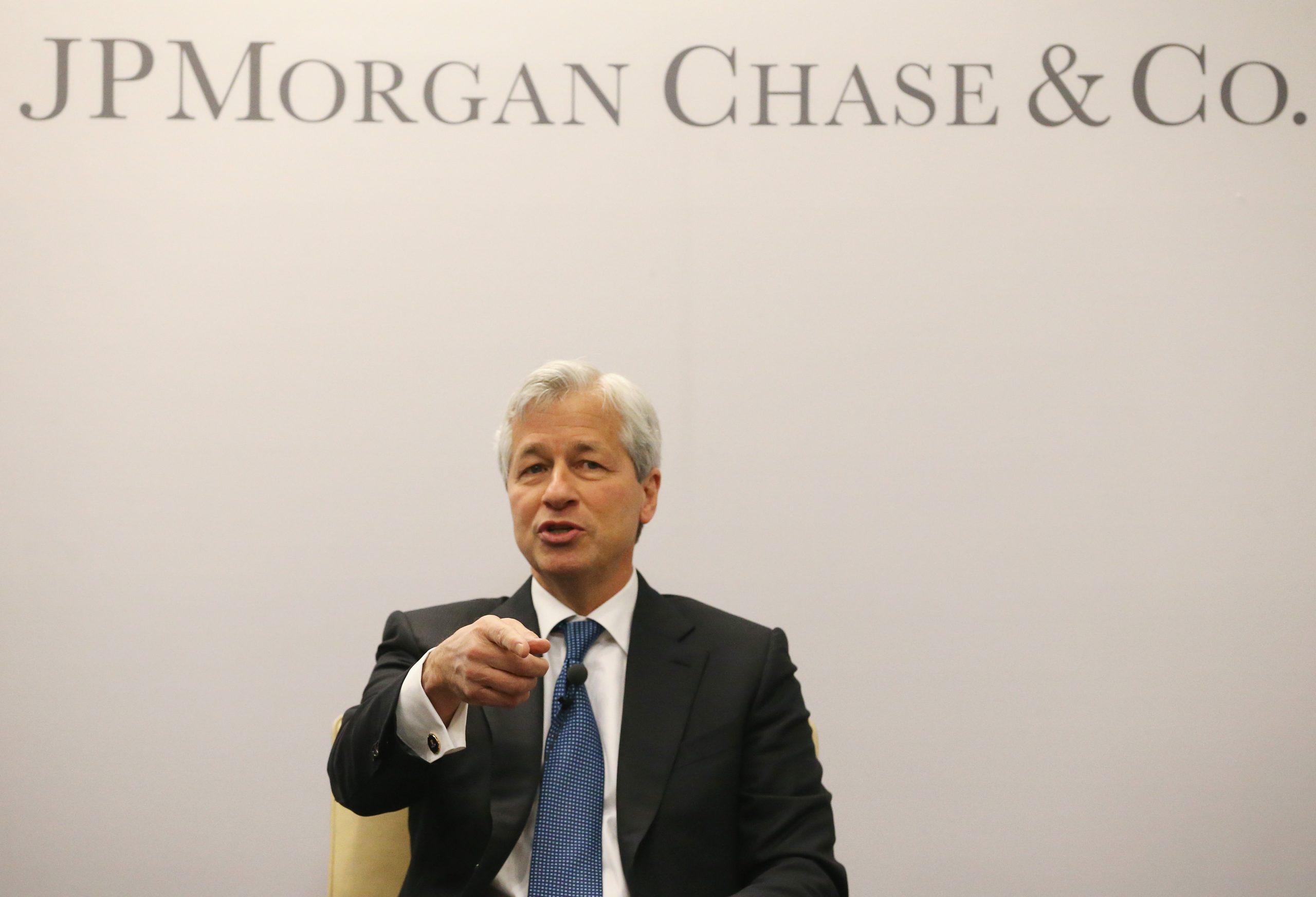
JP Morgan Chase puts contents through its CEO account, it goes viral. But the same content via JPMC account, no one cares (WSJ)

JPMorgan Chase & Co. has announced a sweeping plan to invest up to $10 billion in U.S. companies considered vital to national security and economic resilience, marking the most ambitious private-sector response yet to President Donald Trump’s renewed focus on industrial sovereignty and defense readiness.

The program, announced on Monday, is part of a 10-year, $1.5 trillion initiative that aims to facilitate, finance, and invest in industries critical to the growth and stability of the U.S. economy — including defense, energy, and manufacturing. JPMorgan said it will deploy the initial $10 billion through direct equity and venture capital investments, with the broader commitment spread across lending, project financing, and capital markets support.

The announcement sent shares of the nation’s largest bank up 1.4% in pre-market trading.

The plan aligns closely with the Trump administration’s agenda to modernize infrastructure and reduce dependence on foreign supply chains, particularly in strategic sectors such as semiconductors, pharmaceuticals, clean energy, and rare earth minerals — all areas where the U.S. has long been reliant on imports from China.

“It has become painfully clear that the United States has allowed itself to become too reliant on unreliable sources of critical minerals, products and manufacturing — all of which are essential for our national security,” JPMorgan Chairman and CEO Jamie Dimon said in a statement accompanying the announcement.

Dimon’s comments echoed the White House’s broader industrial policy objectives, which have gained renewed urgency following President Trump’s revival of a trade war with Beijing last Friday. The president promised to sharply raise tariffs in retaliation for China’s decision to curb exports of rare earth materials, vital components in electronics and defense systems.

Trump, who has repeatedly criticized major U.S. banks for “debanking” clients based on political or religious beliefs, praised the new initiative as a sign that Wall Street was “getting back to serving America’s interests.”

The “Security and Resiliency Initiative”

JPMorgan said its new “Security and Resiliency Initiative” will focus investment on four strategic areas:

  • Supply chain and manufacturing
  • Defense and aerospace
  • Energy independence
  • Frontier technologies — including artificial intelligence and quantum computing

These broad areas will be further divided into 27 sub-sectors, covering everything from shipbuilding, nuclear energy, and nanomaterials to secure communications and next-generation computing systems.

The bank also announced that it will establish an external advisory council, composed of public- and private-sector leaders, to guide the initiative. It plans to hire more bankers and investment professionals dedicated to national security-linked transactions and expand research on supply chain vulnerabilities through its recently launched Center for Geopolitics.

The program builds on JPMorgan’s existing work with the federal government. Earlier this year, the bank helped structure the U.S. government’s deal with MP Materials (MP.N) — a Nevada-based rare earth mining company — aimed at revitalizing domestic mineral extraction.

“We’ve had no less than 100 calls with clients to talk about the MP transaction as well as what this means for other industries,” said Andrew Castaldo, JPMorgan’s co-head of mid-cap mergers and acquisitions. “And we’ve had numerous trips down to Washington to explore those opportunities with the government.”

According to people familiar with the discussions, JPMorgan is coordinating closely with the administration on dozens of transactions across up to 30 industries identified as “critical to national and economic security.”

A $1.5 Trillion Industrial Push

The newly announced $10 billion allocation forms part of a much larger strategic plan. JPMorgan revealed it has already committed to facilitating about $1 trillion in financing for clients in these strategic industries over the next decade, and now plans to expand that figure by 50%, to $1.5 trillion.

Analysts say the bank’s decision represents a structural pivot in how Wall Street approaches industrial investment — from maximizing global efficiency to reinforcing domestic production capacity.

Policy Frustrations and a Call for Speed

While unveiling the plan, Dimon also took aim at regulatory and bureaucratic delays that he said were stalling America’s ability to rebuild.

“America needs more speed and investment,” Dimon said, warning that outdated policies and workforce shortages were undermining progress. He added that if key reforms and infrastructure modernization “had been done earlier, things wouldn’t be this bad.”

That sentiment aligns with the Trump administration’s push for accelerated permitting and deregulation to encourage investment in manufacturing, energy, and defense.

The U.S. is currently pursuing deals across multiple strategic sectors, ranging from critical minerals and microchips to advanced defense manufacturing, as part of an emerging national security-industrial complex that fuses government policy with private capital.

In that sense, JPMorgan’s plan is not merely a financial commitment — it is a signal that Wall Street is re-aligning with Washington’s industrial strategy under Trump’s second term.

The bank is effectively positioning itself as a financial backbone of America’s new industrial era by combining its capital strength with federal priorities, helping to fund projects designed to re-shore production, secure supply chains, and drive technological self-sufficiency.

Market analysts expect the plan to stimulate investment in middle-market defense and energy companies, particularly those seeking capital to scale domestic production. It may also boost innovation in frontier technologies — especially in AI and quantum computing, where national competitiveness has become a defining geopolitical issue.

If successful, JPMorgan’s $10 billion security initiative could serve as a template for other major banks, including Goldman Sachs and Bank of America, to follow suit, as Wall Street and Washington draw closer in reshaping America’s economic future.