DD
MM
YYYY

PAGES

DD
MM
YYYY

spot_img

PAGES

Home Blog Page 3568

Abia State Announces Plan to Fully Digitalize Civil Service by March 2024

0

The Commissioner for Science and Technology in Abia State, Nigeria, Chima Oriaku, has announced the government’s commitment to fully digitalizing the state’s civil service by March 2024.

The initiative aims to automate the entire state government workflow and transition from paper-based to digital formats for enhanced efficiency. It is one of the initiatives of the Otti-led government, geared toward transparent governance.

The move focuses on automating the workflow of the state government, converting manual processes into digital formats. The goal is to create a centralized data management system that facilitates easy access to government work environments, files, and project plans.

Challenges of Analog Processes

Oriaku highlighted the challenges of keeping files in paper and analog formats, making them susceptible to losses and destruction due to various factors. The move to digitalization of the state’s workflow is expected to address these challenges and improve overall access and management of government data.

The digitalization effort is also aimed at easing access to government data, enhancing work efficiency, and increasing overall output. The commissioner emphasized the need for a central data management system that enables quick access to information at the push of a button.

“We should have a centralized data management system so that at any time, at the punch of a button, by a government official, you will access data that you can work with.

“That is why we are in this partnership with Xerox Nigeria Limited to give us their support in that plan,” he said.

Oriaku said the digitalization initiative is to make Abia State workers more efficient and improve work processes. He added that the transition from analog to digital systems is expected to bring about accountability, reliability, productivity, and efficiency.

Partnership with Xerox Nigeria Limited

The government of Abia State has entered into a partnership with Xerox Nigeria Limited to support the digitalization plan.

Femi Abidoye, General Manager (Marketing) at Xerox Nigeria Limited, noted that the partnership was initiated by the governor’s desire for quality service delivery.

“The objective is to make Abia state workers work smarter and to deliver on state objectives. To simplify work processes, procedures, and work environment, and to move from the analog system to the digital system era where there is accountability, reliability, productivity, and efficiency at the end of the day,” he said.

“We are partnering with the Abia Ministry of Science and Technology to ensure there is cost control and to correct the record of everybody so that no data is lost at the end of the day. That is of uttermost importance.”

Oriaku stated the government’s commitment to completing the digitalization of the civil service by March 2024.

The move toward digitalizing government processes aligns with global trends in leveraging technology for improved governance, accessibility, and efficiency. It is expected to contribute to better service delivery and data management within the Abia State civil service.

Cybertruck Deliveries start from Thursday.

0
TEHRAN, IRAN - JULY 19: (RUSSIA OUT) Russian President Vladimir Putin leaves his presidential plane during the welcoming ceremony at the airport, on July 19, 2022 in Tehran Iran. Russian President Putin and his Turkish counterpart Erdogan arrived in Iran for the summit. (Photo by Contributor/Getty Images)

The wait is finally over. Tesla has announced that the first batch of Cybertruck deliveries will start on Thursday, marking a milestone for the company and the electric vehicle industry. Elon Musk tweeted on X confirming the delivery scheduled for Thursday.

The Cybertruck, which was unveiled in November 2019, is a futuristic pickup truck that features a stainless-steel exoskeleton, a bulletproof glass windshield, and a tri-motor powertrain that can accelerate from 0 to 60 mph in 2.9 seconds. But what are the Cybertruck’s specs? Here are some of the key features and numbers that make this vehicle stand out:

Range: The Cybertruck offers three battery options, with estimated ranges of 250+, 300+, and 500+ miles respectively.

Towing: The Cybertruck can tow up to 14,000 pounds with the tri-motor variant, 10,000 pounds with the dual-motor variant, and 7,500 pounds with the single-motor variant.

Payload: The Cybertruck can carry up to 3,500 pounds of cargo in its 6.5-foot-long bed, which also has a built-in ramp and a tonneau cover.

Performance: The Cybertruck can reach a top speed of over 130 mph and has an adjustable air suspension that can raise or lower the vehicle by 4 inches.

Price: The Cybertruck starts at $39,900 for the single-motor version and goes up to $69,900 for the tri-motor version. Customers can also opt for a self-driving package that costs an additional $10,000.

But what is the self-driving package? This is an optional feature that enables the Cybertruck to drive itself on highways and city streets, using Tesla’s advanced Autopilot system. The self-driving package also includes access to Tesla’s Full Self-Driving (FSD) software, which is expected to enable more autonomous capabilities in the future, such as navigating complex intersections, recognizing traffic lights and signs, and parking itself.

The self-driving package is not yet fully functional and requires the driver to monitor the vehicle and be ready to take over at any time. However, Tesla claims that the self-driving package will increase in value over time as more features are added.

Tesla has received over one million pre-orders for the Cybertruck, which will be manufactured at its Gigafactory Texas. According to Tesla CEO Elon Musk, the initial production will be limited to the tri-motor variant, followed by the dual-motor variant in late 2022 and the single-motor variant in late 2023.

The Cybertruck is expected to face stiff competition from other electric pickup trucks that are entering the market, such as the Ford F-150 Lightning, the Rivian R1T, and the GMC Hummer EV. However, Tesla has a loyal fan base and a reputation for innovation that could give it an edge over its rivals. The Cybertruck also offers a unique design and features that appeal to customers who are looking for something different and futuristic.

Tesla fans who have pre-ordered the Cybertruck are eagerly awaiting their delivery notifications, while others who are curious about the vehicle can visit Tesla’s website or showrooms to learn more about it. The Cybertruck is set to revolutionize the pickup truck segment and usher in a new era of electric mobility. Thursday can’t come soon enough.

Lessons As Apple and Goldman Sachs End Credit Card Partnership

0

Everything is easy when another person has done it, and if you try, you will learn some lessons. Yes, Goldman Sachs and Apple starting a consumer credit card product is not necessarily pioneering. There is no left inefficiency which both could have exploited to thrive in America. It is the same reason why MPESA clones failed in Nigeria and South Africa because both markets were more advanced than Kenya’s when MPESA started. So, anything MPESA offered Nigerians and South Africans was not better than the current products, for them to switch. So, mobile money failed in Nigeria and South Africa.

It is the same thing with USSD payment in the US. Who cares? What you have here is just great enough to bother.

So, for GS/Apple, I am not sure anyone with decent credit history cares about the design of the card or the logo on the card. Most care about the interest rates and the available credit limit. Apple/GS are babies in that space and cannot match Bank of America, Chase, etc. 

When this launched. I wrote that it was a waste of time for Apple and GS, because unlike when the consumer is giving money out (i.e. you are taking the risk), when you are receiving credits (i.e. borrowing), you focus on the best rates and limits, with limited interests on the “magical” design of the plastic. In other words, even if the plastic has a poor design but offers great rates and limits, Apple’s engineering ergonomics matters less, since no person waves cards as a fashionista product like the iPhone.

That is what happened here and it does not diminish the mission of fintechs which continues to unlock new vistas in the market. Those fintechs depend on bank sponsors to power them. What Apple and GS built was not a fintech product because GS itself is a bank joining a really late party, and its cost model cannot allow the business to thrive.

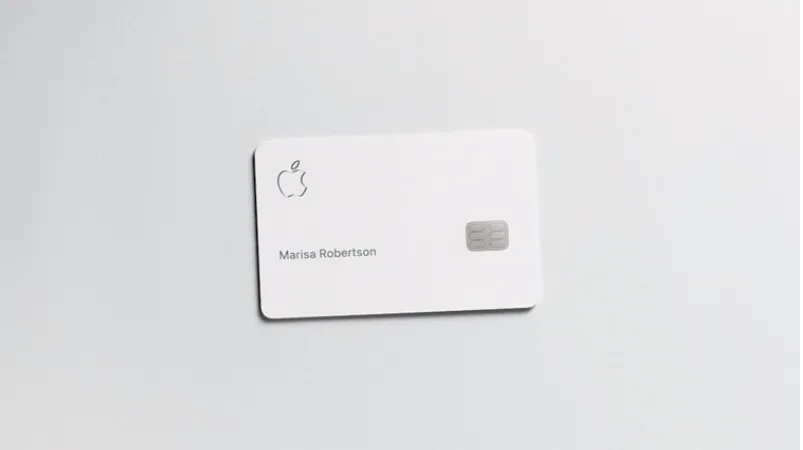
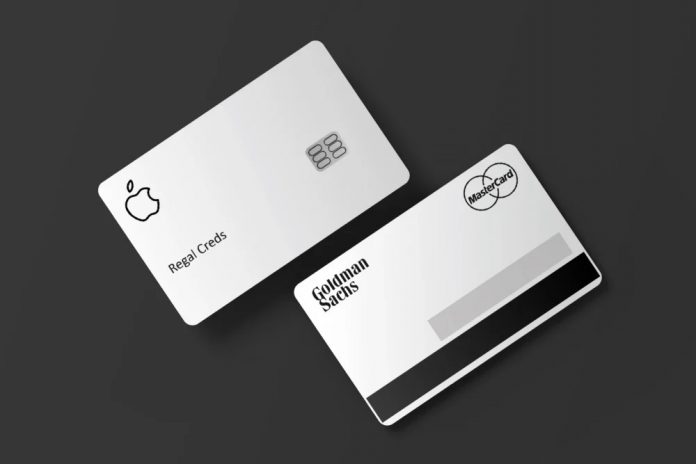
Tech giant Apple has announced its decision to discontinue its credit card partnership with Investment banking company, Goldman Sachs.

The tech giant recently sent a proposal to the Wall Street bank to exit the contract in the next 12 to 15 months. This exit would cover their entire consumer partnership, including the savings account rolled out this year.

Speaking on the end of its partnership with Goldman Sachs, Apple said,

“Apple and Goldman Sachs are focused on providing an incredible experience for our customers to help them lead healthier financial lives. The award-winning Apple Card has seen a great reception from consumers, and we will continue to innovate and deliver the best tools and services for them.”

Comment on Feed

Comment 1: The Apple-Goldman Sachs credit card isn’t just another entry in the crowded market; it’s a game-changer in personal finance. Here’s why:
Brand Power: Apple’s expertise in user experience, combined with Goldman Sachs’ financial prowess, offers a unique, integrated service.
Data-Driven Insights: Leveraging data for personalized services, this partnership could redefine financial management.
Consumer Trends: This card meets evolving consumer demands for digital integration and ethical branding, especially among younger users.
Market Disruption: More than competing with banks, this venture could create a new niche in financial services.
Regulatory Expertise: Goldman Sachs’ experience ensures stability and compliance in this innovative venture.
In essence, this collaboration signifies a shift in financial services, prioritizing technology and user experience as key drivers of value.

My Response: “Apple’s expertise in user experience, combined with Goldman Sachs’ financial prowess, offers a unique, integrated service.” – The irony is that when you are borrowing money, the only user experience is interest rate and amount. Other things are marginal!

The Principle of Proportionality in Criminal Justice

0

In dispensing criminal justice under criminal jurisprudence, there is what is called the principle of proportionality. According to this legal principle of proportionality, justice and fairness require that the offender be entitled only to the punishment of the crime committed which is based on the severity of the crime and the situation of the victim, the situation of the offender, the circumstances of the crime, etc. This is to say that there must be coordination and balance between crime and punishment in order to ensure justice.

Proportionality as a legal principle maintains that the punishment for a crime should be proportionate to the seriousness of the offense. In other words, the punishment should fit the crime and not be excessively harsh or lenient. There must be a balance as to the crime/punishment. 

In dispensing of criminal justice, a tripartite justice is to be achieved; Justice for the state, Justice for the victim and surprisingly, Justice for the offender too. So this legal principle of proportionality advocates for justice for both the victim and the offender. If you over punish the offender, you have done the offender injustice and if you under punish the offender, you have done the state and the victim a great deal of injustice.

The core words here under this principle are fit or balance; the punishment must “fit” the crime and/ or there must be a “balance” between crime and the punishment.

In order to achieve this proportionality, crimes or offenses have been grouped into two; capital crimes/offenses which attract capital punishments and misdemeanors which attract lesser punishments. For instance, the death sentence meted on a murderer has been deemed to be proportionate to the capital offence of murder committed by the offender; the same goes with the life sentence or long imprisonment term meted on a convicted rapist is said to be proportional to the offence of rape committed by the offender but death sentence cannot be meted on an offender whose offence is just stealing because the sentence of murder will not proportionate to the offence of stealing and the offender can appeal such sentence and ask for a lesser punishment which is equivalent to the offence he committed. 

The basic reason criminal justice seeks to strike this balance of proportionality in dispensing justice is because when punishment is less than the crime committed by the offender the purpose of justice will not have been achieved because if a capital offender is punished by a mere slap on the wrist there won’t be deterrence, other prospective offenders may be motivated to commit such offense knowing that the reward outweighs the risk same goes if the punishment of the crime is higher than the crime committed, there won’t be justice as well. 

Apple Announces Decision to End Its Credit Card Partnership With Goldman Sachs

0

Tech giant Apple has announced its decision to discontinue its credit card partnership with Investment banking company, Goldman Sachs.

The tech giant recently sent a proposal to the Wall Street bank to exit the contract in the next 12 to 15 months. This exit would cover their entire consumer partnership, including the savings account rolled out this year.

Speaking on the end of its partnership with Goldman Sachs, Apple said,

“Apple and Goldman Sachs are focused on providing an incredible experience for our customers to help them lead healthier financial lives. The award-winning Apple Card has seen a great reception from consumers, and we will continue to innovate and deliver the best tools and services for them.”

Recall that Goldman Sachs and Apple entered into a partnership in 2019, to provide consumer lending, which included the Apple Card.

The two companies further announced a savings account with high yields, exclusively for Apple card users. Additionally, they also offered a “Buy Now Pay Later” (BNPL) service in the US to Apple users, which enables users to divide purchases into four payments over six weeks without any interest or fees.

However, the end of this partnership comes as Goldman Sachs has been pulling back from its move into consumer lending, which has proven more costly than it anticipated.

In June this year, the investment bank shared its financial results for Q2 2023 will saw it post significant losses.

In the June quarter alone, the bank saw a net loss of $667 million ($872 million pre-tax loss). While the division saw an increase in revenue, the provision for credit losses was very high, quickly eating away all of the $659 million in quarterly revenue and more.

Goldman Sachs’ “Platform Solutions” businesses, including the Apple Card, has resulted in a loss of $3 billion till 2022. Most of the $1 billion loss in 2021 came from the Apple Card, and another $2 billion in 2022 losses are believed to come from the Apple Card and GreenSky mostly.

According to a Wall Street report, Goldman Sachs was overwhelmed by the size of the consumer credit partnership and discussed handing off the program to American Express and other suitors as it struggled to scale the required customer service and back-end resources. 

The New York-based company has said it pushed too quickly into the effort, contributing to missteps. Goldman Sachs has held talks with American Express Co. to take over the Apple credit card and other services, but the company was reluctant in taking over the deal, expressing concerns about loss rates.

For Apple, the partnership with Goldman was part of a broader push into financial offerings. The company is looking to generate more revenue from services as sales of its hardware products slow.

Apple and Goldman will have to work out the terms of an exit which could take over a year. It also marks the latest big step by the investment bank to get out of the consumer banking experiment.

It is also worth noting that Goldman Sachs is also expected to discontinue its credit card partnership with General Motors. Recall that Goldman purchased the card business from GM in 2020 for around $2.5 billion, outbidding Barclays as the two companies.

Last month, the bank announced that it surpassed estimates for third-quarter profit but disclosed that its ill-fated foray into consumer banking continued to weigh on its overall revenue.

For Apple, the tech giant has disclosed that it remains committed to its Apple Card credit card and savings account and doesn’t plan to discontinue the products whether or not Goldman Sachs is involved as it is open to new partnerships.