
DD
MM
YYYY

PAGES

DD
MM
YYYY

spot_img

PAGES

Home Blog Page 3570

Data is Stubborn When it Faces Conventional Wisdom

0

Data is a stubborn thing when it faces conventional wisdom. It often challenges our assumptions, biases and beliefs, and forces us to rethink our views and opinions. Data can also be a powerful tool for innovation, discovery and problem-solving, if we are willing to listen to what it tells us and act accordingly.

I will share some examples of how data has challenged conventional wisdom in various fields and domains, and how it has led to new insights, breakthroughs and opportunities. I will also discuss some of the barriers and pitfalls that prevent us from embracing data-driven decision making, and how we can overcome them.

One of the most famous examples of data challenging conventional wisdom is the story of Ignaz Semmelweis, a Hungarian physician who worked in a maternity clinic in Vienna in the 1840s. He noticed that the mortality rate of women who gave birth in the clinic was much higher than those who gave birth at home or in other hospitals.

He also observed that the doctors who delivered the babies often came from performing autopsies on corpses, without washing their hands or instruments. He hypothesized that the doctors were transferring some kind of “cadaverous particles” to the women, causing them to die from infections.

Semmelweis decided to test his hypothesis by requiring the doctors to wash their hands with a chlorine solution before attending to the women. He found that the mortality rate dropped dramatically, from 18% to 2%. He published his findings and tried to convince his colleagues to adopt his practice, but he was met with resistance and ridicule.

His idea contradicted the prevailing medical theory of the time, which attributed diseases to imbalances in the four bodily humors. Semmelweis was eventually dismissed from his position and died in an asylum, before his discovery was widely accepted and recognized as a major contribution to medicine.

Semmelweis’s story illustrates how data can challenge conventional wisdom, but also how difficult it can be to change people’s minds and behaviors based on data. Some of the reasons why people resist data are:

Confirmation bias: We tend to seek out and interpret information that confirms our existing beliefs and ignore or dismiss information that contradicts them. Status quo bias: We tend to prefer things to remain the same, and avoid changes that might disrupt our routines, habits or comfort zones.

Authority bias: We tend to trust and follow the opinions of experts, leaders or authorities, even if they are wrong or outdated. Groupthink: We tend to conform to the views and norms of our peers, colleagues or social groups, even if they are irrational or harmful. Fear of failure: We tend to avoid taking risks or trying new things that might lead to failure or criticism.

The first step is to challenge conventional wisdom. This involves questioning traditional investment advice and assumptions to see if they hold up under scrutiny. EBI seeks to find evidence that supports or disproves these assumptions to help investors make more informed decisions.

The second step is to ask meaningful questions. This involves identifying the key issues that investors face and asking questions that will help them make better decisions. For example, what is the best way to capture market returns? How much risk should an investor take on? What is the most efficient way to diversify a portfolio?

The third step is to apply the evidence. This involves analyzing the data and research to determine the best course of action. EBI uses a systematic, analytical, and scientific approach to evaluate investment options and make informed decisions.

The final step is to monitor for effectiveness. This involves tracking the performance of the portfolio over time and adjusting as needed. EBI recognizes that markets are dynamic and that investment strategies must evolve over time to remain effective.

These biases can prevent us from seeing the truth, learning from data, and making better decisions. They can also hinder innovation, creativity and progress. How can we overcome them? Here are some suggestions:

Be curious: Seek out new information and perspectives that challenge your assumptions and expand your knowledge.

Be humble: Admit when you are wrong or don’t know something and be open to feedback and correction. Be critical: Question everything, including your own beliefs and opinions, and look for evidence and logic to support them. Be experimental: Test your ideas and hypotheses with data and learn from your successes and failures. Be collaborative: Share your data and insights with others and seek their input and opinions.

Data is a stubborn thing when it faces conventional wisdom. But it can also be a catalyst for change, improvement and growth. If we are willing to embrace data-driven decision making, we can unlock its potential and benefit from its power.

Telcos make more Yields from poor areas with Data plans than rich areas in Accra

This is a surprising fact that many people may not be aware of. How can it be that the poor areas of Accra, where most people struggle to afford basic necessities, are more profitable for the telecommunication companies than the rich areas, where people have more disposable income and access to better infrastructure?

The answer lies in the data plans that the telcos offer to their customers. In the poor areas, most people rely on mobile phones as their primary means of communication and information. They use data bundles that are cheap and expire quickly, such as daily or weekly plans. These plans have high per-megabyte rates and low data caps, which means that the customers end up paying more for less data.
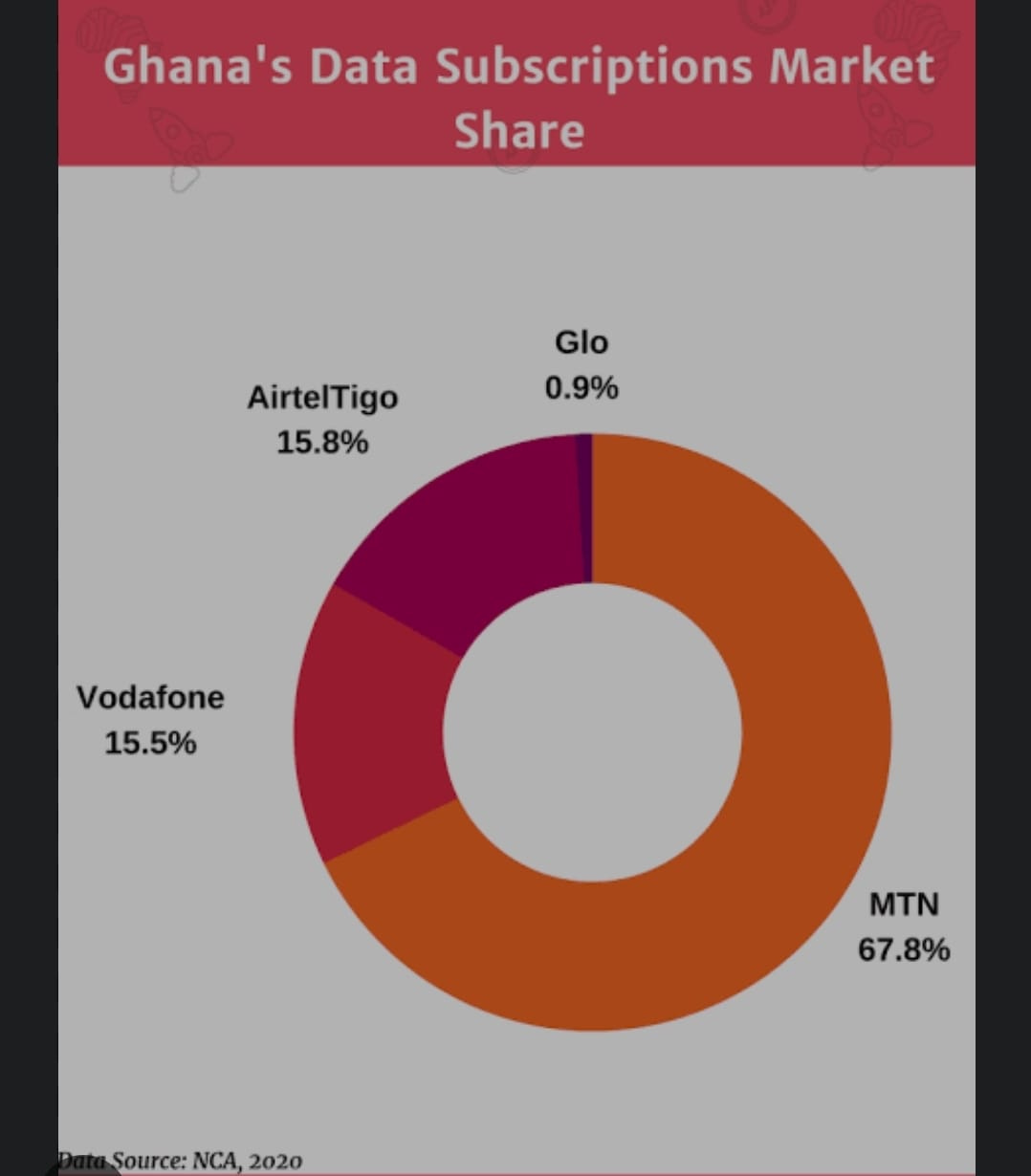
All Ghana’s networks have millions of dollars in assets and subscribers under their belt, but MTN Ghana takes the cake when it comes to the richest. As of 2020, they banked approximately 21 million subscribers, which translates to a whopping 53% market share in terms of telecom companies in Ghana.

In contrast, in the rich areas, most people have access to other forms of communication and information, such as landlines, broadband internet, cable TV, etc. They use data bundles that are more expensive and last longer, such as monthly or yearly plans. These plans have lower per-megabyte rates and higher data caps, which means that the customers end up paying less for more data.

The telcos exploit this difference in demand and supply by charging different prices for different areas. They charge more for the poor areas, where there is high demand and low supply of data, and less for the rich areas, where there is low demand and high supply of data. This way, they maximize their profits by extracting more money from the poor customers than from the rich ones.

Policy makers pushing for digitalization.

For years now, policy makers have been pushing for economic progress through digitalization. Successive governments have initiated a number of projects aimed at connecting more people to the Internet. In 2004, Ghana finalized and legally adopted its ICT Policy for Accelerated Development (ICT4AD), which outlined its vision for the information age. However – and this is the flip side of the coin – digital improvements are predominantly benefiting high earners in urban areas or companies based along the fiber optic infrastructure.

Even in the capital, Accra, coverage is still fragmented, and, especially for start-ups, far too expensive, as William Will Senyo, co-founder and CEO of Impact Hub Accra explains: “There is high speed Internet, but it costs an arm and a leg. It costs you $15 to $100,000 dollars a year to have somewhere between 50 and 100 mbps stable high-speed fiber Internet. So how many companies can afford that? Very few.”

Even for people with a regular income, access to the Internet – and with it the opportunities for digital participation – is associated with high costs. That’s despite Ghana’s leadership among its neighbors. The price for 1GB of mobile data volume is just over 2 percent of an average monthly income. In an international comparison by the Alliance for Affordable Internet (A4AI), Ghana ranks 20th out of 60 countries surveyed. The A4AI Affordability Drivers Index summarizes several factors relevant to access.

Regina Honu, CEO of Soronko Academy, which runs the Tech Needs Girls mentorship program where they teach primarily women and girls to code and work with technology, also remarks that digital participation in Ghana remains difficult because “the cost is prohibitive.” She hopes that “government initiatives that use the internet to train more people in different places and get more organizations to come in” will drive down the cost.

The government is aware of the problem of cost. Ghana was the second nation to endorse the “1 for 2” Internet affordability target. In 2017, Communications Minister Ursula Owusu-Ekuful announced Ghana’s intention to start working toward “1 for 2,” meaning, 1GB of mobile broadband for 2 percent or less of an average monthly income.

This is a clear example of how the telcos are taking advantage of the digital divide in Accra. They are not providing equal and affordable access to data for all their customers, but rather discriminating based on their location and income level. This is unfair and unethical, and it needs to change.

Technology Evolves, so do Preferences and Behaviors of Consumers

0

As technology evolves, so do the preferences and behaviors of consumers. However, we often fail to anticipate how people will react to new products or services, and what factors will influence their adoption. In this blog post, I will explore some of the reasons why consumers can be irrational, from our perspective, and how we can better understand and serve them.

One of the main challenges of predicting consumer behavior is that it is not always based on logic or rationality. Consumers are influenced by emotions, biases, social norms, habits, and other psychological factors that may not align with our expectations or assumptions. For example, consumers may value convenience over quality, novelty over functionality, or status over utility. They may also be swayed by marketing strategies, peer pressure, or word-of-mouth recommendations.

Some examples of irrational consumer behavior include:

Paying more for a product or service that has a lower quality or performance than a cheaper alternative. Buying a product or service that they do not need or use, just because it is trendy or popular. Switching from a product or service that they are satisfied with, to a new one that has no clear advantage or benefit. Rejecting a product or service that has a superior quality or performance, because it is unfamiliar or different. Sticking to a product or service that they are dissatisfied with, because they are loyal or resistant to change.

Consumer behavior is influenced by social and cultural factors that are not always observable or measurable. Consumers are influenced by the opinions, values, beliefs, and norms of their family, friends, peers, and society. These factors can affect how consumers perceive and evaluate products and services, as well as how they communicate and interact with others. Marketers need to understand the social and cultural context of their customers and how it affects their behavior.

Consumer behavior is complex and multidimensional. Consumers do not always act in a linear or logical way. They may have multiple goals, motivations, attitudes, and intentions that guide their behavior. They may also have different levels of involvement, awareness, knowledge, and loyalty towards a product or service. Marketers need to segment and target their customers based on these different dimensions and tailor their marketing mix accordingly.

Consumer behavior is influenced by situational factors that are beyond the control of marketers. Consumers may behave differently depending on the time, place, mood, or occasion. For example, consumers may buy more during holidays, sales, or special events. They may also buy differently depending on the weather, location, or availability of a product or service. Marketers need to anticipate and respond to these situational factors and adjust their marketing strategies accordingly.

These examples show that consumers are not always rational actors who make optimal decisions based on objective criteria. They are human beings who have complex motivations, emotions, and preferences that may not be obvious or consistent. Therefore, we cannot rely on our own logic or intuition to predict what they will want or do.

How can we overcome this challenge and better understand consumer behavior? Here are some suggestions:

Conduct market research and user testing to gather data and feedback from actual or potential consumers. This will help us identify their needs, wants, preferences, pain points, and expectations. Analyze the data and feedback using behavioral economics and psychology principles. This will help us uncover the underlying factors that influence consumer behavior, such as heuristics, biases, emotions, social norms, etc.

Design products and services that cater to the needs and wants of consumers, while also addressing their pain points and expectations. This will help us create value propositions that appeal to both the rational and irrational aspects of consumer behavior. Communicate the value propositions using effective marketing strategies that resonate with the emotions and motivations of consumers. This will help us persuade and influence them to adopt our products and services.

We sometimes underestimate what technology people will adopt and how irrational “to us” a consumer can be. However, by applying these suggestions, we can improve our ability to anticipate and satisfy consumer behavior and create products and services that are successful in the market.

Bitcoin ETFs Have $100M in AUM in Brazil, Blast TVL Surpasses $500M as Cool Cats Featured on the Macy’s Parade

0

The Brazilian crypto market has witnessed a remarkable growth in the past year, as more investors and institutions are embracing the potential of digital assets. One of the most notable developments in this space is the launch of two Bitcoin exchange-traded funds (ETFs) by local asset managers Hashdex and QR Capital.

These ETFs, which track the performance of Bitcoin and are traded on the Brazilian stock exchange (B3), offer a convenient and regulated way for investors to gain exposure to the leading cryptocurrency without having to deal with the technical and security challenges of holding it directly.

According to data from B3, the two Bitcoin ETFs have attracted significant inflows since their inception, reaching a combined total of nearly $100 million in assets under management (AUM) as of November 26, 2023. The Hashdex Nasdaq Crypto Index ETF (HASH11), which was launched in April 2023, has amassed $67.8 million in AUM, while the QR Asset Management Bitcoin ETF (QBTC11), which debuted in June 2021, has accumulated $31.9 million in AUM.

Spot Bitcoin ETFs Have Almost $100M in AUM in Brazil, Led by Hashdex Offering Pro-market digital assets regulation and growing interest from large institutions are among the factors behind the success so far, said Hashdex’s CEO.

The growing demand for these products reflects the increasing popularity and acceptance of Bitcoin as a legitimate asset class in Brazil and beyond. The country’s securities regulator, the Comissão de Valores Mobiliários (CVM), has approved both ETFs, making Brazil one of the few jurisdictions in the world to allow such products. Moreover, the Brazilian central bank has recently recognized Bitcoin and other cryptocurrencies as financial assets, paving the way for further integration and innovation in the crypto sector.

The success of the Brazilian Bitcoin ETFs also puts pressure on other regulators, especially in the US, to approve similar products that could bring more liquidity and transparency to the crypto market. While several proposals for Bitcoin ETFs have been submitted to the US Securities and Exchange Commission (SEC), none have been approved so far, mainly due to concerns over market manipulation and investor protection. However, some analysts believe that the SEC could change its stance in the near future, as more evidence emerges that Bitcoin ETFs can operate safely and efficiently in other markets.

The Brazilian Bitcoin ETFs are a testament to the growing maturity and adoption of the crypto industry in Latin America’s largest economy. They provide an easy and accessible way for investors to participate in the upside potential of Bitcoin, while also contributing to the development and regulation of the crypto ecosystem. As more countries follow suit, we could see a new wave of innovation and growth in the global crypto market.

Blast TVL surpasses $500M as Cool Cats featured on the Macy’s Parade

Blast, the decentralized finance platform that allows users to earn interest on their crypto assets, has reached a new milestone. The total value locked (TVL) on Blast has surpassed $500 millions, making it one of the fastest-growing DeFi projects in the industry.

Blast is a non-custodial platform that leverages smart contracts to enable users to deposit their crypto assets and earn passive income. Users can choose from a variety of pools, each offering different interest rates and risk profiles. Blast supports popular tokens such as ETH, USDT, DAI, WBTC, and more.

Blast’s growth is driven by its innovative features and competitive advantages. One of the key features of Blast is its auto-compounding mechanism, which automatically reinvests the interest earned by users into the same pool, maximizing their returns. Another feature is its low fees, which are only charged when users withdraw their funds. Blast also offers high security and transparency, as all its smart contracts are audited and verified by reputable firms.

Blast’s vision is to become the leading DeFi platform for crypto investors who want to earn passive income without sacrificing control over their assets. By surpassing $500 millions in TVL, Blast has proven its ability to attract and retain users with its attractive and user-friendly platform. Blast aims to continue innovating and expanding its offerings, as well as collaborating with other DeFi projects to create synergies and value for the crypto community.

Cool Cats featured on the Macy’s Thanksgiving parade.

Cool Cats, the popular NFT collection of 10,000 unique and randomly generated cat avatars, you might have been pleasantly surprised to see them on the Macy’s Thanksgiving parade this year. The parade, which is an annual tradition that attracts millions of viewers across the country, featured a giant balloon of a Cool Cat wearing a turkey hat and holding a sign that said, “Happy Thanksgiving from Cool Cats”.

The balloon was sponsored by the Cool Cats community, which raised over $200,000 in donations to make it happen. The community also donated $50,000 to the ASPCA, an animal welfare organization, as a way of giving back and supporting a cause that aligns with their values. The balloon was designed by Klaudia Jankowska, a digital artist and a Cool Cat owner herself.

The Cool Cats NFT project was launched in July 2021 and quickly became one of the most popular and successful collections on the Ethereum blockchain. The project has a strong focus on community building and engagement, offering various benefits and rewards to its holders, such as access to exclusive events, merchandise, games, and collaborations. The project also supports various charitable causes and initiatives, such as planting trees, providing clean water, and fighting climate change.

The Macy’s Thanksgiving parade was a milestone for the Cool Cats community and the NFT space in general, as it showcased the potential of NFTs to reach mainstream audiences and create positive social impact. The parade also celebrated the diversity and creativity of the NFT community, as the Cool Cats balloon was joined by other NFT-related balloons, such as CryptoPunks, Bored Apes, and Meebits. The parade was a testament to the power of NFTs to bring people together and foster a sense of belonging and identity.

Circle and SBI Holdings Partner on USDC Distribution, Banking and Web3 In Japan

0

Circle, the leading global financial technology firm and the principal operator of the USDC stablecoin, has announced a strategic partnership with SBI Holdings, one of Japan’s largest financial conglomerates. The partnership aims to leverage Circle’s expertise in USDC distribution, banking and Web3 technology to accelerate the adoption of digital assets and decentralized finance in the Japanese market.

According to a press release, the partnership will enable SBI Holdings to integrate USDC into its existing products and services, such as its digital asset exchange, SBI VC Trade, and its mobile payment app, MoneyTap. Additionally, SBI Holdings will collaborate with Circle to explore new opportunities for USDC in areas such as lending, yield generation, trade finance and cross-border payments.

USDC is a fully reserved digital dollar stablecoin that is governed by the Centre Consortium, a membership-based organization co-founded by Circle and Coinbase. USDC is supported by hundreds of platforms and applications around the world and has become a trusted and transparent alternative to traditional fiat currencies. As of November 2021, there are over 40 billion USDC in circulation, representing more than 25% of the global stablecoin market.

Circle’s CEO and co-founder, Jeremy Allaire, said: “We are thrilled to partner with SBI Holdings, a visionary leader in the Japanese financial industry and a pioneer in digital asset innovation. Together, we will bring the benefits of USDC and Web3 technology to millions of customers and businesses in Japan and help drive the next wave of growth and innovation in the global digital economy.”

Press Statement from Circle

In June of this year, the Japanese government laid out a vision for growing the Web3 industry in Japan, and crucially, put into effect new stablecoin laws for both domestic and foreign issued stablecoins. Japan is the first major government in the world with this regulatory clarity in effect. Stablecoins that cannot meet the high standards set out by the JFSA will not be allowed to circulate on Japanese markets.

These changes have dramatically opened up the opportunities for stablecoins and Web3 in the world’s 4th largest economy. The opportunity for Circle and USDC is significant. To seize the opportunity, I am incredibly excited to be working with Chairman of SBI Holdings, Mr. Kitao-san, who is an extraordinary businessman, innovator and leader in Asia and the world.

SBI Holdings operates one of the largest financial conglomerates in Japan, with the largest online retail brokerage, one of the largest digital banks, one of the largest retail FX platforms, a trust bank and more. Importantly, Kitao-san is not a “johnny come lately” to crypto and blockchain tech. He has understood it and invested in it for nearly a decade. SBI Holdings already operates digital asset trading, brokerage and cross-border payments solutions.

Kitao-san and I have a shared vision for what the new internet financial system will look like and the impact it will have on commerce, trade and innovation. What does the partnership exactly look like? Our highest priority together is to bring USDC into the Japan market, in a regulated capacity, following the new JFSA stablecoin laws.

As we have done throughout our history, we will work arm and arm with our partners and local regulators. Once launched, USDC can become a stablecoin on Japan digital asset markets and can be widely used in the on-chain economy growing in Japan as well, across many consumer-led Web3 product categories.

We can also work with the very large established retail and crypto platforms that SBI Group operates to adopt USDC as a new digital dollar. The dollar plays a crucial role in cross-border payments, FX and trading in the Japan market. This will extend into the adoption of digital dollars used on blockchain networks.

Another part of this is bringing direct banking from Japan to Circle’s USDC treasury and settlement operations, which translates to direct and local liquidity between JPY and USDC via the domestic banking system in Japan, building on the recent launch of the same in Singapore, with many more markets coming online soon.

Web3 Apps in Japan We have also seen rapid growth in major consumer-facing companies in Japan looking to launch Web3 apps using digital tokens, smart contracts and self-custody digital wallets. To that end, Circle will also work with SBI to promote the growth and adoption of Circle’s full-stack Web3 Services suite, which provides and end-to-end development, deployment and operations platform for building and operating Web3 apps across chains. Think games, culture and consumer entertainment.

A General Comment on Regulatory Clarity What you’re seeing here are the fruits of major governments who have established regulatory clarity for stablecoins. Good actors, working together, across the traditional and the new internet financial system to advance innovation with strong safeguards and supervision. As this plays out around the world, expect to see many more major partnerships with established Web2 companies and financial institutions who will make the leap into building and operating in the internet financial system.

SBI Holdings’ CEO and founder, Yoshitaka Kitao, said: “We are very excited to partner with Circle, the world’s leading provider of USDC and Web3 solutions. We believe that USDC is the most reliable and compliant stablecoin in the market, and that Web3 technology will enable new forms of value creation and exchange in the digital era. By integrating USDC into our platforms and services, we will offer our customers and partners a superior experience and a competitive edge in the Japanese market.”

Changpeng Zhao Steps Down as Binance.US board chairman

0

In a surprising move, Changpeng Zhao, the founder and CEO of Binance, has announced that he is stepping down from his role as the board chairman of Binance.US, the US-based affiliate of the global cryptocurrency exchange. Zhao, who is also known as CZ, made the announcement on Twitter on November 21, 2023, saying that he is handing over the reins to Richard Teng, was CEO of the Financial Services Regulatory Authority at Abu Dhabi Global Market (ADGM).

CZ said that he is stepping down to focus on his role as the leader of the global Binance platform, which has been facing increased regulatory scrutiny and pressure from various jurisdictions around the world. He also said that he is confident in Brooks’ ability to steer Binance.US to success, as he has extensive experience and expertise in both the traditional financial sector and the crypto industry. CZ added that he will remain as an advisor and a shareholder of Binance.US, and that he will continue to support its growth and innovation.

The news of CZ’s departure comes amid a turbulent period for Binance, which has been accused of operating illegally or without proper licenses in several countries, including the UK, Japan, Germany, Singapore, and Canada. The exchange has also faced investigations from regulators in the US, such as the Commodity Futures Trading Commission (CFTC) and the Department of Justice (DOJ), over allegations of market manipulation, money laundering, and tax evasion. Binance has denied any wrongdoing and has said that it is committed to complying with local laws and regulations wherever it operates.

Binance.US, which was launched in September 2019 as a separate entity from Binance, has been trying to distance itself from the regulatory woes of its parent company and to establish itself as a compliant and trustworthy platform for US customers.

The exchange has obtained licenses or registrations in 43 states and territories in the US and has recently applied for a national bank charter from the OCC, which would allow it to offer a wider range of financial services and products to its users. Binance.US has also hired several former regulators and industry veterans to its leadership team, such as Brooks, who joined as CEO in May 2021, and Manuel Alvarez, who joined as chief administrative officer in October 2021.

The reaction from the crypto community to CZ’s announcement has been mixed, with some expressing support and appreciation for his contributions to the industry, and others questioning his motives and credibility. Some analysts have speculated that CZ’s decision may be a strategic move to appease regulators and to avoid potential conflicts of interest or legal liabilities. Others have suggested that CZ may be preparing for a possible initial public offering (IPO) or merger of Binance.US, which could boost its valuation and legitimacy in the eyes of investors and authorities.

Binance.US is a separate entity from Binance, operating under a different management team and board of directors. It is registered as a money services business with the Financial Crimes Enforcement Network (FinCEN) and complies with the US anti-money laundering and know-your-customer regulations. It also has licenses or approvals to operate in 43 states and territories.

An IPO or merger of Binance.US could provide several benefits for CZ and Binance. First, it could raise capital and liquidity for the exchange, which could help it expand its services and market share in the US, one of the most important and competitive markets for crypto.

Second, it could enhance its reputation and credibility among regulators, customers, and partners, as it would have to meet the strict standards and disclosures required by the US Securities and Exchange Commission (SEC) and other agencies. Third, it could create a clear distinction between Binance and Binance.US, which could reduce the legal risks and challenges that Binance faces in other countries.

However, an IPO or merger of Binance.US also entails some challenges and uncertainties. For instance, it is not clear how much control or influence CZ would retain over Binance.US after the deal, as he would have to comply with the corporate governance and fiduciary duties imposed by US law.

Moreover, it is not clear how the deal would affect the relationship between Binance and Binance.US, especially in terms of sharing technology, resources, and customers. Furthermore, it is not clear how the deal would impact the valuation and performance of BNB, the native token of Binance, which is used for various purposes on the platform.

CZ may be preparing for a possible IPO or merger of Binance.US, which could boost its valuation and legitimacy in the eyes of investors and authorities. However, the deal also involves some challenges and uncertainties that need to be addressed before it can materialize. It remains to be seen whether CZ will pursue this option and how it will affect the future of Binance and the crypto industry.