DD
MM
YYYY

PAGES

DD
MM
YYYY

spot_img

PAGES

Home Blog Page 3571

Hong Kong CBDC pilot represents a forward-thinking approach to financial policy

0

Hong Kong central bank begins new phase of its CBDC pilot.

Hong Kong’s central bank has embarked on a new phase of its Central Bank Digital Currency (CBDC) pilot, signaling a significant step forward in the evolution of digital finance. This initiative reflects the bank’s commitment to exploring innovative financial technologies and staying at the forefront of the global financial landscape.

The pilot program aims to assess the feasibility of CBDC in real-world scenarios, examining its potential impact on payment efficiency, financial stability, and policy formulation. By leveraging blockchain technology, the central bank seeks to enhance transaction security and transparency, while also evaluating the implications for monetary policy and financial regulations.

The pilot program aims to explore the feasibility of issuing a digital currency that would operate alongside traditional Hong Kong dollars. By doing so, it seeks to enhance the efficiency of payments and settlements while ensuring robust security measures are in place to protect stakeholders.

The CBDC pilot in Hong Kong is not just about adopting new technology; it’s about reshaping the financial landscape to be more inclusive and efficient. As the pilot progresses, it will provide valuable insights into the operational challenges and opportunities that CBDC provides.

The pilot program, spearheaded by the Hong Kong Monetary Authority (HKMA), aims to explore the feasibility of CBDC in facilitating efficient and secure financial transactions. The CBDC, also referred to as ‘digital HKD’, seeks to offer a new form of currency that combines the convenience of digital payments with the security of traditional banking.

The initiative is part of Hong Kong’s broader strategy to develop a robust digital economy and maintain its status as a global financial hub. By experimenting with CBDC, HKMA intends to evaluate its potential in enhancing payment systems, fostering financial inclusion, and ensuring monetary stability.

As the pilot progresses, it will be crucial to address challenges such as interoperability with existing payment platforms, privacy concerns, and regulatory compliance. However, the successful implementation of a CBDC could revolutionize the financial landscape by providing a scalable and efficient digital payment solution.

As this pioneering project unfolds, it will provide valuable insights into the integration of digital currencies within the existing financial infrastructure. The central bank’s proactive approach underscores its dedication to fostering a dynamic and resilient financial ecosystem that can adapt to the rapidly changing demands of the digital age.

In an era where digital transformation is revolutionizing financial services, Hong Kong has taken a significant step by initiating a Central Bank Digital Currency (CBDC) pilot. This moves position Hong Kong at the forefront of financial innovation, reflecting its commitment to maintaining a dynamic and competitive financial sector.


South Africa is Set to License Around 60 Cryptocurrency Platforms by Month End

0

South Africa is gearing up plans to license around 60 cryptocurrency platforms by month’s end, a move that will position the country as a leader in Africa for digital asset regulation.

The Financial Sector Conduct Authority (FSCA) set a deadline of November 30 for exchanges to apply for licenses or face potential enforcement actions. Over 300 crypto asset providers have reportedly applied for licenses, according to FSCA commissioner Unathi Kamlana.

Speaking in an interview with Bloomberg, Kamlana said,

We are processing those licensing applications and we are doing so in a phased kind of manner given the numbers. If you wait for the Rolls-Royce kind of regulatory framework, you still have those risks anyway. As we license and supervise, we will discover that perhaps there are gaps that cannot be closed by the existing regulatory framework, the FAIS Act, we might need to build on that as we discover what those are”.

The proposed license of crypto platforms in Nigeria is coming after the Financial Sector Conduct Authority (FSCA) in 2022 declared crypto assets as a financial product. This declaration was a pivotal moment, marking the start of a journey to develop the crypto industry within South Africa’s legal framework.

According to Brent Peterson, head of legal at Easy Crypto Ltd., he said the move was about safeguarding the average Joe on the street, offering protections that were previously unavailable due to the unregulated nature of crypto trading.

While South Africa had begun working on a tailored crypto framework in 2021 when it initiated the conversation on digital assets, the country aborted the plans when it labeled cryptocurrencies as financial products, bringing them under the purview of the Financial Advisory and Intermediary Services Act (FAIS).

Besides providing requirements for licensing crypto firms, the FAIS Act offers a range of customer protections and allows regulators to take action against non-compliant businesses.

The need for crypto regulation in South Africa was necessitated following the increased adoption and interest in cryptocurrencies within the country. Cryptocurrency adoption in South Africa has been one of the highest in the world, with a large percentage of the audience that would prefer to use their crypto to make payments,”

Licensing of these crypto platforms will not only provide legitimacy to these platforms but also enhance consumer protection and ensure compliance with anti-money laundering (AML) and know-your-customer (KYC) regulations.

Overall, the licensing of the platforms in South Africa reflects a proactive approach by regulatory authorities to address the evolving landscape of digital finance and provide a conducive environment for the growth of the cryptocurrency industry in the country. In the meantime, stablecoins are exempted from the classification as the country seeks to implement a policy change to include them in its definition of crypto assets.

Don’t Miss Out! Meme Moguls Pump BlockDAG’s Presale – Is This Your Chance to Get Rich?

0

The rise of Memecoins has forever altered the cryptocurrency landscape. Remember the frenzy surrounding Dogecoin and Shiba Inu? Their meteoric ascent and subsequent dips have captivated investors, leaving them pondering the future.

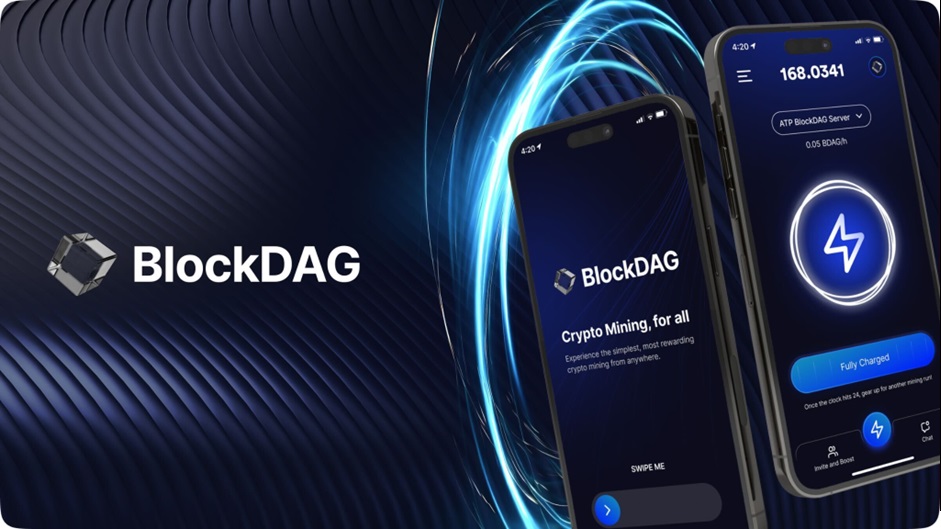
For Meme Moguls entrenched in the meme coin market, a game-changing platform called BlockDAG (BDAG) beckons as the next frontier. Explore the vast potential of the BlockDAG presale and unravel why it presents a unique opportunity to stay ahead of the curve, especially in light of Meme Moguls Tokens Locked.

Meme Mogul: A Recognizable Name

The recent Meme Moguls Tokens Locked signifies a significant milestone, elevating its credibility and long-term growth trajectory. Early adopters who reaped the rewards are now seeking new avenues as their investment horizons expand post-locking.

Unleashing the Potential of BlockDAG Presale for Meme Mogul Investors

What lies beyond the era of Meme Moguls Tokens Locked? Fear not, for the journey is far from over. BlockDAG emerges as an enticing prospect for Meme Mogul investors to continue their success story. Engaging in the presale enables investors to harness the platform’s unique attributes and potential for exponential growth.

But what sets BlockDAG apart? Its innovative technology and forward-looking approach distinguish it from its peers. With a decentralised architecture ensuring transparency and security and a scalable infrastructure facilitating seamless transactions, BlockDAG empowers Meme Mogul investors to optimise their returns upon launch.

Armed with insights into BlockDAG’s groundbreaking features, Meme Mogul investors are positioning themselves for significant gains in the dynamic crypto realm.

BlockDAG: An Attraction For Meme Moguls Investors

Investing with BlockDAG instils confidence in Meme Mogul investors to navigate the crypto landscape adeptly and make informed investment decisions. Its promising attributes and growing community interest render it an appealing choice for those seeking to maximise returns.

While traditional blockchains often encounter sluggish transaction speeds and hindering opportunities, BlockDAG remedies this with its Directed Acyclic Graph (DAG) structure, facilitating near-instant transactions. The recent emphasis on Meme Moguls Tokens Locked underscored the significance of such features, prompting investors to pivot to BlockDAG.

Picture acquiring that coveted limited edition Meme Mogul NFT without delays. Indeed, transaction lags catalysed for investors to transition away from conventional blockchains.

In contrast, BlockDAG ensures scalability post-launch, slated after its 45th and final presale batch. Its network accommodates a significantly higher transaction volume than competitors, fostering widespread adoption in the long run. While transaction fees on mainstream blockchains can be exorbitant, eating into profits, BlockDAG transactions boast considerably lower costs, empowering the community to invest more and retain earnings.

Unveiling The Curtains

Seize the opportunity to join the Meme Moguls Tokens Locked movement as BlockDAG grows monumentally. Delve into the presale, grasp its potential, and embark on an exhilarating investment journey. Embrace the revolution and chart a course towards financial prosperity with BlockDAG.


Invest In BlockDAG Now

Website: https://blockdag.network

Presale: https://purchase.blockdag.network

Telegram:https://t.me/blockDAGnetworkOfficial

Discord: https://discord.gg/Q7BxghMVyu

Nigeria’s Central Bank Must Pause Banking Recapitalization Until the Economy Stabilizes

0

Caution there for Nigeria’s central bank: “A new report from Ernst and Young has sent shockwaves through the Nigerian banking sector, revealing that 17 out of 24 banks could potentially fall short of meeting the capital requirement set by the Central Bank of Nigeria (CBN) if it is increased by 15-fold from its current N25 billion.”

Good People, the central bank must watch carefully before bringing another vector into the Nigerian economy. Yes, we do not want a further reduction in competition. While Zenith Bank can meet any new minimum paid-up share capital for a national commercial banking license at 15x on the old N25 billion, banks like Unity Bank may not.

Zenith Bank had rains last year, and possibly hit more than N1 trillion on PBT, even as Unity Bank was recording losses, and is expected to record losses in some quarters this year. Yes, it was all about choices made!

Simply, Nigerian banking is emerging into two classes: big or dying. I think those guys in CBN are smart enough to avoid anything that would engineer more chaos in the system.  We ask them to pause any recapitalization exercise until we can stabilize the economy!

“While the CBN governor gave no indication as to the magnitude of the proposed hike in the capital base, we have assumed what the proposed increment will be based on three different scenarios underpinned by current macroeconomic conditions. On the back of that, we were able to determine the number of banks (across the three license types) that may fall below the new minimum capital thresholds.

“In a worst-case scenario, i.e., given a capital multiplier of 15, about 17 out of 24 banks would not meet the new minimum capital,” the report states.

About 17 out of 24 Banks Would not Meet the New CBN’s Minimum Capital – Ernst & Young

About 17 out of 24 Banks Would not Meet the New CBN’s Minimum Capital – Ernst & Young

0

A new report from Ernst and Young has sent shockwaves through the Nigerian banking sector, revealing that 17 out of 24 banks could potentially fall short of meeting the capital requirement set by the Central Bank of Nigeria (CBN) if it is increased by 15-fold from its current N25 billion.

The report delves into the potential consequences of this shortfall, offering insights into various options available to banks that might find themselves outside the capital requirements mandated by the CBN. It suggests that such banks may need to consider mergers and acquisitions (M&A) to shore up their capital base, a strategy reminiscent of the consolidation witnessed during the last recapitalization exercise in 2004/2005, which saw the number of banks reduced from 89 to 25.

“While the CBN governor gave no indication as to the magnitude of the proposed hike in the capital base, we have assumed what the proposed increment will be based on three different scenarios underpinned by current macroeconomic conditions. On the back of that, we were able to determine the number of banks (across the three license types) that may fall below the new minimum capital thresholds.

“In a worst-case scenario, i.e., given a capital multiplier of 15, about 17 out of 24 banks would not meet the new minimum capital,” the report states.

The report underscores the urgent need for Nigerian banks to reassess their capital positions and formulate strategic plans to meet the requirements of the proposed capital revaluation by the CBN.

One of the key factors driving the need for this proposed capital revaluation is the recent devaluation of the naira in 2023. The report notes that while the exchange rate stood at N132.9/$ during the last exercise in 2005, the naira now exchanges for over N1400/$. Additionally, it notes that the N25 billion capital base in 2005 amounted to $188.2 million, which has significantly dwindled to a mere $18.4 million using the recent exchange rate.

This analysis presents a stark contrast to the stance of the CBN Governor, who previously indicated that the planned recapitalization aims to support Nigeria’s target of achieving a $1 trillion economy.

In November 2023, the Governor of the CBN hinted at the possibility of raising the minimum capital requirement for banks, citing the need for banks to have adequate capital to support an economy striving for a GDP of $1 trillion, as targeted by the Nigerian Federal Government.

Since the banks’ recapitalization in 2005, bank liquidation in Nigeria has significantly diminished, with no incident of depositors losing money to a failed bank. However, the financial sector has significantly changed since then, with the emerging fintech market which has spurred non-traditional financial institutions to record-breaking market capitalization, underscoring the need for the banks to recapitalize.

Also, the volatility of the Nigerian forex market has exposed the weaknesses of the banks, highlighting the vulnerability of their financial strength when measured in dollars. Given the current situation, experts say many banks will merge if the CBN makes its recapitalization move. Therefore, stakeholders are urged to collaborate closely with regulators and explore innovative strategies to ensure the continued resilience and stability of the banking sector.