DD
MM
YYYY

PAGES

DD
MM
YYYY

spot_img

PAGES

Home Blog Page 3573

Notable Provisions Of The Evidence (Amendment) Act of Nigeria

0

The Evidence (Amendment) Act was passed into law in 2023 to serve as an amendment of its principal act being the Evidence Act of 2011. The notable provisions of this amendment act will be forming the focus of this 2-installment article series.

Amendment of Section 84  :-

– In subsection 2(a), by inserting after the word “document”, the words “or electronic records”.

– In subsection 2 (b), by substituting for paragraph (b), a new paragraph “(b)” –

“(b)That during the period, information of the kind contained in the electronic record or of the kind from which the information so contained is derived was regularly fed into the computer in the ordinary cause of the activities”.

– In subsection (2)(c), by inserting after the word “document”, the words “or electronic records”.

– In subsection (2)(d), by inserting after the word “statement”, the words “or electronic records”.

– In subsection (4)(a)&(b) by inserting after the words “document”, the words “or electronic records”.

– In subsection (5)(c), by inserting after the word “document”, the words “or electronic records”. 

Insertion of new Sections 84a-84d :– 

84A(Information in Electronic Form) : Where any law provides that information or any other matter shall be in writing or in the typewritten or printed from, then notwithstanding anything contained in such law, such requirement shall be deemed to have been satisfied if such information or matter is :

a). rendered or made available in electronic form, and

b). accessible so as to be usable for a subsequent reference.

84B(Records In a Computer To be Admissible) – Notwithstanding anything contained in this act, any information contained in an electronic record which is printed on a paper, stored, recorded or copied in optical or magnetic media or cloud computing or database produced by a computer shall be deemed to also be a document, if the conditions mentioned in this section are satisfied in relation to the information and computer on question and shall be admissible in any proceeding, without further proof or production of the original, as evidence or any contents of the original or if any fact stated in it of which direct evidence would be admissible.

84C(Authentication of Electronic Records) :-

  1. Any person may authenticate an electronic record by affixing his digital signature on it.
  1. A person may authenticate any electronic record by such digital signature or electronic authentication technique which- 

a). is considered reliable, or

b).may be specified by this act.   

– Any digital signature or electronic authentication technique will be considered reliable if – 

a). The signature creation data or the authentication data are, within the context in which they are used, linked to the signatory or , as the case may be, the authenticator and of no other person.

b). Any alteration to the digital signature made after affixing such signature is detectable.

c). Any alteration to the information made after its authentication by the digital signature is detectable.

d). It fulfills other conditions which may be prescribed.

84D(Proof of Digital Signature):- Except in the case of a secure digital signature, if the digital signature of any person is alleged to have been affixed to an electronic record, the fact that such digital signature is the digital signature of the person must be proved.

– A digital signature shall be deemed to be secure if tjr signature creation data – 

a). at the time of affixing the signature, was under the exclusive control of the signatory and no other person, and

b). was stored & affixed in such an exclusive manner as may be prescribed.

Amendment of Section 93 :- In subsections (1) -(3), by inserting after the words “electronic signature” , the words “or digital signature”.

Substitution for Section 108 :-

Affidavit to be filed

– Before an affidavit is used in court, the original is to be filed in the court & this original or an office copy shall be recognized for any purpose o

In the court.

– However, where this affidavit is deposed electronically before any person duly authorized to take affidavits, a copy shall be filed at the court registry and may be recognized for any purposes in the court.

Section II

This second article will be focused on the last amendments to the principal act being the Evidence Act 2011. 

Amendment of Section 109 :– This provision of the principal act is amended by inserting after the word “Nigeria”, the words “Whether in person or through audiovisual means”. 

Amendment of Section 110 :- This  provision of the principal act is amended by inserting after the word “Nigeria”, the words “whether in person or through audiovisual means”. 

Amendment of Section 119 :- Section 119(2) of the principal act is amended by inserting after paragraph (b), a new paragraph (ba) –

“(ba)If the affidavit is taken via audiovisual means, then the electronic record shall state which audiovisual method was used and the date on which it was used”. 

Substitution of Section 255 :-  

-The Minister of Justice may take regulations generally prescribing further conditions with respect to admissibility of any class of evidence that may be relevant under the act.  

– Where a law provides that a rule, regulation, notification, or any other matter be published in the Federal Government gazette, the requirement shall be deemed to have been satisfied if the rule, regulation, notification, or any other matter is published in the Federal Government gazette or electronic gazette.

Amendment of Section 258 :- 

– Audiovisual communications – means being able to see, hear and communicate with another individual in real time using electronic means. 

– Cloud computing- means the delivery of different services through the internet, including data storage, servers, databases, networking and software. 

– “Computer” means any device for storing and processing information, including mobile phones, and any reference to information being derived from it by calculation, comparison or any process.

– “Magnetic media” includes cassette tapes, hard disks, floppy disks, video & computer tapes. 

– “Digital signature” means an electronically generated signature which is attached to an electronically transmitted document to verify its contents and the sender’s identity.

The US Government’s Crypto Seizures

2

Crypto theft may not be as lucrative as it seems. In fact, it could be a very risky and costly endeavor for the perpetrators. This is because the US government has the power and the means to track down and seize the ill-gotten digital assets, as it has done in several high-profile cases. As a result, the US government has become one of the biggest holders of bitcoin and other cryptocurrencies in the world.

We will explore some of the recent examples of how the US government has confiscated millions of dollars’ worth of crypto from hackers, scammers and criminals. We will also discuss some of the challenges and implications of this practice for the crypto industry and the legal system.

The US government’s crypto seizures

One of the most notable cases of crypto seizure by the US government occurred in November 2020, when the Department of Justice (DOJ) announced that it had seized over $1 billion worth of bitcoin from an unnamed individual who allegedly hacked the Silk Road, a notorious online marketplace for illegal goods and services that was shut down in 2013.

The DOJ claimed that the hacker, known as Individual X, had stolen the funds from Silk Road’s founder, Ross Ulbricht, who is currently serving a life sentence for his role in the operation. The DOJ said that it was able to trace and seize the funds using a third-party company that analyzes blockchain transactions.

Another prominent example of crypto seizure by the US government happened in June 2021, when the DOJ announced that it had recovered $2.3 million worth of bitcoin from a ransomware group called DarkSide, which had attacked Colonial Pipeline, a major US fuel supplier, and demanded a ransom of $4.4 million in bitcoin. The DOJ said that it was able to locate and access the private key to a bitcoin wallet that contained most of the ransom payment, thanks to the cooperation of Colonial Pipeline and law enforcement partners.

A third example of crypto seizure by the US government took place in July 2021, when the DOJ announced that it had seized over $19 million worth of bitcoin from two Iranian nationals who were accused of running a sophisticated ransomware scheme that targeted hundreds of victims, including hospitals, municipalities and public institutions. The DOJ said that it was able to identify and freeze the funds using blockchain analysis tools and international cooperation.

The challenges and implications of crypto seizures

While these cases demonstrate the US government’s ability and willingness to crack down on crypto-related crimes, they also raise some questions and concerns about the legality, transparency and fairness of this practice.

One of the main challenges is how to determine the ownership and value of seized crypto assets. Unlike traditional assets, such as cash or property, crypto assets are not issued or controlled by any central authority. They are decentralized and distributed across a network of computers that validate transactions using cryptography. Therefore, it is not always clear who owns, or controls a given amount of crypto assets, especially if they are stored in anonymous or encrypted wallets or transferred across multiple jurisdictions.

Another challenge is how to dispose of seized crypto assets. Unlike traditional assets, such as cash or property, crypto assets are volatile and subject to market fluctuations. They can appreciate or depreciate significantly in a short period of time. Therefore, it is not always clear when and how to sell or auction off seized crypto assets, especially if they are subject to legal disputes or claims by third parties.

A third challenge is how to balance the interests and rights of different stakeholders involved in crypto seizures. These include the victims of crypto-related crimes, who may seek restitution or compensation; the perpetrators of crypto-related crimes, who may contest or appeal their charges or sentences; the US government, which may seek to deter or punish criminal activity or generate revenue; and the crypto industry and community, which may seek to protect their privacy, innovation and autonomy.

These challenges pose some ethical and legal dilemmas for the US government and its agencies. For instance:

Should the US government disclose how it tracks and seizes crypto assets? If so, how much detail should it provide? If not, how can it ensure accountability and oversight?

Should the US government sell or auction off seized crypto assets as soon as possible or hold them until legal proceedings are concluded? If so, how should it determine the best timing and method? If not, how should it manage the risks and costs of holding them?

Should the US government return seized crypto assets to their original owners or use them for other purposes? If so, how should it verify and compensate the rightful owners? If not, how should it allocate and distribute them?

These questions have no easy answers. They require careful consideration and consultation among various stakeholders and experts. They also require clear and consistent policies and regulations that balance security, justice and innovation.

TikTok Parent Company ByteDance Layoffs Hundreds of Workers in Its Gaming Unit

0
The brand is growing

TikTok parent company ByteDance, has reportedly laid off hundreds of workers in its  Gaming unit known as Nuverse, and has withdrawn entirely from the mainstream video game industry.

Speaking on the closure of its gaming unit, a spokesperson at the company said,

“We regularly review our businesses and make adjustments to center on long-term strategic growth areas. Following a recent review, we have made the difficult decision to restructure our gaming business”.

The Chinese tech giant added that it has no plan to return to the $185 billion global video gaming industry. In addition to the closure of Nuverse, ByteDance is looking into divesting from already launched games. Earlier this month, it was reported that the company was seeking buyers for its game development subsidiary, Moonton Technology.

ByteDance has also restructured its virtual reality firm, Pico, significantly downsizing its content team. However, amidst the restructuring at the company, gaming brand Ohayoo and casual games on TikTok, as well as Douyin will not be impacted by these changes.

The recent rounds of layoffs at the ByteDance gaming unit commenced on Monday, and many workers are still anxious to know the outcome of the restructuring process.

It is however unclear how many workers are affected by the current layoffs, meanwhile, Nuverse was reported to have grown to around 3,000 workers in 2021 and has largely maintained that number over the past few years.

ByteDance launched Nuverse in 2019, which is behind mobile card games such as Marvel Snap and Warhammer 40,000. But its performance during its initial launch was not impressive which saw it come into focus again in 2021 when ByteDance formalized its status as one of its six business units under a broader structural overhaul.

Without a breakthrough title and commercial success after two years, Nuverse’s positioning as one of ByteDance’s key revenue drivers came under close examination by the firm’s management team, hence the decision to shut it down.

The mass layoffs at Nuverse are said to have caused a panic in the Chinese internet industry which is reeling from a widespread regulatory crackdown in recent years, leading to dampened businesses and slashed workforces.

It is also worth noting that the Chinese video gaming sector has come under heavy pressure lately, as regulators are looking to clamp down on illegal games that contain pornography, gambling, violence, and content deemed inappropriate by Beijing, including titles that rewrite history.

Also, China is calling for game developers to have a stronger sense of social responsibility, especially when it comes to protecting minors from addiction and illegal content.

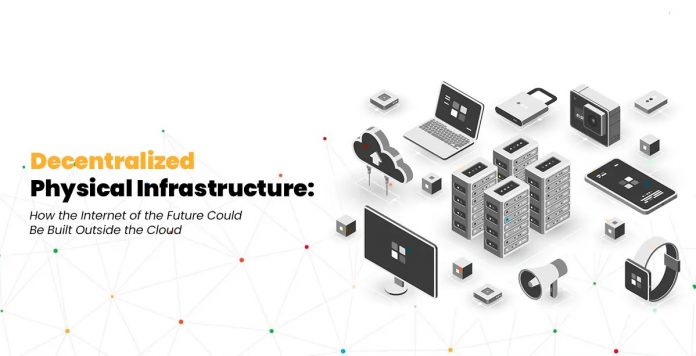
What is Decentralized Physical Infrastructure (DPI)?

0

Decentralized physical infrastructure is an all-new business model that empowers individuals to contribute their physical resources, like solar panels or 5G hotspots, to a shared network that benefits everyone. In this blog post, we will explore how this model works, what are its advantages, and how you can get involved.

Decentralized physical infrastructure (DPI) is a term that describes a network of physical assets that are owned and operated by individuals or small groups, rather than by large corporations or governments. These assets can include renewable energy sources, such as solar panels or wind turbines, communication devices, such as 5G hotspots or mesh routers, or storage facilities, such as batteries or warehouses. These assets are connected to a blockchain-based platform that enables peer-to-peer transactions and coordination among the participants.

How does DPI work?

DPI works by leveraging the power of blockchain technology and smart contracts to create a decentralized marketplace for physical resources. Blockchain is a distributed ledger that records transactions in a secure and transparent way, without the need for intermediaries or central authorities. Smart contracts are self-executing agreements that are encoded on the blockchain and can enforce the rules and terms of the transactions.

By using blockchain and smart contracts, DPI enables individuals to monetize their physical resources by renting them out to other users who need them. For example, someone who owns a solar panel can sell their excess electricity to someone who needs it, or someone who has a 5G hotspot can provide internet access to someone who is nearby. The platform handles the matching of supply and demand, the payment processing, and the dispute resolution.

What are the benefits of DPI?

DPI has several benefits for both the providers and the consumers of physical resources. Some of these benefits are:

Increased efficiency: DPI reduces the waste and inefficiency of centralized systems, where resources are often underutilized or overproduced. By allowing individuals to share their resources on demand, DPI optimizes the use of physical assets and reduces the need for costly infrastructure.

Lower costs: DPI lowers the costs of accessing physical resources for both the providers and the consumers. Providers can earn income from their idle assets, while consumers can pay only for what they use, without having to invest in owning or maintaining them.

Greater resilience: DPI enhances the resilience of physical systems by creating a distributed and diversified network of resources that can withstand shocks and disruptions. By relying on multiple sources of supply and demand, DPI reduces the risk of single points of failure or monopoly power.

Social impact: DPI empowers individuals to participate in the economy and society by providing them with access to essential services and opportunities. By enabling people to contribute their resources to a common good, DPI fosters social inclusion and cooperation.

If you are interested in joining the DPI movement, there are several ways you can get involved. You can:

Become a provider: If you own or have access to any physical resource that can be shared with others, you can register it on the platform and start earning income from it. You can set your own price and availability and choose who you want to share it with.

Become a consumer: If you need any physical resource that is offered on the platform, you can browse the available options and rent them for as long as you need. You can pay with cryptocurrency or fiat currency and enjoy a seamless and secure service.

Become a supporter: If you want to support the development and growth of the platform, you can contribute your skills, ideas, or funds to the project. You can join the community, provide feedback, suggest features, or donate to the cause.

Decentralized physical infrastructure is an all-new business model that empowers individuals to contribute their physical resources to a shared network that benefits everyone. It is a way to create a more efficient, affordable, resilient, and inclusive society.

BTC Digital Bought 220 Bitcoin Miners to Expand Operations in China

BTC Digital, a leading Bitcoin mining company based in China, has announced that it has purchased 220 new Bitcoin miners to expand its operation and increase its hash rate. The company said that the new miners are expected to be deployed by the end of the year and will add about 12 petahashes per second (PH/s) to its current capacity of 80 PH/s.

Bitcoin mining is the process of securing and validating transactions on the Bitcoin network using specialized hardware devices called miners. Miners compete to solve complex mathematical problems and earn rewards in the form of newly minted bitcoins and transaction fees. The hash rate is a measure of the computing power of the network and reflects the level of security and efficiency of the system.

BTC Digital is one of the largest Bitcoin mining companies in China, which accounts for more than half of the global hash rate. The company operates several mining farms across the country, using cheap and abundant electricity from renewable sources such as hydroelectric and solar power. The company also offers cloud mining services, allowing customers to rent its mining equipment and share in the profits.

The company said that the purchase of the new miners is part of its long-term strategy to grow its business and maintain its competitive edge in the industry. The company also said that it is optimistic about the future of Bitcoin and believes that the demand for mining will continue to increase as more people adopt the cryptocurrency.

Crypto Mining operation in China

China has been a dominant force in crypto mining for several reasons. First, it has abundant and cheap electricity, especially from coal and hydropower plants, which are essential for running the energy-intensive mining machines. Second, it has a large and skilled workforce that can manufacture and operate the mining equipment at a low cost. Third, it has a favorable regulatory environment that allows crypto mining to operate with minimal interference from the authorities.

However, in recent months, China’s crypto mining industry has faced some challenges and uncertainties. The Chinese government has cracked down on illegal and unregulated mining activities, citing environmental and financial risks. Some provinces, such as Inner Mongolia and Sichuan, have ordered the closure of mining farms and cut off their power supply. The government has also tightened its control over the cross-border flow of cryptocurrencies, making it harder for miners to cash out their earnings.

These developments have led to a significant decline in China’s share of the global crypto mining market. According to some estimates, China’s hash rate, which measures the computing power of the network, has dropped from over 70% in May 2021 to less than 50% in November 2021. Many miners have relocated their operations to other countries, such as Kazakhstan, Russia, or the United States, where they can find more stable and friendly policies.

The future of crypto mining in China is uncertain. Some analysts believe that China will continue to lose its competitive edge as more countries enter the market and offer better incentives for miners. Others argue that China will still retain its influence and innovation in the industry, as it has a large domestic market and a strong research and development capacity. Regardless of the outcome, China’s crypto mining industry will have a lasting impact on the global crypto ecosystem and the evolution of blockchain technology.

“We are very excited to announce this expansion of our mining operation, which will enhance our performance and profitability. We are confident that Bitcoin is the future of money, and we are committed to providing the best service to our customers and partners. We believe that by investing in our infrastructure and technology, we are contributing to the development and innovation of the Bitcoin ecosystem,” said Li Wei, CEO of BTC Digital.

Everybody Acknowledges Bitcoin is a Commodity, even the Regulators – Ex-NYSE President

0

Bitcoin is more than just a cryptocurrency. It is a digital asset that has a unique value proposition in the global market. Bitcoin is not subject to the whims of any central authority, nor is it influenced by the political and economic conditions of any country. Bitcoin is governed by a transparent and decentralized network of nodes that validate transactions and secure the network. Bitcoin is also scarce, with a fixed supply of 21 million coins that will ever be created.

These features make Bitcoin a commodity, not a currency. A commodity is a basic good that can be bought and sold, such as gold, oil, or wheat. A commodity has intrinsic value, meaning that it has some utility or benefit to its users. A commodity also has market value, meaning that it is subject to the forces of supply and demand. Bitcoin meets all these criteria, and more.

First, let’s define what a commodity and a security asset are. According to Investopedia, a commodity is “a basic good used in commerce that is interchangeable with other goods of the same type”. Examples of commodities are gold, oil, wheat, coffee, etc. A security asset is “a financial instrument that holds some type of monetary value”. Examples of securities are stocks, bonds, options, futures, etc.

The main difference between a commodity and a security asset is that a commodity has intrinsic value, meaning that it can be used for its own sake or for other purposes, while a security asset derives its value from the performance or promise of an underlying entity, such as a company, a government or a contract.

The classification of Bitcoin as a commodity and not a security asset has important implications for investors, regulators and the future of the cryptocurrency industry. Some of these implications are:

Investors can benefit from the lower regulatory burden and higher liquidity of commodities compared to securities. Investors do not need to comply with complex registration, disclosure or reporting requirements that apply to securities. Investors can also access a wider range of platforms and markets to trade bitcoins across borders and jurisdictions.

Regulators can apply existing frameworks and rules for commodities to Bitcoin, rather than creating new ones that may stifle innovation or create uncertainty. Regulators can focus on enforcing anti-money laundering, consumer protection and tax laws that apply to commodities, rather than imposing additional restrictions or obligations on Bitcoin users or developers.

The future of the cryptocurrency industry can be more diverse and competitive, as Bitcoin can coexist with other types of digital assets that may have different characteristics and use cases. Bitcoin can serve as a base layer for innovation and experimentation, while other digital assets can offer different features or functions that may appeal to different users or markets.

Bitcoin is a commodity and not a security asset because it has intrinsic value, does not represent any claim on an underlying entity, is not issued or controlled by any central authority or intermediary, and is fungible and interchangeable with other bitcoins of the same type. This classification has positive implications for investors, regulators and the future of the cryptocurrency industry.

Bitcoin is not only recognized as a commodity by its users, but also by the regulators. In 2015, the Commodity Futures Trading Commission (CFTC) declared that Bitcoin and other virtual currencies are commodities under the Commodity Exchange Act. This means that Bitcoin is subject to the same rules and regulations as other commodities, such as registration, reporting, and anti-fraud measures. The CFTC also has the authority to oversee the trading of Bitcoin futures and options on regulated exchanges.

This regulatory clarity is a positive development for Bitcoin and its investors. It provides legal certainty and legitimacy for the industry, and it fosters innovation and competition in the market. It also protects consumers and investors from fraud and manipulation, and it enhances the security and stability of the network.

As the former president of the New York Stock Exchange (NYSE), I have witnessed firsthand the evolution and growth of Bitcoin as a commodity. I have seen how Bitcoin has attracted institutional investors, hedge funds, and corporations, who see it as a store of value, a hedge against inflation, and a diversifier of their portfolios. I have also seen how Bitcoin has enabled new business models, such as peer-to-peer lending, remittances, and micropayments, that empower individuals and communities around the world.

Bitcoin is a commodity that has revolutionized the world of finance and technology. It is a commodity that has proven its resilience and adaptability in the face of challenges and opportunities. It is a commodity that has earned its place in the global market. And it is a commodity that everyone should acknowledge and embrace.