DD
MM
YYYY

PAGES

DD
MM
YYYY

spot_img

PAGES

Home Blog Page 3587

Returning of Bride Prices in Customary Marriages

0
Igbo traditional marriage

So there is this famous Instagram skit maker that was secretly married but many people had no idea that she is married because she has been posing as a single lady. The husband was the one managing her until she came into the limelight and became famous. 

Once she became famous and moved down to Lagos, she stated in her words that the husband was no longer on her level and that she was no longer interested in the marriage.

She started mingling and dating other famous Lagos-based entertainers; the husband cried and begged her for her to reconsider so that they could still make the marriage work but all the pleadings fell on deaf ears. 

The husband demanded that since she was no longer interested in marrying him and the marriage they did was customary marriage, she should return the bride price so that there could be some closure. The lady has been insisting that she will never return the bride price, reasons best known to her. 

The matter was recently brought to me for a legal opinion and here is my legal opinion on the issue of what is and will become of the marriage legally speaking since the lady has insisted on not returning the bride price. 

Customary marriage is recognized and acknowledged statutorily and the only valid way of entering into a valid customary marriage is by the payment of the bride price by the groom in accordance with the relevant cultural and traditional practices. 

Customary divorce is also recognized under the act and the only acknowledged way of dissolving a marriage customarily is by the returning of the bride price paid back to the groom. 

The court has upheld this custom of returning the bride price to validate a customary divorce in a plethora of cases. 

In the case of Eze v. Omeke (1977) 1 ANSLR 136 the Court while ordering the bride to return the bride price since she said she was no longer interested in the marriage held that “Any order dissolving any customary law marriage without a subsequent order for the return or acceptance of the bride-price or dowry is meaningless. In fact, I’m the case of Tabitha Bawa v. Bawa Waziri CCKJ/CV/14/2011 the Court did not just order the return of the bride price, the court also ordered the lady to return every other incidental pre-marital expense back to the man. 

Therefore, by the implication of court rulings, statutory provisions and acknowledged customary practices which has been judicially noticed, the returning of the bride price is what invalidates a customary marriage, so when the bride price is yet to be returned, the marriage is deemed to still be valid and existing and any of the parties who enters into another marriage can be held liable for bigamy. 

My legal advice to the famous entertainer here in question is for her to return the bride price since she is no longer interested in the marriage as the returning of the bride price will mean that the marriage has been dissolved, not until she does that, she is and will still be deemed to be the lawfully wedded wife of the man. 

Yet, read my perspective on this article as there are contradictions in the Nigerian laws.

An Average Nigerian is not Honest

5

This might come off as a cliche but factually speaking, Nigerians are not good people. The level of dishonesty and trickery on average Nigerian is alarming. Everyone is always looking for a way to rip the other person off or cheat the next person. Just bear in mind whenever you want to purchase an item that the seller might try to cheat you. They claim to be smart while the one they cheat is the dummy but such behaviour is far from being smart or wise, what they are exhibiting is just lies and dishonesty. 

This level of dishonesty is the major reason why it will be very difficult for online trade or payment before delivery style of e-commerce to succeed and scale in Nigeria because we do not trust each other. I am scared to part with my money with a random online vendor hoping that he or she will not block me or stop picking up my calls immediately I make the payment while expecting my delivery; the semi-honest ones will deliver to you but will deliver a totally different thing from what you bargained for. 

I defied my instincts and took the risk of making a payment for a product I found on Instagram to an online vendor, since last weekend when I made the payment till now the lady has not been picking up my calls and it is always like this with me whenever I engage in online transactions. So many folks have terrible experiences with online vendors, especially with the ones that insist on payment before delivery or the ones that place emphasis on “no refund after payment”. 

Due to the high level of dishonesty in Nigerian society, the news of someone returning some bunch of money mistakenly sent into his account or a bunch of money he finds will always make headline news because an average Nigerian will never return the money he or she found, they will rather claim that it is God’s blessings and keep it instead of returning it to the original owner. 

I recently got retained as a counsel by a Chinese expatriate and he has been complaining bitterly about how every Nigerian he has met are always trying to cheat him or rip him off, even those he wants to do business with will rather try to cheat him or extort him of some money than to wait for the business to come to fruition. To them he is just a dummy “Chinko” and they are smarter than him. He told me how tired he is of engaging Nigerians and can’t wait to leave the country. This is always the impression foreigners who visit Nigeria for business or vacation always have about Nigerians and unfortunately, they are not far from the truth. 

Sometimes we complain about how terrible the politicians, the police officers and the civil servants are but we tend to forget that those folks all come from and are nurtured by the Nigerian society; “na we we”. The corrupt politician is a reflection of an average Nigerian, the power-drunk police officer is a reflection of an average Nigerian, and the nonchalant civil servant is a reflection of an average Nigerian. 

We really need to have a change of attitude; we need to start preaching honesty and integrity as core societal values before we can move forward, we can all say enough of the lies and cheating.


US Government Seeks $4 billion from Binance to End Over Two Years of Criminal Litigation

0

The US Government is reportedly seeking a settlement of more than $4 billion from Binance, the world’s largest cryptocurrency exchange, to resolve a criminal investigation into its activities, according to Bloomberg.

Bloomberg cited unnamed sources familiar with the matter, who said that the negotiations are ongoing, and no final agreement has been reached. The sources also said that the settlement amount could change depending on the outcome of the talks.

The US Department of Justice (DOJ) and the Commodity Futures Trading Commission (CFTC) have been probing Binance for alleged violations of anti-money laundering, tax evasion, market manipulation and other laws, as well as its role in facilitating transactions involving illicit funds.

Binance has faced increased regulatory scrutiny and pressure from authorities around the world in recent months, including in the UK, Japan, Germany, Singapore, Canada and Hong Kong. The exchange has repeatedly denied any wrongdoing and said that it complies with all applicable laws and regulations.

Binance CEO Changpeng Zhao, also known as CZ, has expressed his willingness to cooperate with regulators and said that he is open to relocating the company’s headquarters to a more favorable jurisdiction. He has also hired former US government officials and regulators to bolster Binance’s compliance efforts.

A settlement of $4 billion would be one of the largest ever imposed on a cryptocurrency company, surpassing the $1.9 billion fine that HSBC paid in 2012 for facilitating money laundering for drug cartels and terrorists.

If Binance agrees to pay the settlement, it could potentially end its legal troubles in the US and pave the way for a more harmonious relationship with regulators. However, it could also set a precedent for other cryptocurrency exchanges and platforms that are facing similar investigations or actions from authorities.

Binance Agrees to Pay over $4 Billion to Resolve US Criminal Case

Binance, the world’s largest cryptocurrency exchange by trading volume, has reached a settlement with the US Department of Justice and the Securities and Exchange Commission to resolve a criminal investigation into its operations. According to a joint statement issued by the regulators on Monday, Binance has agreed to pay more than $4 billion in fines, disgorgement, and restitution to victims of its illicit activities.

The settlement comes after a two-year probe that revealed Binance had violated various US laws, including the Bank Secrecy Act, the Foreign Corrupt Practices Act, and the Securities Act of 1933. The regulators accused Binance of facilitating money laundering, market manipulation, insider trading, offering unregistered securities, and bribing foreign officials to evade regulatory scrutiny.

As part of the settlement, Binance has admitted to its wrongdoing and agreed to cooperate with the authorities in ongoing and future investigations. Binance has also agreed to implement a comprehensive compliance program and to hire an independent monitor to oversee its operations for the next three years.

The regulators praised Binance for its cooperation and willingness to resolve the matter without litigation. They also warned other cryptocurrency platforms that they must abide by the same rules and regulations as traditional financial institutions or face severe consequences.

Binance’s CEO Changpeng Zhao, also known as CZ, issued a statement on Twitter, expressing his relief and gratitude for the settlement. He said that Binance has learned from its mistakes and is committed to becoming a more responsible and transparent company. He also thanked Binance’s loyal customers and partners for their support and trust throughout the ordeal.

The settlement is expected to have a positive impact on Binance’s reputation and business prospects, as it clears the legal uncertainty that has been hanging over the company for a long time. Binance is also hoping to improve its relations with regulators around the world and to obtain licenses to operate in more jurisdictions.

Binance CEO Changpeng Zhao will plead guilty to U.S. money laundering violations in federal court in Seattle on Tuesday, The Wall Street Journal reports, citing anonymous sources. Zhao will step down as head of the world’s largest crypto exchange as part of an agreement that will settle the Justice Department’s yearslong probe into Binance. The company will plead guilty to three separate criminal charges and pay fines totaling $4.3 billion, per CNBC. The deal reportedly allows Zhao to retain his majority stake but bars him from holding any executive roles at the firm, which will be allowed to continue operations.

  • Similar charges were brought against Arthur Hayes, the co-founder and CEO of BitMEX, who pleaded guilty last year to violating U.S. anti-money-laundering laws, paid a $10 million fine and was sentenced to two years of probation. The date of Zhao’s sentencing hearing is yet to be announced. (LinkedIn News)

AI Tokens Jump On Irrational Euphoria

0

The recent surge in the prices of AI tokens, such as GPT-3, OpenAI and DeepMind, has been driven by a wave of irrational euphoria among investors and enthusiasts. These tokens, which represent the access to or ownership of artificial intelligence services and platforms, have seen their market capitalization skyrocket in the past few months, reaching billions of dollars.

However, this frenzy is not based on any solid fundamentals or realistic expectations of the future value of these tokens. Rather, it is fueled by hype, speculation and fear of missing out (FOMO). Many investors are buying these tokens without understanding the underlying technology, the challenges and risks involved, or the regulatory and ethical implications of AI.

In this blog post, we will examine some of the reasons why AI tokens are overvalued and why they are likely to crash soon. We will also provide some advice on how to invest wisely and responsibly in AI-related projects and assets.

One of the main reasons why AI tokens are overvalued is that they are based on unrealistic assumptions about the potential and progress of artificial intelligence. Many people believe that AI is on the verge of achieving human-level or superhuman intelligence, and that this will create enormous value and opportunities for those who own or control AI. However, this is a misconception that ignores the limitations and difficulties of AI research and development.

AI is not a monolithic entity that can be easily measured or compared. Rather, it is a diverse and complex field that encompasses many subfields, applications and domains. AI systems can perform well on specific tasks or problems, but they are not generalizable or adaptable to new situations or contexts. AI systems also require a lot of data, computing power and human supervision to function properly and safely.

Moreover, AI is not a magic bullet that can solve all the world’s problems or create unlimited wealth. AI can also have negative impacts on society, such as displacing workers, increasing inequality, eroding privacy, undermining democracy, or causing harm or accidents. AI also faces ethical and moral dilemmas that require careful consideration and regulation. AI is not a neutral or objective technology, but rather a reflection of human values, biases and interests.

Therefore, AI tokens that claim to represent the access to or ownership of AI are not only misleading but also dangerous. They create a false sense of security and confidence among investors and users, who may not be aware of the risks and challenges involved in AI. They also create a distorted incentive structure that encourages short-term gains over long-term sustainability and social responsibility.

Why AI tokens are likely to crash soon.

Another reason why AI tokens are likely to crash soon is that they are subject to high volatility and uncertainty. The prices of these tokens are determined by supply and demand in the market, which can be influenced by various factors, such as news, rumors, emotions, trends or events. These factors can create sudden spikes or drops in the prices of these tokens, which can lead to panic buying or selling among investors.

Furthermore, these tokens are not backed by any tangible assets or guarantees. They are essentially digital tokens that rely on the trust and faith of the users and the community. If this trust is broken or eroded, the value of these tokens can plummet to zero. This can happen due to technical glitches, security breaches, hacking attacks, frauds, scams or regulatory actions.

For example, in 2017, a project called DAO (Decentralized Autonomous Organization) raised over $150 million worth of Ethereum tokens to create a decentralized venture capital fund that would invest in various projects using smart contracts.

However, a hacker exploited a vulnerability in the code and stole over $50 million worth of tokens from the fund. This caused a massive drop in the price of Ethereum and triggered a controversial hard fork (a split in the blockchain) to reverse the theft.

Another example is BitClout, a social media platform that allows users to buy and sell tokens that represent the influence or popularity of celebrities, influencers or public figures. The platform claims to be decentralized and powered by its own blockchain and cryptocurrency.

However, many critics have accused BitClout of being a scam or a pyramid scheme that exploits users’ data and money without their consent or knowledge. The platform has also faced legal threats from some of the celebrities whose names and images have been used without their permission.

Therefore, investing in AI tokens is a risky and speculative activity that can result in huge losses or even total loss of funds. Investors should be cautious and diligent before buying these tokens and should not invest more than they can afford to lose.

How to invest wisely and responsibly in AI-related projects and assets

While we do not recommend investing in AI tokens as they are currently structured and marketed, we do acknowledge that there are legitimate and valuable projects and assets related to artificial intelligence that deserve attention and support. These include:

Research institutions and organizations that conduct cutting-edge research on AI and its applications, such as universities, labs, foundations or NGOs. Companies and startups that develop innovative and useful products and services based on AI, such as software, hardware, platforms or solutions.

Communities and networks that foster collaboration and education on AI and its impacts, such as forums, blogs, podcasts, events or courses. Initiatives and movements that promote ethical and responsible use of AI and its benefits for society, such as standards, guidelines, principles or policies.

These projects and assets can be evaluated and invested in based on various criteria, such as:

The quality and credibility of the team, the vision and the mission behind the project or asset. The problem or need that the project or asset is trying to solve or address, and the value proposition or solution that it offers. The market potential and competitive advantage of the project or asset, and the traction or growth that it has achieved or expects to achieve. The social and environmental impact of the project or asset, and the alignment with the values and goals of the investors.

Investing in these projects and assets can be done through various channels and mechanisms, such as:

Donating or sponsoring to support the research or development of the project or asset. Buying or holding equity or shares in the company or startup that owns or operates the project or asset. Participating or contributing to the community or network that supports or benefits from the project or asset. Advocating or endorsing the initiative or movement that advocates or endorses the project or asset.

Investing in these projects and assets can also provide various benefits and returns, such as:

Gaining access to or ownership of the project or asset and enjoying its features or functions. Earning income or dividends from the profits or revenues generated by the project or asset. Learning from or collaborating with the experts or peers involved in the project or asset. Making a positive difference in the world by supporting a good cause or a noble vision.

AI tokens are a new phenomenon that has emerged in the crypto space, but they are not a reliable or sustainable way to invest in artificial intelligence. They are based on unrealistic assumptions and expectations about AI, and they are subject to high volatility and uncertainty. They also create a distorted incentive structure that encourages short-term gains over long-term sustainability and social responsibility.

Instead of investing in AI tokens, investors should invest in legitimate and valuable projects and assets related to AI that have a clear vision, a solid value proposition, a strong market potential and a positive social impact. These projects and assets can be evaluated and invested in based on various criteria, channels, mechanisms, benefits and returns.

By investing wisely and responsibly in AI-related projects and assets, investors can not only protect their funds but also support the advancement and improvement of artificial intelligence for the benefit of humanity.

Argentina Newly Elected President Javier Milei Plans to Replace the Peso with the US Dollar

0
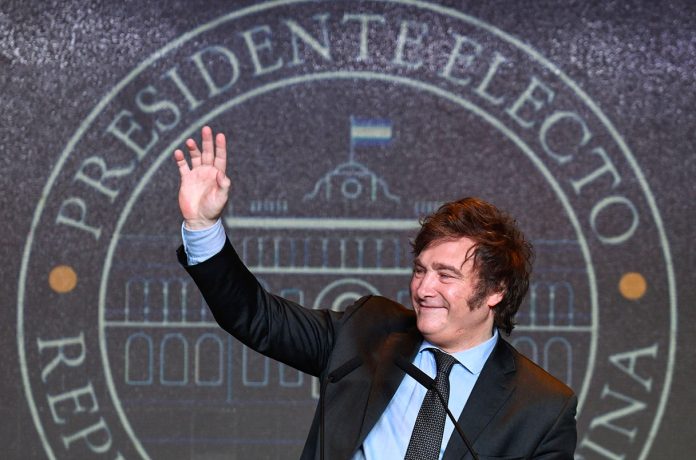
TOPSHOT - Argentine presidential candidate for the La Libertad Avanza alliance Javier Milei waves to supporters after winning the presidential election runoff at his party headquarters in Buenos Aires on November 19, 2023. Libertarian outsider Javier Milei pulled off a massive upset Sunday with a resounding win in Argentina's presidential election, a stinging rebuke of the traditional parties that have overseen decades of economic decline. (Photo by Luis ROBAYO / AFP) (Photo by LUIS ROBAYO/AFP via Getty Images)

In a shocking move, Argentina’s newly elected President Javier Milei announced yesterday that he plans to replace the peso with the US Dollar and shut down the central bank. This is part of his radical agenda to end inflation, restore fiscal discipline and attract foreign investment.

The risk of dollarization is a phenomenon that occurs when a country’s currency loses its value and people start to use a foreign currency, usually the US dollar, as a medium of exchange, store of value and unit of account. This can have serious consequences for the country’s economic stability, monetary policy and financial sovereignty.

Milei, a libertarian economist and outspoken critic of the previous government, won the presidential election last month with 52% of the vote, defeating the incumbent Alberto Fernández. He campaigned on a platform of free markets, low taxes, minimal regulation and sound money. He also promised to dismantle the welfare state, privatize state-owned enterprises and renegotiate the country’s debt with the International Monetary Fund.

In his first speech as president, Milei said that the peso has lost more than 90% of its value in the last decade, making it one of the most unstable and worthless currencies in the world. He blamed the central bank for printing money recklessly and fueling inflation, which reached 50% last year. He argued that adopting the US Dollar as the official currency would eliminate inflation, stabilize prices and restore confidence in the economy.

He also said that he would shut down the central bank, which he called “a parasitic institution that only serves to finance the political class and their cronies”. He said that he would transfer its functions to the Treasury and create a currency board that would ensure a fixed exchange rate between the Dollar and the peso. He claimed that this would make monetary policy transparent and accountable and prevent any future manipulation of the currency.

Milei’s announcement was met with mixed reactions from different sectors of society. Some praised him for taking bold and decisive action to solve the country’s chronic economic problems. Others criticized him for imposing a radical and risky experiment that could have unforeseen consequences. Some expressed concern about the loss of monetary sovereignty and the dependence on a foreign power. Others questioned the legality and feasibility of his plan, which would require constitutional amendments and congressional approval.

Dollarization can happen for various reasons, such as high inflation, currency depreciation, political instability, lack of confidence in the domestic currency, or trade integration with countries that use the dollar. Some countries may choose to adopt the dollar officially, such as Ecuador, El Salvador and Panama, while others may experience partial or unofficial dollarization, such as Argentina, Bolivia and Zimbabwe.

The main advantages of dollarization are that it can reduce inflation, lower transaction costs, increase trade and investment, and enhance credibility and discipline. However, these benefits come at a high price. The main disadvantages of dollarization are that it eliminates the exchange rate flexibility, limits the monetary policy autonomy, reduces the seigniorage revenue, exposes the country to external shocks, and undermines the national identity and sovereignty.

Therefore, dollarization is not a simple or easy solution for countries facing economic challenges. It involves complex trade-offs and risks that need to be carefully assessed and managed. Countries that opt for dollarization should also implement structural reforms to improve their fiscal policy, financial system, institutional quality and competitiveness. Countries that want to avoid or reverse dollarization should pursue sound macroeconomic policies to restore confidence in their currency and strengthen their resilience to shocks.

Milei said that he was aware of the challenges and risks involved in his plan, but that he was confident that it would succeed. He said that he had studied the examples of other countries that had dollarized their economies, such as Ecuador, Panama and El Salvador, and that he had learned from their mistakes and successes. He said that he would implement his plan gradually and carefully, with the help of international experts and institutions. He also said that he would consult with the public and seek consensus with other political forces.

Milei’s plan is expected to face strong opposition from his political rivals, trade unions, social movements and some sectors of the business community. It is also likely to generate uncertainty and volatility in the financial markets, as investors and savers adjust to the new monetary regime. However, Milei said that he was ready to face any challenge and overcome any obstacle. He said that he was determined to make Argentina “the most prosperous and free country in Latin America”.