DD
MM
YYYY

PAGES

DD
MM
YYYY

spot_img

PAGES

Home Blog Page 3594

El Salvador in the Red on its Bitcoin Holdings, Australia’s Inflation Rate “still too high”

0

El Salvador made history in September 2021 when it became the first country in the world to adopt bitcoin as legal tender. The move was hailed by some as a bold experiment that could pave the way for more financial inclusion and economic growth. However, the reality has been far from rosy. Since its launch, the bitcoin project has faced technical glitches, public protests, legal challenges, and international criticism. Moreover, the country’s bitcoin holdings have suffered significant losses due to the volatile nature of the cryptocurrency market.

El Salvador bought 2381 bitcoins in September 2021, worth over $105 million at the time. The country also received a donation of 1 bitcoin from an anonymous benefactor. However, as of November 17, 2023, the value of El Salvador’s bitcoin stash has dropped by more than 20%. This means that the country is in the red by about $21 million on its bitcoin investment.

The decline in value is partly due to the sharp correction that bitcoin experienced in November 2021, after reaching an all-time high of over $68,000 on November 10. Bitcoin plunged by more than 15% in a matter of days, dragging down other cryptocurrencies as well. The drop was attributed to various factors, such as profit-taking, regulatory uncertainty, power outages in China, and a fake news report that claimed that Walmart was accepting Litecoin as payment.

El Salvador’s president, Nayib Bukele, has remained defiant and optimistic about his bitcoin gamble. He has claimed that the country is saving millions of dollars in remittance fees by using bitcoin, and that the adoption of the digital currency will boost tourism, innovation, and foreign investment. He has also announced plans to build a “bitcoin city” near a volcano, where residents and businesses will pay no taxes except for a 10% contribution to fund infrastructure and security.

However, not everyone is convinced by Bukele’s vision. Many Salvadorans have expressed their dissatisfaction and distrust of the bitcoin scheme, citing its complexity, instability, and environmental impact. Some have taken to the streets to demand that the government revoke the law that made bitcoin legal tender and restore the US dollar as the sole official currency. Others have filed lawsuits against the government, arguing that the bitcoin law is unconstitutional and violates human rights.

The international community has also raised concerns about El Salvador’s bitcoin experiment. The International Monetary Fund (IMF) has warned that the move could pose serious risks to the country’s macroeconomic stability, financial integrity, and debt sustainability. The World Bank has refused to assist El Salvador with the implementation of the bitcoin project, citing environmental and transparency issues. The United States has expressed its worries about the potential for money laundering and terrorist financing through bitcoin.

Assuming that the country did indeed purchase one bitcoin per day over the past year, CoinDesk estimates El Salvador’s holdings would sum to 2,744 bitcoins as of Nov. 14. Based on the median price of BTC over each of those days, the country’s average purchase price would have drifted down to roughly $41,800.

El Salvador’s bitcoin adventure is still in its early stages, and its long-term effects are yet to be seen. However, so far, it seems that the country has taken a huge gamble that has not paid off. El Salvador remains in the red on its bitcoin holdings and faces multiple challenges and uncertainties ahead. Bukele has kept pretty quiet about El Salvador’s purchases since and the exact amount of bitcoin the country now owns is not clear as there is no public government record.

Australia’s Inflation Rate is “still too high” – Senior RBA Official

In a recent speech, a high-ranking official from the Reserve Bank of Australia (RBA) acknowledged that the country’s inflation rate remains above the desired level and that the process of bringing it down will take longer than expected. The official explained that the RBA has been implementing a two-stage strategy to reduce inflation, which involves first lowering the expectations of future inflation and then adjusting the actual inflation outcomes.

The first stage has been successful, as evidenced by the decline in inflation expectations since 2020. However, the second stage will be more challenging, as it requires dealing with various supply-side factors that have been pushing up prices, such as labour shortages, global commodity costs and supply chain disruptions. The official stressed that the RBA is committed to achieving its inflation target of 2-3% over the medium term and that it will use all the tools at its disposal to do so.

However, he also cautioned that the timing and pace of monetary policy adjustments will depend on the evolution of economic conditions and inflation pressures, and that there is no predetermined path for interest rates.

Data from Australian Bureau of Statistics (ABS)

The latest data from the Australian Bureau of Statistics (ABS) shows that the annual inflation rate in Australia rose to 3.8% in the September quarter, well above the Reserve Bank of Australia’s (RBA) target range of 2-3%. This is the highest inflation rate since 2008, driven by rising costs of housing, transport, food and energy.

The RBA has been maintaining its ultra-low cash rate of 0.1% since November 2020, as part of its stimulus package to support the economic recovery from the COVID-19 pandemic. However, as inflation pressures mount, the RBA may have to reconsider its monetary policy stance and start to tighten its policy settings sooner than expected.

The RBA has indicated that it will not increase the cash rate until actual inflation is sustainably within the target range, and that this is unlikely to happen before 2024. However, some economists and market analysts have argued that the RBA is behind the curve and that it should act more proactively to prevent inflation from getting out of control.

The main argument for raising the cash rate sooner rather than later is that it would help to anchor inflation expectations and prevent a wage-price spiral from developing. A wage-price spiral occurs when workers demand higher wages to keep up with rising prices, which in turn pushes up costs and prices further, creating a vicious cycle of inflation.

The main argument against raising the cash rate too soon is that it would risk derailing the economic recovery and hurting the most vulnerable sectors of the economy, such as small businesses and households with high debt levels. A higher cash rate would also appreciate the Australian dollar, which would reduce the competitiveness of Australian exports and dampen the growth prospects of the trade-exposed industries.

The RBA faces a delicate balancing act between keeping inflation under control and supporting the economic recovery. The next stage in bringing down Australia’s inflation rate will depend on how the RBA assesses the underlying drivers of inflation, the outlook for growth and employment, and the trade-offs involved in adjusting its monetary policy settings.
Investing Principles and Philosophies at Tekedia Institute

0

This week Tekedia Capital Syndicate invested in 10 startups including Winich Farms and Remy Security. Over the last few years, we have become one of the most active investment entities in Africa. In a recent ranking, we ranked #1 in indigenous African funds and entities, below the governments of Germany, US and UK in Africa, in the number of deals executed.

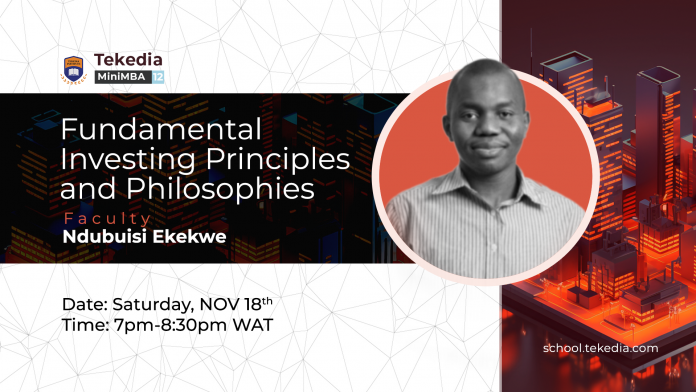
What do Tekedia Syndicate members and other investors look for as they invest? What drives their investment philosophies? Great questions and something to discuss in a classroom. Join me today at Tekedia Mini-MBA as we discuss investing principles and philosophies. The Zoom link is in the class board and you can register for the next edition of Tekedia Mini-MBA here.

Before Tekedia Mini-MBA, we will be discussing Capital Markets and Operations at Tekedia Investment and Portfolio Management program at 4-6pm WAT. Last week, it was a great one as dozens of professionals participated. To learn more, go here 

Pan African Technology Company CSquared Raises $25m Equity to Drive Its Expansion Across Africa

0

CSquared, a Pan-African technology company making commercially driven investments into broadband-enabling infrastructure throughout Africa, has raised $25 million in new equity funding.

The new funding was raised from Convergence Partners Digital Infrastructure Fund (CPDIF) International Finance Corporation (IFC), and the International Development Association (IDA). The company also announced that Google has exited its CSquared stakes which has simultaneously been acquired by the CPDIF.

The recent investment into the company will be used for network expansion as CSquared continues to drive digital infrastructure developments across its footprint and the broader African region.

Speaking on the funding, CSquared Group Chief Executive Officer, Lanre Kolade, said that he remains enthusiastic about the company’s future and its role in directly tackling the continent’s digital transformation challenges.

In his words,

“CSquared has demonstrated a proven track record in developing and commercializing carrier-neutral, open-access networks across Africa. We remain singularly focused on changing lives through the digitization of the region and providing InternetForAll”.

He added that the funding from investors will spur the company to deliver on its ambition to expand its digital broadband infrastructure footprint in all of its current markets which include Kenya, Liberia, Uganda, Ghana, DRC, and Togo, as well as expand into new markets in the future.

Also speaking on the funding, the chairman and founding partner of Convergence Partners, Andile Ngcaba said,

“The opportunity to increase our investment in Squared via our most recently raised fund comes at a pivotal time for African digital development. The benefits of world-class connectivity span all layers of society and have never been more tangible.

“As investors in the Company since 2017 we have had a front-row view of the tremendous impact of open-access networks on the development of the African ICT ecosystem. The combination of developmental impact, as well as strong commercial returns, makes this an attractive investment for CPDIF, and we are delighted to be able to shape the next phase of this journey”.

CSquared was launched as a project within Google in 2011 to build metropolitan fiber optic networks in Sub-Saharan Africa as a carrier-neutral operator of shared infrastructure. The company is making commercially driven investments into broadband-enabling infrastructure throughout Africa.

CSquared enables MNOs and ISPs to provide high-quality broadband at lower costs through shared infrastructure such as metro fiber and Wi-Fi networks. The company’s shared infrastructure model means it works alongside its partners, building networks they can leverage to provide better services to end-users.

The pan-African company disclosed that it has observed how connecting metros in Africa to existing long-distance fiber lines has helped to provide these cities with a foundation for growth and help more people get online, noting that it is excited to accelerate this growth in the rest of Africa.

Since its customers demand for more intensive bandwidth, CSquared seeks to offer matured fiber networks to enable the revolution of consumer needs with the deployment of various access points e.g. FTTT, FTTB, FTTH e.t.c

Notably, it has over 50 Customers using its infrastructure: MNOs, ISPs, and 4G/LTE operators, and  2700+ Customer sites connected on its fiber: base stations, enterprises, SMEs, homes, etc.

YouTube Requires Creators to Disclose if Content is AI generated, or Face Removal from Earning Revenue

0
A picture shows a You Tube logo on December 4, 2012 during LeWeb Paris 2012 in Saint-Denis near Paris. Le Web is Europe's largest tech conference, bringing together the entrepreneurs, leaders and influencers who shape the future of the internet. AFP PHOTO ERIC PIERMONT (Photo credit should read ERIC PIERMONT/AFP/Getty Images)

YouTube has announced a new policy that will affect creators who use artificial intelligence (AI) to generate content for their videos. According to the policy, creators must disclose in the video description if any part of their content is AI generated, such as voice, face, or text. Failure to do so may result in the removal of the video or suspension from earning revenue.

The policy aims to prevent misinformation, deception, and manipulation that may arise from the use of AI technologies, especially deepfakes, which are realistic but fake videos created by swapping faces or altering voices. YouTube says that it respects the creative and innovative potential of AI, but also wants to protect its users and community from harmful or misleading content.

The policy will apply to all videos uploaded after November 30, 2023. Creators who have existing videos that use AI must update their descriptions by December 31, 2023, or risk losing their monetization privileges. YouTube will also provide tools and resources to help creators identify and disclose AI-generated content, as well as educate them on the ethical and legal implications of using such technologies.

How will YouTube know content is AI generated?

Artificial intelligence is becoming more and more prevalent in various domains, including content creation. AI can generate text, images, videos, music, and more, with varying degrees of quality and originality. Some of these outputs are indistinguishable from human-made ones, while others are easily recognizable as synthetic.

YouTube, as one of the largest platforms for content sharing and consumption, faces a challenge in dealing with AI-generated content. How will YouTube know if a video is created by a human or an AI? And why does it matter?

There are several reasons why YouTube might want to identify and label AI-generated content. One is to protect the intellectual property rights of the original creators, who might not want their work to be copied or modified by AI without their consent. Another is to prevent the spread of misinformation or harmful content that might be generated by malicious actors using AI. A third is to maintain the trust and authenticity of the YouTube community, which values human creativity and expression.

YouTube has not yet announced any official policy or guidelines for AI-generated content, but it is likely that they are working on developing some. One possible way that YouTube could detect AI-generated content is by using AI itself.

YouTube could employ machine learning models that are trained to recognize the patterns and features of synthetic content, such as unnatural transitions, artifacts, inconsistencies, or anomalies. These models could then flag or label the videos that are suspected to be AI-generated and alert the human reviewers for further verification.

Another possible way that YouTube could detect AI-generated content is by relying on the users themselves. YouTube could encourage the users to report or flag any videos that they think are AI-generated and provide them with some criteria or indicators to look for.

YouTube could also ask the users to provide some evidence or proof of their own identity and authorship when they upload a video, such as a selfie, a voice recording, or a watermark. This could help YouTube verify the source and legitimacy of the content.

AI-generated content is not inherently bad or good, but it poses some challenges and opportunities for YouTube and its users. YouTube will need to balance the benefits and risks of allowing or restricting AI-generated content on its platform and ensure that it respects the rights and interests of all parties involved. As AI becomes more advanced and accessible, YouTube will also need to adapt and evolve its policies and practices accordingly.

YouTube’s new policy is part of its broader efforts to combat misinformation and promote transparency on its platform. The company has previously implemented policies to label and remove videos that contain false or misleading information about topics such as elections, vaccines, or COVID-19. It has also partnered with fact-checkers and experts to provide authoritative sources and context for users.

YouTube hopes that its new policy will encourage creators to be more responsible and honest about their use of AI, and also foster a more informed and engaged audience. The company says that it will continue to monitor the development and impact of AI technologies, and update its policies as needed.

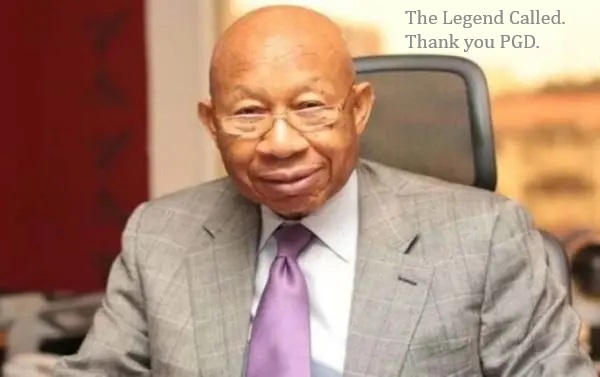
A Legend Called: Thank You PGD for Raising A Professional Generation

0

A phone rang, and I picked it. And from the other side, an unmistakable voice said, ‘Prof Ekekwe, I am PGD, your colleague in Diamond Bank”. I jumped and shouted “Ifeoma [my wife], come over here because a Legend is on the line”.

Yes, today, the banking legend, Pascal Dozie, Founder of Diamond Bank, called one of the young men he inspired.

I was to be hired for the Owerri branch of the bank, but during the final level interview, the leadership decided to post me to the headquarters. And in just three years, I experienced transformation, turning a village boy-FUTO-educated engineer into a top-grade professional. While in the bank, they paid for my two master’s degrees and a correspondence doctoral degree in banking and finance .

As we spoke, I thanked our Chairman for his grace, kindness and generosity, reciting Diamond Bank’s mission and vision statements which I memorized while in the training school. Great leaders inspire generations and PGD through Diamond Bank served Africa.

He remembers things. Many years ago, on a January morning, I came to Diamond Bank to drop my resignation letter; I was to fly into New York that day. That morning, Diamond Bank paid my upfront, a big chunk of my yearly salary. I quickly updated that letter, and asked the bank to reverse the entry as I was leaving the country and would not be around to earn the money. To cut the story short, Chairman later approved for me to keep the money, covering it for the Bank. The bank contacted me since my salary account had been closed and paid me! I documented this here.

Chairman, thank you: “May the Lord continue to bless PGD and the professional generation he raised.” Sure, you used “colleagues” and I added as we spoke “a lower colleague to power 10”. Thank you for finding time to check and the wisdom you shared today.

My Response: I was 100% within policy. Then, either you put a notice or you pay for the time of the expected notice. But if you have an unused vacation, you can use the same to settle. But since my study leave was not approved, my boss, Roly, was aware and it was all planned. Yet, I had to put the paper. Well within policy.

I was 100% within policy. Then, either you put a notice or you pay for the time of the expected notice. But if you have un-unsed vacation, you can use same to settle. But since my study leave was not approved, my boss, Roly, was aware and it was all planned. Yet, I had to put the paper. Well within policy.

My First Day in America and Kindness of Diamond Bank Lagos