
DD
MM
YYYY

PAGES

DD
MM
YYYY

spot_img

PAGES

Home Blog Page 360

Top US Regulated Bitcoin Mining Platforms 2025 for Legal Crypto Earnings

0

The US crypto mining industry is evolving rapidly, driven by stringent regulations, increasing energy costs, and a growing demand for transparency. For many investors and miners, the biggest question in 2025 is no longer “Can I mine Bitcoin profitably?” but rather “Where can I mine legally and safely?”

With government oversight increasing, US-based and globally compliant mining platforms are stepping up to provide legal, transparent, and profitable options for investors. This article examines the top regulated Bitcoin mining platforms for 2025, with a particular focus on ETNCrypto—a cloud mining provider that is fully registered and designed for security-conscious users.

Quick Highlights: Best Regulated Mining Platforms in the US (2025)

  • ETNCrypto – Fully registered in Switzerland, offering legally compliant cloud mining with flexible contracts.
  • HashrateIndex – Analytics-driven platform helping miners track profitability and comply with local standards.
  • Riot Platforms – One of the largest US-based mining companies operating under SEC oversight.
  • Cruxpool – European pool expanding into the US, offering regulated mining pool services.
  • WhiteBIT Mining – Exchange-backed mining platform with strict AML and KYC compliance.

Why Regulation Matters for US Bitcoin Mining

The days of anonymous and unregulated mining services are fading. In 2025, the US government requires mining platforms that serve American users to comply with:

  • KYC (Know Your Customer) and AML (Anti-Money Laundering) regulations
  • Transparent taxation of mining earnings
  • Energy efficiency disclosures

For miners, this is actually an advantage: legal protection, reduced fraud risk, and assurance that profits are recognized under federal law.

ETNCrypto: Legally Registered and Globally Trusted

ETNCrypto, operated by Crypto Mining Solutions GmbH, has become one of the safest cloud mining choices for US users. Registered in Switzerland (Registre Commerce: CH-400.4.450.224-8), the platform complies with international financial and consumer protection standards.

What Makes ETNCrypto Stand Out?

  • Legally Verifiable Registration – All company details,
  • Contract-Based Profit Distribution – Earnings are distributed transparently, according to clear contract terms.
  • Regulatory Oversight – Protected under Swiss and Australian legal frameworks.
  • Energy Optimization – Facilities in regions with low-cost and renewable energy.

Click to visit ETNCrypto to claim your $100 bonus!

ETNCrypto Mining Rigs

Mining Rig Contract Price Contract Period Daily Profit Daily ROI
Antminer S19 XP?Free? $100 1 Day $1.50 1.50%
Antminer T21 $200 2 Days $6.00 3.00%
Antminer Z15 Pro $600 3 Days $19.20 3.20%
Antminer S21 Pro $1,300 5 Days $45.50 3.50%
VolcMiner D1 Lite $3,500 6 Days $133.00 3.80%
Antminer S21+ Hyd $8,000 3 Days $336.00 4.20%
VolcMiner D1 $17,800 5 Days $854.40 4.80%
Antminer L9 $36,000 6 Days $2,088.00 5.80%
Antminer S21e XP Hyd 3U $68,000 5 Days $5,440.00 8.00%

This wide range of contracts—from free trials to enterprise-scale packages—makes ETNCrypto a flexible choice for all types of investors.

Other Top US-Regulated Platforms

To provide a balanced view, here are other legitimate competitors catering to US users in 2025:

  1. HashrateIndex

Not a direct miner, but an analytics platform that tracks mining profitability, compliance, and hosting facilities across the US. Miners use HashrateIndex to ensure their operations align with regulatory frameworks.

  1. Riot Platforms

A publicly traded company listed on NASDAQ, Riot is one of the largest Bitcoin miners in the US. With SEC reporting requirements, it’s among the most transparent and fully regulated mining companies available to investors.

  1. Cruxpool

Originally a European pool, Cruxpool is expanding operations to the US with a focus on compliance. It allows users to join mining pools for Bitcoin and Ethereum, providing KYC-compliant services and institutional-level transparency.

  1. WhiteBIT Mining

Backed by the global WhiteBIT crypto exchange, this mining service integrates regulated trading with cloud mining contracts. With strict AML/KYC checks, it ensures US customers can mine safely while easily converting rewards to USD.

How US Users Can Legally Start Mining in 2025

  1. Select a Regulated Platform – Choose services like ETNCrypto, Riot Platforms, or WhiteBIT.
  2. Complete Verification – Expect to provide ID and proof of address due to KYC rules.
  3. Purchase a Mining Contract or Join a Pool – Start with short-term contracts to test profitability.
  4. Track Earnings Transparently – Platforms like HashrateIndex help monitor profitability and compliance.
  5. Report Income – US miners must report earnings as taxable income to remain compliant.

Risks to Avoid

Even in 2025, scams exist. Here are warning signs:

  • Anonymous Ownership – Avoid platforms without clear registration details.
  • Unrealistic Returns – Be cautious of platforms claiming 10%+ daily returns.
  • No KYC/AML Process – In the US, legit platforms require verification.

FAQ: US-Regulated Bitcoin Mining in 2025

Q: Is Bitcoin mining legal in the US in 2025?
A: Yes, but only through regulated platforms that follow KYC/AML rules and energy reporting standards.

Q: Do I have to pay taxes on mining rewards?
A: Yes, mining income is treated as taxable income under US law.

Q: Which platform is best for beginners?
A: ETNCrypto offers flexible contracts with low entry points, making it ideal for first-time miners.

Q: Can I mine from my phone legally?
A: Direct phone mining isn’t practical. Instead, you can use apps that connect you to regulated cloud mining contracts.

Final Thoughts

For US users, the future of mining lies in legal, transparent, and regulated Cloud Mining platforms. While unverified services may offer tempting returns, they pose significant risks. Platforms like ETNCrypto lead the way with verifiable registration, contract-based profit distribution, and global compliance, making them the safest choice for both beginners and professionals.

Other competitors, such as Riot Platforms, Hashrate Index, Cruxpool, and WhiteBIT Mining, offer complementary services that enhance the US mining ecosystem.

The bottom line: in 2025, legal compliance is not just a formality—it’s the foundation of safe, sustainable crypto earnings.

AI Consultant Communities: Where Experts Exchange Ideas

0

Artificial Intelligence is changing how we connect, think, and collaborate. But even experts need a space to share, debate, and refine ideas. That’s where the best AI consultant communities come in — digital ecosystems where consultants, data scientists, and strategists gather to exchange top ideas online, discuss projects, and solve complex challenges together. These communities aren’t just forums; they are live, evolving laboratories of innovation.

In 2025, more than 70% of AI consultants report belonging to at least one online professional network. The need to keep up with the rapid evolution of generative models, ethical frameworks, and enterprise applications has made such communities vital. Without them, staying relevant would be nearly impossible.

What Makes the Best AI Consultant Communities So Unique?

They don’t work like traditional chat rooms. They are structured yet free, specialized yet inclusive. One may find a mix of mentors, entrepreneurs, and tech architects—all collaborating without borders. The best AI consultant communities often use AI-powered consultant chats that analyze conversation patterns and suggest relevant content in real time. Imagine discussing predictive analytics while the chat interface automatically offers the latest research or case study—instant knowledge exchange, driven by AI itself.

Platforms like Slack channels for AI consultants, specialized Discord groups, or private LinkedIn collectives now serve as hubs for dialogue. The focus isn’t just technical coding talk but strategy, leadership, and practical deployment insights. Each post, comment, or chat message can spark a new project or even a new business partnership.

How AI-Powered Consultant Chats Are Redefining Collaboration

AI has become both the subject and the tool of collaboration. In modern AI-powered consultant chats, algorithms assist with summarizing complex discussions, identifying thought leaders, and even grouping experts with similar focus areas. The chat itself becomes semi-intelligent. It listens, filters, recommends, and enhances clarity.

The process is not static. While consultants discuss machine learning pipelines, the platform might recommend others working on similar problems. As a result, silos disappear. Knowledge circulates freely, even across continents. A question raised in Singapore can find its answer from a consultant in Toronto in seconds. The invisible hand behind this? AI moderation and semantic search capabilities that make conversations efficient, relevant, and personalized.

Interestingly, according to recent digital community data, over 58% of professionals using AI-enhanced communication tools feel they collaborate more effectively than through traditional email exchanges. Conversations become fluid—alive with intelligence.

The Human Side of Digital Consulting

Yet, despite all the smart features, the human factor remains the core of every consultant community. Emotional tone, mentorship, humor, and shared struggle bind experts together. The human side of technology shines brightest when consultants discuss ethical dilemmas or failures. It’s not only success stories that drive learning—it’s the willingness to admit uncertainty.

In these networks, senior consultants share lessons learned from years of deployment; younger specialists bring fresh perspectives. The mixture of experience and curiosity creates a self-sustaining cycle of improvement. It’s a living classroom, always open, never complete.

Anonymous Video Chat and the Value of Spontaneity

Sometimes, words in text form aren’t enough. That’s where anonymous video chat becomes a useful extension of the community. Creating a private online chat is as easy as posting a story. But anonymous chat on platforms like CallMeChat allows you to meet face-to-face with a wide variety of people, including potential clients or colleagues. It’s a great chance to brainstorm freely without revealing your personal identity or compromising professional boundaries.

In practice, anonymous video chat sessions often spark unexpected collaborations. Two participants may discover they’ve been working on similar AI audit frameworks or ethics models. The anonymity removes hierarchy and judgment, allowing ideas to flow without filters. It’s where raw innovation often begins—outside the structured, visible threads of text discussions.

Where Ideas Turn Into Global Movements

The real magic of these communities lies in how small exchanges lead to large-scale change. A consultant may post about optimizing neural architecture search, and within hours, ten others contribute insights or share experiments. The exchange of top ideas online transforms isolated thinkers into a collective intelligence.

Over time, many of these discussions evolve into published frameworks, open-source projects, or industry standards. For example, several open AI policy proposals first appeared in consultant community discussions before reaching global forums. Digital collaboration isn’t merely talk—it’s an engine for action.

The shared goal among members is progress: faster problem-solving, better models, more ethical systems. And every conversation, however brief, adds another piece to that puzzle.

Statistics That Highlight the Growth

Recent surveys show that:

  • 82% of AI professionals believe community engagement improves their technical expertise.
  • 64% of consultants claim that online collaboration leads to new career opportunities.
  • Participation in active AI consultant chats has grown by 45% in just two years.

These numbers reflect a global trend—knowledge no longer belongs to a few institutions or companies. It belongs to interconnected minds sharing it daily.

Challenges: Noise, Bias, and Information Overload

Of course, not everything shines. Some communities face issues with information clutter, self-promotion, or AI bias in moderation tools. The flood of content can overwhelm members. When too many voices speak at once, valuable insights can drown in digital noise.

However, evolving algorithms and human moderators are working together to refine these spaces. Balancing automation and human oversight remains the key challenge for sustaining productive exchanges.

Looking Forward: Smarter, More Inclusive Communities

The next generation of AI-powered consultant chats will likely merge virtual reality, emotional AI, and adaptive learning systems. Members could join immersive think tanks, simulate AI-driven models in real time, and instantly see global feedback. The boundary between consulting and co-creation will blur completely.

As artificial intelligence matures, so will the art of human collaboration. The best AI consultant communities won’t just host discussions—they will become incubators for ethical, innovative, and sustainable progress.

In a world where machines learn faster than ever, the power of human connection—guided by AI but grounded in empathy—remains irreplaceable.

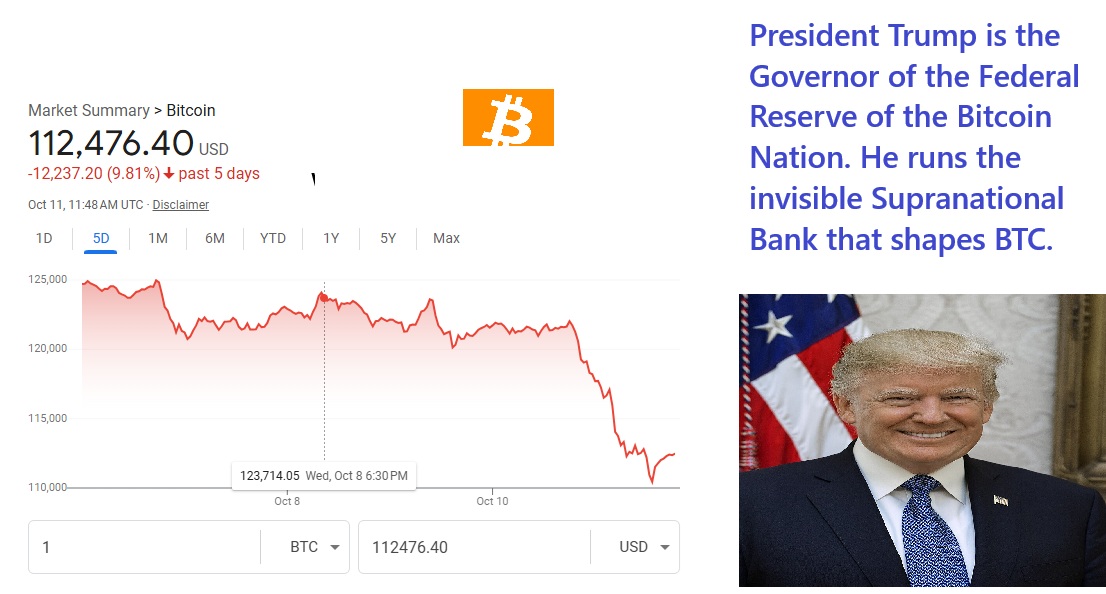
Bitcoin Catches a Cold from Washington and How President Trump is the Governor of the Federal Reserve of Bitcoin Nation.

0

When the leader of the free world sneezes, the crypto economy catches a cold. And this week, President Donald Trump sneezed hard, declaring a 100% tariff on Chinese imports and imposing export controls on what he called “any and all critical software.” The markets panicked. Equities tumbled, and Bitcoin joined the sell-off chorus. It was a powerful reminder that bits are not immune to the physics of global economics. Bitcoin, though decentralized, lives within the gravitational pull of geopolitics.

My doctoral work in banking & finance focused on currency and globalization, studying how currencies ripple through interconnected economies. I have published on these themes in the World Bank and African Union journals (see African Union Paper https://base.afrique-gouvernance.net/docs/volume_21.pdf ). My thesis showed how a single currency, under a supranational authority, can destabilize an entire region when the dominant economy fails to maintain discipline. Imagine a West African ECO currency governed by a “Central Bank of West Africa.” If Nigeria, with its outsized GDP, mismanages inflation or fiscal policy, smaller economies like Benin or Togo will experience welfare losses, not because they did anything wrong, but because Nigeria’s instability would hijack the regional monetary equilibrium.

The Eurozone avoided that fate largely because of its homogeneity. Yes, similar economic structures and governance systems. West Africa, by contrast, is a mosaic of heterogeneity. What happens in Port Harcourt does not mirror what happens in Cotonou. The same asymmetry now plays out on a global scale with Bitcoin. Though it is borderless, its pulse responds to decisions made in Washington, Beijing, and Brussels. El Salvador may adopt Bitcoin as legal tender, but when America coughs, El Salvador’s balance sheet trembles. The irony is profound: a decentralized asset now depends on centralized politics.

In this new construct, the G6 leaders plus China, whether they know it or not, are the de facto central bankers of Bitcoin. Through fiscal decisions, tariffs, and macroeconomic posturing, they set the emotional temperature of the crypto market. The ideal of Bitcoin as a sovereign-free refuge is noble. But in practice, it remains a derivative of global trust, a trust still denominated in dollars. The dream of total independence from the traditional order remains a work in progress. But the path is long!

ChatGPT Dominates Global App Charts for Seven Straight Months as AI Adoption Explodes

0
AI Tools for Startups

OpenAI’s ChatGPT has emerged as the world’s most downloaded app for seven consecutive months, maintaining its top spot across both the Google Play Store and Apple’s App Store from March through September 2025, according to data from mobile analytics firm Appfigures.

The chatbot, launched just two years ago, has now become a cultural and technological phenomenon, amassing an estimated 410.8 million global downloads so far this year — a figure that dwarfs the performance of other major artificial intelligence apps.

Appfigures data shows Google’s Gemini app trailing with 131.1 million downloads, followed by China’s DeepSeek with 79.2 million, Elon Musk’s Grok with 46.6 million, Perplexity AI with 43.1 million, and Meta AI with 16.9 million downloads.

These figures not only illustrate OpenAI’s unmatched reach but also reflect how ChatGPT has become the default gateway for everyday AI use — from education and business to creative writing and programming assistance.

A Global Phenomenon in User Engagement

ChatGPT’s growth has not been limited to downloads. OpenAI CEO Sam Altman revealed during the company’s DevDay conference on Monday that the platform now boasts 800 million active weekly users — equivalent to more than 10% of the world’s population.

According to a joint paper published by researchers from Harvard, Duke, and OpenAI, ChatGPT processed over 2.5 billion messages per day as of July 2025 — roughly 29,000 messages every second. This staggering level of engagement underscores how generative AI has evolved from a niche curiosity into one of the most heavily used digital tools on Earth.

The researchers noted that the chatbot’s widespread use spans more than 180 countries, with strong adoption not only in advanced economies like the United States, Japan, and the United Kingdom but also across emerging markets in Africa, Latin America, and South Asia — regions where AI-powered mobile tools are increasingly seen as vital for learning and work.

Why ChatGPT Stands Apart

Part of ChatGPT’s success lies in its cross-platform accessibility and continuous upgrades. OpenAI’s rollout of voice, image, video, and memory features has made the app more versatile than rivals that remain largely text-based. Users can now hold full conversations with ChatGPT, upload photos for analysis, or have the assistant remember details from past chats — all of which deepen engagement and make the experience feel more personal.

By contrast, some note competitors like Gemini and Perplexity have struggled to achieve similar levels of stickiness, often catering to narrower audiences or integrating AI features into larger ecosystems rather than offering standalone, humanlike assistants.

OpenAI’s close partnerships with Microsoft — integrating ChatGPT’s underlying GPT-4 model into Copilot and Office 365 tools — have also expanded its enterprise footprint, making the app not just a consumer tool but a productivity platform.

The Broader AI App Race

The dominance of ChatGPT comes amid a fierce global race among AI developers to capture mobile users. Tech giants like Google and Meta have poured billions into their AI divisions, while startups such as Perplexity and Anthropic continue to launch innovative conversational models.

However, ChatGPT’s sustained lead for seven months signals the platform’s early advantage in usability and global recognition. Analysts say OpenAI has managed to create a “network effect” where its widespread use fuels data quality, leading to faster model improvements that keep it ahead of rivals.

Still, some experts warn that the broader AI app surge may face sustainability challenges. As user expectations rise and costs of operating large-scale AI models remain high, the question is whether companies can balance accessibility with profitability.

For now, though, OpenAI’s chatbot remains unmatched. With hundreds of millions of downloads, billions of daily interactions, and a user base larger than most social media platforms, ChatGPT has firmly established itself as the most popular and possibly most influential AI product of the modern era.

IBIT’s $3.5B Inflow is a Game-Changer, Cementing Bitcoin’s Role in Institutional Portfolios

0

BlackRock’s iShares Bitcoin Trust (IBIT) just posted a staggering $3.5 billion in net inflows for the week ending October 7, 2025, topping all U.S. ETFs out of over 4,300 and snagging about 10% of the entire market’s total ETF inflows.

This isn’t just a win for crypto; it’s a flex on traditional heavyweights like the Vanguard S&P 500 ETF (VOO) and SPDR Portfolio S&P 500 ETF (SPLG), which it outpaced by a mile. The ETF now holds nearly 800,000 BTC, pushing its assets under management (AUM) to ~$99 billion.

At this clip, it’s on pace to hit $100 billion in just 435 trading days—about five times faster than any other ETF in history for comparison, VOO took over 2,000 days.

All 11 spot Bitcoin ETFs including Grayscale’s GBTC saw positive inflows last week, totaling ~$3.24 billion for U.S. spot BTC products alone. Globally, crypto ETPs pulled in $3.55 billion.

On October 7, IBIT alone added 7,401 BTC ~$899 million, its fourth-highest single-day inflow ever, with trading volume hitting $5.7 billion—landing it in the top 10 for daily ETF volume alongside icons like SPY and QQQ.

This flood of cash synced with BTC smashing a new all-time high of $126,080 on October 6, up from ~$120,000 earlier in the week. Analysts like Bitwise’s Matt Hougan are calling it the start of a “debasement trade,” with Q4 inflows potentially topping last year’s records YTD flows already at $25.9 billion.

This isn’t retail frenzy—it’s institutions piling in, from sovereign wealth funds like the Abu Dhabi’s Mubadala with $437M in IBIT earlier this year to EU players like Luxembourg’s FSIL allocating 1% to BTC. BlackRock CEO Larry Fink’s pivot from skeptic to evangelist calling BTC a “safe haven” potentially worth $700K has supercharged the narrative.

With 95% of prior inflows holding firm through dips, it’s clear: this is “wealth creation” money, not flippers. The vibe’s electric—posts from Bloomberg’s Eric Balchunas who broke the stat to crypto analysts are buzzing about TradFi’s crypto embrace.

IBIT’s dominance, outpacing traditional ETFs like VOO and SPLG, confirms Bitcoin’s transition from a speculative asset to a core portfolio holding for institutions. Sovereign wealth funds allocating to IBIT suggest a growing acceptance of BTC as a hedge against inflation and currency debasement.

BlackRock’s influence, amplified by CEO Larry Fink’s bullish stance predicting BTC could hit $700K, is pulling in conservative investors. Platforms like Vanguard opening crypto access further lowers barriers, potentially driving billions more into spot BTC ETFs.

With IBIT holding 800,000 BTC 4% of Bitcoin’s total supply, institutional demand could tighten supply, especially as miners’ rewards dwindle post-halving. This could fuel further price surges, with analysts eyeing $150K+ by Q1 2026 if inflows persist.

The $3.5B inflow coincided with Bitcoin’s new all-time high of $126,080. Strong inflows signal sustained buying pressure, potentially pushing BTC higher in Q4, especially if “Uptober” sentiment holds.

While 95% of prior ETF inflows have held through dips, a sudden macro shock such as tighter Fed policy or geopolitical turmoil could trigger outflows, amplifying BTC’s volatility. However, current data suggests stickier capital than past retail-driven rallies.

The $3.55B in global crypto ETP inflows last week shows this isn’t just a U.S. story. Emerging markets (e.g., India’s growing crypto ETF interest) and developed markets (e.g., EU funds) could amplify demand, pushing BTC’s market cap toward $3T.

IBIT’s 10% share of total U.S. ETF inflows out of 4,300+ funds upends the dominance of traditional equity and bond ETFs. If IBIT hits $100B AUM in 435 days, it’ll set a record five times faster than VOO, redefining ETF growth benchmarks.

The SEC’s approval of spot BTC ETFs in 2024, followed by this inflow surge, may pave the way for more crypto products like ETH ETFs, mixed-asset crypto funds, further blending TradFi and DeFi.

Surging ETF inflows may draw closer regulatory attention, especially if retail FOMO follows. The SEC and global regulators might tighten rules on crypto custody or leverage, impacting ETF structures.

As BTC gains traction as a store of value, it could subtly erode demand for dollar-based assets, prompting central banks to monitor crypto’s macro impact more closely. However, newer investors may chase momentum, increasing short-term volatility.

IBIT’s success may push financial advisors to recommend 1-5% BTC allocations, normalizing crypto in 401(k)s and IRAs, especially as platforms like Vanguard and Schwab expand access.

BTC’s rally often lifts altcoins. Strong ETF inflows could boost ETH, SOL, and others as investors diversify within crypto, especially if spot ETH ETFs gain traction. Institutional demand via IBIT may spur DeFi platforms to integrate with TradFi custody solutions, bridging centralized and decentralized finance.

Higher BTC prices from ETF demand could incentivize miners, bolstering network hash rate, but also raise environmental concerns as energy use spikes. Rising yields or a stock market correction could divert capital from risk assets like BTC, slowing ETF inflows.

A crackdown on crypto ETFs or custody providers could dent confidence, though current SEC approvals suggest a supportive stance. BTC to new highs $150K isn’t off the table. It’s reshaping the ETF market, challenging traditional finance, and amplifying crypto’s macro influence. But with great hype comes great volatility.