DD
MM
YYYY

PAGES

DD
MM
YYYY

spot_img

PAGES

Home Blog Page 3601

Africa has the potential to become a major player in the Global Pharmaceutical Market

0

Africa imports 800% of medicines, says AFDB.

Africa is the world’s second largest and second-most populous continent, with a population of over 1.3 billion people. It is also home to some of the most diverse and rich cultures, languages, and natural resources. However, Africa also faces many challenges, such as poverty, conflict, disease, and climate change.

Africa is heavily dependent on imported medicines, according to a recent report by the African Development Bank (AFDB). The report, titled “Pharmaceutical Manufacturing in Africa: Status, Challenges and Prospects”, reveals that the continent imports about 80% of its pharmaceutical needs, with some countries importing as much as 95%. This situation exposes Africa to various risks, such as supply disruptions, price fluctuations, substandard products and counterfeit medicines.

The report argues that developing a local pharmaceutical industry in Africa is not only vital for ensuring access to quality and affordable medicines, but also for creating jobs, enhancing skills, boosting innovation and fostering economic growth. It identifies several challenges that hinder the growth of the sector, such as weak regulatory frameworks, inadequate infrastructure, limited financing, high production costs and low competitiveness.

It also proposes some policy recommendations to address these challenges, such as strengthening regional integration, enhancing public-private partnerships, promoting research and development, and improving human capital.

The report calls for a collective action from all stakeholders, including governments, development partners, private sector, civil society and academia, to support the development of a sustainable and competitive pharmaceutical industry in Africa. It also highlights some success stories and best practices from countries that have made significant progress in this area, such as Ethiopia, Ghana, Kenya, Morocco, Nigeria and South Africa.

This means that Africa is highly dependent on external sources for its pharmaceutical needs, which exposes it to various risks, such as:

High prices: Importing medicines from abroad increases the cost of drugs for African consumers, who often have to pay out-of-pocket for their health care. According to a study by the United Nations Economic Commission for Africa (UNECA), the average price of imported medicines in Africa is 2.5 times higher than the international reference price.

Low quality: Importing medicines from abroad also raises concerns about the quality and safety of the drugs, as they may not meet the standards and regulations of the African countries. According to a report by the WHO, about 42% of substandard and falsified medicines reported globally between 2013 and 2017 were from Africa.

Supply chain disruptions: Importing medicines from abroad also makes Africa vulnerable to supply chain disruptions, such as delays, shortages, or stock-outs, due to factors such as political instability, trade barriers, natural disasters, or pandemics. For example, during the COVID-19 crisis, many African countries faced difficulties in procuring essential medicines and medical supplies from abroad, as global demand surged, and export restrictions were imposed by some countries.

The implication of this situation is that many Africans are unable to access the medicines they need for their health conditions, which leads to increased morbidity and mortality rates, reduced productivity and economic growth, and increased inequality and social unrest.

To address this challenge, Africa needs to develop its own pharmaceutical industry, which can produce locally relevant, affordable, and quality medicines for its population. This would not only improve the health outcomes and well-being of millions of Africans, but also create jobs, stimulate innovation, enhance regional integration, and foster self-reliance and sovereignty.

Some of the steps that can be taken to achieve this goal include:

Investing in research and development (R&D) to discover and develop new drugs that are tailored to the specific needs and preferences of African patients, such as drugs for neglected tropical diseases or drugs that are suitable for tropical climates.

Strengthening the regulatory capacity and harmonization of African countries to ensure that the medicines produced in Africa meet the highest standards of quality, safety, and efficacy.

Promoting public-private partnerships and collaboration among African countries and stakeholders to leverage their complementary strengths and resources, such as human capital, infrastructure, technology, markets, and financing.

Enhancing the local production capacity and competitiveness of African pharmaceutical manufacturers by providing them with incentives, subsidies, tax breaks, preferential procurement policies, technical assistance, and access to raw materials.

Improving the distribution and access of locally produced medicines by expanding the coverage and affordability of health insurance schemes, strengthening the supply chain management systems, reducing tariffs and non-tariff barriers, and raising awareness among consumers and health workers.

Africa has the potential to become a major player in the global pharmaceutical market, which is expected to reach $1.5 trillion by 2023. By developing its own pharmaceutical industry, Africa can not only improve its health security and resilience but also contribute to its economic development and social transformation.

The report is part of the AFDB’s efforts to promote industrialization and economic transformation in Africa, as outlined in its High 5 priorities. The AFDB believes that a vibrant pharmaceutical sector can contribute to improving the health and well-being of the African population, as well as to achieving the Sustainable Development Goals and the African Union’s Agenda 2063.

The Futility on Predicting the Naira’s Stable State by Wall Street Banks

0
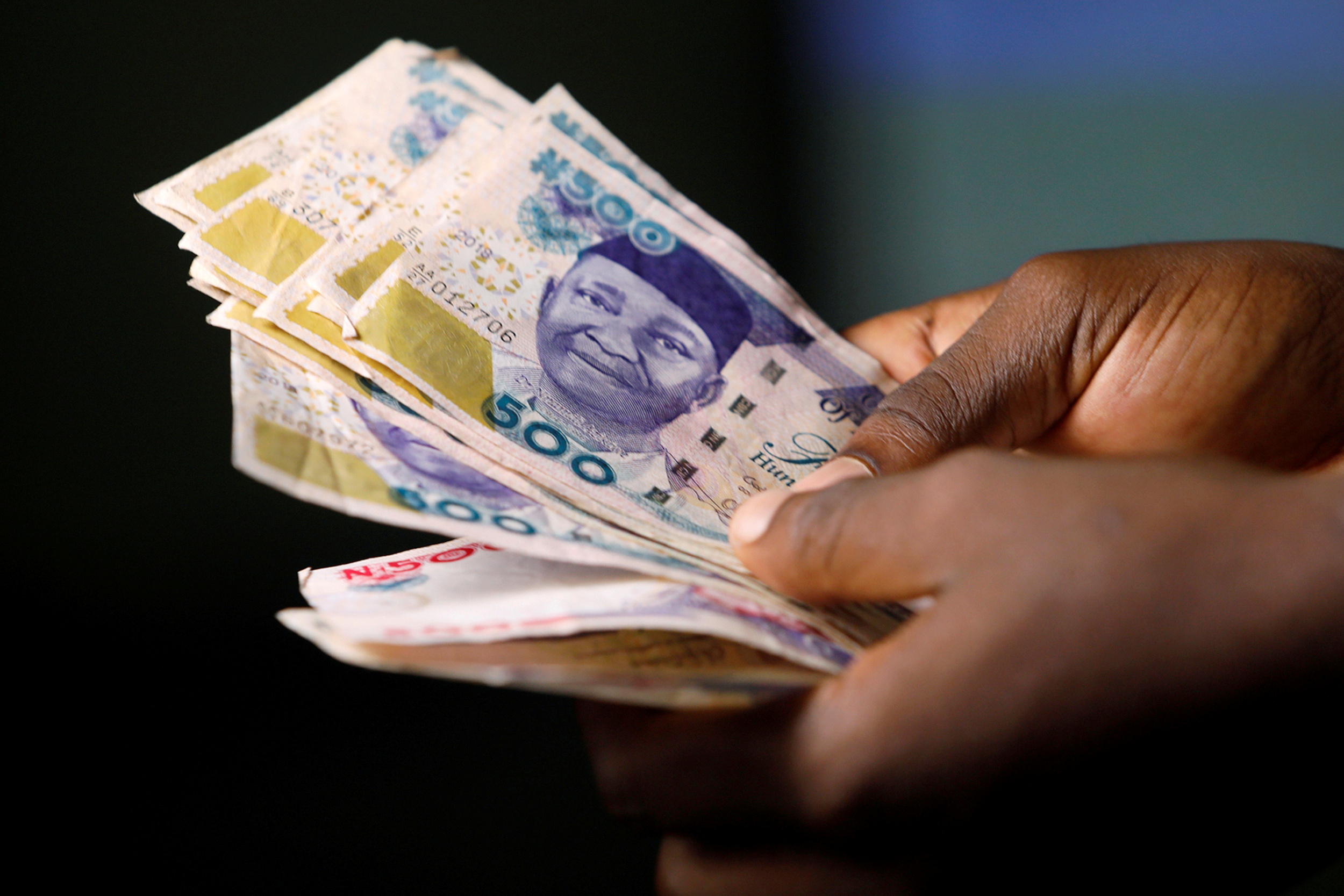
Nigerian naira banknotes are seen in this picture illustration, September 10, 2018. REUTERS/Afolabi Sotunde/File Photo

Not sure we should celebrate N1,200/$ since it took Naira about 50 years to get from about N1/$ to N415/$, only to crash to N1,600/$ in 9 months: “Goldman Sachs analysts Andrew Matheny and Bojosi Morule have projected a significant turnaround for Nigeria’s currency, foreseeing a remarkable appreciation to N1,200 against the US dollar within the span of 12 months.” Naira is currently hovering around N1,600/$.

Indeed, anything more than N600/$ should be considered a monumental bad policy in the annals of history. Also, do not waste your time thinking that Wall Street banks understand what is happening in Nigeria. From JP Morgan to GS and even IMF, all of them called it wrong after the floating:

“Also, in June 2023, JP Morgan projected that the naira, which was at N755/$1 then, would appreciate in the coming months, trading around N600 to a dollar. A statement by the institution said: “While it will take a few days for USD/NGN spot to settle, we fully expect an initial overshoot towards the parallel market rate of -750 or higher, after which, we expect USD/NGN to settle in the high 600s over [the] coming months.”

Their assumptions about Nigeria are off by miles and those predictions have no real values. I mean they should not be wasting their time sharing opinions on where the Naira will settle, since the $billions we were promised will come from investors, after floating the Naira are yet to arrive.

If Nigeria had attracted say $50 billion post-float, things would have normalized. But the problem is that the floating has depressed investments, triggering a paralysis across the nation. If the government can find how to adjust for that, at least Naira will stabilize.

Nigeria’s problem now is not even Naira as the abduction of students has returned at scale, with more than 400 under the control of terrorists in the last 6 days.

Early this week, reports of mass abduction of residents across communities in Borno and Kaduna states by armed groups, compounded an existing insecurity and economic hardship in Nigeria under the watch of President Bola Tinubu.

The communities in Borno and Kaduna where the kidnappings occurred are some of the most insecure communities in the troubled states and have witnessed repeated terror attacks in the past. The insecurity in the areas also means limited access to non-residents including journalists, making real-time information difficult to get.

Goldman Sachs Analysts Forecast Naira Appreciation to N1,200/$ in 12 months

5 BITES OF THE CHERRY – eNAIRA, CRYPTOJACKING, NFT CALENDAR, UNIZEN, ETH ETF DEMISE

0

CBN bring in Gluwa in attempt to raise eNaira adoption.

So, apparently, Gluwa Nigeria Limited (Gluwa) has entered into a strategic partnership with the Central Bank of Nigeria (CBN).

The Gluwa website seems very new, and the anchor content on it seems to revolve around its’ so called ‘strategic partnership with CBN, whatever that might mean.

‘This partnership with the CBN signifies a significant stride in Gluwa’s mission to develop a borderless financial ecosystem centred on emerging markets, aiming at broadening financial inclusion.’ – code for marketing tripe.

The Marketing Director is one Alan Kong. Very ‘son of the soil’ 9ja name it is. Must be from some obscure part of ‘North’ I don’t know, because being tribally titled for over 20 years, I tend to recognise Nigerian names.

I cannot find any long term history of Alan Kong online in relation to Gluwa.

At time of writing, it’s difficult to establish Gluwa architecture, beyond their own statement about it being an L1. They have 46 Github repositories here.

I haven’t really had time to look at it in detail, but despite my distain for CBDCs, I see that some of those repositories refer to ERC 20, and that should be nowhere near any nations sovereign digital currencies than 20 x 20 foot barge poles.

Not sure what is going on here and why local engagement hasn’t happened on this. It makes the recent headline grabbing drama and reversal regarding Expatriate Levy look at best, ‘somehow’.

We have folk on ground like Franklin Peters, Hanu Fejiro Agbodje, Efosa Ighodaro, Deborah Ojengbede and Oyemi Victor (to name a few).

With the (ominous) lack of visibility on the issue at time of writing, I will be politically economical and file this under ‘perplexing’

Additional Perspective – Coinchapter, Chainwire

Cryptojacking on the rise since BTC ETFs.

Cryptojacking is a growing trend of cybercrime that involves the unauthorized use of a computer, mobile device, or server to mine cryptocurrencies. It presents a lower risk than ransomware because it operates almost silently in the background, constantly providing a pay-out for the perpetrators. It uses a distributed computing model to mine, usually completely undetected by the device owner, who may notice drops in performance, particularly over an internet connection. 

Attacks in the financial sector have risen by more than 250 percent in the past year. The US and Europe saw significant increases in cryptojacking, with a 340% and 788% rise respectively, and incidents increased to 332 million compared to 67 million a year ago, targeting cloud and macOS devices. The intensity of cryptojacking has been significant since the approval of Bitcoin Spot ETFs. – Additional Perspective – Sonic Wall

NFT Calendar closing on its 50,000th Drop.

NFT Calendar is a well known free promo tool for announcing and managing NFT releases and it has been operating since 2021. It is well over the 49k mark in assisted drops, and is eyeing 50,000. With the release trajectory for new series heating up, this milestone is likely to be met sooner rather than later.

There is also an interesting article about different options to promote an NFT collection on the site by Alice Lynx

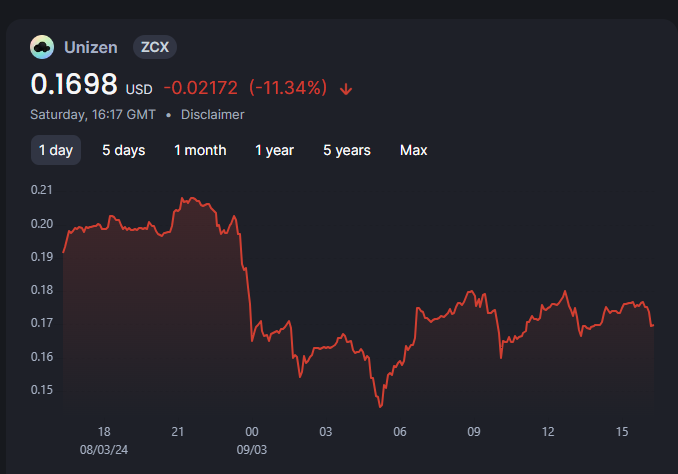
Over $USD 2M unaccounted For on Unizen; hack suspected.

Unizen, which is described as a DeFi trading platform is suspected of being attacked, possibly due to an approval-related vulnerability. The total losses are estimated to exceed $2 million.

While Unizen describes itself as a Cross-Chain enabled DeFi / DEX Aggregator on Ethereum, Eth has been becoming steadily more centralized since ‘The Merge’. It still remains the best of bad choices in the EVM Compatible Ecosystem and its contradictory to describe anything built on top of them as DEX or DeFi, or DAO or ‘De’ anything.

Ultimately the only way of achieving true DEX,  DeFi, or DAO is to run it on top of a Nakamoto Consensus PoW Blockchain.

Users of the approval-related transaction aggregator are advised to withdraw as soon as possible. Unizen (ZCX)  lost 11.34% in the days’ trading on the news.  Additional Perspective – Foresight News, Binance News

Why Ethereum Spot ETFs may never happen.

The resistance within the ‘against’ camp for Eth ETFs isn’t just confined to the SEC. There are many somewhere between ambivalent and hostile on the basis that Ethereum has commercial actors endemic to its core operations in ways Bitcoin does not.

This means the SEC has allies where it did not have with the BTC ETFs and at a minimum, many counterweights to SEC BTC ETF opposition would be absent in its crusade against Eth ETF.

Grayscale, who was motivated to sue the SEC in order to be able to convert the assets in its Bitcoin trust to an ETF, won’t do so for its Ethereum.

The SEC approved all spot Bitcoin ETFs to begin trading at the same time, and after an expensive lawsuit, Grayscale then ended up in a spot ETF issuers race,  losing market share rather than keeping its first-mover advantage.

Once bitten, twice shy.

The SEC has set May 23 as a deadline for spot Eth ETFs submissions, and applicants are nowhere near the engagement milestones with the SEC as spot bitcoin ETF applicants were positioned within their timeline relative to the closure deadline.

Besides the concern about commercial actors, such as stakers and validators who stand to benefit without ever actually investing in an Eth ETF, an asset struggling to achieve $USD 4k a unit, is not the same as the approx $50k BTC unit price around the time of ETF launch.

Structurally, Handshake is Bitcoins closest relative, and operates on Nakamoto Consensus, but at a unit price of only USD 3 cents, and lucky to scrape a USD$100k daily volume, it sits light years outside the interests of Financial Houses.

There really isn’t another crypto-asset to rival Bitcoin in the combination of its market cap and fixed supply with its robustness and ownerlessness of structure.

Also listen to Laura Shin and Eric Balchunas here

Additional Perspective – Unchained

9ja Cosmos is here…

Get your .9jacom and .9javerse Web 3 domains  for $2 at:

.9jacom Domains

.9javerse Domains

Visit 9ja Cosmos LinkedIn Page

Visit 9ja Cosmos Website

Preview our Sino Amazon/Sinosignia releases (Ente)

Preview our Sino Amazon/Sinosignia releases (Pinterest)

Goldman Sachs Analysts Forecast Naira Appreciation to N1,200/$ in 12 months

0

Goldman Sachs analysts Andrew Matheny and Bojosi Morule have projected a significant turnaround for Nigeria’s currency, foreseeing a remarkable appreciation to N1,200 against the US dollar within the span of 12 months.

This optimistic forecast marks a monumental shift from the prevailing narrative of the naira’s undervaluation, promising a substantial recovery for the embattled currency.

The crux of this forecast rests on Nigeria’s transition away from volatile monetary policies and deeply negative real interest rates, factors that have contributed to the naira’s prolonged depreciation. According to the analysts, the past nine months have witnessed a staggering 60-70% cumulative weakening of the naira, signaling the urgency for a strategic intervention to reverse this trend.

However, amidst this gloomy backdrop, there emerges a glimmer of hope. The analysts assert that the trajectory of Nigeria’s currency crisis is poised for a pivotal transformation, propelled by the emergence of positive real interest rates and a shift towards more orthodox policy frameworks.

This transition, they note, marks the inception of Nigeria’s journey towards economic recovery, albeit with the caveat of sustained and concerted efforts for enduring macroeconomic stability.

Yet, amidst the optimism, lurks the specter of uncertainty. The success of Goldman Sachs’ forecast hinges on the unwavering commitment of Nigerian authorities to uphold orthodox monetary policies and enact stringent measures to attract vital capital inflows. Any deviation from this trajectory could pose a formidable risk to the projected appreciation of the naira.

The recent monetary policy reforms under President Bola Tinubu’s administration have garnered commendation from Goldman Sachs analysts, who view the adoption of inflation targeting and a more flexible exchange rate regime as positive strides toward economic rejuvenation. However, the initial implementation phase of these reforms was marred by criticisms of inadequate depth, underscoring the imperative for a steadfast execution of policy adjustments.

In their report, the analysts highlight the indispensable role of positive real interest rates and external financing in mitigating Nigeria’s currency and liquidity crisis. While acknowledging recent policy adjustments and bill issuances by the central bank as steps in the right direction, they emphasize the exigency for more decisive rate increases and a resolute confirmation of policy shifts to galvanize meaningful foreign inflows.

Addressing skepticism surrounding their forecast, the analysts assert that Nigeria’s currency and external liquidity crisis necessitate immediate remedial measures, including the attainment of positive real interest rates and capital inflows. They posit that the current undervaluation of the naira, coupled with a burgeoning current account surplus, lays a robust foundation for the projected appreciation to N1,200/$ within the ensuing 12 months.

The report reads partly:
“We argued that addressing Nigeria’s currency and external liquidity crisis required positive real interest rates and capital inflows, conditions that were both present – at least in a limited form – for the first time last week on the back of the central bank’s monetary policy adjustments and bill issuance.

“In our view, this is the cue to turn constructive on the FX outlook, even if more decisive rate increases and confirmation of the policy shift are likely required to attract meaningful foreign inflows. This is especially the case given that, in the near term, inflation on our estimates is likely to rise further on the back of lagged currency depreciation and given that real interest rates are still comparatively low relative to elsewhere (most notably Egypt, which is likely to be a beneficiary of large inflows on the back of recent policy adjustments).

“We think the Naira looks cheap on a REER basis in a historical context. Added to this, the current account surplus was +3.5% of GDP in 2023Q3, and we expect it to increase above +5.0% on the recent FX moves and associated import compression. We thus see reason for the Naira to be undervalued, and we see it appreciating to 1200 within the next 12 months.”

Reaction to this prediction has been skeptical, owing to several factors, including what analysts have described as ‘inadequate moves’ by the Nigerian government to boost the naira’s performance in the FX market.

Also, in June 2023, JP Morgan projected that the naira, which was at N755/$1 then, would appreciate in the coming months, trading around N600 to a dollar. A statement by the institution said: “While it will take a few days for USD/NGN spot to settle, we fully expect an initial overshoot towards the parallel market rate of -750 or higher, after which, we expect USD/NGN to settle in the high 600s over [the] coming months.”

Despite JP Morgan’s optimism for a significant naira appreciation, the currency plummeted to its lowest levels since then, exacerbating record-high inflation rates and fostering disillusionment among Nigerians.

Financial analysts believe that while Goldman Sachs’ prognosis offers a ray of hope for Nigeria’s currency outlook, its realization hinges on the meticulous execution of monetary policies and the ability of Nigerian authorities to navigate the intricate terrain of economic stabilization.

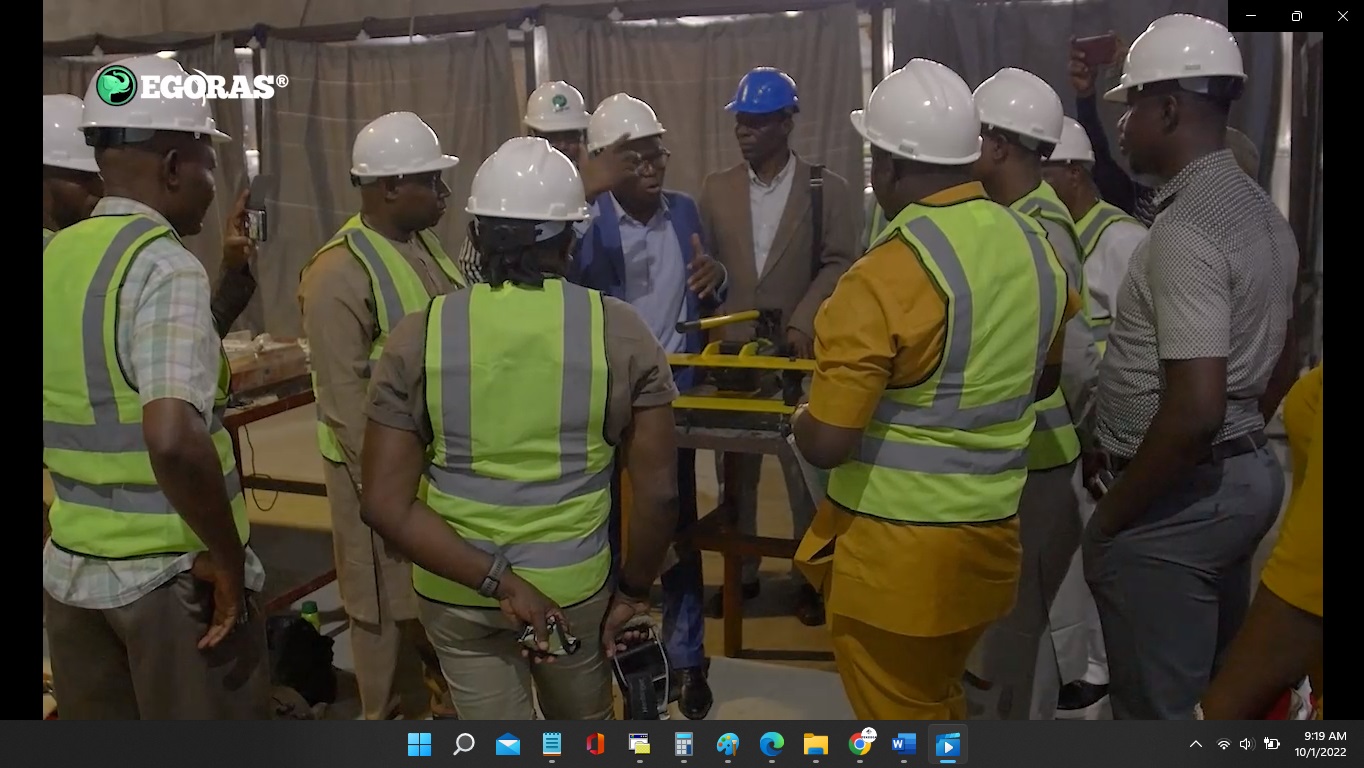
Tekedia Capital Salutes Egoras As Egoras APEX 28 Arrives

0

Tekedia Capital is honoured to have supported Egoras on its mission. This humble company began by repairing and assembling generators, refrigerators, electric irons, etc. Over time, it acquired and built technical capabilities for something higher. On April 28, 2024, Egoras will unveil its first electric vehicle brand:  Egoras APEX 28.

We salute innovators who understand that great missions could begin small. Like Aliko Dangote, who began as a trader, only to become the owner of Africa’s biggest industrialized conglomerate,  Ugoji Harry has demonstrated the power of vision.

To learn how Tekedia Capital is funding the next Africa, go here .