DD
MM
YYYY

PAGES

DD
MM
YYYY

spot_img

PAGES

Home Blog Page 3616

The Tesla’s Multi-Play Strategy Around The One Oasis of its Electric Vehicle Operations

0

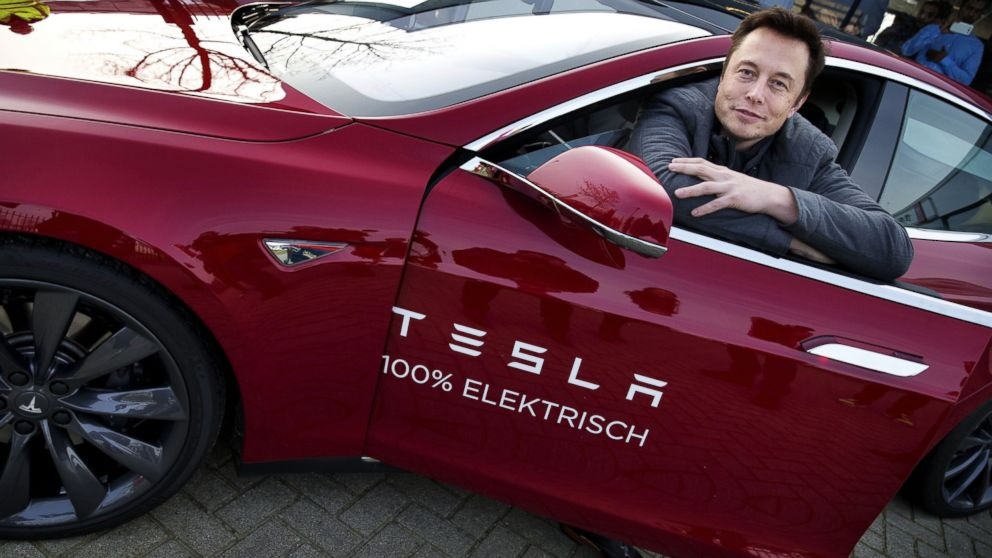
Tesla earned $1.79 billion from carbon credit sales last year, as disclosed in its Q4 2023 and annual financial report, bringing its total earnings from such credits since 2009 to nearly $9 billion. Tesla’s carbon credits are generated by its clean energy operations, which include producing electric vehicles,operating a solar panel installation business and selling energy storage systems.

These operations generate carbon offset credits by reducing greenhouse gas emissions. Tesla sells these credits to other firms, such as automakers, that struggle to meet emissions standards set by regulatory bodies. 

Tesla’s regulatory credit sales have increased by an average of 36% year over year since 2013. In 2021, Tesla’s carbon credit revenue was nearly $1.5 billion. In 2023, Tesla reported a revenue of $554 million from the Q3 sale of carbon credits, which is a 94% increase year-over-year.

And Tesla has opened its Supercharger network to owners of other electric vehicles in North America, and is expected to earn $30 billion on that deal. Tesla is executing a multi-play strategy around its One Oasis of EV vehicles.

The One Oasis Strategy is a business strategy concept that suggests that a company’s best product can help other products in the business. The strategy is based on the idea that if a product drives key investments, it can help other products in the business. The other products would then feed from the best product, and the company would flourish overall.

Tesla Opens Charging Stations to Ford, others: Expected to earn $30bn

0

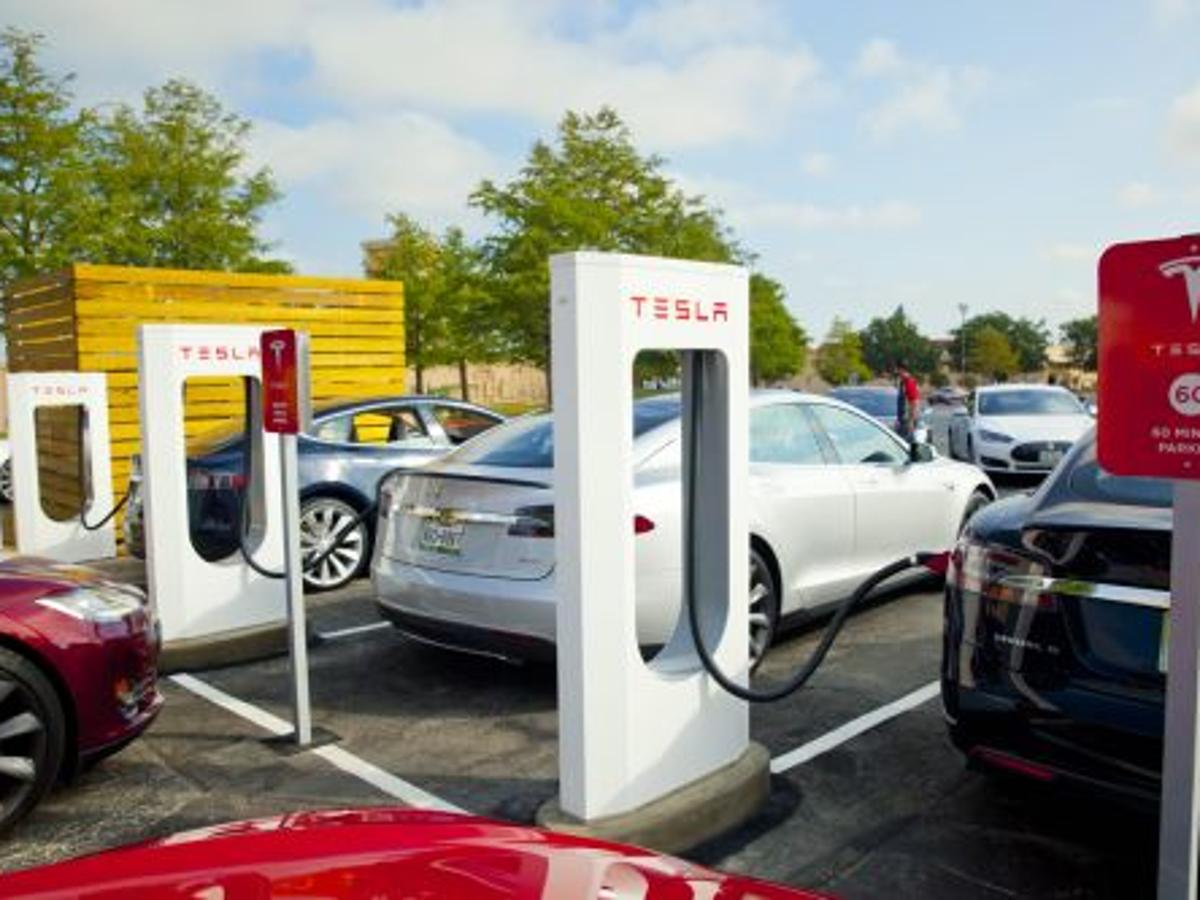
In a surprising move, Tesla has opened its Supercharger network to owners of Ford electric vehicles in North America, marking a significant shift in strategy for the electric vehicle pioneer.

This partnership, confirmed on Thursday, allows Ford EV owners, including those of the Mustang Mach-E and F-150 Lightning, to utilize Tesla’s fast-charging adapters, enhancing the EV ownership experience for Ford drivers.

Ford CEO Jim Farley expressed enthusiasm about the collaboration, stating, “This partnership will improve the EV ownership experience for Ford EV drivers. I’ve tested it myself, and it works great.”

The move follows a similar agreement between Tesla and General Motors, announced earlier, which granted GM customers access to over 12,000 Tesla fast chargers across the United States and Canada. GM CEO Mary Barra projected savings of up to $400 million from a planned investment in EV charging infrastructure.

Elon Musk, CEO of Tesla, has long championed the exclusivity of Tesla’s charging network. However, these recent partnerships signify a strategic shift towards collaboration.

Sam Fiorani, VP for global forecasting at AutoForecast Solutions, believes that while Tesla may lose some customers to other brands, the benefits outweigh the risks. Fiorani predicts that Tesla could generate $6 billion to $12 billion annually by 2030 from its expanded charging business.

Despite concerns about potential customer loss, loyalty to the Tesla brand remains strong. “People shopping for a Tesla aren’t typically cross-shopping at Kia, Ford, or Mercedes-Benz dealers because they simply want a Tesla,” Fiorani wrote. “Competition will continue to heat up and Tesla will inevitably lose some sales to rivals, but loyalty to the brand means the vast majority of owners will return to Tesla with little or no comparison shopping.”

Moreover, opening up its charging network aligns with Tesla’s broader financial goals. Under President Joe Biden’s Inflation Reduction Act, Tesla stands to benefit from federal incentives for expanding EV infrastructure.

William Navarro Jameson, Tesla’s Strategic Charging Programs lead, emphasized the extensive effort behind these collaborations, including interoperability testing and legal negotiations.

“Tesla is not afraid to use government regulations for income and has been working all possible revenue streams for much of its existence,” Fiorani wrote.

Tesla’s market capitalization currently stands at $645.36 billion, and experts speculate that opening its charging stations to other EV producers could further boost its valuation.

The expansion of Tesla’s charging network to accommodate vehicles from other manufacturers could bolster its market value in several ways. Firstly, by increasing the accessibility of charging infrastructure, Tesla stands to attract a broader customer base, thereby driving higher demand for its products and services.

Tesla’s charging revenue is currently reported within its “Total automotive & services and other segment revenue.” However, the company has not disclosed plans to break out revenue from non-Tesla vehicle use of its charging network.

In response to inquiries, Tesla did not provide further information. Nevertheless, the company continues to promote the expansion of its charging network on social media, urging more retailers to host Superchargers at their facilities.

Seplat and Dangote Cement are Great Rainmakers of Cash

1

The flip from the other side. Yes, as we report how companies like MTN Nigeria, PZ Cussons, etc are declaring huge losses, it is also fair we report on non-banking publicly traded institutions from Nigeria. The data has started dropping and one of them, Dangote Cement, continues to be a rainmaker in the league of money:

“Dangote Cement hauled in record windfall income after converting net investments in foreign operations into the naira, more than doubling the company’s comprehensive income to N1 trillion. Comprehensive income, the cash earned from profit after tax in addition to extraordinary gains outside the regular sources of income of companies, climbed 150 per cent from N405.4 billion a year earlier, its audited earnings report showed Friday upon release.”

Seplat, another indigenous company with an international play, reported more than eightfold in comprehensive income:”Seplat Energies raked in N885.1 billion in total comprehensive income – the combined earnings that companies receive from unexpected gains in addition to profit – after the energy giant turned Nigeria’s foreign exchange crisis into its advantage.”

So, indigenous Nigerian companies are having great parties while subsidiaries of multinational firms are struggling. Advantage to the home team, as always, in everything. Go and build multinational companies, out of Nigeria, and the floating of Naira will work for you!

*all quotes from Premium Times

Do you want to join in the Bitcoin surge?

0

Bitcoin has traded above $62,000 and is approaching an all-time high after the U.S. Securities and Exchange Commission approved a spot Bitcoin exchange-traded fund (ETF). BlackRock’s iShares Bitcoin Trust has benefited greatly from the new hype cycle in cryptocurrencies: As of Thursday, the ETF had earned $1.4 billion. In addition to BlackRock, miners, exchanges, mining platforms and derivatives markets have all joined the current surge in cryptocurrencies and have made considerable profits from it.

As the world’s top mining platform, simpleminers naturally benefits from it. The investors of simpleminers were all happy when they shared the extra income of the current period, and they increased their investment in simpleminers one after another, planning to welcome a bigger carnival with simpleminers.

So what does simpleminers do? How much can you earn from investing in simpleminers? How to invest in simpleminers? This article will elaborate on these issues.

  1. What does simpleminers do?

Simpleminers is a mining platform founded in 2019 that focuses on mining Bitcoin. In order to ensure the leadership in computing power, Simpleminers has created a cloud mining business (that is, users can rent a certain amount of “computing power” from Simpleminers to participate in Bitcoin mining, and Simpleminers will allocate corresponding interest to users based on the amount of computing power rented by users. And give users a certain amount of additional rewards when Bitcoin appreciates and benefit) to solve the capital needs during the investment period. Simpleminers’ cloud mining business has been favored by investors since it was launched, because it provides users with a simple and stable way to make money in the fast-paced and volatile world of cryptocurrency.

  1. How much money can you make from investing with simpleminers?

Investing in simpleminers can provide you with the following four layers of superimposed benefits:

  1. Registration bonus: Download and register a simpleminers account to get a $10 registration bonus;
  2. Daily income: Purchase a computing power contract and obtain the daily income from the contract (daily income rate up to 3%);
  3. Additional bonuses: If the value of Bitcoin increases, you can also receive additional rewards during the contract period;
  4. Invitation income: By inviting friends to invest in simpleminers, you can get a reward of 3% of the friend’s investment. If your friend invites his friends to invest in simpleminers, you can also get a reward of 1% of their investment.

Investing in simpleminers and earning $1,000 every day is completely achievable.

  1. How to invest in SimpleMiners?

For cloud mining with Simpleminers, you only need to complete three simple steps:

Step 1: Create an account at Simpleminers and get a $10 bonus. You only need to fill in the registration form on the official website and set up your email, login account, login password, etc. to complete the registration.

Step 2: Choose the contract that’s right for your purchase. Simpleminers provides you with a variety of contracts with different “hash power” amounts. You can invest starting from $100, with daily returns of up to 3%. You can choose any one of these, or purchase multiple different contracts or multiples of the same contract, depending on your needs.

Step 3: Pay the required amount to the contract and you can start cloud mining with Simpleminers.

In addition, Simpleminers provides 24-hour online services from a team of experts, pays profits daily, and provides customers with mobile APP download services to facilitate users’ contract subscription and redemption operations, ensuring the security and visibility of user funds. Simpleminers does not charge any maintenance fees except for contract fees, making it a truly low-cost, high-yield cloud mining platform.


To know more, you can log on to their official website: simpleminers.com

AI is a tool, not a creature: OpenAI CEO Addresses AI Misconceptions Amid Legal Dispute with Elon Musk

0

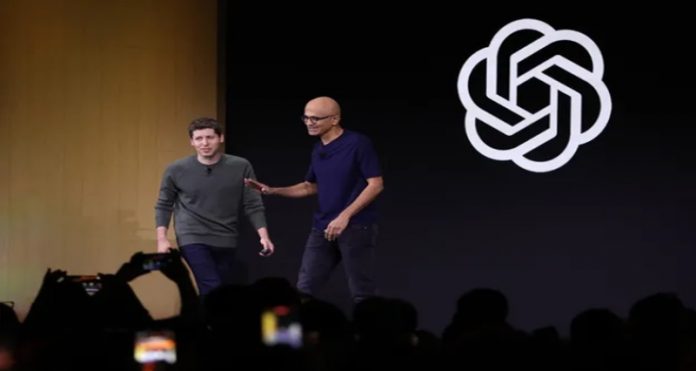
In a recent interview with The Advocate, OpenAI CEO Sam Altman sought to clarify common misunderstandings surrounding artificial intelligence (AI), particularly preaching that AI should be perceived as a tool rather than a sentient being.

Altman highlighted the prevalence of the misconception that AI resembles a creature, perpetuated by science fiction narratives.

“It’s a better movie plot if it’s a creature in a sci-fi movie, for example. If you use ChatGPT, it’s clearly a tool,” Altman explained, shedding light on the distinction. He emphasized that while AI presents risks, they manifest in different forms than often portrayed in fictional scenarios.

Altman acknowledged the evolving discourse surrounding AI, noting shifts from alarmist sentiments to a more nuanced understanding of its potential. However, this optimism is tempered by the recognition of AI’s inherent risks.

“It’s a bit less alarming than his earlier warnings,” remarked Altman, referencing previous statements where he speculated on the potentially catastrophic outcomes of AI development. Despite these concerns, Altman maintained an optimistic outlook, emphasizing the transformative power of AI as a tool to enhance human capabilities.

This conversation comes amidst a legal dispute between Altman and OpenAI co-founder Elon Musk, who recently filed a lawsuit against Altman alleging a deviation from OpenAI’s original nonprofit mission. Musk’s lawsuit argues that OpenAI’s partnership with Microsoft contradicts its initial commitment to leveraging AI for the betterment of humanity.

“OpenAI, Inc. has been transformed into a closed-source de facto subsidiary of the largest technology company in the world: Microsoft,” Musk’s legal team asserted, raising concerns over the prioritization of profit over societal benefit in OpenAI’s current direction.

Microsoft has thrown billions of dollars into OpenAI, investing in and incorporating the chatbot into its tech operations, including Bing – the web search engine it’s preparing to rival Google.

According to legal documents, OpenAI’s founding agreement mandated that its technological advancements be freely accessible to the public, a principle that Musk contends has been disregarded. Instead, he argues, OpenAI has transitioned into a profit-driven enterprise, particularly following its lucrative partnership with Microsoft.

This shift in focus, Musk argues, constitutes a stark betrayal of the original vision and principles upon which OpenAI was founded.

“OpenAI, once a beacon of hope for ethical AI development, has strayed from its noble mission,” Musk declared in a statement accompanying the legal filing. “I cannot stand idly by as an organization that I helped nurture and support veers off course, prioritizing profit over the betterment of humanity.”

In response to the lawsuit, Altman and OpenAI CSO Jason Kwon addressed staff in a memo quoted by the Wall Street Journal, refuting Musk’s claims and suggesting personal motivations behind the legal action. “We believe the claims in this suit may stem from Elon’s regrets about not being involved with the company today,” the memo stated, implying a possible discord between Musk and the current leadership of OpenAI.

The lawsuit underscores broader tensions within the AI community regarding the ethical implications of AI development and its alignment with societal interests. While Altman advocates for a pragmatic approach to AI, emphasizing its potential as a tool for positive impact, Musk’s lawsuit reflects deeper concerns about the commercialization and control of AI technologies by powerful entities like Microsoft.

Despite these challenges, Altman remains committed to advancing AI responsibly and fostering dialogue around its implications. He holds strong the perception of AI as a tool while dismissing the growing ‘misconception’ of the technology. He said, “the popular misconception of AI as sci-fi is very, very different from people who have been using it as a tool for a long time.”