DD
MM
YYYY

PAGES

DD
MM
YYYY

spot_img

PAGES

Home Blog Page 362

U.S. Sanctions on Iranian Oil Exports Hit Sinopec, Straining Washington-Beijing Relations Ahead of Trump–Xi Talks

0

The United States has imposed sweeping new sanctions targeting Iran’s oil exports, striking directly at one of China’s largest state-owned refiners, Sinopec, by designating a key crude terminal that handles roughly one-fifth of the company’s total oil imports.

The move intensifies tensions between Washington and Beijing just weeks before Presidents Donald Trump and Xi Jinping are scheduled to meet.

The U.S. Treasury Department announced on Thursday that it had sanctioned Rizhao Shihua Crude Oil Terminal Co. Ltd, accusing the facility of receiving Iranian oil transported aboard sanctioned vessels.

Rizhao Shihua accepted more than a dozen of Iran’s so-called shadow fleet vessels, the Treasury said, listing tankers such as Kongm, Big Mag, and Voy, which it said carried “several million barrels of Iranian oil to Rizhao.”

Located in the coastal city of Lanshan in eastern Shandong province, the terminal is jointly owned by Sinopec Kantons Holding—a logistics arm of Sinopec—and Shandong Port Group’s Rizhao Port, backed by local government interests. According to Chinese corporate data platform Qichacha, each party holds a 50 percent stake. The facility operates three berths capable of handling Very Large Crude Carriers (VLCCs), each with the capacity to carry up to 2 million barrels of oil.

The Rizhao terminal is a critical hub in China’s refining network. Shipping data from analytics firm Vortexa and multiple industry executives show that Sinopec handles the majority of the crude passing through the port. In 2024, Sinopec imported about 804,000 barrels per day (bpd) via Rizhao—representing roughly 20 percent of its total crude imports. The port’s pipelines supply two major Sinopec subsidiary refineries—Sinopec Luoyang Petrochemical in Henan province and Sinopec Yangzi Petrochemical in Jiangsu province—with a combined processing capacity of 420,000 bpd. Rizhao also indirectly serves several smaller refineries along the Yangtze River through pipeline connections.

The sanctions on Rizhao Shihua mark the fifth time Washington has designated an oil import terminal in Shandong, a region that serves as the heart of China’s independent refining industry and a major destination for crude shipments from Iran, Venezuela, and Russia. Collectively, the sanctioned facilities represent about half of Shandong’s VLCC handling capacity.

Industry experts said the impact could be significant. “Compared to the previous round of sanctions on Chinese terminals, the impact could be larger,” said Samuel Kong, a senior analyst at energy consultancy FGE. “In the near term, we could see disruptions to discharges around Rizhao, and vessels carrying non-sanctioned barrels might seek alternative ports in Shandong to unload their cargoes.”

FGE estimates that about 10 to 20 percent of crude imported through Rizhao comes from sanctioned sources, but the sweeping restrictions could complicate all trade passing through the port.

The new measures are part of a broader U.S. effort to choke off Iran’s energy revenue by targeting its logistics network and shipping fleet. Treasury Secretary Scott Bessent said the administration is “degrading Iran’s cash flow by dismantling key elements of Iran’s energy export machine.” The sanctions package also includes several ships and an independent Chinese refinery accused of processing Iranian crude.

The impact on the market was swift. Spot freight rates for VLCCs on the Middle East–China route rose about 3 percent on Friday amid concerns over potential port congestion and discharge delays resulting from the sanctions. Shipping sources said several vessels bound for Rizhao had begun seeking alternative destinations along the Shandong coast.

The sanctions also follow a broader pattern of Washington’s enforcement actions against China-linked entities accused of facilitating Iran’s oil trade. In early 2025, U.S. authorities blacklisted a China-based crude oil storage facility linked to an independent refinery, while the Haiye Dongjiakou terminal in Qingdao—once handling up to 200,000 bpd of Iranian crude—was sanctioned and forced to suspend operations.

To adapt, Chinese refiners have increasingly used indirect channels to continue importing Iranian oil. Traders have rebranded Iranian crude as originating from Malaysia to evade detection. Discounts for Iranian oil have also widened as inventories built up and import quotas for smaller refiners in Shandong became increasingly constrained.

Beijing had last year denounced the U.S. sanctions, which it called “illegal” and said they have no basis in international law, urging Washington to abandon the wrong practice of arbitrarily resorting to sanctions and to stop interfering in normal energy cooperation between China and other countries.

Industry insiders say Sinopec is now reviewing its crude logistics network to mitigate the impact. Executives familiar with the matter told Reuters that the company could redirect shipments to other terminals, including Ningbo or Qingdao, or increase throughput at nearby refineries to offset possible production losses at Luoyang and Yangzi plants.

Still, such adjustments could take time and increase costs, particularly for a supply chain built around the Rizhao terminal’s pipeline infrastructure.

Analysts say the sanctions highlight Washington’s growing use of financial and logistical pressure to target Beijing’s role in sustaining Iran’s oil exports. The measures come shortly after China announced tighter controls on rare earth mineral exports, a move widely interpreted as a counterweight to U.S. trade restrictions.

With Trump preparing to meet Xi later this month, the sanctions are expected to feature prominently in discussions between both leaders.


After 66% Price Surge in Q3, Ethereum (ETH) Targets $8500 in Q4, While Little Pepe (LILPEPE) Aims for 12,300% Returns

0

Ethereum has once again shown that it is the best digital currency. In the third quarter of 2025, its price increased by 66%, which was higher than most other significant cryptocurrencies. Ethereum is the leading platform for creating new contracts globally. Its strengths include being highly liquid, being used by institutions, and its decentralized ecosystem is continually developing. But even though ETH’s goal of $8,500 in Q4 seems more and more likely to happen, a new meme coin called Little Pepe ($LILPEPE) is making news by promising a mind-boggling 12,300% return on its current presale price. The difference between Ethereum’s steady growth and Little Pepe’s explosive potential is a fantastic example of the two sides of the crypto market: established giants provide stability, while new ventures promise life-changing rewards.

Ethereum’s 66% Q3 Rally Rekindles Investor Optimism

In the third quarter of this year, Ethereum experienced its most significant increase in nearly a decade, rising 66% to reach $4,500, driven by institutional funding, increased blockchain activity, and overall improvements in the cryptocurrency market.  Due to the overall market conditions, Ethereum is predicted to encounter a bullish continuation pattern. In the meantime, its current support at $4,200 and resistance at $4,800 will serve as reference points while prices consolidate. Current forecasts, which state that Ethereum will close the year around $ 8,500, will only be accurate if BTC continues its bullish run, implying an 80% increase in the predicted lower Ethereum price. Standard Chartered has predicted Ethereum will close the year within the $7,000 to $8,500 range, an estimate that will be true only if institutional funding via spot ETH ETFs becomes available. Their prediction is also based on Ethereum blockchain-based applications that will be launched alongside tokenization and the Hyper Web 3.0.

Little Pepe ($LILPEPE): The Meme Coin Turning Heads in Q4

Ethereum remains the most significant component of decentralized finance, but Little Pepe ($LILPEPE) is quickly emerging as the face of the new meme revolution. The initiative has garnered a significant amount of investors’ attention and is now in Stage 13 of its presale at $0.0022, following the receipt of more than $26 million in earlier rounds. Little Pepe is constructing real infrastructure with a dedicated Layer-2 blockchain optimized for meme and community tokens, which differs from most meme coins that rely solely on online humor and virality. It has the following features:

  • Ultra-low transaction fees for microtransactions and meme trading
  • Fast finality for instant execution
  • Anti-sniper bot protection to ensure fair launches
  • Meme Launchpad for creators to deploy new meme tokens on its network

Little Pepe differs from other meme coins, such as Dogecoin and Shiba Inu, in that it employs an ecosystem approach. It mixes humor and community excitement with real technology development, which might keep it interesting for a long time. Little Pepe’s tokenomics also show that the company is committed to growth and sustainability. The structure encourages both participation and holding by having no transaction taxes, 26.5% set aside for presale, and 13.5% set aside for staking incentives. The project’s successful Certik audit has further reassured investors. Some analysts are already comparing Little Pepe’s rise to the early phases of Pepe Coin’s breakout in 2023. Some estimates suggest that the current presale value could increase by as much as 12,300%. If this happens, Little Pepe will be one of the most successful meme coin launches ever.

Conclusion

Ethereum performed well in the third quarter, positioning it for an even stronger fourth quarter. Analysts expect the price to rise to $8,500 as more institutional investors enter the market. Ethereum remains a blue-chip asset, but Little Pepe ($LILPEPE) is demonstrating that the meme business can still be innovative and generate substantial profits. Little Pepe is setting itself up to be more than just another meme token. With its utility-driven plan, strong community, and fast presale performance, it is becoming a whole meme ecosystem that will help shape the next chapter of crypto’s evolution. Combining Ethereum’s stability with Little Pepe’s momentum could be a good way for investors to get both safety and speculative gain in the last quarter of 2025.

For more information about Little Pepe (LILPEPE) visit the links below:

Website: https://littlepepe.com


Whitepaper: https://littlepepe.com/whitepaper.pdf

Telegram: https://t.me/littlepepetoken

Twitter/X: https://x.com/littlepepetoken 

Top US Regulated Bitcoin Mining Platforms 2025 for Legal Crypto Earnings

0

The US crypto mining industry is evolving rapidly, driven by stringent regulations, increasing energy costs, and a growing demand for transparency. For many investors and miners, the biggest question in 2025 is no longer “Can I mine Bitcoin profitably?” but rather “Where can I mine legally and safely?”

With government oversight increasing, US-based and globally compliant mining platforms are stepping up to provide legal, transparent, and profitable options for investors. This article examines the top regulated Bitcoin mining platforms for 2025, with a particular focus on ETNCrypto—a cloud mining provider that is fully registered and designed for security-conscious users.

Quick Highlights: Best Regulated Mining Platforms in the US (2025)

  • ETNCrypto – Fully registered in Switzerland, offering legally compliant cloud mining with flexible contracts.
  • HashrateIndex – Analytics-driven platform helping miners track profitability and comply with local standards.
  • Riot Platforms – One of the largest US-based mining companies operating under SEC oversight.
  • Cruxpool – European pool expanding into the US, offering regulated mining pool services.
  • WhiteBIT Mining – Exchange-backed mining platform with strict AML and KYC compliance.

Why Regulation Matters for US Bitcoin Mining

The days of anonymous and unregulated mining services are fading. In 2025, the US government requires mining platforms that serve American users to comply with:

  • KYC (Know Your Customer) and AML (Anti-Money Laundering) regulations
  • Transparent taxation of mining earnings
  • Energy efficiency disclosures

For miners, this is actually an advantage: legal protection, reduced fraud risk, and assurance that profits are recognized under federal law.

ETNCrypto: Legally Registered and Globally Trusted

ETNCrypto, operated by Crypto Mining Solutions GmbH, has become one of the safest cloud mining choices for US users. Registered in Switzerland (Registre Commerce: CH-400.4.450.224-8), the platform complies with international financial and consumer protection standards.

What Makes ETNCrypto Stand Out?

  • Legally Verifiable Registration – All company details,
  • Contract-Based Profit Distribution – Earnings are distributed transparently, according to clear contract terms.
  • Regulatory Oversight – Protected under Swiss and Australian legal frameworks.
  • Energy Optimization – Facilities in regions with low-cost and renewable energy.

Click to visit ETNCrypto to claim your $100 bonus!

ETNCrypto Mining Rigs

Mining Rig Contract Price Contract Period Daily Profit Daily ROI
Antminer S19 XP?Free? $100 1 Day $1.50 1.50%
Antminer T21 $200 2 Days $6.00 3.00%
Antminer Z15 Pro $600 3 Days $19.20 3.20%
Antminer S21 Pro $1,300 5 Days $45.50 3.50%
VolcMiner D1 Lite $3,500 6 Days $133.00 3.80%
Antminer S21+ Hyd $8,000 3 Days $336.00 4.20%
VolcMiner D1 $17,800 5 Days $854.40 4.80%
Antminer L9 $36,000 6 Days $2,088.00 5.80%
Antminer S21e XP Hyd 3U $68,000 5 Days $5,440.00 8.00%

This wide range of contracts—from free trials to enterprise-scale packages—makes ETNCrypto a flexible choice for all types of investors.

Other Top US-Regulated Platforms

To provide a balanced view, here are other legitimate competitors catering to US users in 2025:

  1. HashrateIndex

Not a direct miner, but an analytics platform that tracks mining profitability, compliance, and hosting facilities across the US. Miners use HashrateIndex to ensure their operations align with regulatory frameworks.

  1. Riot Platforms

A publicly traded company listed on NASDAQ, Riot is one of the largest Bitcoin miners in the US. With SEC reporting requirements, it’s among the most transparent and fully regulated mining companies available to investors.

  1. Cruxpool

Originally a European pool, Cruxpool is expanding operations to the US with a focus on compliance. It allows users to join mining pools for Bitcoin and Ethereum, providing KYC-compliant services and institutional-level transparency.

  1. WhiteBIT Mining

Backed by the global WhiteBIT crypto exchange, this mining service integrates regulated trading with cloud mining contracts. With strict AML/KYC checks, it ensures US customers can mine safely while easily converting rewards to USD.

How US Users Can Legally Start Mining in 2025

  1. Select a Regulated Platform – Choose services like ETNCrypto, Riot Platforms, or WhiteBIT.
  2. Complete Verification – Expect to provide ID and proof of address due to KYC rules.
  3. Purchase a Mining Contract or Join a Pool – Start with short-term contracts to test profitability.
  4. Track Earnings Transparently – Platforms like HashrateIndex help monitor profitability and compliance.
  5. Report Income – US miners must report earnings as taxable income to remain compliant.

Risks to Avoid

Even in 2025, scams exist. Here are warning signs:

  • Anonymous Ownership – Avoid platforms without clear registration details.
  • Unrealistic Returns – Be cautious of platforms claiming 10%+ daily returns.
  • No KYC/AML Process – In the US, legit platforms require verification.

FAQ: US-Regulated Bitcoin Mining in 2025

Q: Is Bitcoin mining legal in the US in 2025?
A: Yes, but only through regulated platforms that follow KYC/AML rules and energy reporting standards.

Q: Do I have to pay taxes on mining rewards?
A: Yes, mining income is treated as taxable income under US law.

Q: Which platform is best for beginners?
A: ETNCrypto offers flexible contracts with low entry points, making it ideal for first-time miners.

Q: Can I mine from my phone legally?
A: Direct phone mining isn’t practical. Instead, you can use apps that connect you to regulated cloud mining contracts.

Final Thoughts

For US users, the future of mining lies in legal, transparent, and regulated Cloud Mining platforms. While unverified services may offer tempting returns, they pose significant risks. Platforms like ETNCrypto lead the way with verifiable registration, contract-based profit distribution, and global compliance, making them the safest choice for both beginners and professionals.

Other competitors, such as Riot Platforms, Hashrate Index, Cruxpool, and WhiteBIT Mining, offer complementary services that enhance the US mining ecosystem.

The bottom line: in 2025, legal compliance is not just a formality—it’s the foundation of safe, sustainable crypto earnings.

AI Consultant Communities: Where Experts Exchange Ideas

0

Artificial Intelligence is changing how we connect, think, and collaborate. But even experts need a space to share, debate, and refine ideas. That’s where the best AI consultant communities come in — digital ecosystems where consultants, data scientists, and strategists gather to exchange top ideas online, discuss projects, and solve complex challenges together. These communities aren’t just forums; they are live, evolving laboratories of innovation.

In 2025, more than 70% of AI consultants report belonging to at least one online professional network. The need to keep up with the rapid evolution of generative models, ethical frameworks, and enterprise applications has made such communities vital. Without them, staying relevant would be nearly impossible.

What Makes the Best AI Consultant Communities So Unique?

They don’t work like traditional chat rooms. They are structured yet free, specialized yet inclusive. One may find a mix of mentors, entrepreneurs, and tech architects—all collaborating without borders. The best AI consultant communities often use AI-powered consultant chats that analyze conversation patterns and suggest relevant content in real time. Imagine discussing predictive analytics while the chat interface automatically offers the latest research or case study—instant knowledge exchange, driven by AI itself.

Platforms like Slack channels for AI consultants, specialized Discord groups, or private LinkedIn collectives now serve as hubs for dialogue. The focus isn’t just technical coding talk but strategy, leadership, and practical deployment insights. Each post, comment, or chat message can spark a new project or even a new business partnership.

How AI-Powered Consultant Chats Are Redefining Collaboration

AI has become both the subject and the tool of collaboration. In modern AI-powered consultant chats, algorithms assist with summarizing complex discussions, identifying thought leaders, and even grouping experts with similar focus areas. The chat itself becomes semi-intelligent. It listens, filters, recommends, and enhances clarity.

The process is not static. While consultants discuss machine learning pipelines, the platform might recommend others working on similar problems. As a result, silos disappear. Knowledge circulates freely, even across continents. A question raised in Singapore can find its answer from a consultant in Toronto in seconds. The invisible hand behind this? AI moderation and semantic search capabilities that make conversations efficient, relevant, and personalized.

Interestingly, according to recent digital community data, over 58% of professionals using AI-enhanced communication tools feel they collaborate more effectively than through traditional email exchanges. Conversations become fluid—alive with intelligence.

The Human Side of Digital Consulting

Yet, despite all the smart features, the human factor remains the core of every consultant community. Emotional tone, mentorship, humor, and shared struggle bind experts together. The human side of technology shines brightest when consultants discuss ethical dilemmas or failures. It’s not only success stories that drive learning—it’s the willingness to admit uncertainty.

In these networks, senior consultants share lessons learned from years of deployment; younger specialists bring fresh perspectives. The mixture of experience and curiosity creates a self-sustaining cycle of improvement. It’s a living classroom, always open, never complete.

Anonymous Video Chat and the Value of Spontaneity

Sometimes, words in text form aren’t enough. That’s where anonymous video chat becomes a useful extension of the community. Creating a private online chat is as easy as posting a story. But anonymous chat on platforms like CallMeChat allows you to meet face-to-face with a wide variety of people, including potential clients or colleagues. It’s a great chance to brainstorm freely without revealing your personal identity or compromising professional boundaries.

In practice, anonymous video chat sessions often spark unexpected collaborations. Two participants may discover they’ve been working on similar AI audit frameworks or ethics models. The anonymity removes hierarchy and judgment, allowing ideas to flow without filters. It’s where raw innovation often begins—outside the structured, visible threads of text discussions.

Where Ideas Turn Into Global Movements

The real magic of these communities lies in how small exchanges lead to large-scale change. A consultant may post about optimizing neural architecture search, and within hours, ten others contribute insights or share experiments. The exchange of top ideas online transforms isolated thinkers into a collective intelligence.

Over time, many of these discussions evolve into published frameworks, open-source projects, or industry standards. For example, several open AI policy proposals first appeared in consultant community discussions before reaching global forums. Digital collaboration isn’t merely talk—it’s an engine for action.

The shared goal among members is progress: faster problem-solving, better models, more ethical systems. And every conversation, however brief, adds another piece to that puzzle.

Statistics That Highlight the Growth

Recent surveys show that:

  • 82% of AI professionals believe community engagement improves their technical expertise.
  • 64% of consultants claim that online collaboration leads to new career opportunities.
  • Participation in active AI consultant chats has grown by 45% in just two years.

These numbers reflect a global trend—knowledge no longer belongs to a few institutions or companies. It belongs to interconnected minds sharing it daily.

Challenges: Noise, Bias, and Information Overload

Of course, not everything shines. Some communities face issues with information clutter, self-promotion, or AI bias in moderation tools. The flood of content can overwhelm members. When too many voices speak at once, valuable insights can drown in digital noise.

However, evolving algorithms and human moderators are working together to refine these spaces. Balancing automation and human oversight remains the key challenge for sustaining productive exchanges.

Looking Forward: Smarter, More Inclusive Communities

The next generation of AI-powered consultant chats will likely merge virtual reality, emotional AI, and adaptive learning systems. Members could join immersive think tanks, simulate AI-driven models in real time, and instantly see global feedback. The boundary between consulting and co-creation will blur completely.

As artificial intelligence matures, so will the art of human collaboration. The best AI consultant communities won’t just host discussions—they will become incubators for ethical, innovative, and sustainable progress.

In a world where machines learn faster than ever, the power of human connection—guided by AI but grounded in empathy—remains irreplaceable.

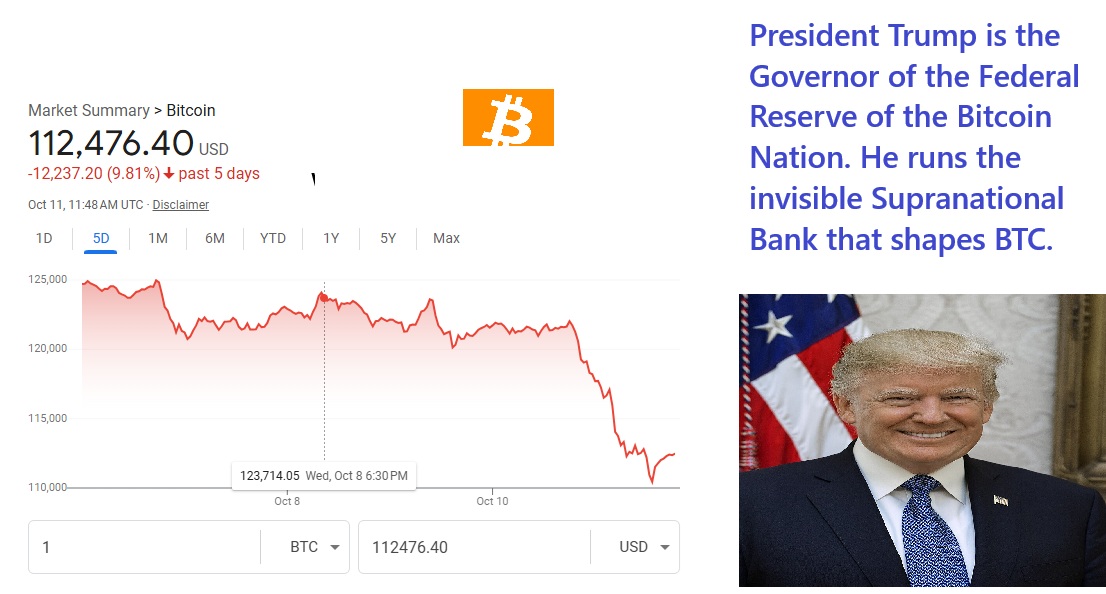
Bitcoin Catches a Cold from Washington and How President Trump is the Governor of the Federal Reserve of Bitcoin Nation.

0

When the leader of the free world sneezes, the crypto economy catches a cold. And this week, President Donald Trump sneezed hard, declaring a 100% tariff on Chinese imports and imposing export controls on what he called “any and all critical software.” The markets panicked. Equities tumbled, and Bitcoin joined the sell-off chorus. It was a powerful reminder that bits are not immune to the physics of global economics. Bitcoin, though decentralized, lives within the gravitational pull of geopolitics.

My doctoral work in banking & finance focused on currency and globalization, studying how currencies ripple through interconnected economies. I have published on these themes in the World Bank and African Union journals (see African Union Paper https://base.afrique-gouvernance.net/docs/volume_21.pdf ). My thesis showed how a single currency, under a supranational authority, can destabilize an entire region when the dominant economy fails to maintain discipline. Imagine a West African ECO currency governed by a “Central Bank of West Africa.” If Nigeria, with its outsized GDP, mismanages inflation or fiscal policy, smaller economies like Benin or Togo will experience welfare losses, not because they did anything wrong, but because Nigeria’s instability would hijack the regional monetary equilibrium.

The Eurozone avoided that fate largely because of its homogeneity. Yes, similar economic structures and governance systems. West Africa, by contrast, is a mosaic of heterogeneity. What happens in Port Harcourt does not mirror what happens in Cotonou. The same asymmetry now plays out on a global scale with Bitcoin. Though it is borderless, its pulse responds to decisions made in Washington, Beijing, and Brussels. El Salvador may adopt Bitcoin as legal tender, but when America coughs, El Salvador’s balance sheet trembles. The irony is profound: a decentralized asset now depends on centralized politics.

In this new construct, the G6 leaders plus China, whether they know it or not, are the de facto central bankers of Bitcoin. Through fiscal decisions, tariffs, and macroeconomic posturing, they set the emotional temperature of the crypto market. The ideal of Bitcoin as a sovereign-free refuge is noble. But in practice, it remains a derivative of global trust, a trust still denominated in dollars. The dream of total independence from the traditional order remains a work in progress. But the path is long!