DD
MM
YYYY

PAGES

DD
MM
YYYY

spot_img

PAGES

Home Blog Page 3621

AI Should Be Decentralized as Much as Possible, Open Source is A Great Step Toward Achieving It

0

Artificial intelligence (AI) is one of the most powerful and influential technologies of our time. It has the potential to transform various domains such as healthcare, education, transportation, entertainment, and more. However, it also poses significant challenges and risks, such as ethical dilemmas, privacy violations, bias, and security threats. Therefore, it is crucial to ensure that AI is developed and deployed in a responsible and trustworthy manner.

One way to achieve this goal is to decentralize AI as much as possible. Decentralization means that AI systems are not controlled by a single entity or authority, but rather distributed among multiple stakeholders and participants.

This can enhance the transparency, accountability, diversity, and innovation of AI systems, as well as empower the users and communities that interact with them. Decentralization can enhance the diversity, transparency, accountability, and resilience of AI systems, as well as empower users and communities to have more control and influence over the technology that affects their lives.

Open source is a great step toward decentralizing AI. Open source refers to the practice of making the source code of software or hardware available for anyone to access, modify, and share. Open source can foster collaboration, creativity, and learning among developers and researchers who work on AI projects. It can also enable users to inspect, audit, and improve the quality and performance of AI systems. Moreover, open source can facilitate the dissemination and adoption of AI solutions that address social and environmental problems.

How can we ensure that AI is not only available to a few privileged actors, but also to those who need it most?

One possible answer is open source. Open source is a model of software development and distribution that allows anyone to use, modify, and share the code freely. Open source can facilitate the dissemination and adoption of AI solutions that address social and environmental problems, by lowering the barriers to entry, fostering collaboration and innovation, and increasing transparency and accountability.

Some examples of open source AI projects that aim to make a positive impact on the world are:

TensorFlow: A framework for building and deploying machine learning models, developed by Google. TensorFlow is used for a variety of applications, such as natural language processing, computer vision, speech recognition, and recommendation systems. TensorFlow also supports social good initiatives, such as detecting illegal fishing, predicting famine, and diagnosing diseases.

Hugging Face: A platform for natural language processing (NLP), which enables researchers and developers to create and share state-of-the-art NLP models. Hugging Face supports several languages and tasks, such as sentiment analysis, text summarization, question answering, and text generation. Hugging Face also contributes to social good projects, such as fighting online hate speech, improving mental health, and enhancing education.

PyTorch: A framework for building and deploying deep learning models, developed by Facebook. PyTorch is widely used for research and development in computer vision, natural language processing, reinforcement learning, and generative models. PyTorch also enables social good applications, such as detecting deforestation, preventing wildlife poaching, and improving accessibility.

AllenNLP: A library for natural language processing (NLP), developed by the Allen Institute for AI. AllenNLP provides easy-to-use tools and models for common NLP tasks, such as semantic parsing, coreference resolution, named entity recognition, and sentiment analysis. AllenNLP also supports social good efforts, such as fact-checking, combating misinformation, and analyzing social media.

Fast.ai: A library for deep learning, developed by fast.ai. Fast.ai simplifies the process of building and training deep learning models, by providing high-level abstractions and best practices. Fast.ai also promotes social good causes, such as democratizing AI education, empowering underrepresented groups, and tackling global issues.

These are just some of the many open-source AI projects that are making a difference in the world. By sharing their code and knowledge with the community, they are creating opportunities for learning, collaboration, and innovation. They are also increasing the diversity and inclusivity of the AI field, by enabling more people to participate and contribute. And they are enhancing the trustworthiness and responsibility of the AI systems they create, by exposing them to public scrutiny and feedback.

Open source can be a powerful catalyst for social good AI. By embracing the open-source philosophy and culture, we can create more accessible, equitable, and impactful AI solutions that benefit everyone.

Therefore, we argue that AI should be decentralized as much as possible, and that open source is a great step toward this goal. By embracing open-source principles and practices, we can create a more diverse, transparent, accountable, and resilient AI ecosystem that can benefit humanity in a sustainable and ethical way.


OpenAI Reinstates Sam Altman in A Startling Organizational Overhaul

0

In a stunning reversal, OpenAI announced on Wednesday at 10:03 p.m. Pacific Time that Sam Altman, the former CEO who was fired from the company just five days prior, will return to his previous role. 

In addition, a new initial board has been introduced, signaling a major organizational shift.

The unexpected turn of events was disclosed on OpenAI’s official Twitter account, marking the close of a turbulent chapter for the artificial intelligence research lab.

“We have reached an agreement in principle for Sam Altman to return to OpenAI as CEO with a new initial board of Bret Taylor (Chair), Larry Summers, and Adam D’Angelo,” OpenAI said. “We are collaborating to figure out the details. Thank you so much for your patience through this.”

Altman’s return comes after a controversial departure earlier this year when he was accused of inconsistent candor in his communications with the board. Coupled with the announcement of a new board, including Bret Taylor as chairman, Larry Summers, and Adam D’Angelo, these developments suggest a substantial reset for OpenAI.

Altman’s original departure from OpenAI has been the biggest news in the tech world for the past five days. As CEO, Altman was a driving force behind the lab’s ground-breaking research and advancements in artificial intelligence. His exit, marked by the board’s cryptic claim that he was “not consistently candid” in his communications, sparked intrigue and speculation across the industry.

In a tweet, Altman wrote: “I love OpenAI, and everything I’ve done over the past few days has been in service of keeping this team and its mission together… With the new board and with Satya’s support, I’m looking forward to returning to OpenAI, and building on our strong partnership with MSFT.”

Microsoft CEO, Satya Nadella, expressed support for the changes at OpenAI. He tweeted “We are encouraged by the changes to the OpenAI board. We believe this is a first essential step on a path to more stable, well-informed, and effective governance.” 

Former OpenAI president Greg Brockman will also rejoin the organization. It’s unclear whether he will reassume his former role at the organization. Brockman kept his comments short, tweeting: “Returning to OpenAI & getting back to coding tonight.”

The reasons for Altman’s return to OpenAI remain undisclosed for now. It’s unclear whether the issues that led to his exit have been resolved, or if this marks a shift in the board’s stance.

The new initial board, with Bret Taylor (chairman), Larry Summers, and Adam D’Angelo, hints at a possible reshaping of the organization’s leadership and strategy. It remains to be seen how these changes will impact OpenAI’s direction and the broader AI community.

Altman’s return as OpenAI CEO, along with the new initial board, signals a significant turning point for the AI research lab. Altman’s leadership was key to the lab’s early successes, and his return could herald a resurgence of his vision for the company. 

As the tech world digests this news, one thing is clear: the saga of Sam Altman and OpenAI is far from its final chapter, and no one knows for sure what chapter it will turn next.

Beyond Coding and The Richest Man in America of African Origin and Africa’s Latent Opportunities Yet

0
??????????????????????????????????????????????????????

Enterprise software is a massive latent opportunity which must be unlocked. And the interesting element is that creating it may not even be where the juice is. The richest person in America of African origin  makes money via enterprise software. 

Robert F. Smith’s Vista Equity Partners does one thing: “invests in enterprise software opportunities through multiple strategies including private equity, permanent capital, credit and public”. In other words, he does not write codes but buys produced codes packaged as enterprise software. Robert F. Smith is worth $11.9 Billion!

Why this post? A young investment analyst feels lost that he cannot write software. People, who told you that you need to write software to become successful in the business of software? We must avoid the temptation of the group think, and go out and pioneer new vistas in our careers. 

Yes, depending on how you look at it, Robert is the most successful tech geek of African origin, but I am not sure, he knows how to code in Python or whatever because who needs snakes when you can decorate the house with benjamines!

As I write, I am looking for someone with vision to do what Robert F. Smith has done, for Nigeria’s capital market, with another embedded layer of integration, automation and digitization upon enterprise software across many Nigerian sectors, and with the eye on listing in the Nigerian Stock Exchange via different vehicles! If you know anyone with capacity, Tekedia Capital is open to invest.

“Software will eat the world”, they say, but something must prepare the food. Are you there – and ready?

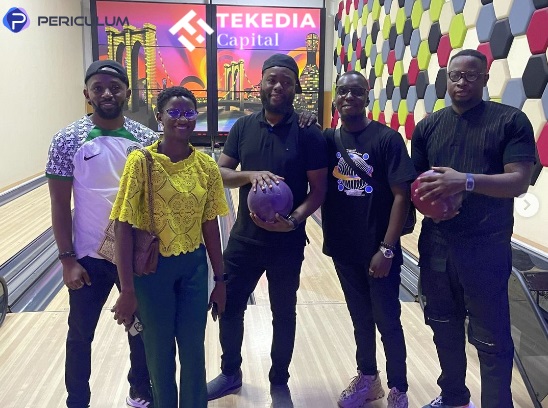
Periculum, A Tekedia Capital Portfolio Startup, Provides AI Services To Clients

0

Periculum, your technology powers intelligence in Nigeria and broad Africa.  From some of the leading financial brands like Fairmoney, Sycamore and leading banks, to law enforcement & security entities, you have baked AI and ML solutions which work for customers across lending, customer intelligence and support, and other domains. Yes, technologies with local intelligence. That is why you are the best!

To learn what Periculum does and how it can help your business mission, click here periculum.io . To learn about Tekedia Capital, click here capital.tekedia.com. At Tekedia Capital, we fund entrepreneurial capitalism, a foundation for the next Africa.

Periculum, proudly backed by Tekedia Capital.

Africa Needs to Start Developing Indigenous Social Media platforms, Web Hosting Services Amid Improving Urban Electricity

0
The African Union logo is seen outside the AU headquarters building in Addis Ababa, Ethiopia, November 8, 2021. REUTERS/Tiksa Negeri

The recent events in Nigeria, where the government banned Twitter after the platform deleted a controversial tweet by ex-President Muhammadu Buhari, have highlighted the vulnerability of African countries to the decisions of foreign tech giants. While some Nigerians have found ways to circumvent the ban using VPNs and other tools, the situation raises important questions about the digital sovereignty of African nations and their ability to control their own online spaces.

One of the ways to address this challenge is to develop and promote local social media platforms that cater to the specific needs, preferences and cultures of African users. There are already some examples of such platforms, such as Koo in Nigeria, Ummo in South Africa, and Eyenak in Egypt, but they face many obstacles to compete with the global giants like Facebook, Twitter and Instagram. Some of these obstacles include lack of funding, technical expertise, user base, and regulatory support.

Another way to enhance Africa’s digital sovereignty is to invest in local web hosting services that can store and serve the data generated by African users within the continent. Currently, most of the African websites are hosted on servers located outside Africa, mainly in Europe and North America.

This means that the data of African users is subject to the laws and policies of foreign countries, which may not align with their interests or values. Moreover, hosting data outside Africa increases the latency and cost of accessing websites, as well as the risk of cyberattacks and data breaches.

By developing local web hosting services, Africa can reduce its dependence on foreign providers and improve its digital infrastructure, security and resilience. Local web hosting can also create more jobs, opportunities and innovations for African entrepreneurs, developers and content creators. Some of the initiatives that are working towards this goal include Afrihost in South Africa, Web4Africa in Ghana, Truehost in Kenya, and Genious in Morocco.

What is the benefit of local web hosting services?

Faster loading speed: Local web hosting services have servers that are closer to your target audience, which means that your website will load faster and provide a better user experience. Faster loading speed can also improve your SEO ranking and conversion rate.

Better customer support: Local web hosting services have staff that speak your language and understand your culture, which means that you can communicate with them more easily and get faster and more personalized support. You can also reach them at convenient hours and avoid long-distance phone charges.

Higher security and compliance: Local web hosting services have to comply with the laws and regulations of your country, which means that they can offer higher security and privacy for your data and website. You can also avoid potential legal issues or conflicts that might arise from using a foreign web hosting service.

More social responsibility: Local web hosting services contribute to the local economy and community, which means that you can support the development and growth of your country and region. You can also build trust and reputation with your local customers and partners by showing that you care about their needs and preferences.

As you can see, local web hosting services have many benefits that can help you achieve your online goals and objectives. If you want to find out more about local web hosting services, you can contact us today and we will be happy to assist you.

Africa needs to start developing not only its own social media platforms but also its own web hosting services if it wants to have more autonomy and influence in the digital world. This is not an easy task, but it is a necessary one for the future of the continent.

Vast majority of urban Africa has reliable 24/7 Electricity

The vast majority of urban Africa has reliable 24/7 electricity. This is a remarkable achievement that deserves more recognition and appreciation from the rest of the world. I will explore how this feat was accomplished, what benefits it brings to the continent, and what challenges still remain.

Africa is home to more than 1.3 billion people, of whom about 60% live in urban areas. Urbanization is a key driver of economic growth, social development, and environmental sustainability. However, it also poses significant demands on infrastructure and services, especially energy.

Without reliable and affordable electricity, urban dwellers cannot access basic needs such as water, sanitation, health care, education, and communication. They also face difficulties in engaging in productive activities, such as manufacturing, commerce, and innovation.

For a long time, Africa was lagging behind other regions in terms of electrification. According to the World Bank, in 2010, only 42% of the urban population in sub-Saharan Africa had access to electricity, compared to 76% in South Asia and 95% in Latin America. The situation was even worse in rural areas, where only 16% of the population had electricity access.

The main reasons for this low level of electrification were the lack of investment, the poor quality of service, the high cost of generation and distribution, the inefficiency and corruption of utilities, and the political instability and conflict in some countries.

However, in the past decade, Africa has made remarkable progress in expanding and improving its electricity sector. According to the International Energy Agency (IEA), between 2010 and 2019, the number of people with access to electricity in sub-Saharan Africa increased by more than 100 million, reaching 54% of the population.

The urban electrification rate rose to 71%, while the rural electrification rate reached 25%. The IEA estimates that by 2030, almost 90% of the urban population and more than 50% of the rural population will have access to electricity.

How did Africa achieve this impressive transformation? There are several factors that contributed to this success story. First, there was a strong political commitment and leadership from African governments and regional organizations to prioritize electrification as a key development goal.

They adopted ambitious policies and targets, mobilized domestic resources, and created enabling environments for private sector participation and innovation. Second, there was a significant increase in financial support from international partners, such as multilateral development banks, bilateral donors, foundations, and impact investors.

They provided loans, grants, guarantees, technical assistance, and capacity building to help African countries overcome the financial and technical barriers to electrification. Third, there was a rapid deployment of renewable energy technologies, such as solar photovoltaic (PV), wind, hydro, biomass, and geothermal.

These technologies offered several advantages over conventional fossil fuels: they were cheaper, cleaner, more abundant, more resilient, and more adaptable to local conditions. They also enabled the development of decentralized solutions.