DD
MM
YYYY

PAGES

DD
MM
YYYY

spot_img

PAGES

Home Blog Page 3634

Let’s discuss #Abia and #Nigeria; Invest in Abia

0

Every citizen of the world is an Abian because Abia State is “God’s Own State”, and we’re all children of God (at least for many!). The near-term VISION is to restore the glory of Abia State and make it the #1 State in Nigeria on opportunity, human welfare, and progress. Doing that goes through a MISSION to establish responsive, efficient and accountable governments at the community, local and state levels.

If you are planning to invest in Africa, consider #Abia State, Nigeria. We just have a power plant commissioned, and we do hope that electricity will be available in our largest commercial city, Aba – the Enyimba City. Come over and let Abia power your mission.

How can Abia help you? We want you to invest in God’s Own State? We have got many young people who can explain the promises in Abia State and how Abia will host your projects. We’ve got a responsive, focused and capable state leadership. #InvestInAbia

Ndubuisi Ekekwe – honoured by Abia Elders and State Council as the “2021 Most Outstanding Abia Professional in the Diaspora” and the “2021 Abia Ambassador”. Let’s discuss #Abia and #Nigeria.

Ndubuisi Ekekwe Honoured As “2021 Most Outstanding Abia Professional in the Diaspora” and the “2021 Abia Ambassador”

The Naira Problem Is Not Distribution-Related But Structural, Making Banning Binance, Restricting BDCs, etc Impotent

0

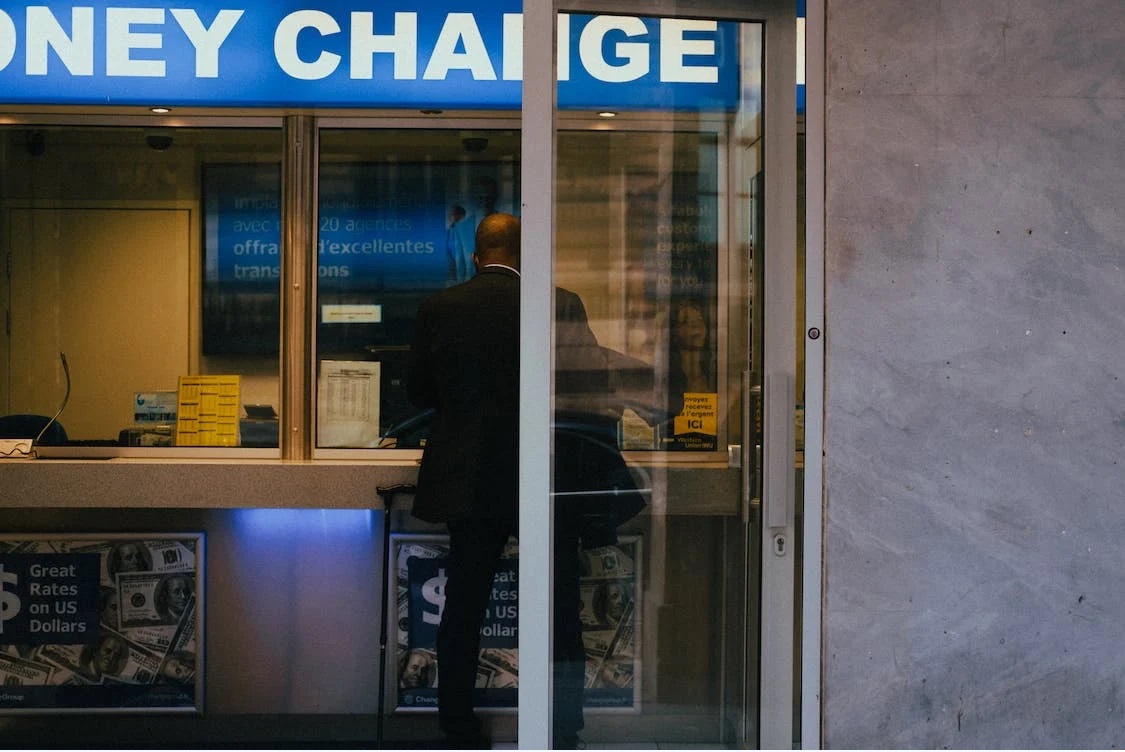
Nigeria remembers Bureau De Change (BDC) operators again: ‘“BDCs may sell foreign currency up to the equivalent of USD10,000 to a customer for school fee once a year. Such fee, which shall be transferred from the BDC’s domiciliary account with a Nigerian bank, shall be paid directly to the school,” the proposed Central Bank of Nigeria (CBN) guideline said. Similarly, the guideline highlighted the imposition of a limit of $5,000 per annum for foreign currency transactions for medical bills abroad.’

Good People, I am not aware of any decent university in the United States which charges $10k per year. In the one I attended, they go for $67,000 yearly. And if you go for Harvard MBA, you could be looking at $75, 000 per year. (These fees are for tuition only.) So, if that is the case, does this policy hold water? Sure – the central bank has to initiate an action.

Things have changed. When I began in FUTO,  the Center of Erosion Studies in the university was manned by Germans, and we had a fair decent number of foreign students. In the Physics department, there were many Cameroonians. But over a series of strikes, the Indians, Nigeriens, Cameroonians, etc all left.

Today, here we are…very unfortunate. Yet, I do not think BDCs are the root cause of this FX paralysis. The root cause is that Nigeria is floating Naira which is a bad policy. We can ban Binance,  restrict BDCs, etc but until we can earn US dollars, the Naira will continue to struggle. The problem we’re having is not distribution-related, but structural, and that means if we close all distribution channels, and refuse to reduce DEMAND (foreign schools, hospitals, toothpicks, etc), the core drivers of the paralysis, the Naira will continue to fade.

Considering everything happening, I propose for Nigeria to remove floating but change FX forward-credit into one which focuses on production-oriented things. For example, instead of giving a company $1m at the official rate to import an equipment,  you ask that company to source funds via, wherever, and when it is imported and confirmed at the Customs, the Central Bank of Nigeria will refund that company the money and debit the Naira. The focus here is to make sure only production-focused imports are supported.

Comment on Feed

Comment 1: School fees and medicals can still be processed through the commercial banks.
Having bdc’s trading in unquantifiable amounts of foreign exchange daily without anyone knowing who is demanding or supplying or what the purpose or source of supply is coming from. Can create a very big distortion in a market that has been liberalized & its also dangerous to the economy.

Lastly, I agree the problem is not only regulating the bdc’s. We have to improve on our productivity e.g export has a nation but creating transparency in the bdc sector is very paramount. Ndubuisi Ekekwe

My Response: Your point noted. Sure – I did not even know that BDCs can help people pay school fees from Nigeria. It seems they have evolved. Typically you expect people to pay via their banks. I wish CBN good luck on this

CBN’s proposed guidelines limit BDCs dollar outflow for Education and Medical Expenses to $10k and $5k annually

Central Bank of Nigeria’s proposed guidelines limit BDCs dollar outflow for Education and Medical Expenses to $10k and $5k annually

0

In a bid to address the challenges in Nigeria’s foreign exchange market, the Central Bank of Nigeria (CBN) has unveiled stringent measures targeting transactions related to overseas education and medical expenses.

These measures, part of the CBN’s revised regulatory guidelines for Bureau De Change (BDC) operators, aim to curb significant outflows of foreign currency and stabilize the value of the Naira.

“BDCs may sell foreign currency up to the equivalent of USD10,000 to a customer for school fee once a year. Such fee, which shall be transferred from the BDC’s domiciliary account with a Nigerian bank, shall be paid directly to the school,” the proposed guideline said.

Similarly, the guideline highlighted the imposition of a limit of $5,000 per annum for foreign currency transactions for medical bills abroad.

“Funds for medical bills will be transferred directly from the BDC’s account to the medical facility,” it explained, adding that it must be supported by comprehensive documentation, including a completed e-Form A, a referral letter from a recognized specialist doctor or hospital in Nigeria, valid travel documents, and a letter from an overseas medical professional detailing the cost of treatment.

Recently, the central bank has announced a series of new guidelines, changing existing rules. CBN governor Yemi Cardoso, said these measures are essential to mitigate the challenges posed by significant outflows for foreign education and medical tourism, which have contributed to the depreciation of the Naira beyond N1,600 in the official market.

The apex bank head said in recent years, approximately $40 billion has been directed towards these sectors. He explained that such massive outflows have exerted immense pressure on the country’s foreign exchange reserves and have contributed to the depreciation of the Naira, impacting the economy at large.

The proposed regulations also affect International Money Transfer Operators (IMTOs), including major entities like Western Union and MoneyGram, restricting their services to inbound transfers with mandatory Naira payouts. Additionally, the issuance of Personal Travel Allowance (PTA) and Business Travel Allowance (BTA) will no longer be in cash but through electronic means.

Analysts anticipate that these measures could have significant implications for Nigerian international students. With the Naira facing substantial devaluation against the dollar, the proposed $10,000 yearly limit for international study fees may present challenges as the BDCs are major source of FX for many international students.

In light of the current exchange rate, $10,000 is nearly equivalent to N18 million. This means that Nigerian students may require more than a year to receive sufficient outbound funds to cover their annual school fees, potentially delaying their education plans and increasing financial burdens.

In response to the proposed regulations, stakeholders have expressed concerns about the potential impact on access to quality education for Nigerian students studying abroad, particularly some students from low-income backgrounds who rely on foreign exchange transactions to fund their education overseas.

While the measures aim to stabilize the Naira, it is believed that they could inadvertently restrict opportunities for educational advancement.

Furthermore, there are concerns regarding the effectiveness of the proposed measures in addressing the root causes of currency depreciation and foreign exchange instability. While these measures may offer temporary relief to the foreign exchange market, experts believe that they do not address underlying economic challenges such as inflation and fiscal deficits.

Against the backdrop of the implications of these measures, stakeholders said there is a need for a balanced approach that ensures the stability of the Naira without compromising access to quality education for Nigerian students. They said comprehensive economic reforms are necessary to ensure long-term stability and sustainable growth.

Largest Bitcoin Holder MicroStrategy’s X Account Hacked, Users Lose Over $440,000

0

Pioneer in AI-powered cloud analytics, and the largest public holder of Bitcoin, MicroStrategy’s X account was reported to have been hacked, which saw users lose Oliver $440,000.

The breach transpired on a Monday in Asia, orchestrated by an adept attacker who strategically placed and subsequently deleted a post on MicroStrategy’s X page.

Reports disclose that hackers posted a series of malicious links to a fake airdrop for a so-called Ethereum-based MSTR token.

Users who clicked on the link were directed to a lookalike MicroStrategy webpage that directed them to connect a wallet and claim the fake MSTR airdrop. Once users accept a series of permissions in their Web3 wallet, it is understood that the attackers can automatically drain the tokens out of the user’s wallet.

According to a report from blockchain sleuth ZachXBT and anti-scam platform, Scam Sniffer, one user alone lost over $420,000 worth of altcoins, including wBAI, CHEX, and wPOKT.

Reacting to the incident, crypto industry experts have criticized the scam for its obvious nature, noting that MicroStrategy is a form that is exclusively focused on Bitcoin, and it is highly unlikely that it would launch a token on Ethereum.

MicroStrategy’s co-founder, Michael Saylor, an influential figure in the crypto space said,

“Obviously trying not to be victim-blaming here but you gotta be very special to think MicroStrategy is launching an ETH token after Saylor has spent multiple years very famously saying there is no second best and you only use one chair”.

MicroStrategy has not yet publicly commented on the hack. It is the largest independent publicly traded analytics and business intelligence company. The MicroStrategy analytics platform is consistently rated as the best in enterprise analytics and is used by many of the world’s most admired brands in the Fortune Global 500.

It pursues two corporate strategies: (1) grow our enterprise analytics software business to promote our vision of Intelligence Everywhere and (2) acquire and hold Bitcoin, which it views as a dependable store of value supported by a robust, public, open-source architecture untethered to sovereign monetary policy.

Presently, MicroStrategy’s Bitcoin holdings are estimated to be around $10 billion, a testament to the digital asset’s recent surge in value. The company recently announced a purchase of $37 million worth of BTC in its earnings call, bringing its total holdings to over $8.1 billion.

However, the company has a history of being targeted by scammers. In 2022, the company’s CEO, Michael Saylor, was impersonated on social media in an attempt to promote a fake cryptocurrency giveaway.

The recent breach raises pertinent questions about the overall security infrastructure of companies deeply entrenched in the world of cryptocurrencies.

As the adoption of digital assets continues to gain momentum, the threats posed by sophisticated hackers seeking unauthorized access and exploiting the trust of unsuspecting users have become more pronounced. 

The hack on MicroStrategy’s X account serves as a stark reminder of the evolving and dynamic nature of cyber threats within the cryptocurrency space.

Nigerian Government’s Crackdown on BDC Operators ill-advised and Wrongly Directed – Peter Obi

0

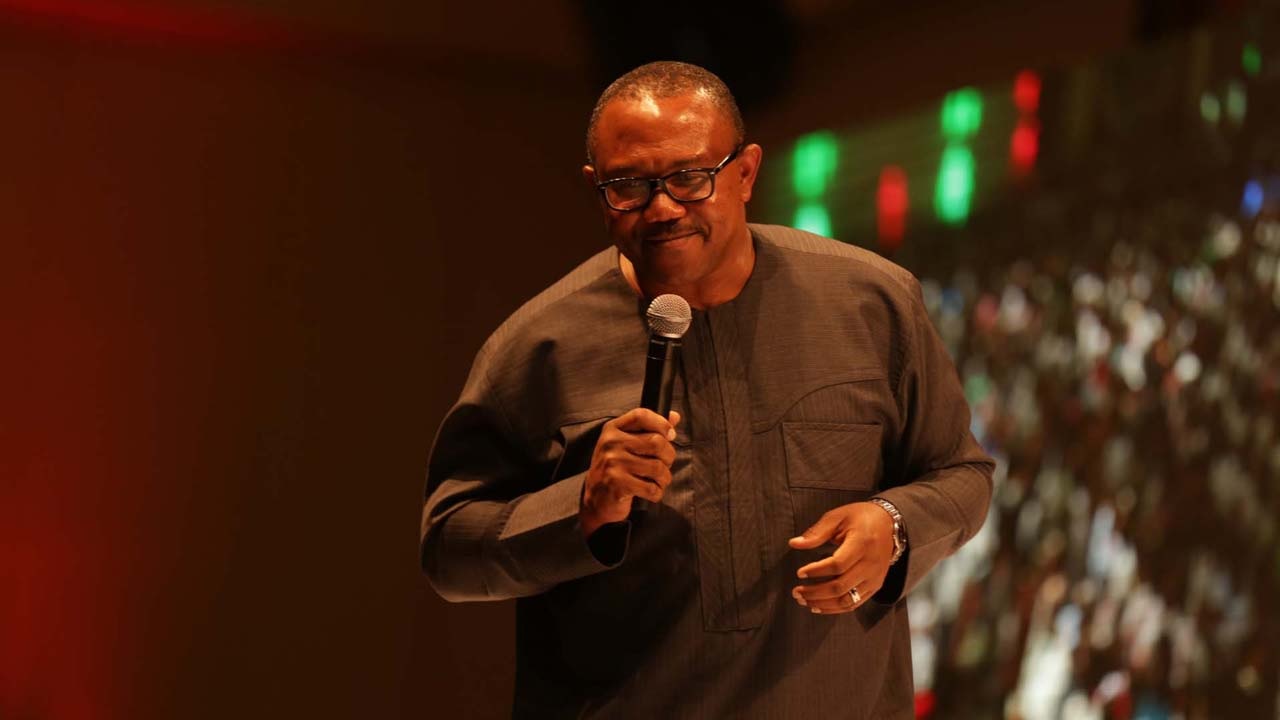
Peter Obi, the presidential candidate of the Labour Party in the 2023 elections, has condemned the reported clampdown on Bureau de Change (BDC) operators by government agencies, describing it as ill-advised and misdirected.

In a statement posted on his social media account, the former governor of Anambra State expressed concerns that the government’s actions would exacerbate the country’s exchange rate woes rather than alleviate them.

Obi asserted that targeting BDC operators would not address the root causes of Nigeria’s foreign exchange challenges. He argued that BDCs are not the primary suppliers of forex and merely serve as intermediaries for buyers and sellers of foreign currency.

He said that similar to other economies, BDCs play a crucial role in facilitating currency exchange transactions.

“The recent reported attacks and disruption of the business activities of Bureaux de Change (BDCs) operators in different urban centers across the country by Government Agencies, are ill-advised and wrongly directed,” Obi stated in his post.

He further emphasized the need for a comprehensive approach to address the underlying factors contributing to the depreciation of the Naira. Obi emphasized the importance of transitioning Nigeria from a consumption-oriented economy to one driven by production, particularly export-led production.

“To think that the BDCs are the cause of the declining value of the Naira is a smack on rational economic thinking,” Obi remarked.

Additionally, he highlighted the need to combat corruption, which he identified as a significant factor fueling the demand for foreign currency.

“As long as Nigeria remains an unproductive economy and corruption continues unfettered with people in possession of unproductive excess cash, the value of our currency will continue to depreciate.”

The former Anambra State governor called on government officials to adopt a more nuanced understanding of modern economic principles and tailor their policies accordingly. He stressed the importance of addressing structural deficiencies and implementing measures that promote productivity and transparency in the economy.

“The only way to shore up the value of our currency is to move the country from consumption to production, especially export-led production, and fight corruption, which allows unproductive money to pursue the available supply of foreign currency,” he said.

Obi’s remarks come in the wake of recent raids conducted by the Economic and Financial Crimes Commission (EFCC) against illegal BDC operators in various parts of the country on February 21, 2024. The crackdown is said to be part of the government’s efforts to curb illicit financial activities and enforce regulatory compliance within the foreign exchange market.

Before now, economists have shared Obi’s sentiment regarding Nigeria’s FX crisis, which has been significantly attributed to the nation’s declining oil revenue.

A series of advice has been provided to the government on how to boost FX liquidity as a solution to the country’s forex crisis. Here are some recommendations:

Promote Export Diversification: Nigeria’s economy is heavily reliant on oil exports, which exposes it to fluctuations in global oil prices. To mitigate this vulnerability and boost FX liquidity, the government has been advised to prioritize diversifying the export base by supporting non-oil sectors such as agriculture, manufacturing, and services. Encouraging exports in these sectors is said to have the capacity to generate additional foreign exchange earnings and reduce the country’s dependence on oil revenue.

Improve Ease of Doing Business: the government has also been advised to streamline bureaucratic processes and reduce regulatory hurdles to attract foreign direct investment (FDI) and stimulate economic growth. Experts say that by creating a more conducive business environment, the government can attract investment inflows, enhance productivity, and bolster FX reserves.

Enhance Foreign Investor Confidence: Implementing transparent and consistent economic policies has also been advocated as a way to instill confidence in foreign investors and attract capital inflows. According to economic experts, clear fiscal and monetary policies, as well as adherence to the rule of law, can help reassure investors about the stability and predictability of Nigeria’s economic environment.

Strengthen Monetary Policy Framework: The Central Bank of Nigeria (CBN) plays a critical role in managing FX liquidity through its monetary policy tools. The apex bank has been urged to implement effective monetary policies aimed at maintaining price stability and managing inflation, thereby instilling confidence in the domestic currency and attracting foreign investment.

Encourage Remittances: Remittances from Nigerians living abroad constitute a significant source of FX inflows. The government has been asked to implement policies to encourage diaspora remittances, such as offering incentives for formal channels, reducing transfer fees, and facilitating access to financial services for remittance recipients.

Combat Corruption: Corruption undermines economic stability and erodes investor confidence. Implementing robust anti-corruption measures and strengthening institutional frameworks for accountability and transparency is said to be key in curbing illicit financial flows and preserving FX reserves.

Invest in Infrastructure: Investing in critical infrastructure projects, such as transportation, energy, and telecommunications, can improve productivity, reduce production costs, and attract investment. Financial analysts believe that infrastructure development will enhance Nigeria’s competitiveness and attractiveness to foreign investors, thereby boosting FX liquidity.

Promote Financial Inclusion: Expanding access to financial services, particularly in rural and underserved areas, is said to be a way to promote savings mobilization, investment, and economic growth. The government has been advised to promote financial inclusion initiatives to broaden the investor base and stimulate economic activity, thereby contributing to FX liquidity.

Experts say that by implementing these measures in conjunction with a holistic approach to economic management, the Nigerian government can address the country’s forex crisis and promote sustainable economic growth. They added that it is essential to adopt a coordinated and multi-faceted strategy that addresses the root causes of FX volatility and strengthens the resilience of Nigeria’s economy.