DD
MM
YYYY

PAGES

DD
MM
YYYY

spot_img

PAGES

Home Blog Page 3650

It Is Illegal for Internet Vendors To Ask Interested Buyers To “DM For Price”.

0

Some days ago, the Federal Competition and Consumer Protection Commission (FCCPC), sealed up some supermarkets in Abuja. One of their reasons for doing that is that the stores did not attach the prices of the items displayed on the shelves which is in breach of the law. 

Section 115 of the Federal Competition and Consumer Protection (FCCP) Act has mandated vendors (both offline and online vendors) to attach the price of any item they display or advertise for sale. 

Here are the full provisions of Section 115 of the FCCP Act; 

“115(1) An undertaking shall not display any goods or services for sale without adequately displaying to the consumer a price of those goods or services.

(2) For the purposes of this subsection, a price is adequately displayed to a consumer if, in relation to any, particular goods or services, a written indication of the price, expressed in the currency of the Federal Republic of Nigeria, is annexed or affixed to, written, printed, stamped or located upon, or otherwise applied to the goods or services or to any band, tickle covering the label, package, reel, shell or other thing used in connection with the goods or services, or on which the goods or services are mounted for display or exposed for sale, or published in relation to the goods or services in a catalogue, brochure, newspaper, a circular or similar publication available to the consumer

or to the public generally.

(3) An undertaking shall not require a consumer to pay a price for any goods or services higher than the displayed price for those goods or services, or if more than one price is concurrently displayed is higher than the lower or lowest of the prices so displayed. 

By implication of this s. 115 of the FCCP Act, posting an item for sale without affixing the price is an offence and asking interested buyers to dm you for the price as online vendors usually do is an offence as well. You are expected to charge in Niara so far your patrons or customers are residents in Nigeria or your business is conducted within the territorial jurisdiction of Nigeria. If your price tag is in any other currency other than the Niara, you have run a breach of subsection 2 of this section 115. 

The intention of this law and the reason for the establishment of the consumer protection agency is for the protection of the final consumers; to ensure that consumers are not exploited by greedy sellers who can Jack up their prices at any time and charge exorbitant prices. The agency is to ensure that dealers and sellers charge consumers a market fair price for the items, any price charged for an item which is above what is considered to be the fair price of the item is extortion and it is illegal. 

Sellers are therefore expected to charge customers the prices that were attached to the item, once a seller charges a customer a price different from the displayed price, it becomes an offense. If there is a change in price, it is expected of the seller to quickly update the price change to avoid running a breach of the law.


 

Investors in Europe Remain Cautious of Crypto Investment Despite ETFs Approval – VanEck Europe CEO

0

Managing Director and Head of Europe at VanEck, Martijn Rozemuller, has stated that investors in Europe remain cautious of crypto investments despite ETFs approval.

Martijn disclosed that the launch of Spot Bitcoin ETFs in the United States is gaining significant acceptance, meanwhile, some European investors remain reluctant to pull in resources into the assets.

In his words,

“U.S. investors are more willing to take educated risks. They’re also more used to trading on exchanges than some European investors that are still stuck in mutual funds that their bank or fund manager once advised”.

The VanEck Europe CEO highlights key differences in attitude toward the cryptocurrency sector on either side of the Atlantic Ocean. He disclosed that Europe’s crypto-curious investors typically include retail users, smaller independent wealth managers, and family offices:

It’s mainly retail because a lot of the larger financial institutions are still reluctant to use any crypto-related products in their standard portfolios”, he said.

Rozemuller further adds that although Europe has a number of exchange-traded notes (ETNs) that are appropriately licensed, local regulators have “explicitly” mentioned that they’re not in favor of crypto-related investments.

Recall that the U.S. Securities and Exchange Commission (SEC), last month approved the first U.S.-listed exchange-traded funds (ETFs) to track bitcoin, in a watershed for the world’s largest cryptocurrency and the broader crypto industry.

This approval gave the green light to multiple financial firms to offer spot bitcoin ETFs, including asset management giants like BlackRock, Fidelity Investments, and Franklin Templeton that cater to retail investors.

After a decade, the ETFs have been poised to be a game-changer for Bitcoin, offering investors exposure to the world’s largest cryptocurrency without directly holding it. They also provide a major boost for the wider crypto industry.

Standard Chartered analysts said the ETFs could draw $50 billion to $100 billion this year alone. Other analysts have said inflows will be closer to $55 billion over five years. Some regulatory experts believe the Bitcoin ETFs could also pave the way for other innovative crypto products.

The green light marks a U-turn for the SEC, which had rejected bitcoin ETFs due to worries they could be easily manipulated.

Analysts say that the introduction of ETFs could usher in new investor cohorts from traditional finance, significantly improving market transparency and liquidity and bringing long-term capital inflow into the digital assets market.

Bitcoin ETFs promise major potential gains but also have notable downsides, presenting investors with a wide range of outcomes that will test their risk tolerance. However, investors are advised to weather the asset’s considerable volatility as well as uncertainty stemming from its association with issues of fraud and mismanagement in the wider crypto industry.

China and USA have different approaches, goals and strategies when it comes to Crypto

0

The global landscape of cryptocurrencies is changing rapidly, as two of the world’s most powerful nations compete for dominance in this emerging field. China and the USA have different approaches, goals and strategies when it comes to crypto, and their actions have significant implications for the rest of the world.

We will compare and contrast the main aspects of China’s and USA’s crypto policies and discuss the potential outcomes and challenges for both countries and the global crypto community.

The USA is another major player in the global crypto scene, with a vibrant and diverse ecosystem of crypto companies, investors, developers and users. The USA is home to some of the most popular and influential crypto platforms, such as Coinbase, Kraken, Gemini, PayPal and Square. The USA also has a large and active market of crypto users, with millions of people buying, selling and holding cryptocurrencies.

However, unlike China, the USA does not have a clear or consistent policy or regulation on crypto. Instead, the USA has a decentralized and fragmented approach to crypto regulation, with different federal agencies, states and courts having different views and jurisdictions on various aspects of crypto activities.

One of the main challenges for the USA’s crypto policy is its lack of a national digital currency or CBDC. Unlike China, the USA does not have a clear or urgent need or plan to launch its own digital currency. The US dollar is still the dominant reserve currency in the world, and the existing financial system is still relatively stable and efficient.

China has been a pioneer in the development and adoption of cryptocurrencies, especially in the areas of blockchain technology, digital payments and mining. China is home to some of the largest and most influential crypto companies, such as Binance, Huobi, OKEx, Ant Group and Bitmain.
China also has a huge market of crypto users, with millions of people using digital wallets and platforms to trade, invest and transact with cryptocurrencies.

However, China’s crypto landscape is also characterized by a high degree of centralization and regulation. The Chinese government has a tight grip on the crypto industry, imposing strict rules and bans on various aspects of crypto activities.

For example, China has banned initial coin offerings (ICOs), crypto exchanges, foreign platforms and mining operations in certain regions. China has also cracked down on illegal or fraudulent crypto schemes, such as Ponzi schemes, money laundering and tax evasion.

One of the main reasons for China’s strict regulation of crypto is its ambition to launch its own digital currency, the digital yuan or e-CNY. The digital yuan is a central bank digital currency (CBDC) that is issued and controlled by the People’s Bank of China (PBOC).

The digital yuan is designed to be a legal tender that can be used for payments, settlements and transfers within China and abroad. The digital yuan is also intended to enhance China’s financial sovereignty, security and efficiency, as well as to challenge the dominance of the US dollar in the global financial system.

The digital yuan is currently in the testing phase, with several pilot projects running in various cities and regions across China. The PBOC has also partnered with several domestic and foreign institutions, such as banks, payment platforms, retailers and telecom operators, to facilitate the adoption and use of the digital yuan. The PBOC has not announced a specific timeline for the official launch of the digital yuan.

However, some experts argue that the USA should consider developing its own CBDC to keep up with the global trend of digitalization and innovation in finance. A US CBDC could potentially enhance the US financial sovereignty, security and efficiency, as well as to counter the threat of China’s digital yuan.

These different regulatory frameworks in USA and China create uncertainties, complexity and inconsistency for crypto companies and users in the USA, China and the world at large. They also create challenges for innovation and competition in the crypto industry, as some crypto companies face barriers or restrictions to operate or expand in certain states or markets.

Moreover, they create risks for compliance and enforcement, as some crypto companies or users may violate or evade existing laws or regulations.

Notable lawsuits and legal cases involving Generative Artificial Intelligence

0

Generative AI is a branch of artificial intelligence that aims to create new content, such as text, images, music, or code, based on existing data. Generative AI has been advancing rapidly in recent years, thanks to the development of powerful neural networks and large-scale datasets.

However, generative AI also poses significant legal and ethical challenges, such as intellectual property rights, privacy, liability, and accountability.

We will provide a timeline of some of the most notable lawsuits and legal cases involving generative AI, focusing on the four major players in this field: OpenAI, Microsoft, Anthropic, and More. We will also discuss some of the implications and future directions of these cases for the generative AI industry and society at large.

OpenAI vs. The New York Times (2019)

OpenAI is a research organization that aims to create and promote beneficial artificial intelligence for humanity. In February 2019, OpenAI released a partial version of GPT-2, a large-scale language model that can generate coherent and diverse text on almost any topic.

However, OpenAI also claimed that GPT-2 was too dangerous to release in full, as it could be used for malicious purposes, such as generating fake news, spam, or phishing.

The New York Times, a leading newspaper in the US, challenged OpenAI’s decision and filed a Freedom of Information Act (FOIA) request to obtain the full version of GPT-2. The New York Times argued that GPT-2 was a public interest research project that should be accessible to journalists and researchers for verification and analysis. OpenAI refused to comply with the FOIA request, citing national security and privacy concerns.

The case went to court, where OpenAI argued that GPT-2 was not subject to FOIA because it was not funded by the US government or affiliated with any federal agency. The New York Times countered that OpenAI was a public entity because it received donations from prominent individuals and organizations, such as Elon Musk and Microsoft.

The court ruled in favor of OpenAI, stating that GPT-2 was not a federal record and that OpenAI had the right to withhold it from public disclosure. The court also noted that GPT-2 posed significant risks of misuse and abuse that outweighed the public interest in its release. The New York Times appealed the decision, but the appeal was dismissed by a higher court in 2020.

This case raised important questions about the transparency and accountability of generative AI research and development. It also highlighted the potential conflicts between the freedom of information and the protection of national security and privacy in the age of generative AI.

Microsoft vs. GitHub (2020)

Microsoft is a multinational technology company that develops and sells software, hardware, and cloud services. GitHub is a subsidiary of Microsoft that provides a platform for hosting and collaborating on software development projects. In September 2020, Microsoft sued GitHub for copyright infringement, alleging that GitHub hosted and distributed a repository called Copilot.

Copilot is a generative AI tool that can suggest code snippets for programmers based on their input. Copilot was developed by GitHub in collaboration with OpenAI, using GPT-3 as the underlying model.

GPT-3 is an improved version of GPT-2 that can generate even more realistic and diverse text on various domains. However, GPT-3 also relies on large amounts of data scraped from the internet, including copyrighted code from various sources.

Microsoft claimed that Copilot violated its intellectual property rights by reproducing and distributing its proprietary code without authorization or attribution. Microsoft also claimed that Copilot harmed its business interests by competing with its own products and services, such as Visual Studio and Azure. Microsoft demanded that GitHub cease and desist from hosting and distributing Copilot, as well as pay damages and legal fees.

GitHub denied Microsoft’s allegations and argued that Copilot was a fair use of Microsoft’s code. GitHub claimed that Copilot did not copy or distribute Microsoft’s code verbatim, but rather transformed it into new and original content. GitHub also claimed that Copilot was a beneficial tool for programmers that enhanced their creativity and productivity. GitHub asked the court to dismiss Microsoft’s lawsuit as baseless and frivolous.

The case is still ongoing as of February 2024. It is expected to have significant implications for the intellectual property rights of generative AI content creators and users. It will also test the boundaries of fair use doctrine in the context of generative AI.

Ethereum surge high amidst Starknet Airdropping tokens to Beta Testers

0

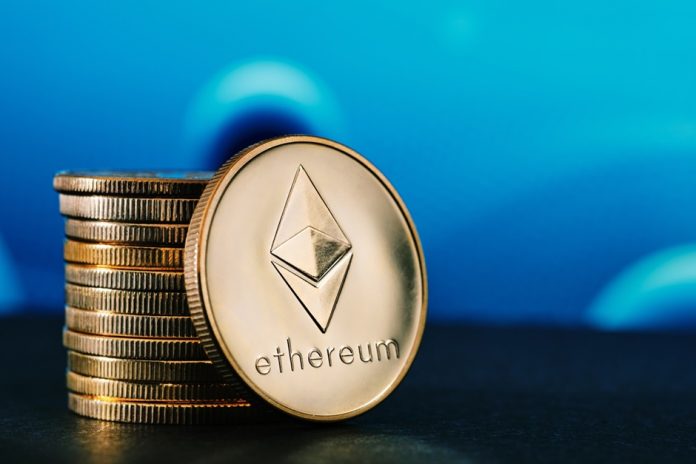
In a remarkable turn of events, Ethereum, the second-largest cryptocurrency by market value, has reached price levels not seen for almost two years. On Monday, investors anticipated approval of spot ether exchange-traded funds (ETFs) in the U.S., driving Ethereum to climb to $2,984, its highest level since April 26, 2022.

Analysts expect ETH to continue its upward trajectory, with some predicting it could reach $3,600 in the short term in the coming weeks. Kenny Hearn, SwissOne Capital’s chief investment officer, stated, “We are very close in this move to levels around $3,150-$3,300. The next level after that would be $3,600, and we think this is quite easily attainable in the next month or so as the alts continue to play catch up”.

Ethereum Rollup Starknet’s Airdrop

In addition to the price surge, Ethereum rollup Starknet initiated the distribution of 728 million tokens to around 1.3 million addresses, marking what is being dubbed as the largest airdrop of the year. The token’s pre-launch perpetual futures were trading at $1.80 on decentralized futures platform Aevo. Although it briefly spiked to $5 on Kucoin minutes after release, it has since settled at $3.50 in a volatile opening.

But what exactly is Starknet, and why is its token generating so much excitement?

Starknet is a layer-2 network that leverages zero-knowledge cryptography. Its mission? To enable decentralized applications (dApps) operating on top of Ethereum to scale efficiently without compromising on composability and security. By bundling transactions off-chain into a proof submitted to Ethereum, Starknet aims to process transactions faster and reduce fees for computing them.

Starknet is designed to address Ethereum’s scalability challenges. As the Ethereum ecosystem grows, congestion and high gas fees have become pressing issues. Starknet aims to solve these problems by processing transactions and smart contract functions off-chain while still benefiting from the security guarantees of Ethereum’s underlying blockchain.

STRK, Starknet’s native token, has garnered significant attention. With an initial total supply of 10 billion tokens, STRK’s fully diluted value (FDV) stands at an impressive $35 billion. However, the actual market capitalization—calculated based on the current circulating supply multiplied by the current price—is currently at $2.32 billion.

Starknet initiated its native token distribution through an airdrop. Eligible users, including Ethereum solo and liquid stakers, developers, and projects within and outside the Web3 ecosystem, were able to claim their share of STRK tokens. Over 45 million tokens were secured within the first 90 minutes of allocation.

Token Allocation; 50.1% was allocated to the Starknet Foundation for community airdrops, grants, and donations. 24.68% was distributed to early contributors and investors. 32% was Assigned to StarkWare employees, consultants, and developer partners.

The 700 million STRK tokens are allocated across nine categories and will be used for governance decisions and transaction fees. Starknet plans to introduce staking for STRK tokens in the future.

Following the airdrop, STRK began trading on major exchanges such as Binance, KuCoin, Bybit, Bitfinex, and OKX. Its price surged to over $7 on Binance and surpassed $5 on KuCoin. The market capitalization exceeded $2.1 billion.

Ethereum’s ongoing work on layer 2 solutions, such as rollups and sidechains, aims to improve transaction throughput and reduce fees. These developments position Ethereum well for increased adoption and usage.