DD
MM
YYYY

PAGES

DD
MM
YYYY

spot_img

PAGES

Home Blog Page 3651

Educating Africans Through Russian Educational Institutions

0
A university

Education has always been a powerful tool for the transformation and progress of nations. In the context of Africa’s development, Russian educational institutions have emerged as valuable partners in shaping the future of the continent. The historical ties between Russia and African countries are deep-rooted, and the commitment to educating Africans has yielded remarkable results. This piece explores the enduring partnership and the exciting new initiatives that promise to further strengthen the bridge between Russia and Africa.

A Historical Legacy of Education

The mid-1980s marked a significant turning point when the Soviet Union had already signed numerous agreements in economic, cultural, and other fields with African nations. Thousands of African students were given the opportunity to study at Soviet universities and Technikons. As a result, today, we witness a notable legacy with African leaders, including the Presidents of Angola, Mozambique, and South Africa, who once honed their skills within the Soviet educational system. Moreover, the Soviets trained over 200,000 specialists on African soil, contributing to the continent’s development.

Contemporary Partnerships

Today, Russian universities continue to attract students from across the African continent. Prominent institutions like the Peoples’ Friendship University of Russia, St. Petersburg State Electrotechnical University “LETI,” Peter the Great St. Petersburg Polytechnic University, and the National Research University Higher School of Economics have welcomed a growing number of African scholars.

The most recent data shows that the number of African students studying at the National Research University Higher School of Economics (HSE) increased by 20% in the 2022-2023 academic year, demonstrating the increasing interest in Russian education. The educational program “Population and Development” at HSE has seen participation from 127 students representing 29 different countries, with six African nations actively engaged in this program.

Growing Opportunities

Russia’s commitment to educating African students is further exemplified by the substantial increase in state-funded places for foreigners in the 2023-24 academic year, totaling 30,000. The allocation of federal funds to support African students has increased by an impressive 150% in the past three years, reaching over 4,700 scholarships for the upcoming academic year.

Moreover, President Vladimir Putin has noted that approximately 10,000 African students are currently pursuing medical specialties in Russia, highlighting the diverse range of fields in which African scholars are making strides.
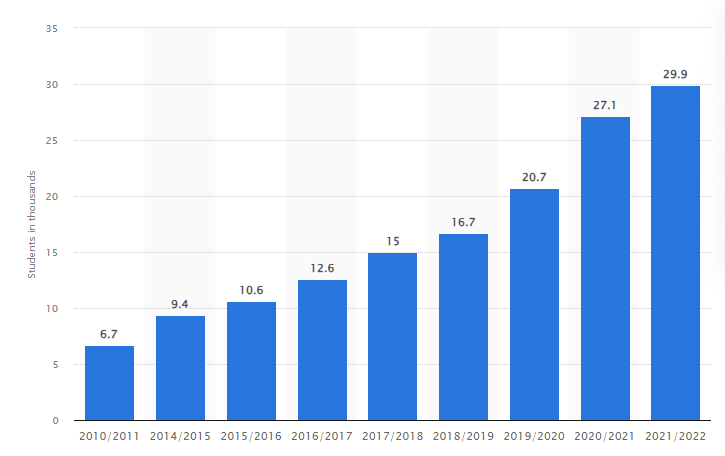
Number of students from African countries enrolled in higher education institutions and scientific organizations
Source: Statista, 2023

Expanding Horizons

Currently, nearly 35,000 African students are studying in Russian universities, with over 6,000 benefiting from Russian government scholarships. This number continues to grow steadily, highlighting the enduring appeal of Russian educational institutions. Russia’s commitment to Africa goes beyond the classroom. President Putin has announced plans to open branches of leading Russian universities in Africa. The Russian-African Network University is fostering close ties with African educational institutions, aiming to enhance collaboration and educational opportunities.

A promising initiative, the Russian-African consortium of technical universities, is focused on joint training of professionals for the mineral resources sector, aligning with Africa’s growing significance in the global resource landscape. Also, the creation of the Association of African Graduates of Russian Universities in July 2023 in St. Petersburg signifies a new chapter in Russia-Africa educational cooperation. This initiative underscores the importance of nurturing all-round development within university education collaboration, thereby solidifying Russia’s commitment to its African partners.

From all indications, the sustainable growth of Russian education in Africa looks promising with the kind of friendship the government and people of Russia have extended to Africans over the years. This indicates the country poise to continue to play a pivotal role in advancing the continent’s potential. The collaborative efforts in education, the expansion of scholarship opportunities, and the joint initiatives between Russian and African institutions present a bright outlook for Africa’s development. The enduring friendship between Russia and Africa, forged through education, promises to have a lasting impact on the continent’s progress.

Treating Mental Health Issues From Spiritual Standpoints

0

The intersection of mental health and spirituality is a topic of great importance, particularly in cultures where spiritual practices play a significant role in addressing various aspects of life, including mental well-being. Exorcism, a religious or cultural practice employed in various faiths such as Islam, Christianity, and Buddhism, has long been used as a method to address mental health disorders. In this piece, we delve into the complex relationship between spiritual approaches and mental health, with a focus on Islamic exorcism, and explore whether spiritual standpoints alone can effectively treat mental health issues.

The Role of Islamic Exorcism

Islamic exorcism, known as “Ruqyah” in Islam, is a practice often sought when individuals believe that they are suffering from spiritual afflictions, such as possession by Jinn (supernatural beings) or the effects of the “evil eye.” Skilled Islamic exorcists, who often have backgrounds in holistic remedies, are called upon to examine and provide spiritual solutions to such issues.

Spiritual Examination

When patients are brought to Islamic exorcists, the initial step is to conduct a spiritual examination to determine the presence of Jinn or spiritual afflictions. This examination is not carried out using laboratory tools but is performed through spiritual and cultural means. Common methods include reciting Quranic verses believed to elicit responses from Jinn or offering patients specially formulated powders. If a Jinn is present, it may communicate through the patient. If it is not Jinn possession but rather an effect of sorcery or the evil eye, patients may experience symptoms such as heat or vomiting.

The Complexity of Mental Health

It is crucial to recognize that not all mental health issues are rooted in spiritual afflictions. Factors such as societal pressures, family dynamics, peer influence, increasing responsibilities, and changes in thought processes can contribute to mental health challenges, including depression, anxiety, and suicidal thoughts. These non-spiritual triggers of mental health issues necessitate a broader perspective in addressing them.

A Holistic Approach

In practice, Islamic exorcists are faced with complex cases that may or may not involve spiritual elements. Two real-life examples highlight the need for a holistic approach to mental health. In one instance, a young lady displayed symptoms of Jinn possession, but upon closer examination, a neurological test revealed underlying mental health issues related to her childhood experiences. In another case, a man exhibited unusual behaviour and was tested for Jinn possession, only to be found under the influence of sorcery.

The stories above underscore the importance of a comprehensive approach to mental health. While spiritual standpoints are meaningful to many individuals, they should not be the sole focus in addressing mental health issues. Combining spiritual and holistic mental health therapy can provide a more well-rounded and effective approach to treatment.

The dynamic relationship between mental health and spirituality should be approached with sensitivity and an open mind. Mental health issues are complex and multifaceted, often requiring a combination of therapies that address both the spiritual and psychological dimensions. By fostering collaboration between spiritual practices and modern mental health care, we can offer individuals the support they need on their journey towards improved mental well-being.

Umar Olansile Ajetunmobian independent, interdisciplinary researcher with special interests in political, (mental) health, development, and digital media communication, contributes to the development of this piece through his skills and knowledge garnered over the years. 

Sam Bankman-Fried found guilty over collapse of crypto exchange FTX – CNN

0
Sam Bankman-Fried

Sam Bankman-Fried has been found guilty, CNN reports.


Sam Bankman-Fried was found guilty on Thursday for his role in the collapse of crypto exchange FTX.

After 15 days of testimony and about four and a half hours of deliberations, jurors returned a verdict that found him guilty on seven counts of fraud and conspiracy.

Bankman-Fried looked sunken as the verdict was read out. After the jury was released, he stood, head bowed and shaking as his lawyer spoke in his ear. A few feet behind him, his parents stood watching. As Bankman-Fried was escorted out of the room, he turned back and smiled at his parents. His father, Joe Bankman, put his arm around his mother’s shoulders. As their son left the room, Barbara Fried broke down in tears.

Bankman-Fried was found guilty of stealing billions of dollars from accounts belonging to customers of his once-high-flying crypto exchange FTX. He was also found guilty of defrauding lenders to FTX’s sister company, the hedge fund Alameda Research, which held FTX customer funds in a bank account.

During his trial, Bankman-Fried said he learned in 2020 that FTX customer funds were held by Alameda but he did not take action to safeguard them.

When he later discovered in the fall of 2022 that Alameda owed $8 billion to FTX, no one was fired.

Other charges Bankman-Fried was found guilty of include defrauding investors in FTX and a money-laundering charge.

The verdict caps a yearlong saga that took the 31-year-old Bankman-Fried from a billionaire living in a luxury apartment in the Bahamas to a defendant in one of the biggest white-collar crime cases since Bernie Madoff’s Ponzi scheme that fell apart in 2009.

FTX was once one of the most trusted names in crypto. The trial has been closely watched by regulators, investors and the crypto community for signs of a potential larger crackdown on the largely unregulated crypto market.

Login Instructions For Tekedia Investment & Portfolio Management Program Which Begins Nov 6

0

If you registered for this program, you ought to have received this login instruction.


Greetings and Welcome to Tekedia Investment and Portfolio Management program which begins on Monday, Nov 6, 2023. We have created or updated your account at http://school.tekedia.com/ with the email you are receiving this email. Please login, or if new, please reset your password by following the steps here https://school.tekedia.com/manuals/reset/.

Once logged in, click this link https://school.tekedia.com/course/investmgt/ and click Take This Course to complete the setup; you will see your course under MY PROFILE. (This is mandatory for the course to drop in your profile.). If you do not see the “Take This Course”, the course is already there.

The Week 1 courseware will drop on Monday at 12 noon on Nov 6, 2023. The schedule of Group Zoom for the first 4 weeks (on Saturdays) will also be posted; you will find all here when you login https://school.tekedia.com/lesson/inv-general-information/

Regards,

Tekedia Team

Nigerian Lawmakers Remove N5bn Yacht from the N2.17tn Supplementary Appropriation Bill, Following Public Outcry

0

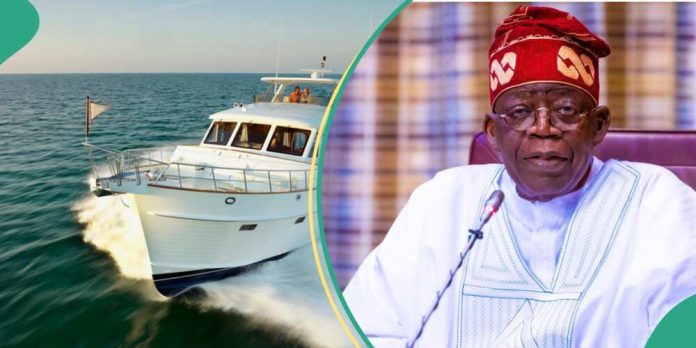
The Nigerian Senate and the House of Representatives have passed the controversial N2.17 trillion 2023 Supplementary Appropriation Bill after its third reading, removing the controversial N5 billion budgeted for yacht, following outcry from civil society organizations and the general public.

The House of Representatives also made significant changes to the proposed supplementary budget, including an increase in the allocation for student loans and adjustments to other critical areas. The Chairman of the House Appropriations Committee, Abubakar Bichi Abubakar, shared these changes during a press briefing on Thursday.

One noteworthy adjustment was the increase in the budget for student loans, which was raised from the initially documented N5.5 billion to N10 billion. This decision was made to address concerns about the low budgetary allocation for student financial support.

Additionally, the budgetary allocation for the Ministry of Defence was increased from N476 billion to N546 billion in response to heightened security concerns.

Bichi also revealed that the minimum wage for workers was considered and approved for onward transmission to the executive branch. The House is committed to ensuring proper legislative oversight to ensure the full implementation of this decision.

The sum of N100 billion, as requested by the Minister of the Federal Capital Territory (FCT), Nyesom Wike, was retained for the FCT.

Ultimately, the House passed the revised supplementary budget, amounting to N2.177 trillion. Notably, the initial budget allocation had sparked controversy due to the inclusion of N5.09 billion for a presidential yacht in the Federal Government’s N2.1 trillion supplementary budget. The yacht was listed as part of the Nigerian Navy’s proposed capital expenditure of N42.3 billion.

Prior to the bill’s passage, the Senate adopted the report of the harmonized sittings of both chambers, which was submitted by Chairman of the Appropriations Committee, Senator Solomon Olamilekan Adeola (APC Ogun West).

The bill progressed through readings in both the upper and lower chambers with an emphasis on its significance for the country’s welfare. The Supplementary Appropriation Bill was introduced by President Bola Tinubu, who sought approval for a total of N2,176,791,286,033. This supplementary budget is intended to address various critical needs, including labor wage adjustments and security measures.

President Tinubu had also submitted the 2024-2026 Medium-Term Expenditure Framework (MTEF) & Fiscal Strategy Paper to the National Assembly. Previously, the Senate had approved N819 billion, which included a N500 billion palliative package.

The supplementary bill is considered essential to implement additional palliative measures, including wage awards. The Federal Executive Council had given its approval to the 2023 supplementary budget of N2.1 trillion earlier.

During debates in the Senate, lawmakers stressed the urgency of expediting the passage of the supplementary budget. They highlighted the need to address critical areas, such as infrastructure, insecurity, labor demands (including a N210 billion wage award payment), and a N5.5 billion student loan.

The proposed supplementary budget allocates N610 billion for temporary wage awards to federal civil servants and a conditional cash transfer program aimed at supporting vulnerable individuals and households. Specifically, the wage award for four months is expected to cost the federal government approximately N210 billion, while the conditional cash transfer program will account for N400 billion.

However, some extravagant items on the budget triggered outcry of civil society groups and the general public. The budget includes a fleet of SUVs for the president and his wife, a presidential yacht, the renovation of his villa, and other government offices – expected to gulp billions of naira.

The development comes amid a rising economic crisis that has seen the poverty rate of the country accelerate. Tinubu announced the removal of fuel subsidy in late May, during his inaugural speech, and subsequently, the Central Bank of Nigeria (CBN) announced the removal of control pegs around the dollar, allowing the naira to trade freely in the FX market.

These economic reforms have exacerbated the rising cost of living – shooting inflation to 26.72%, as petrol prices rose as much as N617 per liter and the naira crashed to more than N1200 per dollar in the parallel market.

The government’s decision to include luxury items in the budget for the political elite amid the suffering has been described as insensitive.

Tracka, a non-governmental organization monitoring the implementation of budgets and contracts awarded by the government, began collecting 10 signatures for the letter intended to deliver to the Senate on Friday. The aim is to compel the red chamber to “delete the frivolous items in the N2.17 trillion 2023 supplementary budget before it gets sent to the President for assent.”