DD
MM
YYYY

PAGES

DD
MM
YYYY

spot_img

PAGES

Home Blog Page 3656

Notable Provisions Of The Regulatory Framework Governing Heliports In Nigeria

0

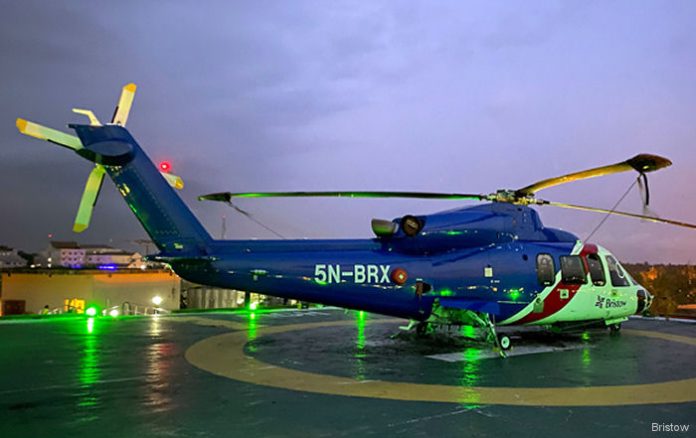
Aviation Law :- The Regulatory Framework Governing Heliports In Nigeria

This article deals with the regulatory provisions governing Heliports in Nigeria from applicability to certification to regulatory provisions as outlined by the Nigerian Civil Aviation Authority (NCAA).

Applicability of Regulations

NCAA Regulations provide that:-

(a) The regulations shall apply to the certification and operation of heliports in Nigeria with the exception of military heliports.

Operation Of Heliports

– No person shall operate a heliport (mobile or fixed) for the takeoff and landing of helicopters in Nigeria unless he is a holder of a Heliport Certificate (HC) granted under these Regulations for the said operation.

Exemptions

The NCAA provides that:-

(a) The Authority may exempt, in writing, a heliport operator from complying with specific provisions of these Regulations.

– Before the Authority decides to exempt the Heliport Operator, the Authority will take into account all safety related aspects.

Establishment of Heliports In Nigeria

NCAA Regulations provide that :-

(a) The Minister may approve the establishment and development of heliport anywhere in Nigeria;

(b) Roads, approaches, apparatus, equipment, buildings and other accommodations in connection to such heliports shall be maintained by the owners in conformity with these regulations and any other requirement as may be prescribed by the Authority from time to time.

Design/Operation Of Heliports

(a) No person or corporate entity shall commence construction or reconstruction of an heliport without approval of the Authority.

(b) Pursuant to relevant provisions of the NCAA regulations, the Heliport operator shall submit to the Authority the following information for assessment:

(1) heliport layout and markings, lights and signs plans;

(2) architectural drawings of the terminal and other operational buildings.

Restrictions/Prohibitions

-Except with the approval by the Authority, no helicopter shall operate at a heliport.

– No heliport operator shall operate in the night except for emergency purposes granted by the Authority.

-Subject to the approval, the Authority will restrict or prohibit flights at any heliport at which aviation facilities for emergency night flights are lacking; or where the terrain, landing surface conditions or other objects in the vicinity of the heliport could cause a hazard to the operation of helicopters.

– The Authority will restrict or prohibit operation at an Heliport either absolutely or subject to any exceptions or conditions that the Authority will specify, if the restriction is necessary for aviation safety and/or in the public interest.

Requirements to hold Heliport Certificate

-The operator of a heliport intended for landing and take-off of helicopters in Nigeria shall be in possession of a heliport certificate. This also applies to heliports owned by Corporate entities engaged in business activities.

– A person shall not operate a Heliport if the Heliport is not certified by the NCAA.

Application for Heliport Certificate

– An application for the issuance of heliport certificate shall be:

(a) made to the Authority in the appropriate form as prescribed by the Authority.

(b) accompanied by:-

(1) the heliport manual; and statement of compliance demonstrating the heliport Operator’s manual is in compliance with the relevant provisions in this volume;

(2) the plans of heliport; including obstacle chart A showing details of obstructions marked /lighted ;

(3) security clearance from the Federal Government;

(4) written approval from the town planning authority where applicable;

(5) Environmental Impact Assessment approval from the (relevant State entity );

(6) proof of payment of the appropriate fee prescribed by the Authority; and

(7) adequate insurance cover;

(8) Particulars of non-compliance with, or deviations from the standards prescribed in this Regulation.

Grant of Heliport Certificate

-The Authority may approve the application and accept the heliport manual of the applicant for a heliport certificate subject to the provisions in this section and grant a Heliport Certificate to an applicant if:

(a) the Heliport facilities and equipment are in accordance with the applicable heliport standards;

(b) The heliport manual prepared for the applicant’s heliport accurately describes the facilities, services and equipment at the Heliport;

(c) the heliport operating procedures make satisfactory provision for the safety of helicopters;

(d) the applicant would, if granted a certificate, have the necessary competence, experience and resources to operate and maintain the heliport;

(e) an acceptable safety management system is in place at the heliport.

Refusal to Grant Heliport Certificate

If the NCAA refuses to grant a heliport certificate to an applicant, the authority will give the applicant notice of the refusal, and the reasons for it, not later than 14 days from the date of refusal.

Siam Commercial Bank acquires 97% stake off Bitkuba crypto Exchange in Thailand

0

In a major development for the Thai crypto industry, Siam Commercial Bank (SCB), the second-largest bank in the country, has announced that it is acquiring a 97% stake in Bitkub, a leading local Bitcoin and crypto exchange. The deal, which is subject to regulatory approval, is expected to close by the end of the year.

SCB is one of the oldest and most prestigious banks in Thailand, with a history dating back to 1906. It has over 1,000 branches and 16 million customers nationwide. It also has a strong presence in the Southeast Asian region, with operations in Cambodia, Laos, Myanmar and Vietnam.

Bitkub is the largest crypto exchange in Thailand by trading volume and user base. It was founded in 2018 and offers over 30 digital assets, including Bitcoin, Ethereum, Binance Coin, Cardano and Dogecoin. It also provides crypto-related services such as lending, staking, wallet and education. Bitkub has over 1.8 million registered users and handles over $2 billion in monthly transactions.

The acquisition will enable SCB to tap into the fast-growing crypto market and offer its customers a seamless and secure way to access digital assets. SCB plans to integrate Bitkub’s platform with its own digital banking services, such as SCB Easy, SCB Wealth and SCB 10X. The bank also aims to leverage Bitkub’s expertise and technology to develop innovative crypto products and solutions for the Thai market and beyond.

According to SCB’s president and CEO, Arthid Nanthawithaya, the acquisition is part of the bank’s vision to become a leader in digital banking and innovation. He said:

“We are delighted to partner with Bitkub, the leading crypto exchange in Thailand. This strategic investment will allow us to offer our customers a comprehensive range of digital asset services that meet their needs and expectations. We believe that crypto assets will play an increasingly important role in the future of finance, and we are committed to supporting the development of this industry in Thailand and the region.”

Bitkub’s founder and CEO, Jirayut Srupsrisopa, also expressed his excitement about the deal. He said:

“We are honored to join forces with SCB, one of the most respected and trusted banks in Thailand. This partnership will bring tremendous value to our users and the crypto community as a whole. We share the same vision of empowering people with digital assets and creating a more inclusive and accessible financial system. Together, we will be able to offer more innovative and convenient crypto services to millions of people across Thailand and beyond.”

This acquisition is not only a milestone for SCB and Bitkub, but also a sign of the growing acceptance and adoption of crypto assets in Thailand. The country has been one of the most progressive and supportive jurisdictions for crypto regulation and innovation in the region. It has established a clear and comprehensive legal framework for crypto businesses and investors, as well as a supportive ecosystem of regulators, banks, startups and educational institutions.

According to a recent report by Chainalysis, Thailand ranked 10th in the world in terms of crypto adoption, with over 6.5 million crypto users and over $4 billion in annual crypto transactions. The report also highlighted that Thailand has one of the highest rates of women crypto users in the world, at 44%. Moreover, Thailand has seen a surge in institutional and corporate interest in crypto, with several publicly listed companies investing in Bitcoin and other digital assets.

The future of crypto in Thailand looks bright and promising, as more people and businesses embrace the benefits and opportunities of this new asset class. SCB’s acquisition of Bitkub is a testament to this trend and a catalyst for further growth and innovation.

Notable Provisions Of The Regulatory Framework Governing Remotely Piloted Aircraft Systems (RPAS) In Nigeria

0

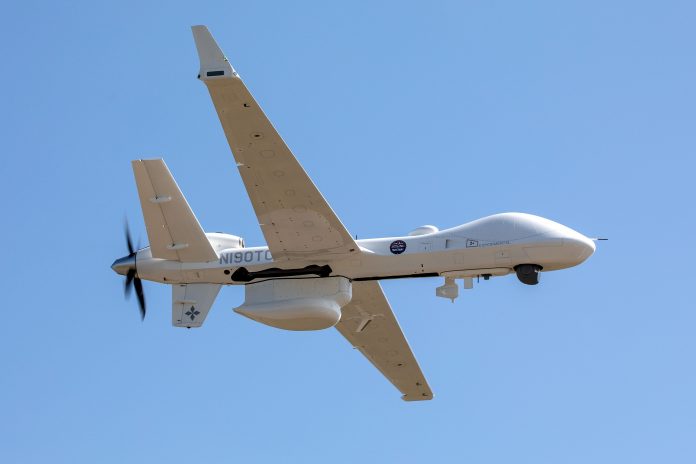
This article will be looking at provisions of the regulatory framework governing Remotely Piloted Aircraft Systems (RPAS) in Nigeria as outlined by the Nigerian Civil Aviation Authority (NCAA).

Applicability

The NCAA Regulations apply to certification, registration, operations, and surveillance of Remotely Piloted Aircraft Systems (RPAS).

NCAA Regulation Focus Areas

The NCAA RPAS Regulations are focused on :-

(a) The classification of RPAS

(b) Security Requirements

(c) The registration and marking of RPAS

(d) RPAS Operating Requirements

(e) RPAS Maintenance Requirements

(f) Requirement for ROC

(g) Requirement for Manufacturers

(h) Transport of Dangerous Goods

Exceptions to the NCAA Regulations

Nothing in the NCAA Regulations apply to:

(a) a control-line model aircraft (that is, a model aircraft that is constrained to fly in a circle, and is controlled in attitude and altitude, by means of inextensible wires attached to a handle held by the person operating the model); or 

(b) a model aircraft indoors; or

(c) a remotely piloted airship indoors; or

(d) a small balloon within 100 metres of a structure and not above the top of the structure; the operation of a remotely piloted balloon or a hot air balloon, or

(e) remotely piloted tethered balloon that remains below 400 feet above ground level; or

(f) a firework rocket not capable of rising more than 400 feet above ground level.

Notable Provisions of the NCAA RPAS Regulations

– A flight does not take place indoors in accordance with 21.1.1.2 of this regulations, if the building in which it takes place has the roof, or one (1) or more walls, removed.

– All RPAS classified under subsection 21.2.1.2 shall be registered by the Nigeria Civil Aviation Authority.

– a) No person may conduct private or recreational or educational or 

research RPAS operations unless:

(i) the flights are below Four Hundred feet (400 ft) AGL ;

(ii) the flights are limited to VLOS operations;

(iii) the flight are conducted outside a radius of 10 km of any aerodrome or helipad or heliport ;or as may be prescribed by the Authority or the Nigeria Airspace Management Agency;

(iv) the flights are not conducted over any congested area;

(v) the RPAS is in compliance with all relevant sections of this Part and any regulations and laws of the Federal Republic of Nigeria;.

(b) Recreational RPAS operations are forbidden in restricted, prohibited, danger areas and Special Use Areas (SUA) as published in the Nigerian Aeronautical Information Publication (AIP),

(c) Private RPAS operations and educational/research RPAS operations are forbidden in restricted, prohibited, danger areas and Special Use Areas (SUA) as published in the Nigeria Aeronautical Information Publication (AIP), without prior authorisation from the Authority and any other relevant Governmental agencies.

Definitions of Key Terms

– “Accident” means an occurrence associated with the operation of an aircraft which, in the case of a manned aircraft, takes place between the time any person boards the aircraft with the intention of flight until such time as all such persons have disembarked, or in the case of an unmanned aircraft, takes place between the time the aircraft is ready to move with the purpose of flight until such time as it comes to rest at the end of the flight and the primary propulsion system is shut down, in which:

  1. a) a person is fatally or seriously injured as a result of:

— being in the aircraft, or

— direct contact with any part of the aircraft, including parts which have become detached from the aircraft, or

— direct exposure to jet blast, except when the injuries are from natural causes, self-inflicted or inflicted by other persons, or when the injuries are to stowaways hiding outside the areas normally available to the passengers and crew; or

  1. b) the aircraft sustains damage or structural failure which adversely affects the :-structural strength, performance or flight ,characteristics of the aircraft, and

—would normally require major repair or replacement of the affected component, except for engine failure or damage, when the damage is limited to a single engine (including its cowlings or accessories), to propellers, wing tips, antennas, probes, vanes, tires, brakes, wheels, fairings, panels, landing gear doors, windscreens, the aircraft skin (such as small dents or puncture holes), or for minor damages to main rotor blades, tail rotor blades, landing gear, and those resulting from hail or bird strike (including holes in the radome); or

  1. c) the aircraft is missing or is completely inaccessible.

Note 1.— For statistical uniformity only, an injury resulting in death within thirty days of the date of the accident is classified, by ICAO, as a fatal injury.

Note 2.— An aircraft is considered to be missing when the official search has been terminated and the wreckage has not been located.

Note 3.— The type of unmanned aircraft system to be investigated is addressed in 5.1 of Annex – 13, NCAA Regulations— Aircraft Accident and Incident Investigation.

Note 4.— Guidance for the determination of aircraft damage can be found in Attachment E of Annex 13.

– “Aerial work” means an aircraft operation in which an aircraft is used for specialized services such as agriculture, construction, photography,surveying, observation and patrol, search and rescue, aerial aadvertisement etc.

– “Aerodrome” means a defined area on land or water (including any buildings, installations and equipment) intended to be used either wholly or in part for the arrival, departure and surface movement of aircraft.

– “Aerodrome operating minimum” means the limits of  of an aerodrome for:

  1. a) take-off, expressed in terms of runway visual range and/or visibility and, if necessary, cloud conditions;
  1. b) landing in 2D instrument approach operations, expressed in terms of visibility and/or runway visual range minimum descent altitude/height (MDA/H) and, if necessary, cloud conditions; and
  1. c) landing in 3D instrument approach operations, expressed in terms of visibility and/or runway visual range and decision altitude/height (DA/H) as appropriate to the type and/or category of the operation.

– “Aeroplane” means a power -driven heavier-than-air aircraft, deriving its lift in flight chiefly from aerodynamic reactions on surfaces which remain fixed under given conditions of flight.

– “Airborne Collision Avoidance System (ACAS)” means an aircraft system based on secondary surveillance radar (SSR) transponder signals which operates independently of ground-based equipment to provide advice to the pilot on potential conflicting aircraft that are equipped with SSR transponders.

– “Aircraft” means any machine that can derive support in the atmosphere from the reactions of the air other than the reactions of the air against the earth’s surface.

– “Aircraft category” means classification of aircraft according to specified basic characteristics, e.g. aeroplane, helicopter, glider, free balloon.

-“Air traffic’ means all aircraft in flight or operating on the manoeuvring area of an aerodrome.

Classifications of RPA

(a) RPA may be classified according to their weight as follows:

(i) Small: Greater than 250g but less than or equal to 25kg and shall be flown only within the visual line of sight of the pilot with prior authorization of the NCAA.

(ii) Medium: Greater than 25kg, but less than or equal to 150kg which shall be flown either within the VLOS of the pilot or BVLOS of the pilot with prior authorisation of the Authority.

(iii) Large: Greater than 150kg which shall be flown either within the VLOS of the pilot or BVLOS of the pilot with prior authorisation of the authority.

(b) There are three (3) main operational risk categories of RPAS:

(i) Open – these present the lowest risk and do not require prior authorization before operating the RPAS but must be registered.

(ii) Specific – these create a higher risk and require authorisation to operate the RPAS.

(iii) Certified – these require the RPAS and its operator and pilot to be certified and generally treat RPAS like manned aircraft.

Registration & Marking of RPAs

Eligibility for Registration

(a) An aircraft is eligible for registration if it is-

(1) Owned by:

(i) A citizen of Nigeria,

(ii) An individual citizen of another State who is lawfully admitted for permanent residence in Nigeria,

(iii) A corporation lawfully organised and doing business under the laws of Nigeria and the aircraft is based and primarily used in Nigeria,

(iv) A government entity of Nigeria or political subdivision thereof.

(c) No person may own, register or operate RPA with military specifications.

Registration Of RPAS

(a) No person may operate an RPAS unless the RPAS has been registered and a certificate of registration issued by the NCAA.

(b) The application for registration of RPA shall:

(1) be made in a form and manner specified by the Authority;

(2) proof of ownership (such as a bill of sale); and

(3) proof of payment of the applicable fee.

(4) End User Certificate

(c) The Authority will maintain a register of RPAS containing the information specified in these regulations.

(d) The certificate of registration is not be transferable.

(e) A foreign registered RPAS shall not operate in Nigeria unless there is proof of registration from another State or country and is authorised by the Authority.

Display of Registration Marks

(a) The registration marks shall be displayed in a form and manner prescribed by the Authority

De-Registration of RPAS Grants

(a) The Authority shall remove an aircraft from the Nigerian registry if:

(1) The owner of the RPAS does not meet the eligibility provisions of Section 21.3.1.1 of NCAA Regulations.

(2) If a holder of a valid de-registration Power of Attorney applies to the Authority for de-registration.

(3) When the holder of a Certificate of Registration, owner or lessor or his duly authorized attorney applies in writing for de-registration of the aircraft from the Nigerian Register.

(4) When the Authority is satisfied that:

(i) The aircraft is destroyed, lost or stolen and cannot be found or 

(ii) The aircraft is permanently withdrawn from use or;

(iii) The aircraft is registered in a country other than Nigeria or;

(iv) The RPAS has a Certificate of Airworthiness (if applicable); which has lapsed for 5 or more years .

(5) Where the Authority exercises its power of de-registration of an RPAS, the Certificate of Registration shall be cancelled and the entry of the aircraft in the aircraft register shall be deleted.

(6) Nothing in this section shall require the Authority to cancel the registration of an aircraft if, in its opinion, it would be inexpedient in the public interest to do so.

RPA Operators Certificates (ROCs)

No person may operate an RPA except in accordance with the terms and conditions of the ROC.

Application for RPAS Operator Certificate (ROC)

(a) An application for the issuance of an RPAS operator certificate shall be in a form prescribed the Authority with proof of payment of the prescribed fee.

(b) An application shall include:

(1) the name and address of the applicant;

(2) the details of the operation for the RPAS authorization or ROC;

(3) the applicant’s application as required by the Authority; and

(4) any other information relating to the application as may be required by the NCAA

(c) The Authority may require only those matters in paragraph (b) that the Authority considers are appropriate in the particular circumstances to be contained in the application.

ROC Features and Validity

(a) The ROC shall consist of two documents – the Certificate and the Operations Specifications in accordance with IS: 21.4.4.

(b) Contents of the ROC

(1) The ROC shall include:

(i) the State of the Operator and issuing authority;

(ii) the ROC number and its expiration date;

(iii) the RPAS operator name, trading name (if different) and address of the principal place of business;

(iv) the date of issue, signature and title of the Authority representative;

(v) the location where the contact details of operational management can be found;

(vi) the description of the types of operations authorized;

(vii) the type(s) or model(s) of RPA authorized for use; and

(viii) the authorized types of operation.

 Validity of an ROC

(1) An ROC issued by the Authority is valid for a period of five (5) years .

Issuance of ROCs

(a) The Authority may issue an ROC to a person who has applied under NCAA Regulations.

(b) When issuing an ROC under paragraph (a), the Authority may:

(1) impose requirements on the RPAS and may specify procedures to be followed by the operator of any RPA that are operated under the authority of the ROC;

(2) specify any additional conditions that the Authority considers necessary in the interest of aviation safety; and

(3) after considering the type of RPA to be used, determine that any RPA to be operated under the ROC shall display identification markings in accordance with 21.3, if the Authority considers that it is necessary in the interest of aviation safety.

Lagos Secures $1.3bn Deal for 4th Mainland Bridge, Other Projects

0

Lagos State Governor, Mr. Babajide Sanwo-Olu, has successfully secured a substantial partnership for infrastructure investment, amounting to $1.352 billion, in collaboration with the African Export-Import Bank and Access Bank.

The historic agreement was formalized during the second Africaribbean Trade and Investment Forum 2023 in Georgetown, Guyana.

Governor Sanwo-Olu announced this significant milestone on his verified social media handle, X (formerly Twitter), on Tuesday. He expressed his enthusiasm for the partnership, which will play a pivotal role in funding long-term infrastructure projects, demonstrating the trust and confidence of both international and local partners in the growing economy of Lagos.

“It was a significant moment in Guyana at the Africaribbean Trade and Investment Forum 2023 as we’ve secured a partnership with the African Export-Import Bank and Access Bank for a massive investment of $1.352bn in Lagos.

“This investment will power our long-term infrastructure projects, demonstrating confidence from international and local partners in our growing economy,” he said.

Sanwo-Olu highlighted that this substantial investment will support the execution of key projects, including the Fourth Mainland Bridge, the Omu Creek Project, and the second phase of the LRMT Blue Line from Mile 2 to Okokomaiko.

These projects are critical for the development and progress of Lagos State, and they are expected to have a substantial impact on the region’s infrastructure and transportation systems.

The governor emphasized the commitment to creating a brighter future for Lagos and its residents. He also noted the ongoing realization of the state’s vision, which includes the development of the Lekki-Epe International Airport and the Lagos Food Systems and Logistics Hub in Epe. These initiatives are poised to bolster the local economy and serve as a cornerstone for future generations.

The partnership with the African Export-Import Bank and Access Bank represents a significant step forward in the development and expansion of Lagos State’s infrastructure, ensuring that the region remains a beacon of economic growth and prosperity.

The 4th mainland project was conceived years ago and has been repeatedly hindered by lack of funds. On November 28, 2019, the advert for expression of interest was placed by the state government.

About the bridge

In 2008, NLE Works created the visual concept for a bridge, which was subsequently approved by the State Government. The bridge was planned to be a 38-kilometer expressway with a speed limit of 140 kilometers per hour. It featured a unique two-level design, with the upper level dedicated to vehicle traffic and the lower level reserved for pedestrian use, allowing for social and commercial activities.

The bridge’s design included eight interchanges, facilitating connectivity to various parts of Lagos. The proposed route passed through towns such as Lekki, Langbasa, and Baiyeku along the Lagos Lagoon estuaries, traversed the Igbogbo River Basin, and crossed the Lagos Lagoon estuaries to reach the Itamaga area in Ikorodu. It continued across the Itokin road and the Ikorodu-Sagamu road before connecting to Isawo and ultimately reaching the Lagos-Ibadan expressway at Ojodu Berger.

This bridge was designed to feature a four-lane dual carriageway, with each carriageway consisting of three lanes and two-meter hard shoulders on each side. With a total length of 38 kilometers, it would become the longest bridge in Africa, surpassing Egypt’s 6th October Bridge, which measures 20.5 kilometers.

In December last year, the Lagos State Government revealed the selected bidder for the 4th mainland bridge project. The announcement came three years after the expression of interest for the project was initially advertised.

The Special Adviser to the Governor on Public Private Partnerships, Mr. Ope George, disclosed that the preferred bidder for the project is the consortium known as Messrs CCECC-CRCCIG CONSORTIUM.

Why do developers adopt pessimistic mindset?

0
Work Space

Why do developers adopt the base pessimistic mindset? There are many possible reasons, but I think the main one is that they have been burned by the code base before. They have experienced the pain of dealing with legacy code, spaghetti code, or code rot. They have wasted hours or days trying to figure out how something works, why something doesn’t work, or how to make something work.

They have faced the wrath of angry users, clients, or managers who blamed them for breaking something that was already broken. They have felt the pressure of tight deadlines, changing requirements, or unrealistic expectations. They have learned to distrust the code base and to doubt their own abilities.

This pessimistic mindset has a negative impact on the quality and productivity of software development. It leads to defensive coding, over-engineering, or under-engineering. It discourages innovation, experimentation, or refactoring. It reduces collaboration, communication, or feedback. It lowers motivation, satisfaction, or morale. It creates a vicious cycle of pessimism that feeds on itself and makes the code base worse over time.

How can we break this cycle and foster a more optimistic mindset? Here are some suggestions:

Adopt a growth mindset. Believe that you can learn from the code base and improve your skills. Don’t let your past failures define your future success. Embrace challenges as opportunities to grow.

Practice gratitude. Appreciate the good aspects of the code base and the people who contributed to it. Recognize the value and purpose of your work. Celebrate your achievements and those of your teammates.

Seek feedback. Ask for help when you are stuck or unsure. Listen to constructive criticism and learn from it. Share your ideas and opinions and welcome different perspectives.

Refactor continuously. Don’t be afraid to change the code for the better. Apply good design principles and coding standards. Remove duplication and complexity. Add clarity and simplicity.

Test thoroughly. Write automated tests that cover all the important scenarios and edge cases. Run them frequently and fix any issues as soon as possible. Use code analysis tools to detect potential problems and improve quality.

Deploy frequently. Deliver working software to your users or clients as often as possible. Get their feedback and incorporate it into your next iteration. Measure the impact and value of your work.

dYdX won’t profit from v4 as it becomes public benefit corporation.

dYdX, one of the leading decentralized exchanges (DEXs) in the crypto space, has announced a major change in its governance and business model. The platform, which recently launched its v4 protocol, has decided to become a public benefit corporation (PBC), a type of legal entity that prioritizes social and environmental impact over profits.

According to a blog post by dYdX founder Antonio Juliano, the move was motivated by the desire to align the platform’s values with its users and community. He wrote:

“We believe that decentralization is not only a technological innovation, but also a social one. Decentralization empowers individuals to take control of their own financial destiny and enables new forms of collaboration and coordination that can create positive change in the world.”

As a PBC, dYdX will have a fiduciary duty to consider the interests of all stakeholders, not just shareholders, when making decisions. This means that the platform will prioritize user experience, security, innovation, and social impact over maximizing profits.

Additionally, dYdX will allocate 10% of its revenue to a public benefit fund, which will be used to support projects and initiatives that advance the mission and vision of dYdX. The fund will be governed by a board of directors, which will include representatives from the dYdX community.

Juliano also clarified that becoming a PBC does not mean that dYdX will stop being profitable or competitive. He said:

“We believe that being a PBC will actually make us more successful in the long term, as it will help us attract and retain the best talent, partners, and users who share our vision and values. We also believe that being a PBC will give us a competitive edge in the market, as it will differentiate us from other platforms that may have conflicting incentives or agendas.”

The transition to a PBC is part of dYdX’s broader vision to become a fully decentralized and community-owned platform. The platform plans to launch its own governance token in the near future, which will enable users to participate in the decision-making process and benefit from the growth of dYdX.

dYdX is one of the most popular and innovative DEXs in the crypto space, offering users access to various trading products such as spot, margin, perpetuals, and options. The platform leverages layer 2 scaling solutions to provide fast, cheap, and secure transactions. According to its website, dYdX has processed over $40 billion in trading volume since its inception in 2017.