


DD
MM
YYYY

PAGES

DD
MM
YYYY

spot_img

PAGES

Home Blog Page 3657

Notable Regulatory Provisions Governing Aviation Security in Nigeria

0

Civil Aviation Security in Nigeria is regulated by the Nigerian Civil Aviation Authority (NCAA) through a set of regulations forming the focus of this article, particularly regarding its provisions on applicability, definitions and conditions for security programmes.

Applicability

These Regulations shall apply to:

-International airport operators

– Domestic airports operators and any other aerodrome operator certified by the NCAA

– National aircraft operators

– Foreign aircraft operators

– Aerodrome tenants and/or operators of Tenant Restricted Areas at International air ports or Domestic airports;

– Any person in or within the vicinity of an international airport or domestic airport, or any other aerodrome specified by the Authority

– Any person who offers goods for transport by air

– Any person who provides a service to an air craft operator

– Any person on board an aircraft 

– Any organization or agency who provides air traffic services; and

– Remotely Piloted Aircraft (RPA) operator.

Definitions of Terms

For the purpose of the NCAA Regulations the following definitions shall apply:

– “Acts of unlawful interference” : These are acts or attempted acts such as to jeopardize the safety of civil aviation including but not limited to:

(i)unlawful seizure of an aircraft;

(ii)destruction of an aircraft in service;

(iii)hostage-taking on board an aircraft or on aerodromes;

(iv) forcible intrusion on board an aircraft, at an airport or on the premises of an aeronautical facility;

(v)introduction on board an aircraft or at an airport of a weapon or hazardous device or material intended for criminal purposes ;

(vi) Use of an aircraft in service for the purpose of causing death, serious bodily injury, or serious damage to property or the environment; or

(vii) communication of false information such as to jeopardize the safety of aircraft in flight or on the ground, of passengers, crew, ground personnel or the general public, at an airport or on the premises of a civil aviation facility.

– “Aerial Work”:-An aircraft operation in which an aircraft issued for specialized services such as agriculture, construction, photography, surveying observation and patrol, search and rescue, aerial advertisement, etc.;

– “Aerodrome”:-A defined area of land on land or water (including any buildings, installations, and equipment) intended to be used either wholly or in part for the arrival, departure and surface movement of aircraft;

– “Aerodrome Operator”:- The holder of an aerodrome license, issued under the NCAA Regulations;

– “Aerodrome or Airport Tenant”:- Any enterprise that is resident at an aerodrome and offers services and products at that aerodrome;

– “Aircraft Operator”:-  A national aircraft operator and a foreign aircraft operator;

-“Aircraft Security Check”:- An inspection of the interior of an aircraft to which passengers may have had access and an inspection of the hold for the purposes of discovering suspicious objects, weapons, explosives or other dangerous devices;

-“Aircraft Security Search”:-A thorough inspection of the interior and exterior of the aircraft for the purpose of discovering suspicious objects, weapons, explosives or other dangerous devices, articles or substances;

– “Airside”:-  The movement area of an airport, adjacent terrain and buildings or portions thereof, access to which is controlled;

-“Authority”:-  The Nigeria Civil Aviation Authority (NCAA);


– “Audit”:-  Any procedure or process used for compliance monitoring undertaken at national level. It covers security audits, inspections, surveys, tests and investigations ;

– “Auditor” shall mean any person conducting audits at national level;

Aviation Security. Safeguarding civil aviation against acts of unlawful interference. This objective is achieved by a combination of measures and human and material resources;

– “Aviation Security Officer”:-A person who is trained in accordance with the aviation security training requirements of the appropriate approved Airport Security Programme and who has been appointed as an aviation security officer by an aerodrome operator, aircraft operator or aerodrome tenant.

National Civil Aviation Security Programme

The Authority will establish, and monitor the implementation of, a written national civil aviation security programme designed to safeguard civil aviation operations against acts of unlawful interference, which takes into account the safety of passengers, crew, ground personnel and the general public including regularity and efficiency of flights.

-The implementation of the written national civil aviation security programme shall be capable of responding rapidly to meet any increased security threat.

– The national civil aviation security programme shall be the repository of national policy of the Federal Government of Nigeria with regard to civil aviation security measures implemented within Nigeria and on Nigerian registered aircraft, and shall specify the agencies responsible for the implementation of that policy.

– The Authority will ensure that supporting resources and facilities required by the aviation security services are made available by aerodrome operator at each airport serving civil aviation.


General Conditions For Security Programmes 

-No aerodrome operator may operate except in accordance with the approved security programme. 

– No Aircraft operator may operate except in accordance with the approved security programme.

-No foreign aircraft operator may operate in Nigeria unless he has submitted an approved Aircraft Operator Security Programme as part of his application for air services to the Authority for its acceptance and submission of proposed Local Standard Operating Procedure (LSOP) for its operation in Nigeria for approval.

– No person may conduct general aviation operations, including corporate aviation operations, using aircraft with a maximum take-off mass greater than 5,700 kg, except in accordance with the approved security programme.

– No person may conduct aerial work operations except in accordance with the approved security programme. This programme shall contain operations features specific to the type of operations conducted.

– No organization or agency may provide air traffic services except in accordance with the approved security programme.

– No person may operate an enterprise or an organization whose purpose is the movement of cargo by air, within and through Nigeria, except in accordance with the approved security programme.

Security Programme Requirements For Other Operators

-The security programme requirement for an aerodrome certificate, Air Operator Certificate and a Foreign Carrier Operating Permit (FCOP) shall be as specified in the NCASP.

Submission of Security Programmes 

– The submission of the security programme does not authorize the person to use the proposed security programme, until the programme is evaluated and approved for use by the Authority.

-Notwithstanding the provision above, an approved foreign aircraft operator’s security programme may be use provided it is accepted by the Authority.


Approval of Aerodrome Operator Security Programme

– An aerodrome operator shall implement its approved security programme within sixty (60) days of approval of its security programme ensure that the programme is implemented.

Aircraft Operator Security Programme

– An Aircraft Operator Security Programme required under the regukatons shall meet the requirements of the National Civil Aviation Security Programme and shall be in form and manner as specified by the Authority.

Approval of Aircraft Operator Security Programme

An aircraft operator shall implement its approved security programme within sixty (60) days of approval of its security programme.

A Remotely Piloted Aircraft (RPA) shall have the same security procedures as aircraft operator.

Air Traffic Services Provider Security Programme

-An Air Traffic Service Provider Security Programme required under the regulations shall meet the requirements of the National Civil Aviation Security Programme and shall be in form and manner and content as specified by the Authority.

Approval of Air Traffic Service Provider Security Programme

– An air traffic services provider shall implement its approved security programme within thirty days of approval of its security programme.

Regulated Agent Security Programme

– A regulated agent Security Programme required under the regulations shall meet the requirements of the National Civil Aviation Security Programme and shall be in form and manner as specified by the Authority.

Approval of a Regulated Agent Security Programme

-A regulated agent shall implement its approved security programme within sixty (60) days of approval of its security programme.

Air Cargo Operator Security Programme

An Air Cargo Operator Security Programme required under 17.4. shall meet the requirements of the National Civil Aviation Security Programme and shall be in form and manner as specified by the Authority.

Approval of an Air Cargo Operator Security Programme

– An Air Cargo Operator shall implement its approved security programme within thirty days of approval of its security programme.

In-Flight Catering Operator Security Programme

-An In-Flight Catering Operator Security Programme required under the regulations shall meet the requirements of the National Civil Aviation Security Programme and shall be in form and manner as specified by the Authority.

-An In-Flight Catering Operator Security Programme shall be accompanied by a current scale map of the flight catering facility area of operations.

Approval of an In-Flight Catering Operator Security Programme

-An In-Flight Catering Operator shall implement its approved security programme within sixty (60) days of approval of its security programme.
Tenant Restricted Area Security Programme.

– A Tenant Restricted Area Security Programme required under 17.4. shall meet the requirements of the National Civil Aviation Security Programme and shall be in form and manner as specified by the Authority.

-The Tenant Restricted Area Security Programme shall be accompanied by a current scale map of the Tenant Restricted Area, as required and produced under the appropriate Airport (Restricted Area) Bye-laws.

Approval of Tenant Restricted Area Security Programme

– A Tenant Restricted Area operator shall implement its approved security programme within sixty (60) days of approval of its security programme.

Other Allied Aviation Service Providers Security Programme

– Other Allied Aviation Service Providers as listed in the Regulations required to have security programmes under  shall meet the requirements of the National Civil Aviation Security Programme and shall be in form and manner as specified by the Authority.

Approval of Other Allied Aviation Service Providers Security Programme

-Other Allied Aviation Service Provider shall implement its approved security programme within sixty (60) days of approval of its security programme.

Cathie Wood on Bitcoin over Gold, NAR guilty of colluding on home sales commissions, Federal Reserve Pauses Rates

0

In a recent interview, Cathie Wood, the founder and CEO of Ark Invest, shared her bullish views on Bitcoin and why she prefers it over gold. She said that Bitcoin is digital gold and that it offers a better hedge against inflation and deflation than the traditional precious metal.

Wood explained that Bitcoin has a fixed supply of 21 million coins, unlike gold, which has a variable supply that depends on mining activity and demand. She also said that Bitcoin is more portable, divisible and secure than gold, thanks to its decentralized network and cryptography.

She added that Bitcoin is not only a store of value, but also a medium of exchange and a unit of account, which makes it more versatile and useful than gold. She said that Bitcoin is becoming more accepted and adopted by institutions, governments and individuals around the world, which increases its network effect and value proposition.

Wood concluded that she would choose Bitcoin over gold “hands down” if she had to pick one asset to hold for the long term. She said that Bitcoin is digital gold and that it is a hedge against inflation AND deflation.

National Association of Realtors found guilty of colluding to keep home sales commissions artificially high, ordered to pay $1.8 billion in damages.

In a landmark ruling, a federal judge has found the National Association of Realtors (NAR) guilty of violating antitrust laws by conspiring to inflate commissions for home sales. The judge ordered the NAR to pay $1.8 billion in damages to a class of home sellers who sued the trade group for overcharging them.

The lawsuit, filed in 2019, alleged that the NAR and its affiliated multiple listing services (MLSs) required sellers to pay a fixed percentage of the sale price to both the listing and the buyer’s agents, regardless of the services they provided or the market conditions. The plaintiffs claimed that this arrangement prevented competition and innovation among real estate agents and resulted in higher costs for consumers.

The judge agreed with the plaintiffs and ruled that the NAR and its MLSs engaged in a “hub-and-spoke” conspiracy to fix commissions at an artificially high level. The judge found that the NAR’s rules and policies, such as the “best interest of the client” standard, the “clear cooperation” policy, and the “blanket unilateral offer of compensation”, were designed to maintain the status quo and discourage agents from offering lower commissions or alternative services.

The judge also rejected the NAR’s arguments that its practices benefited consumers by ensuring quality and professionalism in the industry, and that its commission structure was necessary to protect buyer’s agents from being cut out of the deal. The judge said that these claims were not supported by evidence, and that the NAR’s practices actually harmed consumers by reducing their choices and bargaining power.

The $1.8 billion in damages awarded to the plaintiffs represents 10% of the estimated commissions paid by home sellers who used an NAR-affiliated agent between 2015 and 2020. The judge said that this amount was appropriate to deter future antitrust violations by the NAR and its MLSs, and to compensate the victims of their unlawful conduct.

The NAR said that it was disappointed by the ruling, and that it planned to appeal. The trade group said that its rules and policies were lawful and beneficial, and that it was committed to advancing the interests of its members and consumers.

The ruling is a major victory for home sellers, who have long complained about the high commissions they have to pay when selling their homes. It is also a blow to the NAR, which is the largest trade association in the US, with more than 1.4 million members. The NAR has a powerful influence on the real estate industry, as well as on politics and policy.

The ruling could have significant implications for the future of the real estate market, as it could open the door for more competition and innovation among agents, and lower costs and more options for consumers. It could also lead to more lawsuits against the NAR and its MLSs, as well as other entities that participate in or facilitate their commission-fixing scheme.

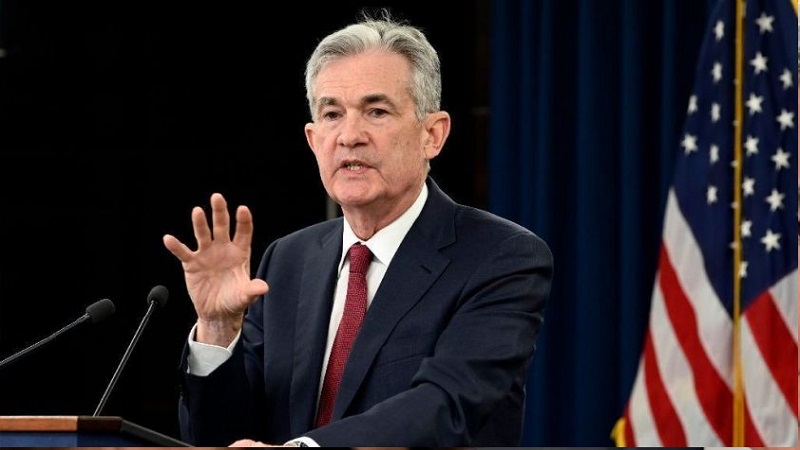
Federal Reserve pauses interest rate hikes, remains at 5.25% – 5.50%

The Federal Reserve announced that it will keep the target range for the federal funds rate unchanged at 5.25% to 5.50%, citing mixed signals from the economy and inflationary pressures. This decision marks the third consecutive meeting where the Fed has paused its rate hike cycle, which began in December 2015 and raised the rate by a total of 2.25 percentage points.

The Fed’s statement acknowledged that the labor market has continued to strengthen, and that economic activity has been rising at a moderate rate. However, it also noted that household spending and business fixed investment have moderated, and that indicators of longer-term inflation expectations are little changed.

The Fed said it will continue to monitor global economic and financial developments and assess their implications for the economic outlook. It also reiterated that it expects that further gradual increases in the federal funds rate will be consistent with sustained expansion of economic activity, strong labor market conditions, and inflation near its symmetric 2 percent objective over the medium term.

The Fed’s decision was widely expected by market participants, who had priced in a zero percent chance of a rate hike at this meeting, according to the CME Group’s FedWatch Tool. However, some analysts had speculated that the Fed might signal a more hawkish stance for future meetings, given the recent uptick in inflation and wage growth.

The Fed’s projections for the federal funds rate, known as the dot plot, showed little change from the previous meeting in December. The median estimate for the end of 2019 remained at 6.00%, implying two more rate hikes this year. The median estimate for the end of 2020 also stayed at 6.25%, while the median estimate for the longer run edged down slightly to 6.00% from 6.13%.

The Fed’s economic projections were also largely unchanged, with only minor revisions to the growth, unemployment, and inflation forecasts. The Fed expects the economy to grow by 2.3% this year, down from 2.5% in December, and by 2.0% next year, unchanged from December. The unemployment rate is projected to fall to 3.5% by the end of 2019 and 2020, down from 3.7% and 3.6%, respectively, in December. The inflation rate is expected to rise to 1.9% this year and 2.0% next year, up from 1.8% and 1.9%, respectively, in December.

The Federal Reserve’s decision to keep the interest rate unchanged at 5.25% to 5.50% has implications for the economy, as the interest rate affects various aspects of economic activity. Here are some of the main effects of the interest rate on the economy:

The interest rate influences the cost of borrowing and saving. A higher interest rate makes borrowing more expensive and saving more attractive, while a lower interest rate makes borrowing cheaper and saving less rewarding. This affects the spending and saving decisions of households and businesses, which in turn affect the aggregate demand and supply in the economy.

The interest rate affects the exchange rate of the currency. A higher interest rate tends to appreciate the currency, as it attracts more foreign capital inflows, while a lower interest rate tends to depreciate the currency, as it discourages foreign capital inflows. This affects the competitiveness of exports and imports, which in turn affect the trade balance and the current account in the economy.

The interest rate affects the inflation rate of the economy. A higher interest rate tends to reduce inflation, as it lowers aggregate demand and increases the purchasing power of the currency, while a lower interest rate tends to increase inflation, as it boosts aggregate demand and reduces the purchasing power of the currency. This affects the price stability and the real value of income and wealth in the economy.

The Fed’s decision to pause its rate hike cycle reflects its assessment of the trade-offs between these effects, as well as its expectations for future economic conditions and inflation. The Fed aims to achieve its dual mandate of maximum employment and stable prices by adjusting the interest rate accordingly.

The Fed’s decision was not unanimous, as two members dissented in favor of a rate hike. Esther L. George, president of the Federal Reserve Bank of Kansas City, and Eric S. Rosengren, president of the Federal Reserve Bank of Boston, argued that a 25-basis-point increase in the target range for the federal funds rate was appropriate at this meeting. The Fed’s next meeting is scheduled for March 19-20, when it will also release a new set of economic projections and dot plot.

Interest rates are a critical tool used by the Federal Reserve to control inflation. When the Fed adjusts the interest rate, it influences the rate of inflation in the following ways:

Higher Interest Rates: Increasing the interest rate can help reduce inflation. This is because higher rates make borrowing more expensive, which can lead to reduced spending by consumers and businesses. With less money circulating in the economy, the demand for goods and services can decrease, leading to lower price increases or even price decreases in some cases.

Lower Interest Rates: Conversely, lowering the interest rate can lead to increased inflation. Lower rates make borrowing cheaper, encouraging spending and investment. This increased economic activity can result in more money chasing a limited number of goods and services, which can push prices up.

The Federal Reserve’s recent decision to maintain the interest rate between 5.25% and 5.50% indicates its current strategy to balance economic growth with its inflation targets. By pausing rate hikes, the Fed signals its cautious approach towards ensuring that inflation remains near its desired level without stifling economic expansion.

SEC Chairman is reviewing up to 12 spot Bitcoin ETFs for approval, Social media NOT a US industry

1
social media apps

The cryptocurrency community is eagerly awaiting the decision of the U.S. Securities and Exchange Commission (SEC) on whether to approve or reject the applications of up to 12 spot Bitcoin exchange-traded funds (ETFs). These products would allow investors to gain exposure to the price of Bitcoin without having to buy or store the digital asset directly.

The SEC has been reluctant to approve Bitcoin ETFs in the past, citing concerns over market manipulation, investor protection, and regulatory clarity. However, some experts believe that the agency may be more open to the idea now, as the crypto market has grown in size, maturity, and legitimacy.

The SEC Chairman, Gary Gensler, has indicated that he is more favorable towards ETFs that track Bitcoin futures contracts rather than spot prices, as futures are regulated by the Commodity Futures Trading Commission (CFTC). However, he has not ruled out the possibility of approving spot Bitcoin ETFs, saying that he is reviewing each application on a case-by-case basis.

The SEC has set deadlines for several spot Bitcoin ETFs in November and December, which means that the agency will have to either approve, deny, or extend the review period for these products by then. Some of the applicants include VanEck, Valkyrie, WisdomTree, NYDIG, and Bitwise.

If the SEC approves any of these spot Bitcoin ETFs, it would be a historic milestone for the crypto industry, as it would signal the recognition and acceptance of Bitcoin as a legitimate asset class by one of the most influential regulators in the world. It would also likely boost the demand and price of Bitcoin, as more institutional and retail investors would be able to access the market through a regulated and convenient vehicle.

However, if the SEC rejects or delays the applications, it would be a setback for the crypto community, as it would indicate that the agency is still not comfortable with the idea of allowing investors to trade Bitcoin through an ETF. It would also dampen the hopes and expectations of many crypto enthusiasts who have been waiting for years for a spot Bitcoin ETF to launch in the U.S.

The SEC’s decision on spot Bitcoin ETFs will have a significant impact on the future of the crypto industry and the adoption of Bitcoin as a mainstream asset. Therefore, it is important to keep an eye on the developments and updates from the agency in the coming weeks and months.

However, investing in a spot Bitcoin ETF also comes with some risks that investors should be aware of. Some of these risks are:

Volatility: Bitcoin is known for its high price fluctuations, which can result in significant gains or losses for investors. A spot Bitcoin ETF would reflect the movements of the underlying asset, which means that investors would be exposed to the same volatility as if they owned Bitcoin directly.

Liquidity: A spot Bitcoin ETF would depend on the availability and efficiency of the spot market for Bitcoin, which may not always be reliable or accessible. If there are disruptions or delays in the trading or settlement of Bitcoin transactions, it could affect the performance and pricing of the ETF.

Regulatory uncertainty: The legal status and treatment of Bitcoin varies across different jurisdictions and may change over time. A spot Bitcoin ETF would have to comply with the rules and regulations of the SEC and other authorities, which may impose restrictions or requirements on its operations or holdings. Additionally, there is no guarantee that the SEC will maintain its approval of any spot Bitcoin ETF or that other regulators will follow suit.

Operational risk: A spot Bitcoin ETF would involve various parties and processes to ensure its proper functioning and security, such as custodians, auditors, administrators, brokers, and exchanges. Any failure or breach in these systems could result in losses or damages for the ETF and its investors.

Social media doesn’t even make the list of 22,607 industries by the US Census Bureau

If you think social media is a big deal, think again. Social media doesn’t even make the list of 22,607 industries by the US Census Bureau. That’s right, the agency that tracks the economic activity of every sector in the country does not recognize social media as a distinct industry. Why is that? And what does it mean for the future of social media?

The US Census Bureau uses a system called the North American Industry Classification System (NAICS) to categorize every business establishment in the US, Canada, and Mexico. The NAICS assigns a six-digit code to each industry, based on its primary economic activity. For example, the code for newspaper publishers is 511110, while the code for internet publishing and broadcasting and web search portals is 519130.

The NAICS is updated every five years to reflect changes in the economy and technology. The latest version, NAICS 2017, was released in October 2016 and became effective in January 2018. The next update, NAICS 2022, is expected to be released in October 2021 and become effective in January 2023.

The NAICS does not have a code for social media because it considers social media as a subset of internet publishing and broadcasting and web search portals (519130). This means that social media platforms such as Facebook, Twitter, Instagram, YouTube, TikTok, and others are grouped together with websites such as Google, Netflix, Amazon, Wikipedia, and others.

This may seem surprising, given the popularity and influence of social media in our society. However, the NAICS is not designed to capture the cultural or social aspects of industries, but rather their economic activities. According to the NAICS definition, internet publishing and broadcasting and web search portals are establishments that “publish and/or broadcast content on the Internet exclusively or operate web sites that use a search engine to generate and maintain extensive databases of Internet addresses and content in an easily searchable format”.

From this perspective, social media platforms are similar to other websites that publish and/or broadcast content on the Internet. They generate revenue from advertising or subscription fees, they use algorithms to rank and display content, they collect and analyze user data, they employ software engineers and web developers, etc.

However, this does not mean that social media is insignificant or irrelevant. On the contrary, social media has many unique features and challenges that distinguish it from other types of websites. For example:

Social media platforms allow users to create and share their own content, rather than just consuming content produced by others. Social media platforms facilitate social interactions and connections among users, rather than just providing information or entertainment.

Social media platforms have a large impact on public opinion, political discourse, social movements, cultural trends, and personal identity. Social media platforms face complex issues such as content moderation, misinformation, hate speech, privacy protection, cyberbullying, addiction, mental health effects, etc.

These features and challenges require specific attention and regulation from policymakers, researchers, educators, journalists, activists, and users themselves. Therefore, it may be useful to have a separate category for social media in the NAICS or other classification systems.

However, creating a new category for social media is not a simple task. There are many questions and difficulties involved in defining what constitutes social media and how to measure its economic activity. For example:

How do we define social media? Is it based on the type of content (text, images, videos), the type of interaction (likes, comments, shares), the type of network (friends, followers), or something else? How do we distinguish social media from other types of websites that also have some social features? For example, are online forums, blogs, podcasts, online games, e-commerce sites considered social media? How do we account for the diversity of social media platforms in terms of size, scope.

social media is not currently considered as a separate industry by the US Census Bureau, but rather as a part of internet publishing and broadcasting and web search portals. This may change in the future, as social media platforms become more prominent and influential in our society. Creating a new category for social media would have both benefits and drawbacks for social media businesses and users, depending on how the category is defined and implemented. Therefore, it is important to have an informed and inclusive discussion on this topic among all the stakeholders involved.

FTX Gate : Sam Bankman-Fried perpetrated one of the biggest financial crimes in US history

0

In a shocking announcement, the US Attorney for the Southern District of New York has accused Sam Bankman-Fried, the founder and CEO of FTX, of orchestrating one of the biggest financial crimes in US history.

According to the indictment, Bankman-Fried and his associates allegedly manipulated the prices of various cryptocurrencies on FTX and other platforms, defrauding investors of billions of dollars. The US Attorney also alleged that Bankman-Fried used his influence and connections to evade regulatory scrutiny and launder money through offshore entities.

The indictment comes as a major blow to the crypto industry, which has been enjoying a surge of popularity and innovation in recent years. Bankman-Fried is widely regarded as one of the most influential and successful figures in the space, having built FTX into one of the largest and most innovative crypto exchanges in the world. He is also known for his philanthropic efforts, having pledged to donate most of his wealth to effective altruism causes.

However, the US Attorney claims that behind this facade of benevolence lies a ruthless and greedy scheme to enrich himself and his cronies at the expense of unsuspecting investors. The indictment details how Bankman-Fried and his co-conspirators allegedly used sophisticated trading algorithms and bots to manipulate the prices of various cryptocurrencies, such as Bitcoin, Ethereum, Solana, and Dogecoin.

By creating artificial demand and supply, they were able to inflate and deflate the prices at will, profiting from both the ups and downs. They also allegedly exploited their access to insider information and market data to execute their trades ahead of other participants, giving them an unfair advantage.

The US Attorney also alleges that Bankman-Fried and his associates used various methods to conceal their illicit activities and evade detection. They allegedly created multiple accounts and identities on FTX and other platforms, using VPNs, proxies, and encryption tools to mask their locations and IP addresses.

They also allegedly transferred their ill-gotten gains to offshore entities and accounts, using complex layers of shell companies, trusts, and foundations to obscure their ownership and origin. The indictment names several jurisdictions where Bankman-Fried allegedly operated his scheme, including Hong Kong, Singapore, Switzerland, Panama, and the Cayman Islands.

Sam Bankman-Fried, the billionaire founder and CEO of cryptocurrency exchange FTX, has a surprising ambition: he wants to be the president of the United States. That’s according to his ex-girlfriend Caroline Ellison, who spoke to Business Insider about their relationship and his political aspirations.

Ellison, a 28-year-old software engineer, dated Bankman-Fried for about a year and a half, from late 2018 to mid-2020. She said they met on a dating app and bonded over their shared interest in math, logic and cryptocurrencies. They also shared a passion for social causes and effective altruism, a philosophy that advocates for using evidence and reasoning to maximize positive impact in the world.

Ellison said Bankman-Fried was always very ambitious and driven, but also humble and generous. He donated millions of dollars to various charities and political campaigns, especially those that supported climate change mitigation and animal welfare. He also founded the FTX Foundation, which donates 1% of FTX’s revenue to effective altruism causes.

But Ellison said Bankman-Fried had another goal that he rarely talked about publicly: he wanted to run for president of the United States someday. She said he believed that he could use his skills and influence to make the world a better place, and that being the leader of the most powerful country would give him the best opportunity to do so.

“He always had this idea that he wanted to be president,” Ellison said. “He thought that he had the best chance of solving the world’s problems, and that he could do it better than anyone else.”

Ellison said Bankman-Fried was serious about his presidential ambitions, and that he had a detailed plan for how to achieve them. He planned to use his wealth and connections to build a network of supporters and allies, and to fund his own campaign. He also planned to leverage his expertise in cryptocurrencies and blockchain technology to create innovative solutions for various issues, such as voting systems, campaign finance and digital identity.

Ellison said Bankman-Fried was not deterred by the challenges or risks involved in running for president. He was confident in his abilities and vision, and he was willing to sacrifice his personal life and privacy for the greater good. He also believed that he had a unique advantage over other candidates: he was not affiliated with any political party or ideology, and he could appeal to voters across the spectrum with his rational and pragmatic approach.

“He didn’t care about labels or categories,” Ellison said. “He just cared about what worked and what didn’t work. He was very data-driven and evidence-based. He wanted to find the best solutions for every problem, regardless of whether they were left-wing or right-wing or something else.”

Ellison said she supported Bankman-Fried’s presidential aspirations, but she also had some reservations. She said she worried about how the public would react to his unconventional background and personality, and how the media would portray him. She also worried about how their relationship would change if he became president, and whether they would be able to maintain their intimacy and privacy.

“I loved him very much, but I also knew that being with him would mean giving up a lot of things,” Ellison said. “I knew that if he became president, I would have to share him with the world, and that I would have to deal with a lot of scrutiny and pressure. I wasn’t sure if I was ready for that.”

Ellison said she ultimately decided to break up with Bankman-Fried in June 2020, shortly after he moved from Hong Kong to the Bahamas to set up his new headquarters for FTX. She said the distance and the pandemic made it harder for them to stay in touch, and that they grew apart over time. She said they still remained friends, and that they occasionally talked on the phone or online.

Ellison said she did not know if Bankman-Fried still planned to run for president in the future, but she wished him all the best. She said she still admired him for his intelligence, generosity and vision, and that she hoped he would achieve his goals.

“I think he would make a great president,” Ellison said. “He has a lot of potential and a lot of ideas. He could really make a difference in the world.”

The US Attorney stated that this is one of the most complex and sophisticated financial crimes he has ever seen, involving multiple jurisdictions, currencies, platforms, and actors. He said that his office is determined to bring Bankman-Fried and his associates to justice, and to recover the stolen funds for the victims.

He also warned that this is not an isolated case, but part of a larger crackdown on crypto-related fraud and money laundering. He urged anyone who has invested in or traded cryptocurrencies on FTX or other platforms to contact his office or the FBI immediately.

Bankman-Fried has not yet commented on the allegations, but his lawyers have issued a statement denying any wrongdoing and vowing to fight the charges. They said that Bankman-Fried is a visionary entrepreneur who has contributed immensely to the development and innovation of the crypto industry.

They said that he has always operated with integrity and transparency, and that he has complied with all applicable laws and regulations. They said that the indictment is based on false accusations and misunderstandings of how crypto markets work. They said that they are confident that Bankman-Fried will be exonerated in court.

Bitcoin is exactly 50% below ATH amid FED threatening to sue Bitcoin Magazine

0

Bitcoin is the most popular and widely used cryptocurrency in the world, with a market capitalization of over $1 trillion as of November 2023. It was created in 2009 by an anonymous person or group using the pseudonym Satoshi Nakamoto, who wanted to create a decentralized and peer-to-peer electronic cash system that does not rely on any central authority or intermediary.

Bitcoin operates on a network of computers called nodes, which validate transactions and maintain a shared ledger of all the transactions that have ever occurred on the network. This ledger is called the blockchain, and it is the source of truth for the state of the Bitcoin system. Anyone can join the network and participate in the consensus process, which ensures that the network is secure and resilient against attacks.

One of the unique features of Bitcoin is that it has a limited supply of 21 million coins, which are generated through a process called mining. Mining is the act of solving complex mathematical problems that require a lot of computational power and electricity. The miners who solve these problems are rewarded with newly created bitcoins and transaction fees. The difficulty of these problems adjusts every 2016 block (about two weeks) to ensure that the average time between blocks is 10 minutes.

The limited supply of Bitcoin means that it is subject to deflationary pressure, which means that its value tends to increase over time as demand exceeds supply. This is in contrast to fiat currencies, which are subject to inflationary pressure, which means that their value tends to decrease over time as supply exceeds demand. Fiat currencies are controlled by central banks, which can print more money or change interest rates to influence the economy.

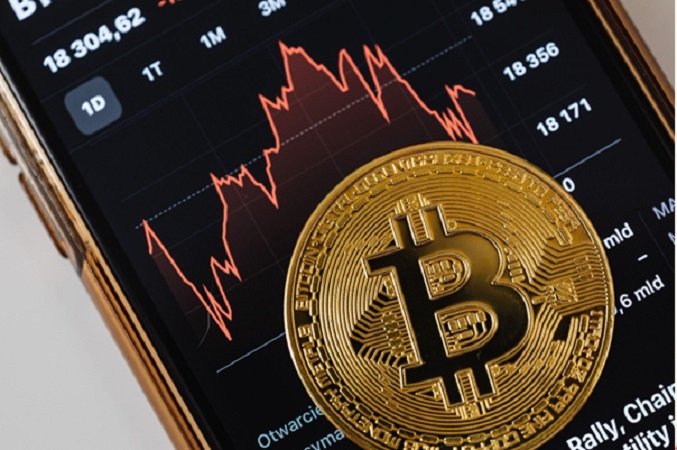
Bitcoin reached its all-time high of $67,000 in 2021, after a period of rapid growth fueled by institutional adoption, regulatory clarity, innovation, and public awareness. However, since then, it has experienced a series of corrections and crashes that have brought its price down to $34,561 as of November 3, 2023. This represents a 50% drop from its peak value.

There are many factors that can affect the price of Bitcoin, such as supply and demand, market sentiment, news events, technical analysis, innovation, competition, regulation, security breaches, hacks, scams, and more. Some of the possible reasons for the recent decline include:

Profit-taking: Some investors may have decided to sell their bitcoins after making huge gains during the bull run, which creates downward pressure on the price.

Market manipulation: Some large players may have deliberately influenced the price by buying or selling large amounts of bitcoins in order to create artificial volatility or panic in the market.

Regulatory uncertainty: Some governments may have imposed restrictions or bans on cryptocurrency activities, such as trading, mining, or holding bitcoins, which reduces the demand and confidence in the market.

Innovation lag: Some competitors may have introduced new features or technologies that make their cryptocurrencies more attractive or superior to Bitcoin, such as faster transactions, lower fees, higher scalability, more privacy, or more functionality.

Security breaches: Some hackers may have exploited vulnerabilities or stolen funds from exchanges, wallets, or other platforms that deal with bitcoins, which erodes trust and security in the market.

Despite these challenges, many experts and enthusiasts believe that Bitcoin still has a bright future and a lot of potential to grow and improve. Some of the possible reasons for optimism include:

Scarcity: The limited supply of Bitcoin makes it a scarce and valuable asset that can serve as a hedge against inflation and currency devaluation.

Network effect: The more people use and accept Bitcoin as a form of money or payment, the more valuable and useful it becomes.

Innovation: The Bitcoin community is constantly working on developing new solutions and technologies that can enhance the performance and functionality of Bitcoin, such as layer two solutions (e.g., Lightning Network), sidechains (e.g., Liquid), smart contracts (e.g., Taproot), privacy (e.g., CoinJoin), and more.

Adoption: The adoption of Bitcoin by individuals, businesses, institutions, and governments is increasing every day, which creates more demand and legitimacy for the cryptocurrency.

Regulation: The regulation of Bitcoin by authorities can provide more clarity and certainty for the market participants and foster a healthy and compliant environment for innovation and growth.

Bitcoin is currently trading at half of its all-time high value due to various factors that affect its price. However, this does not mean that Bitcoin is doomed or worthless. On the contrary, Bitcoin still has many advantages and opportunities that can make it a viable and valuable asset for the long term. As always, investors should do their own research and due diligence before making any decisions regarding their investments.

Federal Reserve threatens to sue Bitcoin Magazine in attempt to silence criticism of its FedNow service

The Federal Reserve has issued a cease-and-desist letter to Bitcoin Magazine, a leading publication in the cryptocurrency space, accusing it of defamation and false advertising for its coverage of the FedNow service, a proposed instant payment system that competes with Bitcoin and other decentralized platforms.

According to the letter, which was obtained by CoinDesk, the Fed claims that Bitcoin Magazine has engaged in “a systematic campaign of misinformation and disparagement” against the FedNow service, which is still in development and expected to launch in 2023. The letter alleges that Bitcoin Magazine has made “false, misleading, and unsubstantiated statements” about the FedNow service, such as:

Claiming that the FedNow service is a “centralized and insecure” system that will “undermine the privacy and sovereignty of individuals and businesses.”

Suggesting that the FedNow service is a “desperate attempt” by the Fed to “maintain its monopoly and relevance in the face of the growing adoption and innovation of Bitcoin and other cryptocurrencies.”

Implying that the FedNow service is a “threat to the stability and security of the global financial system” and a “potential tool for censorship and surveillance.

The letter demands that Bitcoin Magazine immediately stop publishing such statements and remove any existing articles or posts that contain them. It also warns that the Fed will pursue legal action against Bitcoin Magazine if it fails to comply with these demands.

Bitcoin Magazine has responded to the letter with a defiant statement, saying that it stands by its reporting and analysis of the FedNow service and that it will not be intimidated or silenced by the Fed’s threats. The statement argues that Bitcoin Magazine has a right to express its opinions and criticisms of the FedNow service, which it views as a “flawed and inferior” alternative to Bitcoin and other cryptocurrencies. The statement also challenges the Fed to prove its claims and provide evidence for its allegations.

Bitcoin Magazine’s editor-in-chief, Aaron van Wirdum, told CoinDesk that he believes the letter is an attempt by the Fed to stifle dissent and suppress public debate about the FedNow service, which he said poses serious risks to the users and the economy. He said that Bitcoin Magazine will continue to cover the FedNow service and expose its shortcomings and dangers.

“We are not afraid of the Fed or its lawyers. We are journalists and we have a duty to inform our readers and the public about the truth. The FedNow service is a bad idea and a bad product, and we will not stop saying so,” van Wirdum said.